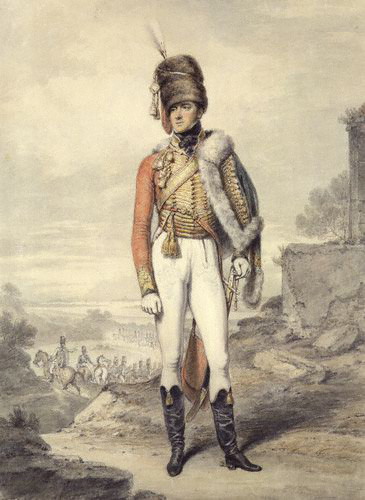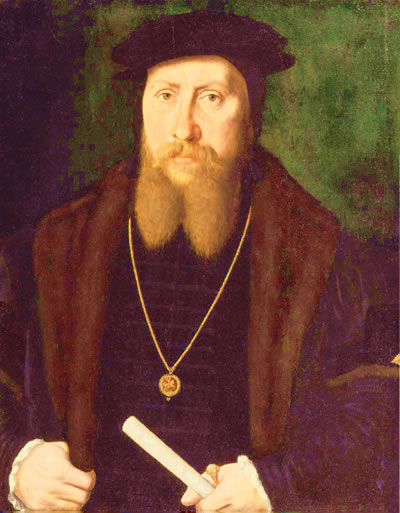
Hamar Alfred Bass (1842 – 1898)

Hamar Bass was the second son of Michael Thomas Bass and his wife Eliza Jane Arden. He was brother of Lord Burton and also a Director of the family firm of Bass, Ratcliff, Gretton and Co. One sister Emily married Sir William Plowden, MP for Wolverhampton West, and the other married Sir George Chetwode being the mother of Field Marshall Philip Chetwode.

Hamar Bass was MP for Tamworth from 1878 to 1885. He was then MP for West Staffordshire from 1885 until his death aged 56 in 1898 from a complex form of rheumatism.

Hamar Bass married Louisa Bagot (1853-1942), daughter of William Bagot, 3rd Baron Bagot, in 1879. They lived at Byrkley Lodge and Needwood House, Burton, and also at 145 Piccadilly, London. Louisa subsequently married Rev Bernard Shaw. He was a breeder at the Byrkley Stud and his horse “Love Wisely” won the Ascot Gold Cup in 1896. He was also for 12 years master of the Meynell Hunt.

His son William succeeded in his uncle’s baronetcy of Stafford according to special remainder. Hamar Bass’s daughter Sibell Lucia married Major Berkeley John Talbot Levett, Scots Guard, son of Theophilus Levett of Wychnor Park, Staffordshire. Berkeley Levett served as one of the Gentlemen Ushers to the Royal Family from 1919 to 1937.


This Website

Select page to view:


Recording

One of the roles of this website is to capture some of Burton’s history as it has survived into the twenty-first century, and to raise the awareness of the history that lies behind it.

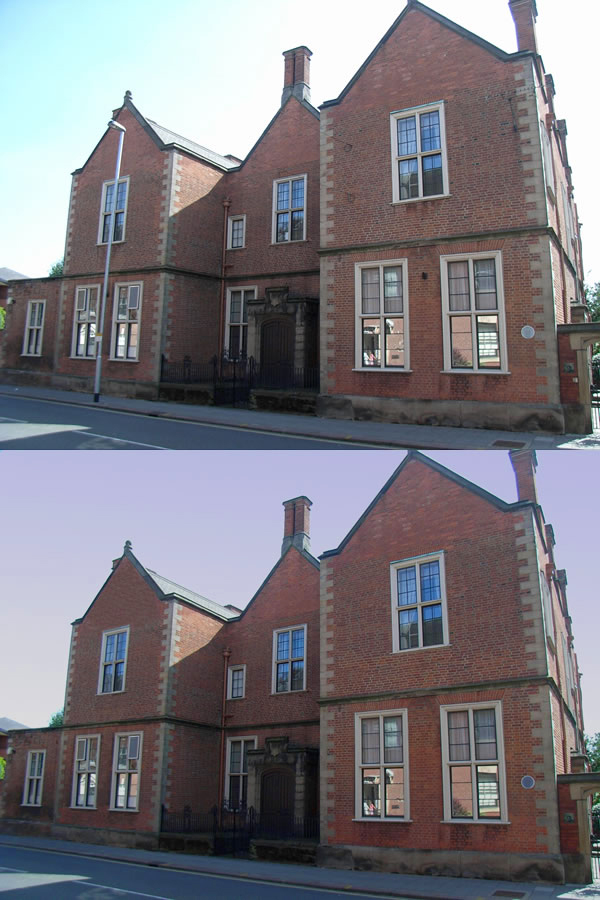
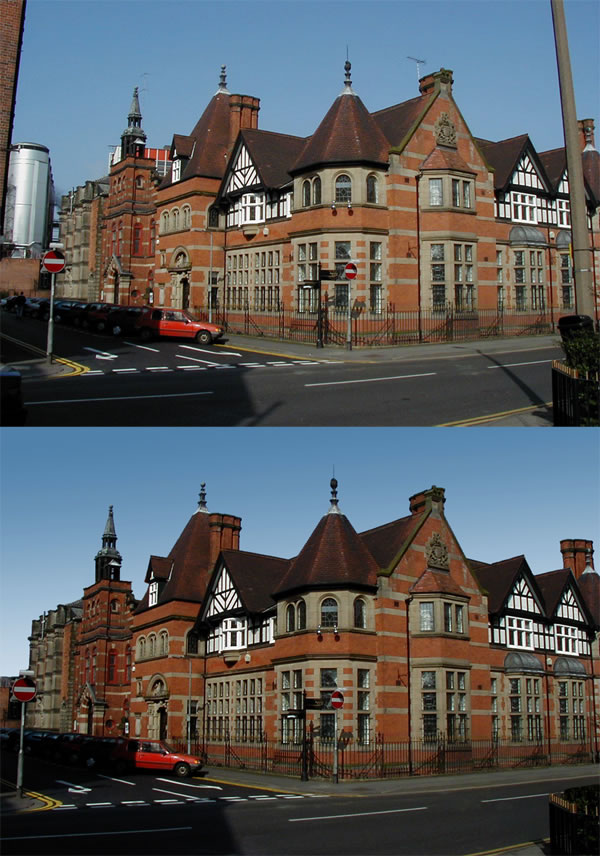
Whilst I am keen to record things as they are, graphic tools allow lamp-posts, bus stops, street signs, telephone wires, TV aerials, satellite dishes and other modern items to be removed such that the buildings can be enjoyed in their true glory.


Restoration

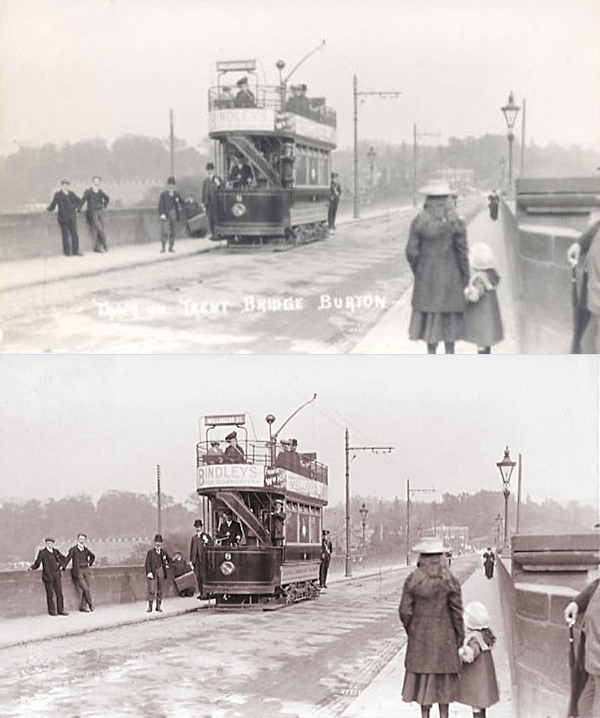
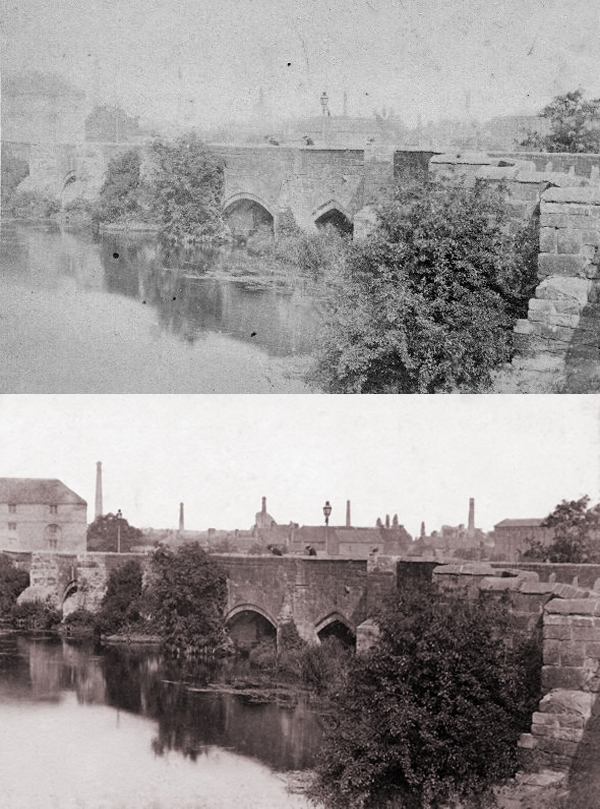
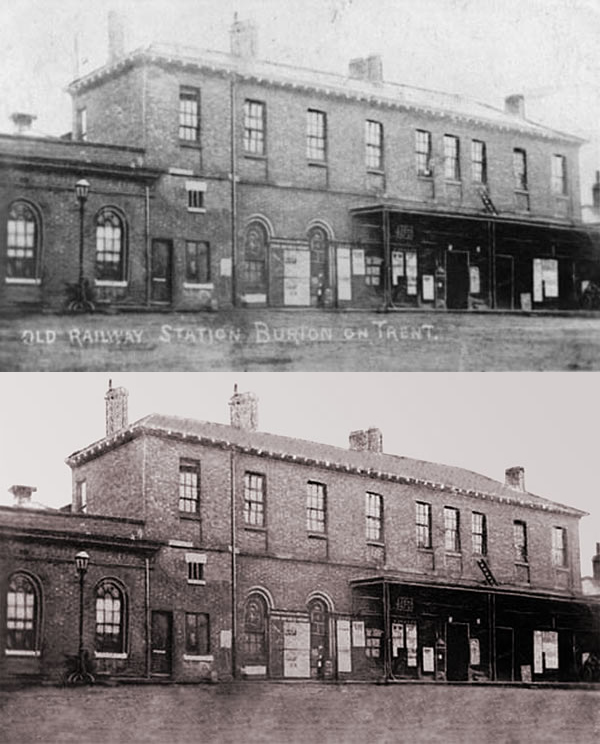
One of the pleasures of preparing this website is rescuing photographs, images, documents etc., before they disappear such that they can be permanently recorded due to the amazing capabilities of modern image editing software. In many cases, the restore is actually much better than the original would have been.

This example shows a 1903 photograph which was used as the source of a postcard at the time. Though the picture tells a story, it was clearly taken using fairly primitive equipment but it can be fully brought back to life.

Below is one of the last available photographs of the Old Trent Bridge which was closed in 1846 after the ‘new’ one was built parallel to it.

This below example shows Burton’s first Railway Station which was demolished in 1883 after a replacement station had been built further down the line.

So – if you have any images of Burton upon Trent that would be of interest, don’t be put off by their condition.


Bibliography

Many books have been invaluable in providing background information for this website.

Title Author Format
A Burtonian’s diary Alf Moss A5 Paperback
A History of Bass, Ratcliff & Gretton Colin Owen A5 Hardback
A Penny Fee David Felthan A5 Booklet
A Visit to Bass Brewery Bass Museum A5 Paperback
An Illustrated History of Burton upon
Trent to the 18th Century
Denis Stuart A4 Paperback
Around Burton upon Trent in old
photographs I
Geoffrey Sowerby & Richard Farman A5 Paperback
Around Burton upon Trent in old
photographs II
Geoffrey Sowerby & Richard Farman A5 Paperback
Bass Railway Trips Rod Pearson A4 Paperback
Bass, Ratcliff & Gretton Excursion
to Liverpool & New Brighton
Bass Museum A5 Paperback
Bretby and the Earls of Chesterfield Howard Usher A5 Booklet
Burton and Ashby Light Railways
1906-1927
Mark Brown A5 Booklet
Burton Mail Remembers 2003 Burton Mail A4 Paperback
Burton Mail Remembers 2004 Burton Mail A4 Paperback
Burton Mail Remembers 2005 Burton Mail A4 Paperback
Burton Mail Remembers 2007 Burton Mail A4 Paperback
Burton Mail Remembers 2008 Burton Mail A4 Paperback
Burton Mail Remembers 2009 Burton Mail A4 Paperback
Burton upon Trent Glenys Cooper A5 Paperback
Burton upon Trent – A history Richard Stone A5 Hardback
Burton upon Trent – The years of change Denis Stuart A5 Booklet
Burton upon Trent illustrated history Colin Owen A5 Hardback
Burton upon Trent on old postcards Geoffrey Sowerby & Richard Farman A5 Paperback
Burton upon Trent street plan Geographia Folded map
Burton-on-Trent on old postcards Mark Brown A5 Booklet
Bygone Burton upon Trent on postcards
and photographs
Terry Garner A4 Hardback
County Borough History of Burton upon
Trent Part 1: Edwardian
Denis Stuart A5 Hardback
County Borough History of Burton upon
Trent Part 2: 1914-74
Denis Stuart A5 Hardback
Deus Nobiscum Gertrude Radford A5 Hardback
Directional Pointer Guide to Burton upon
Trent
Burton upon Trent Council Folded map
Early history of Burton upon Trent H.J. Wain A4 Booklet
Going for a Burton  Mark Rowe A5 Paperback
Gone for a Burton Mark Rowe A5 Paperback
History of a provincial hospital, Burton
upon Trent
Robert Bewick A5 Hardback
History of Burton upon Trent Charles Haywood Underhill A5 Hardback
Looking Back Geoffrey Sowerby & Richard Farman A5 Paperback
Memory Lane Burton and South Derbyshire David Stacey A4 Hardback
Moats, Boats, and other notes… Richard Stone A5 Paperback
More old postcards of Burton upon Trent Geoffrey Sowerby & Richard Farman A5 Paperback
Needwood Forest to the Weaver Hills Geoffrey Sowerby & Richard Farman A5 Paperback
Old Ordinance Survey map – Burton on
Trent 1900
Godfrey Folded map
Recollections Geoffrey Sowerby & Richard Farman A5 Paperback
Rich Pickings around Burton Richard Stone A5 Paperback
Schooldays in Staffordshire on old
postcards
Roy Lewis A5 Booklet
Sixpenny Switchback P.M. White & J.W. Storer A4 Book
St Modwen’ Church Dr Robin Trotter A5 Booklet
St Peters Church, Stapenhill Centenary
Souvenir
St Peters Church A5 Booklet
St Peters Church, Stapenhill Centenary
Souvenir 
St Peters Church A5 Booklet
Staunton Harold John Fox A5 Paperback
Tales of the town Geoffrey Sowerby & Richard Farman A5 Paperback
The Development of Industry, Burton upon
Trent
Colin Owen A5 Hardback
Trams and Buses in Burton Keith West, Davis and Linda Stanier A4 Paperback
We all and each of us – History of Burton Fire Brigade Robert Cox A4 Paperback


Acknowledgements

Acknowledgements to the following:

AbeBooks
for an excellent service in sourcing out-of-print books

Arthur Roe, local history enthusiast
for assistance with a number of oddments

Christine Thompson, Headmistress of Abbot Beyne school
for making archive material available and donating a copy of ‘Deus Nobiscum’ book

Colin Owen, retired author
for general help and assistance, and for sending me a signed copy of his book

David Swinscoe, historian
for information on removal of  image of St Modwen

Dr Paul Hegarty of Molson Coors
for help with Bass content.

Dr Robin Trotter, local historian
for his assistance with Saint Modwen’s church history

eBay
for proving to be an amazing resource of books, postcards, documents, photos…

Father Paul Farthing, Vicar
for his assistance with Saint Paul’s church and surrounding history

Gaye King, local historian
for Byrkley Park history

Geoffrey Thursfield, local historian
for a number of assistances and images

John Nutt
for help with Bladon Castle history

Ken Bell, retired corporation employee
for help with Burton Corporation transport

Les Simpson, local history enthusiast
for assistance with schools history

Marilyn and Ian Gilliver of Saint Peter’s Church
for their help and for even letting me wind the tower clock up!

P.M. White and J.W. Storer, author and tramway enthusiast
for help with Burton & Ashby Tramway history

Pam Charlton of Legal & Democratic Services
for help with Civic History and Town Hall

Richard Stone, local author
for a number of assistances and photographs

Robin Clay, Thornewill / Clay descendant
for various help and many images

Robert Cox, local author and fireman
for his assistance with Burton Fire Brigade history

Simon Kent, Deputy Justices Clerk
for help with Magistrates Court history

Stuart Haywood, local history enthusiast
for various assistances and his enthusiasm

… but disappointment from:

Freda Shepherd and Jenny Griffin of Burton High School Old Girls Association
for being outstandingly unhelpful

Burton Library
for denying web-usage of a large archive of donated local photographs

Burton Mail
for declining to assist

Burton Police Force
for declining to assist

Marstons Brewery
for declining to assist

The Magic Attic
for denying web-usage of a large archive of donated local photographs

Three Queens Hotel
for declining to assist


Copyright Issues

Burton Library
Burton Library has a very large collection of archival material. Most of it is comprised of collections that were freely donated to a PUBLIC archive in the hope that they would provide the best PUBLIC access. The majority were transferred from the library in Union Street to the ‘new’ library when it was opened in 1976 with no-one knowing quite what to do with them.

I, and other local historians and authors, have been denied access on the basis that many are now of unknown ownership so the copyright MAY belong to someone. Firstly however, most of the material is out of copyright simply by age since my main interest is prior to 1915. Secondly, in the worst case, it would anyway only mean payment of a nominal copyright fee or retraction of the image. They are not of high monetary value… they are simply photos of Burton!

A quick inspection of a randomly chosen box revealed large collections of incredible photos of Burton upon Trent decorated for the King George V Coronation in 1911. For many, this is within grandparent era, making them still very relevant.

The Magic Attic
The Magic Attic at Swadlincote similarly boasts over 22,000 donated historic local photos. Again however, I have been denied permission to feature any of them on this website on the basis that I may reduce revenue of image sales. With around 10,000 pageviews per month, more astute would probably be reference links to The Magic Attic, informing that “Full quality images and thousands more like it available from them”.

General
In both cases, collections have been freely donated (for example, JS Simnett) with instruction that images should be made available for local projects as long as:
a) They were non-commercial.
b) A website did not make hi-resolution images suitable for printing available.

The website is prepared on a completely non-profit basis (in fact, a not insignificant cost to myself). Images are strictly controlled to web-quality, which would not be suitable for printed media. The sole intention of the website is to raise local awareness and provide a quality, informative record of Burton’s local history.

These issues are slowly but very surely becoming the death of this website as I move to less resistive projects. It is a fraction of what it would have been with co-operation.

The website currently enjoys around 10000 pageviews per month (around 30000 images). It is a criminal shame that so many more images will remain locked away with hardly anyone ever seeing them as the originators would have wished, until they have deteriotated to the point where they will be thrown away, most of them unrecorded.


The Paget Family

Paget Family

Select page to view:


Sir William Paget – 1st Baron Paget of Beaudesert

In Tudor times, William Paget was one of the most prominent men in England. Son of John, one of the serjeants-at-mace of the city of London, he was born in London in 1506. His father was said to have been of humble origin from Wednesbury, Staffordshire. Educated at St Paul’s School, and at Trinity Hall, Cambridge, proceeding afterwards to the university of Paris.

Probably through the influence of Stephen Gardiner, who had early befriended Paget, he was employed by Henry VIII in several important diplomatic missions; in 1532 he was appointed clerk of the signet and soon afterwards of the privy council. He acquired large estates from Henry VIII on the dissolution of the monasteries. He became secretary to Queen Anne of Cleves in 1539, and in 1543 he was sworn of the privy council.

A letter written by William Paget, clerk to the Privy Council, to Sir Thomas Wriothesley, Garter King-at-arms, dated 27 Jun 1541, only two days before Lord Dacre’s execution, tells that the Lord Chancellor and the Lords Sussex, Hertford and St. John, with Mr. Baker, consulted in the Star Chamber upon Lord Dacre’s case:

Sir, I am sent for to the Council, and must stay my writing until soon.

At my coming to the Star Chamber there I found a11 the lords, to the number of xvij assembled for a conference touching the lord Dacre’s case;. . . To Council they went, and had with them present the Chief Justices, with others of the King’s learned Counsel; and albeit I was excluded, yet they ‘spake so loud, some of them, that I might hear them notwithstanding two doors shut between us. Among the rest that could not agree to wilful murder, the Lord Cobham, as I took him by his voice, was vehement and stiff: Suddenly and softly they agreed, I wot not how, and departed to the Kings Bench together; whereas the lord Chancellor executing the office of High Steward, the lord Dacre pledd not guilty to the indictment, referring himself to the trial of his peers, and declaring, with long circumstances, that he intended no murder, and so purged himself to the audience as much as he might. And yet nevertheless afterward, by an inducement of the confession of the rest already condemned, declared unto him by the judge, he refused his trial, and, upon hope of grace (as I took it), confessed the indictment; which he did not without some insinuation. His judgment was to be hanged. It was pitiful to see so young a man by his own folly brought to such a case, but joyful to hear him speak at the last so wisely and show himself so repentant. . . . To-day after dinner the Council was with the King to declare lord Dacre’s humble submission, hoping thereby to move his Majesty to pardon him, which took no effect, for to-morrow shall. . . Mantel, Roydon, and Frowdes suffer, and the lord Dacre upon Wednesday. God have mercy upon them and give them grace to repent their evil doings and to take patiently their deaths.

He was Secretary of State with Thomas Wriothesley, Earl of Southampton, 1543 and 1544, and again with Sir William Petre, 1544 to 1547. Henry VIII in his later years relied much on his advice, named him as one of the executors of his will, and appointed him one of the council to act during the minority of Edward VI.

Influential in Edward Seymour’s plot to become Protector of Edward VI, Paget at first vigorously supported the Protector Somerset, while counselling a moderation which Somerset did not always observe. In 1547 he was made comptroller of the King’s household, Chancellor of the Duchy of Lancaster, and a Knight of the Garter; and in 1549 he was summoned by writ to the House of Lords as Baron Paget de Beaudesert. About the same time he obtained extensive grants of lands, including Cannock Chase and Burton Abbey in Staffordshire, and in London the residence of the bishops of Exeter, afterwards known successively as Lincoln House and Essex House, on the site now occupied by the Outer Temple in the Strand. He also obtained Beaudesert in Warwickshire, which remained the chief seat of the Paget family. Paget shared Somerset’s disgrace, being committed to the Tower in 1551 and degraded from the Order of the Garter in the following year, besides suffering a heavy fine by the Star Chamber for having profited at the expense of the Crown in his administration of the duchy of Lancaster. He was, however, restored to the King’s favour in 1553, and was one of the twenty-six peers who signed the device of King Edward; was one of Jane Grey’s Privy Councillors, but signed a proclamation in support of Mary shortly after. He made his peace with Queen Mary, who reinstated him as a Knight of the Garter and in the privy council in 1553, and appointed him Lord Privy Seal in 1556. William Paget openly suggested to marry Edward Courtenay to Elizabeth; but Courtenay had rejected it, on the grounds that it would be beneath the dignity of one of his unblemished lineage. On the accession of Elizabeth I in 1558 Paget retired from public life.

By his wife Anne Preston he had six daughters and five sons, the two eldest of whom, Henry and Thomas, succeeded in turn to the peerage. The Pagets’ marriage was close, and William’s fellow-councillors had on occasion appealed to her influence with him, just as she had appealed to them on his behalf in 1552. Lady Paget was not an especial favourite of Queen Mary, though she was chosen to escort her in the coronation procession.
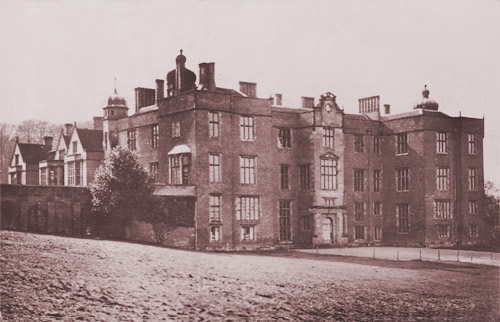
The Paget family’s main residence was Beaudesert House in Cannock Chase. But before this was built, they often occupied the Manor House within the precincts of the former Burton abbey.
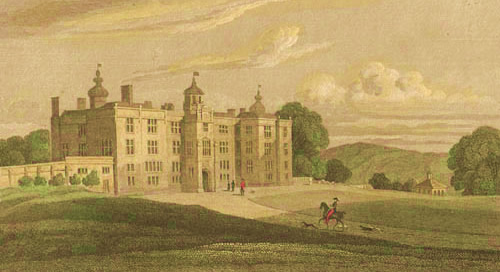
When they stayed there, they lived in grand style. An inventory of c. 1580 shows that there were over 60 rooms, many handsomely furnished. On occasion, the household staff numbered 75 persons, and in the first week of Jan of that year, there were 14 guests staying in the house, including the sheriff of Staffordshire.
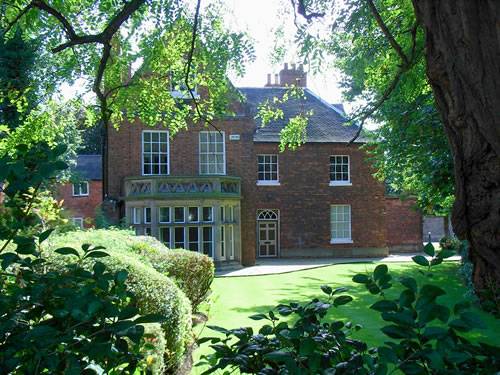
When Burton Abbey was granted to its new owner in 1546, William Paget began planning to expand the Manor House, known to have existed since at least 1514, into a grand mansion. A plan of 1562 shows that the house was to have three storeys and a long gallery. To provide the materials for this project, the old abbey buildings were to be cannibalised. There were major alterations to the house over the next three centuries. The present building, still very much in evidence close to the Market Place, is mainly of brick but was formerly of stone, and timber-framed. The attic probably has the most exceptional medieval roof in Burton. The early 19th century range probably occupies the site of a medieval open hall, and parts of the building still date back to the original building.

Sir William died in 1563. After his death, after being implicated in Catholic plots against the Queen, the manor house along with most of the family estates were confiscated, ended the Pagets’ interest in the Manor House.

It was leased to Richard Almond in 1612 by which time some of the former Abbey buildings incorporated into the house were in a very bad state of repair.




Henry William Paget – 1st Marquis of Anglesey

Field Marshal Henry William Paget, 1st Marquess of Anglesey KG, GCB, GCH, PC (17 May 1768 – 29 April 1854), known as Lord Paget from 1784 to 1812 and as the Earl of Uxbridge from 1812 to 1815, was a British military leader and politician, now chiefly remembered for leading the charge of the heavy cavalry against d’Erlon’s column during the Battle of Waterloo. He also served twice as Master-General of the Ordnance and twice as Lord Lieutenant of Ireland.
Born in London, as Henry Bayly (his father assumed the name Paget in 1770), he was the eldest son of Henry Paget, 1st Earl of Uxbridge, by his wife Jane, daughter of the Very Reverend Arthur Champagné, Dean of Clonmacnoisie, Ireland. The Hon. Sir Arthur Paget, General the Hon. Sir Edward Paget and Vice-Admiral the Hon. Sir Charles Paget were his younger brothers. He was educated at Westminster School and Christ Church, Oxford.

Paget entered parliament in 1790 as member for Carnarvon, a seat he held until 1796, and then represented Milborne Port between 1796 and 1804 and again between 1806 and 1810.

At the outbreak of the French Revolutionary Wars, Paget raised the regiment of Staffordshire volunteers and was given the temporary rank of lieutenant-colonel in 1793. As the 80th Foot, the corps took part in the Flanders campaign of 1794 under Paget’s command. In 1795 he was made a lieutenant-colonel of the 16th Light Dragoons; in that same year, he married the daughter of the Earl of Jersey. In 1796 he was made a colonel, and by 1801 he had become colonel of the 7th Light Dragoons. In 1802 he was promoted major-general, and six years later lieutenant-general. He commanded the cavalry for Sir John Moore’s army during the Corunna campaign, wherein his troopers provided excellent rear-guard defence during the long retreat. The British cavalry showed a distinct superiority over their French counterparts at the action of Sahagun and routed the Chasseurs a Cheval of the Imperial Guard at Benevente.

This was his last service in the Peninsular War, because his liaison with Lady Charlotte, the wife of Henry Wellesley, afterwards Lord Cowley, made it impossible subsequently for him to serve with Wellington, Wellesley’s brother. His only war service from 1809 to 1815 was in the disastrous Walcheren expedition (1809), in which he commanded a division. In 1810 he was divorced and then married Lady Charlotte Wellesley, who had about the same time been divorced from her husband.

In 1815, he was appointed cavalry commander in Belgium, under the still resentful eye of Wellington. On the eve of Waterloo, Paget had his command extended by Wellington so as to include the whole of the allied cavalry and horse artillery. He handily covered the retirement of the Anglo-Allies from Quatre Bras to Waterloo on 17 June, and on 18 June led the spectacular cavalry charge of the British centre, which checked and in part routed D’Erlon’s corps d’armée (see Waterloo campaign).

One of the last cannon shots fired that day hit Paget in the right leg, necessitating its amputation. According to anecdote, he was close to Wellington when his leg was hit, and exclaimed, “By God, sir, I’ve lost my leg!” — to which Wellington replied, “By God, sir, so you have!” According to his aide-de-camp, Thomas Wildman, during the amputation Paget smiled and said, “I have had a pretty long run. I have been a beau these 47 years and it would not be fair to cut the young men out any longer.”

He was to have an articulated artificial limb fitted by James Potts. Lord Uxbridge’s amputated leg had a somewhat macabre after-life.

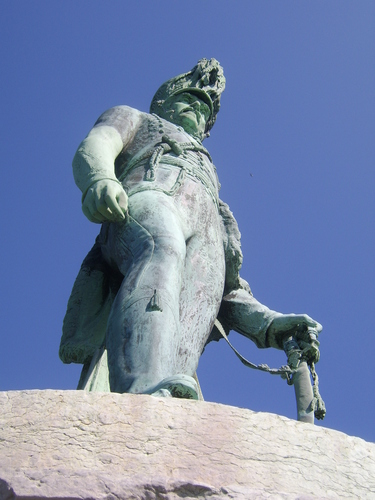
Paget was appointed a Knight Grand Cross of the Order of the Bath in January 1815, and on 4 July 1815, just over two weeks after Waterloo, the Prince Regent created him Marquess of Anglesey. He was also made a Knight of the Order of St George of Russia and a Knight of the Order of Maria Theresa of Austria the same year. In 1816 he was also apppointed a Knight Grand Cross of the Royal Guelphic Order and in 1818 he was made a Knight of the Garter. A 27m high monument to his heroism (designed by Thomas Harrison) was erected at Llanfair PG on Anglesey, close to his country retreat at Plas Newydd, in 1816. A separate monument to his leg was erected at Waterloo but the bones were later disinterred and put on display.

In 1819 Anglesey became full general, and at the coronation of George IV, he acted as Lord High Steward of England. His support of the proceedings against Queen Caroline made him for a time unpopular, and when he was on one occasion beset by a crowd, who compelled him to shout “The Queen!”, he added the wish, “May all your wives be like her.” In April 1827, he became a member of the Canning administration, taking the post of Master-General of the Ordnance and becoming a member of the Privy Council. Under the Wellington administration, he accepted the appointment of Lord Lieutenant of Ireland (March 1828).

In December 1828, he addressed a letter to the Roman Catholic primate of Ireland stating his belief in the need for Catholic emancipation, which led to his recall by the government; on the formation of Earl Grey’s administration in November 1830, he again became lord-lieutenant of Ireland. In July 1833, the ministry resigned over the Irish question, he spent thirteen years out of office, then joined Lord John Russell’s administration in July 1846 as master-general of the ordnance, finally retiring in March 1852 with the rank of field-marshal and colonel of the Royal Horse Guards. He also held the honorary posts of Lord Lieutenant of Anglesey between 1812 and 1854 and Lord Lieutenant of Staffordshire between 1849 and 1854.

As well as the long name, the village of Llanfairpwll on the island of Anglesey is also locally famous for the Marquess of Anglesey Column. It is 90 feet high and was erected as a tribute in 1817.


« Previous PageNext Page »

Website by Kevin Gallagher