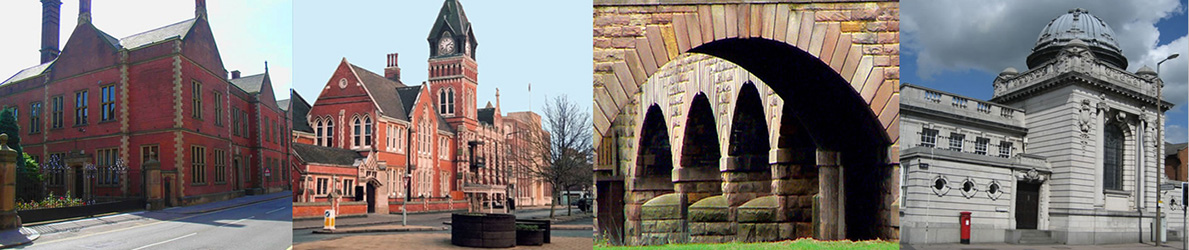
Burton upon Trent when renown as one of the most significant brewing towns in the country, was famous for having its own internal railway system solely to serve the breweries.
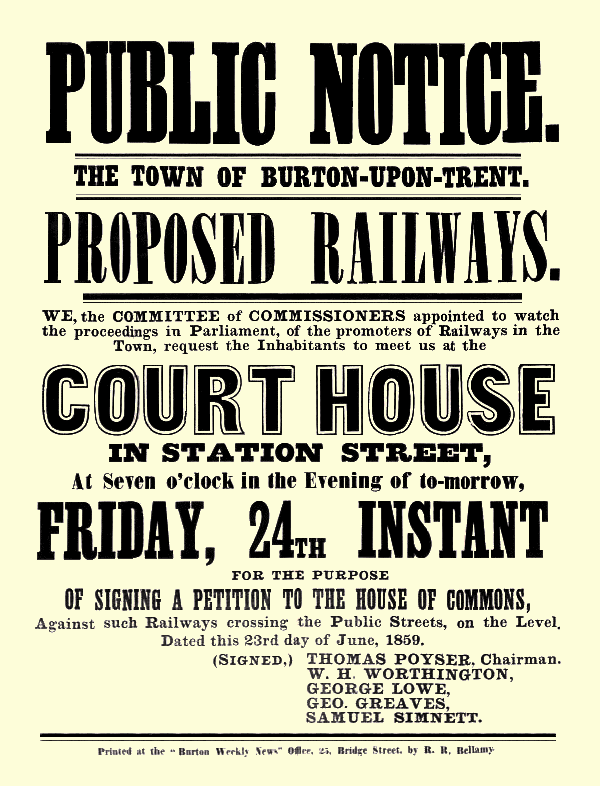
Brewers aside however, the plans were not met with enthusiasm, largely because of the many proposed railway crossing that would disrupt the traffic. In 1859, notices were posted all over the town prompting readers to meet at the Court House in Station Street to sign a petition to the House of Commons “Against such railways crossing the Public Streets”. Slightly surprisingly, one of the signatories was W.H. Worthington (who would eventually go on to become Burton’s first Mayor). This might suggest that the Worthington Brewery could manage without them more than some of its competitors!
FIRST LOCOMOTIVES
In 1839 the railway services first reached Burton-on-Trent In anticipation, the progressive thinking breweries had constructed their own internal railway to be later connected to the main network.
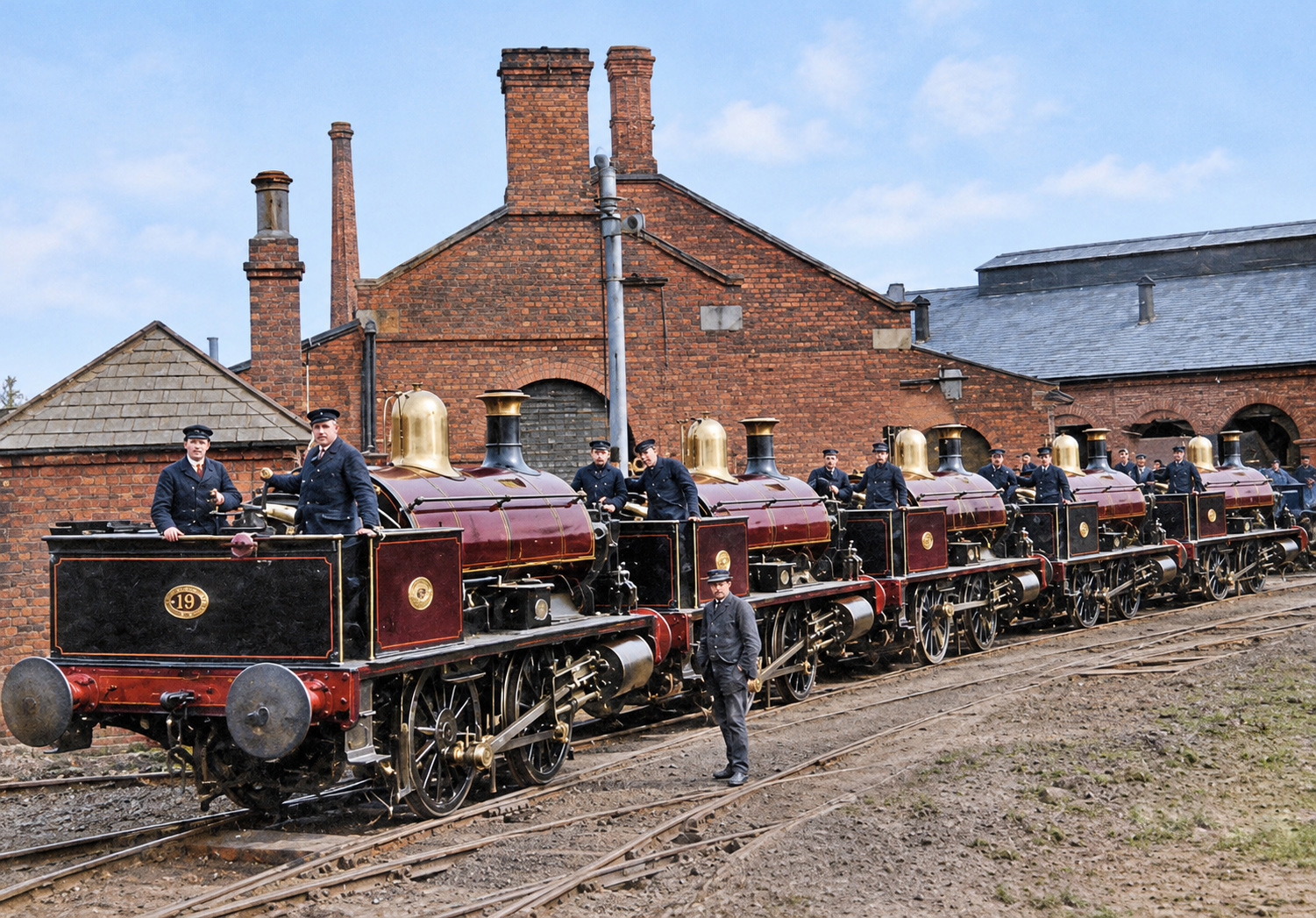
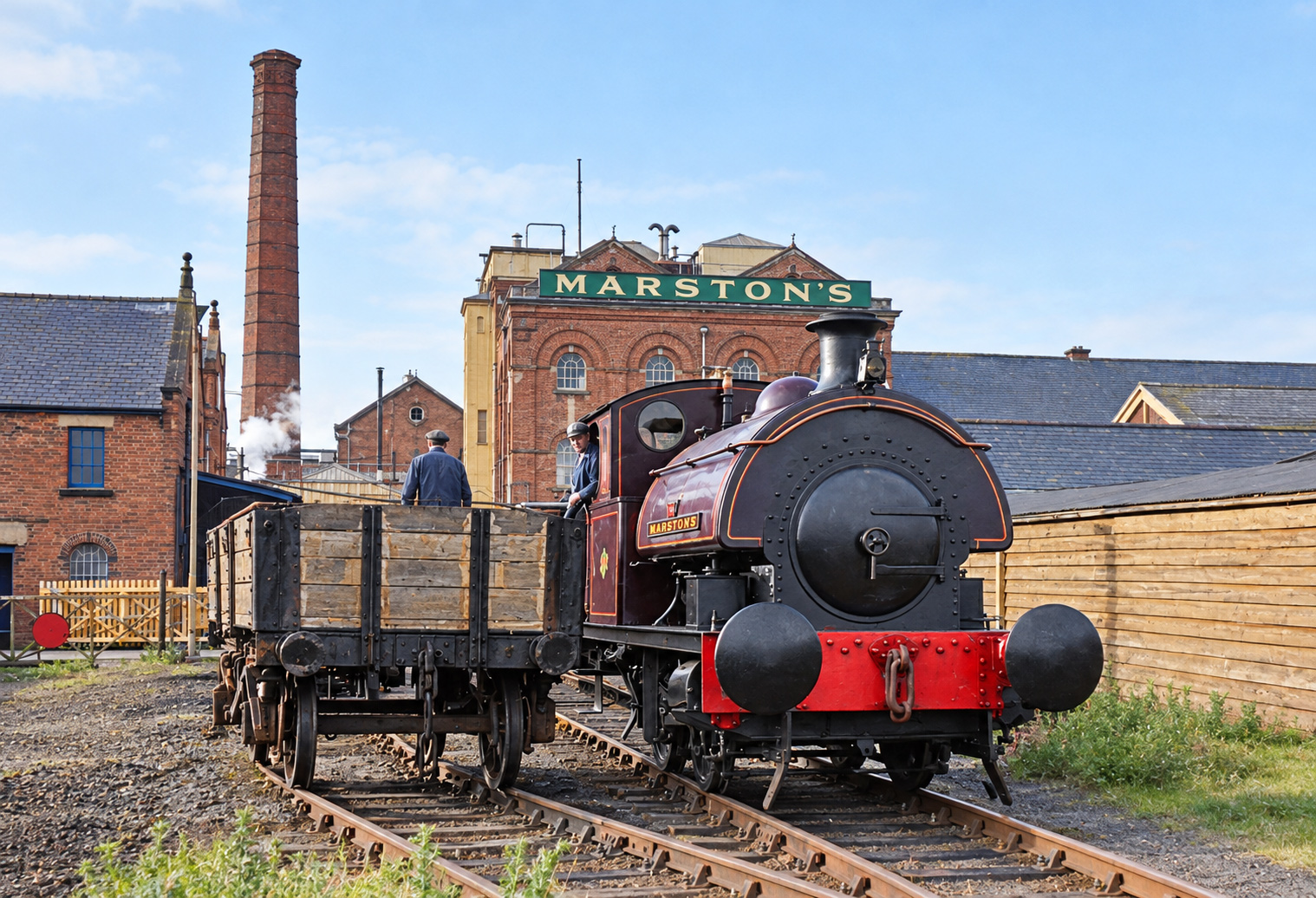
Above shows the exciting delivery of first brewery trains to Marston’s Brewery in c1839 and below, shows one of the locomotives in service.
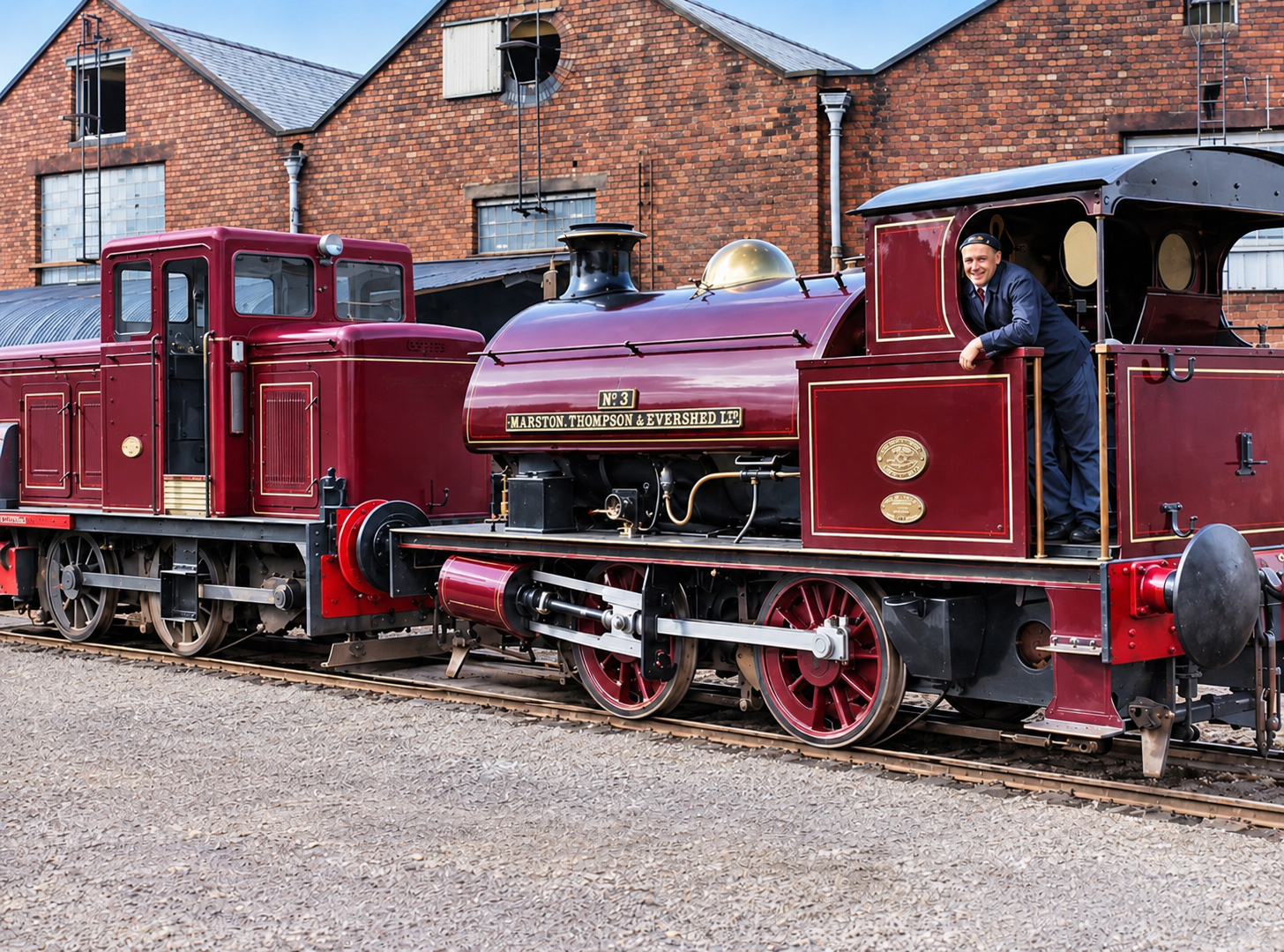
and a telling picture of No. 3 Steam locomotive alongside a diesel locomotive that will ultimately replace it.
BASS LOCOMOTIVES
Bass Brewery railway begam operating at around the same time and its distinctive fleet of bright red industrial steam locomotives —mostly compact saddle tank shunters — to haul heavy wagons of ale, barrels, and ingredients around the brewery’s winding, sharply curved tracks are probably the most recognised.
Notable Bass Locomotives & Fleet Details:
• Nos. 2 & 3: Steam shunters operating on the brewery line alongside No. 9-style saddle tank designs.
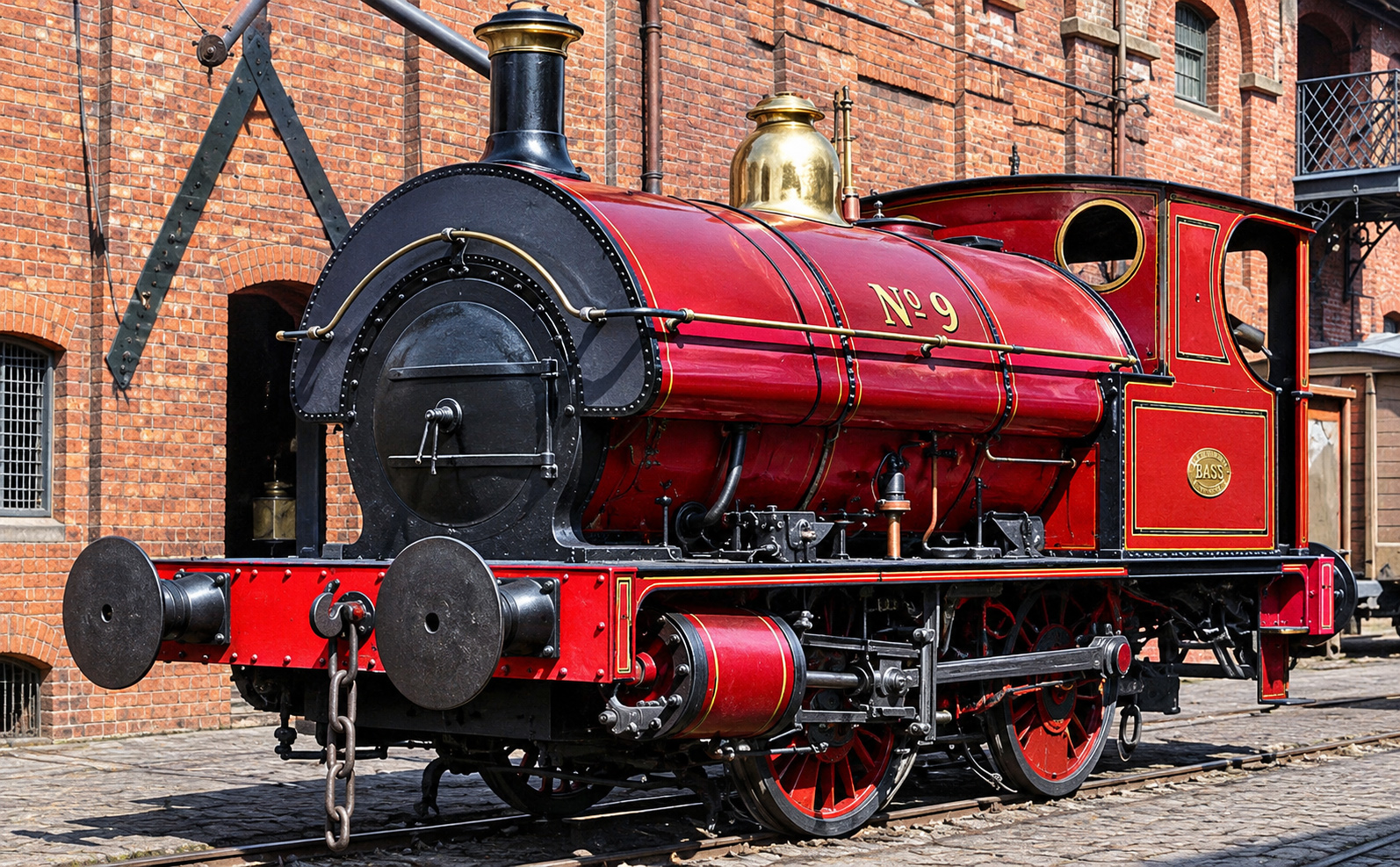
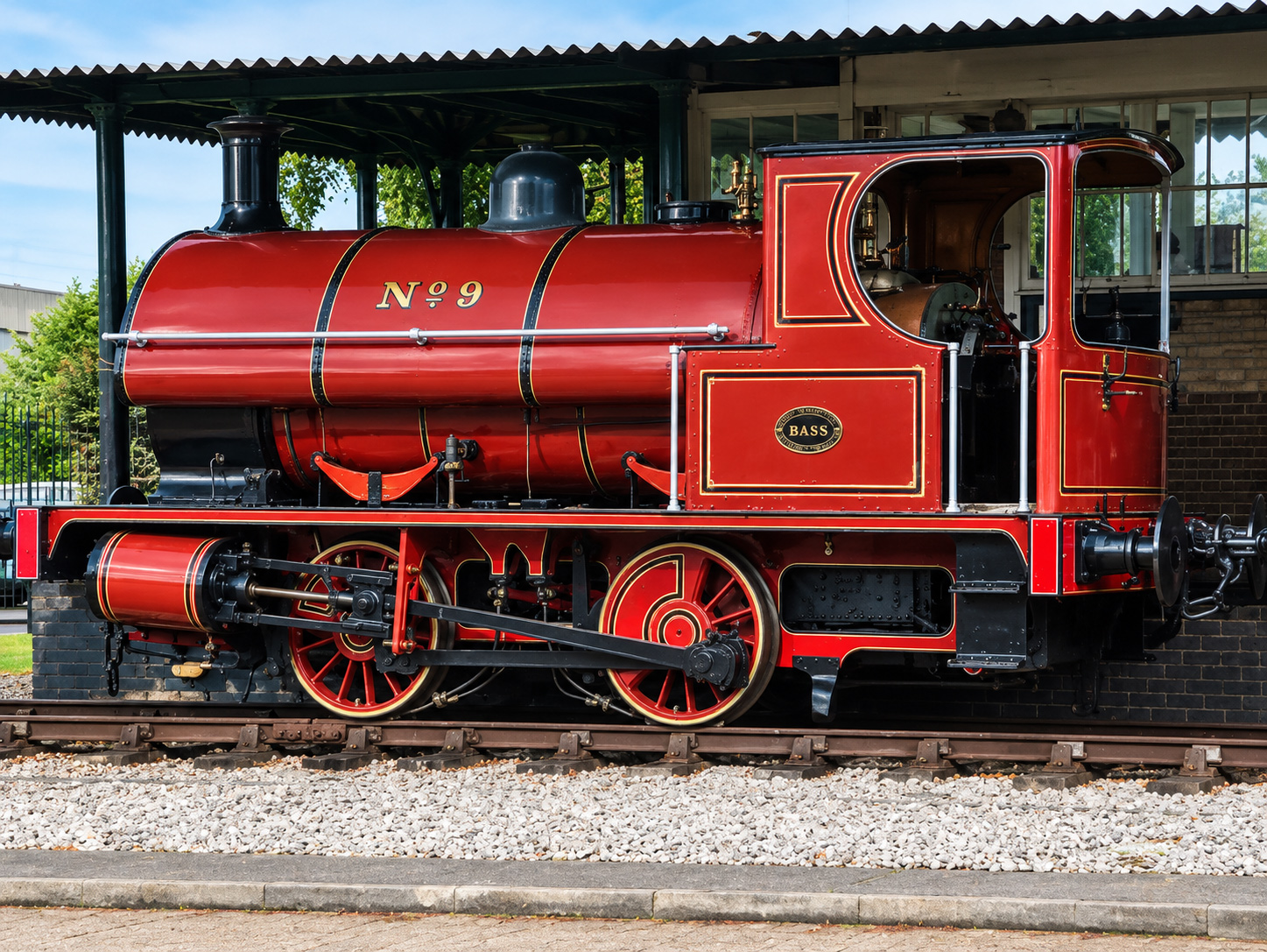
• No. 9 (0-4-0ST): Built by Neilson, Reid & Co. in 1901 (Works No. 5907) and withdrawn in 1964. It is the best-known surviving Bass steam locomotive, paired historically with the Director’s Coach used for site tours.
• No. 15 (0-4-0ST): Built by Hudswell Clarke in 1901 (Works No. 602) as Worthington Loco No. 4, absorbed into Bass’s fleet after the 1960 takeover and withdrawn in 1963.
The locomotives of the era were equipped with steam brakes and sanding gear to handle up to 30 loaded wagons along tight industrial curves. They were gradually phased out in favour of diesel shunters (such as those produced in Burton by Baguley). The Bass railway was finally wound down in the 1960s.
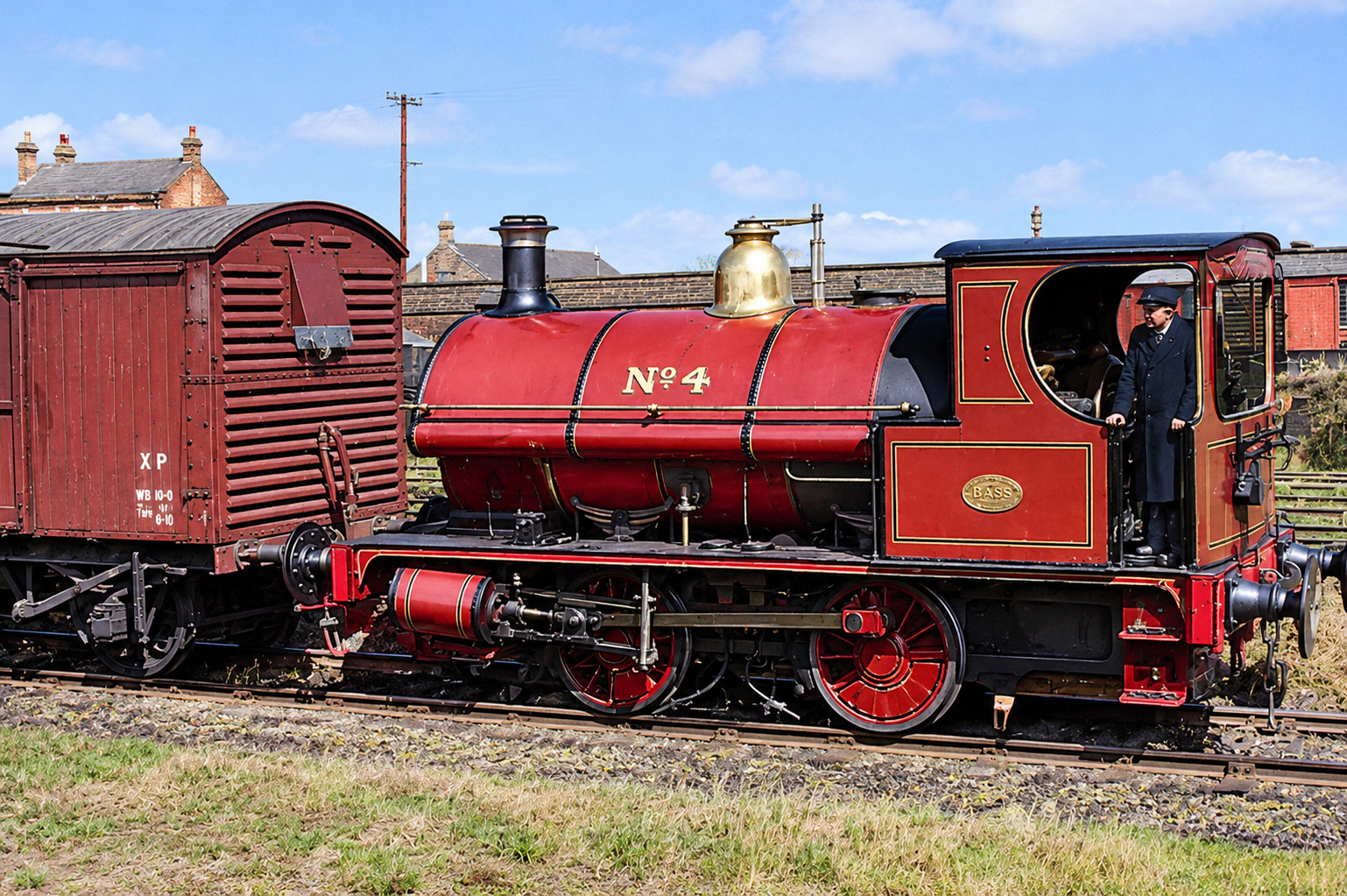
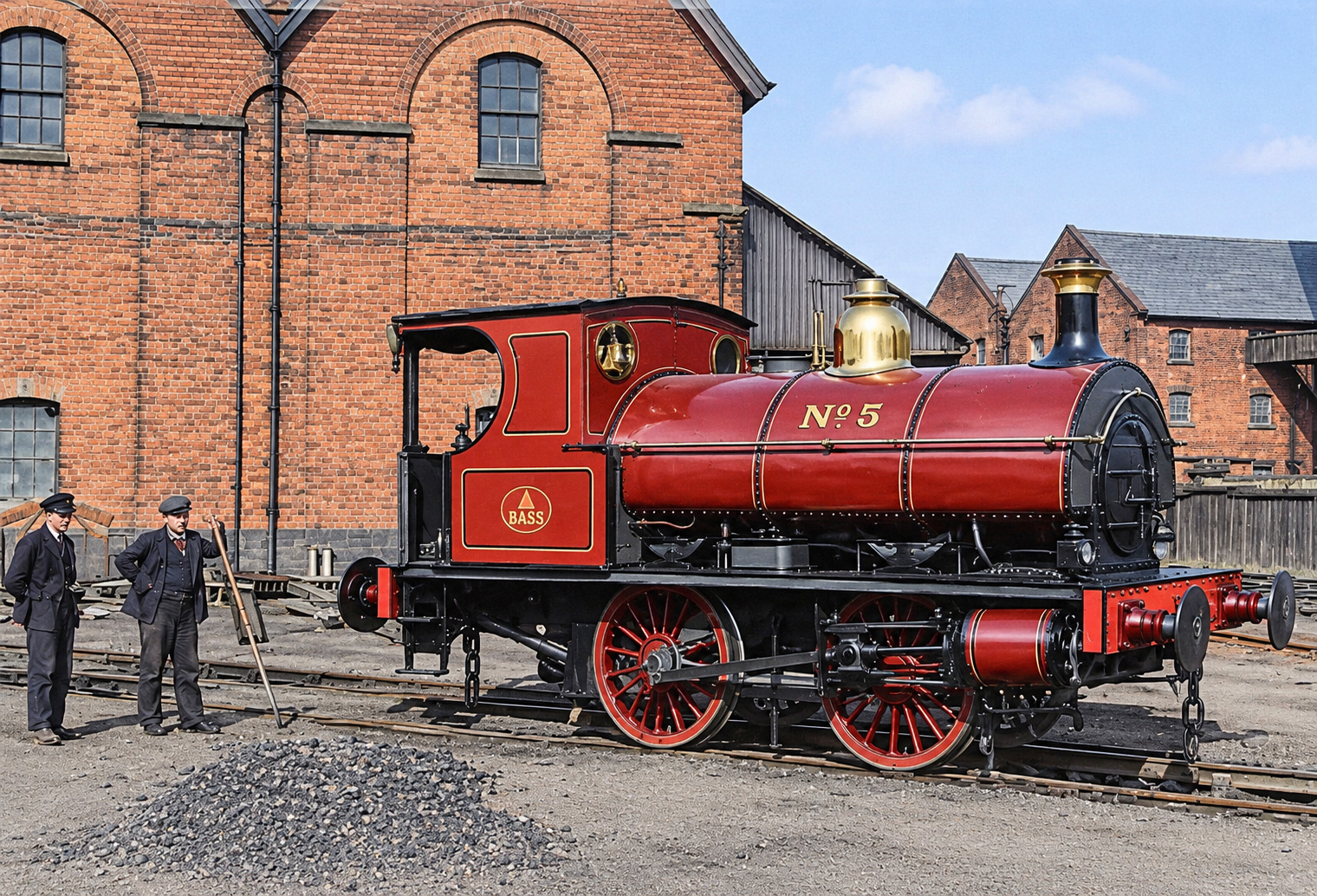
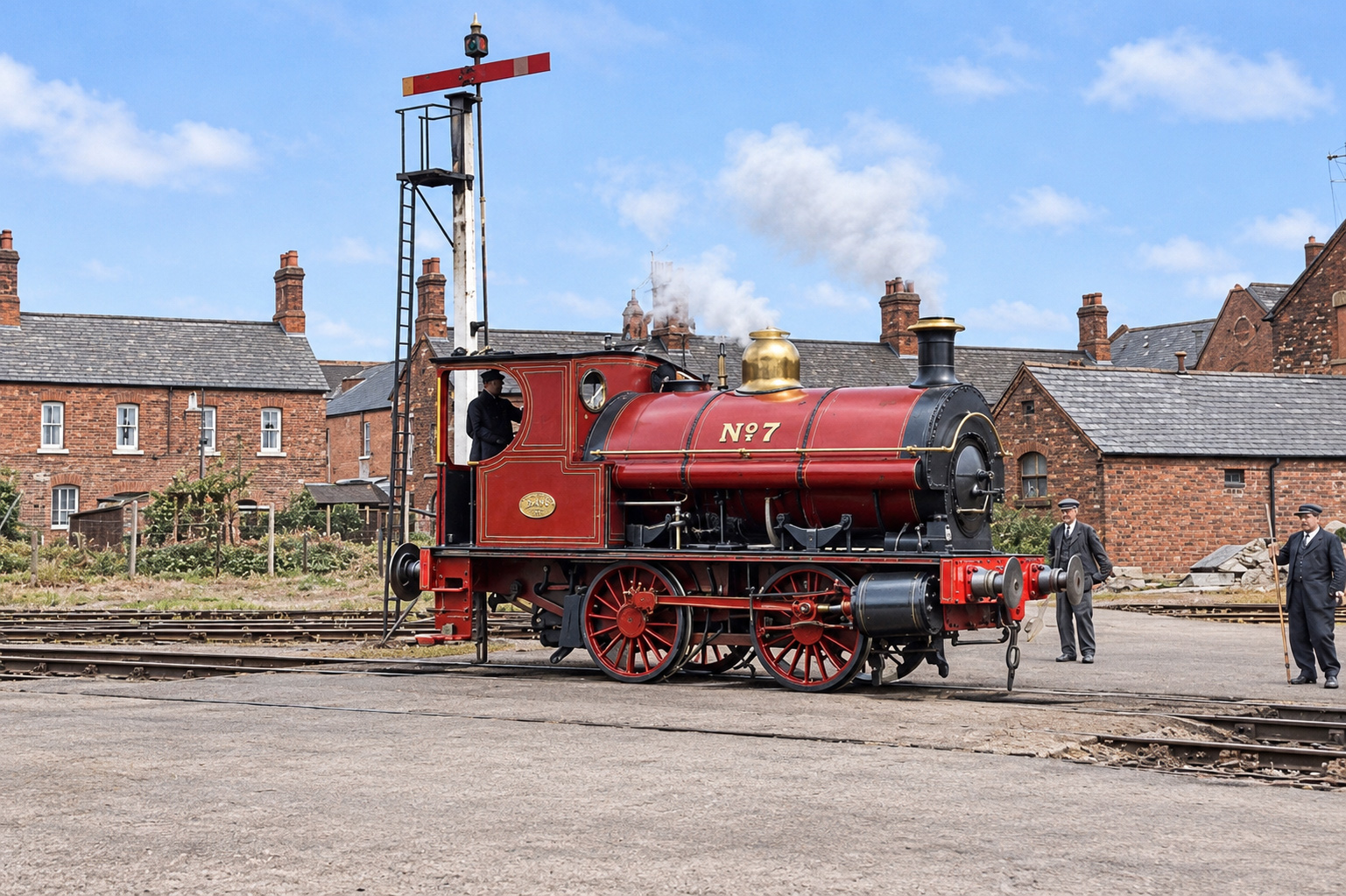
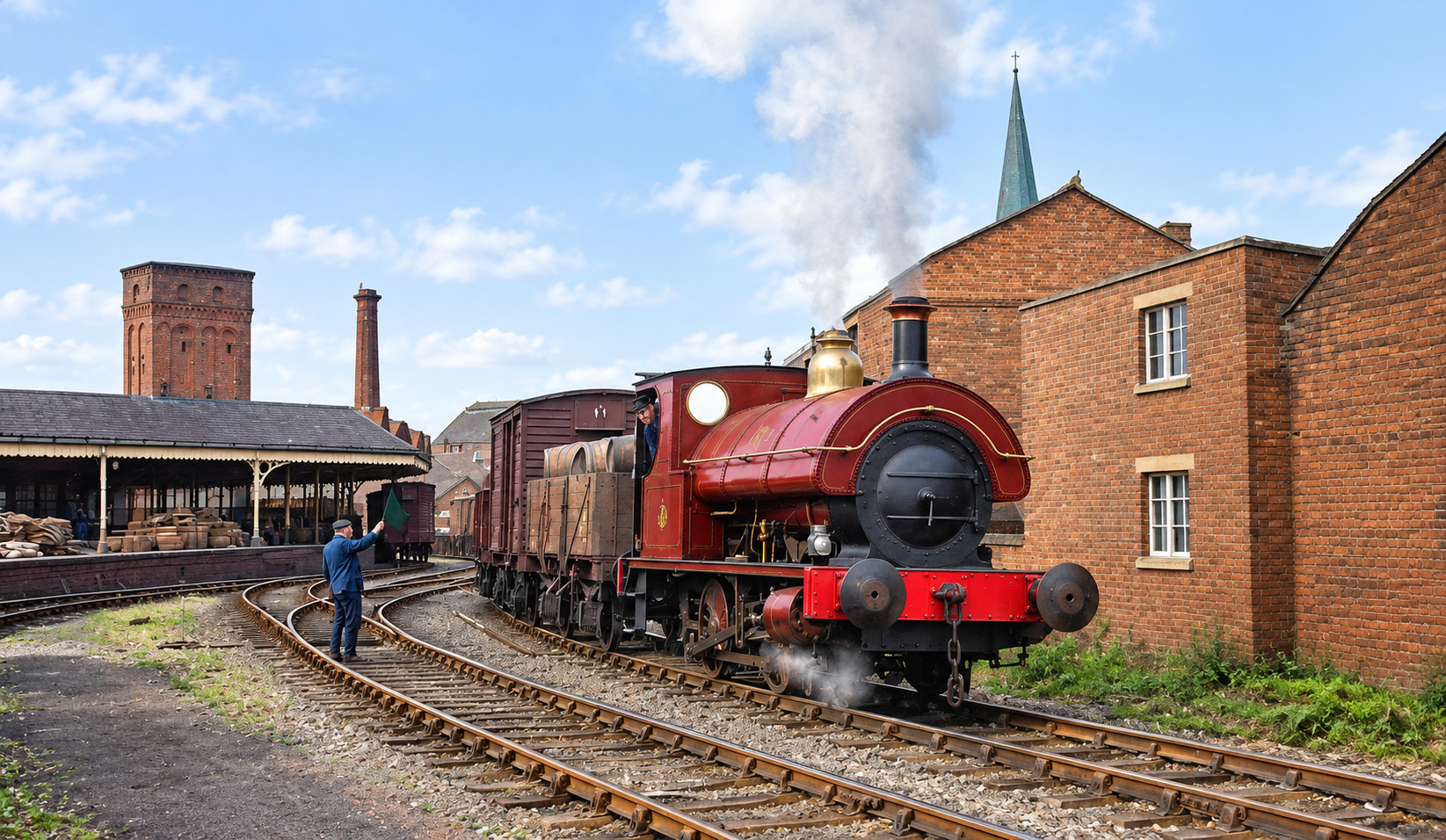
I feel like a bit of a train-spotter with the below set of photos and yearn for photos of locomotives 1, 3, 6 and 8 to complete the series. Such photos exist but I have not been able to gain permission to feature them.
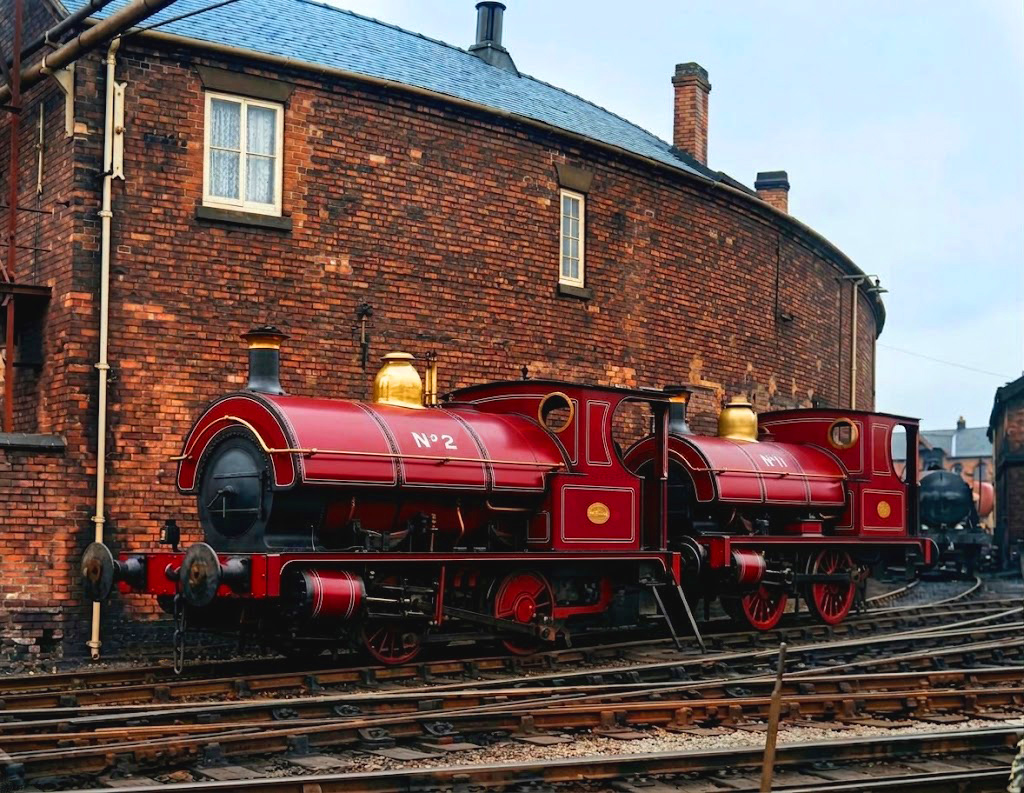
Engines No.2 and No. 11 appear to be playing hide-and-seek.
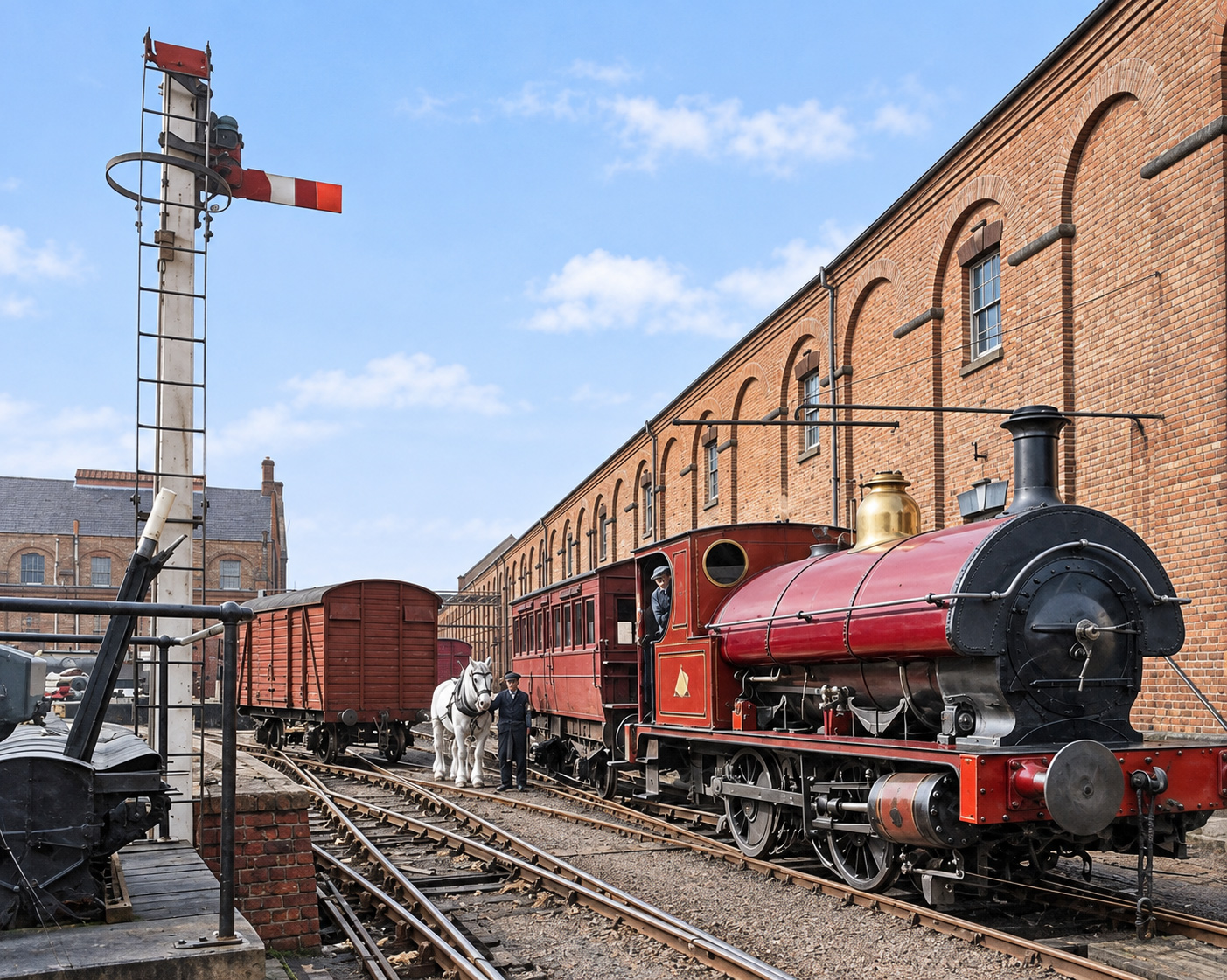
Horses were used to transport materials from one part of the brewery to another in the early days. I think that this one would be enjoying its new sedentary life-style.
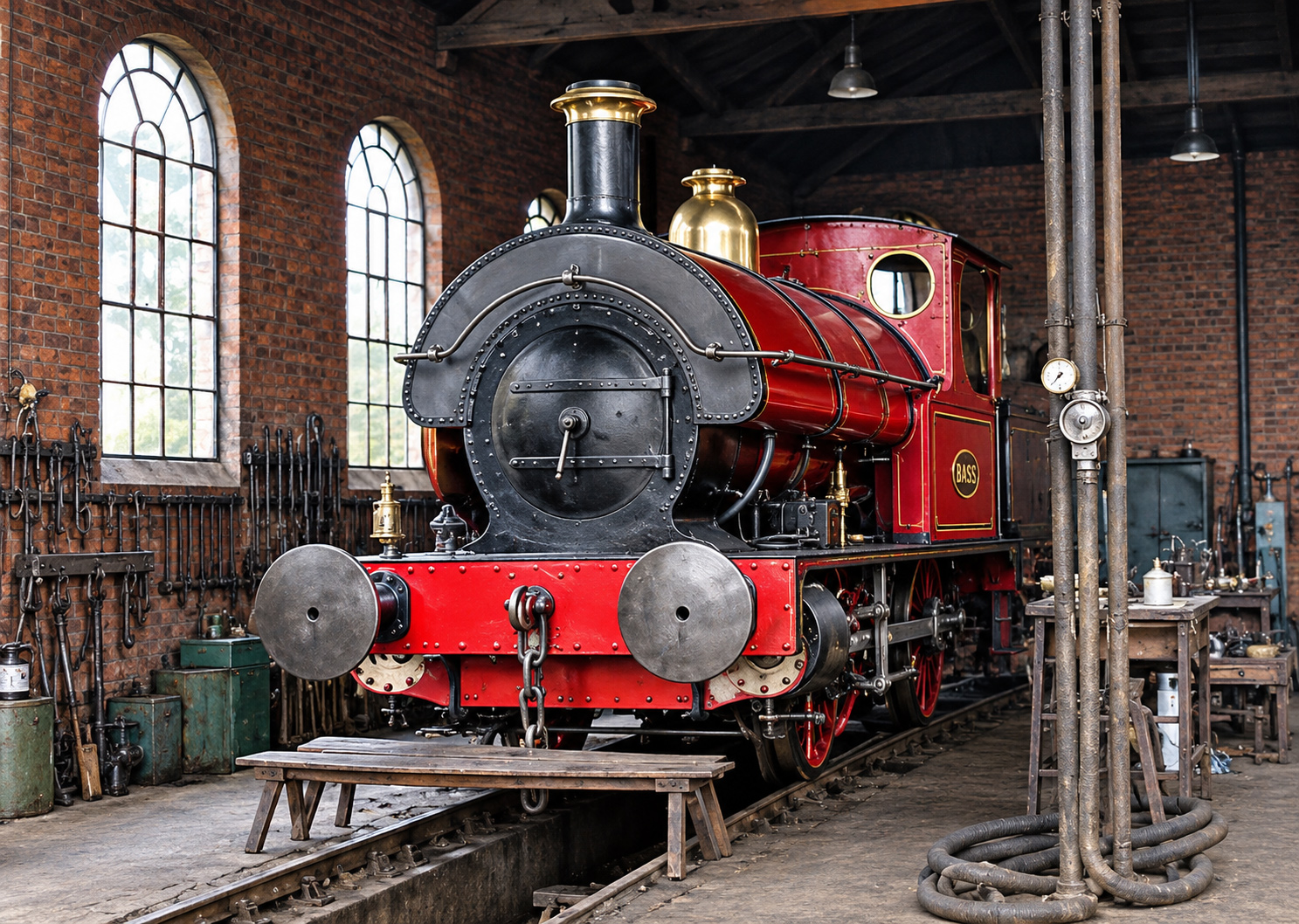
Bass locomotive No. 9 was lucky enough to be lovingly restored to proudly stand on display as part of the Bass Museum (later Nation Brewery Centre). The museum was finally closed in October 2022 due to profit and stock dividends being far more important the heritage; an act that would have made Arthur Bass turn in his grave.
The steam locomotives were eventually replaced with diesel powered ones. The first of these were jointly designed by Bass and Baguley engineers: a Baguley 0-4-0 diesel-mechanical shunting locomotive using a Gardner 4L3 diesel engine that could produce a staggering 85 hp (!)
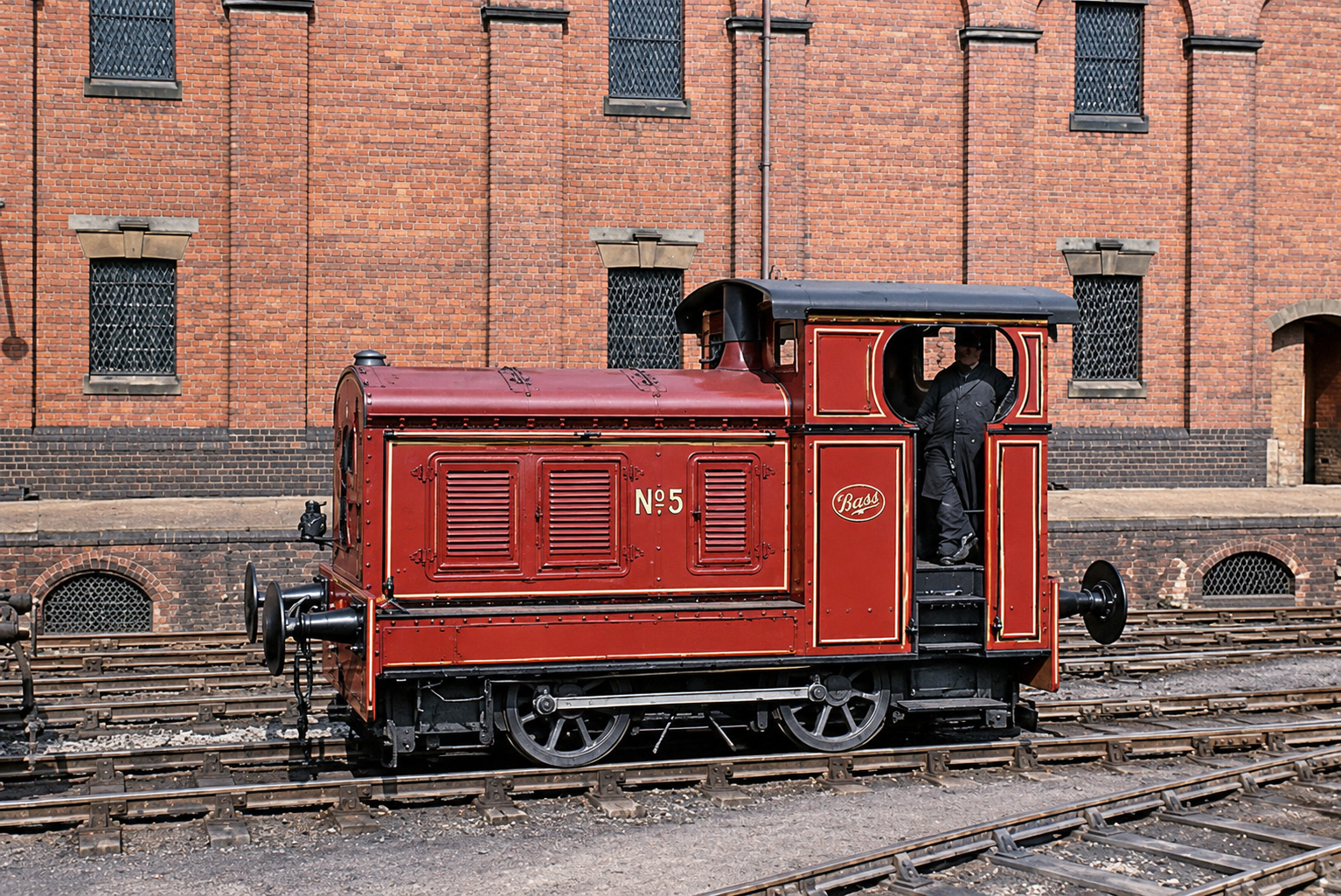
Bass No. 5 was one of the brewery’s first diesel shunter. It was mainly used around the grain department, moving pumping machinery. It had a duller livery than early steam locomotives known as turkey red. From 1964, they received a ‘Worthington’ blue livery with red lining.
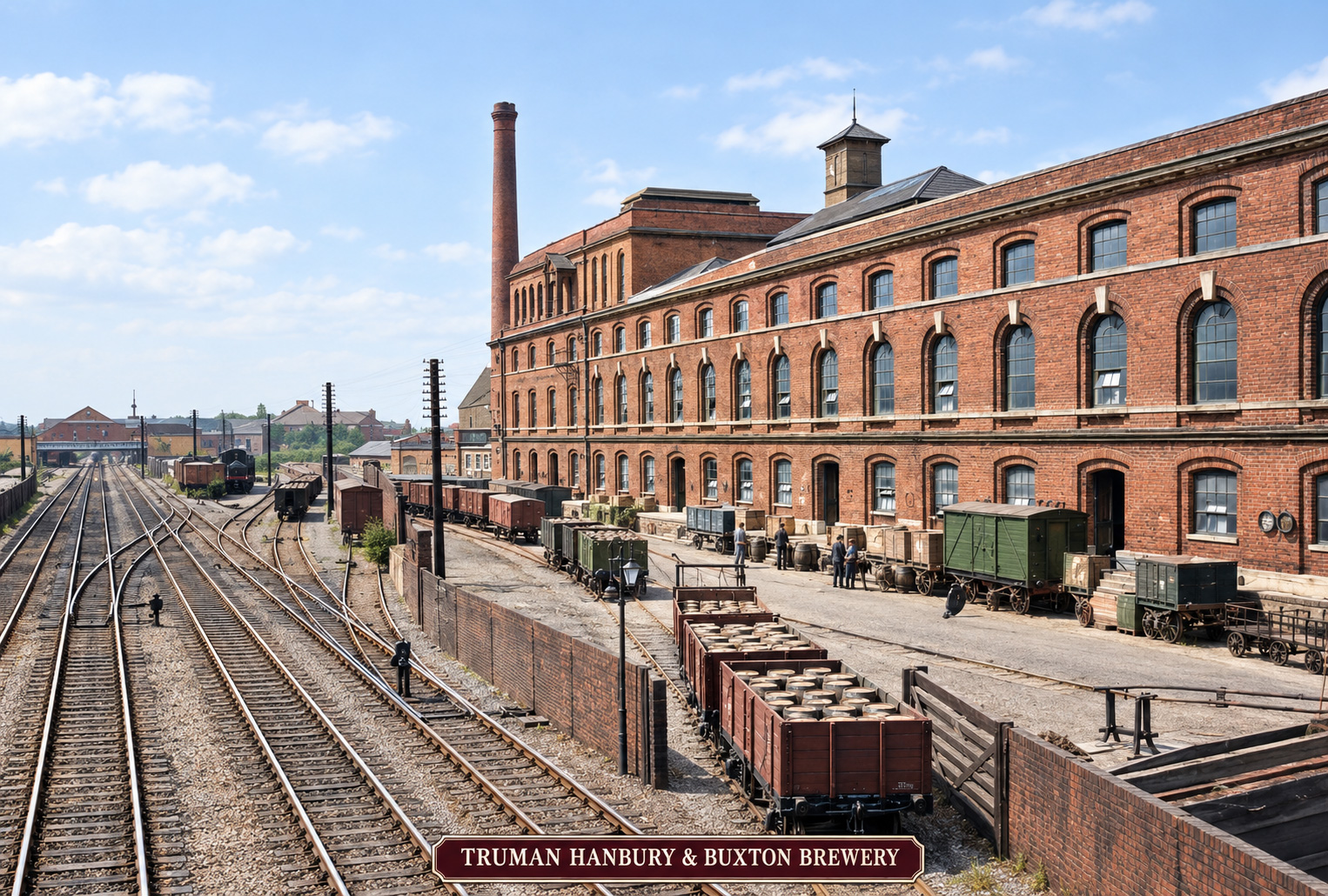
TRUMAN, HANBURY & BUXTON BREWERY
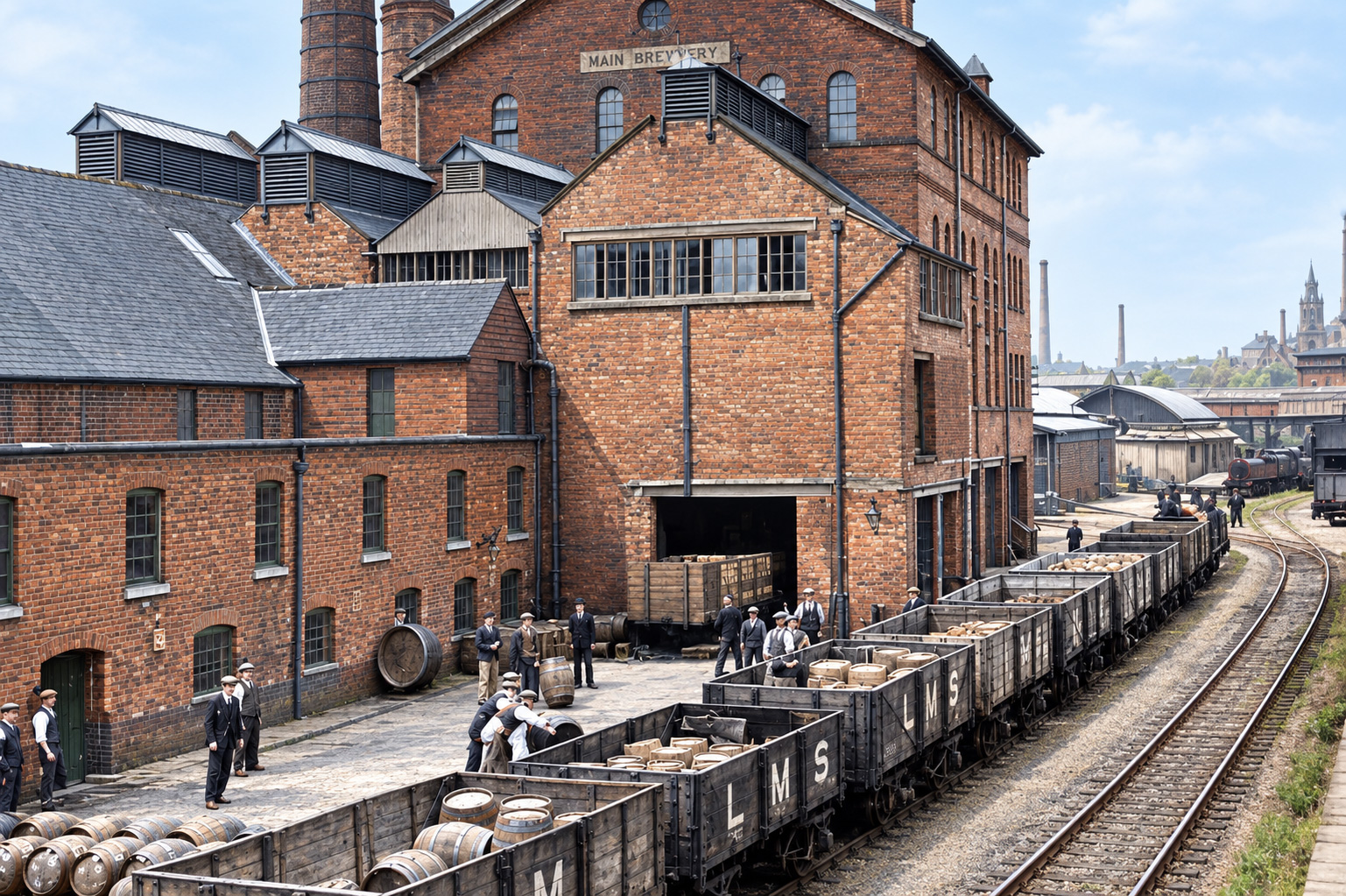
One of the lesser known breweries at Burton on Trent was Truman, Hanbury, Buxton & Co. Ltd, to the north west of Burton Station. By 1958 rail traffic was in decline and the older of the company’s two Peckett locomotives (No. 2112) was sold to J C Statons at Tutbury to work the branch from the Derby to Stoke main line, across the River Dove, to the plaster mill.
ALLSOPP & SONS
The gorgeous below locomotive was one of those used by Allsopp & Sons when ambitiously converting its IPA plant to brew lager.
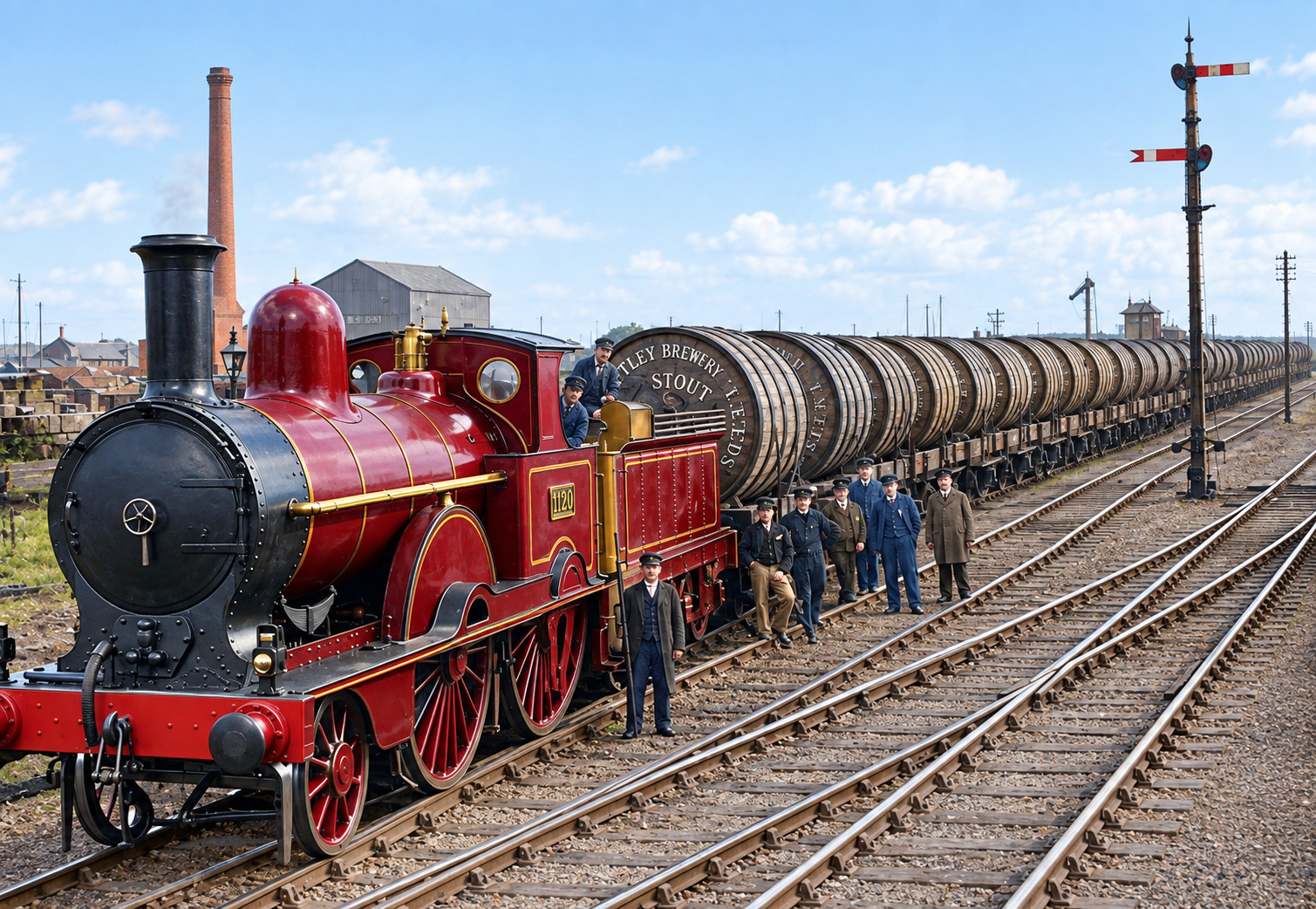 Used by Allsopp & Sons 1899
Tenderless Tank Locomotive Number 1120
Its gorgeous burgundy with gold piping livery makes it look way too nice for industrial use.
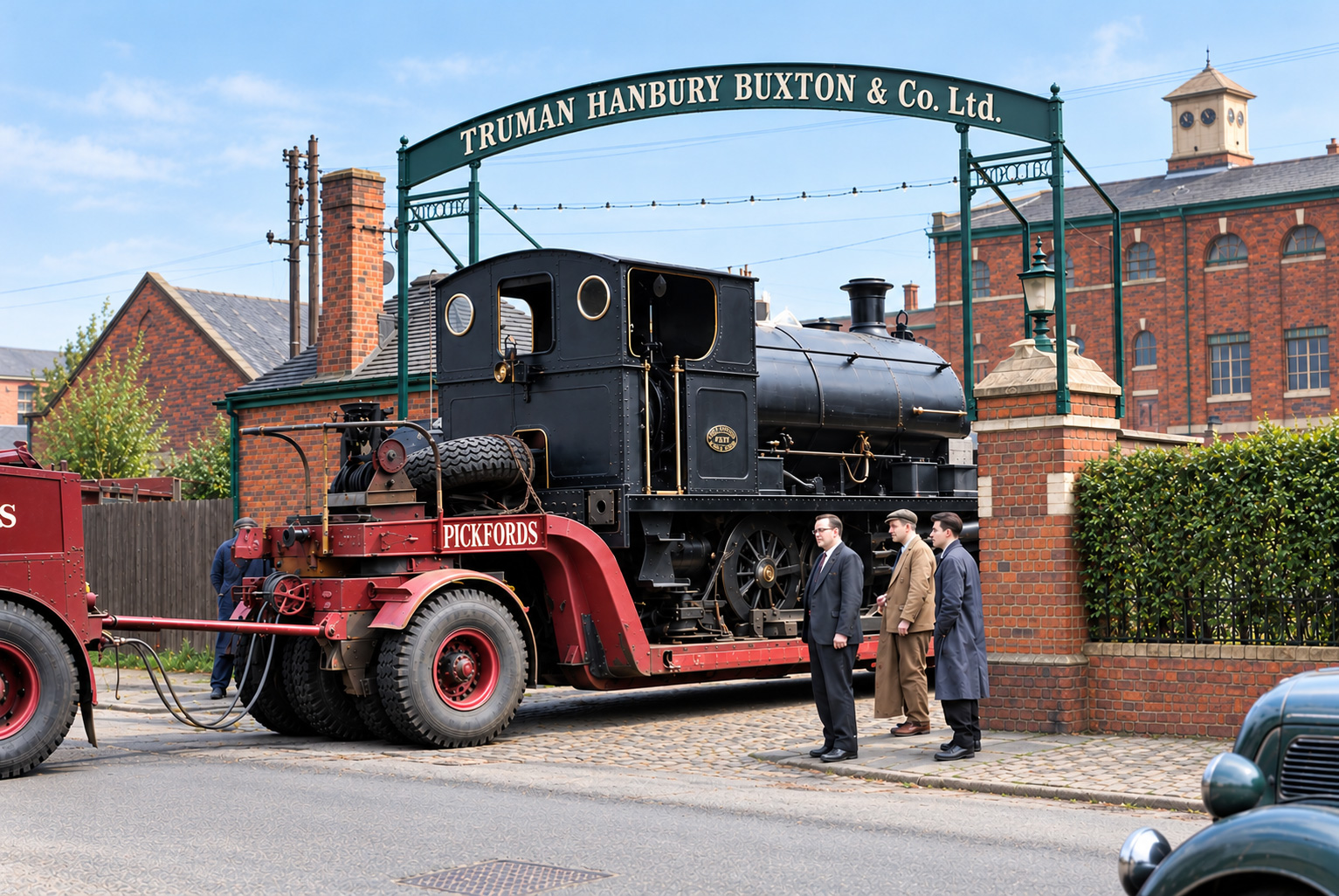
Below shows a Pickfords low loader transporting a locomotive to Truman, Hanbury, Buxton & Co.’s Black Eagle Brewery which was situated just off the Station Bridge, bordering Derby Street
RAILWAY CROSSINGS
As dreaded by oppositions to the town’s internal railway, it become more infamous than famous with vehicle drivers and pedestrians alike by the time it had reached its peak of 32 railway crossings. It was joked that there was never a major robbery in Burton because no-one would ever be able to escape.
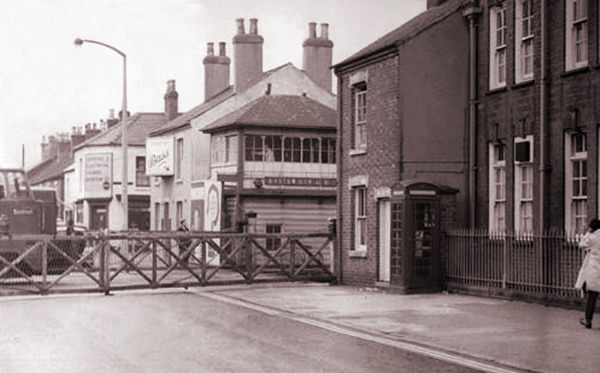
The crossing in New Street with Burton General Hospital in the foreground. An aged Bass diesel shunter built by local company Baguley can be seen trundling across.
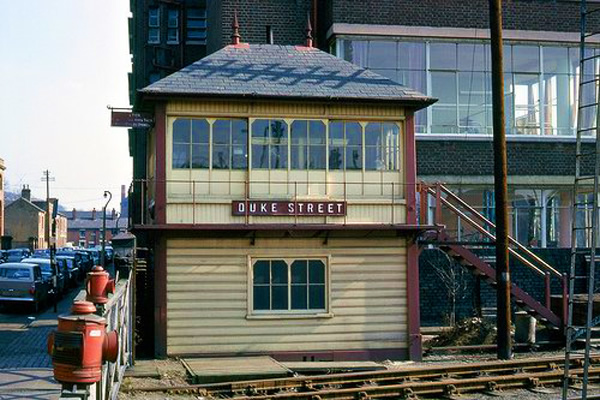
A later photo from a little further down from the New Street Crossing above, this time in Duke Street with the ‘new’ wing of the Burton General Hospital behind.
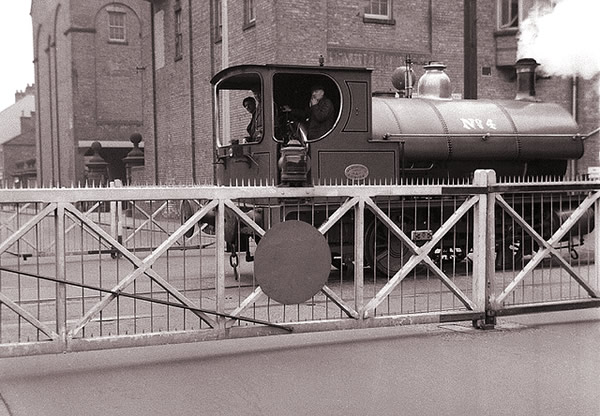
A view of the Station Street crossing in action.
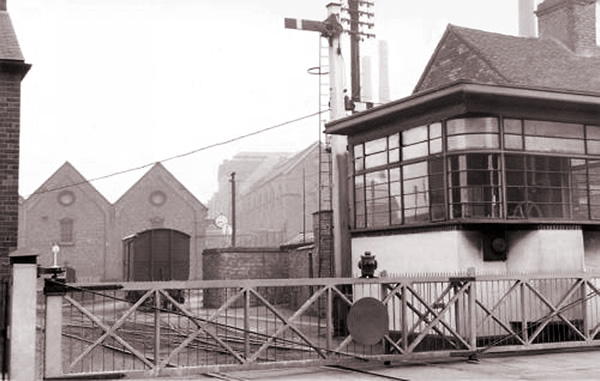
A view of the opposite side of the road reveals one of the more ‘modern’ style of control box.
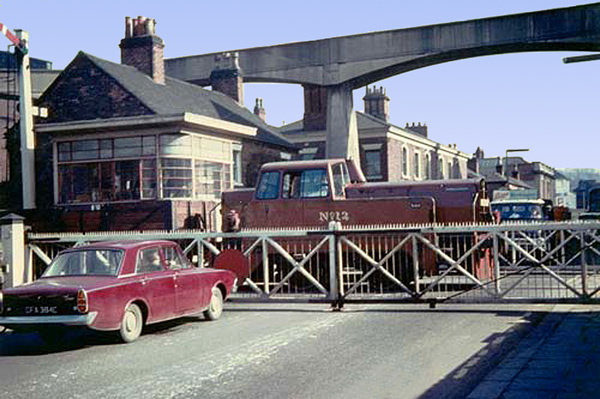
A later view of the same Station Street crossing with a 1965 Ford Corsair waiting patiently for a Bass diesel shunter to cross.
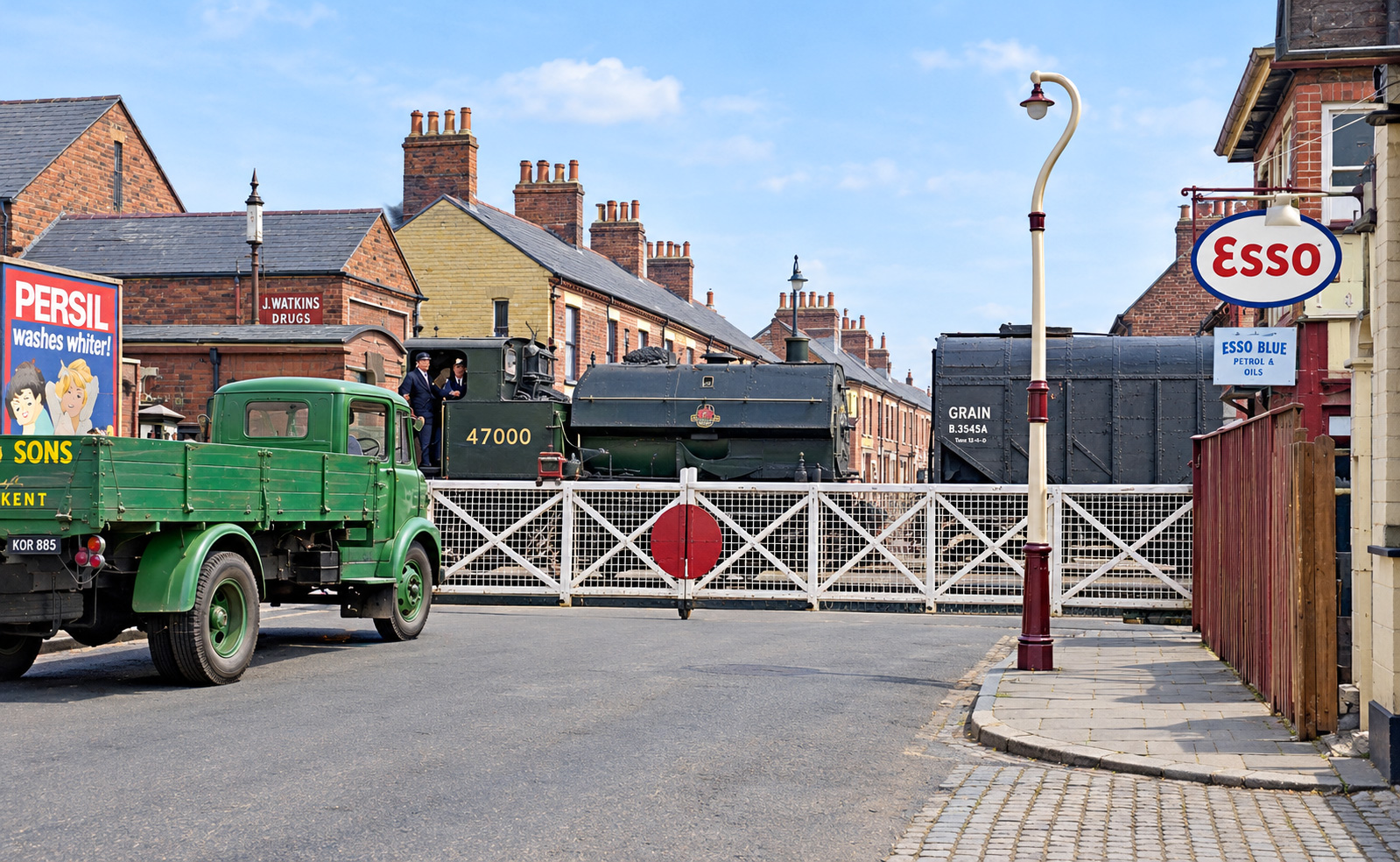
A view of Uxbridge Street crossing. I haven’t yet been able to identify the locomotive.
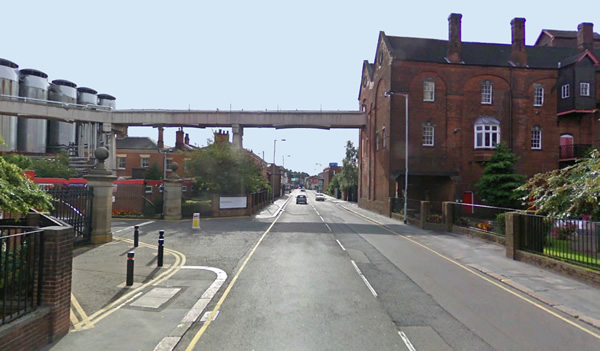
The present day site of the Station Street crossing still has lots of features that can be picked out from the photos above but even still, it is difficult to image trains running back and forth across the road all day.
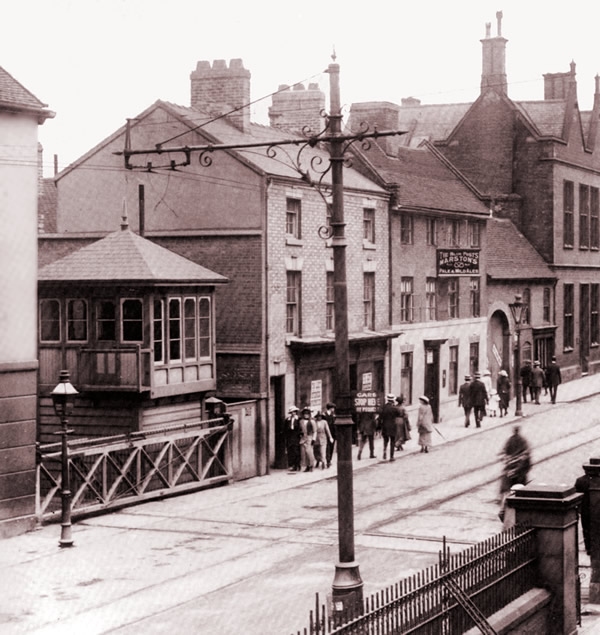
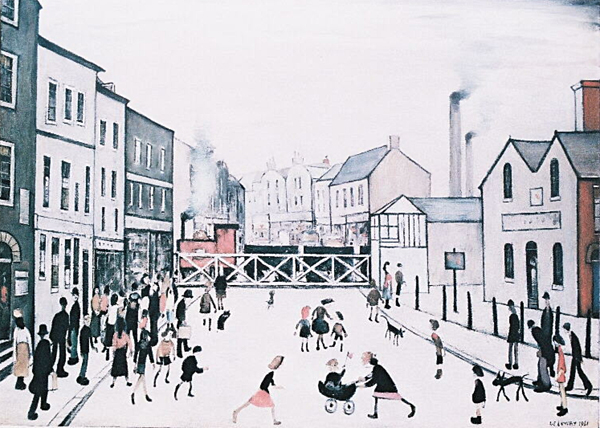
The crossing next to the Blue Posts in High Street was some time later immortalised by being featured in an L.S. Lowry painting, ‘The Crossing’.