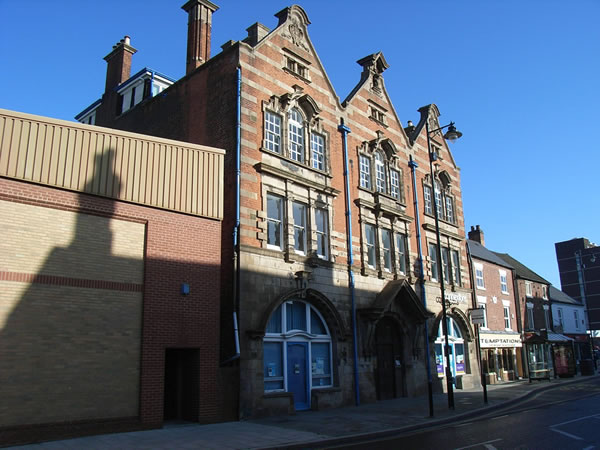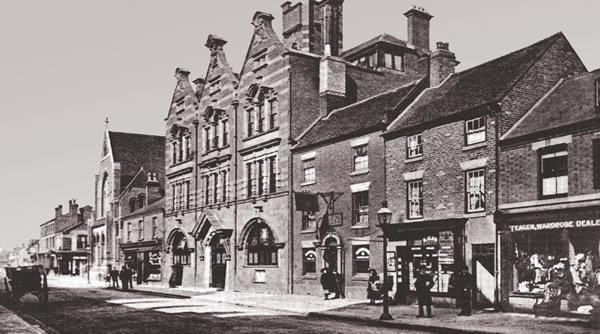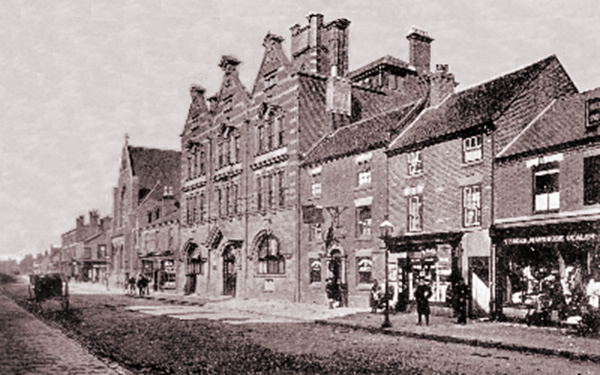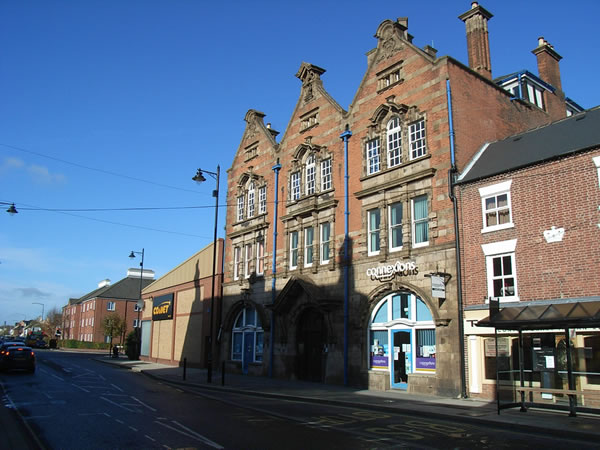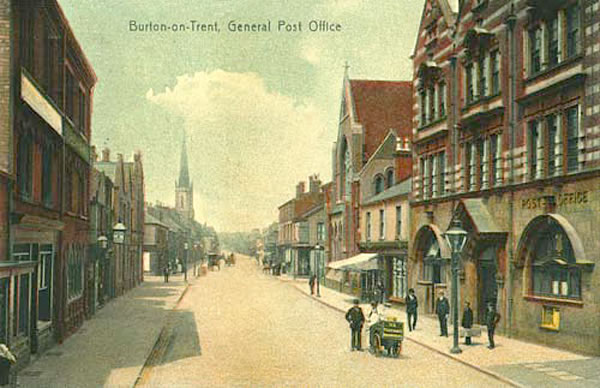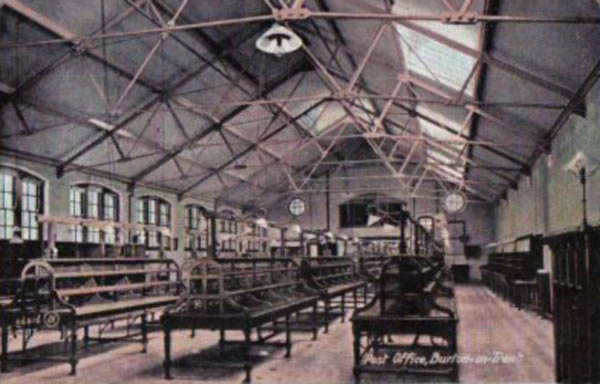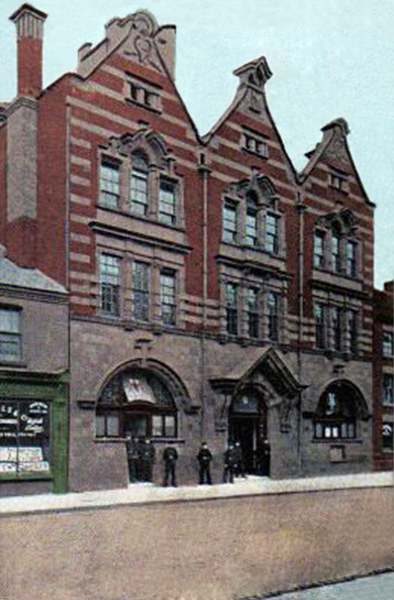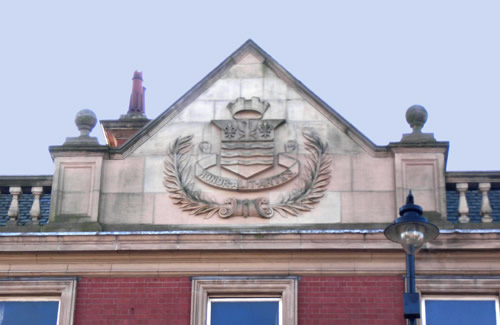
Burton General Post Office

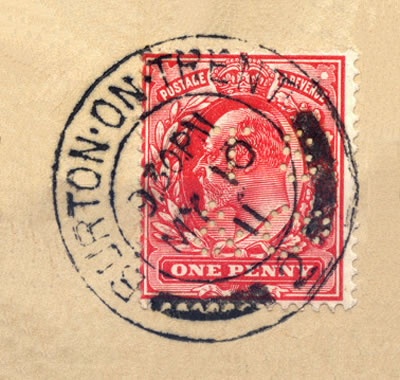
The first recorded Burton postmark was in 1722 although the nearest sorting office was in Lichfield. Burton would not get its own until Post Office for well over another hundred years!

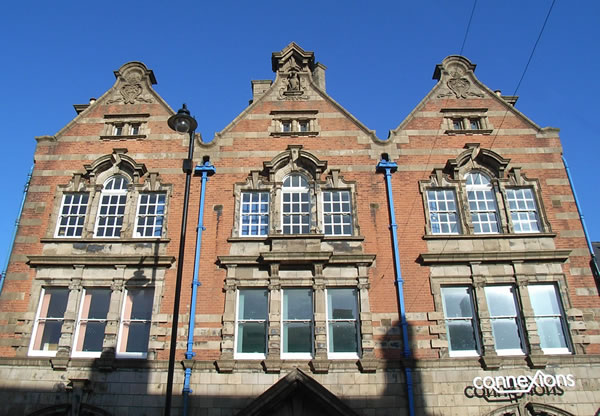
The first public telephone service available in Burton was 1895 when the National Telephone Company speculatively rented a shop in New Street. The National Telephone Company was eventually absorbed by the GPO and the combined exchange finally moved into new premises in New Street in 1905, built by R.Kershaw Limited which, just two years earlier, had built the Fire Station across the road.

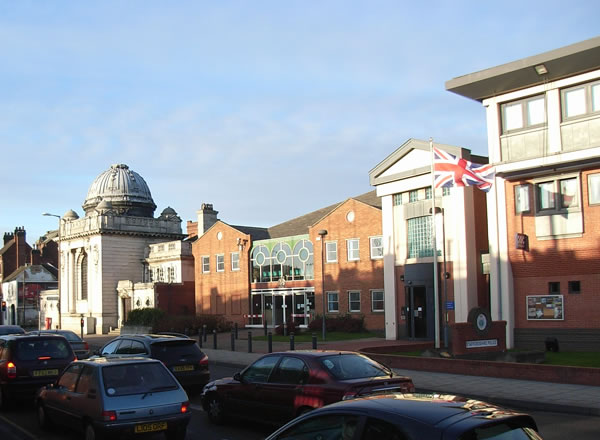
The building thankfully still survives but has struggled to find modern usage.

Select page to view:


Postal Service History

The first recorded Burton postmark was 8th October 1722. It arrived at its destination in London two days later. The postage cost, based on mileage, was sixpence (6d) which the recipient had to pay on delivery.

The postmark appeared as BURTON REF 1, which continued to be used until 1768.

Up until 1765, Burton mail from London only travelled as far as Lichfield where it had to be sorted.

In 1765, a number of Staffordshire Members of Parliament, including the MP for Burton, presented a petition to the General Post Office in London complaining both about the service and the high charges added by Burton postmaster, William Stratham. The London to Lichfield postal charge was 4d, but Mr Stratham applied a 2d charge from Lichfield to Burton which was thought of as very unreasonable. It was customary at the time to reply the same day and a further 1d was charged for the return journey. This meant that Burtonians were paying 3d more for the same service available in Lichfield or Derby. In 1765 therefore, the Post Office conceded and introduced a new sorted bag for Burton, avoiding the excess charge. The new bag however, still had to be collected and returned to Lichfield although postmaster Stratham was allowed an extra £60 a year to provide a man and two horses for both Lichfield and Derby.

Horse delivery continued until the Mail Coach System was introduced in 1796 when Burton at last enjoyed its own direct mail service. The route ran through Lichfield-Burton-Derby-Nottingham-Newark; Newark provided the link to the Great North Road which ran up to Edinburgh. The coaches ran to a tight schedule and postmasters at each office signed for each collection and despatch, recording the time.

The earliest recorded local collection service within Burton was 1816. It did not however, prove to be viable and was fairly short-lived.

The post office in 1818 was at the George Inn in High Street. In 1834 it moved to the Three Queens Inn in Bridge Street but was moved back to High Street in 1841. It still stood next to the George in the later 1850s.

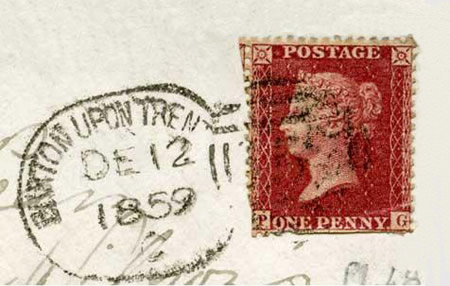
Above shows an 1859 Buron upon Trent postmark and a One Penny stamp of the time. With several collections a day, this was probably being sent to someone else within the town to be read later the same day.

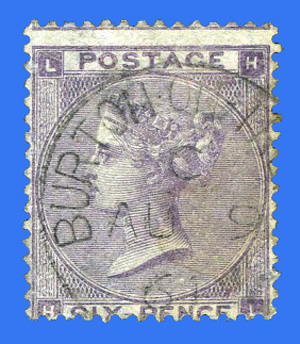
The above stamp, with a Burton postmark dated 9th August 1861, is a Six Penny ‘Lilac’. For half a shilling, this would almost certainly be for a package rather than a letter.

In 1874 the main post office at 162 High Street had Mr Gibson Bowie as Postmaster, William Stone as chief clerk, nine clerks, two stampers, one porter, eight letter carriers and nine rural messangers on the staff. By this time, aside from the main post office, there were ten ‘receiving houses’. These were situated at Newton Road (bottom of Bearwood Hill), Bridge Street, Horninglow Street, Derby Turn, Victoria Cresent, Station Street, Moor Street, Uxbridge Street, Orchard Street and Branston Road.

In 1877 the office was moved to a new building on the site of Parker’s Almshouses on the east side of High Street which was later to become the Constitutional Club.

In 1905, it moved again to new premises in New Street. These were built by R.Kershaw Limited which, just two years earlier, had built the Fire Station across the road. At the time, there were 12 sub-postoffices in Burton.

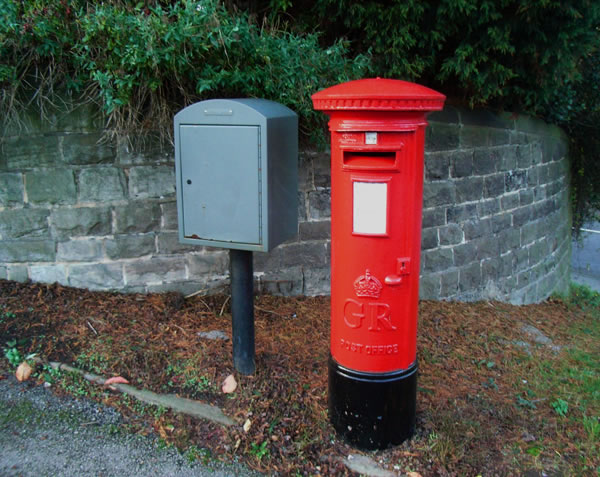
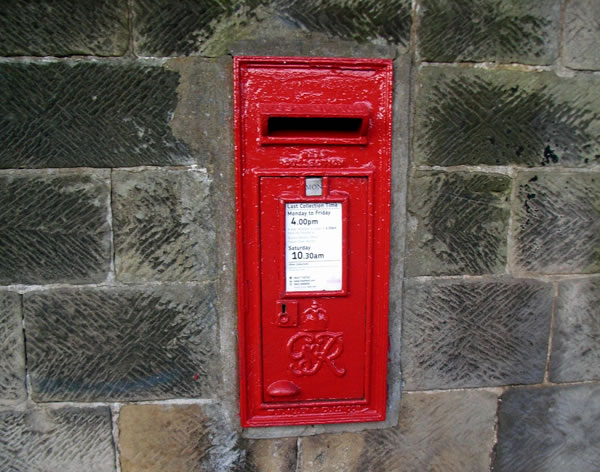
By 1912, there were 19 sub-postoffices distributed around the town but also, a combination of 38 wall and pillar boxes strategically distributed around the town. A few original ones survive characterised by having the Edward VII insignia on the front. Though most of the original sites are still in use, most boxes have been replaced. It was not uncommon for someone to call for the doctor by sending a postcard! Before you scoff however, there were eight collections every day except Sunday, when there were only two. Letters posted in the morning would often reach their local destination before lunchtime and very often, replies were received on the same day. No local post would of course, ever leave Burton unlike todays logistics.


Messenger boys were also available for delivering urgent messages or parcels for which they would receive three farthings.

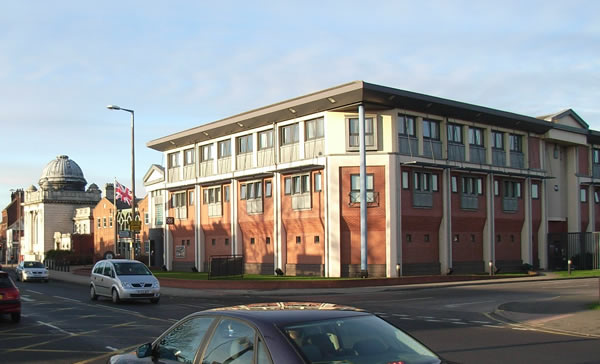
The building can still be seen little changed over 100 years later, alongside some delighful modern architecture (?!).

The General Post Office has been the subject of a number of early Burton postcards.


Telephone Service History

There was at the time of course, a much stronger relationship between the postal and telephone services. The first public telephone service available in Burton was 1895 when the National Telephone Company rented a shop in New Street. In 1898, the General Post Office opened an exchange for trunk calls, enabling calls to other towns, when it was still in High Street. The first local telephonist, Miss Clifton, transfered to the Post Office at this time but there was not enough work to have her full-time employed for telephones alone so she also worked as telegraph operator – there were after all, only around 150 telephones in Burton! The annual subscription for a telephone service was £3 3s and calls cost 1d each making them too expensive for the vast majority.

The first telephone system installed in Burton aside from the telephone exchange was incidentally, the Fire Station whilst still in Union Street. Although it is not enormously useful to have the only telephone at least their telephone number was easy to remember; it was ‘1’.

The service was moved to the New Street with the GPO. A few years later, the National Telephone Company was absorbed by the GPO and a combined exchange was opened in New Street across the road from the main post office building.

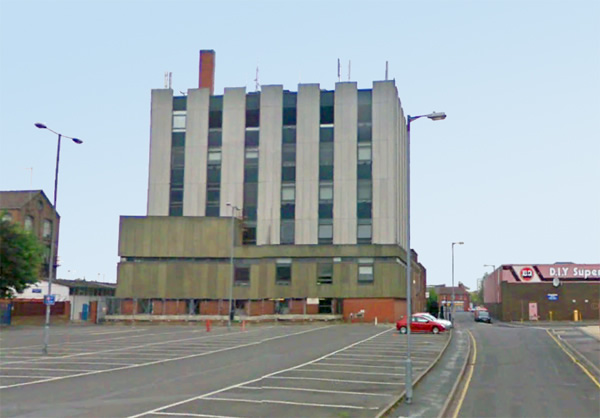
In time, the telephone exchange outgrew the New Street premises and a new large exchange was established in Fleet Street.


Burton Police Force

Select page to view:


Police Force – General History

In 1629, the county Justice of the Peace, who was appointed by means of a commisssion to ‘keep the peace’, appointed Constables. Constables in turn appointed common warders to apprehend rogues and vagabonds. The warders appear though, to have been over zealous and were asked later the same year to show greater respect to poor people. Beggars from outside the parish remained a problem in the 18th century and keeping them out of town was one of the duties of the crier in 1711.

There was a watch by 1646 and a watch house by 1678. Watch duty was a liability imposed on inhabitants, and in 1711 it was supervised by the crier. By 1723 the bellman was paid 10s. a year out of town lands money, and that was still his salary as night watchman in 1788. A night watch was established by subscription in 1793.

Burton vestry engaged a man in 1737 to drive out vagrants. His services were discontinued in 1747, most likely for financial reasons, but he was re-appointed in 1749, presumably because they discovered in his absence that he fulfilled a useful role.

A ‘bang beggar’ was employed by the Burton township in 1826, and his duties in 1828 were to remove street beggars, examine lodging houses, and assist the constables in apprehending prostitutes.

A treble bell was rung at St. Modwen’s church in the market place for 15 minutes at 7:00 am every morning in the earlier 1800s; this is thought to have been a curfew bell. When largely discontinued in 1867 it was still being rung at 5.45 am and 7.45 pm every evening between Michaelmas (Christmas Day) and Lady Day; Lady Day being New Year’s day but up until 1752 when the Julian Calendar was replaced by the Gregorian Calendar, this was actually January 14th.

From at least 1875 the feoffees of the town lands paid for the ringing of the morning bell, and continued to do so until 1916. The evening bell was again being rung on some weekdays between Michaelmas and Lady Day until the late 1880s.

In 1728 the vestry agreed to defray the costs of prosecuting felons by levying inhabitants in Burton townships in what was one of the earliest agreements of its type in England. The order, however, was revoked in 1730. Burton had a voluntary association for the prosecution of felons in 1802. From 1807 the vestry paid its clerk to assist the annually elected parochial constable.

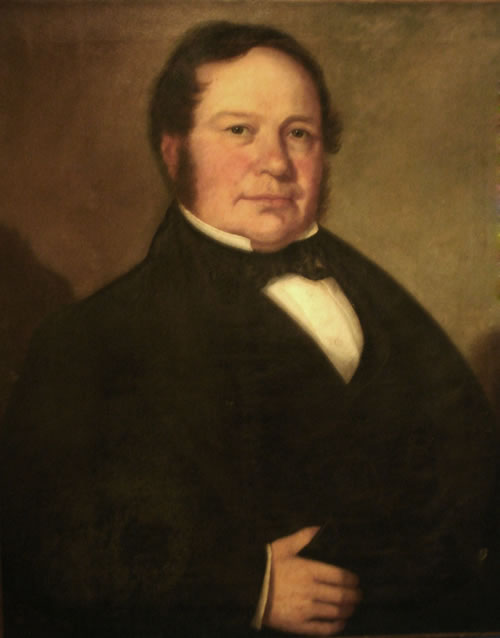
In 1819 it appointed its first salaried police officer, Richard ‘Dick’ Roe, who by all accounts, was a “tall powerful fellow” – an impression not easy to deduce from the most common portrait of him shown here.

His starting salary of 30 guineas a year; he also received £5 from the parochial constables out of their own pockets. The salary was increased to £70 in 1826, when the post was redefined as constable and police officer. This was an impressive salary at the time.

Dick Roe also a publican and used to keep the Wheatsheaf Inn, at the corner of Station Street and High Street. Tales are told of a large iron ring fastened into the fireplace to which he used to forcibly chain prisoners after they had been apprehended by him until they could be legally attended. Some concern was expressed however in 1836 about Dick Roe’s conflict of interest in his two roles. As a result, he was asked to stop selling alcohol at local race meetings and other public events and to concentrate on his police duties. He was described as ‘highly efficient’, however, in 1837 when the vestry applied to the feoffees of the town lands for financial help to pay his salary after the Poor Law Amendment Act of 1834 prevented him from being paid out of the ‘poor rate’.

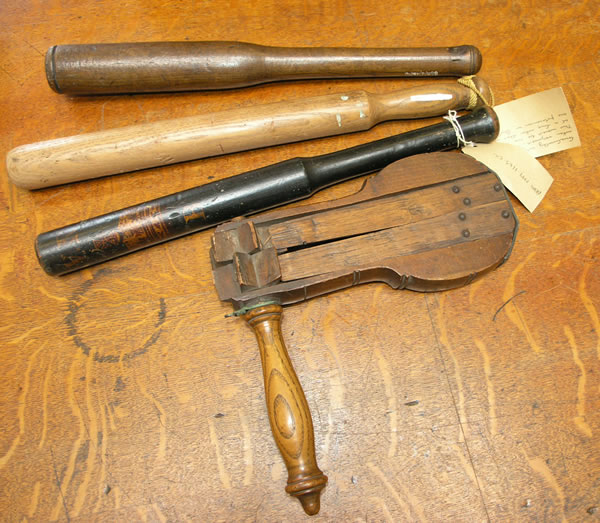
Some policing equipment of the time can be seen below. The images are courtesy of Arthur Roe, a local historian and actual descendent of Richard Roe. They show handcuffs of the time together with a variety of Burton police truncheons and a police rattle, a predecessor of the police whistle, used to call for help from other police officers. They were once on display in Burton Museum before it was closed
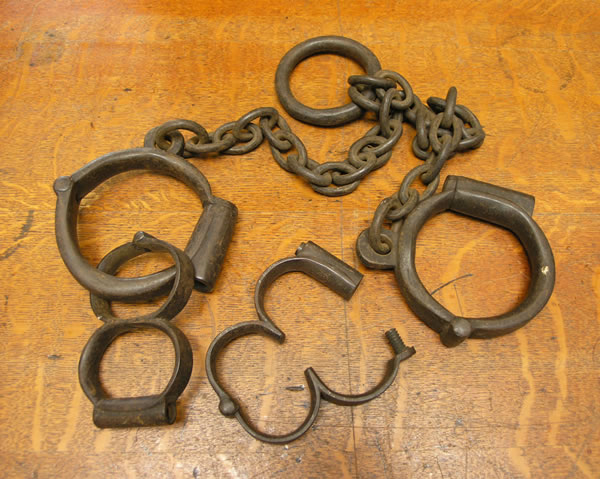
As one of Burton’s celebrated characters of the time, when he died in 1853, he was buried in the old churchyard, and a monument was erected to his memory by public subscription.

What was classed as the manorial gaol was situated below the Royal Oak public house in the market place. A few othe Burton pubs had 1d (one penny) a night cells that they made available.
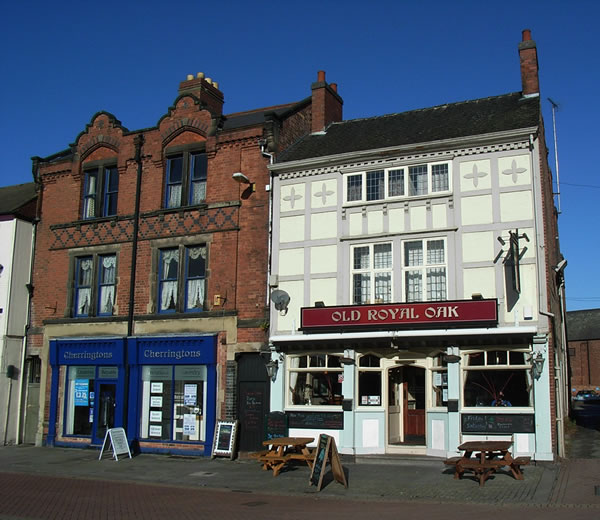
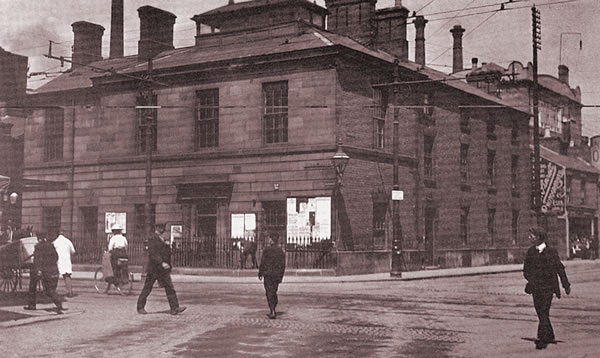
After the closure of the manorial gaol in the earlier 1830s, there was no secure place of detention until a police station with cells was built at the corner of Station Street and Guild Street. The Police Station was built by local builder, Thomas Lowe in 1848. It had already been implicated that all towns would have to provide a police station. This finally came into force in 1856.
The aformentioned Richard Roe was promoted from Town Constable to inspector and was provided with police constables.
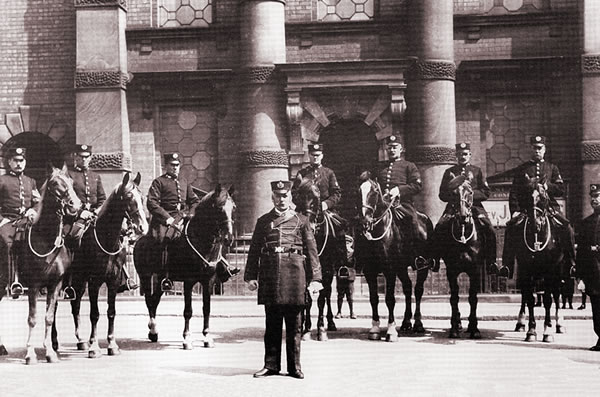
Before motorised transport became available, Burton Police used to patrol and attend incidents on horseback. By 1896, the Burton police force had grown to a Superintendent, James Gilbride, three sergeants and twenty-four constables.

The force can be seen above on parade in George Street at the rear of the Police Station around 1898. At the front is the recently appointed Police Superintendent W. Moss.
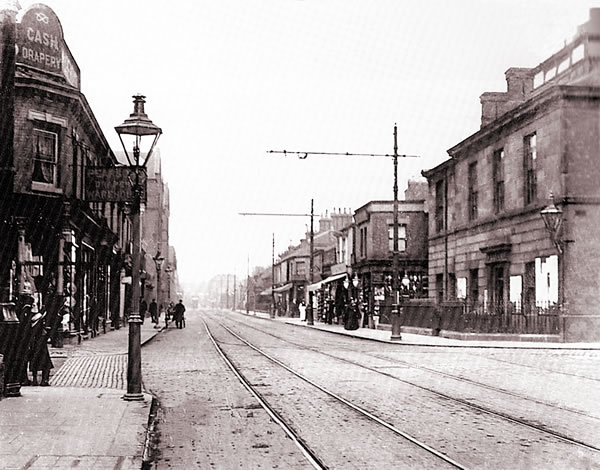
The Station Street, Guild Street, Union Street junction is just about recognisable here with tramway now running past the police station. The present day George Street entrance is just before the shops on the right.
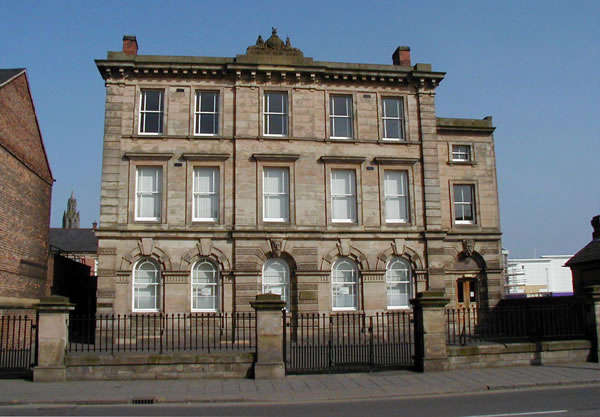
The Staffordshire county force continued to provide officers for Burton after the town became a county borough in 1901. A new police station with cells was opened behind the new magistrates’ court in Horninglow Street in 1910.
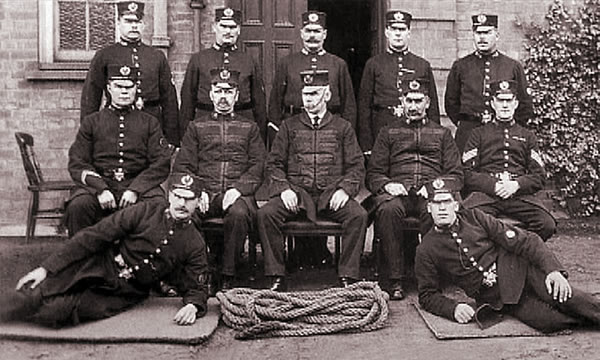
Few photos exist of the Burton Police force but the above one taken in 1920 gives a good flavour. Don’t worry, the rope is nothing to do with the penal system at the time; the picture is in fact, the Burton Police Force Tug-a-War Team. At the time, the was an annual battle between different factions of the town and the police team was always one of the most formidable.
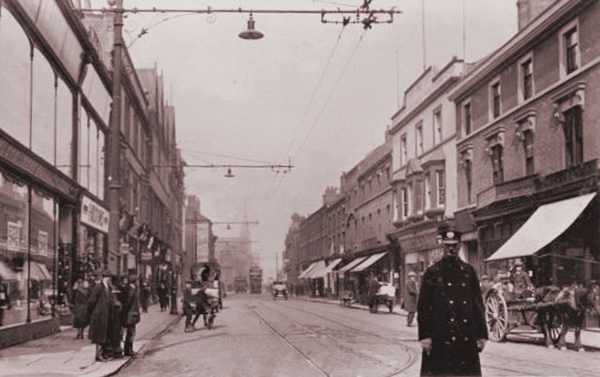
And another elusive shot of a Buron policeman on duty in a still very recognisable 1927 Station Street.

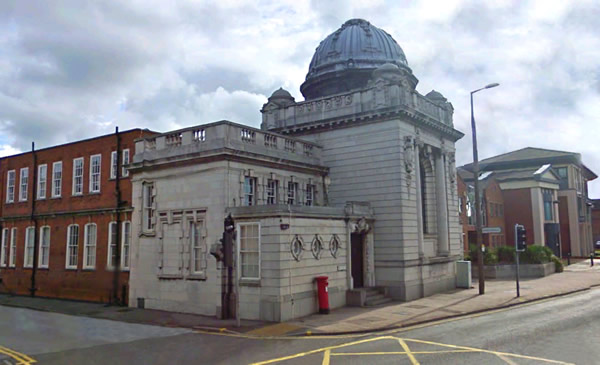
In the late twentieth century, the 1910 police station and magistrates court, having become an annex of a new modern complex but remain very much in use.



Penal System

FORMS OF PUNISHMENT

Gallows and Instruments of Punishment
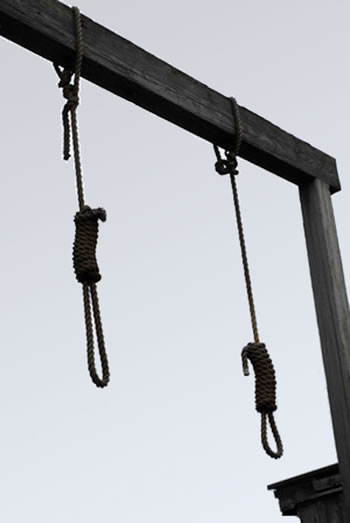
There is recorded to have been a gallows on Burton meadow dating back to 1012 – before the Norman invasion. In 1293 the Abbot successfully claimed the right to use a gallows. There was a gallows on the parish boundary with Tatenhill by 1395. The bridge which carried the road south from Branston village over the boundary brook was for this reason, known as ‘Gallow Bridge’. There may also have been a gallows in the Middle Ages on the boundary between Burton Extra and Horninglow. In 1757 land off Derby Road was known as ‘Gallows Flat’ which led to speculation that this was the site of a gallows.

Gallows also existed at the present day sites of the Derby Turn, Horninglow Road, and at the bottom of Scalpcliffe Road in Stapenhill (now Brizlincote). The latter is thought to be the site of the last hanging to take place in Burton.

Stocks mentioned in 1280 probably stood in the market place. The stocks in 1608 were inside the market hall, but later recordings in 1619 and 1708 indicate that they were outside next to the market cross. Stocks were also positioned at Bargates at the Horninglow Road end of High Street. The earliest record of the use of these was in 1610. There were still two pairs of stocks in 1826 but probably only one by 1839, when a pair stood on the Hay near the south-west end of Burton bridge.

Burton apparently had a pillory in the late 1570s. This was a wooden framework with a hole for the head and holes either side for the wrists holding the male or female offender so that they could be publically ridiculed. It was only erected when needed. Its last recorded use was in 1739, but I am sure there are still those that would be in favour of its re-introduction!

There is a Burton cuckstool mentioned in the 1590s; this was a form ‘ducking stool’ often used as a punishment for a nagging wife; I have not yet managed to establish its whereabouts. There was also a whipping post in the early 1610s to which offenders were strapped to receive lashes on the back. A new cuckstool was made in 1711, when there was still a whipping post in operation.

A wooden cage was made in 1622 and stood in the market place serving a similar role to pillory stocks where prisoners could be publically displayed where they could be taunted and ridiculed. Its last recorded mentioned was in 1720, when a payment was made for its removal, suggesting that it was in use until around this time.

Jail and House of Correction
There seems to have been a secure place of detention in Burton by the mid 1270s. It is recorded that a man who had committed murder in Alrewas was brought to Burton for detainment. In the early 1300s, there was a secure lock-up in Burton market place called ‘Helle’, no guesses for guessing what its nickname was. Although occupied by a townsman, it is likely that offenders were retained on the Abbot’s orders.

There was a prison in the mid 1550s, and repairs to the town gaol were made in 1641 and again in the late 1680s. What was called the Jail House or Prison House in 1762 stood at the south east corner of the market place. Together with the adjoining bowling green. It was let that year as an inn but the landlord had to agreed to guard prisoners in a cell and would be accountable to the lord of the manor if a prisoner escaped. Although still used as gaol in 1792, the building was let in 1795 to a brewer, John Sherratt, who used it as an inn, which later became known as the Bowling Green. It was demolished in or shortly before 1834, when a house called the Priory was built on the bowling green itself.

There is a ‘black hole’ lock-up mentioned in 1718. This is thought to have been on the same site as the 14th-century ‘Helle’. It was intended for temporary detention; a boy is known to have been detained there for a period of seven days in 1736. It was still in use in 1789.

Until 1729 the nearest house of correction to Burton was that at Walsall. One for Burton parish licensed that year was opened in part of the workhouse in Anderstaff Lane (now Wetmore Road). The Burton house of correction is last recorded in 1738, and may have been closed soon afterwards in order to avoid the implications of the 1740 Vagrancy Act.

COMMISSION OF THE PEACE
In the late 1840s petty sessions were held weekly in the Angel Inn and by 1851 in the combined county court house and police station at the corner of Station Street and Guild Street.

Borough magistrates were first empanelled in 1887, meeting weekly in the same place as the petty sessions’ justices but on a different day.

Sessions were transferred in 1910 to a newly built impressive magistrates’ court house in Horninglow Street. At this time, six strokes of the birch was common for such crimes as ‘stealing food’.

A separate quarter sessions for the county borough was granted by royal charter in 1912. It was abolished under the Courts Act, 1971, but Burton remained the meeting place for petty sessions. An office block for the magistrates and their clerk was added to the court house in 1991.

COURT OF RECORD AND COUNTY COURT
By 1585 a weekly court of record for the recovery of debts, called the Genters court, was held on Fridays.

Apparently still held in the earlier 18th century, the court later fell into disuse but had been re-established by 1794, when it was styled a court of requests. The upper limit of debts within its competence was 40s. in 1841, when it met every three weeks. The court apparently still met in the mid 1850s, although its function had been taken over by a county court held in Burton from 1847.

From 1848 the County Court met in a building also used as a police station at the corner of Station Street and Guild Street. The present Court Court House in Station Street, pictured below, was built in 1862.

All a long way removed from the present day magistrate’s court.


Barrel Race

Burton has a long history of barrel rolling competitions with the first one held on 5th May 1933.

This involved twelve men representing different breweries racing down the streets of Burton on Trent trying to keep a beer barrel under control.


Burton Fire Brigade

Select page to view:


Fire Brigade – Early History

There was an enforced requirement in some towns during the early 17th century for householders to have buckets or water containers next to any wells to assist with fire protection.

In 1707, the Parish Fire Act was introduced by the Government which deemed that a parish should have a fire combatting equipment conspicuously available although, in the most sophisticated cases, this was nothing more than a crude hand pump. In Burton, fire hooks and buckets were maintained out of town lands money and kept in the market place, next to the original town hall.

There is known to have been a Burton manual fire engine in 1791, when a new one was acquired by subscription. A second engine was given in the same year by Robert Peel, the owner of cotton mills at Bond End and Winshill. The engines were maintained out of a parish rate, which in 1807 paid a retaining fee of £2 to the man who worked the engine and £1 every time he was called out; he also received 3 guineas for keeping the engines in good repair.

Eight assistants were each paid £1 as a retainer and 10s. for a callout. There were also fees for four annual practice sessions. In 1835 one engine was kept in Horninglow Street opposite Holy Trinity church, and by 1844 the other was kept in the gatehouse of the former monastic precinct near the market place. A replacement engine was acquired in 1839.

By 1841 the engines were maintained jointly by Burton and Burton Extra townships, but support from the parish rate was evidently later withdrawn and in 1854 it was stated that the engines had been kept for several years by the feoffees of the town lands. The feoffees stopped payments that year and responsibility passed to the improvement commissioners. A new engine house for both engines was opened in 1855 in the former gas works in Station Street.

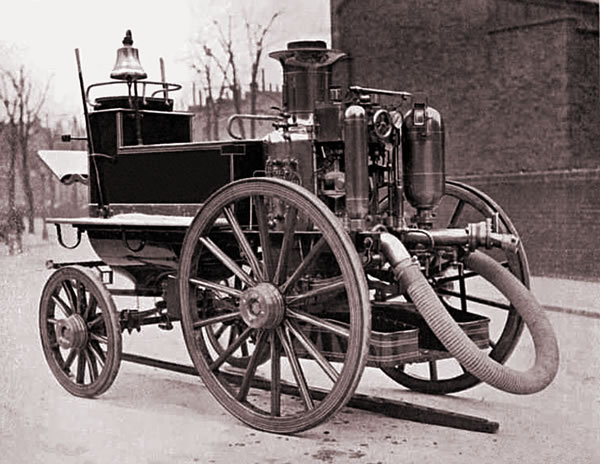
It was replaced in 1879 by one on the west side of Union Street. In 1876, while situated in Union Street, Burton Fire Brigade finally took possession of thier first Steam Fire Appliance, a Shand Mason and Company Fire Engine – although the steam was used to drive a pump not for traction; it was a horse drawn vehicle requiring two horses in harness which were borrowed in the case of a fire from local merchants!

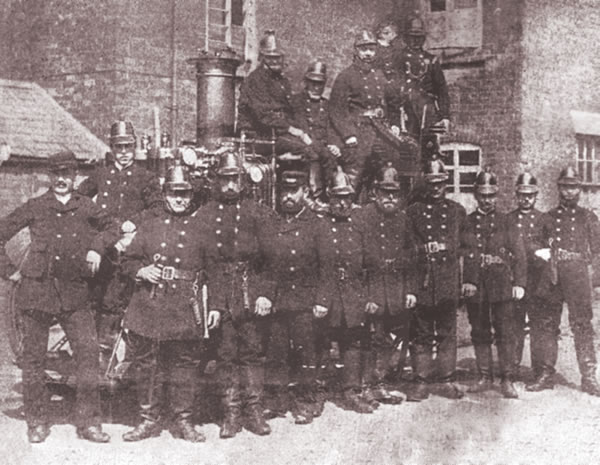
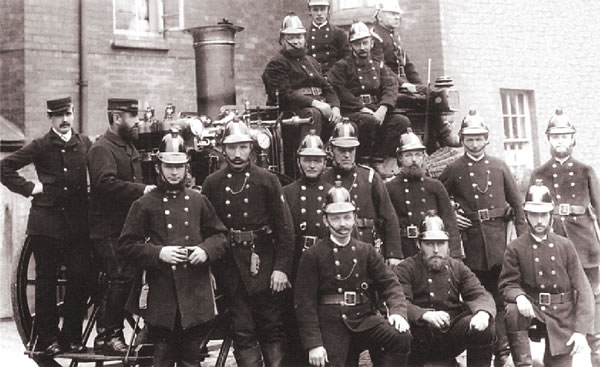
Below is one of the very few surviving pictures of the Union Street firemen, together with their steam appliance. It wouldn’t normally make it through quality control but it is just too good to omit!

Aside from being Burton’s most effective available fire-fighting appliance, it provided a convenient stage for this later group photo, with helmets polished for the occasion.

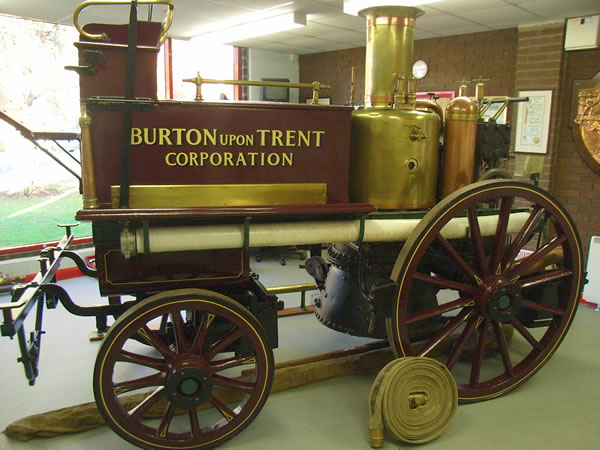
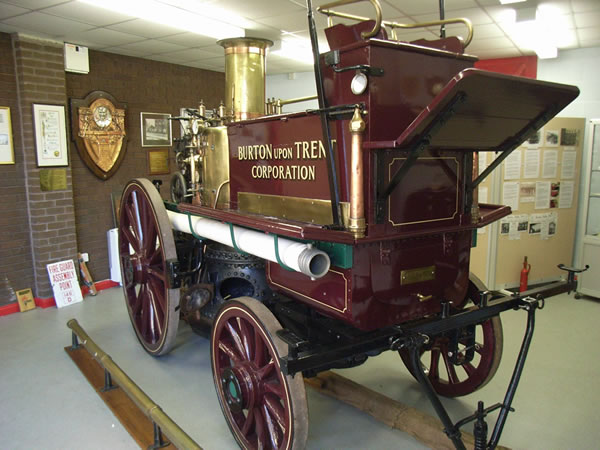
The Burton Steamer survives to this day and is still proudly displayed at the present day fire station.

Brewery Fire Brigades

In the 1850s Michael Thomas Bass established a fire brigade for his brewery. Allsopp & Co. also had one by 1904, when it was agreed with Burton corporation that neither brigade would turn out unless requested to do so by the town brigade and that they would attend a fire outside a 5 mile radius from St. Modwen’s church only if the premises involved belonged to a partner of one of the companies. The Bass fire brigade survived until 1970.

In 1884, a fire broke out at a property in Sydney Street, Horninglow. Burton Fire Brigade failed to attend. Instead, the Allsopps Brewery brigade had to attend but were late on the scene. Following this incident, the town’s authorities agreed that a number of Hose Reel Stations should be strategically placed around the town with a hand pulled hose cart which could act as a first line of defence where necessary. These were locked with a notice informing who the custodian was.

Stations were positioned as follows:

  • Outside Marston’s Brewery, Dog Lane, Horninglow (keyholder – Mr Hubbard of Dog Lane)
  • Barley Mow, Main Street, Stapenhill (keyholder – publican of Barley Mow)
  • Anglesey Arms, Church Hill Street, Winshill (keyholder – publican of Anglesey Arms)
  • End of Trent Bridge, Newton Road, Winshill (keyholder -publican of Swan Hotel)

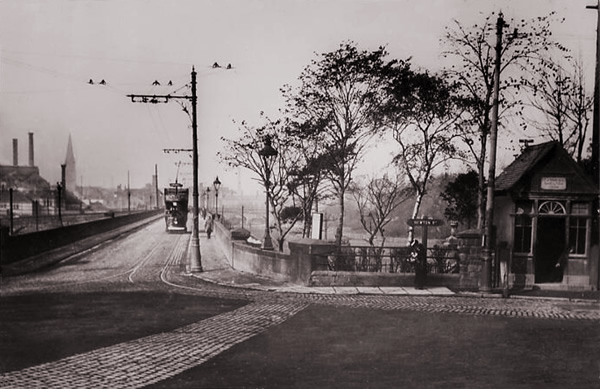
The last example can be seen in the below photo.


Fire Brigade – New Street

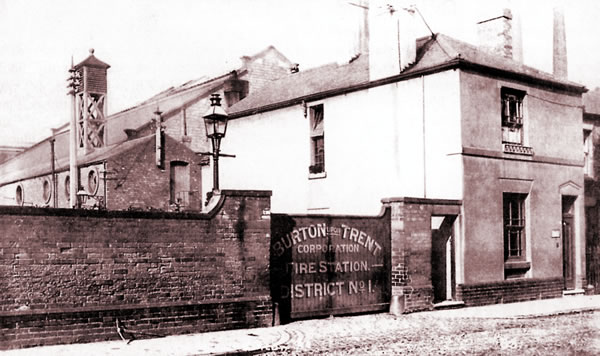
The idea of a new ‘more fitting’ Fire Station to replace the one in Union Street was first raised with the Borough Council in 1900. It was met with some enthususiasm and a number of possible land purchases were considered. The favourite proposal was for properties in New Street and Park Street, as long as a right of way could be established between the two. This done, the land was acquired and local building companies were invited to tender. Five tenders were submitted, the winning bid was submitted by R.Kershaw for £6,150.

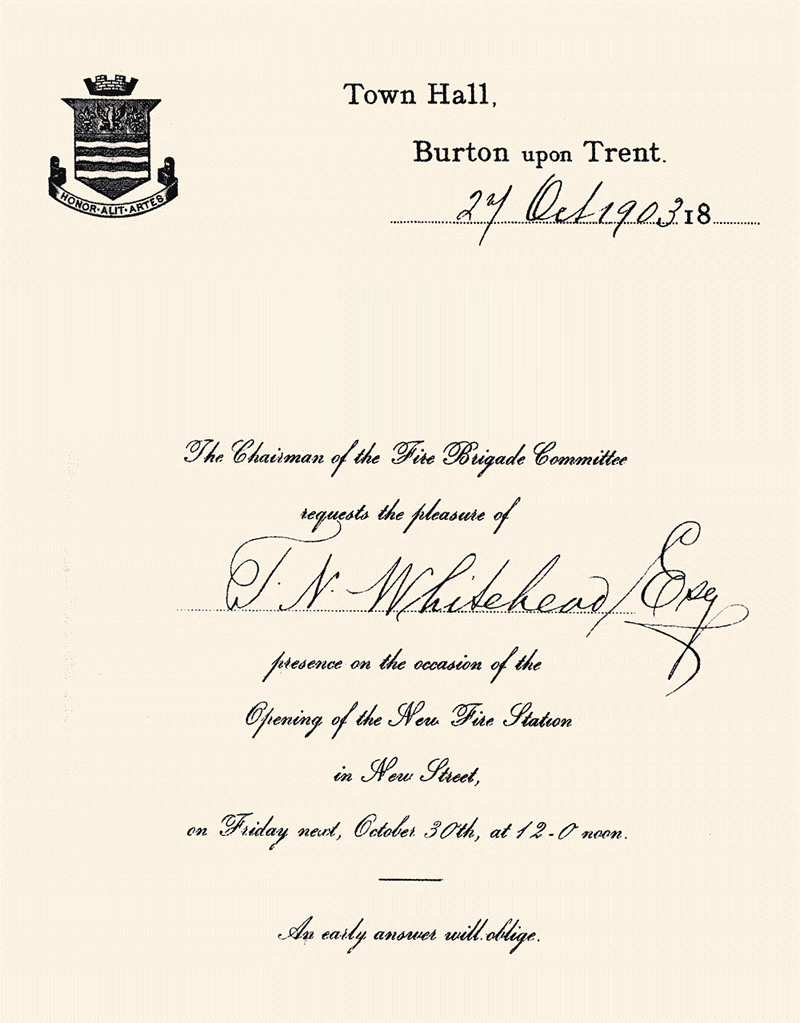
The station was completed in 1903 and the Grand Opening was scheduled for Friday, October 30th. The opening ceremony was performed by the Chairman of the Fire Brigade Committee, Harold Rugg. This full list of those who received official invitations such as the one shown above was: Deputy Major – J.R.Morris; Aldermen – Austin, Bassett, Croad, Glover, Hall, Harlow, Hutchinson, King, Lathbury, Lowe, Ordish, Parker, Rowland, Samble, Stack, Thanely, Tresise and Wilkison; Borough Surveyor – Mr Lynham; Town Clerk – Mr Whitehead.

Representing the Fire Brigade were Superintendents Robert William Gooch (Burton Borough Fire Brigade), Bailey (Allsopps Brewery Fire Brigade) and Bradshaw (Measham Fire Brigade). The opening also attracted very good support from the town’s residents. This was to be a good year for Burton crowds for the new tramway system had been opened to much acclaim a couple of months earlier.

The aforementioned Mr Gooch together with Alfred Wilkins (Engineer) and Ralph Harvey (Coachman/Driver) had accommodation within the new station. There were however, teething problems with faulty or incorrectly designed chimneys which rendered many parts of the building smoke logged rendering them uninhabitable until new taller chimneys could be built.

Full time firemen were employed for the first time and new uniforms, including bright new helmets were issued, though the latter proved to be unpopular in service.

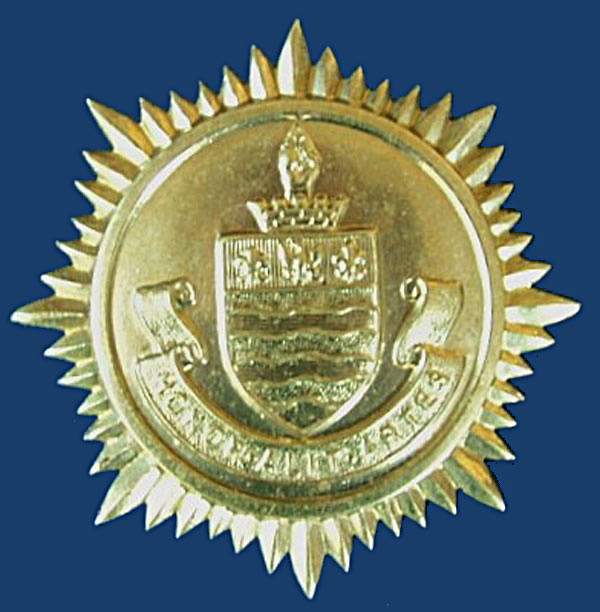
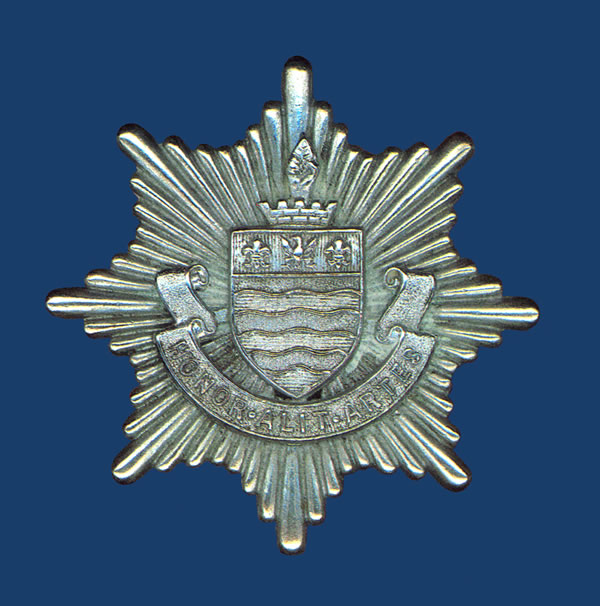
Two versions of the Burton Fire Brigade badge are a slight mystery at the moment thanks to an eagle-eyed visitor. I had imagined that one was introduced when the New Street station opened, to be later revised but, as has been pointed out, both bear the hand holding the saltire of Saint Andrew (as an allusion to the early medieval chapel on Andresey island founded by Saint Modwen) which was not added to the Burton Crest until the Grant of Arms in 1928, prior to that, it was simply a crown (answers welcome).

Both badges  bafflingly show the hand holding the saltire of Saint Andrew  not added to the Burton Crest until the Grant of Arms in 1928.

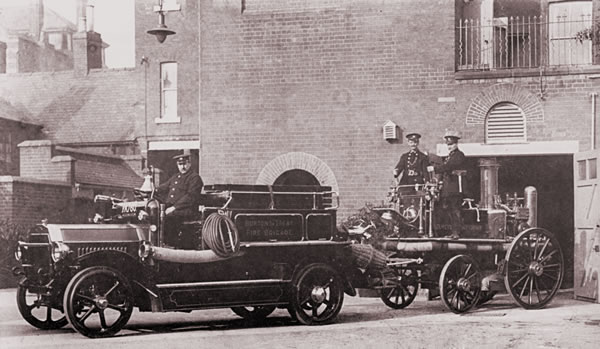
As a boy, I can remember seeing the Fire-Engines in their bays, not unlike the picture here. It is easy to forget that when the Fire Station was opened, no such vehicles existed. This was still very much the age of horse drawn transport with motorized transport only just beginning to become available. When the station opened, it only had one Shand, Mason & Co. Steam Fire Engine as shown below, together with one hand pump engine which could only produce a limited jet, unable to reach higher levels of buildings.

The Fire Brigade also now had its own horses instead of having to ‘hire’ them for each emergency!

Below shows the Burton Steamer, preserved in excellent condition at the present day fire station.

The bays initially dwarfed THE Steam Fire Engine. Fortunately, it was built large enough to accommodate some of  the early Fire Engines but the Station’s eventual downfall was that the bays were simply too small to accommodate modern appliances.

In 1920, the first motorized Fire Engine was purchased. It was a 45hp Dennis Motor Pump and cost Burton Corporation the princely sum of £2,650 with a loan to be paid back over 10 years. It could also replace horses by towing the existing Shand Steamer to larger incidents where both pumps were called for. A second engine was delivered later in the year, this one being equipped with a wheeled ladder. A ‘proper’ fire engine at last!

By the 1960s, a variety of appliances were at the brigade’s dispossal.

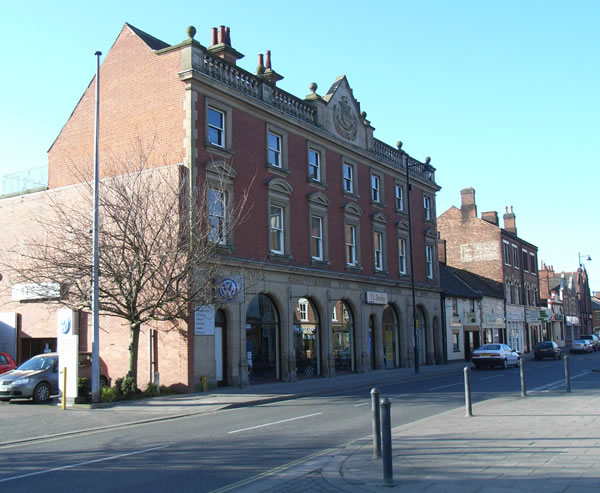
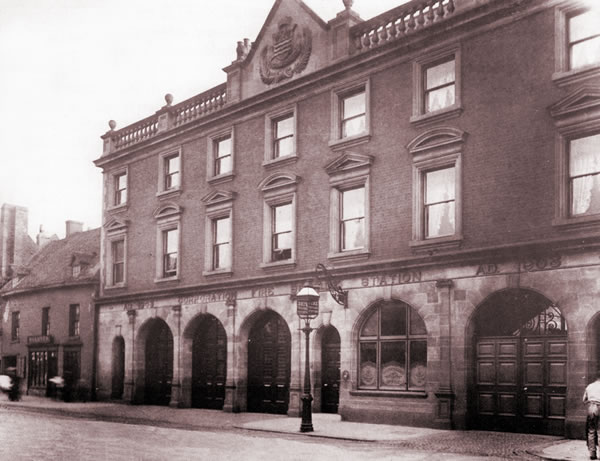
New Street Fire Station was finally closed in 1973 when it was transferred to the new Fire Station in Moor Street. For some years, the old Fire Station has been the home of T.L. Darby the Volkswagon car dealer who have made a beautiful job of keeping one of Burton’s favourite buildings in excellent order.

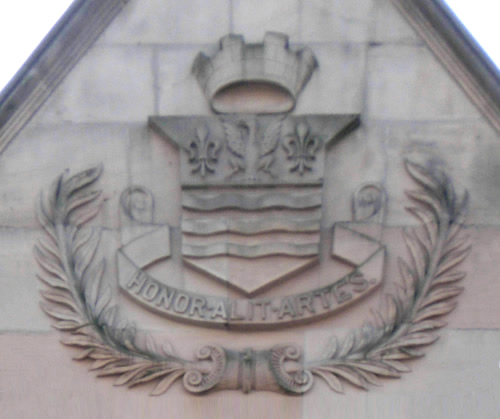
All of the Edwardian stonemasonary, once again, proudly featuring the new Coat of Arms, now make a very attractive feature.


« Previous PageNext Page »

Website by Kevin Gallagher