Menu Close

Brewery Railways

Burton upon Trent when renown as one of the most significant brewing towns in the country, was famous for having its own internal railway system solely to serve the breweries.

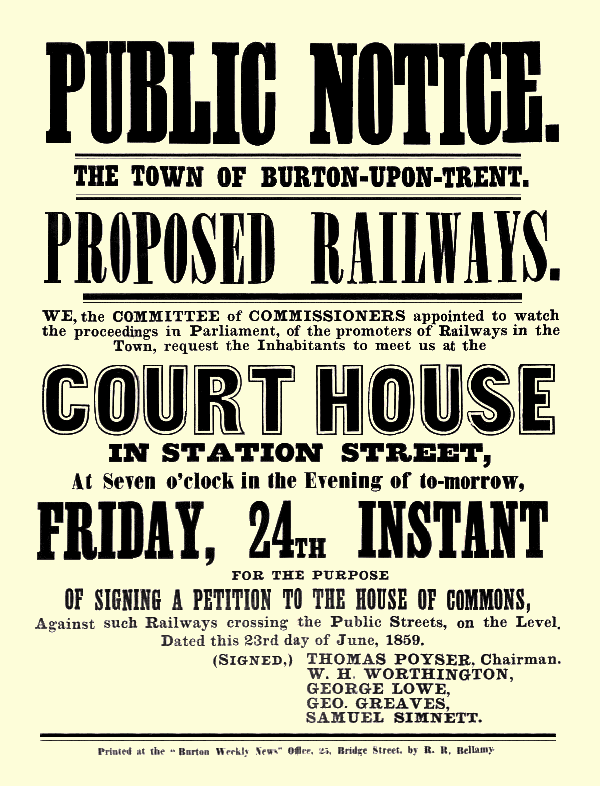
Brewers aside however, the plans were not met with enthusiasm, largely because of the many proposed railway crossing that would disrupt the traffic. In 1859, notices were posted all over the town prompting readers to meet at the Court House in Station Street to sign a petition to the House of Commons “Against such railways crossing the Public Streets”. Slightly surprisingly, one of the signatories was W.H.Worthington (who would eventually go on to become Burton’s first Mayor). This might suggest that the Worthington Brewery could manage without them more than some of its competitors!

As anticipated, the town’s internal railway had become more infamous than famous with vehicle drivers and pedestrians alike by the time it had reached its peak of 32 railway crossings.


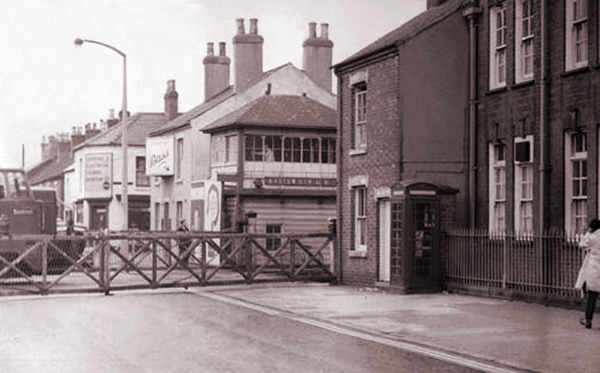
The crossing in New Street with Burton General Hospital in the foreground.


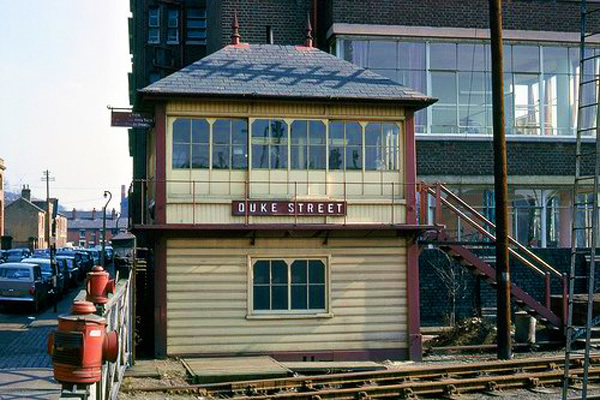
A later photo from a little further down from the New Street Crossing above, this time in Duke Street with the ‘new’ wing of the Burton General Hospital behind.


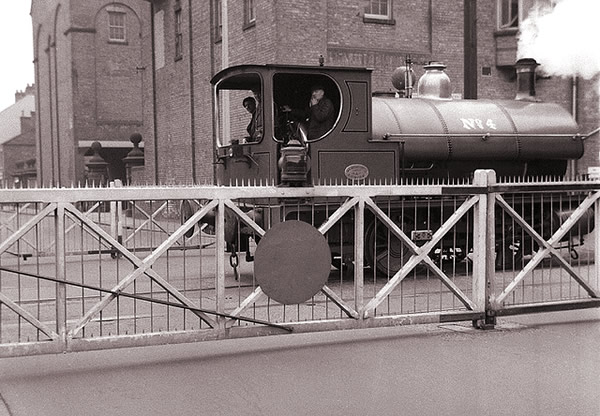
A view of the Station Street crossing in action.


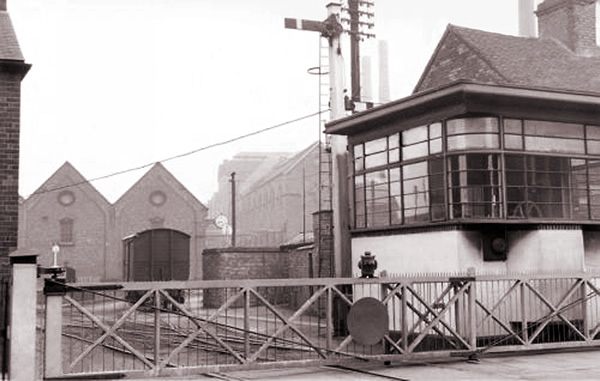
A view of the opposite side of the road reveals one of the more ‘modern’ style of control box.


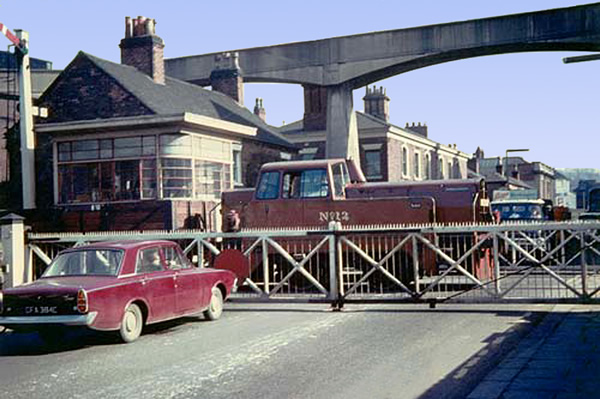
A later view of the same Station Street crossing. I am not too hot on brewery trains but I CAN say that the car waiting is a 1965 Ford Corsair with its distinctive pointed front.


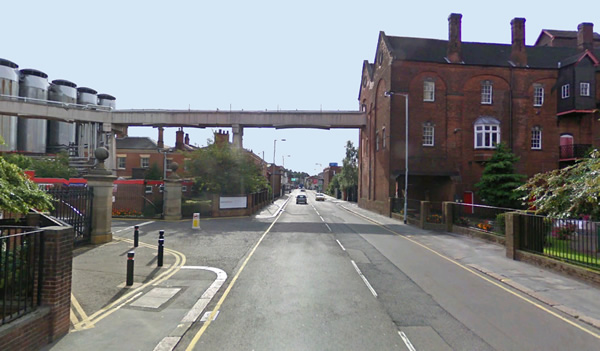
The present day site of the Station Street crossing still has lots of features that can be picked out from the photos above but even still, it is difficult to image trains running back and forth across the road all day.

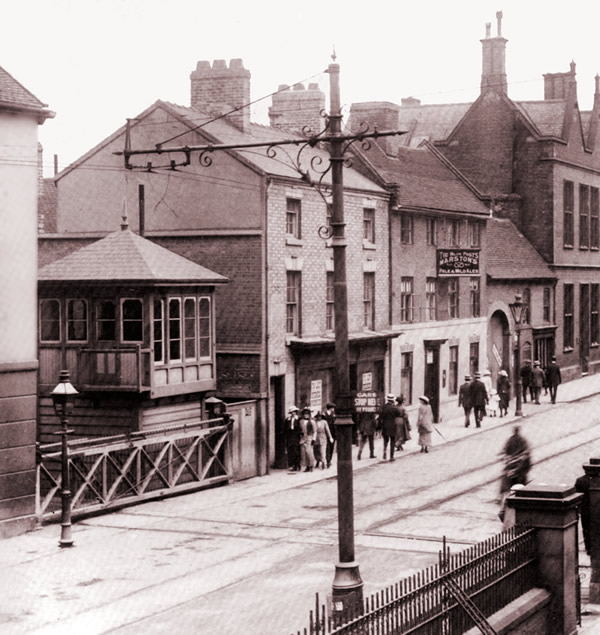
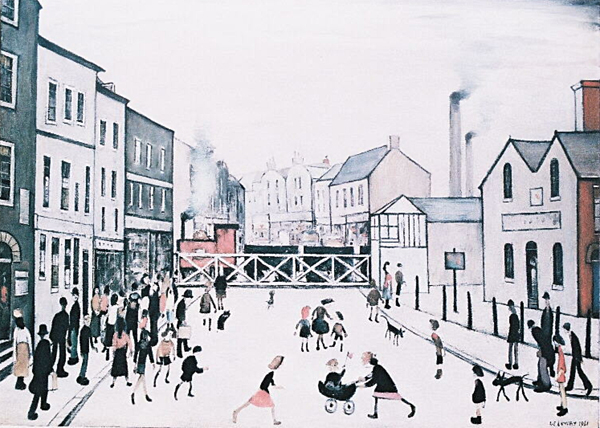
The crossing next to the Blue Posts in High Street was some time later immortalised by being featured in an L.S. Lowry painting, ‘The Crossing’.

Station History

Old Station (1839)

Burton’s first railway station was opened in 1839 by the Birmingham and Derby Junction Railway on its original route from Derby to Hampton-in-Arden meeting the London and Birmingham Railway for London. The station stood at end of what was then called Cat Street, which was eventually renamed in 1844 to the now much more familiar Station Street.
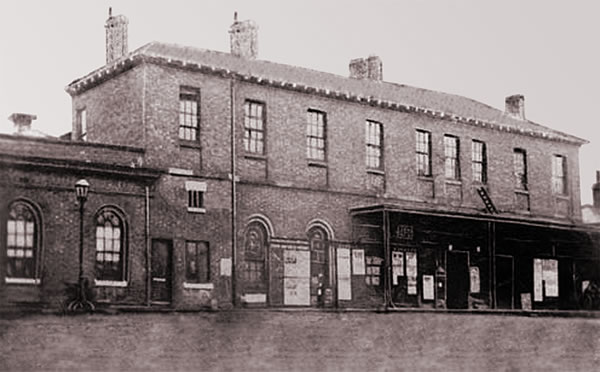
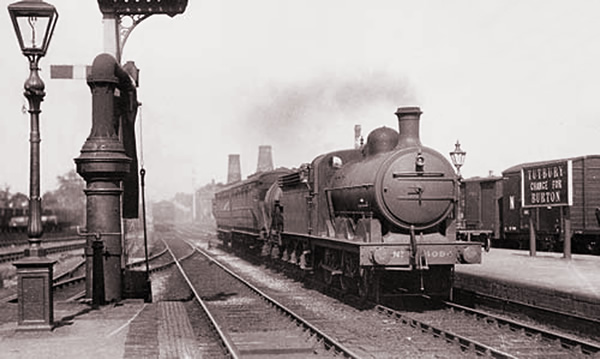
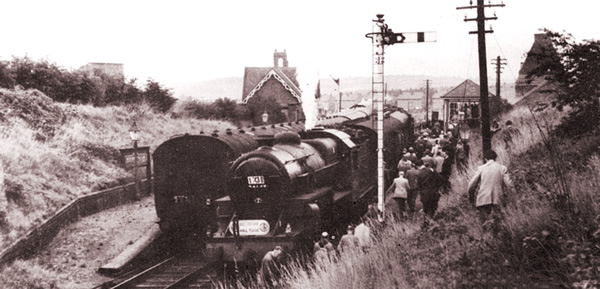
In 1848, the North Staffordshire Railway Company opened a line from Crewe to Derby, with a branch line from Uttoxeter which connected Tutbury and Burton. A small passenger train known affectionately as the Tutbury Jinny, seen below, was a popular sight at the old Burton station.  It operated a push-pull service between the two stations.
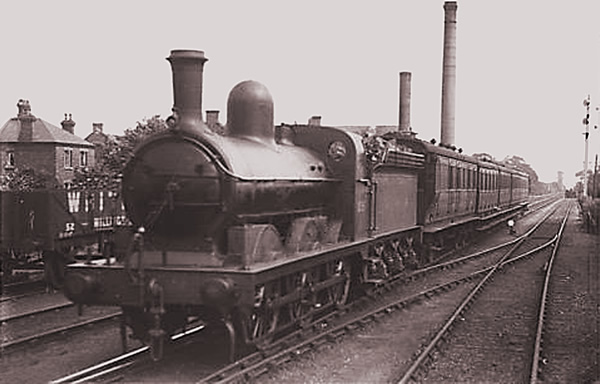
This later became known as the more colloquial ‘Tutbury Jinnie’ and became important for commuters and shoppers, who travelled from Tutbury to Burton.

In its heydey, the ‘Tutbury Jinnie’ provided eight trains each way on weekdays and two on Sundays. However, as the motor car became more accessible, a survey in 1960 revealed that the service was only carrying an average of twelve passengers and running at a loss of around £7000, which was quite a significant sum at the time. The service managed to survive until it was withdrawn in 1960 when a ceremonious packed last train left Tutbury at 8:12pm on 11th June.
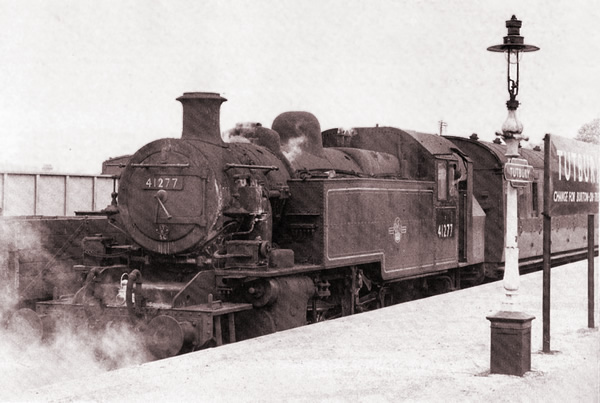
It can be seen above and below in its more ‘modern’ guise in its final years.
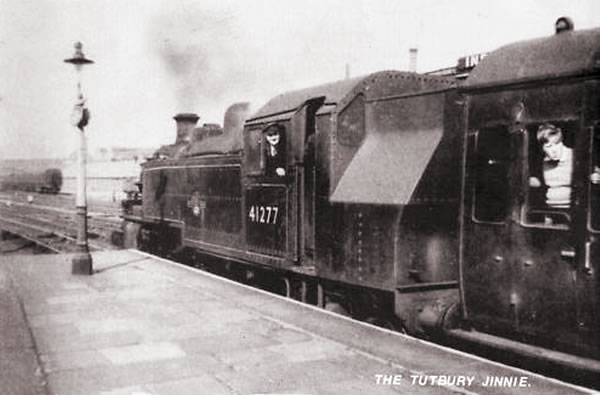
Tutbury station was fully closed in 1966 but was re-opened by popular request in 1990 and remains in use today.

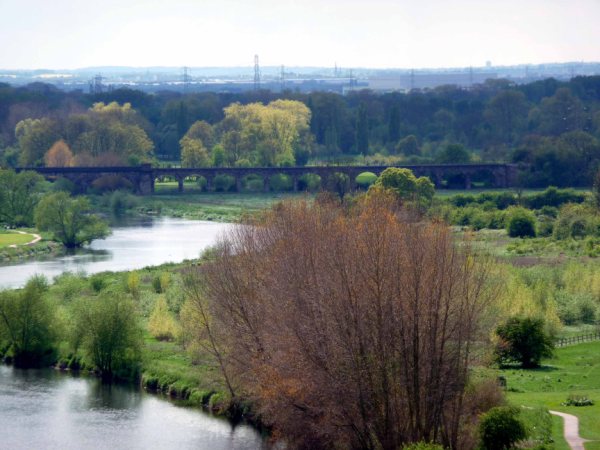
A year after the previous line, in 1849, the Midland Railway Company, which now owned and operated the Birmingham to Derby line, opened a line from Burton to Leicester which crossed the Trent by a substancial viaduct still known today as the Leicester Line Bridge.
Burton’s main streets became congested by drays delivering barrels to the station from the breweries which were mostly located near the river. As early as 1853 it was proposed to lay a railway track from the main line south of Horninglow Street as far as the breweries in High Street to service them.

Under an Act of 1859 the Midland and other railway companies were authorised to construct two branches from the North Staffordshire line in Stretton, one running across Guild Street and High Street and the other under Hawkins Lane, across Anderstaff Lane (later Wetmore Road), and southwards along the west arm of the Trent. The branches met at sidings on the Hay behind the High Street breweries. A separate Act of 1860 authorised a private line from the Guild Street branch to serve Allsopp’s brewery on the north side of Horninglow Street. The construction of the Hay branch was instrumental in the demolition of the old medieval bridge over the Trent and its replacement by a new bridge opened in 1864.

Further lines in the central and eastern parts of the town were laid privately by brewing companies under an Act of 1862 and by the Midland Railway Company under Acts of 1864 and 1867. To serve brewery premises on the west side of town lines were laid by the Midland company in 1874, including one along the disused Bond End canal. Lastly, the London and North Western Railway Company in 1882 made a line along the east side of the Trent and Mersey canal between Shobnall and the Stretton junction.

The below extract from a map produced in 1865 shows the yet disjointed Station Street (now renamed from Cat Street) and Borough Road. It is also interesting to note that the soon to be demolished windmill is still in place on what would become the rear of the Station Hotel. It would also be a few years before Saint Paul’s Church followed by Saint Paul’s Institute and the Liberal Club (eventually destined to become the Town Hall) appeared.

As an ever increasing centre for beer brewing, Burton soon became criss-crossed brewery companies’ private lines and the numerous level crossings became the bain of the town!


New Station (1883)

A construction of a new much needed station was agreed in 1881. The first part of the plan necessitated the Station Bridge to be constructed to join the top of Cat Street (Station Street) to Borough Road, prior to which, there was only a foot crossing. The new station was built 150 yards down the line. It was built as an island platform with bays at each end, with substancial buildings along its length. At the same time, the number of tracks was quadrupled to cater for much greater needs.

Buildings, including freight handling and a booking hall, were built at the upper bridge level. They were built in early English retro-style, partly timbered to look older than they actually were. Access down to the platforms was reached by a wide flight of steps with one side for ascending, the other for descending.
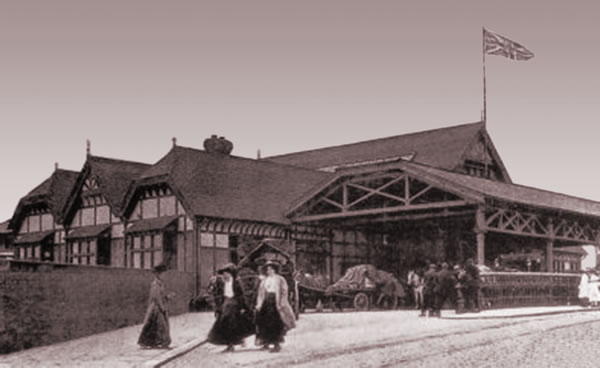
The new station was opened in 1883 and the old station was demolished. It had much larger buildings at the upper level and a large canopy provided shelter at the front.
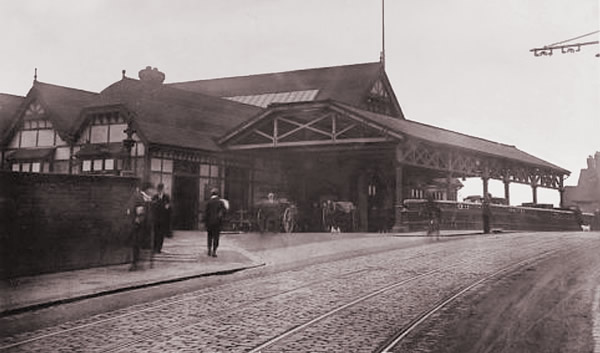
The distinctive canopy survived pretty much unchanged by the time the above 1910 photograph was taken. Trams had by now replaced horse drawn hanson cabs. The canopy was eventually removed to meet the demand for car parking.
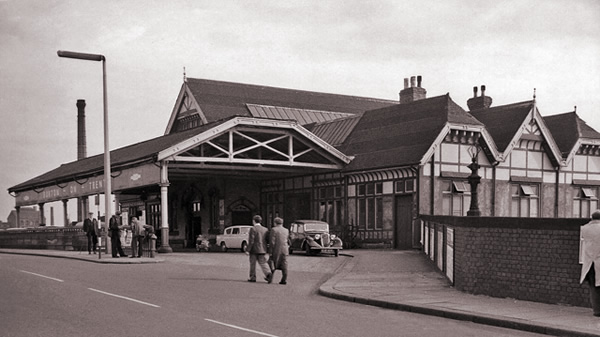
Still little changed by 1960. The tramlines were of course, long replaced by a suitable surface for cars together with improved street lighting. The lattice work of the canopy had been replaced with simpler boarding.
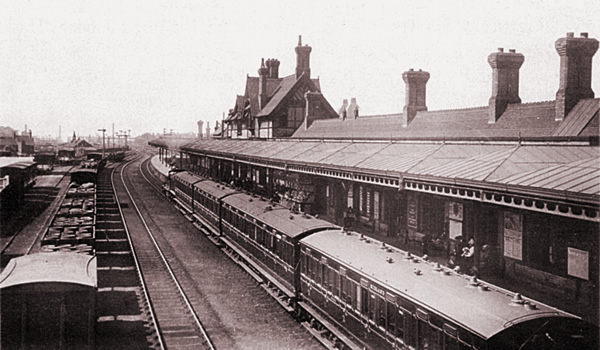
Views of either side of the platform looking in the Branston direction from viewpoints at the upper level which used to be inside the station buildings but now form part of the car park.
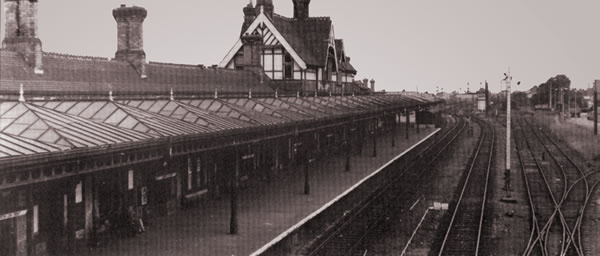
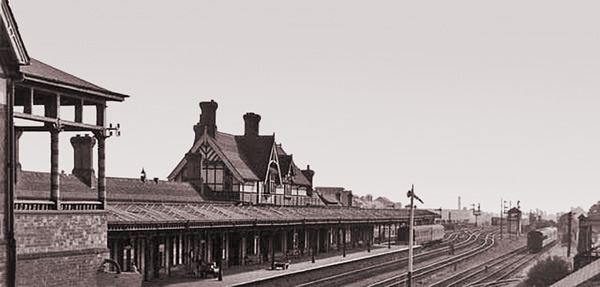
And a marvellous wider view to put everything in perspective.
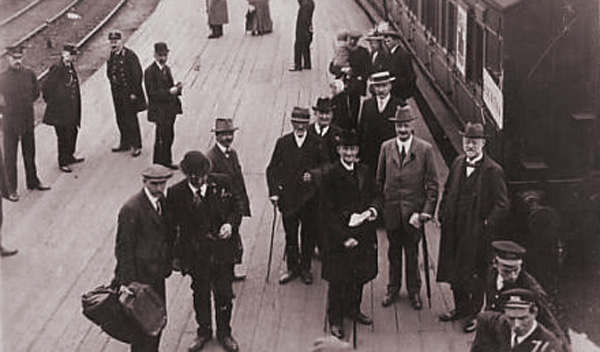
A posed picture by some of the senior staff from the Bass Brewery prior to a trip financed by the company. Bass trips, with other breweries following suit, became legendary with numerous trains being specially commissioned for trips to various seaside resorts.
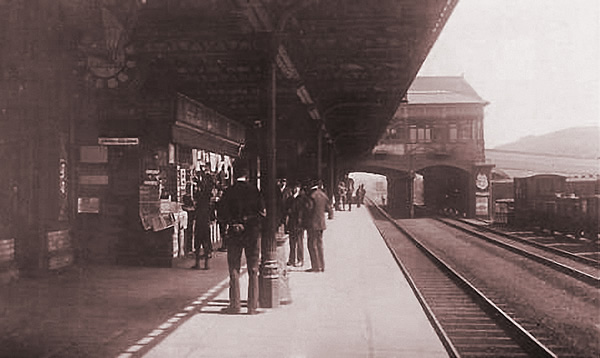
A view of the distinctive platform clock which I am sure I can remember, together with the news kiosk which did a brisk trade in newspapers, confectionery and cigarettes.
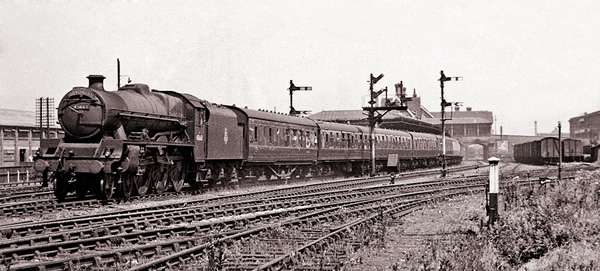
Before being whisked away in old fashioned style. Burton Station still very recognisable as the express train heads south towards Branston.
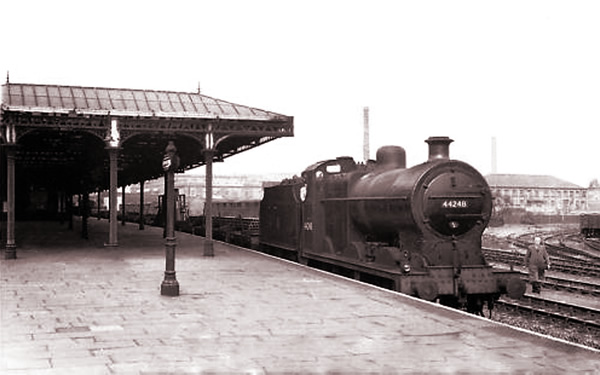
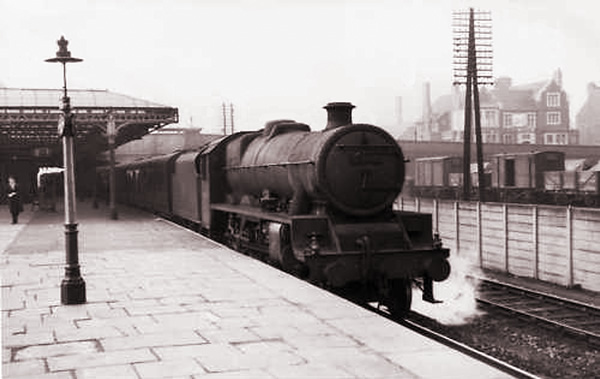
Two views of the platform in around the 1950s. The above one shows the most familiar view with brewery buildings having taken over the site of the original station. The below view shows that at the time, the platform extended on the other side of the Station Bridge, showing the Station Hotel which still stands, built soon after the station to take advantage of the new prime position.
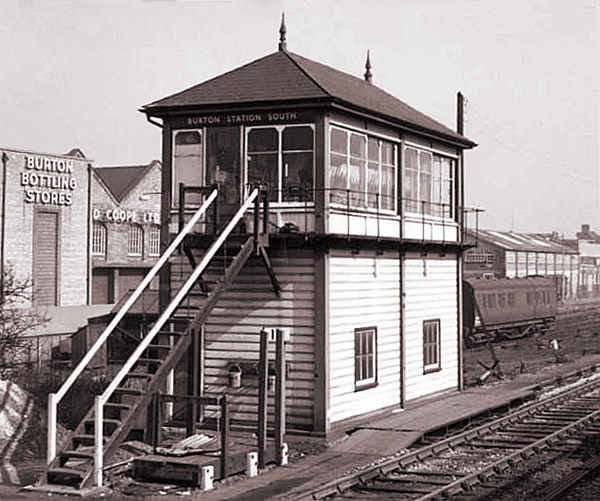
Just down the line, visible from the station platform in its day, in front of what was Ind Coope Ltd, bottling store (now IMEX Business Park) was a typical signal box.
In 1870 a new locomotive shed was built to the south of the station. This consisted of a roundhouse built round a 42 feet diameter turntable. In 1892 another roundhouse was added, with a 50 feet diameter turntable. In 1923 these were replaced by still larger 57 feet and 55 feet turntables respectively. It can be seen below, still in regular use in 1960 a few years before it fell into disuse.
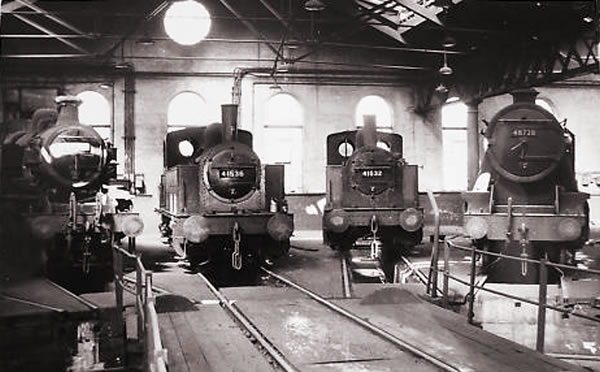
By 1948 it had 111 locomotives allocated to it, but with the arrival of diesel locomotives it became a sub-depot of Nottingham and was finally closed in 1968.
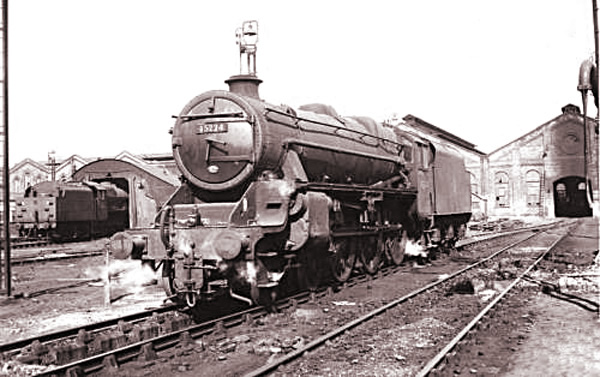
I am reliably informed that the above photo shows an LMS Class 5-4-6-0 at Burton.
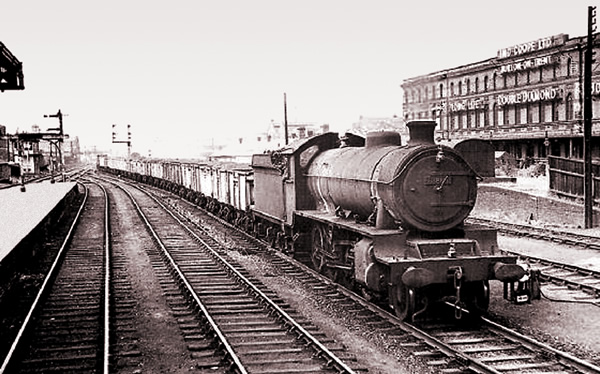
A few photos fortunately providing more or less the same view through the ages with the Ind Coope brewery building in the background.
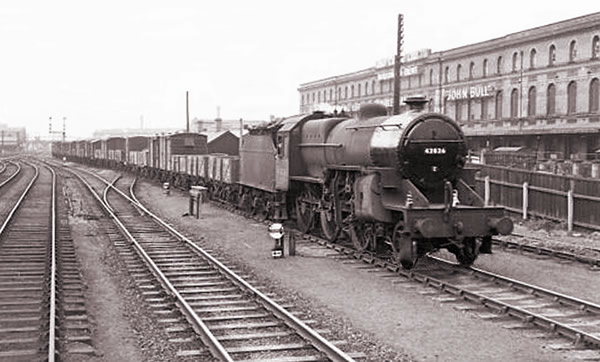
The second, I am informed by enthusiasts, is an LMS Hughes/Fowler Crab 2-6-0 No. 42826 with the same building little changed other than the signage to advertise its new usage.
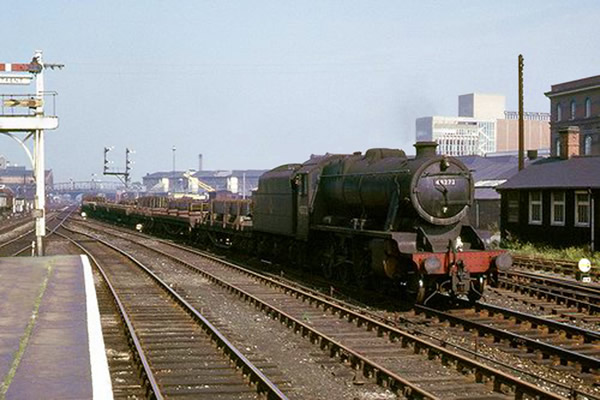
The final photo, in more modern times. The building still survives but with less prominence as the town has developed around it.
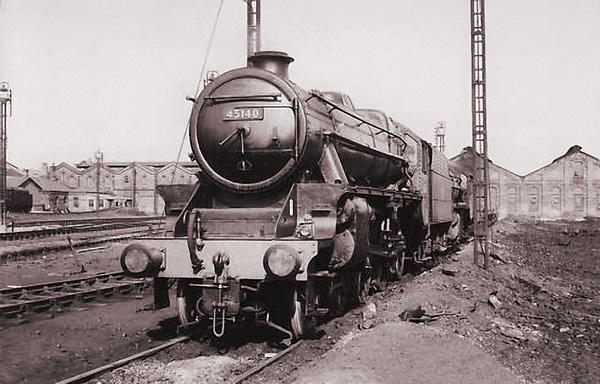
For the enthusiasts, 5MT number 45140 again taken at Burton. Though having little knowledge of trains, I can very vaguely remember the days when trains looked like proper trains.
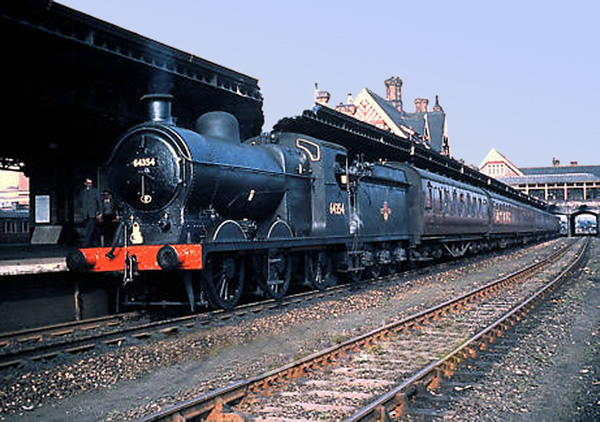
And, an early colour photo showing locomotive 64354 sitting at Burton Station – enough to bring the schoolboy out in anyone!
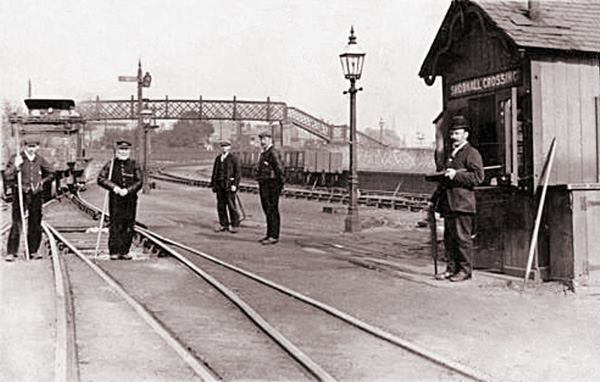
The above photo shows work at what was known as the Shobnall Crossing close to the present day Moor Street bridge.
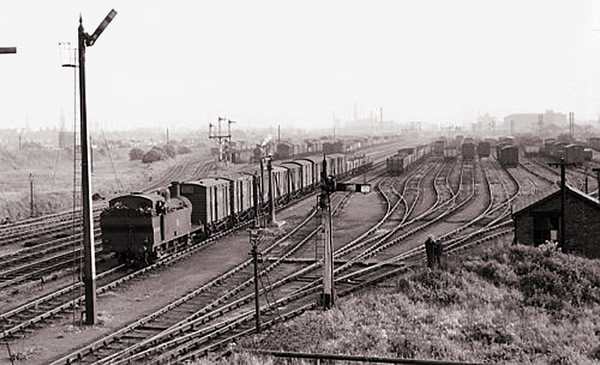
And at the other, Northern, end of town, a view over Wetmore Sidings.
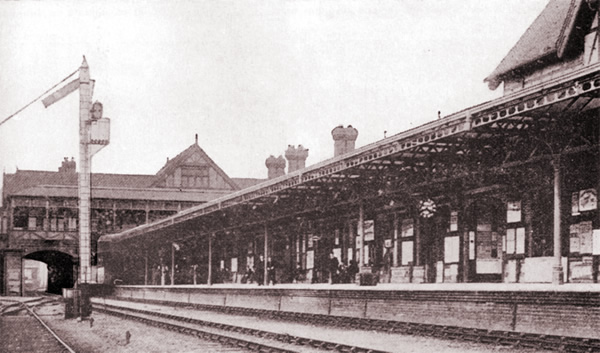
Only just about making it through quality control – but two photos too good to omit showing the north-bound platform.
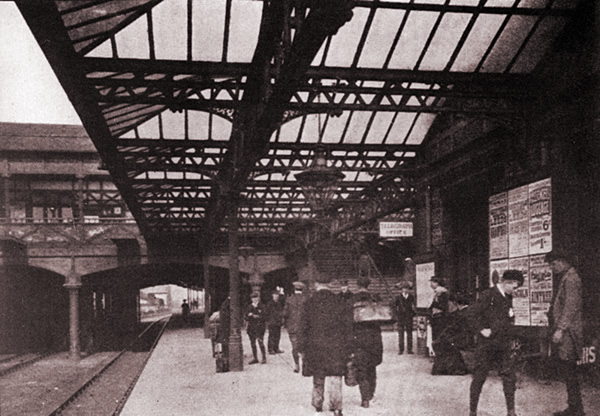
Finally, a few more photos towards the end of its life.
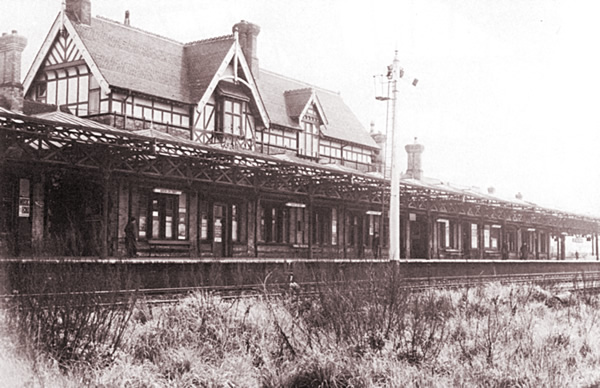
One of the very last photographs taken of the distinctive platform building.
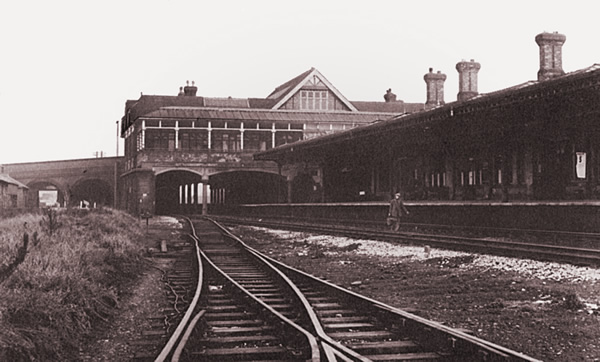
Most of the private brewery railway lines were closed between 1963 and 1968 and the tracks were removed, with road transport now far more preferred.

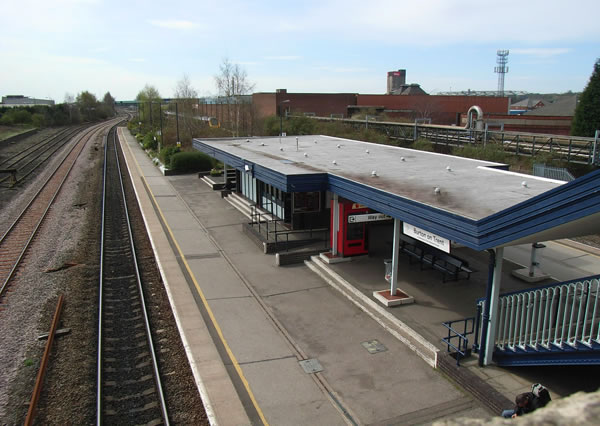
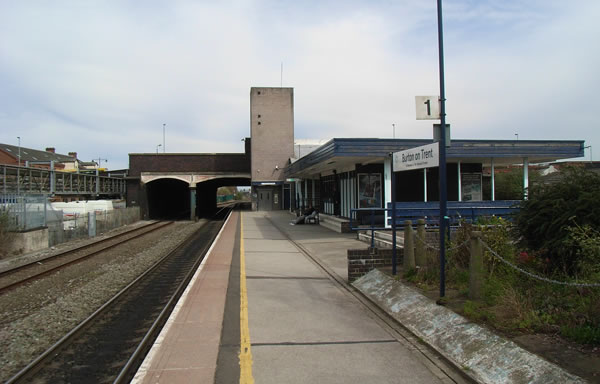
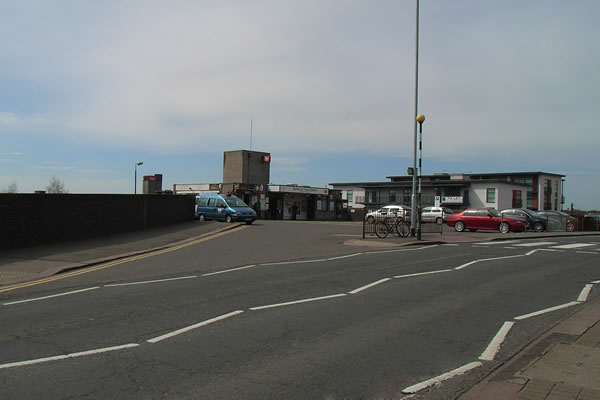
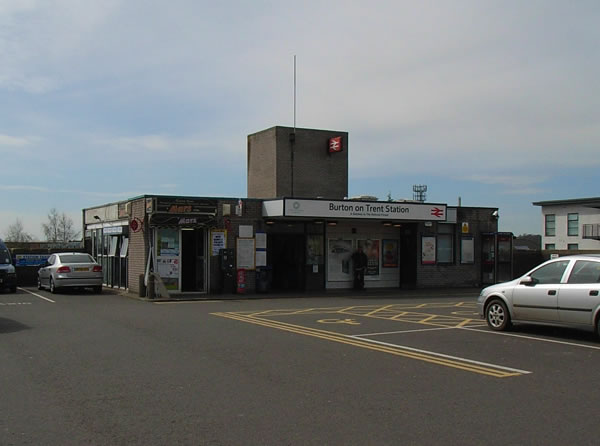
The station was rebuilt yet again in 1971. The booking office remains in around the same place and the platform stairs are largely original to the previous station. The final photos show the present station for comparison.
Railway

Though many will be able to remember the old railway station on the site of the current one, this was not the original Burton station. It was in fact opened in 1883 to replace the first station opened in 1839, further up the line at the very end of Station Street (then Cat Street).
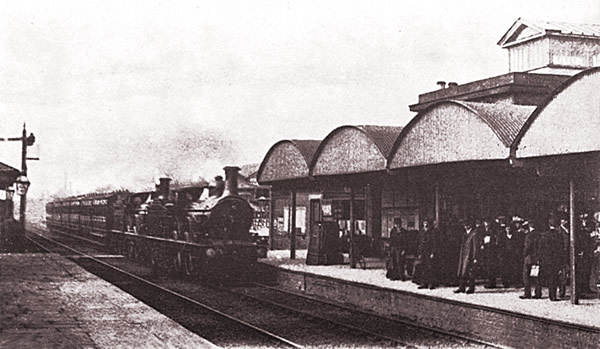
At the same time, the new Station Bridge was built prior to which, there was only a foot crossing between Station Street (Cat Street) and Borough Road where the new Saint Paul’s Institute and Liberal Club had recently been opened (later to become the Town Hall). The number of lines was also quadrupled to cater for much greater needs.

Select page to view:

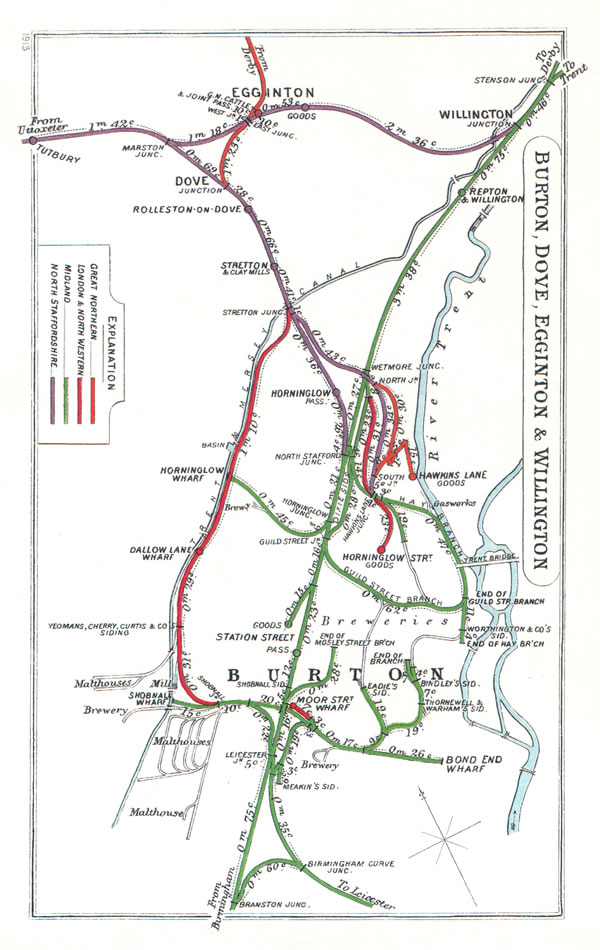
1913 Railway Map

The map from 1913 shows how responsibility of the line was shared between the Great Northern, London and North Western, Midland and North Staffordshire railway companies.

Other town branch lines were operated by individual breweries. The overall effect was a town with 32 level crossings!

Branch Lines

A reminder that much of the out-lying community of Burton made good use of the train.
Tutbury Station
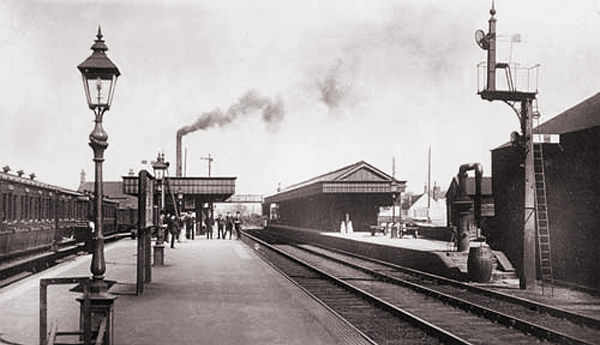
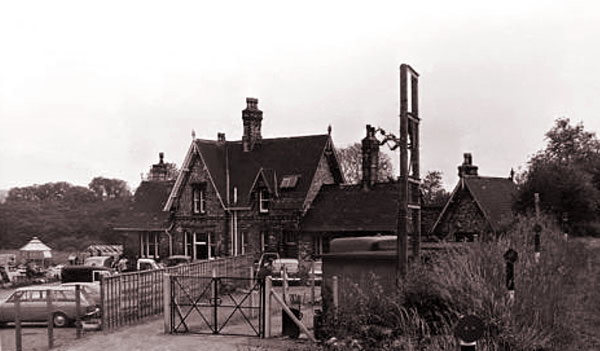
Tutbury Station, probably the most famous of Burton’s out-lying stations because of the revered Tutbury Jinny.
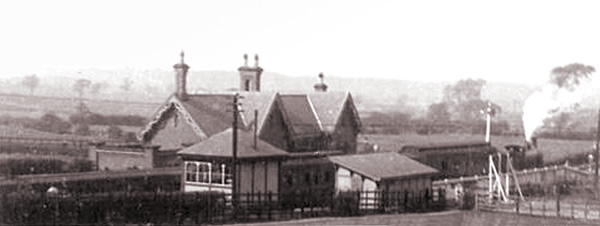
Tutbury Station was built on the Burton upon trent to Uttoxeter branch line and was opened in 1849. The smoking chimney was Nestle on the same site as the existing plant. On the right is a goods shed behind which was a grain warehouse and cattle pen.

In its heydey, the ‘Tutbury Jinnie’ provided eight trains each way on weekdays and two on Sundays. However, as the motor car became more accessible, a survey in 1960 revealed that the service was only carrying an average of twelve passengers and running at a loss of around £7000, which was quite a significant sum at the time. The service managed to survive until it was withdrawn in 1960 when a ceremonious packed last train left Tutbury at 8:12pm on 11th June.

The station was fully closed in 1966 but was re-opened by popular request in 1990 and remains in use today.

Willington Station
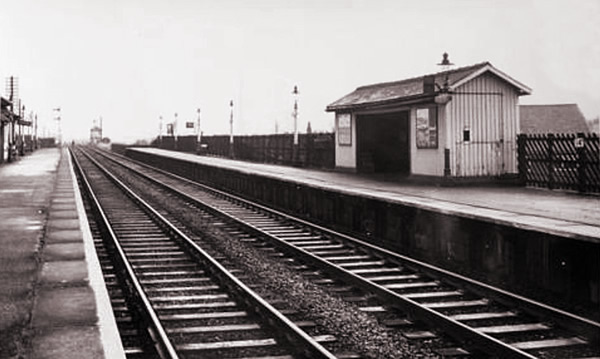
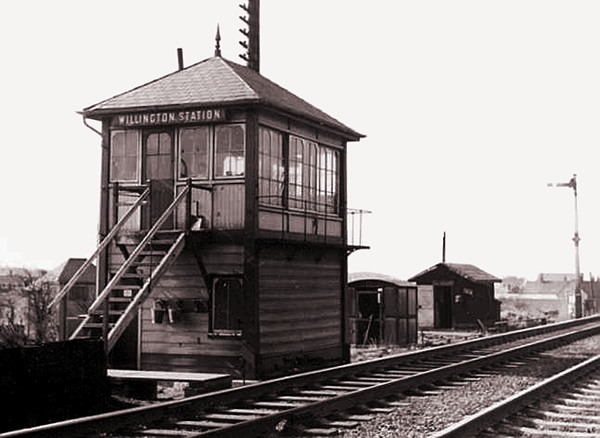
The station at Willington, was built on the Derby line which opened in 1859, has also managed to survive and a station on the same site remains in use today.

Willington signal box has of course, long gone. The main Derby line from Burton still goes over Willington bridge but just before Willington on the Derby side, a branch survives which runs over the modern Willington crossing on its way to Tutbury and Uttoxeter.

Barton and Walton Station
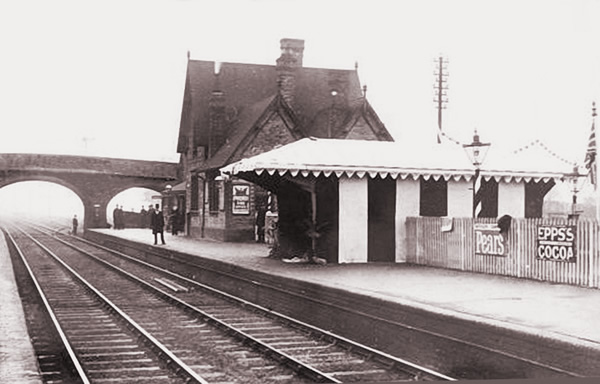
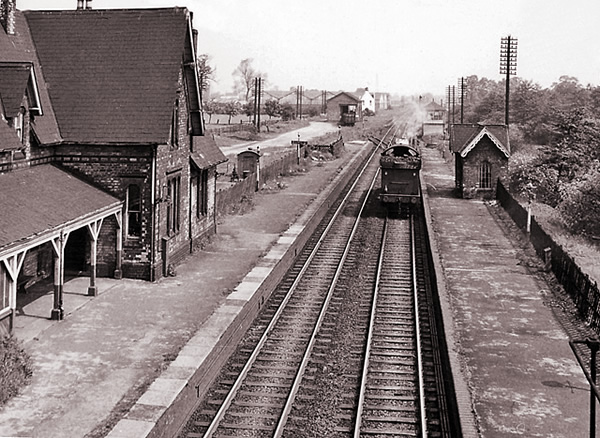
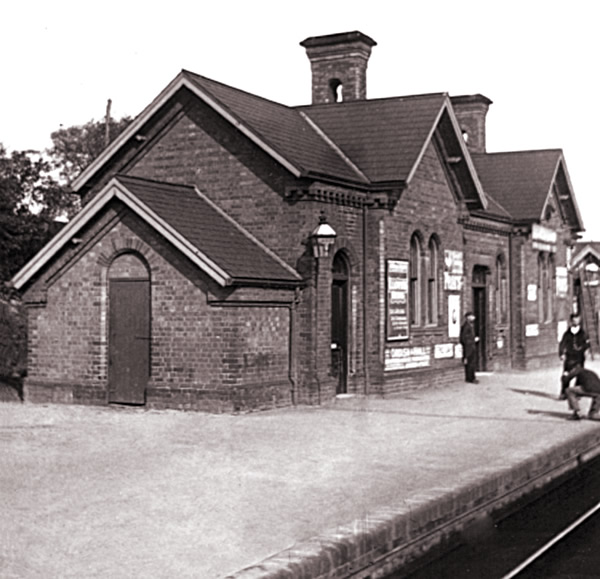
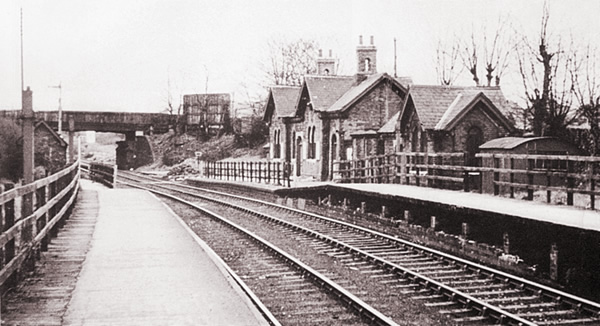
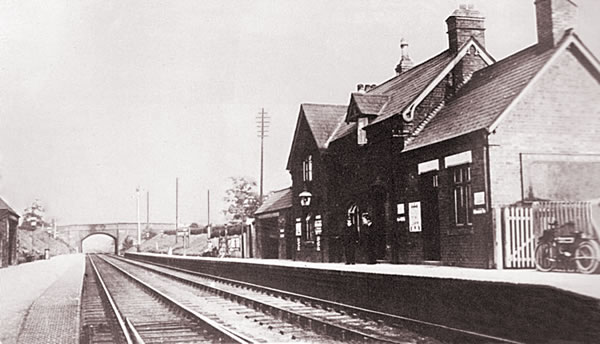
The three following photos show the Barton and Walton Station, opened in 1846 on the Derby to Birmingham line.


It was situated between the villages of Barton under Needwood and Walton-on-Trent. The station was closed in 1958 and is now the site of a railway depot.

Gresley Station
Gresley Station with a name that will always be associated with railways. It was built a Castle Gresely on the Leicester line, which opened in 1849, but there is little evidence left of it today.

The below view towards the end of its life shows its proximity to the bridge that forms part of the A444.

Moira Station
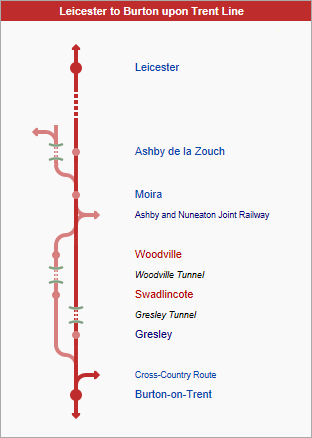
After Gresley on the way to Leicester came Moira (or Overseal and Moira) Station.

The above photo with both platforms empty suggests that a train has recently departed.

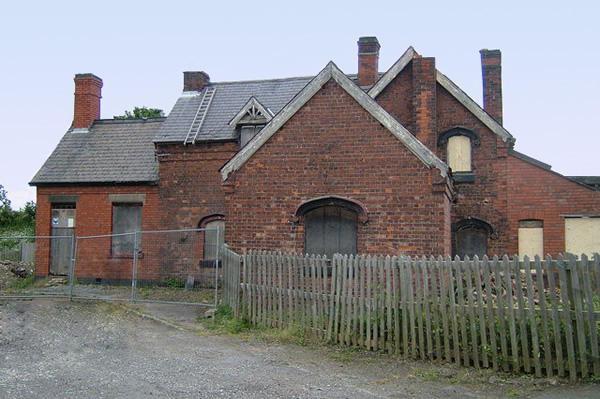
The above photo shows the abandoned station, opened in 1850 – closed in 1964. It was eventually sold for convertion to a private residence.

Swadlincote Station
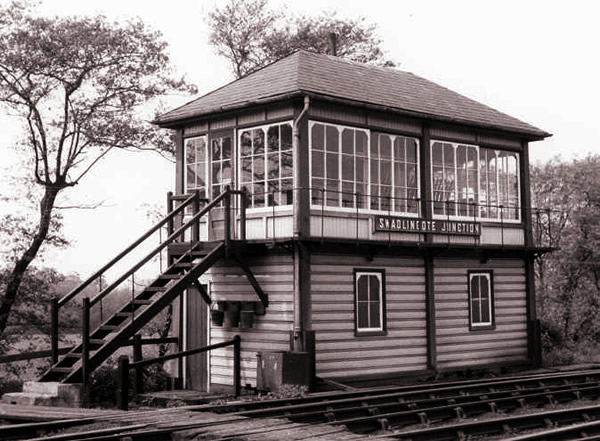
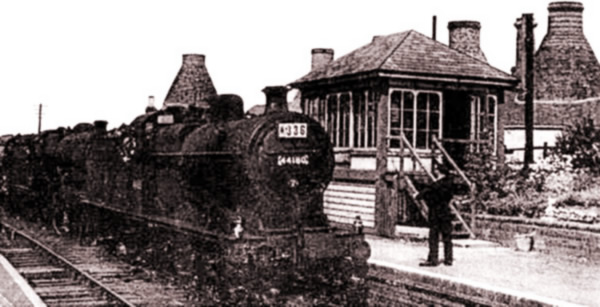
There was a loop off the Burton to Ashby line that some trains used going through both stations as an alternative to going directly to Burton via Gresley. The below photo shows the Swadlincote Junction signal box.

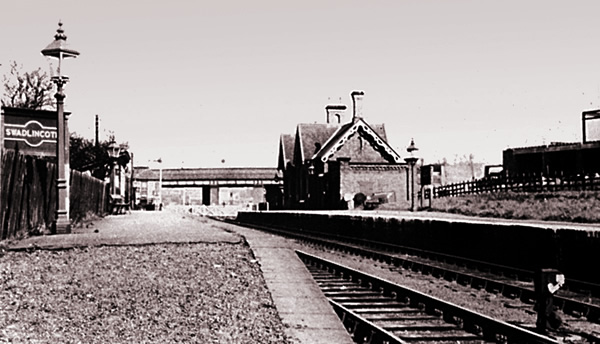
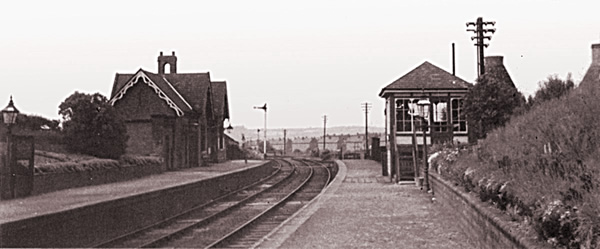
You could be forgiven for thinking that the above and below photos were different angle shots of the same station. In fact, the above photo is Swadlincote Station and below is Woodville Station. Your eyes are not deceiving you however, the two station buildings are identical mirror images of one another. They were both built by the same builder for exactly the same price.

I wonder if anyone ever woke up with a start and jumped off at the wrong station.

Woodville Station
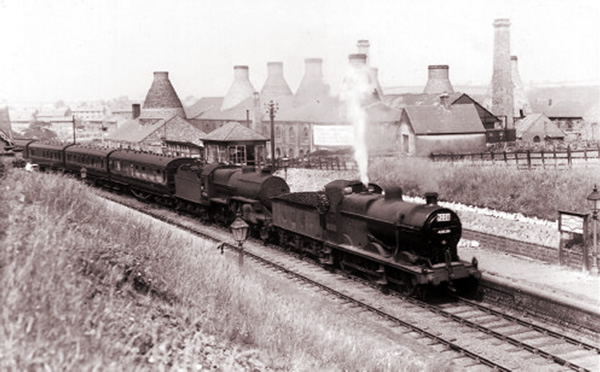
The pottery adds to the confusion because many would deduce that it was Rowley’s Pottery close to Swadlincote Station but in fact, Woodville had its own Mansfield’s pottery.

The road in Woodville is still called Station Road and on Google earth, it is still fairly easy to pick out the loop where the line used to run going back to Swadlincote although it is very difficult to image trains running around there now.

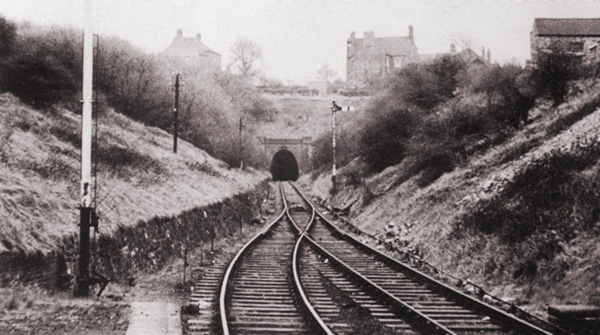
The Woodville Tunnel, seen above, was between Swadlincote and Woodville and went under the main Ashby Road (A511). Although it is easy to pick out the section now, again, it is almost impossible to image steam trains running under the road.

The above shows Woodville station at its busiest. Two trains heading in opposite directions co-incide with both platforms. A regular using his own shortcut has timed his run to perfection to gain one of the few remaining places.

The above wider view gives a better idea of the size and position of the pottery. Because of the gradient between Swadlincote and Woodville, and hence the above shown tunnel, steam engines were often paired together.

Finally, a wide view from the other side taken patiently as a train builds up steam to depart.

The final photo of Woodville Station is very grainy but is, I think, worth showing. Once again, you can just about make out that there are two steam engines.

Ashby Station
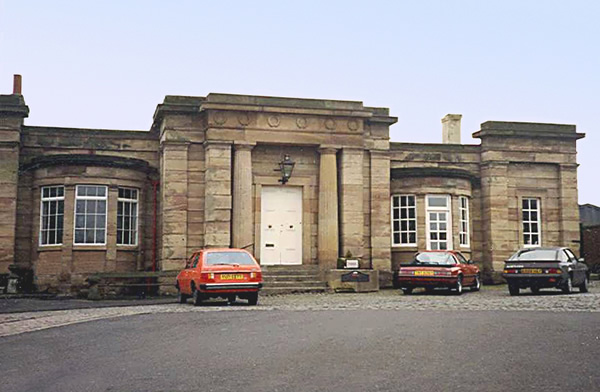
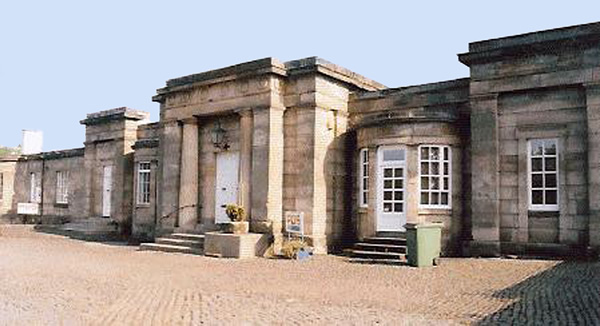
Ashby-de-la-Zouch railway station was too nice a building to fall into disuse. At the time of being built, Ashby was a well-to-do spa town with station to reflect its status.

The Midland Railway opened the station on 1st August 1849 as part of its new line between Swannington and Burton-on-Trent. The station was built partly on the remains of the horse-drawn Ticknall Tramway, which previously connected Ticknall lime quarries with the Ashby Canal.

In 1874 the Midland extended its Derby to Melbourne line to Ashby-de-la-Zouch, partly using the route of the former Ticknall Tramway. The junction with the Leicester to Burton-on-Trent line was just west of Ashby station, so for a time the branch was served by a separate station a short distance from the 1849 building.

Eventually, the station was consolidated with the main platform being the Leicester line. Apologies for the quality of the above image but it does show that it was bustling in its heyday. The stone block above the platform shelter is the rear of the existing building. I am not sure what the tower on top is.

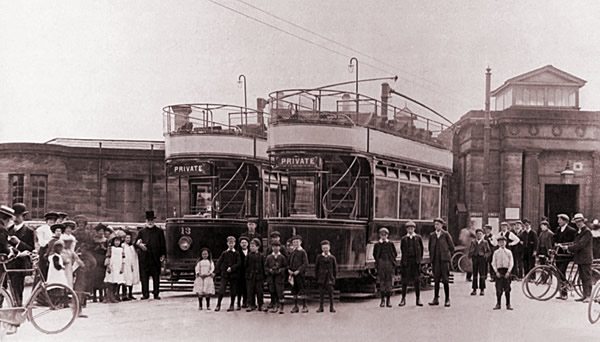
Ashby station forecourt was also a terminus for the 3 ft 6 in gauge Burton and Ashby Light Railway, the tramway between Ashby and Burton upon Trent, built by the MR and closed on 19th February 1927. Tram lines for the Burton and Ashby Light Railway are still visible in the forecourt.

The line became part of the London, Midland and Scottish Railway under the Grouping of 1923. In the nationalisation of transport in Britain in 1948 the line passed to the London Midland Region of British Railways. British Railways withdrew passenger services and closed Ashby station on 7 September 1964.

The building is now Grade II listed.

Drakelow Power Station
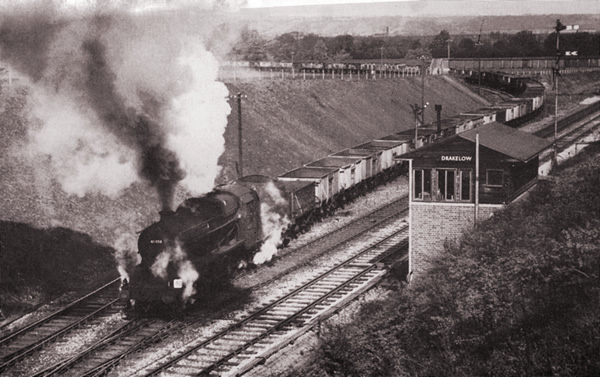
I receive many emails thanking me for memories that were long before my time. But the final photo is for my own sheer indulgence. It shows a coal train joining the Leicester Line at the Drakelow junction.

My Nan and Grandad used to live in an upstairs flat on Rosliston Road close to the Drawelow Bridge. My Grandad worked at the Power Station and he explained to me why they were always going one way full of coal and the other empty. From the window, it was possible to see steam rising in time to race to the bridge and watch the train go under and enjoy being surrounded in steam and taking in the smell.

I could almost have taken this photo myself from the days that waving to the driver might result in a wave back. I had never been on a train and this is my sole recollection of trains from the age of steam.

Map
The below map shows the relationship between the local Leicester Line stations. The direct route was through Moira and Gresley to Burton but some trains took a detour between Burton and Moira, missing out Gresley but taking in Swadlincote and Woodville instead,