Menu Close

Market Hall History

On 12th April, 1200, King John, son of Henry II, younger brother of Richard I (Lionheart) probably most famous for being forced to sign the Magna Carta in 1215, is recorded as granting the necessary charter to allow Burton to have a weekly market. The date of the charter seems to have been authenticated but at this time, King John was on the continent and arrived in England in early October with his child bride before they were crowned together at Westminster Abbey on 8th. If the date is correct therefore, the charter would therefore have been handled by the king’s administration. King John did however, visit Burton that autumn during a grand tour around the country which included Staffordshire to Nottingham along the river Trent.

This allowed permission for a weekly Thursday market and a three-day festival on the eve, day and morrow of St Modwen’s Day (28th-30th October) to the Abbot William Melbourne.

The first Market House was built by Thomas Feylde, Abbot of Burton 1472-93. This actually survived until 1772 when it was finally demolished to make space for a new Town Hall built by Lord Paget in 1883.
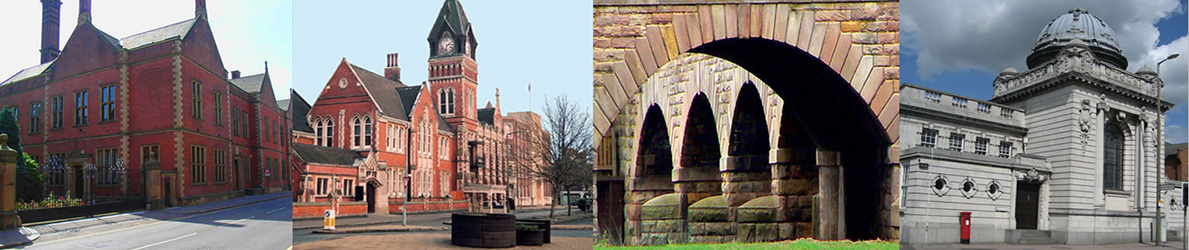
Market Hall 1883

A competition for architectural designs was launched in May 1880, with one of its terms being the inclusion of an ornamental design connected with the history of the town over the west entrance. The competition was won by Dixon and Moxon of Barnsley, and tenders for the building of the new market hall were invited by 19 December 1881. A model of the main sculpted panel was approved by the Fire Brigade, Markets and Fairs Committee on 23 May 1883. Work was commenced and the Market Hall was officially opened later the same year.


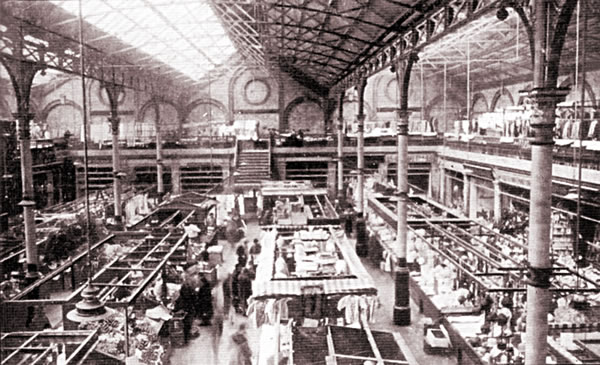
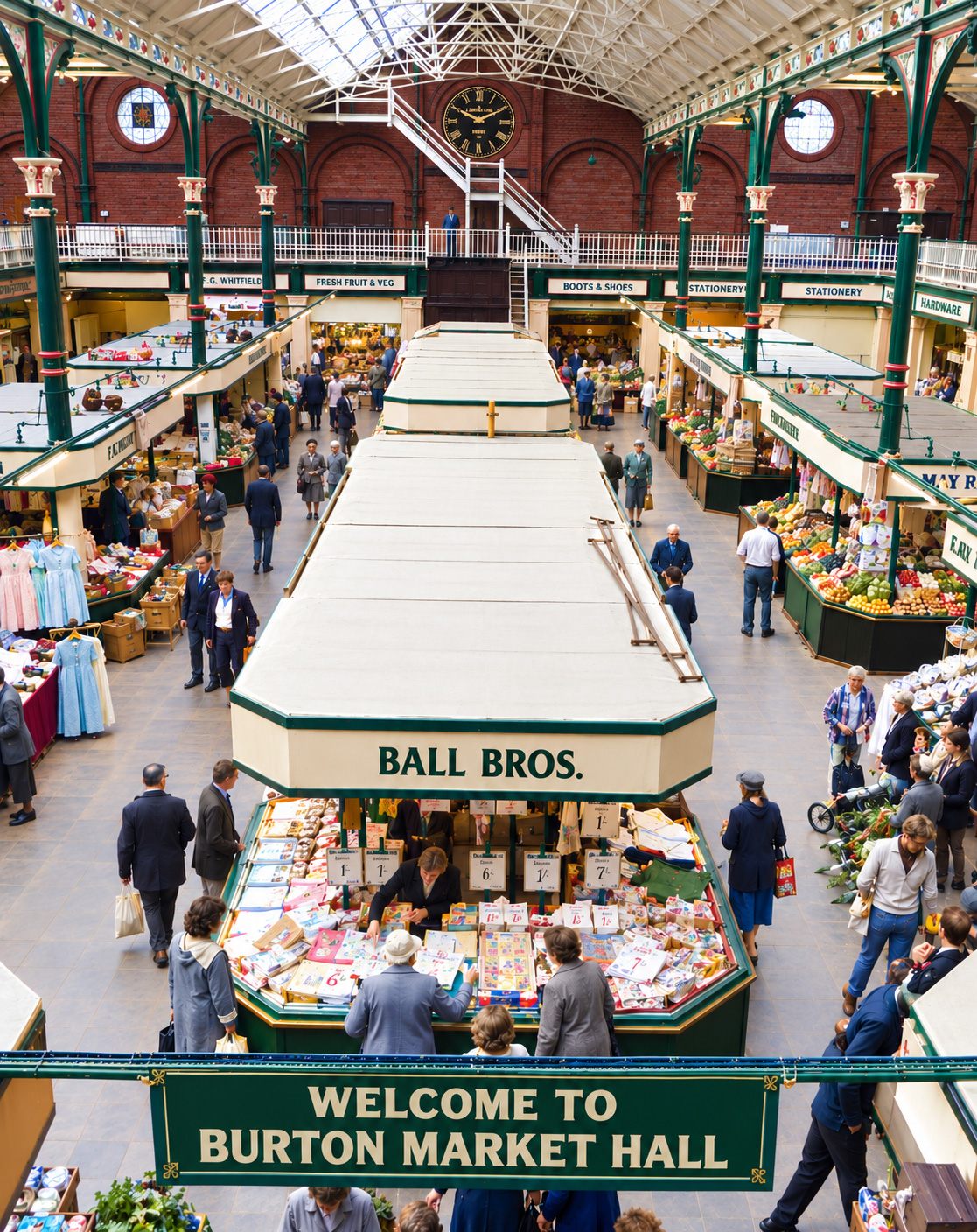
Originally, as well as stalls laid out pretty much as in the current day, the Market Hall interior used to have stalls around the whole of the upstairs balcony, accessible by stairs at the far end. The balcony is actually still there but, since it is no longer used, it goes largely unnoticed. I bet you look up the next time you visit!

A fish market was added to the Market Hall in 1925.

In the twenty-first century, the Market remains an important feature of Burton’s identity.

Market Hall Stonework

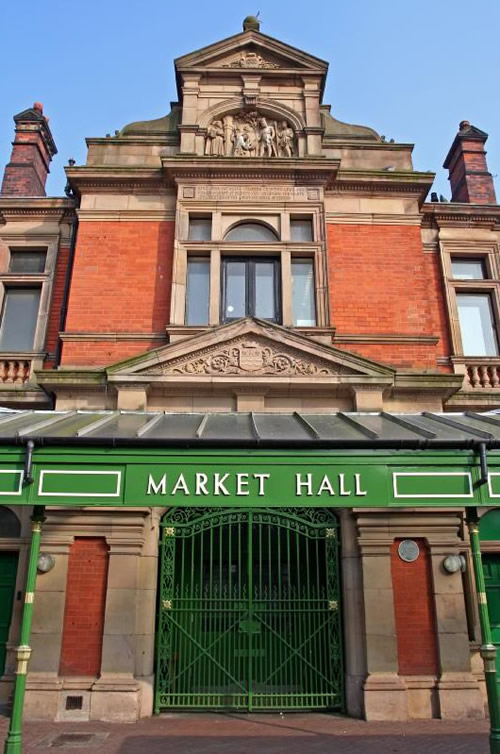
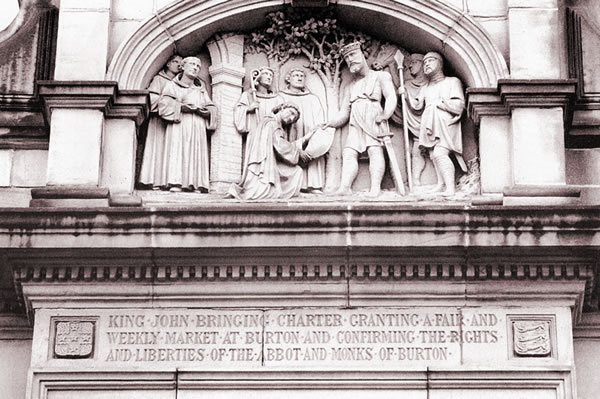
The impressive stone sculpture above the main market hall entrance depicts the scene of King John accompanied by two knights as he hands over a scroll to confirm the rights and liberties to the kneeling abbot, who is accompanied by two monks and a figure bearing a bishop’s crozier.


The inscription beneath is flanked by the coat of arms of King John on the right and those of Burton Abbey on the left. It reads…

KING JOHN BRINGING CHARTER GRANTING A FAIR AND
WEEKLY MARKET AT BURTON AND CONFIRMING THE RIGHTS
AND LIBERTIES OF THE ABBOT AND MONKS OF BURTON

There was also some debate about the type of lettering to be used for the inscription: there was a suggestion that it should be in Gothic script, but the architect felt this would be inappropriate to the Renaissance style of the building. At the time, there was also some dispute over that actual date with different sources claiming 1200, 1203 and 1204 so the date was not included as originally intended.

The carving was still uncompleted in August, with the sculptor, John Roddis arguing that he should receive an additional £60 for the work because the stone was much harder than the Coxbench stone originally agreed upon so took longer than planned.


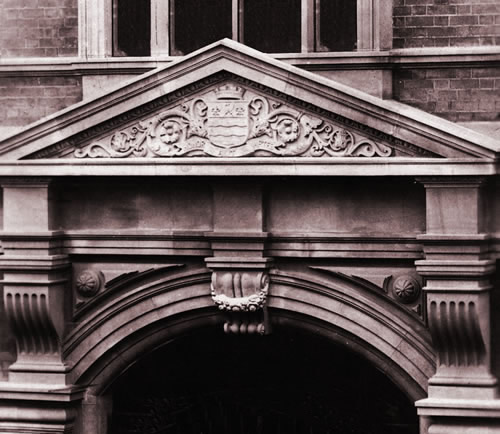
Above the doorway set into a triangular entrance pediment is a relief of the Burton upon Trent coat of arms, a shield, crest and motto. The shield is divided into lower and upper sections, with the lower one depicting six wavy lines across the shield that symbolise the Rivers Trent and Dove. The upper segment of the shield bears a spread-eagle flanked by two fleur-de-lys taken from the arms of the Paget family. The crest is a castellated crown, a symbol of civic government. The motto reads ‘HONOR ALIT ARTES’.


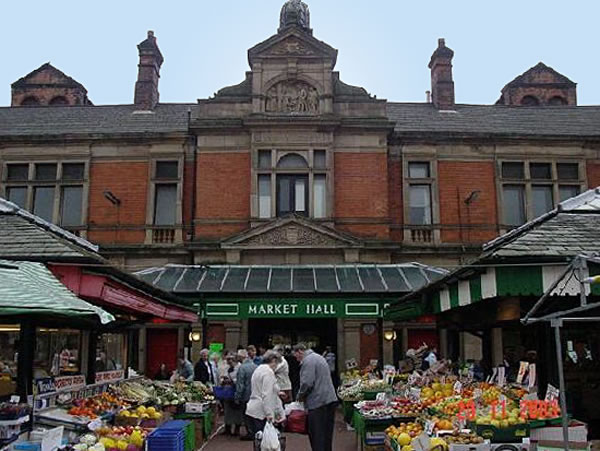
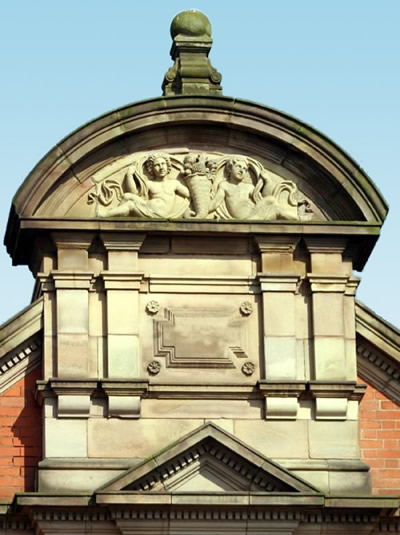
The upper facades on each wing of the building have semi-circular pediments each containing a pair of seated male figures holding fruit, a reference to the market products.


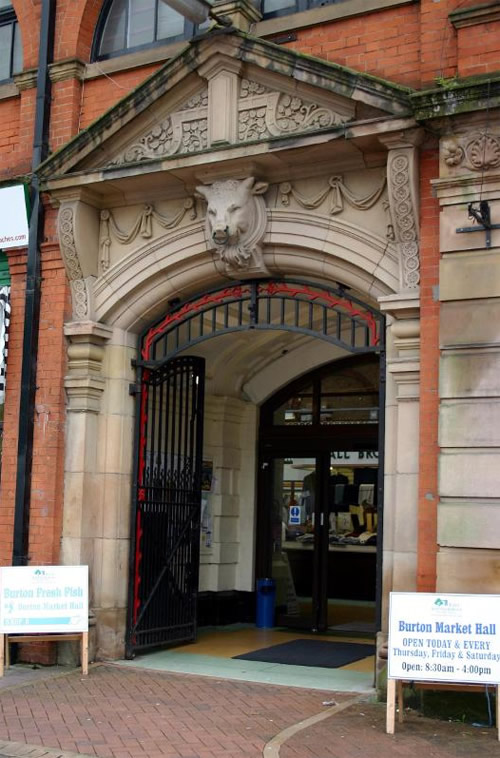
The side entrance of the market building has a sculptural relief of a bull’s head, complete with a ring through its nose. There are also smaller decorative features of garlands and faces at various points on the building.

Market Hall Clock

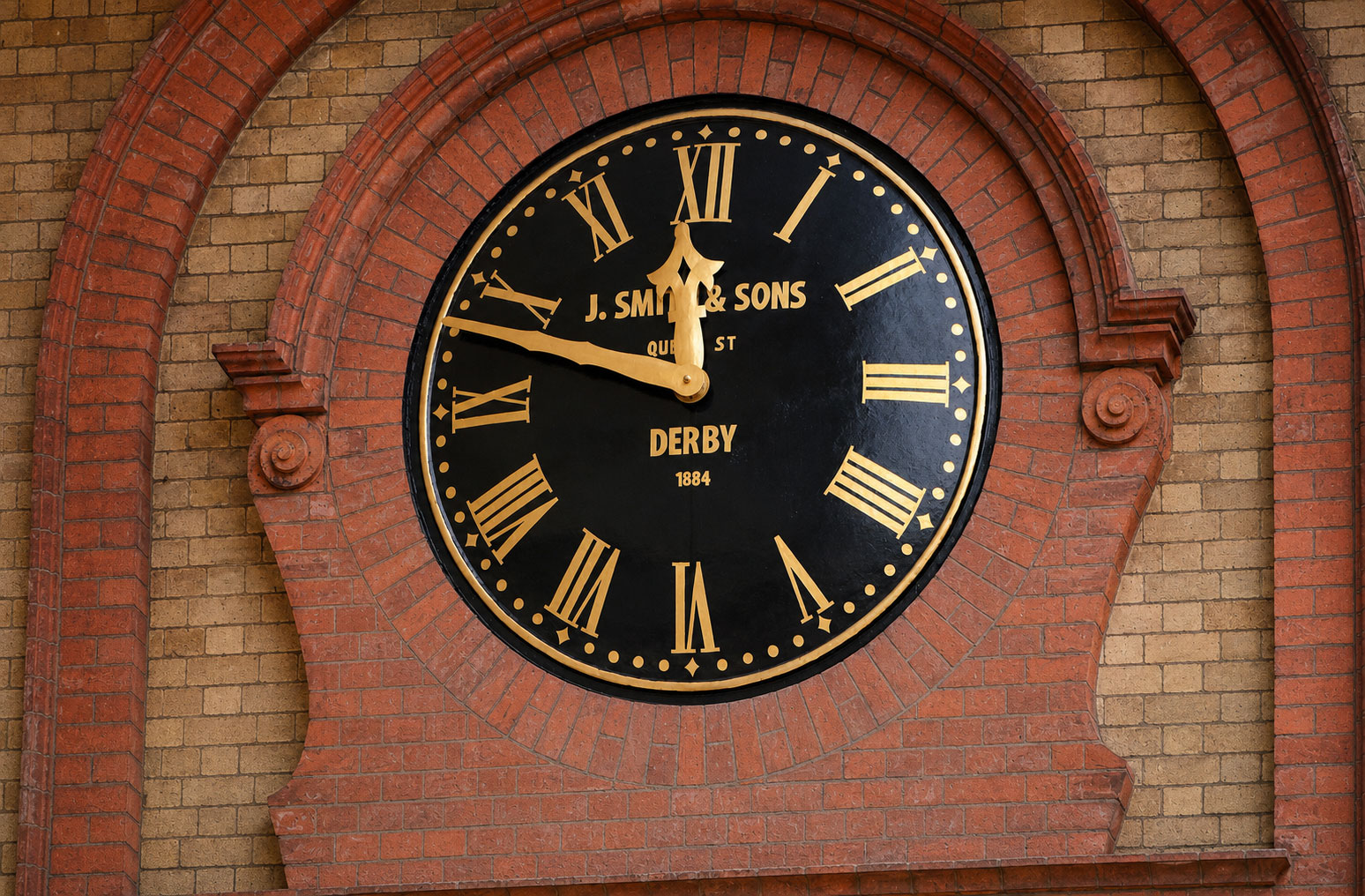
It is easy to overlook the clock in the Market Hall other than to check the time to see if it is correct. The clock was custom commissioned by Derby based J. Smith & Son in 1884, the clock tells its own story so far!

The clock company was though, one of the most renown in the country so was very prestigious at the time of install with no expense spared.

Some of the other clocks installed include:

  • St Paul’s Cathedral Clock Tower, London 1893
  • Trinity College Clock, Cambridge 1910
  • St Pancras Station Grand Brassier Clock, London
  • Fortnum & Mason Tea Salon, London
  • Salisbury Cathedral Clock, Salisbury (complete restoration)

To name but a few of a long list. During the war, the company was commandeered to manufacture dashboard clocks and precision instruments for military vehicles and aircraft including spitfires. After the war, it returned to become a staple manufacturer of large clocks for major buildings, churches, railway stations, schools and colleges etc.

It is comforting that the company still exists and that the Market Hall clock still keeps perfect time but needs regular winding.

Market Scenes

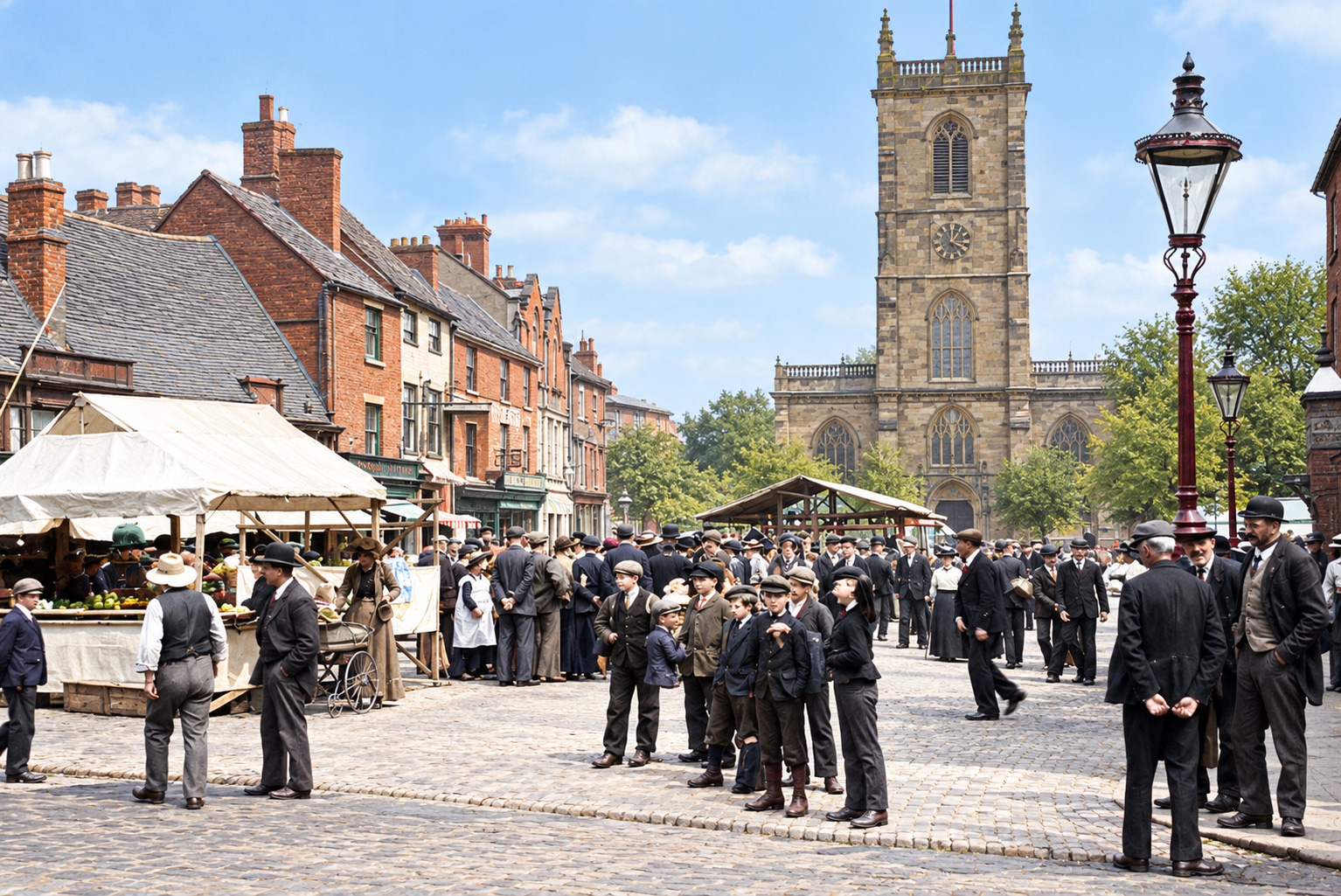
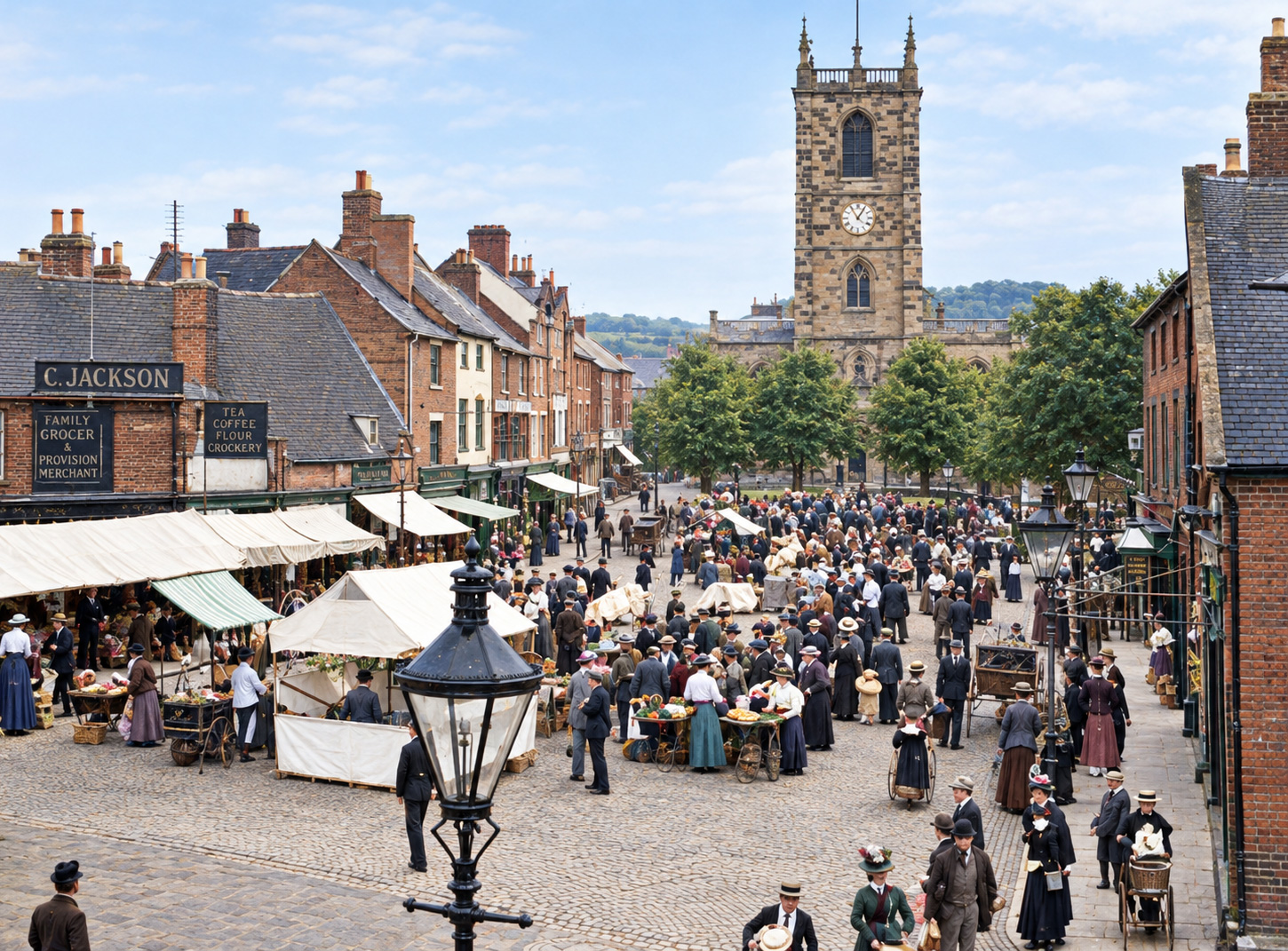
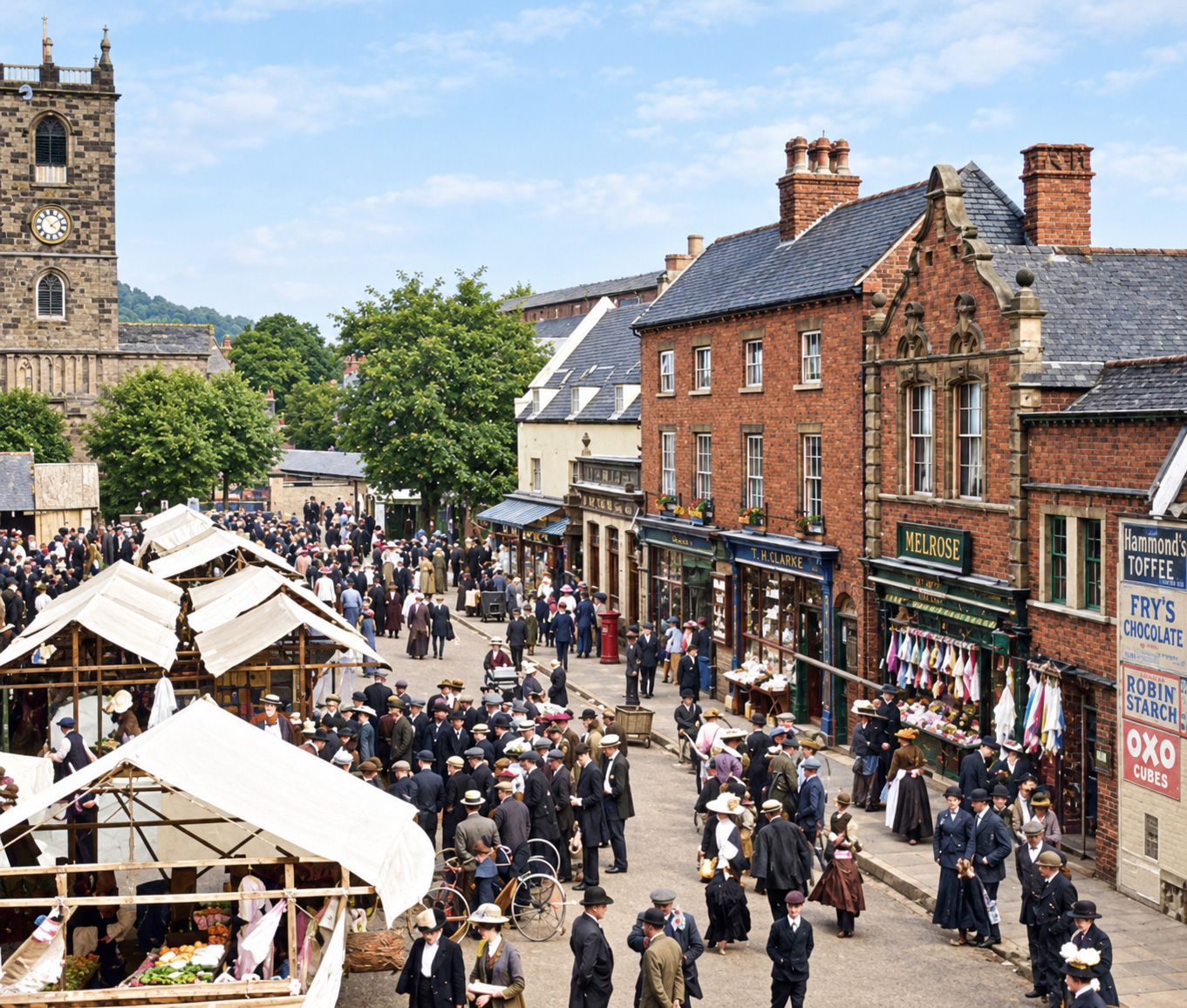
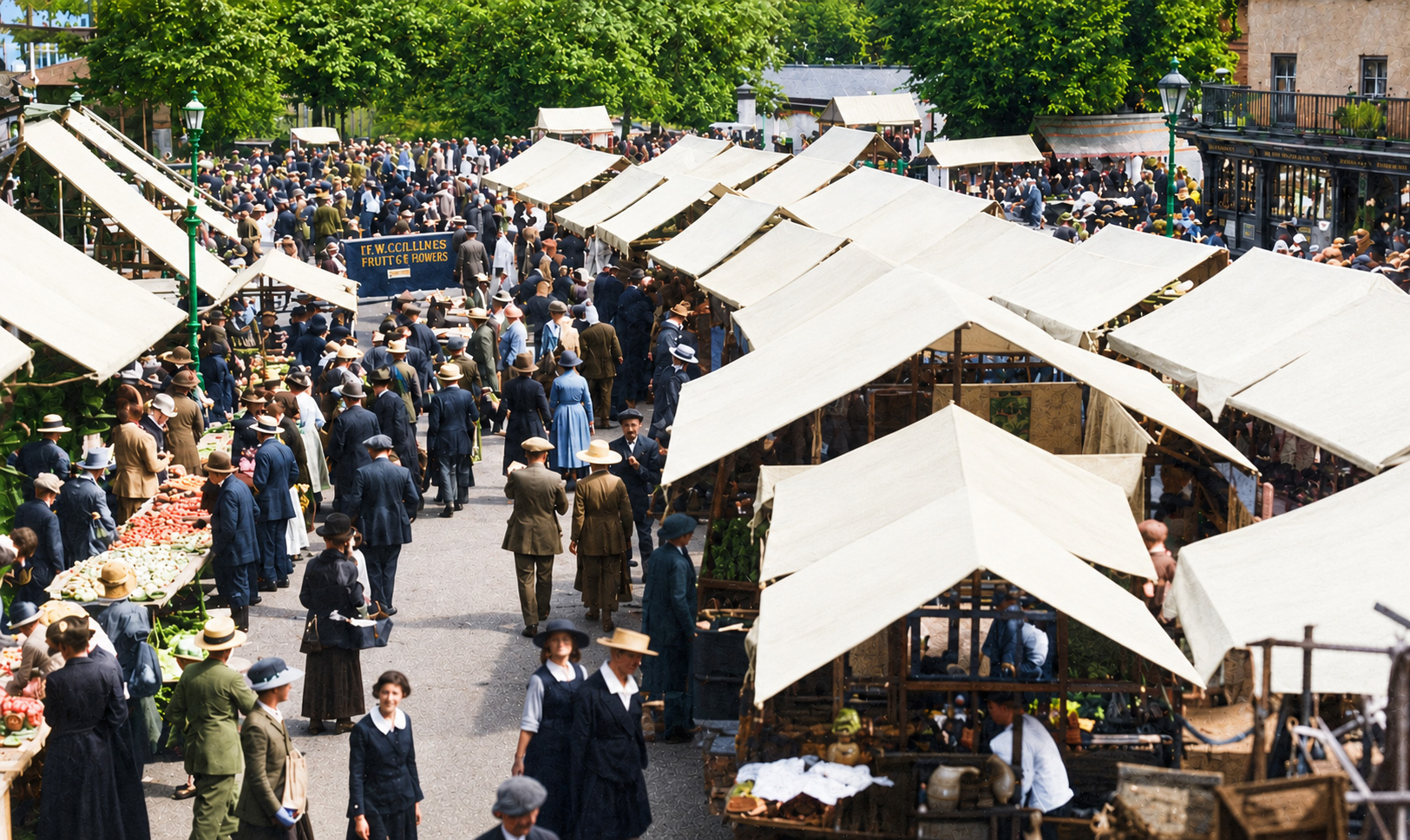
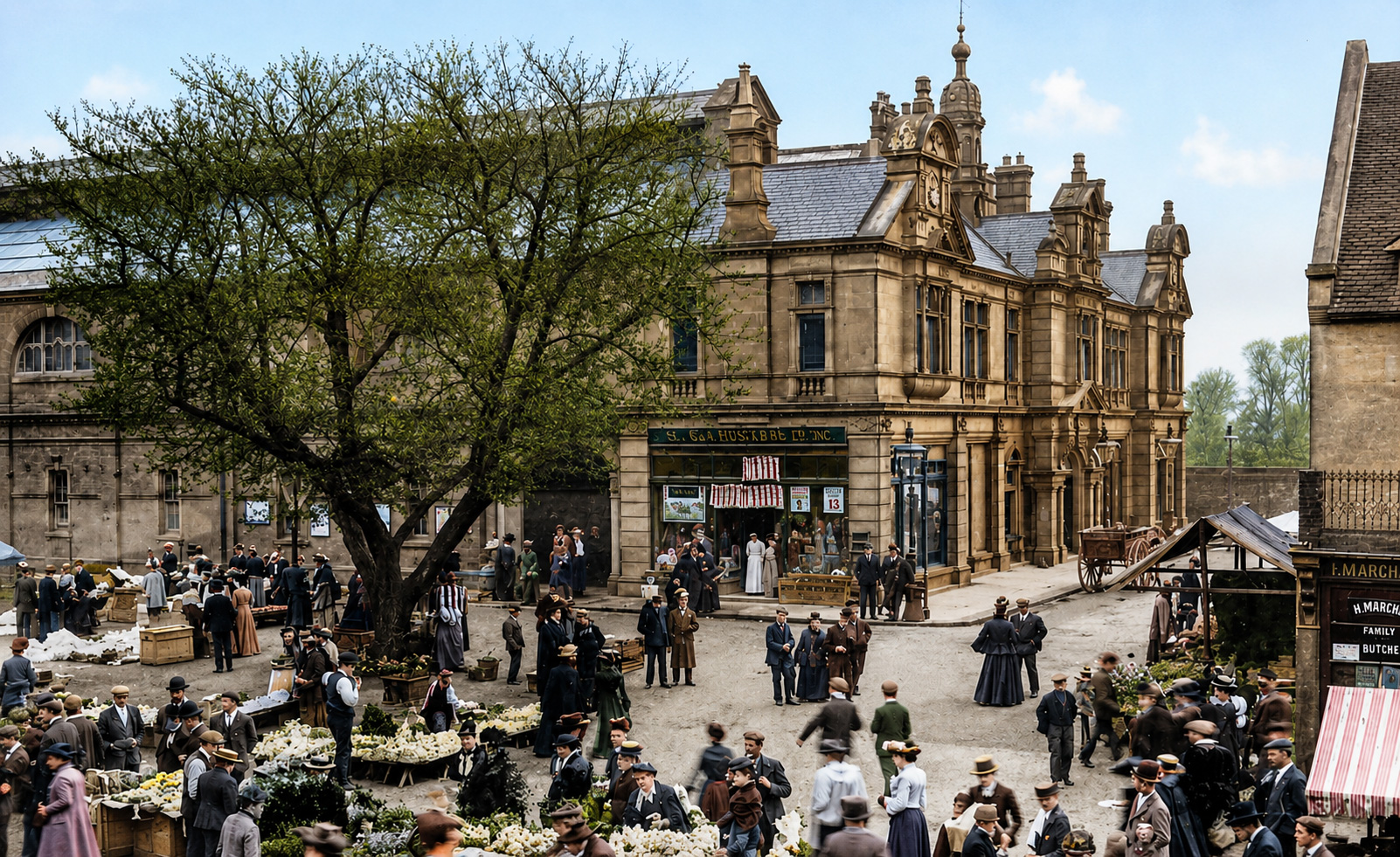
Some wonderful (if you will allow me to say so) restorations of early photographs of Burton Market from 1890 to 1920

The outdoor market adjacent to the recently completed Market Hall, the new pride of the town.

The Statutes fair held on the first Monday following Michaelmas, was originally a hiring fair to match employers looking for workers with those seeking employment.

Bustling market but not yet many formal stalls.

The market busier than ever now with formal lines of permanent stalls which traders were allowed to rent.

The market in its heyday in the 1920s after the recovery from World War I