Menu Close

1002 Burton Abbey

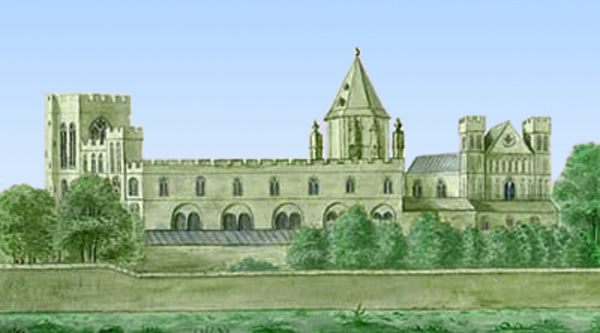
I was dumbfounded to first learn of the sheer scale of Burton Abbey which occupied a 14 acre site. I remain amazed that I could have lived in Burton for decades before discovering that such a huge structure ever existed. What I had always known as the Abbey was in fact, a relatively small annex which spent at least some of its time as an infirmary. The complete Abbey in fact extended to include all of what is now the Market Hall and Saint Modwen’s church.

Burton Abbey

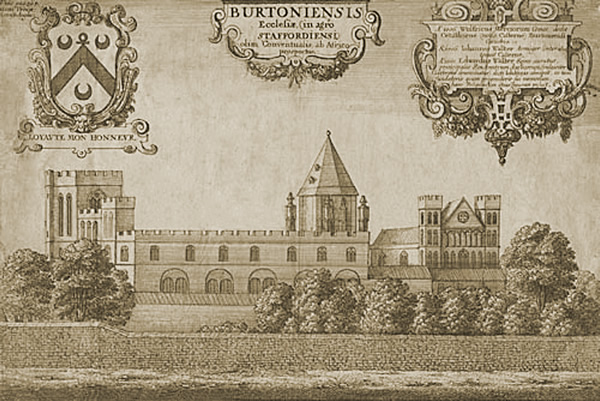
The above picture is my re-creation based on the below 1661 engraving by W. Hollar that appears in numerous sources and can be found on a plaque of the outside wall of the Coopers Shopping Centre close to the ‘Market Entrance’.

Burton Abbey Engraving

Select page to view:

Burton Abbey – Medieval History

Burton Abbey featured in the Domesday Book in 1086 where it appeared as the abbey of Saint Mary. It was recorded as also controlling lands outside of Burton, included Mickleover, Appleby Magna, Coton in the Elms, Caldwell and Ticknall.

By 1310, the abbey had been reduced to one of the smallest and poorest Benedictine monastery in England, suffering a number of severe financial difficulties often due to mismanagement and outright criminal behaviour. At this time, the number of monks had been reduced to around thirty. Even so, as an abbot, the holder of the position between 1295 and 1322 was summoned to attend the ‘Parliament of England’.

By the 1520s, the number of monks had been reduced to less than twenty but, almost contradictary, the abbey was the most important in Staffordshire and by the 1530s had the highest revenue. The abbot was both a secular lord and, “exercised an independent spiritual jurisdiction”. He was a figure of some standing, regularly serving on papal and royal commissions and acting as a collector of clerical taxes within the diocese.

There have been a number of Royal visits to the abbey. William I came on a visit to the shrine of St. Modwen; Henry II was at Burton in 1155, John in 1200, 1204, and 1208, Henry III in 1235 and 1251, Edward I in 1275 and 1284, and Edward II in 1322 during the campaign against Thomas Plantagenet, earl of Lancaster.

Burton Abbey – Tudor History

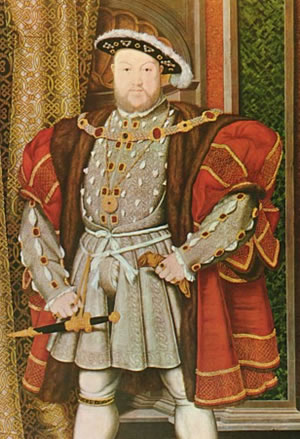
Henry

By the early 1530s the abbot was paying procurement fees to the bishop for Burton, Abbots Bromley, and Mickleover as well as for Ilam and Austrey; he also paid similar fees to the archdeacon for Abbots Bromley and to the bishop for visitations of the abbey.

Although there was general fear for the future of major religious establishments as Henry VIII wrangled with the pope over his ‘Great Matter’, this was temporarily overshadowed by the election of a new Burton abbot in 1533 following the promotion of the current Abbot de Bronston to Abbot of Westminster. This caused some excitement because it was the highest office ever attained by any monk of Burton.

Bishop Lee, under instructions from Thomas Cromwell, went to Burton in June with Richard Strete, Archdeacon of Derby, and David Pole, the vicar general, and “so sped the election” that the community agreed to leave the choice of a new abbot to the bishop and the archdeacon, stipulating only that one of themselves should be chosen before the 1st August. Cromwell’s original candidate seems to have been ‘the monk Baylye’, but William Edys, the ‘third prior’, was actually appointed.

By 1536, Henry was installed as Head of the Church of England and had laws, now known as the first dissolution, had been enacted to allow the King to seize any church building with an income of less than £200. Many were confiscated. Some were pillaged and destroyed, other smaller ones were turned into graineries, barns and stables.

Early in 1538 Francis, Lord Hastings, wrote to Thomas Cromwell to point out that Burton Abbey “lay very conveniently” for him, adding that he would have asked for it earlier but for an attack of measles. Later the same year the Crown tried to secure the tithes of Austrey for a royal official, but the abbot replied to Cromwell that the income was “so necessary to our house that we cannot do without it”. The Abbey was the centre of life in Burton; it was also a place of pilgramage to the shrine of Saint Modwen and received around £2 per year in offerings. The suppression of ‘Idolatry’ (worship of false idols) was one of the leverages used by the crown.

Sir William Bassett of Meynell Langley, a manor a few miles to the North-West of Derby, received instructions from Thomas Cromwell at the end of August 1538 “that such images as you know… so abused with pilgrimages or offerings… you shall for avoiding that most detestable offence of Idolatry forthwith take down”. Sir William carried out his task and replied to Cromwell in a letter, as follows:

Right honourable my inespecial good lord, according to my bounden duty and the tenor of your lordship’s letter lately to me directed, I have sent unto your good lordship by this bearer, my brother Francis Bassett, the images of St Anne of Buxton and St Modwen of Burton upon Trent which images I did take from the places where they did stand, and brought them to my own house within 48 hours after contemplation of your said lordship’s letter, in as sober manner as my little and rude wits would serve me. And for that there should no more idolatry and superstition be there used I did not only deface the tabernacles and places, where they stand but also did take away the crutches, shirts and sheets with wax offered, being things that did allure and intice the ignorant people to the said offerings, also giving the keepers of both places admonition and charge that no more offerings should be made in those places till the King’s pleasure and your lordships be further known in that behalf. My lord, I have locked up and sealed the baths and wells at Buxton and none shall enter to wash them till your lordship’s pleasure be further known. Whereof I beseech your lordship that I may be ascertained again at your pleasure and I shall not fail to execute your lordship’s commandment to the uttermost of my little witt and power. And the trust that they did put in those images and the vanity of the things, this bearer, my brother can tell your lordship better at large than I can write for he was with me at the doing of all and in all places, as knoweth good Jesus, whom ever good lordship in his blessed keeping. Written at Langley with the rude and simple hand of your assured and faithful orator and as one ever at your commandment, next unto the King to the uttermost of my little power.

Signed William Bassett (Knight)

William employed his brother, Francis Bassett – a servant to Thomas Cranmer, archbishop of Canterbury, to physically remove the statue. The statue was removed, its receptacle heavily defaced and further pilramages and offerings were outlawed.

On 1st September, Thomas Thacker, Steward to Cromwell, wrote to his Master telling him that Francis Bassett had delivered to Austin Friars (Thomas Cromwell’s main residence) in London, “the image of Saint Modwyn with her red cow and her staff which women labouring of child in those parts were desirous to have with them to lean upon and to walk with“. This is the best available description of the object.

Thomas Cromwell fell from grace a few years later and was arrested being accused of many crimes, most significantly treason. Cromwell was condemned to death without trial and beheaded on Tower Hill on 28 July 1540 (the day of the King Henry VIII’s marriage to Kathryn Howard). Following his death, an inventory was taken of his belongings which showed an extensive collection of treasures that had been confiscated from the church for supposed destruction. It has not been possible to identify the images of St Anne and St Modwen mentioned in the letter from Sir William Bassett.

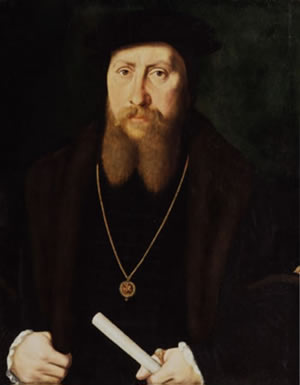
PagetAs the Dissolution continued, many great Abbeys such as Glastonbury, Shaftesbury and Canterbury which had flourished as pilgrimage sites were reduced to ruins. Some were gifted to the Kings most ‘loyal subjects’. In 1539, Abbot Edys was finally forced to surrender Burton Abbey. Rather than being destroyed like most abbeys, it was later gifted, together with extensive grants to lands including what is now Cannock Chase, to Sir William Paget (pictured) – a close adviser to Henry VIII who later became 1st Baron Paget of Beaudesert. This fortunate survival left the abbey one of the largest in the country. The abbot’s probate jurisdiction in Burton also passed to the Pagets, who continued to exercise it until 1858.
In February 1539 Dr. John London was at Burton and on 14th November the abbot and community surrendered their house and its possessions to Dr. Thomas Legh. Pensions ranging from £6 13s 4d to £2 were assigned to 7 monks: 5 priests, a deacon, and a novice. The abbot and probably four remaining monks became members of the new college at Burton which was already being planned, though it was not actually founded until 1541. Robert Heathcote, one of the deacons, and Humphrey Cotton, the novice, were recorded as in receipt of their pensions when they died in 1552 and 1563.

The chronology of the dissolution of Burton Abbey was as follows:

  • 1533 – William Edys appointed as abbot
  • 1535 – Burton Abbey surveyed and valued at £513 19s 5d (gross)
  • 1536 – Act dissolving lesser monastries due to siful, carnal and abominable living
  • 1538 – Thomas Cromwell instructs William Bassett to remove St Modwen statue to avert Idolatry (idol worship)
  • 1539 – Abbot Edys surrenders abbey to the crown under second act of dissolution
  • 1541 – New collegiate Church of Christ and Saint Mary established
  • 1545 – Collegiate dissolved and few remaining monks pensioned
  • 1546 – All former abbey lands and possessions awarded to William Paget

A descendent of William Paget became the 1st Marquess of Anglesey in 1815. The title still exists and the current Marquess still has title to most of the land in Burton.

Burton Abbey – Development History

The abbey precincts occupied an area bounded on the east by the River Trent and on the west by the present High Street and Lichfield Street. The whole site extended to 14 acres.

The church stood at the northern end of the site on ground now occupied by part of the Market Place and by the 18th century church of Saint Modwen. The cloister and the conventual buildings lay immediately south of the church, an area now largely covered by the current market hall. Further to the south and west was a walled courtyard with an outer court beyond. The latter was approached from the west through the gatehouse. South-east of the cloister and next to the river was a detached building thought to have been the infirmary.

There is very little remaining evidence of the monastic layout but there are a few surviving plans of the church and cloister drawn up in the mid 16th century. The church is known to have been divided into an upper and a lower church, that is, a monastic east end or choir and a non-monastic nave to the west, although the plan does not indicate any clear divide. It shows transepts on either side of the chancel with a tower above the crossing. A tower is also marked at the west end between two smaller transepts or porches. The nave extends westwards beyond the tower, and it has been suggested that this projection may have been a large porch.

Burton Abbey

The most famous image is the above 1661 engraving from the river by Wenceslas Hollar but this does not entirely agree with known records so contains ‘artistic license’ and is therefore, a partly speculative re-constructed from another Benedictine abbey of the time with better surviving plans.

The chancel (part of the church near the altar) had fallen into ruin after the dissolution, but a south leg of the transept (main cross-shape) ending with an ornate gable with angle turrets that most likely late date from the 13th century. There is a polygonal central tower as well as an embattled north-west tower with tall traceried windows. Any westward extension of the nave has either disappeared or is hidden by trees. It has been suggested that the curious fenestration of the south wall of the nave may be due to a lowering of the aisle roof after the dissolution, and the consequent exposure of a Norman  triforium (arcade above the arches of the nave) which was later glazed. The row of five arches, each enclosing a pair of round-headed openings, is typical of such a triforium. The clerestory (upper row of windows) and embattled parapet above appear to be of later medieval date.

It is possible to trace the history of several of these features. The early 11th century church seems to have been divided into an upper and a lower church. In 1114, at the end of his abbacy, Abbot Nigel (or Niel) began building at the western end of the church, and his successor Geoffrey (1114-50) erected an elegant tower, roofed with lead, over the choir. The central part of the church shown in the engraving most probably dates from this period. The east end was re-modelled in the late 13th and earlier 14th centuries.

The chancel was rebuilt under Abbot Packington (1281-1305) and the work was completed around 1293. A new high altar was dedicated by Abbot de Burton (1305-16) at the end of 1305, and Abbot Bryknell (1340-7) was responsible for a great window over the high altar. The bell tower mentioned in 1340 as adjoining the market-place would be the north-west tower of the church, and this is probably the tower mentioned early in the 14th century. Abbot Ibstock (1347-66), possibly while he was still almoner, rebuilt the northern side of the lower or parish church. Abbot Southam (1366-1400) recast the three great bells in the tower of the lower church. Under Abbot Sudbury (1400-24) Richard Creyhton while sacrist carried out some work in stone in the chancel and re-roofed the lower church. Richard Babe as prior and sacrist was responsible for some stone work in the tower of the upper church and also for new stalls in the choir. Under Abbot Henley (1433-55) the tower of the lower church was completed and a bell placed in it. In 1474-5 the tower of the upper church collapsed, causing extensive damage to that part of the building. Abbot Feld promptly repaired the damaged walls, rebuilt one of the four pillars of the choir and the arch between the upper and lower church, erected a new high altar with steps to it, re-roofed the upper church, and began a new tower.

There were several side chapels and altars in the church. The altar of Holy Cross is mentioned in the early 13th century and again in 1254. Abbot de Lisle (1222-9), having come from Bury St. Edmunds, built and endowed a chapel of St. Edmund. This was repaired by Prior Richard Lythum shortly before 1428 when the bishop granted an indulgence to all who said prayers and masses there for the dead, and especially for the souls of Richard and his parents. The chapel of St. Mary was begun under Abbot Laurence (1229-60), and in 1254 money was assigned to the sacrist for the maintenance of a lamp before the altar of St. Mary. Around the same time, a further gift was made for a candle before the statue of St Mary during the celebration of her daily mass. The chapel was evidently completed during the time of Abbot Stafford (1260-81) together with prior Michael. It was the most important of the chapels, with its daily mass, its own keeper and, by the 15th century, its own singers. In 1335, its revenue from endowments was £4 a year.

The altar of St. Nicholas is mentioned in 1254, and in 1305 Abbot Burton dedicated the altars of the Apostles and the Martyrs. Ex-Abbot Southam was buried in the chapel of the Martyrs in 1401. The chapel of the Confessors was built by Abbot Longdon (1329-40), and ex-Abbot Sudbury was buried there in 1425.

Some time after the foundation of the abbey the remains of Saint Modwen were transferred there from their previous resting place on the island of Andressey, near the current day ‘Cherry Orchard’. A replacement shrine was built in the abbey; decorated with gold, silver, and jewels, it was ‘satis preciosum’ by the time of Abbot Leofric (1051-66), who despoiled it to buy food for the poor during a famine. William I visited the shrine. It was rebuilt early in the 15th century by Prior Babe. 

Andressey, however, remained sacred to the memory of St. Modwen. A chapel of St. Andrew there was dedicated by the bishop early in the 13th century and endowed by Abbot Melburne. It had its own keeper, and in 1535 its income from offerings was £2. It was rebuilt by Abbot Feld (1473-93) and was by then known as the chapel of St. Modwen. It was evidently here that the statue of St. Modwen was kept ‘with her red cow and her staff which women labouring of child in those parts were very desirous to have with them to lean upon and to walk with it’. 

At the end of Friars walk was an inlet from the river that ran into a large pond called the Stew Pond and was also know as the Harbour. The lawns next to the present day library stand on the site of the original pond. This was where the monks kept their fish stocks. The Stew Pond ran into the Hay Ditch which was an artificial channel that ran from the Stew Pond to Bargates. It passed along the bottom of the gardens in the High Street and was crossed at intervals by small wooden bridges to gain access to the Hay Walk. The ditch served as both an irrigation ditch and as a way of keeping fresh water flowing into the Stew Pond.

Doors from the upper and lower church gave access to the cloister, which the 16th century plan show as exactly 100 feet square. Some rebuilding of the cloister was carried out in 1431, beginning at the corner against the almonry – probably the north western corner. Bishop Heyworth’s gifts to the abbey at his death in 1446 included £40 for building the cloister. The chapter-house led off the east walk and was rebuilt by Abbots Longdon (1329-40) and Bryknell (1340-7).

The few remains of the chapter house, cloister wall and parlour doorway are in the grounds of ‘The Abbey Inn’ (now The Winery) at the rear of the market hall. The remains of the doorways were re-discovered by Robert Thornewill, of Thornewill & Warham iron founders in 1850, when he rented the building as a private home.

According to the 16th century plan the east range continued southwards beyond the line of the cloister to support a dormatory above. A stairway shown at the east end of the south walk presumably gave access to it. It is not clear whether the plan depicts the east range at the same level throughout. The dormatory is shown separated from the south transept of the church by three chambers. These chambers may be intended to represent the sacristy, chapter-house, and parlour, or, alternatively, rooms above them, and this part of the east range was evidently roofed separately. The dormatory is shown with six ‘cells’ along each side with a larger one at its south end. The refectory occupied the south range.

The west range accommodated the abbot’s rooms. Abbot Ibstock (1347-66) added the abbot’s private chamber between the great hall and the ‘outward’ chamber, while Abbot Feld (1473-93) erected what was described as the Abbot’s Chamber. The ‘house of stone next to the church’ was given to the almoner by Abbot Laurence (1229-60) was for the reception of the poor.

Abbot de Burton (1305-16) erected a long building by the gates of the abbey, and in 1326 his successor Abbot Bromley assigned it to the chamberlain for use by the brethren as a common chamber.

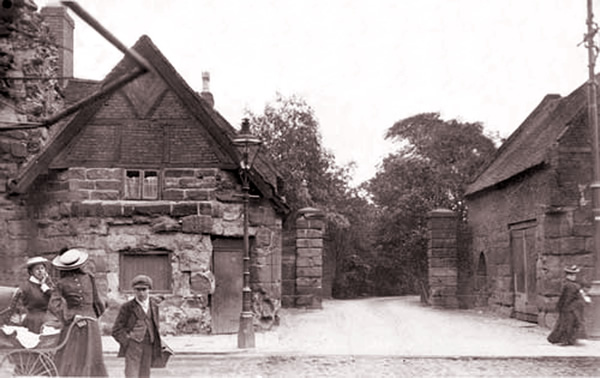
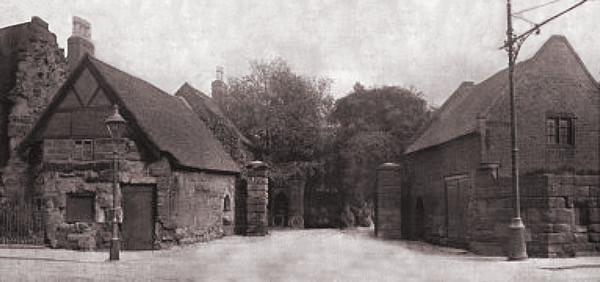
Abbey GatesAbbey Gates 1910

Abbey GatesAbbey Gates 1913

In 1428 Abbot Mathew began building the abbey gates on the west of the precinct. Abbot Henley (1433-55) further extended the work to them. These were situated at what is now the road to The Abbey Inn (now the Winery) between the Market Place and the Memorial Gardens, opposite the end of the present New Street. They are shown in the above late Victorian photo. The remains of the Abbey gates were finally demolished in 1927. Part of the gate and one of the arches were rebuilt in Newton Park where they still stand today.

The Abbey

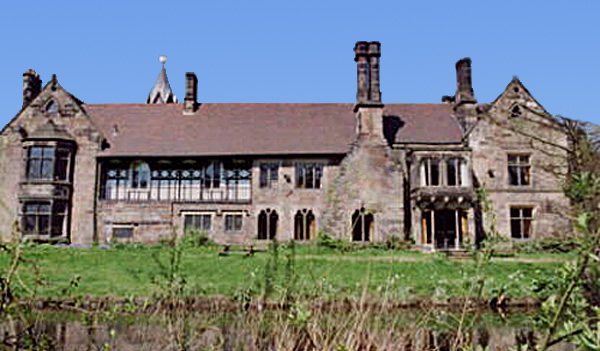
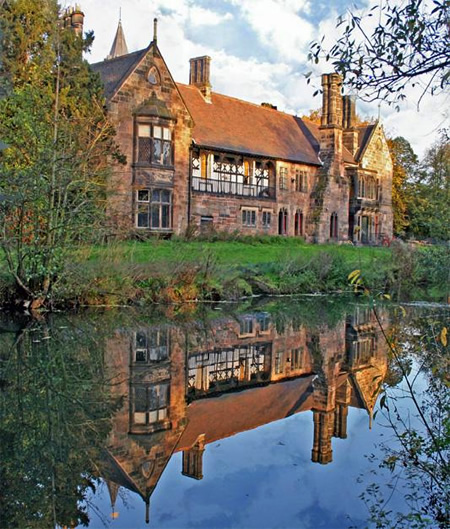
What I have always thought of as ‘The Abbey’ (now slightly frustratingly, known instead as The Winery’) was referred to as “The great hall by the water of the Flete (fleet?)”. It was a separate, detached annex built in the time of William de Bromley who was Burton Abbot from 1316 to 1329 (which included the time when Burton was attacked by Edward II). As well as a great hall, it is known to have included an infirmary. Remains of the medieval building are still incorporated into the present day building but most of what is now seen is a mock Tudor facing as a result of a major renovation.

The Abbey

Remains were excavated in the late 19th century which suggested a partly timber framed structure at right-angles to it.

Burton Abbots

There were 38 Abbots of Burton (although not to be caught out as with American Presidents, this includes one Abbot who served two non-consecutive terms making 37 different ones).

Abbot From Until Notes
Wulfgeat 1004 1027 Formerly of Winchester.
Brihtric I 1027 1050 Formerly of Winchester.
Leofric 1051 1066 Also Abbot of Peterborough (1052–1066), as well as Coventry, Crowland, and Thorney, he was the nephew of Leofric, Earl of Mercia.
Brihtric II 1067 1085 Formerly Abbot of Malmesbury, he was appointed by William the Conqueror soon after Abbot Leofric’s death in 1066.
Geoffrey de Mala Terra 1085 1094 Formerly of Winchester. Expelled for dissipating lands and goods of the abbey.
Niel (or Nigel) 1094 1114 Formerly of Winchester. Began building west end of church.
Geoffrey 1114 1150 Formerly of Winchester. Began building tower over choir. Wrote ‘Life of Saint Modwen’.
Robert I 1150 1159 Expelled for dissipating abbey lands but restored in 1176.
Bernard 1160 1174 Formerly Abbot of Cerne.
Robert I (Repeated!) 1176 1177 Restored but died within a year.
Roger Mal-Branche 1177 1182 Formerly prior of Great Malvern.
Richard 1182 1187 Formerly prior of Rochester.
Nicholas 1187 1197 Formerly prior of Abington. Founded burgage tenure; endowed chamberlain’s and kitchener’s departments.
William Melburne 1200 1213 Formerly of Reading. Endowed St Andrew’s chapel; received Royal Charter to establish the borough and began Horninglow Street.
Stephen de Lucy 1214 1214 Elected but resigned shortly afterwards.
Roger 1214 1216 Formerly prior of Winchester.
Nicholas de Wallingford 1216 1222 Formerly prior of Burton. Endowed almonry.
Richard de Insula 1222 1229 Formerly prior of Bury St Edmonds. Granted mills on Trent; established borough at Abbots Bromley. Returned to Bury St Edmonds to take up post of abbot.
Laurence de St Edward 1229 1260 Formerly kitchener of Burton abbey. Gave stone house next to the church to the poor; began building St Mary’s chapel. Summoned to King’s council in 1257.
John de Stafford 1260 1281 Formerly prior of Burton. Extended the borough; built Monk’s Bridge over the river Dove at Clay Mills.
Thomas de Packington 1281 1305 Formerly prior of Burton. Rebuilt chancel; enlarged borough.
John de Burton 1305 1316 Formerly prior of Burton. Built guest house between tower and sacristry; built Helle – house with paintings depicting heaven and hell.
William de Bromley 1316 1329 Formerly cellarer of Burton. Built a hall and infirmary annex.
Robert de Longdon 1329 1340 Formerly monk of Burton and Prior of Tutbury. Started the chapter-house.
Robert de Bryknell 1340 1347 Former prior of Burton. Completed chapter-house; built window over high alter and barn at Shobnall Grange.
John of Ibstock 1347 1366 Formerly almoner of Burton. Rebuilt north side of lower church.
Thomas of Southam 1366 1400 Formerly chaplain to abbot of Burton. Recast three bells in tower of the lower church.
John de Sudbury 1400 1424 Formerly sacrist of Burton. Pardoned in 1407 for violence and theft and found guilty of rape. Charged with mis-administration in 1422; found guilty of adultery; resigned amid financial crisis!
William Matthewe 1424 1430 Formerly almoner of Burton. Built abbey gates and constructed causeway.
Robert Ownesby 1430 1433 Formerly of St Albans – imposed by bishop for who he had been chaplain.
Ralph Henley 1433 1455 Formerly of Burton. Impoved abbey gates; suspended by bishop for mis-administration, absence, gambling and drunkeness.
William de Bronston 1455 1473 Formerly cellarer of Burton.
Thomas de Feld 1473 1493 Formerly of Burton. Repaired church after tower collapsed in 1474; built abbot’s chamber; built Guild Hall.
William Flegh 1493 1502 Formerly kitchener of Burton.
William Beyne 1502 1531 Formerly prior of Burton. Founded Burton Grammar School.
William Benson 1531 1533 Formerly of Peterborough. Friend of Thomas Cromwell. Became Abbot of Westminster.
John Beaton 1533 1534 Formerly prior of Burton.
William Edys 1534 1539 Formerly prior of Burton. Last abbot who surrendered the abbey as part of the dissolution by Henry VIII

Burton Abbey – Anglo-Saxon History

Burton Abbey

Burton Abbey was founded as a Benedictine abbey in 1002 by Wulfric Spot, the extremely wealthy earl of Mercia thought to be a descendent of King Alfred. In 1004, the abbey received its official confirmation when King Ethelred granted a charter of freedom.

Wulfric Spot died in October 1010 after fighting with with his ranks in support of Ulfrick Ealdorman of East Anglia against the Danes at Ringmere near Ipswich. He was mortally wounded and his body was returned to Burton Abbey where it was buried in the cloister under a stone arch near the door of church next to the body of his wife, Elswitha, who was already buried there. In later times Burton Abbey marked the occasion of his death on 22th October.

In his will Wulfric appointed the king, Aethelred (‘the Unready’), as lord of the abbey and archbishop Alfric and Alfhelm, Wulfric’s brother, as guardians. He also gave estates to senior churchmen and his nephew, Ufegeat, such that they would support the abbey when needed.

The first abbot and monks came from Winchester. This established a long relationship and over the next two hundred years, six of Burton’s abbots would also come from Winchester. The abbey was initially described as the monastery of Saint Benedict and All Saints in royal charters of 1008 and 1012 and appeared in the Domesday Book as the abbey of Saint Mary in 1086. Its dedication to Saint Modwen didn’t actually occur until the 12th century. The abbey was later to include Saint Mary’s chapel.

The surviving will of Wulfic Spot has proved to be an extremely valuable historic document listing in detail the vast estates under his control:

Staffordshire: Burton, Stretton, Bromley, ‘Bedintun’ (in Penkridge), Gailey, Whiston (in Penkridge), Darlaston (in Stone), Rudyard, ‘my little land at Cotwalton [in Stone]’,Leigh, Okeover, Ilam, Calton, Castern, and a hide at Sheen.

Derbyshire: Winshill (now of course, part of the borough of Burton), Sutton-on-the-Hill, Ticknall, Morley, Breadsall, Morton, Pilsley, Ogston, Wingfield, ‘Snodeswic’ (near Morton), ‘Niwantune’ (Newton Solney), and ‘that land at Appleby (Appleby Magna, now in Leicestershire) that I bought with my own money’.

Leicestershire: land at Shangton and Wigston Parva and a hide at Sharnford in Wigston Parva.

Shropshire: Longford, Stirchley, Romsley, Shipley, and ‘Suthtune'(Sutton Maddock);

Warwickshire: Weston-in-Arden, Burton Hastings, and Harbury.

Elsewhere or less certain: ‘Actune’ (probably Acton Round in Shropshire), ‘Halen’ (probably Halesowen,Worcs.), ‘Niwantun at the Wich’ (possibly Newton near Middlewich, Ches.), ‘Tathawyllan’ (possibly Tathwell, Lincs.), ‘Ealdeswyrthe’ (either Awsworth, Notts. or Aldsworth, Glos.), ‘Alfredingtune’ (either Alvington, Glos., or Alfreton, Derbys), and ‘Eccleshale’ (possibly Exhall, Warws., Ecclesall (Yorks or Staffs.), and ‘Waddune’ (possibly Whaddon, Glos.). ‘Waededun’ has not been identified at all.

The abbey was also given a reversionary interest in Elford and Oakley, both in Staffordshire, Wibtoft (Warws.), and ‘Twongan'(either Tong, Salop. or Tonge, Leics.). Half the usufruct of ‘Langandune’ (probably Longdon,Staffs.) was assigned to the monks, and also the enjoyment ‘of meat and of men and of all things’ on the land of the bishop at ‘Bubandune’ (Bupton, Derbys).

Wulfric’s lands between the Ribble and the Mersey and on the Wirral were left to Alfhelm and Wulfage ‘on the condition that when the shad shoals come in, each of them give 3,000 shad to the monastery at Burton’; similarly Conisbrough (Yorks) went to Alfhelm provided that the monks had a third of the fish every year.

Finally, Wulfric left the abbey 100 wild horses and 16 tame geldings ‘and besides this all that I possess in livestock and other goods except those which I have bequeathed’. Most of these lands were mentioned in the royal charter of 1004 confirming Wulfric’s endowment.

Either Wulfric’s intentions were never fully carried out, or else the abbey soon lost much of its original property, perhaps during the Danish Conquest in the early 11th century. Regardless, many of the estates given by Wulfric were not in the abbey’s possession at the end of the Edward the Confessor’s reign, and what remained was confined to Staffordshire and Derbyshire.

In Staffordshire the losses had not been great, and the property there still included Burton, Stretton, Bromley, ‘Bedintun’, Whiston, Darlaston, Leigh, and Okeover; Ilam, Calton, and Castern, though not mentioned in Domesday Book, were held by the abbey in the early 12th century and may have been included under Okeover in the Domesday Survey.

In Derbyshire only Winshill, Sutton, Ticknall, and Appleby remained. Ealdeswyrthe’ and ‘Alfredingtune’ had been exchanged by Abbot Wulfgeat in 1008 with king Aethelred (‘the Unready’) for Rolleston in Staffordshire, but Rolleston too was lost soon after.