Menu Close

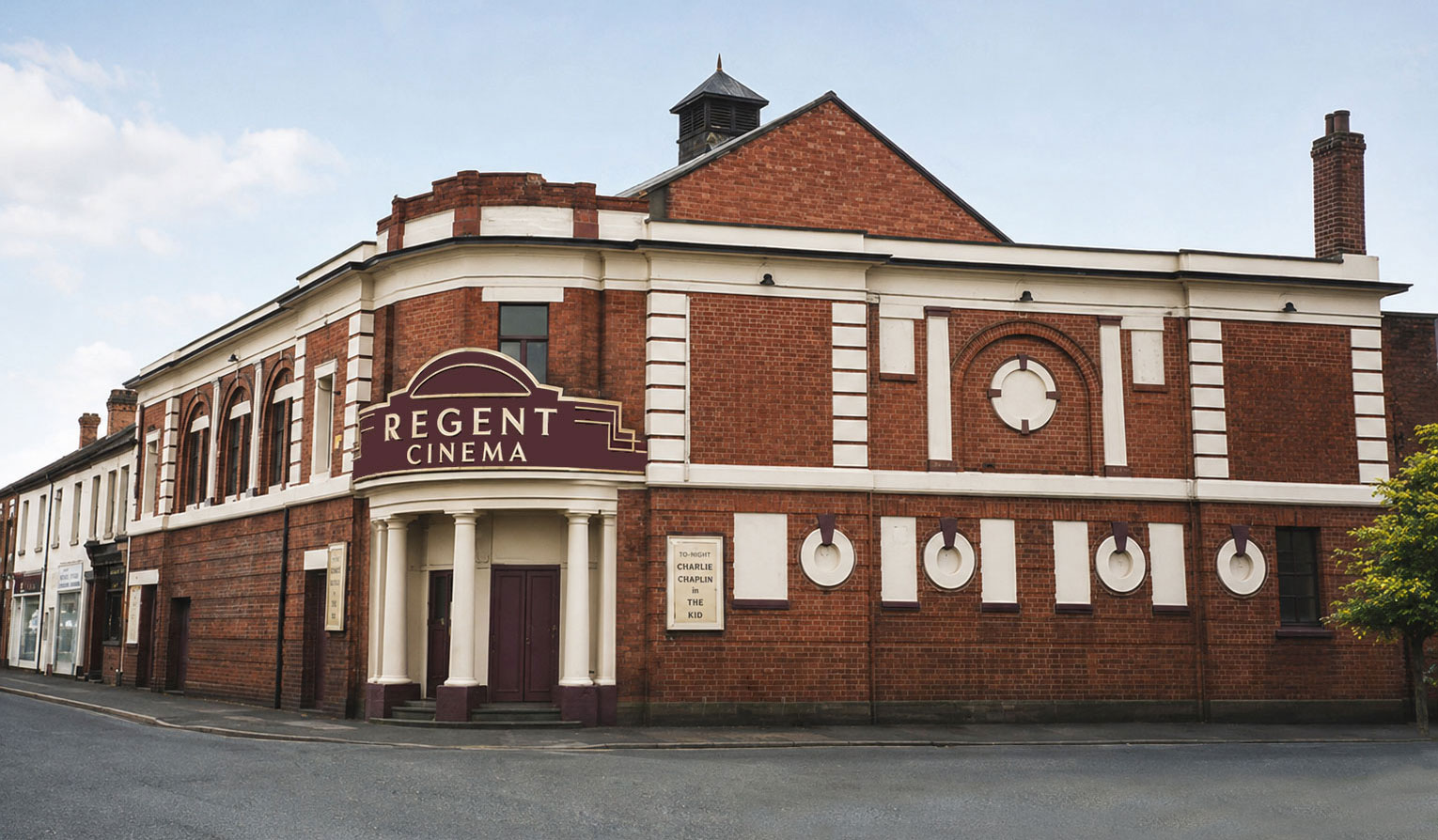
Picture Palace (Regent)

The Picture Palace was a 900-seat cinema that opened on November 17, 1920, at the junction of Dallow Street and Horninglow Road, the Derby Turn Picture Palace opened on Wednesday 17th November 1920. The proprietor was Derby Turn Picture Palace Company Ltd. and the manager was Alfred J. Wise. A 15ft deep stage was provided for variety acts. The proscenium was 30ft wide. There were 900 seats.

By 1922 the manager was S. A. Suffolk, who was later to set up Sheridan Films Services and run his own cinemas. Western Electric(WE) sound was installed; on 28th July 1930 the first ‘talkie’ was “Innocents of Paris” starring Maurice Chevalier. In 1932 the cinema was sold to opposition company Burton-on-Trent Picturedrome Company, who renamed it the Regent Cinema. At this time it is believed the seating capacity was reduced to 690.

The cinema closed in 1940 when it was requisitioned by the government as a Ministry storehouse. Post-war, it became a post office and later, a Bingo Hall.

The building was destroyed by a large fire whilst vacant in 2008.

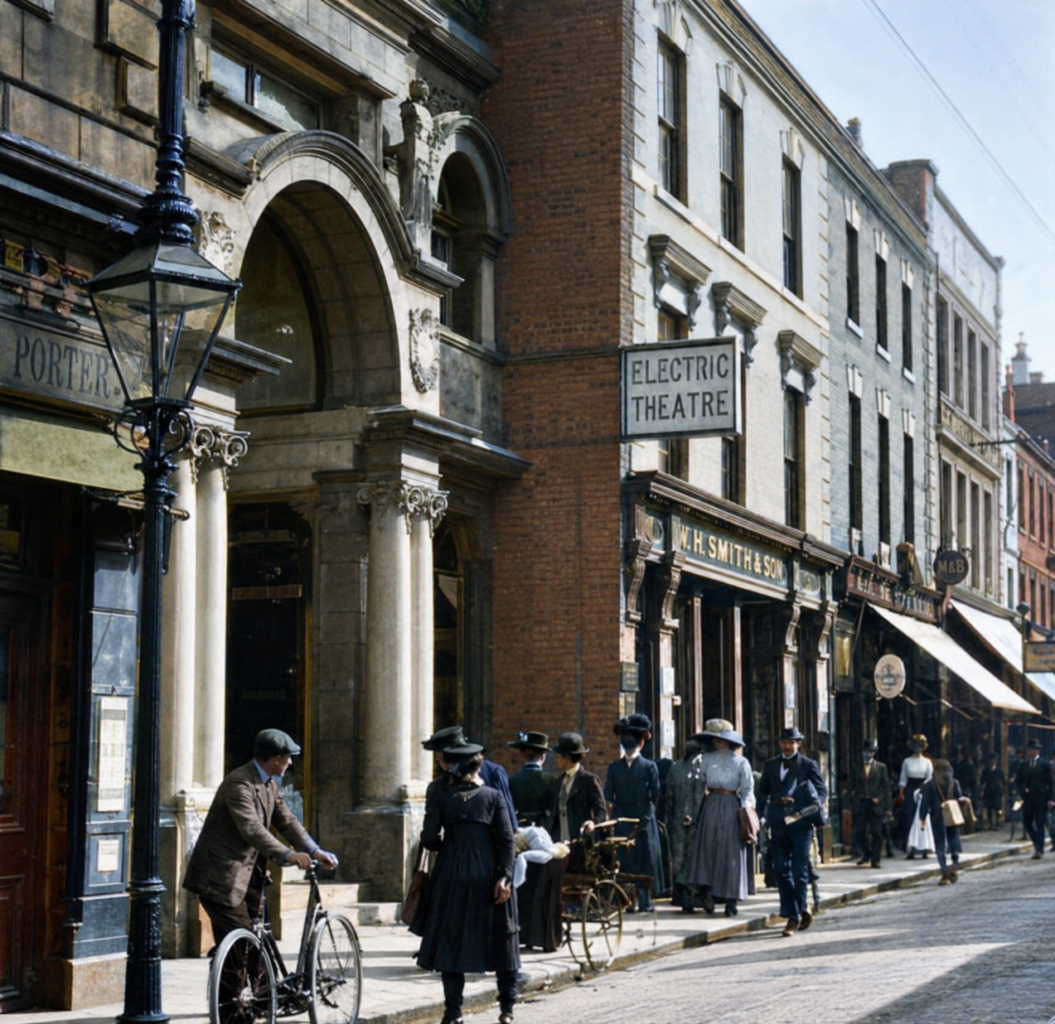
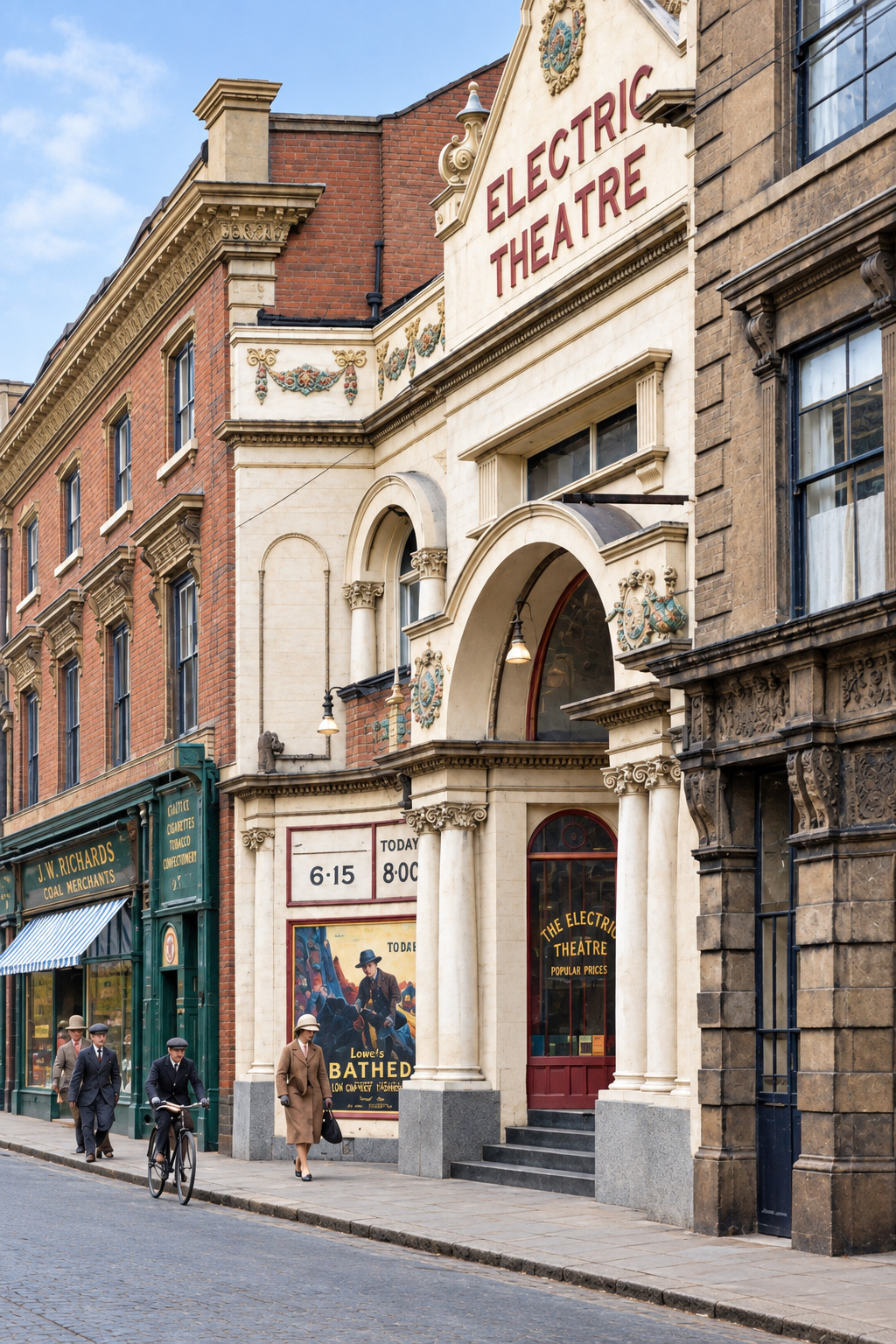
Electric Theatre

The Electric Theatre, generally known as simply ‘The Electric’, in High Street, was purpose-built on the site of the Empire Tea Store with its 750 velvet tip-up seats and tea lounge. It was opened on October 25, 1910, with the enticing ‘The Indiscretions of Betty’.

In 1928, it was taken over by Gaumont British Theatres chain and was closed for the auditorium to be reconstructed and reopened the same year with an increased seating capacity for 1,025. attached café was retained. The interior was remodelled in 1941 to make utilize unused space and increase the capacity to 1,050.

The first talkie (non-silent) picture, ‘King of the Khyber Rifles’, was shown to much excitement in 1929 which spelled the beginning of the end for the piano player.

The cinema closed for a few days, as did all cinemas, on the outbreak of the Second World War in 1939 but was soon reopened with a special showing of Sherlock Holmes starring Basil Rathbone.

It was acquired by Gaumont on November 28, 1949, and was closed on May 29, 1956.

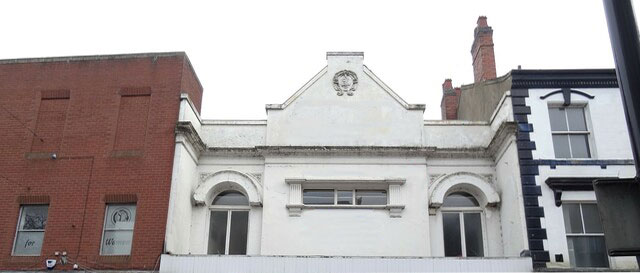
If you glance up at the upper half of the buildings in High Street opposite the banks, you can still see this unassuming piece of history that has seen so much change.

Picturedrome

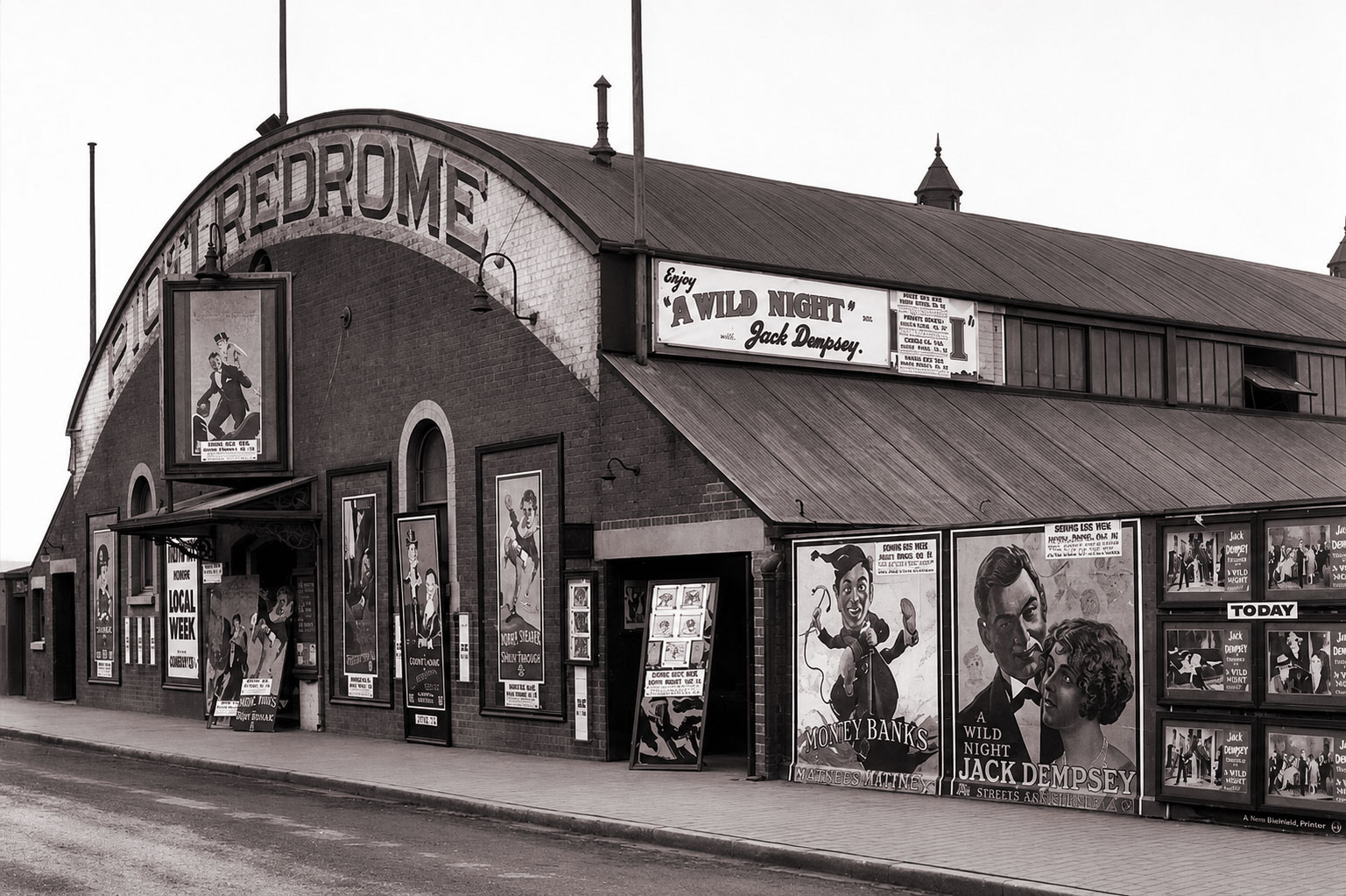
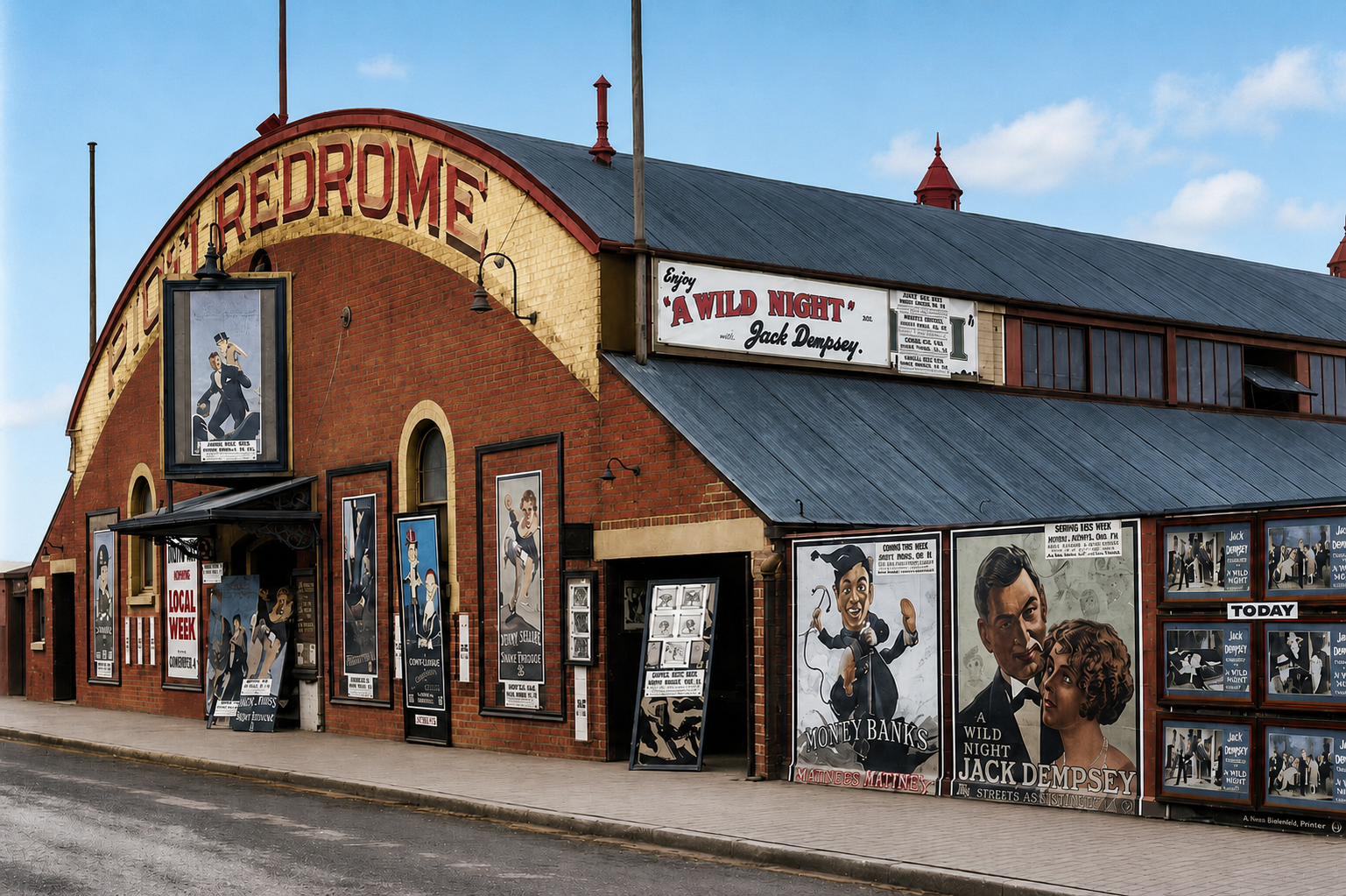
The Picturedrome opened in 1913. It was situated in Curzon Street, adjacent to the Railway Station. Like other cinemas to follow, the cinema was established by local fairground entrepreneurs George Orton, Charles Spooner, and Orton’s sons. It was adapted from what was previously a roller skating rink before being used by the Territorial Army. The building was acquired when it had fallen into disuse after the territorials moved to a superior home at the rear of the police station.

It housed a church organ brought and transported from a London church which was played enthusiastically during the film, which itself of course was silent. In the late 1920s, the Picturedrome had the distinction of showing Burton’s first ever talking picture which was hugely attended. The cinema was serviced by a poster man whose task it was to regularly paste up new posters as the films changed.

The original structure was demolished in August 1931, and a lavish, modern new building holding around 2,000 seats was constructed in just four months. It was designed by architect Alderman Thomas Jenkins and local builders. In 1955, it was acquired by Odeon Theatres Ltd in 1955 and was officially renamed the following year.

It closed as a cinema on June 5, 1965 and the building was transitioned into a Top Rank bingo club, later operating as Mecca Bingo until it closed in December 2003. The structure was subsequently demolished, and a block of flats now stands on the site.

Ritz Cinema

The Ritz Cinema was built in 1935. It was, commissioned by Orton & Spooner, a company based in Burton which earlier in the century had made fairground rides and shows, and later owned the Burton Picturedrome Company. Also so[[prting and involved was Thomas Jenkins, a local architect who had designed the Electric Theatre, of 1910, and conveniently, Mayor of Burton at the time.

It was built on the site of the New Theatre and Opera House, of 1902, which showed films from 1930 which was demolished in 1934. This was a rebuilding of St George’s Hall, a concert hall of 1868. Interestingly, the front of this building was in George Street and the back in Guils Street: the reverse of the buildiding that replaced it.

The cinema is a steel-framed brick building in Modernist style; the façade on Guild Street has above the ground floor entrance a central section projecting forwards, which features five square Crittall Windows, and a row of smaller windows above.

The interior was designed in Art Deco style by Annie Orton, a relation of the owner and after buying a ticket, you entered the door to the left to the stalls and up the stairs through the door to the right for the balcony.

The first film shown at the Ritz Cinema was ‘Blossom Time’. A staple was the ‘Saturday Morning Club’ with a variety of films including the likes of ‘Old Mother Riley’.

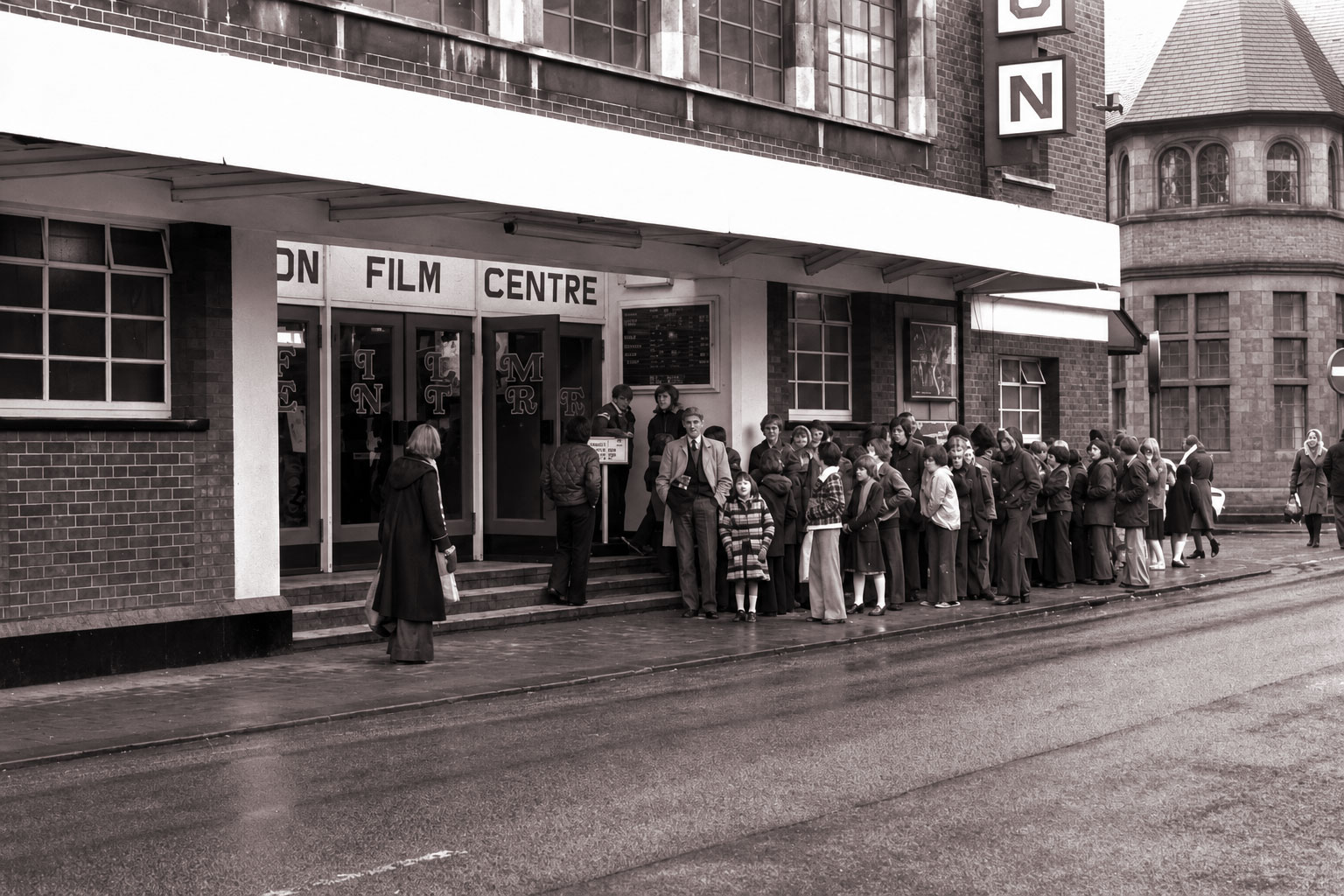
In 1957, it changed ownership and became known as ‘The Gaumont’. It changed again in 1957 to become a member of the ‘Odeon’. Finally, in 1966, it changed to become the ‘Robins Cinema’ although, as can be seen in the above 1870s photo, the Odeon signage remained. It was re-designed in 1974 to have three separate screens.

It was the most successfull and longest lasting cinema in the town, largely due to its central location, but closed as a cinema in 1999.

Burton General Post Office

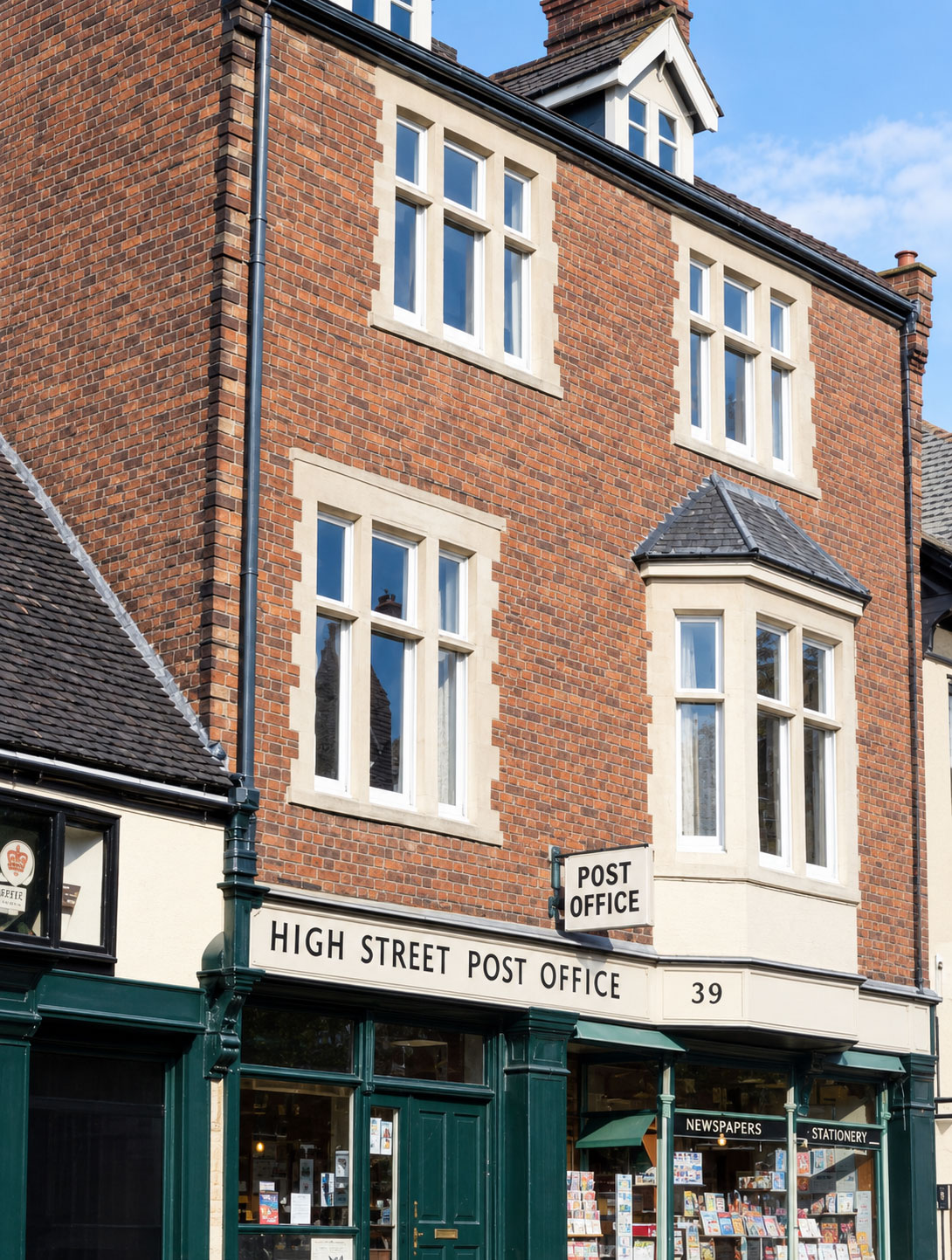
The first recorded Burton postmark was in 1722 although the nearest sorting office was in Lichfield. Burton would not get its own until Post Office for well over another hundred years! The first Post Office was established at 39 High Street.

The first public telephone service available in Burton was 1895 when the National Telephone Company speculatively rented a shop in New Street. The National Telephone Company was eventually absorbed by the GPO and the combined exchange finally moved into new premises in New Street in 1905, built by R.Kershaw Limited which, just two years earlier, had built the Fire Station across the road.

The 1905 building still survives but has struggled to find modern usage.

Postal Service History

The first recorded Burton postmark was 8th October 1722. It arrived at its destination in London two days later. The postage cost, based on mileage, was sixpence (6d) which the recipient had to pay on delivery.

The postmark appeared as BURTON REF 1, which continued to be used until 1768.

Up until 1765, Burton mail from London only travelled as far as Lichfield where it had to be sorted.

In 1765, a number of Staffordshire Members of Parliament, including the MP for Burton, presented a petition to the General Post Office in London complaining both about the service and the high charges added by Burton postmaster, William Stratham. The London to Lichfield postal charge was 4d, but Mr Stratham applied a 2d charge from Lichfield to Burton which was thought of as very unreasonable. It was customary at the time to reply the same day and a further 1d was charged for the return journey. This meant that Burtonians were paying 3d more for the same service available in Lichfield or Derby. In 1765 therefore, the Post Office conceded and introduced a new sorted bag for Burton, avoiding the excess charge. The new bag however, still had to be collected and returned to Lichfield although postmaster Stratham was allowed an extra £60 a year to provide a man and two horses for both Lichfield and Derby.

Horse delivery continued until the Mail Coach System was introduced in 1796 when Burton at last enjoyed its own direct mail service. The route ran through Lichfield-Burton-Derby-Nottingham-Newark; Newark provided the link to the Great North Road which ran up to Edinburgh. The coaches ran to a tight schedule and postmasters at each office signed for each collection and despatch, recording the time.

The earliest recorded local collection service within Burton was 1816. It did not however, prove to be viable and was fairly short-lived.

The post office in 1818 was at the George Inn in High Street. In 1834 it moved to the Three Queens Inn in Bridge Street but was moved back to High Street in 1841. It still stood next to the George in the later 1850s.
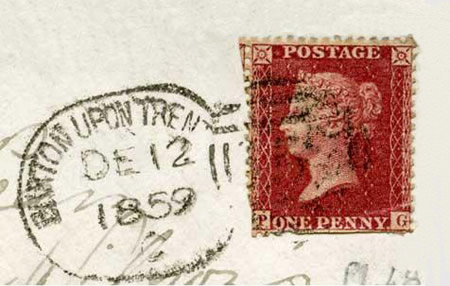
Above shows an 1859 Buron upon Trent postmark and a One Penny stamp of the time. With several collections a day, this was probably being sent to someone else within the town to be read later the same day.
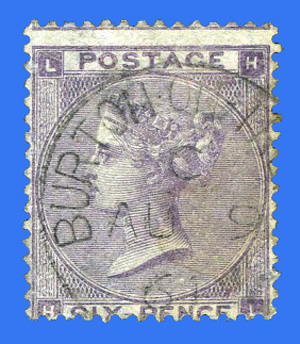
The above stamp, with a Burton postmark dated 9th August 1861, is a Six Penny ‘Lilac’. For half a shilling, this would almost certainly be for a package rather than a letter.

In 1874 the main post office at 162 High Street had Mr Gibson Bowie as Postmaster, William Stone as chief clerk, nine clerks, two stampers, one porter, eight letter carriers and nine rural messangers on the staff. By this time, aside from the main post office, there were ten ‘receiving houses’. These were situated at Newton Road (bottom of Bearwood Hill), Bridge Street, Horninglow Street, Derby Turn, Victoria Cresent, Station Street, Moor Street, Uxbridge Street, Orchard Street and Branston Road.

In 1877 the office was moved to a new building on the site of Parker’s Almshouses on the east side of High Street which was later to become the Constitutional Club.
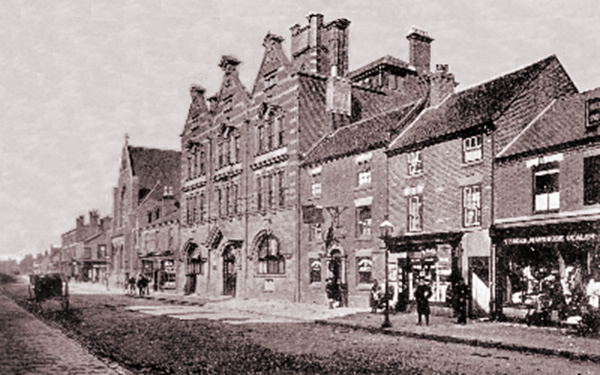
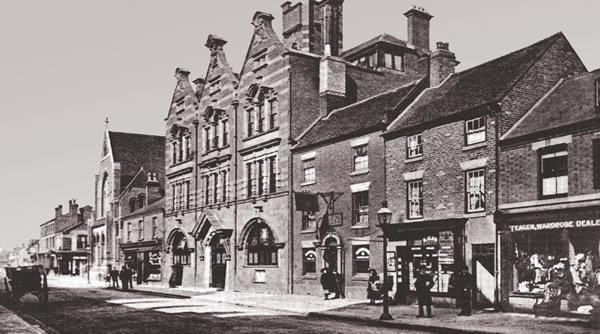
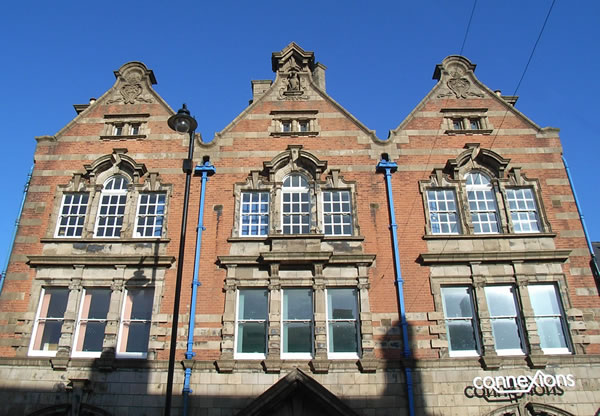
In 1905, it moved again to new premises in New Street. These were built by R.Kershaw Limited which, just two years earlier, had built the Fire Station across the road. At the time, there were 12 sub-postoffices in Burton.
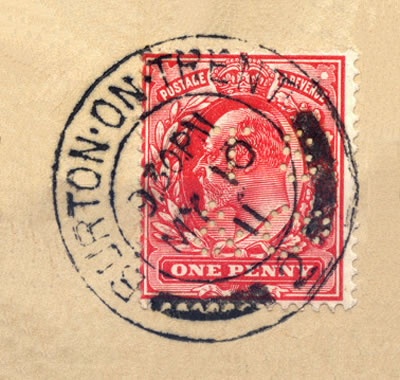
By 1912, there were 19 sub-postoffices distributed around the town but also, a combination of 38 wall and pillar boxes strategically distributed around the town. A few original ones survive characterised by having the Edward VII insignia on the front. Though most of the original sites are still in use, most boxes have been replaced. It was not uncommon for someone to call for the doctor by sending a postcard! Before you scoff however, there were eight collections every day except Sunday, when there were only two. Letters posted in the morning would often reach their local destination before lunchtime and very often, replies were received on the same day. No local post would of course, ever leave Burton unlike todays logistics.
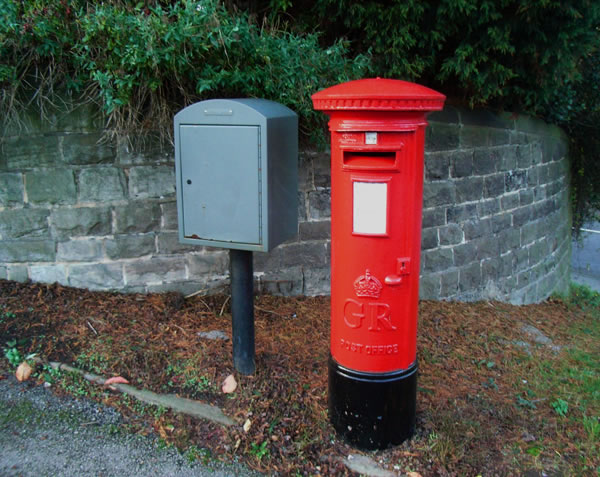
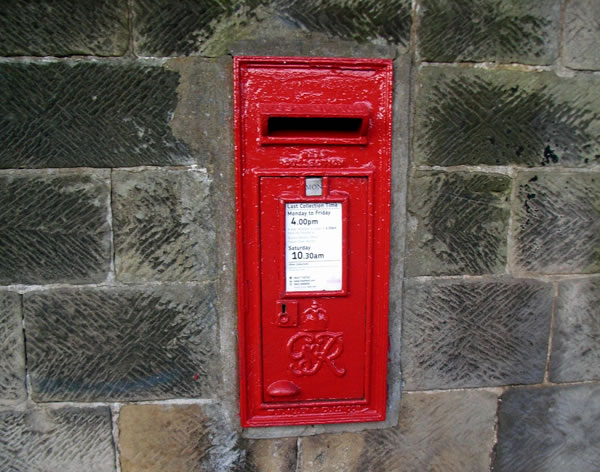
Messenger boys were also available for delivering urgent messages or parcels for which they would receive three farthings.
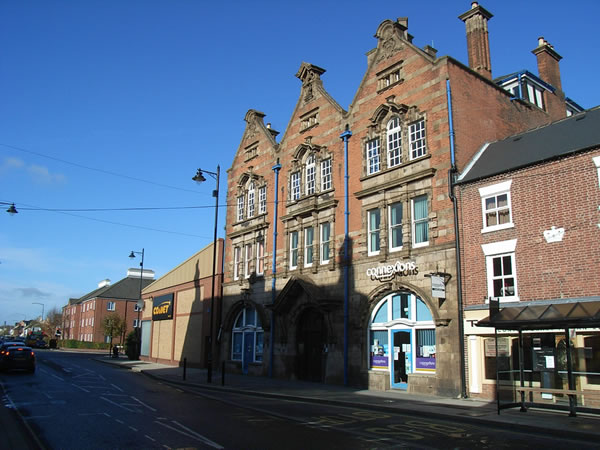
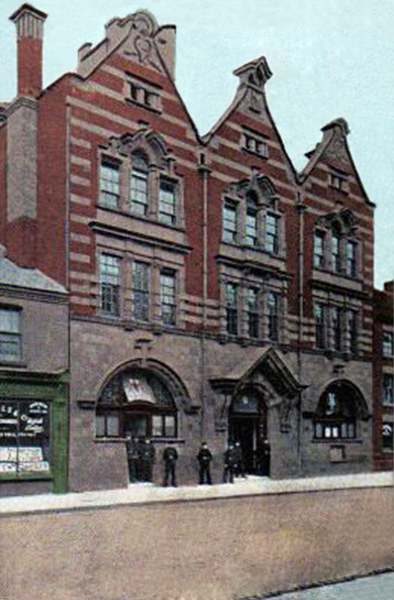
The building can still be seen little changed over 100 years later, alongside some delighful modern architecture (?!).
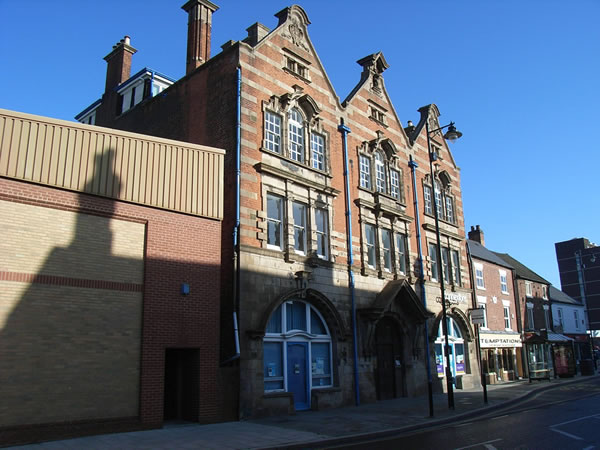
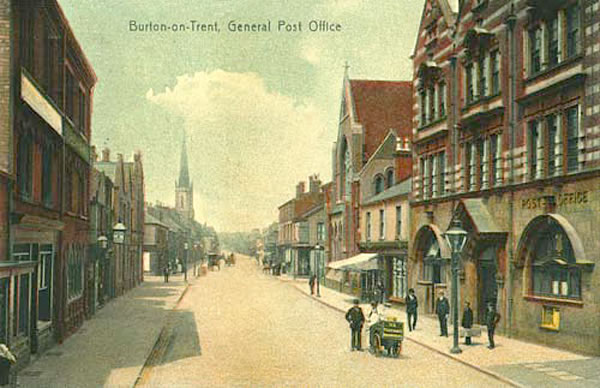
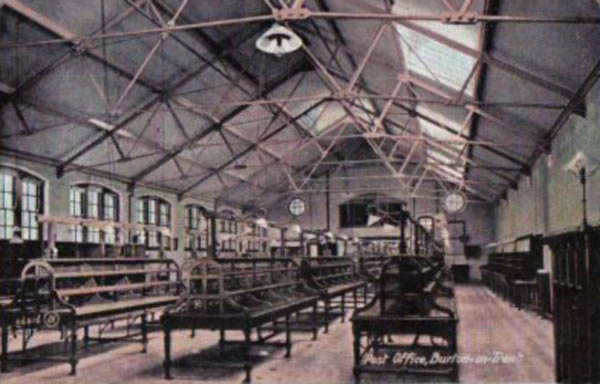
The General Post Office has been the subject of a number of early Burton postcards.
Telephone Service History

There was at the time of course, a much stronger relationship between the postal and telephone services. The first public telephone service available in Burton was 1895 when the National Telephone Company rented a shop in New Street. In 1898, the General Post Office opened an exchange for trunk calls, enabling calls to other towns, when it was still in High Street. The first local telephonist, Miss Clifton, transfered to the Post Office at this time but there was not enough work to have her full-time employed for telephones alone so she also worked as telegraph operator – there were after all, only around 150 telephones in Burton! The annual subscription for a telephone service was £3 3s and calls cost 1d each making them too expensive for the vast majority.

The first telephone system installed in Burton aside from the telephone exchange was incidentally, the Fire Station whilst still in Union Street. Although it is not enormously useful to have the only telephone at least their telephone number was easy to remember; it was ‘1’.

The service was moved to the New Street with the GPO. A few years later, the National Telephone Company was absorbed by the GPO and a combined exchange was opened in New Street across the road from the main post office building.

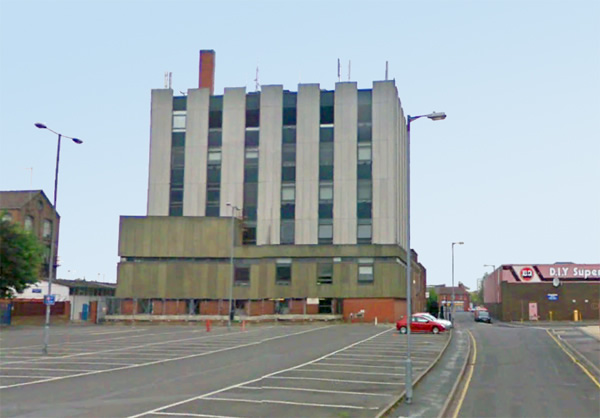
In time, the telephone exchange outgrew the New Street premises and a new large exchange was established in Fleet Street.

Public Library

The first Permanent Library, at a property owned by Mr. R. R. Bellamy in Bridge street, was opened in 1838. It was supported by a number of shareholders and just over 70 subscribers, and contained around 2,000 volumes. The shares were £10 each together with an annual subscription of 16 shillings. Subscribers who were not shareholders were allowed to join for a Guinea (21 shillings) a year subscription making it a fairly exclusive club.

The Burton Literary Society, High street, commenced in 1844 and had a reading room and a library of about 1,100 volumes mostly, but not exclusively, of a scientific nature. It was supported by a subscription of £1 per annum for first class, 8s 8d for second class, and 5 shillings per annum for third class. First class had the privilege of attending the reading room at all hours of the day, second class in the evenings only from 5:00 to 10:00pm, third class only had restricted access. The reading room also had London and provincial newspapers available together with most of the popular periodicals of the day. The Secretary and Librarian was Mr S. Simnett.

The Young Men’s Christian Association (YMCA) in Guild street, established around 1846, introduced a reading room, and library containing about 1,400 volumes. Mr. John W. Lomas was Secretary. In 1867 the (Church of England) Young Men’s Christian Association was transformed into the Mechanics’ Institute. By 1868 it had a reading room and a library of 4,000 books, and by 1871 it had been moved to premises in Station Street.

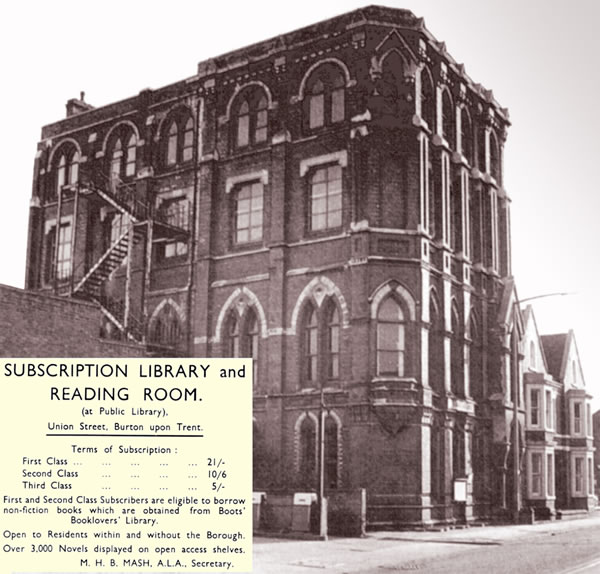
In 1876, the Mechanics’ Institute and the Burton Literary Society were amalgamated as the Burton Institute. This moved to new premises in Union Street in 1879. A very tall in its day, narrow building of four bays designed in Italian Gothic style, by Reginald Churchill of Burton as seen above. The institute occupied the ground floor with a library of now nearly 8,000 volumes and a reading room; the second floor was occupied by the School of Art and part of the third floor by the School of Science.

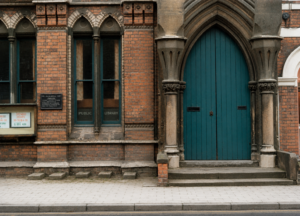
One of the features that sticks in my mind was the impressive green entrance doors.

The institute grew from 650 members in 1888 to 966 in 1896, when it was dissolved and its premises were acquired by Burton Municipal Corporation for use as Burton’s first Free Library, available to everyone. By this time, the collection had grown to 19,000 volumes together with an additional reference only section of 1,700 books…

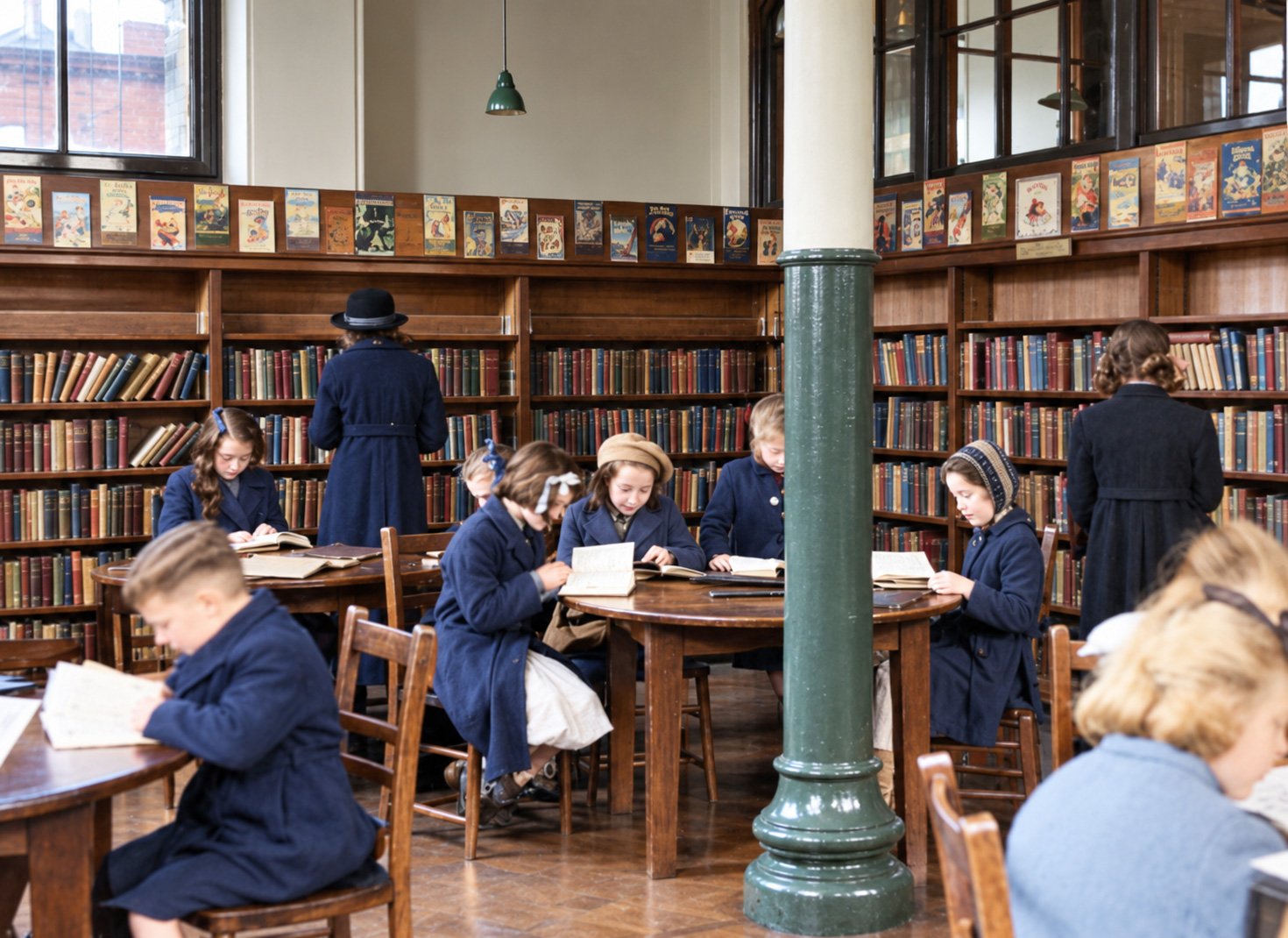
and catered for both young and old.

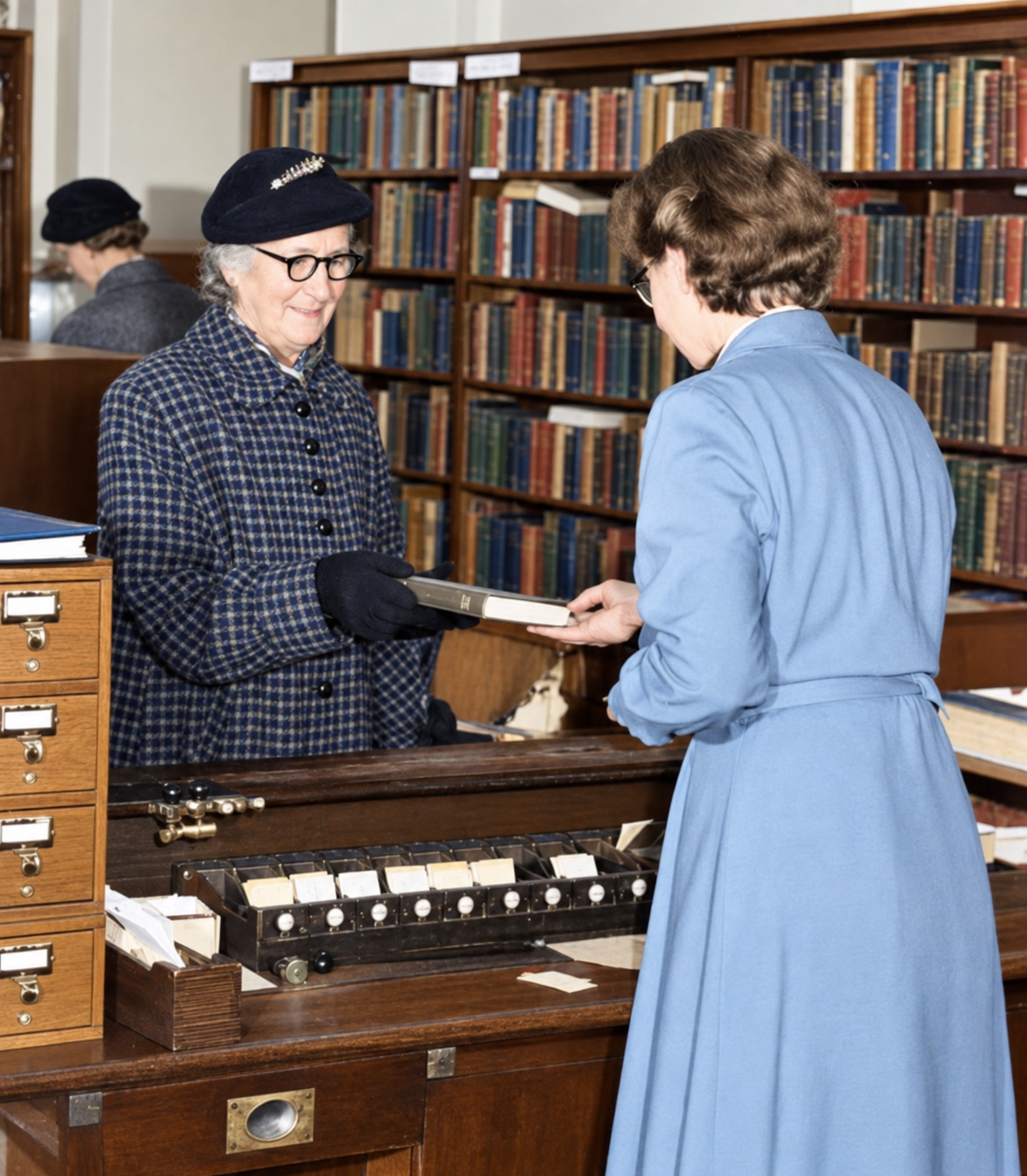
Part of the building and 3,000 books, largely technical, was reserved as a subscription library. This had three levels of membership; first class at 21 shillings, second class at 10s 6d and third class at 5 shillings for an annual subscription, the different classes of subscription again being used to determine what hours of access were permitted.

In 1902, the Borough Librarian had salary of £120 plus an additional £45 for his additional duty of Secretary for both the Schools of Art and Design. If that wasn’t enough, he was also absent for some hours to fulfil his other duty as Museum Curator just up the road on the corner of Guild Street. At this time, the library was investing something like £50 (£8000 in 2026) a year on new books.

Aside from the main Union Street library, due to lack of space, branch reading rooms for newspapers were established at Uxbridge Street and Victoria Road schools which were open in the evening from 6:00 – 9:30pm.

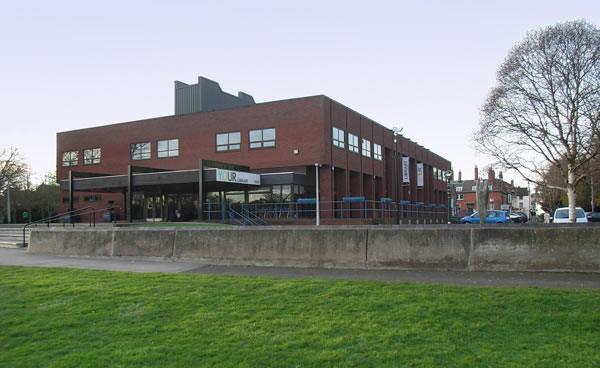
Towards the end of its time, the Union Street library was hopelessly inadequate and the later librarian, Kenneth Stanesby spent most of his energy leading campaigns for a replacement library (added to his duty of ejecting schoolboys from playing in the lift which was a popular free entertainment of the time). The new Burton library was finally opened in 1976 at Riverside, off High Street on the redundant Bass Maltings site. The Union Street building was unceremoniously demolished in 1977.

Burton Baths

A number of requests Burton baths

Swimming In 1870 comprised of a public shed on Ox Hay for the use of swimmers in the river Trent, and Burton Swimming Club had its own sheds to the south on Shipley meadow. The swimming was for men and boys only.

Several requests for a Burton public swimming baths had been made with the only available swimming in the river Trent. These were most strongly voiced in 1853. It would be over twenty years though, before any action was taken.

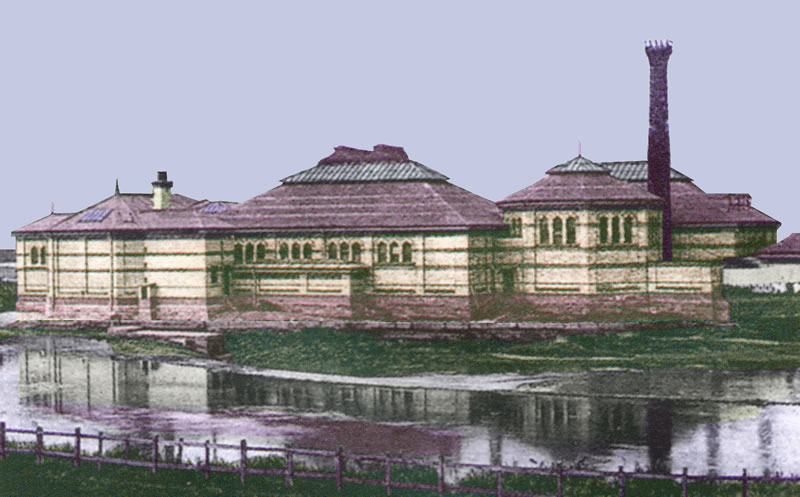
The swimming baths were built and donated to the town by Richard and Robert Ratcliff, the sons of the Burton brewer Samuel Ratcliff. Burton Public Baths was finally handed over to the improvement commissioners and officially opened to the public in 1875.

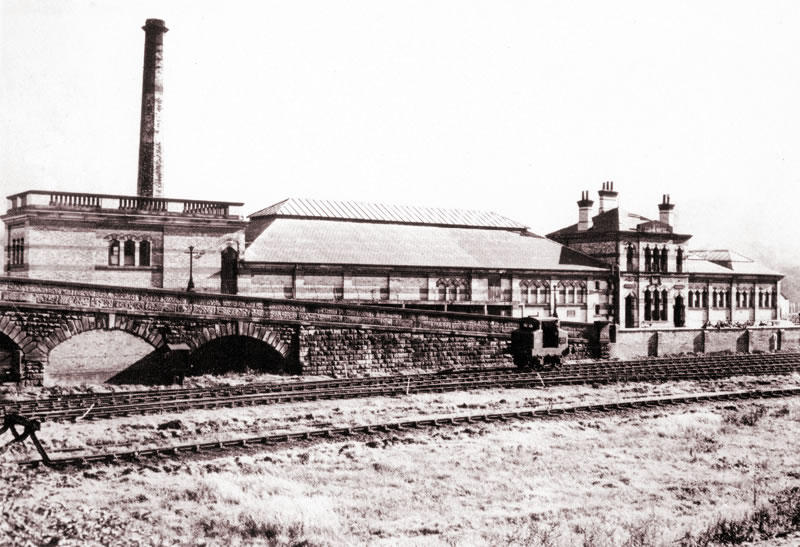
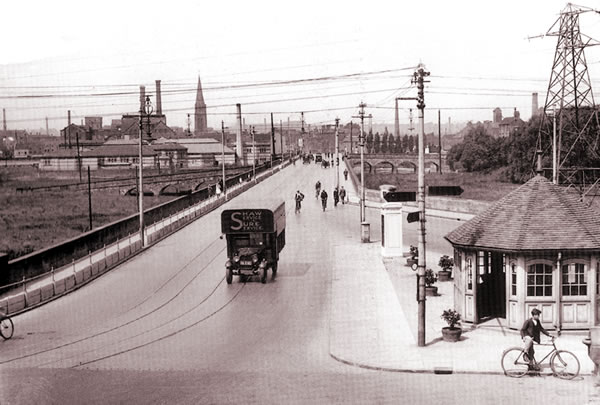
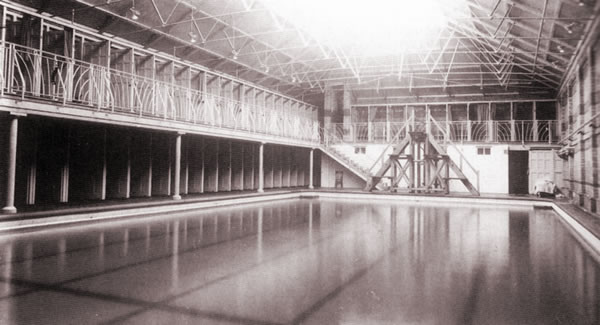
The baths, which included two separate swimming pools, was situated at the bottom of the ramp on the south side of the Trent Bridge. Initially, the larger ‘first-class pool’ was restricted to men and boys.

The two sides of the new Burton Public Baths Burton baths with its distinctive yellow bricks, the entrance being from a ramped access down from the Trent Bridge.

 Turkish baths were added in 1903. The first-class pool was extended in 1931 and diving boards were added. Changing cubicles lined the baths at both pool and balcony level and it was normal to leave your clothes in one for the period of your swim often resulting new arrivals not being able to secure one.

A swimming attendant was on duty and alternated between the two pools. Once he had disappeared into the smaller pool, it was common practice for the daring to run up the stairs, climb over the balcony barrier and jump or dive down into the pool until he returned with his all too familiar whistle. 

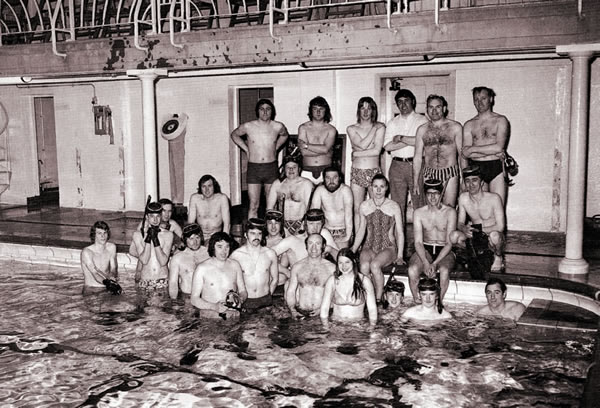
There was an open doorway to the other smaller ‘second-class’ pool, that always seemed to be a bit warmer. Swimming clubs for men and boys were established almost from the opening but it was not until 1906 that a ladies’ swimming club was formed. 

Burton Baths was demolished soon after the nearby replacement Meadowside Centre was opened in 1980.