 Founded in 1871, Burton Swifts were one of the early pioneers of professional football in England, representing the brewing town of Burton upon Trent during a period when the game was rapidly evolving from local competition into a national sport. Although their time in the Football League lasted less than a decade, the Swifts played an important role in the development of football in the Midlands and left behind a legacy that deserves to be remembered.
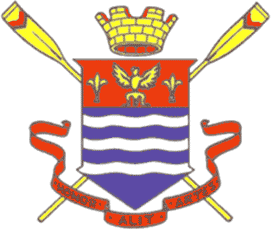
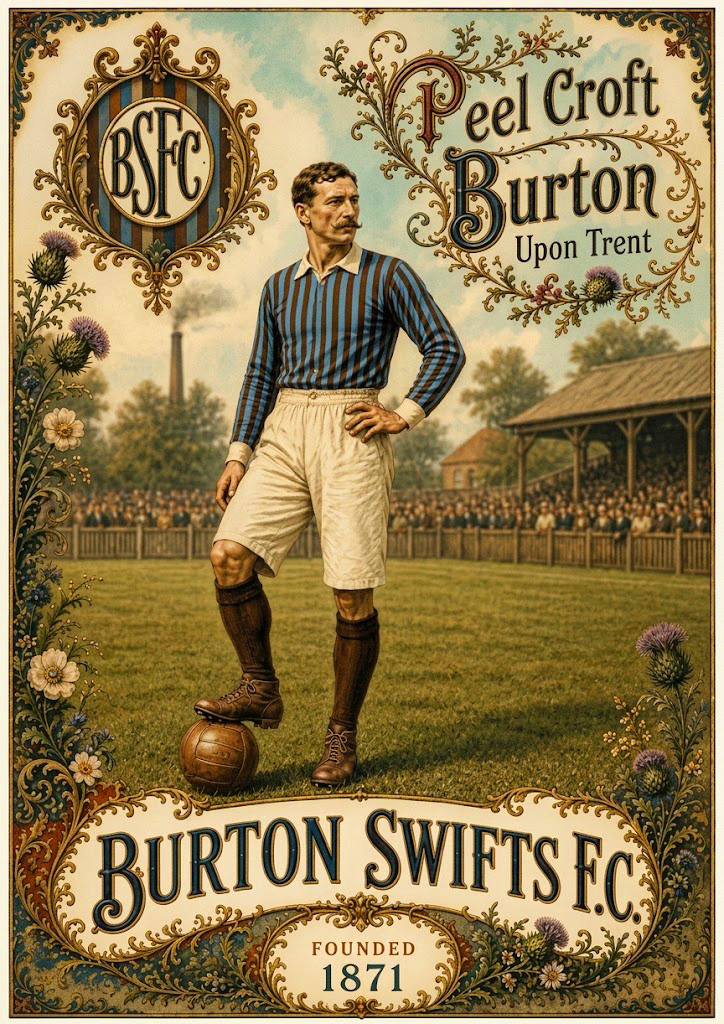
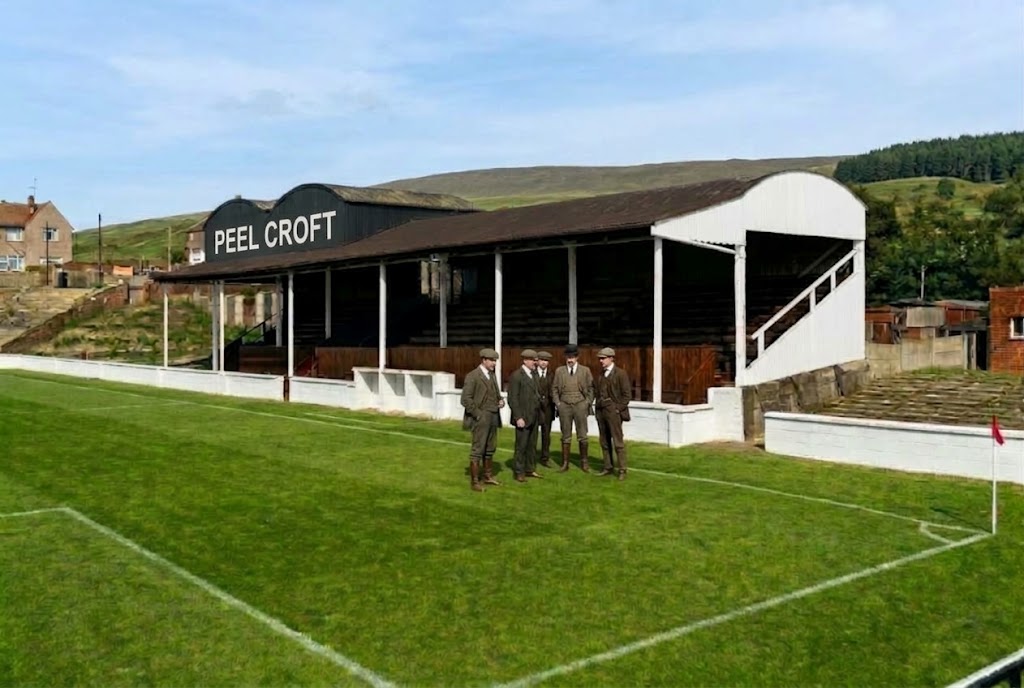
The club’s origins can be traced back to 1871, when it was formed under the name Outwood Stars. Two years later, in 1873, the club adopted the name Burton Swifts and played at Peel Croft in Lichfield Street. The team wore several colour combinations throughout their history. When the club was founded, they played in red and blue thin horizontal stripes. At some point, they changed to brown and blue thin vertical stripes, as in the poster.
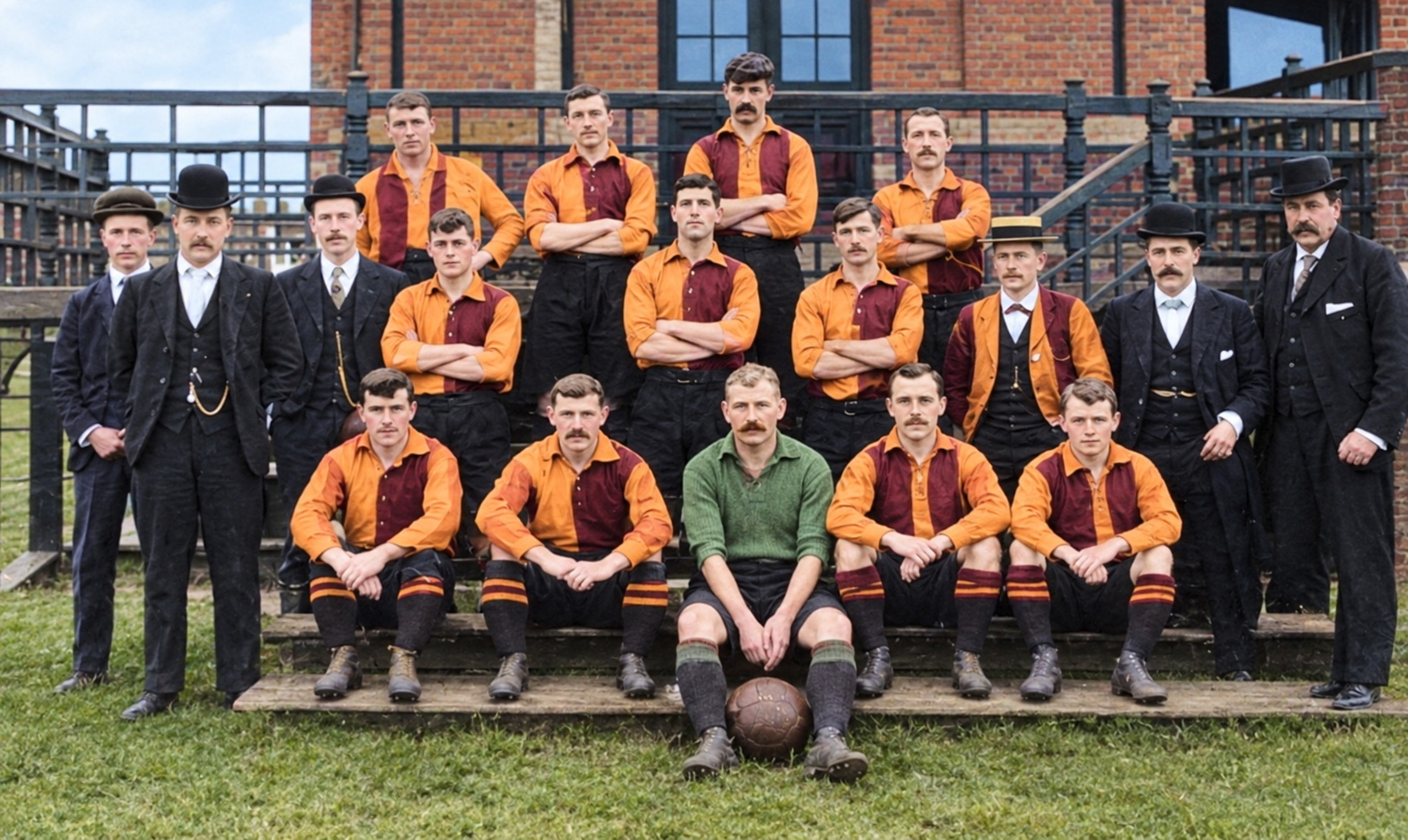
Like many ambitious clubs of the Victorian era, Burton Swifts progressed through a succession of competitions as organised football became increasingly structured. In 1890 they became founder members of The Combination, one of several leagues created to satisfy the growing appetite for competitive football. After only a single season they switched to the stronger Football Alliance, where they competed against many clubs that would soon become household names. Their strip was changed to maroon and orange for which they are best known.
Their biggest opportunity arrived in 1892, when the Football Alliance merged with the Football League. Burton Swifts were invited to become one of the founder members of the newly created Football League Second Division, a significant achievement that placed the club among England’s recognised professional sides. Home matches were staged at Peel Croft, a ground that became synonymous with the club throughout its Football League years.
The Swifts made an encouraging start to life in league football. During the 1893–94 season they enjoyed the finest campaign in their history, finishing sixth in the Second Division while collecting 31 points and scoring 79 league goals. Those achievements remained club records throughout their existence and demonstrated that Burton could compete with more established opponents when at their best.
However, consistency proved elusive. For much of the following decade Burton Swifts occupied positions in the lower reaches of the Second Division and struggled to establish themselves as genuine promotion contenders. Financial pressures and increasing competition meant that survival often became the club’s primary objective. In 1897 they were required to seek re-election to the Football League after finishing near the foot of the table. Fortunately for the Swifts, they retained their place, while local rivals Burton Wanderers lost theirs.
Despite occasional memorable performances, success remained limited. The club recorded an exhilarating 8–5 victory over Walsall in 1894, one of the highest-scoring matches of the era, but they also suffered heavy setbacks, including a 9–0 defeat against Manchester City in 1898. Their best FA Cup run came during the 1896–97 season, when they reached the First Round before narrowly losing 4–3 to Liverpool in an entertaining contest.
By the turn of the twentieth century, Burton Swifts were again battling to preserve their Football League status. The 1900–01 season proved disastrous, as they finished bottom of the Second Division and once more faced the prospect of applying for re-election. Recognising that neither Burton Swifts nor Burton Wanderers possessed the resources to thrive independently, officials from both clubs agreed to unite before the League held its annual meeting.
The merger created Burton United in 1901, with the new club inheriting Burton Swifts’ place in the Football League and continuing to play at Peel Croft. Although the amalgamation ensured that league football remained in Burton upon Trent, it marked the end of Burton Swifts as an independent club after almost thirty years of existence.
Unfortunately, the merger did not bring the success many had hoped for. Burton United struggled for several seasons before eventually losing its Football League status in 1907 and folding altogether in 1910. Consequently, neither Burton Swifts nor Burton United has any direct historical connection with the modern Burton Albion, despite all three clubs sharing the same town.
Although Burton Swifts never challenged for major honours or reached the top flight, they occupy an important place in football history. As founder members of the Football League Second Division, they helped establish the national league structure that still exists today. Their story reflects the realities faced by many pioneering Victorian clubs—ambitious, community-driven organisations that laid the foundations of professional football before financial realities and changing fortunes brought their journeys to an end. Today, Burton Swifts remain an important chapter in the rich sporting heritage of Burton upon Trent and in the wider history of the English Football League.