Menu Close

Drakelowe and the Gresleys

THE GRESLEYS OF NETHERSEALE
The Manor of Seale was purchased from Sir George Gresley by Gilbert Morewood, a London merchant and friend of Sir John Moore, who built a school at Appleby in Leicestershire. Seale derives its name from ‘Scegel’ which meant ‘a small wood’. This wood divided the manor into two parts – upper and lower, now known as Overseal and Netherseal.

This manor was soon restored to the family by the marriage of Gilbert Morewood’s daughter to Sir Thomas Gresley, the second baronet, and in due course it was settled upon the second son of the marriage. By this means a branch of the Gresley family became established at Netherseale and when the main line of the family died out in 1837 with the death of the 8th baronet, a descendant of this branch succeeded to the title and the family estates.

Frances Morewood, Lady Gresley, appears to have been a forceful character. In a letter to Sir John Moore concerning Mr. Waite, a schoolmaster who lived within a mile of Drakelow and had been recommended for the head mastership of Appleby School, she remarked that Sir John was right not to appoint any one to that position for life but only while of good behaviour, adding that Repton School had been ruined by the opposite principle. In their old age Frances and her husband acquired the reputation of being miserly and a tradition arose that large sums of gold and silver were hidden in Drakelowe Hall – but none was discovered when the mansion was demolished in 1926.

SIR NIGEL GRESLEY, 6th BARONET
Sir Nigel Gresley, 6th Baronet (1726-1787) was born at Drakelowe Hall.
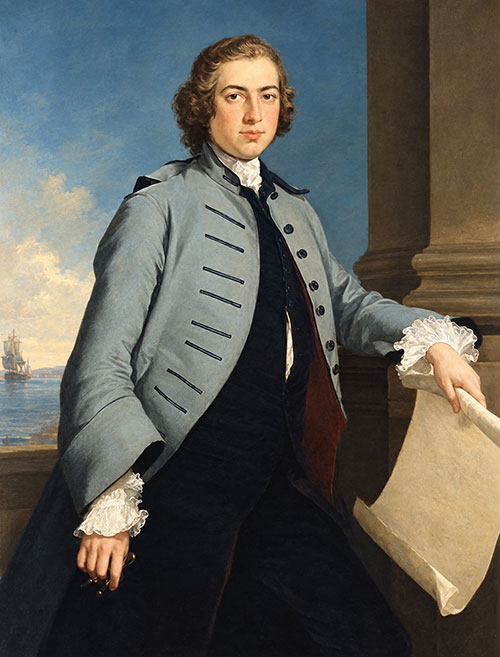
In 1753, Nigel Gresley succeeded his elder brother Sir Thomas Gresley, 5th Baronet who died of smallpox without issue. As well as Drakelowe, Gresley inherited from his mother’s family their home of Knypersley Hall at Biddulph, Staffordshire. Drakelowe Hall was still inhabited by Dame Wilmot Gresley, and so Nigel lived at Knypersley. As part of these he owned several coal and iron ore mines. James Brindley built a water engine for draining the mines there in 1752.

He enrolled in the Royal Naval Academy and, by the end of 1746, Gresley was serving in the 24-gun frigate HMS Bridgewater, a prison ship stationed in the Firth of Forth, as a volunteer. Bridgewater transported the Jacobite rising rebel Flora MacDonald to London, leaving on 7 November and arriving in the River Thames on 29 November. Gresley, who was suggested to be a quiet supporter of the Jacobites, was gifted a Richard Wilson portrait of her in thanks for the kindness shown to her in captivity. He was then promoted to lieutenant on 22 April 1748 and was appointed to serve on the 22-gun frigate HMS Inverness, which he did until she was paid off on 14 November of the same year, having served only in home waters. He did not serve again in the Royal Navy due to increasing rheumatic issues, and declined a posting to the 24-gun frigate HMS Mercury in March of 1749 or 1750.

Retired from the Navy, he became High Sheriff of Staffordshire in 1759, serving out his year-long term of office.

In 1765 he and his family moved from Knypersley to Worcester both to allow his children better access to education and to help Gresley lessen the weight of some debts, accrued from unsuccessful business ventures. He subsequently sold Knypersley via the Gresley’s Estate Act 1767 in a further effort to pay off his debts.

Sir Nigel Gresley’s Canal Act 1775 was passed allowing Gresley and his son to build a private canal from Apedale to Newcastle-under-Lyme so that he could more easily transport the mine’s products of coal and iron ore. The canal opened in 1776 and was named Sir Nigel Gresley’s Canal; the act provided Gresley with a monopoly over coal in Newcastle, with all coal apart from that used for pottery coming from his mines and canal for a period of forty-two years. Mostly built on land already owned by Gresley, the project resulted in the price of coal being set at the same rate until the expiration of the act, greatly to the benefit of the local public.

After moving to Bath for health reasons, Gresley died there in 1787 from what was then known as dropsy; he was buried in Bath Abbey where he is remembered by a plaque within the Abbey.

SIR ROGER GRESLEY, 8th BARONET
Sir Roger Gresley, 8th Baronet, succeeded to the title when eight years old. He grew up to be a man of many parts, a politician, a dandy, an author, a virtuoso, a sportsman, a country gentleman, and an antiquary. He became High Sheriff of Derbyshire and a Captain in the Staffordshire Yeomanry. Sir Roger fought several Parliamentary elections and incurred considerable debts thereby. In 1828 he sold the site of the Priory at Gresley, as well as the Castle Knob and Gresley Hall. In 1836 he sustained severe injuries by a fall from his horse and died from the effects a year later.

Sir Roger, against his mother’s wishes, married Sophia, youngest daughter of the Earl of Coventry, and their only child leved only a few weeks. So, on Roger’s death, the title and family estates passed to his cousin, the Rev. William Nigel Gresley, Reactor of Seale, with the exception of a life interest in Drakelow which passed to Roger’s widow.

Lady Sophia married as her second husband Sir Hentry des Voeux Bt., who lived with her at Drakelow Hall, and as she did not die until 1875, the ninth and tenth baronets never resided there.

Concerning Sir Henry des Voeux while living at Drakelow, there are two good stories told. When Swadlincote market hall was built by public subscription in 1861, the money was insufficient to install a clock and the Vicar, the Rev. J.R. Stevens, undertook to ask Sir Henry for a donation. Unfortunately, Sir Henry, suffering from gout, had just received news of the loss of a lawsuit, so the Vicar’s request met with a curt refusal. On second thoughts however, Sir Henry added: “You can have your clock if these words are placed beneath it, ‘TIME THE AVENGER’. I’ll beat these lawyers yet”.

The other story was related to me by the late Charles Hanson, a noted local sportsman (1836-1931). Sir Henry gave him permission to shoot wildfowl on the Trent at Drakelow provided certain ducks were left alone. But when one of these birds suddenly rose before him he brought it down with a quick shot. Unluckily Sir Hentry saw this happen and summoned him to the Hall. On arrival the butler warned him Sir Henry was very angry. As he entered the room he was greeted by the words “What the devil do you mean by shooting that duck, you will not shoot here again”. After this wigging he was dismissed and met the butler on his way out. “What did the old man say?” he queried. “Oh it’s all right”, was the reply “he told me to ask you for a drink!”

Some time late Sir Henry said to the butler “Has that young devil gone?” “Yes, Sir Henry”, was the reply, “and I gave him a drink as instructed”. This amused Sir Henry so much that he sat down and penned a letter restoring permission to shoot on the estate again.

The Rev. Sir William Nigel Gresley, who succeeded his cousin Roger as ninth baronet, had followed his father as Rector of Netherseal in 1830 and spent the remainder of his life there. To pay Sir Roger’s debts the manor of Lullington was sold to C.R. Colville for £98,000.

Devoted to hunting, Sir William was forced to give this up owing to ill health and on his death in 1847 he was succeeded by his son Thomas as tenth baronet, who was at that time a Captain in the 1st Dragoon Guards and an aide-de-camp to the Lord Lieutenant of Ireland.

More of the Gresley inheritance was sold by him, including Coton Park and land at Church Gresley and Linton. He was elected to represent South Derbyshire in Parliament in November, 1868, but died a month later. As Drakelow was still occupied by Lady Sophia, he resided at Caldwell Hall, lent to him by Sir Henry des Voeux Sir Thomas was succeeded as eleventh baronet by his son, Robert, who was then only two years old.

On the death of Lady Sophia des Voeux in 1885 the Drakelow estate came into the possession the new baronet. As he was still a minor, Drake-low Hall was let for a time to John Gretton, the brewer, who came there with his family from Bladen House, near Burton-on-Trent. The family included John Gretton junior (afterwards the 1st Baron Gretton of Stapleford Park) and his brothers Frederick and Rupert and his sister Katherin.

On attaining his majority Sir Robert Gresley took up residence at Drakelow and in 1893 he married the eldest daughter of the eight Duke of Marlborough. A Deputy Lieutenant for Derbyshire and later High Sheriff, he took an active part in county affairs.

Sir Robert made many improvements in the mansion and gardens at Drakelow and was. responsible for the construction of the terraced river frontage of the hall. He was one of the best shots in England and reared game on a large scale, but increasing taxation and dwindling resources finally compelled him to sell the estate of his ancestors of which he was so proud.

He died in 1936 and was succeeded by his eldest son Nigel (born 1894) as the twelfth baronet. The heir to the baronetcy is Sir Nigel’s brother Laurence(born 1896).

A notable member of the family was the Rev. John Morewood Gresley, the son of the Rev. William Gresley and half brother of the ninth baronet. Educated at Appleby Grammar School and Harrow, he graduated M.A. at Oxford and took Holy Orders, becoming Reactor of Seale and subsequently Master of Etwall Hospital. A Fellow of the Society of Antiquaries and an archeologist of some renown, he married a great granddaughter of Dr. William Stukeley, the celebrated antiquary.

The Rev. J.M. Gresley was a founder of the Leicester Archaeological Society and of the Anastatic Drawing Society. In 1861 he carried out an extensive and systematic excavation of the foundations of Gresley Priory. He also compiled “Stemmata Gresleyana” and gathered together a large number of family papers which were extensively used in the compilation of ‘The Gresleys of Drakelowe’ by F.C. Madan in 1899.

During the course of a Parliamentary election at Ashby de la Zouch in 1865 he imprudently drove into the town with his horses and carriage decorated with blue ribbons. These Conservative colours infuriated some people so much they surrounded his carriage and followed him into a house in Wood Street where he was handled so roughly that he died a few months later.

SIR NIGEL GRESLEY
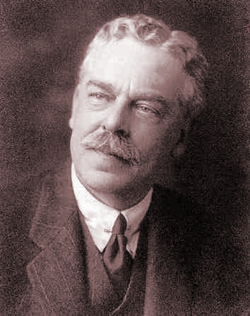
Probably the most notable member of the family from today’s perspective was Sir Herbert Nigel Gresley, C.B.E., D.SC, M.I.C.E., M.I.MECH.E., M.I.E.E. shown here. He was born in 1876 he was the fourth son of the Rev. Nigel Gresley (9th baronet) and nephew of Sir Thomas Gresley (10th baronet) and cousin of Sir Robert Gresley (11th baronet).

Sir Nigel, as he preferred to be called, was educated at Marlborough and early evinced an interest in railway locomotives, sketching them at the age of 13. After serving as an apprentice in the railway works at Crewe, he entered the service of the L. & Y. Railway at Horwick, and in 1905, at the age of 31, was appointed carriage and wagon superintendent of the G.N. Railway at Doncaster.

Sir Herbert Nigel Gresley first worked on the railways as an apprentice at Crewe eventually working for the Lancashire and Yorkshire Railway. Appointed carriage and wagon superintendent of the Great Northern Railway in 1905. In 1911 he was appointed locomotive engineer, being then in his thirty-sixth year and in the same year, he succeeded H.A. Ivatt as Chief Mechanical Engineer. In 1923 he was appointed Chief Mechanical Engineer of the London & North Eastern Railway, being knighted in 1936. He was also president of the Institute of Mechanical Engineers in 1936.

During the First World War of 1914-18 war, he was responsible for the design of armoured trains and held the rank of Lt. Colonel in the Royal Engineers. On the grouping of the railways he became chief mechanical engineer of the L.N.E. Railway and had the task of integrating the technical staffs of the constituent companies into one team. For over 30 years he exercised an influence over the design of British locomotives in a career which has no parallel.

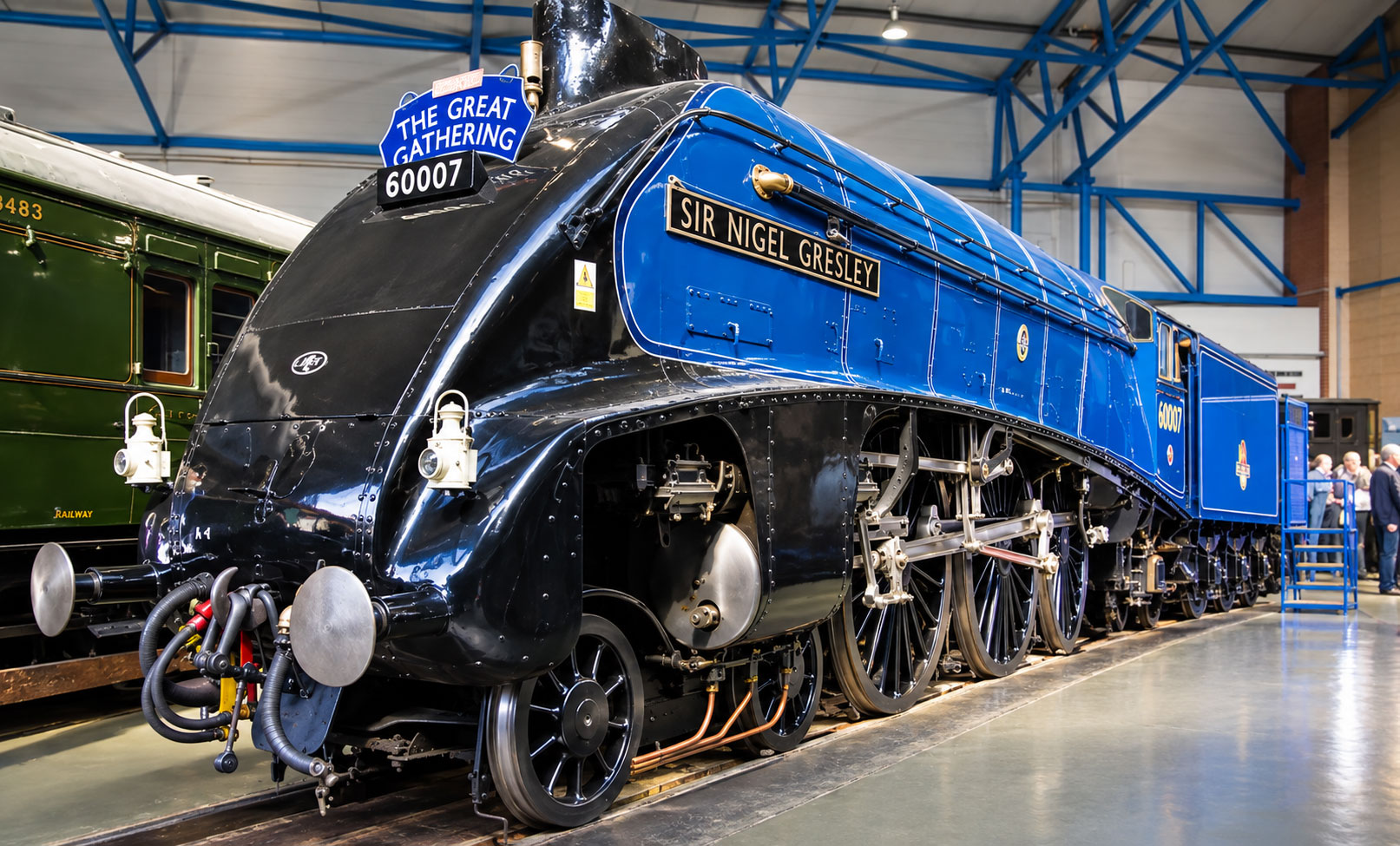
He designed the silver jubilee trains of 1935 and on November 26th, 1937, the name-plate “Sir Nigel Gresley”, affixed to his 100th “Pacific” locomotive, was unveiled by the chairman of the L.N.E. Railway – a tribute never before paid to any living locomotive engineer. This picture shows the 100th Pacific locomotive, which was named after him.
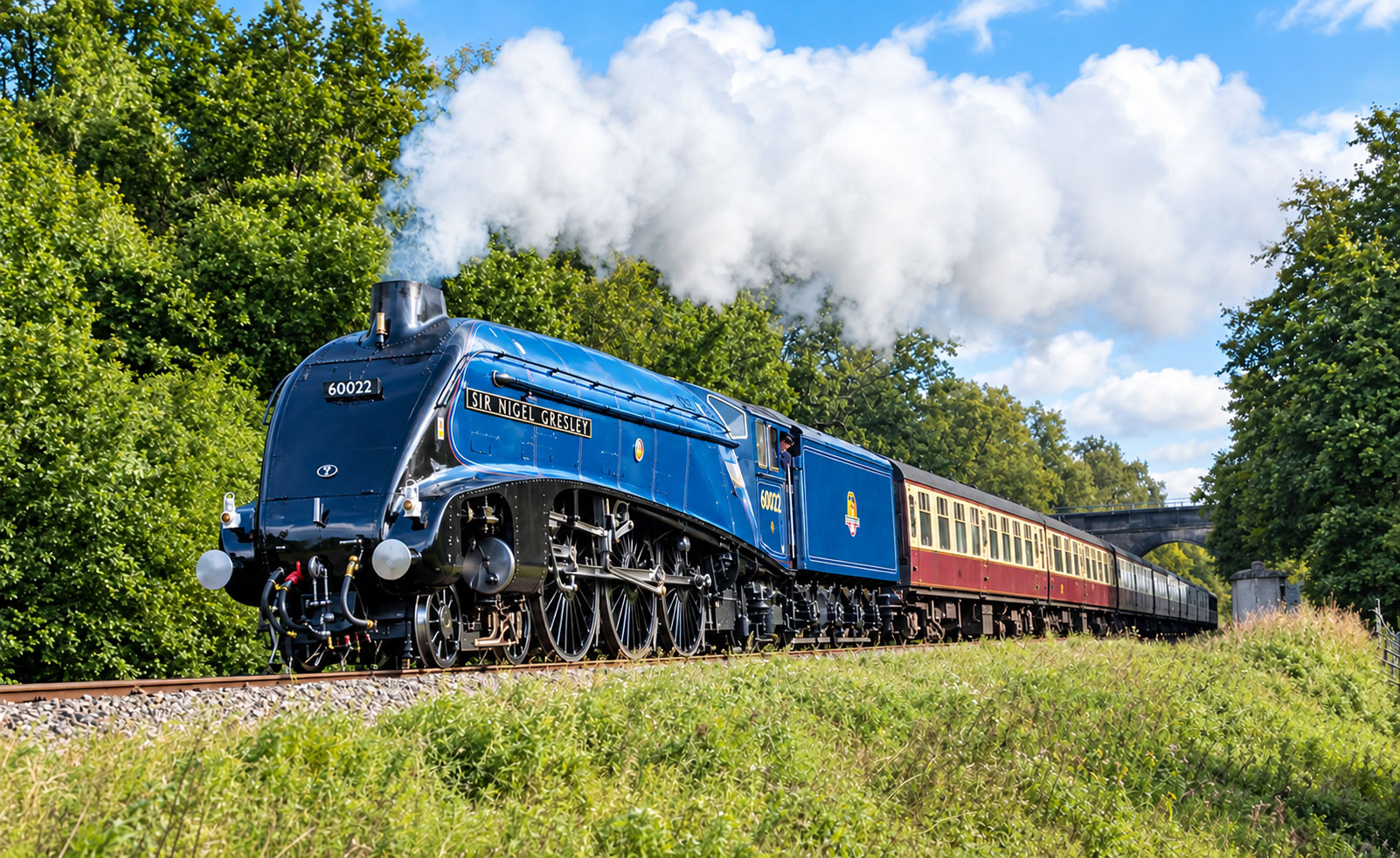
Sir Nigel Gresley in service 1938

Sir Nigel Gresley in retirement

The interior also enjoyed the grandeur of the day with salubrious ‘Art Deco’ styling. Sir Nigel can be seen below enjoying the results of his labour.
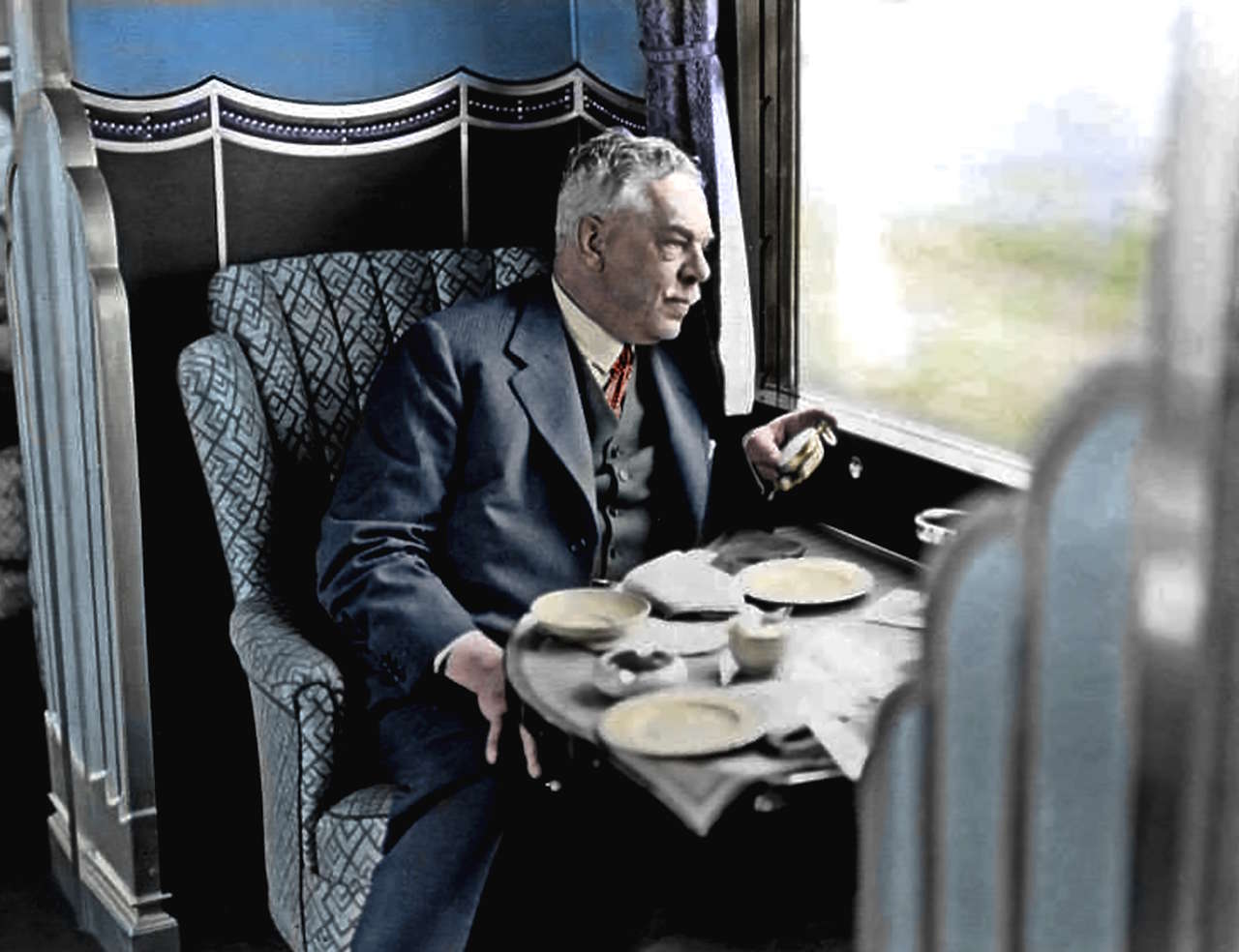
Sir Nigel was created C.B.E. in 1920 and knighted in 1936. He died in 1941, three months before he was due to retire, and is buried in Netherseal church near the home of his ancestors.

THE GRESLEY COAT OF ARMS

The Gresley Arms are “Vaire, ermine and gules” (i.e. silver and red). Armorial bearings came into use during the last quarter of the 12th century and it was not unusual for a tenant at that time to adopt the arms of his feudal lord.

It is therefore probable that William de Gresley, who was exempted from all but nominal service to his feudal overlord, William Ferrers, 4th Earl of Derby, in 1200, assumed the Ferrers Coat of Arms “Vaire or and gules” (i.e. gold and red) with a change of tincture.
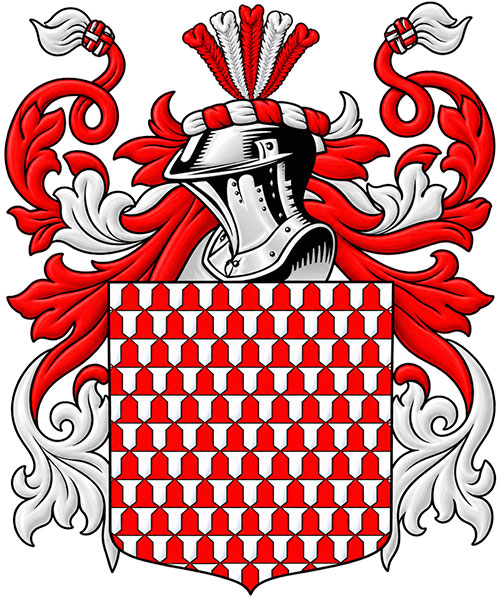

These arms appear for the first time on the family seal of Geoffrey de Gresley circa 1240. With the creation of the baronetcy in 1611, the badge of Ulster was added to the cost of arms borne by the head of the family.

The family crest is a “lion passant, ermine, armed, langed and collared gules” the first occurs in 1513.

The family motto was meliore guam fortuna – “More faithful than fortunate”

DRAKELOWE HALL, GRESLEY HALL AND GRESLEY CHURCH
The site of the earliest mansion or castle at Drakelow is unknown, but there is evidence of an early structure at the junction of the Walton and Rosliston roads. The site of the moat is clearly visible and it enclosed an area measuring 75 yards by 75 yards. This site was outside Drakelow Park, which was enclosed at a much later date. Excavation would probably reveal traces of foundations of a structure which may have been built by William de Gresley on his return from Castle Gresley in 1201.

It was notable that this piece of land was excluded from the sale of the Barn Farm, of which it forms part, in 1933. At the final sale of the remainder of the Drakelow Estate it was purchased by Mr. J. Hulse, of the Barn Farm, who felled the trees growing on it and eventually sold the land to Sir Clifford Gothard the present owner of the farm.

At present the land is covered with a thick growth of scrub but it is hoped that at some future date a systematic excavation of the site may yet take place to throw some light upon its past history.

It would appear that between 1086 and 1090 a motte and bailey castle of the usual Norman type had been built in a clearing in the large wood mentioned in the Domesday Survey, and that Nigel de Stafford was in residence there. Of 51 of these Norman structures, 36 were built in places insignificant before the Norman Conquest. These strongholds were erected to overawe the Anglo-Saxons, and to serve as a place of refuge in case of any uprisings.

A wide ditch of considerable depth was dug in a circle, the earth being thrown inwards to form a lofty mound, advantage being taken of a natural mound if this was available. On the flattened top of the mound, or ‘motte’, a wooden tower was erected to serve as a residence for the lord and his family.

In addition to the ditch, which was crossed by a drawbridge, the mound was protected by a wooden stockade. Outside the ditch a “baily” or courtyard, of varying extent but usually of half-moon shape, was surrounded by a further ditch and also protected by a stockade. Within this space, huts, barns and cattle shelters were erected for labourers attached to the manor. As the structure and palisades were of wood there are no visible remains except the mound which is now known as ‘Castle Knob’. It is from this ‘motte and bailey’ castle erected in a ‘Grassy Lea’ in the large wood that the place-name of GRESLEY is derived.

Concerning the late hall in Drakelow Park, Sir Robert Gresley (eleventh baronet) stated that the date of foundation of this structure was not known, nor was it easy to determine from the available evidence. Described in the sale catalogue as ‘Elizabethan’, it may have contained some earlier work, but during successive centuries considerable alterations and improvements had been effected.

The greater part of the mansion was apparently rebuilt by Sir William Gresley (fourth baronet) in 1723 for this date appeared on several leaden waste-pipe heads.

Sir Roger Gresley (eighth baronet) altered the west front considerably and built a billiard room and the bedrooms above it c1830. Sir Robert (eleventh baronet) also effected some alterations and improvements both in the mansion and the gardens, the most notable being the construction of terraces leading down to the river front which were completed in 1902 in memory of his mother.

On the dissolution of Gresley Priory in 1543 the buildings were sold to Henry Criche, a speculator in monastic properties. Thirteen years later they were purchased by Sir Christopher Alleyne, son of Sir John Alleyne, twice Lord Mayor of London. Sir Christopher, who had property in Kent, married a daughter of Sir William Paget, who had acquired the monastic properties of Burton Abbey, and possibly this influenced his purchase of Gresley Priory.

He pulled down the Priory buildings, except for the church, and used the material to build a residence known as Gresley Hall. There is no foundation for the belief that the Hall was connected to the Priory by an underground passage.

It would appear the Hall was rebuilt in the Flemish style in the early 18th century and it has some interesting architectural features which have been carefully preserved.

On the death of Samuel Alleyne in 1734 the property passed into the possession of the Meynell family. It was purchased by Sir Nigel Gresley in 1775 and the outbuildings were converted into a pottery in 1794. Gresley Hall was sold by Sir Roger Gresley in 1828 and was converted into a farmhouse and subsequently became a tenement building.

After changing hands several times it was purchased by the National Coal Board in 1953 and converted into a Miners’ Welfare Club. In 1957 the premises were extended to cater for five collieries in the district.

That there was a chapel at Drakelow in the 12th century is proved by a grant to Burton Abbey of the ‘vil’ and church at Stapenhill together with the chapels and tithes of Drakelow, Heathcote and Newhall. This grant was confirmed by Pope Lucius III in 1185. The sites of these three chapels are not known for none was in existence in the 16th century.

In 1650 a Parliamentary Commission stated that: “Drakelow supposed to be a member of Stapenhill is lately united to Gresley and fit so it continue”. The Gresley family always maintained a close connection with Gresley priory from the date of its foundation and the nomination of the Prior was in their hands.

After the Dissolution the Priory buildings were demolished and the nave of the monastic church became the parish church of Gresley and the family association was continued. Although Gresley Church has undergone considerable alterations at different times, it still contains many memorials of the Gresley family, the most notable being an ornate alabaster tomb erected to the memory of Sir Thomas (second baronet) who died in 1699. Under an arch in the centre kneels a life-sized figure of the baronet and round the tomb are impaled the arms of every marriage of his ancestors.

Following the establishment of the Netherseale branch at the beginning of the 18th century, several members have been Rectors of Seale and there are various family memorials in that church. Sir Robert (11th baronet) worshipped at Caldwell Church and is buried there while Sir Nigel, the L.N.E.R. engineer, is buried at Netherseale.

In 1540 Leland wrote: “Sir George Gresley hath upon Trent, a mile lower than Burton, a very large manor place and park at DRAEKELO”. Concerning the park, Sir Robert Gresley (eleventh baronet) wrote: “This park, including the pleasure grounds and that part called the Warren (in older times known as the Hare Park) is 580 acres in extent of which the deer park comprises 297 acres”, It may be of interest to note that the coneygreave or rabbit warren is mentioned in a deed dated 1328.

The deer park was well wooded and contained some fine old trees, a notable feature being the “one mile avenue”, a double row of trees leading to the Hall from a thatched entrance lodge on the Walton Road. There was a large pond in the park and a curious castellated cottage occupied by a gamekeeper.

In addition to a number of Galloway cattle there was a herd of 160 fallow deer, the average weight of a buck being 84 lbs. When the timber was felled in 1934 the remaining deer escaped to the woods where they were eventually killed off.

Burtonians of an older generation will remember with delight the pleasant walk by the riverside from Stapenhill which crossed the Burton-Leicester railway and continued through a meadow into a spinney over a brook crossed by a narrow wooden bridge. Thence a path through the park led to the lodge on the Walton Road.
Thornewill Family

Thomas Thornewill (senior) was baptised in Burton Parish Church on 4th October 1719, the son of Thomas and Elizabeth Thornewill.
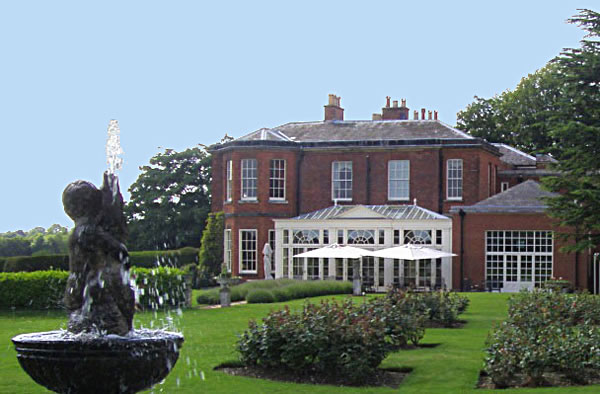
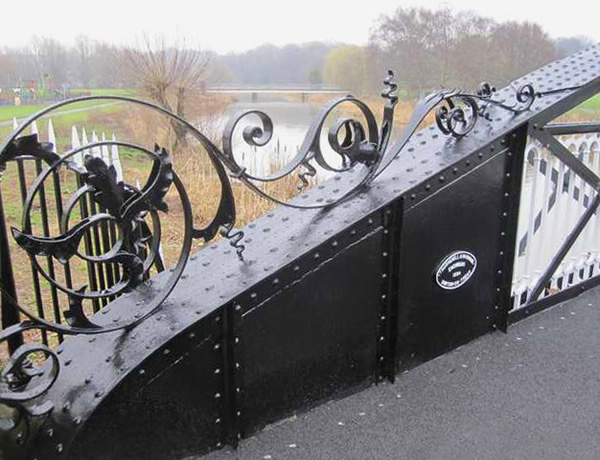
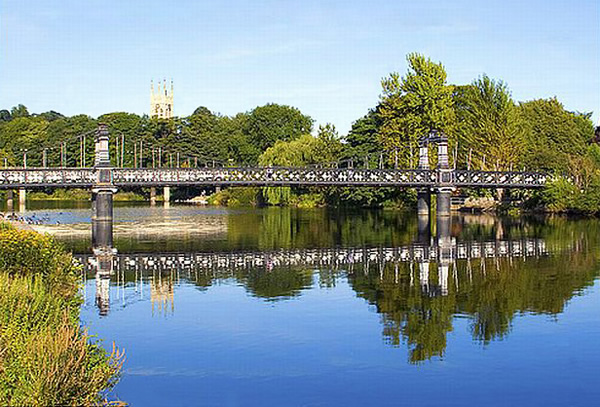
The Thornewill firm dates back to at least 1732 making iron goods. Thomas Thornewill (junior) was apprenticed in that year, at the age of thirteen.

Thomas Thornewill (senior) married Elizabeth Astle on 20th October 1746. She was the widow of Francis Astle, a noted local feltmaker and hatter who had died in 1735. He had left most of his properties to his wife Elizabeth (by a will of 20th May 1735), including a freehold house, on the south side of New Street. She was to have the use of this house for the remainder of her life, and it was then to be sold by Astle’s executors, Thomas Towndrow (gentleman) and John Downes (feltmaker), and the proceeds invested in land worth £5 a year to provide clothing for four poor boys of Richard Allsop’s Charity School in Burton.

Thomas Thornewill of Burton, now listed as ‘Edge Tool maker’ settled the property and its contents to Elizabeth, so that if he died they would pass to her. In 1751, Thomas leased a garden adjoining his freehold property on its eastern side, from William Jordon (cooper) for an annual rent of six shillings. This is significant in that it was the first move towards an expansion of the Thornewill property between New Street and Park Street (which was then known as Pinfold Lane).

Elizabeth, Thomas Thornewill’s wife, died in 1755 and it became the duty of Francis Astle’s executors to dispose of the freehold property in accordance with his will. The freehold property was advertised for sale in the “Derby Mercury”. Thomas Thornewill of Burton and his brother Francis of Clay Mills, both now listed as ‘Edge Tool Makers’ purchased the freehold property in New Street from Thomas Towndrow, the surviving executor or trustee of Francis Astle, for the sum of £140.

By 1760 the Thornewill brothers had established a small business there still making edge tools such as axes, knives and spades. From this time on they began to systematically expand their property in New Street whenever the chance arose. It was not however, their only business interest. A reference to Clay Mills in a 1760 indenture shows that the Thornewills were already in possession of the Forge Mill there. This was sited on the Mill Fleam, a watercourse branching from the River Dove, on or near the site of an old water corn mill. The exact dates when the Thornewills leased the mill and opened the forge are not known, but were probably around the year 1740.

Water power was needed for working the bellows and hammers in the forge and also to operate rolling and slitting mill. The forge usually consisted of a “finery” in which the iron was hammered into blooms and a “chafery” in which the blooms were reheated and beaten into bars. In the rolling and slitting mills the iron was rolled into sheets and then cut into rods ready for the nailers. The Thornewill’s forge may not have had rolling and slitting mills attached in 1760, but it certainly had in 1807 when they purchased the premises outright.

In 1760 about 25,000 tons of iron were imported annually into England (approximately 50% of the requirements) mainly from Russia and Sweden. The Thornewills used this imported iron, which they purchased from the Burton brewers of the time, such as Benjamin Wilson, John Walker Wilson and Samuel Sketchley. The brewers normally accepted some iron, flan or timber as part payment for the beer that they exported along the Trent to the Baltic countries.

Thomas Thornewill (ironmonger and spademaker) leased the White Hart Inn in High Street from the Earl of Uxbridge on 23rd September 1769. Later in the year, he sub-let a house and garden on the north side of New Street (which he previously leased from the Earl of Uxbridge) to John Shorthose (turner). In a property lease of 1770 John Shorthose is described as a spademaker and was an employee at the Thornewill works in New Street.

In March 1772, Thomas and Francis Thornewill leased from the Earl of Uxbridge, two further tenements and a garden to the east of their freehold property, and also a property to the west. Ever expanding, Thomas also leased land at Stretton, including some waste land near the forge.

By 1778 the Thornewill’s business had grown considerably. They were in possession of extensive properties in Burton, particularly in New Street, and at Clay Mills, Stretton. They were purchasing large quantities of imported iron, (for example, in August, 1778 Thomas Thornewill bought 658 iron bars imported by John Walker Wilson from St. Petersburg, Russia, for £273 7 6) and were manufacturing considerable quantities of spades, iron hoops, iron plate and other forms of hardware. They were probably the main suppliers of iron hoops to the Burton brewers of the time, and this was no doubt the way in which the firm developed as brewery engineers.

At the beginning of 1784, Thomas Thornewill made his will, and in this he left his leasehold properties to his daughter Sarah Spiers. After Thomas’s death Sarah sold the property lying to the east of the freehold property, to George Wood for £125, and it was not until 1834 that the Thornewills were able to buy it back from George’s son William. The Wood family, together with William Shorthose, Philip Port and William Smith were also, at this time, eager to acquire land on the south side of New Street, where they operated (approximately 1775 1835) a large screw making works. No doubt the Thornewills supplied this firm with iron.

Thomas Thornewill (senior) died in 1786 and the firm came under the management of Thomas, his son, and Francis, his brother.

In the same vein as his father, in 1801, Thomas Thornewill leased two more properties on the South side of New Street.

Francis Thornewill made his will in 1805 which showed that he was a man of considerable wealth. He left the bulk of his estate to his sons, John and Francis, but he was still able to leave £500 to his daughter Anne; and £200 to his grand daughter Anne Neal. He died just 2 years later in 1807 having done much to build up the business. He had also been one of the Townmasters in 1792 and was a Feoffee in 1794.

In March 1807, Thomas Thornewill (junior) purchased outright for £3,220, extensive properties and rights at Clay Mills from the Earl of Uxbridge. These included:
(a) “Cliffcroft” 7 acres of land containing Dove Cliff House, that was built for him about 1700, gardens, plantations, pleasure grounds, etc.
(b) Clay Mill forge with “all those iron works and all the slitting mills, forges, warehouses, buildings and works belonging thereto”.
(c) A warehouse and tenement near the Grand Trunk Canal in Stretton.

The Grand Trunk Canal had been opened in 1770 and was a considerable improvement on the Trent navigation.

By 1811, Thornewill’s were operating a forge at Wichnor as well as at Clay Mills. At the latter there was also a foundry and an iron casting house.

In the 1818 edition of the Bradshaw & Parsons Directory of Staffordshire, there are two Thornewill listings, the new one being in New Street. These appeared as:

  • J. & F. Thornewill spade manufactures.
  • John Thornewill & Co. merchants.

Although not listed in the Directory, Thornewill & Co. also held the forge at Stretton (Clay Mills) and William Gretton was the iron master there. At the time, there were also recorded living in the area around the works an iron founder, a foundry man, three spade makers, end three nailers, in addition to six patten ring makers and fourteen screw forgers who worked at the nearby screw mill.

By 1834, the Bradshaw & Parsons Directory had pretty much been replaced by The White’s Directory of Staffordshire. The listed had changed slightly to:

  • John & Francis Thornewill Iron and brass founders and spade manufacturers.
  • John Thornewill & Son Iron Merchants.

In 1835/36 the leases for the New Street properties were successfully renewed. By 1837, most of these premises together with the freehold property were in the possession of Robert, John and Francis who were now running the business.

By 1837, Thomas Thornewill made his will. By this time, he was 77 years of age and had taken little part in the running of the business for some time. A few of the main clauses of his will illustrate the considerable wealth that the Thornewill family had acquired since 1760 when Thomas (senior) and Francis (senior) had raised the £140 to buy the freehold premises in New Street. It listed:

  • To Mary, his daughter £3,600.
  • To Ann Fenwick (daughter) £3,700.
  • To Jane (daughter) £3,100.
  •  To Frances Hewitt (daughter) £1,000 q + £2,700 in trust.
  • Residue from the sale of two farms at Yoxall and Hadley End, and other estates; personal effects; and Dove Cliff House, together with the nearby forges, workmen’s houses furnaces rolling and slitting mills, watercourses, weirs, fisheries, and adjoining lands, all to pass to Edward, his son.

During 1839, the New Street premises were further extended and the firm constructed a number of new buildings on its existing land. A large area of land extending to Pinfold Lane was also purchased by Robert Thornewill from Thomas Lambert and in 1840, the date above a new archway marked the alterations.

A large two storied building was built in 1845. Mr. William Jones, the tenant of the neighbouring property, wrote a letter to Robert Thornewill complaining about the number of windows in the upper storey of the new building.

On 1st Feb 1847, Robert Thornewill purchased the leasehold premises, to the west of the freehold property, from Thomas Cooper. These very old premises had, for the previous one hundred and fifty years been used by Francis Astle, Thomas Cooper and others, as a hat factory. At a later date the houses were demolished or extensively modified to form the present offices.

An Indenture of partnership between Robert Thornewill and J.R. Warham (engineer), now described as engineers, ironfounders and iron merchants was signed on 2nd July 1849

Robert Thornewill purchased a piece of land adjoining the west side of the works in Park Street from William Wood in 1852. This meant that the site now occupied a complete 2 acre plot of land between New Street and Park Street.

It was probably about this time also that the business changed considerably in the types of goods that it produced. From its beginning to about 1845 it was little more than a hardware firm making iron, copper, and brass goods for use locally, particularly in the Burton breweries. From 1845 onwards it became an engineering firm in the true sense, and it is significant that Bagshaw, in his Directory of Derbyshire of 1846, lists the firm of Robert Thornewill of New Street iron and brass founders and steam engine makers. These early engines were probably sold mainly to local collieries and breweries.

The 1851 White Directory of Staffordshire, stated that Thornewill and Warham Iron foundry and Engine and Machine Works in New street “employs 75 men and 25 boys”. He also mentioned that Thornewill & Co. had an ironworks at Clay Mills, and that Edward Thornewill lived at Dovecliff House, Rolleston.

Dovecliff House, Rolleston

Robert Thornewill (senior) died in 1858 and his share of the business passed to his wife Martha Hammond Thornewill (neé Wright), in accordance with his Will of 20th Feb 1856.

An article in The Burton Weekly News of 30th March 1860 stated “apart from brewing, the only considerable manufactory now is Messrs Thornewill and Warham’s iron foundry and Engine and Machine Works.”

By this time the firm was producing approximately fifteen to twenty steam engines annually. These consisted of pumping, haulage and winding engines and tank locomotives which were sold mainly to collieries in Derbyshire, Leicestershire, Staffordshire and Warwickshire. A few were sold to Burton breweries and to ironworks and lead mining companies in the Midlands.

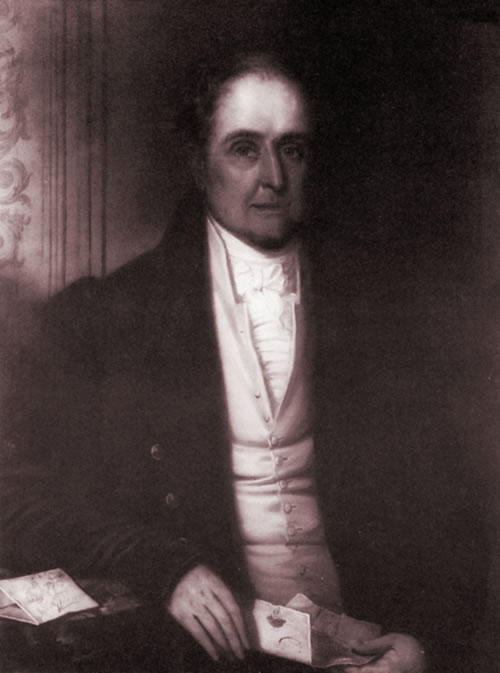
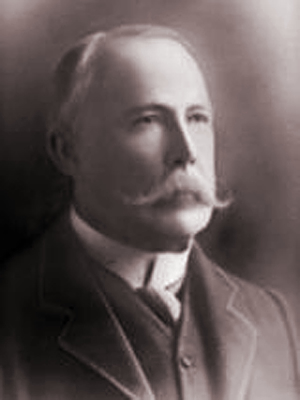
On 25th November 1868, the partnership of M. H. Thornewill and J. R. Warham was dissolved to allow Robert Thornewill pictured above (son of Robert Thornewill (senior) who had died in 1858) to enter. At this time the property, stock and other assets of the firm were valued at £43,048 1 6 of which M. H. Thornewill held £27,720 15 7 and John Robson Warham £15,327 5 11.

Under the new partnership agreement J. R. Warham was to control 6/12ths, M. H. Thornewill 5/12ths, and R. Thornewill 1/12th of a total capital of £44,000.

At the end of 1878, Thornewill and Warham purchased a piece of land with a number of properties, on the corner of Lichfield Street and Park Street, from Frederick Gretton, a brewer of Burton, for £2,500. It adjoined John Bell’s brewery on its north east side. In 1879 some of this land was sold to the Midland Railway Co., who built a line through Thornewill and Warham’s premises from the south side of Station Street to the Bond End Railway.

Two years later, in 1880, Thornewill and Warham purchased property on the south side of New Street, to the west of their own premises, from the Trustees of G. R. Bircher. This consisted of premises fronting New Street, originally an inn known as the Old Queen’s Head, and 423 sq. yds. of ground to the rear.

In approximately 1885 Thornewill and Warham exported three engines to Japan to be used for winding and hauling at Taskanna Colliery. After 1885 the number of engines made for export increased considerably the following extracts from the firm’s order book illustrates this:

  • 1886 Two pumping engine for a sewage works at Buenos Aires, Argentina.
  • 1889 Two engines for pumping and winding to the Taeping Colliery Co. in China.
  • 1892 Winding engine for the Dundee Coal Co. in Natal, South Africa
  • 1897 Pumping engine for a Gold Mining Syndicate in British Guiana.
  • 1902 Winding engine sent to the Rajah of Sarawak in Borneo.

Not only did Thornewill and Warham considerably expand the extent of their market, they also greatly extended the range of their manufactures. By 1880 they were producing a full range of brewery equipment, including various types of refrigerators, and indeed were capable of producing all types of machinery and metal goods.

On 26th March 1886, J.R. Warham died, leaving his share of the business to his wife, Anne Jane Warham of Birmingham, and to his son, William Warham (gentleman) of Seaham Harbour, Co. Durham. M.H. and Robert Thornewill purchased these shares and thus the business became an entirely family concern again after a break of 37 years.

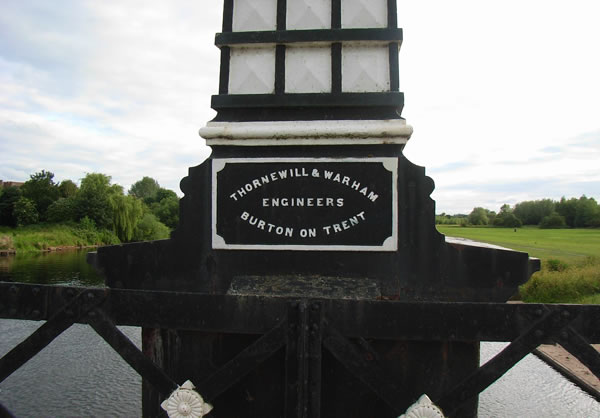
In 1889, Thornewill and Warham made the contribution to Burton for which they are best known… having built the Andresey Bridge by special commission, they were commissioned by Michael Arthur Bass (later to become Lord Burton) to build the Ferry Bridge. The Ferry Bridge was opened on 3rd April 1889, and the viaduct linking it to Bond End added a little later at the total cost of just over £10,000. A few weeks later on 24th April 1889 Martha Hammond Thornewill died, and her share of the business passed equally to her three sons, Rev. Charles Francis, Robert and Arthur, in accordance with her will of 1st Feb 1889. Charles Francis sold his share in 1890 and Arthur his in 1893, leaving Robert in control of the business.

Andresey Bridge

Ferry Bridge

By 1895 Thornewill and Warham were manufacturing approximately twenty steam engines a year. Between 1870 and 1895 they made 500 (including locomotives). Of the 329 that can be traced in the engine order book they were installed in the following types of works:

  • Collieries 202
  • Breweries 50 + 16 locomotives in Burton breweries
  • Waterworks 12
  • Ironworks 10
  • Potteries 10
  • Engineering 6
  • Sewage Works 5
  • Railways 4
  • Gasworks 3
  • Quarries 3
  • Lead mines 2
  • Building works, brickworks, canal company, flour mill. dock company and woodworks 1 each.

In 1907, assignment of the business changed from Robert Thornewill Esq. to Thornewill and Warham Ltd. Robert Thornewill died in 1914, leaving two daughters, Ella Violet and Kathleen Hamilton

1919 marked the end of an era when Thornewill and Warham Ltd. went into liquidation and a new company of the same name was formed. This was purchased by S. Briggs & Co. Limited which remains successful today but was moved from the New Street premises to new premises in Derby Street to make way for the Octagon Shopping Centre.

William Bass (1717 – 1787)

William Bass, born in 1717, was the second son of three sons of William Bass who ran a moderately successful plumbing and glaziery business and small-holding in Hinkley.

William’s father died when he was just fifteen. The eldest son, John, succeeded his father as plumber and glazier, leaving William to look after the running of the small-holding. Eventually, John and William established a carrier business and by 1754, they were operating a bi-directional service between Manchester and London but the following year, William gained complete control over the carrying business with his brother preferring to concentrate on the original established business so that he could remain in Hinckley.

In 1756, William married Mary Gibbons, the daughter of a London publican close who ran the ‘Red Lion’ close to the London depot. They chose to make their home in Burton upon Trent because it was mid-way en route from Manchester and London, was a growing industrial and commercial centre, and was positioned on the new, under construction Trunk canal.

From Burton, he carried felt hats, which had a strong manufacturing presence in Burton, together with spades, axes, screws and hardware predominantly for Thomas Thornewill’s works in New Street but also for other Burton manufacturers such as Richard Green. Increasingly, he was also shipping casks of beer from Burton’s steadily growing brewery trade for the likes of Charles Leeson, William Musgrave, Samuel Sketchley, Joseph Clay, Thomas Lovatt and Henry Evans.

Living in a modest house in Wetmore, William’s first of two sons, Michael Thomas was born in 1759. As a well established carrier proprietor, in 1765, William Bass was able to lease a large new house in High Street.

He entered brewing relatively late in life, aged 60, by selling his transportation business to the Pickford family and using the funds to purchase a Town House in High Street, with a brewery and malthouse on adjoining land, seeing brewing as providing a better future business for his two sons.

The Bass Brewery catered mainly for the domestic market, but in 1784 he started to export ale directly to the Baltic (Russia) via Hull. After his death, he was succeeded in the business by his sons William and Michael and in 1795 Michael took sole control.

Michael Thomas Bass I (1759 – 1827)

After his father’s death in 1787, Michael ran the brewery with his brother William until he took sole control in 1795. He continued to develop the Baltic trade with Russia and North Germany, exporting via the River Trent and Hull.
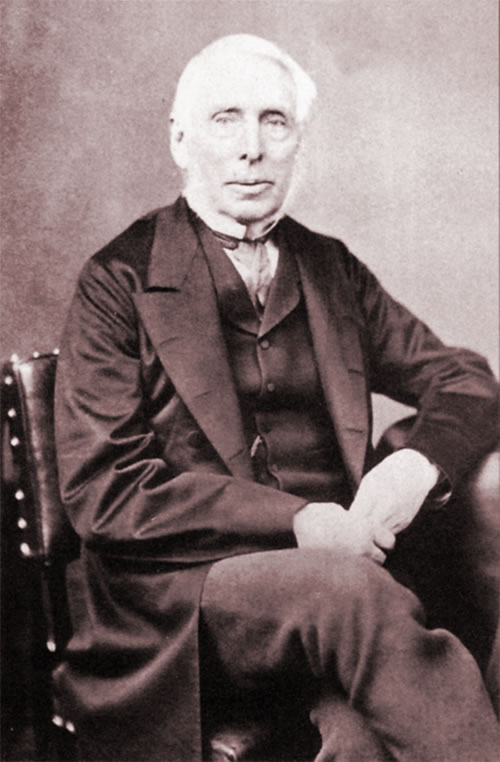
He extended the brewery’s operations, laying the foundations for its future success. He entered into partnership with John Ratcliff and in 1799 he built a second brewery at Burton. Following the Napoleonic blockade, Burton brewers needed another market, and Bass was one of the breweries to start brewing and exporting India Pale Ale.

Bass married Sarah Hoskins, the daughter of Abraham Hoskins of Burton and Newton Solney. Sarah’s brother, Abraham, built Bladon Castle, a folly which aroused bad feeling locally. Sarah’s great grandfather George Hayne was responsible for establishing the Trent Navigation as an active concern.

On Bass’s death in 1827, his eldest son, Michael Thomas Bass, Jr., born in 1799, succeeded to the brewery.

Michael Thomas Bass II (1799 – 1884)

Bass was born in Burton upon Trent in 1799, the son of Michael Thomas Bass (senior) who had expanded the Bass brewery founded by his father William Bass in 1777 and made it a major exporter to Russia. His mother, Sarah Hoskins, was the daughter of Abraham Hoskins, a prominent lawyer of Burton.
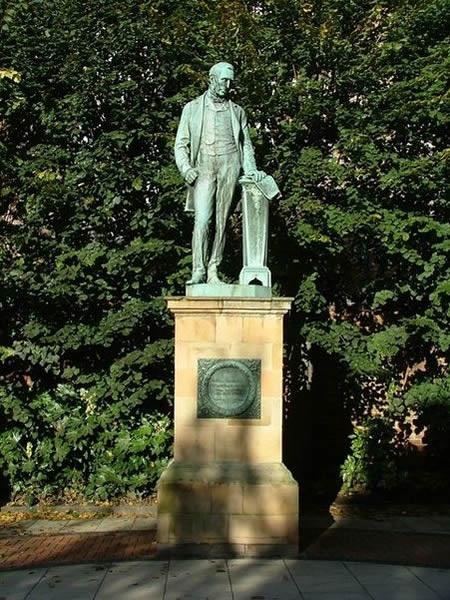
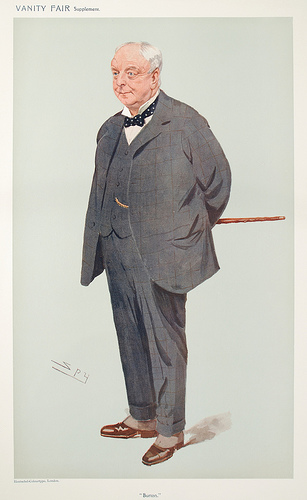
Bass attended the grammar school in Burton upon Trent and finished his schooling in Nottingham. At the age of 18, he joined the family business as an apprentice when business was not going well because the Napoleonic Wars had disrupted trade with Russia. However, the sales of India Pale Ale in India and southeast Asia were taking off by the 1820s.

Bass took over control of the company in 1827 and continued the export focus on Asia. By 1832-33, the company was exporting 5,000 barrels of beer representing 40% of its output in that year

The coming of the railway to Burton upon Trent in 1839 helped the growth of the business by reducing transport costs. The company had four agents in the 1830s in London, Liverpool, Stoke-on-Trent and Birmingham. By the 1880s, this had grown to 21 in the United Kingdom and another in Paris. The export trade was supplied by the agencies in London and Liverpool.

Under Bass’s leadership, company production and sales had grown enormously. Production of ale had grown to 340,000 barrels in 1860 and to almost a million barrels in the late 1870s. By 1881, the company had three breweries and 26 malthouses covering 145 acres (0.59 km2) in Burton upon Trent. The company was Britain’s biggest brewery and was one of its best known companies.

Bass was first elected as the member for Derby in 1848 and served until 1883. His obituary in the Brewers Journal stated that he was known more “in the House of Commons for his regular attendance than for any feats of oratory.” He focussed on being a national advocate for the brewing industry against efforts by nonconformists within the Liberal Party to legislate against alcohol.

Bass was an orthodox Liberal supporting free trade, low taxes and improving living standards for the working class. He promoted legislation to abolish imprisonment for small debtors. His legislation against organ grinders on the grounds that they were street nuisances was less successful.

He was known as a philanthropist both in Burton upon Trent and Derby. His obituarists claimed that his contributions totalled £80,000 and that he had given Derby a new library, School of Art, recreation ground, and swimming baths.

Bass represented Derby until the final years of his life. William Ewart Gladstone offered Bass a peerage which he declined preferring to stay in the House of Commons.

Michael Arthur Bass (1837 – 1909)

In brief: Michael Arthur Bass, 1st Baron Burton KCVO was born in Burton upon Trent in 1837. He was a Brewer, Liberal Party politician and philanthropist and became Sir Michael Bass, 1st Baronet in 1882, but was always best known as simply, Lord Burton.
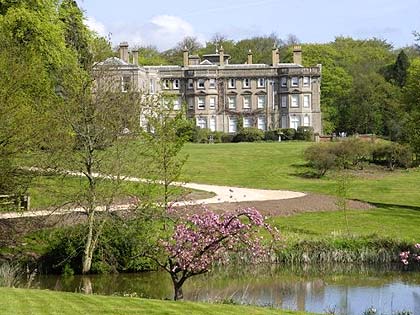
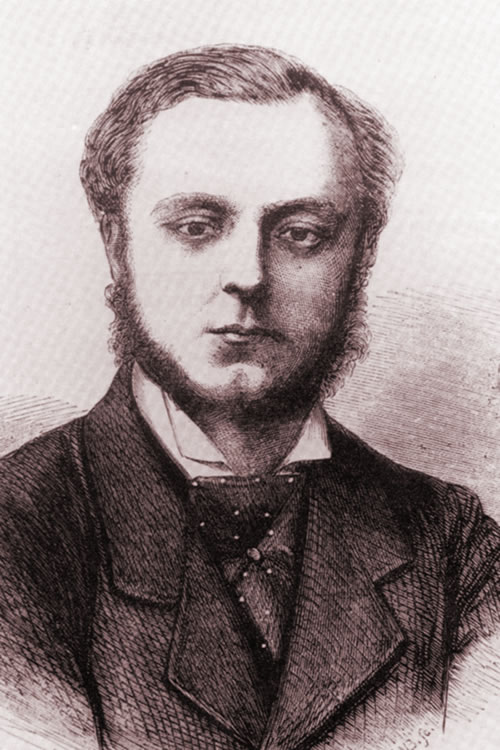
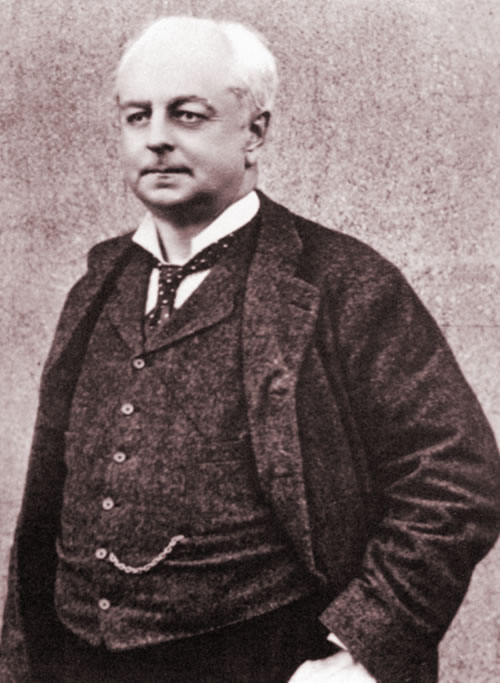
Bass was the elder son of Michael Thomas Bass and the great-grandson of William Bass who moved to Burton upon Trent from London in 1777 to found the brewery firm of Bass & Company.

His mother was Eliza Jane, daughter of Samuel Arden. Bass was educated at Burton Grammar School, Harrow and Trinity College, Cambridge. He was a Director of the family firm of Bass, Ratcliff, Gretton and Co from 1863, and Chairman of the Directors upon his father’s death in 1884. He also sat as a Member of Parliament for Stafford from 1865 to 1868, for East Staffordshire from 1868 to 1885 and for Burton from 1885 to 1886. As a brewer, it was uncomfortable to be a Liberal MP as there was a strong temperance element to the Liberal party at the time.

In 1882 he was created a Baronet, of Stafford in the County of Stafford, chiefly in honour of his father who was then still alive and who had declined every honour offered to him. Four years later, in 1886, he was raised to the peerage as Baron Burton, of Rangemore and of Burton-on-Trent in the County of Stafford, with remainder to heirs male. In 1897 he was created Baron Burton, of Burton-on-Trent and of Rangemore in the County of Stafford, with remainder, in default of male issue, to his daughter and her male issue. In 1904 he was further honoured when he was made a Knight Commander of the Royal Victorian Order.

Lord Burton married Harriett Georgina, daughter of Edward Thornewill, in 1869. He died in February 1909, aged 71. He was succeeded in the baronetcy according to the special remainder by his nephew William while the barony of 1886 became extinct. The peerage of 1897 passed according to the special remainder to his daughter Nellie Lisa. Lady Burton died in 1931.

King Edward VII visited Rangemore, the town and Bass Brewery in February 1902 and stayed with Lord Burton at the family home, Rangemore Hall.

Like his father, Michael Arthur Bass was a generous benefactor to Burton, making many fine contributions to the town, including the Ferry Bridge and, a few years later, the causeway, St. Chad’s church and St Paul’s Institute and Liberal Club, which was later to become Burton Town Hall

A bronze statue of Lord Burton, sculpted by F. W. Pomeroy, was erected in front of the Burton Town Hall in 1911.


Hamar Alfred Bass (1842 – 1898)

Hamar Bass was the second son of Michael Thomas Bass and his wife Eliza Jane Arden. He was brother of Lord Burton and also a Director of the family firm of Bass, Ratcliff, Gretton and Co. One sister Emily married Sir William Plowden, MP for Wolverhampton West, and the other married Sir George Chetwode being the mother of Field Marshall Philip Chetwode.

Hamar Bass was MP for Tamworth from 1878 to 1885. He was then MP for West Staffordshire from 1885 until his death aged 56 in 1898 from a complex form of rheumatism.

Hamar Bass married Louisa Bagot (1853-1942), daughter of William Bagot, 3rd Baron Bagot, in 1879. They lived at Byrkley Lodge and Needwood House, Burton, and also at 145 Piccadilly, London. Louisa subsequently married Rev Bernard Shaw. He was a breeder at the Byrkley Stud and his horse “Love Wisely” won the Ascot Gold Cup in 1896. He was also for 12 years master of the Meynell Hunt.

His son William succeeded in his uncle’s baronetcy of Stafford according to special remainder. Hamar Bass’s daughter Sibell Lucia married Major Berkeley John Talbot Levett, Scots Guard, son of Theophilus Levett of Wychnor Park, Staffordshire. Berkeley Levett served as one of the Gentlemen Ushers to the Royal Family from 1919 to 1937.

Sir William Paget – 1st Baron Paget of Beaudesert

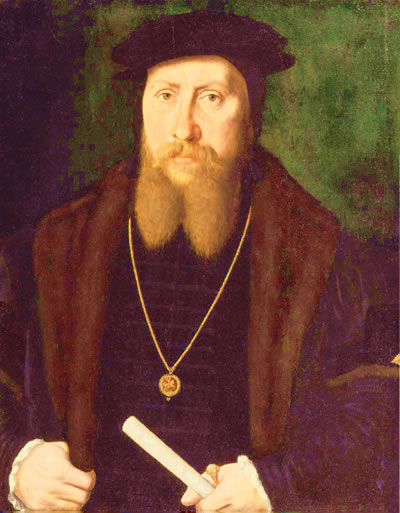
In Tudor times, William Paget was one of the most prominent men in England. Son of John, one of the serjeants-at-mace of the city of London, he was born in London in 1506. His father was said to have been of humble origin from Wednesbury, Staffordshire. Educated at St Paul’s School, and at Trinity Hall, Cambridge, proceeding afterwards to the university of Paris.
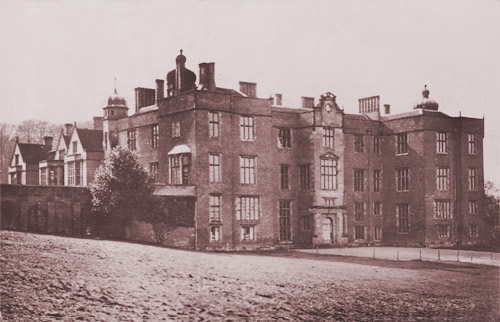
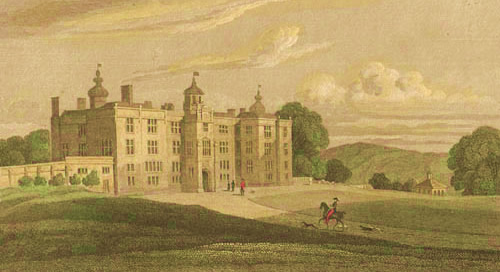
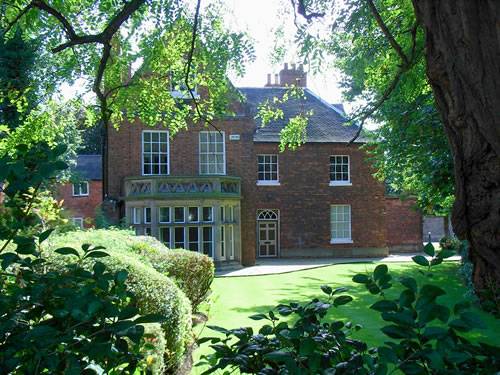
Probably through the influence of Stephen Gardiner, who had early befriended Paget, he was employed by Henry VIII in several important diplomatic missions; in 1532 he was appointed clerk of the signet and soon afterwards of the privy council. He acquired large estates from Henry VIII on the dissolution of the monasteries. He became secretary to Queen Anne of Cleves in 1539, and in 1543 he was sworn of the privy council.

A letter written by William Paget, clerk to the Privy Council, to Sir Thomas Wriothesley, Garter King-at-arms, dated 27 Jun 1541, only two days before Lord Dacre’s execution, tells that the Lord Chancellor and the Lords Sussex, Hertford and St. John, with Mr. Baker, consulted in the Star Chamber upon Lord Dacre’s case:

Sir, I am sent for to the Council, and must stay my writing until soon.

At my coming to the Star Chamber there I found a11 the lords, to the number of xvij assembled for a conference touching the lord Dacre’s case;. . . To Council they went, and had with them present the Chief Justices, with others of the King’s learned Counsel; and albeit I was excluded, yet they ‘spake so loud, some of them, that I might hear them notwithstanding two doors shut between us. Among the rest that could not agree to wilful murder, the Lord Cobham, as I took him by his voice, was vehement and stiff: Suddenly and softly they agreed, I wot not how, and departed to the Kings Bench together; whereas the lord Chancellor executing the office of High Steward, the lord Dacre pledd not guilty to the indictment, referring himself to the trial of his peers, and declaring, with long circumstances, that he intended no murder, and so purged himself to the audience as much as he might. And yet nevertheless afterward, by an inducement of the confession of the rest already condemned, declared unto him by the judge, he refused his trial, and, upon hope of grace (as I took it), confessed the indictment; which he did not without some insinuation. His judgment was to be hanged. It was pitiful to see so young a man by his own folly brought to such a case, but joyful to hear him speak at the last so wisely and show himself so repentant. . . . To-day after dinner the Council was with the King to declare lord Dacre’s humble submission, hoping thereby to move his Majesty to pardon him, which took no effect, for to-morrow shall. . . Mantel, Roydon, and Frowdes suffer, and the lord Dacre upon Wednesday. God have mercy upon them and give them grace to repent their evil doings and to take patiently their deaths.

He was Secretary of State with Thomas Wriothesley, Earl of Southampton, 1543 and 1544, and again with Sir William Petre, 1544 to 1547. Henry VIII in his later years relied much on his advice, named him as one of the executors of his will, and appointed him one of the council to act during the minority of Edward VI.

Influential in Edward Seymour’s plot to become Protector of Edward VI, Paget at first vigorously supported the Protector Somerset, while counselling a moderation which Somerset did not always observe. In 1547 he was made comptroller of the King’s household, Chancellor of the Duchy of Lancaster, and a Knight of the Garter; and in 1549 he was summoned by writ to the House of Lords as Baron Paget de Beaudesert. About the same time he obtained extensive grants of lands, including Cannock Chase and Burton Abbey in Staffordshire, and in London the residence of the bishops of Exeter, afterwards known successively as Lincoln House and Essex House, on the site now occupied by the Outer Temple in the Strand. He also obtained Beaudesert in Warwickshire, which remained the chief seat of the Paget family. Paget shared Somerset’s disgrace, being committed to the Tower in 1551 and degraded from the Order of the Garter in the following year, besides suffering a heavy fine by the Star Chamber for having profited at the expense of the Crown in his administration of the duchy of Lancaster. He was, however, restored to the King’s favour in 1553, and was one of the twenty-six peers who signed the device of King Edward; was one of Jane Grey’s Privy Councillors, but signed a proclamation in support of Mary shortly after. He made his peace with Queen Mary, who reinstated him as a Knight of the Garter and in the privy council in 1553, and appointed him Lord Privy Seal in 1556. William Paget openly suggested to marry Edward Courtenay to Elizabeth; but Courtenay had rejected it, on the grounds that it would be beneath the dignity of one of his unblemished lineage. On the accession of Elizabeth I in 1558 Paget retired from public life.

By his wife Anne Preston he had six daughters and five sons, the two eldest of whom, Henry and Thomas, succeeded in turn to the peerage. The Pagets’ marriage was close, and William’s fellow-councillors had on occasion appealed to her influence with him, just as she had appealed to them on his behalf in 1552. Lady Paget was not an especial favourite of Queen Mary, though she was chosen to escort her in the coronation procession.

The Paget family’s main residence was Beaudesert House in Cannock Chase. But before this was built, they often occupied the Manor House within the precincts of the former Burton abbey.

When they stayed there, they lived in grand style. An inventory of c. 1580 shows that there were over 60 rooms, many handsomely furnished. On occasion, the household staff numbered 75 persons, and in the first week of Jan of that year, there were 14 guests staying in the house, including the sheriff of Staffordshire.

When Burton Abbey was granted to its new owner in 1546, William Paget began planning to expand the Manor House, known to have existed since at least 1514, into a grand mansion. A plan of 1562 shows that the house was to have three storeys and a long gallery. To provide the materials for this project, the old abbey buildings were to be cannibalised. There were major alterations to the house over the next three centuries. The present building, still very much in evidence close to the Market Place, is mainly of brick but was formerly of stone, and timber-framed. The attic probably has the most exceptional medieval roof in Burton. The early 19th century range probably occupies the site of a medieval open hall, and parts of the building still date back to the original building.

Sir William died in 1563. After his death, after being implicated in Catholic plots against the Queen, the manor house along with most of the family estates were confiscated, ended the Pagets’ interest in the Manor House.

It was leased to Richard Almond in 1612 by which time some of the former Abbey buildings incorporated into the house were in a very bad state of repair.