Menu Close

Bretby Hall

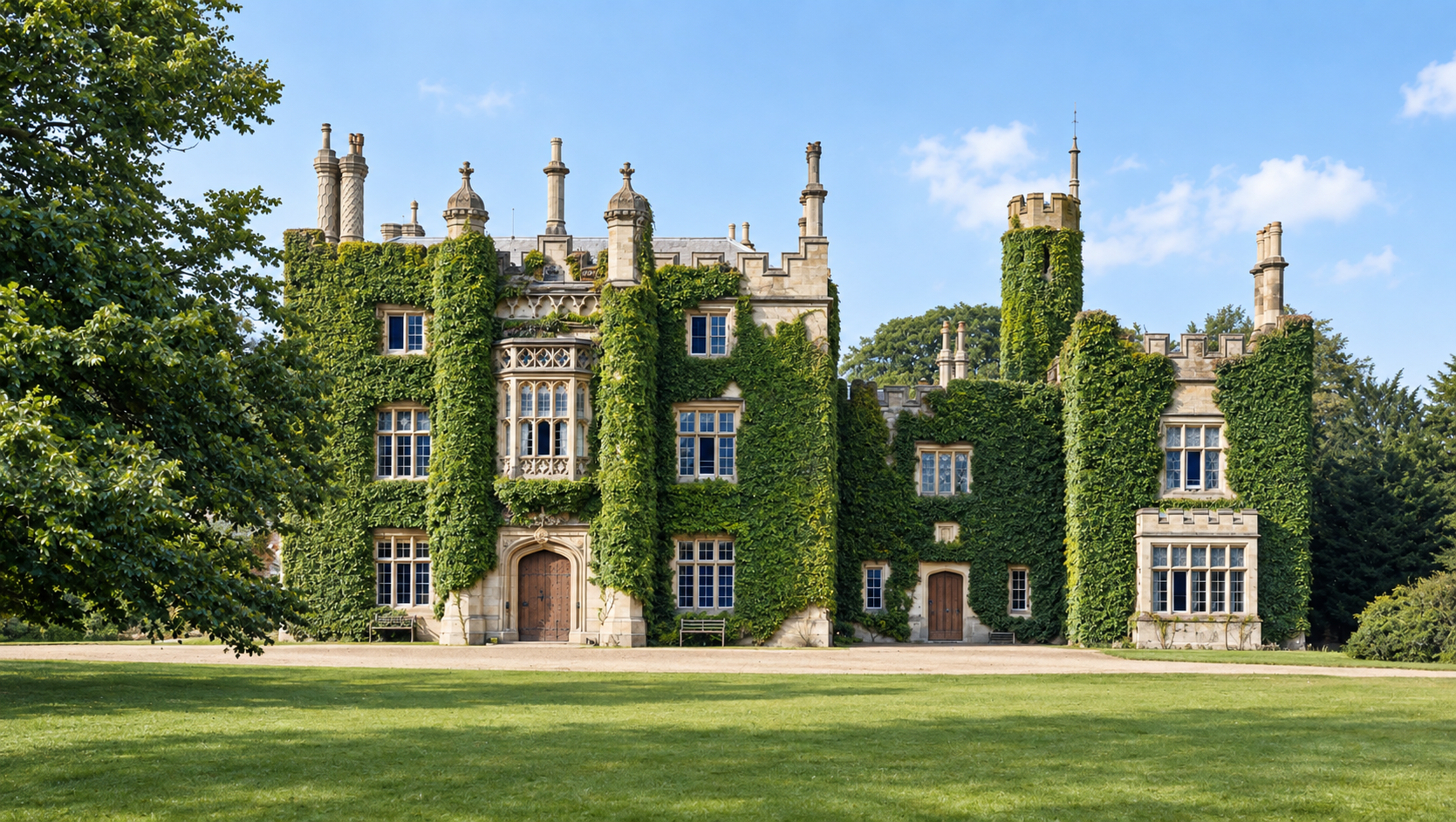
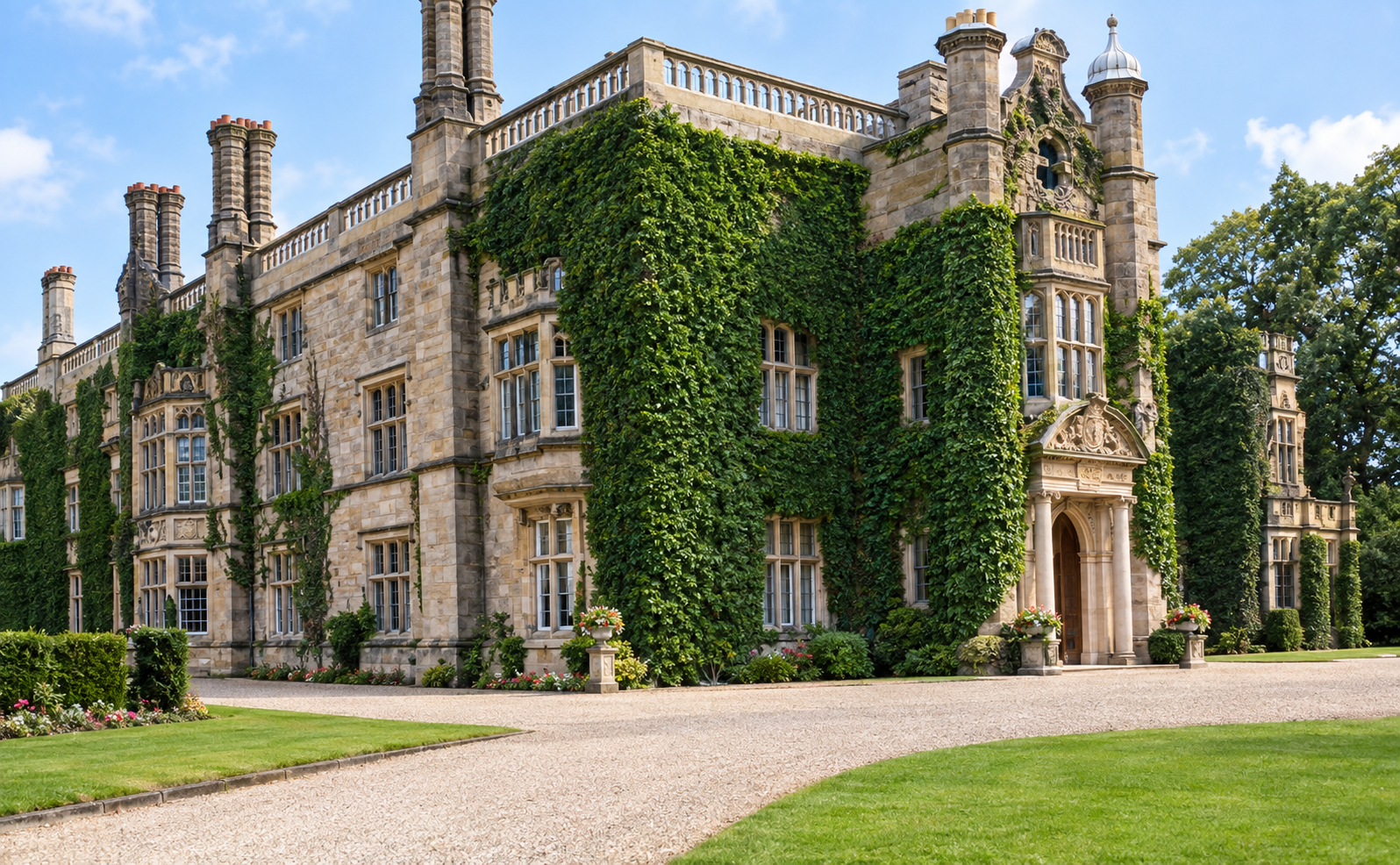
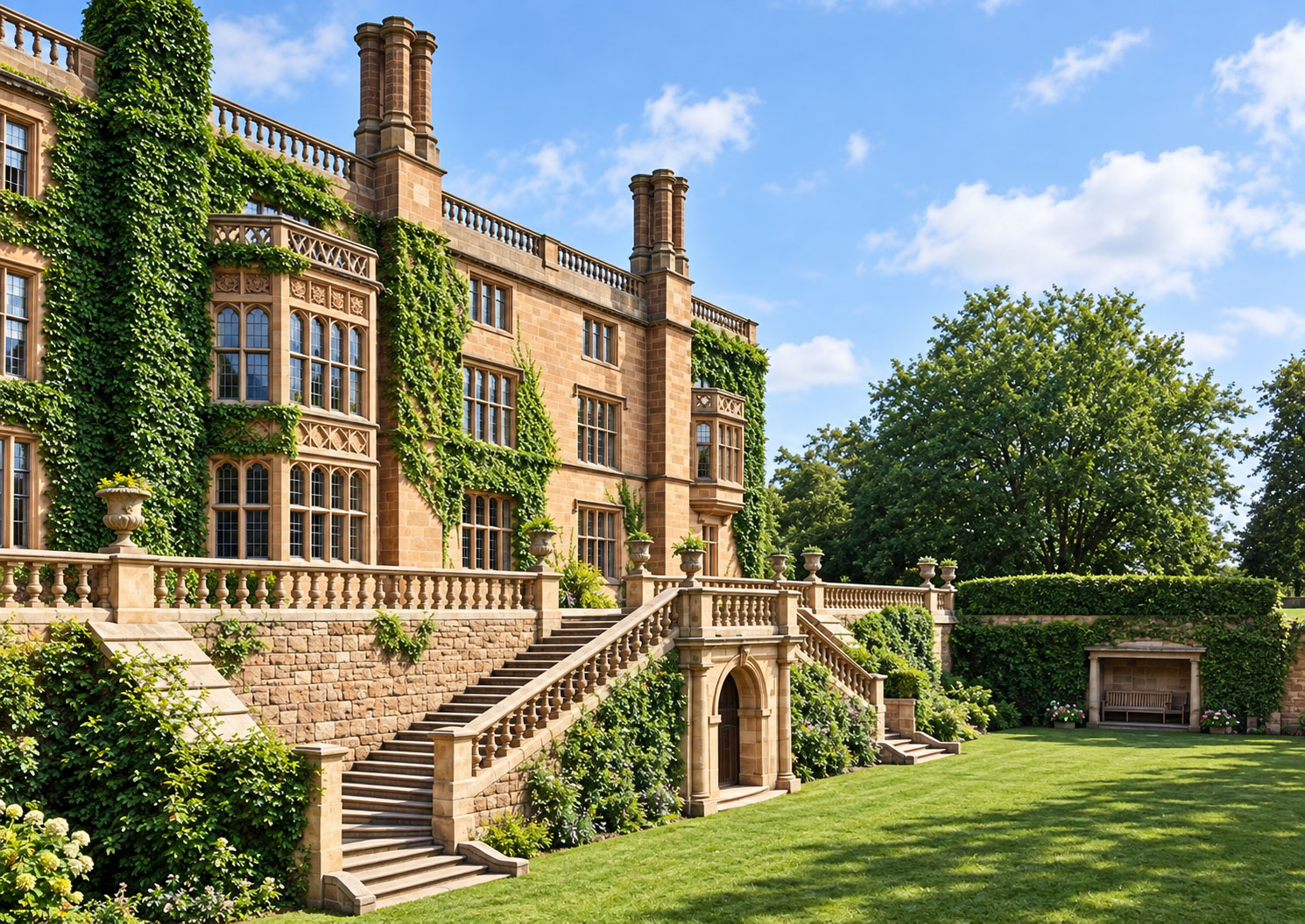
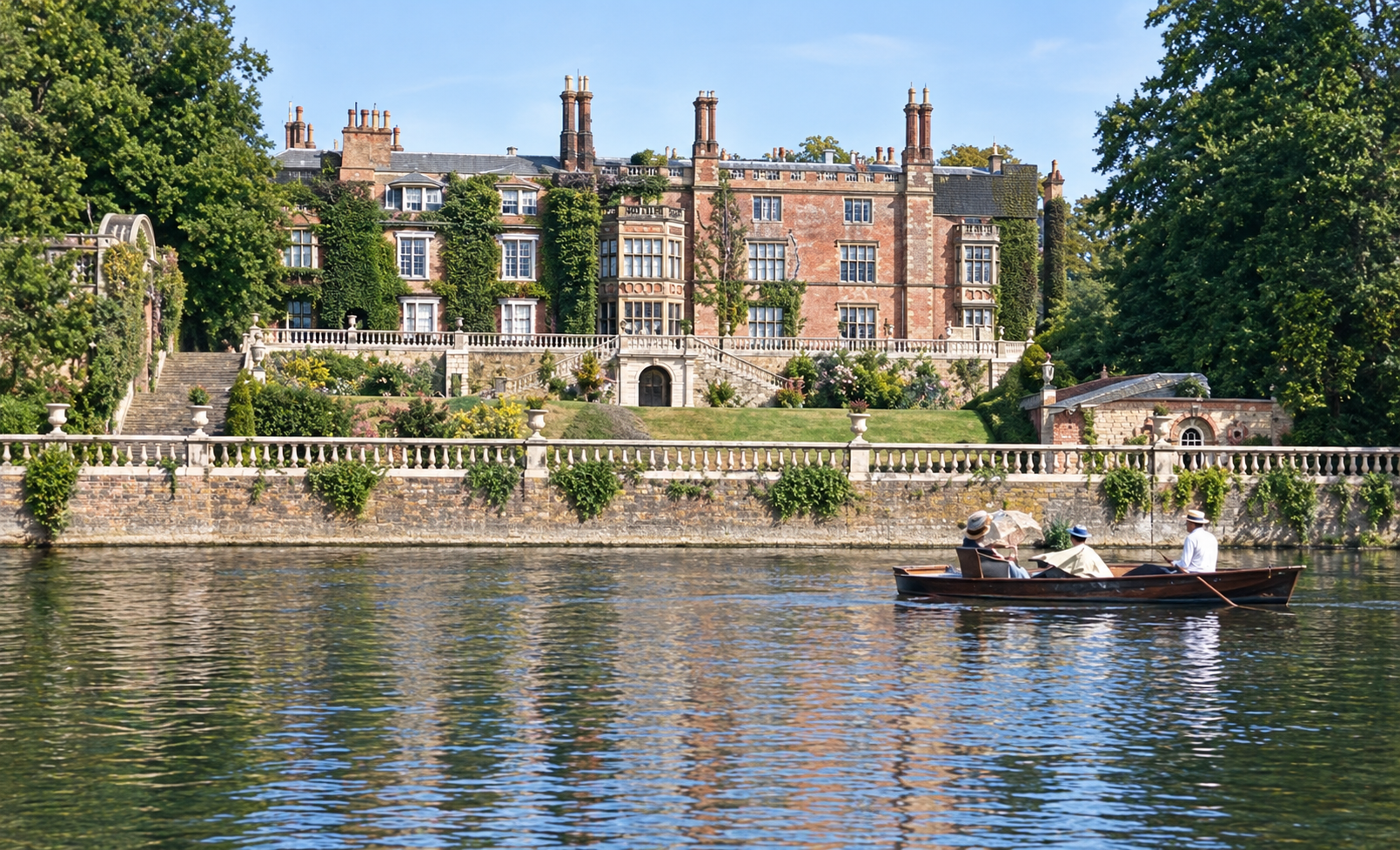
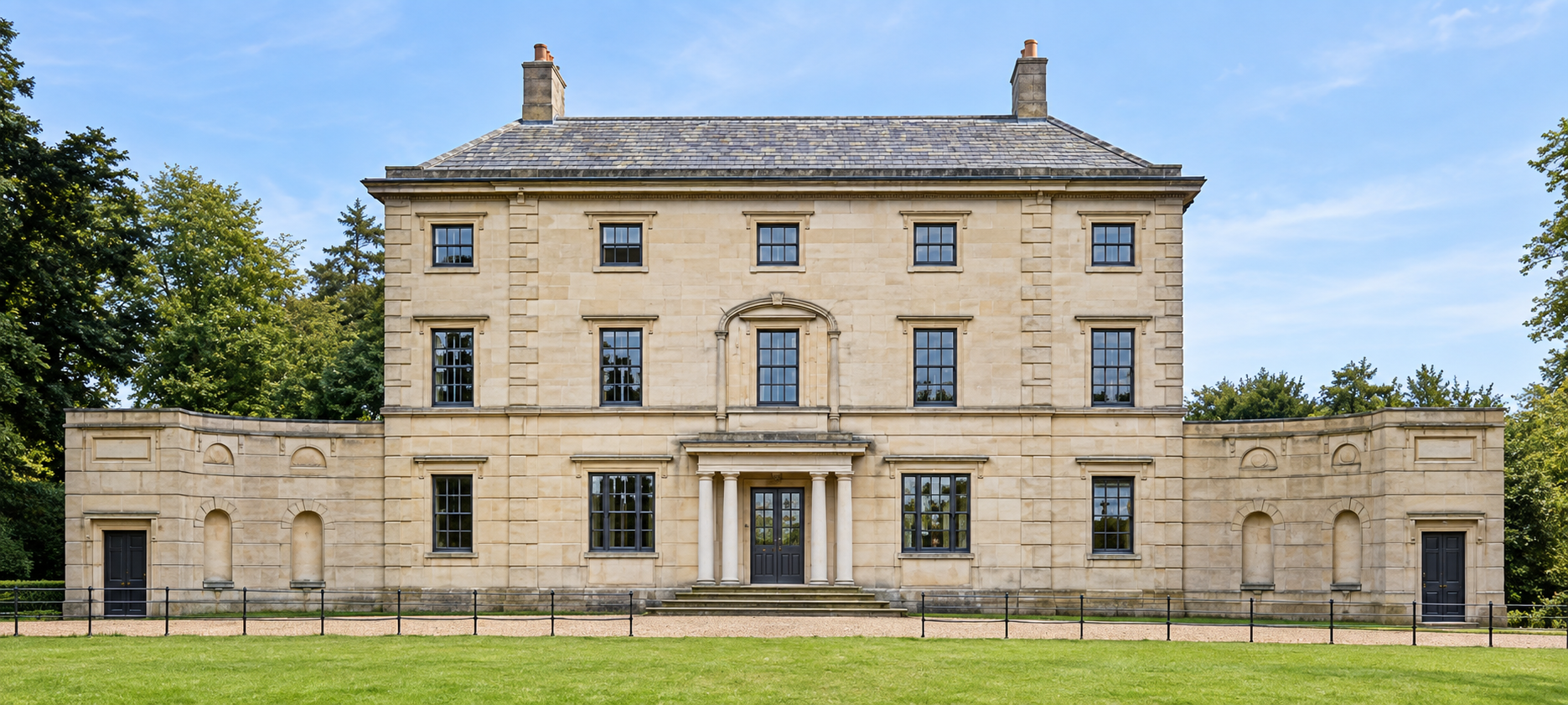
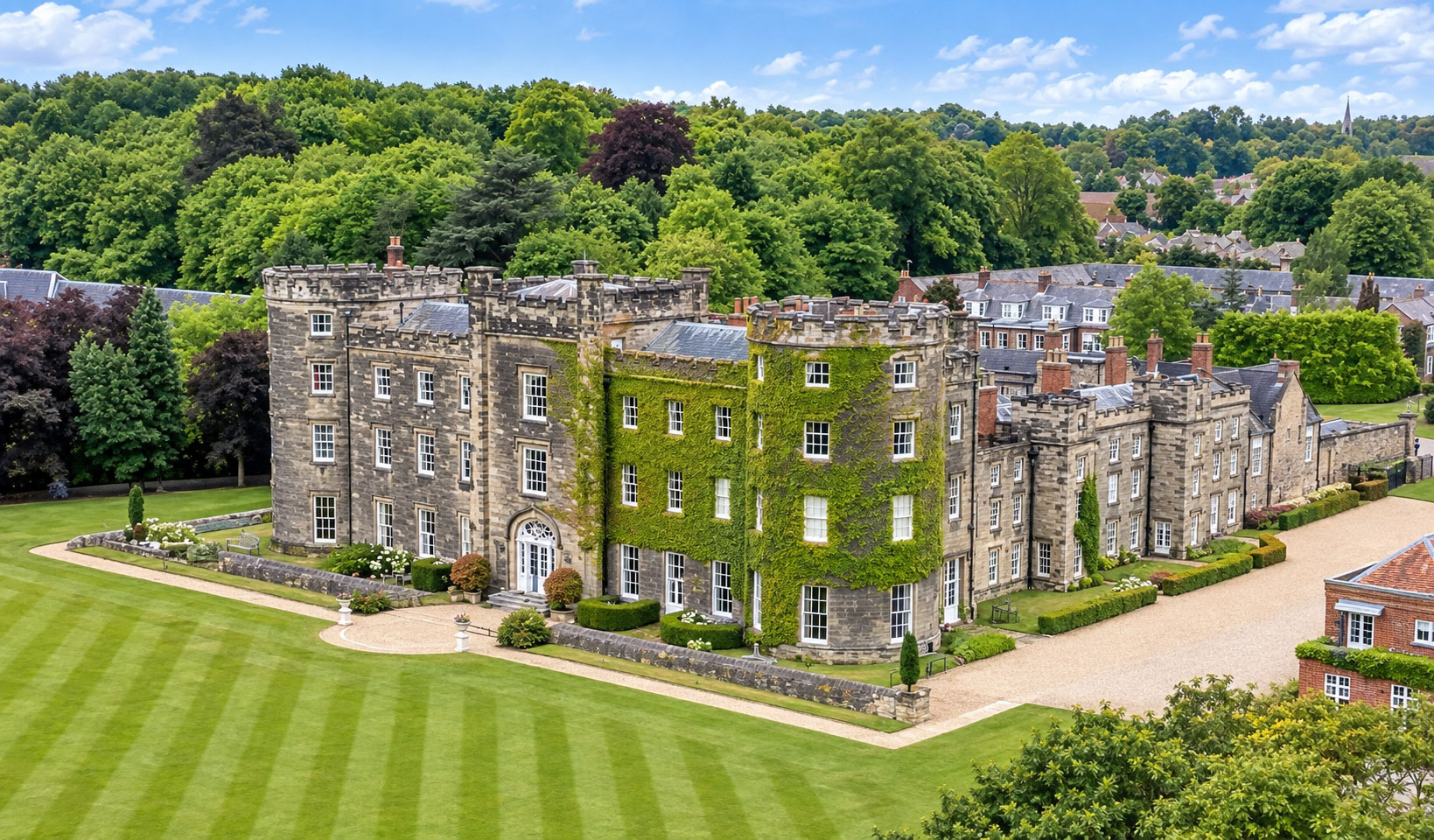
Bretby Hall is an historic Gothic-style country house that evolved from a medieval manor and castle into prominent seat for the Earls of Chesterfield, a hospital, and finally private luxury apartments.

The manor of Bretby (Bretebi) is recorded in the 1086 Domesday book.

Around 1209, the land was granted to Stephen de Segrave by Ranulph de Blondeville, 4th Earl of Chester. He built an early mansion and church that later evolving as it expanded into Bretby Castle.

In 1585, the estate was purchased by the Stanhopes. Philip Stanhope, the 1st Earl of Chesterfield, received permission to enclose a park and built a new house nearby in the early 17th century, replacing the old castle. 

‘Old’ Bretby Hall, during its relatively brief existence, was the second largest country house in Derbyshire after Chatsworth. Towards the end of the 16th century the Stanhopes of Shelford (Notts.) bought the estate and in 1610 Philip, 1st Lord Stanhope (in 1628 created 1st Earl of Chesterfield) obtained Royal Consent to enclose land to form a park. It was probably at this stage that an old castle was pulled down, and no doubt any usable stone re-cycled into the structure of a new house he began not long afterwards, the building of which occupied him until the 1630s.

In 1628, his grandson Philip was made Earl of Chesterfield by King Charles I of England which meant that Bretby Hall became the ancestral home of the Earls of Chesterfield. The first Bretby Hall was built in 1630 after Thomas Stanhope bought the manor of Bretby from the Stephen de Segrave family,

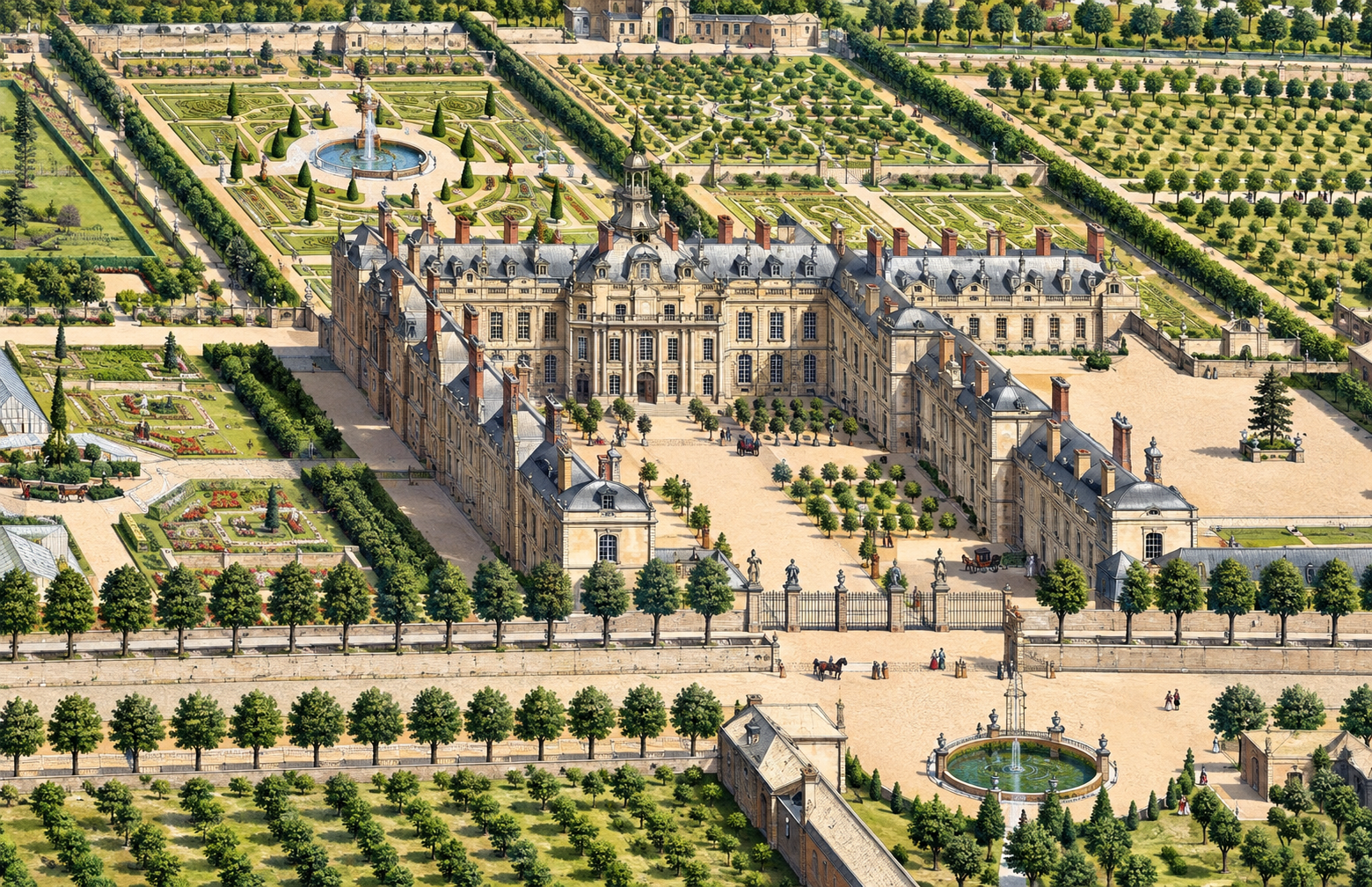
The 2nd Earl of Chesterfield developed lavish formal gardens which were much celebrated famous in the late 17th century and even compared with the gardens at Versailles. From all of the available materials, below is my best interpretation of both the Old Hall and Gardens.

This magnificent ensemble fell into disuse by the family under the famous 4th Earl (who twice refused a dukedom), and his successor, Philip Stanhope, the 5th Earl of Chesterfield, was persuaded to allow it to be demolished between 1775-1781, by a mendacious resident agent, who greatly enriched himself through the sale of the materials.

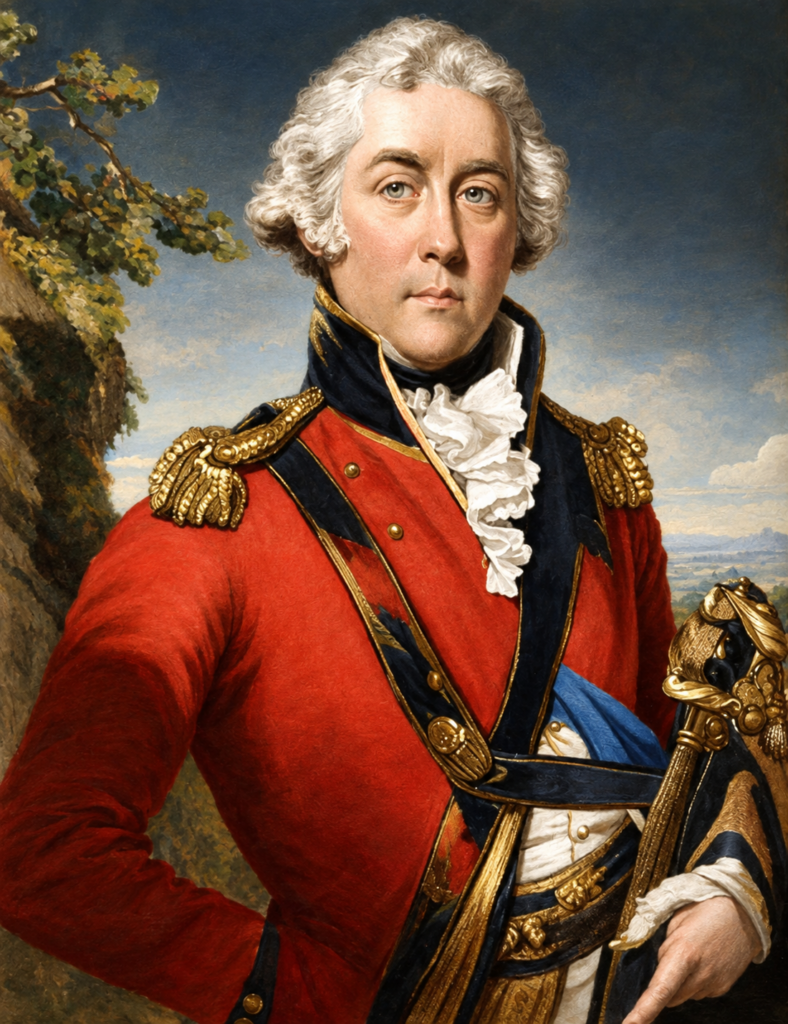
The 5th Earl later had regrets and commissioned a grand new castellated Gothic mansion designed by architects Sir Jeffry Wyatt and W. Martin. Building commenced on a site several hundred yards further south of the previous hall. Unfortunately, the building project proved to be too ambitious and was a long way from being finished when the 5th Earl died in 1815 so he never got to see the completed works.

All that remains of the original hall are some of the architecturally workaday outbuildings and service accommodation. A new brick house was put up on the site of the old one to accommodate the wily agent’s successor, but this was swallowed up in the present Bretby estate in the early 19th century.

The sixth Earl, known as the ‘Racing Earl’, loved cricket and shooting, so he built a cricket pitch and raised game birds.

Following the death of the seventh Earl in 1871, the Estate passed to his widowed mother, Anne Elizabeth, Dowager Countess of Chesterfield, who was a close friend of Benjamin Disraeli who frequently visited the estate.

On the death of the Countess, her estates devolved upon Lord Porchester, the eldest son of her daughter, Evelyn (died 1875), who had married Henry Herbert, 4th Earl of Carnarvon in 1861.

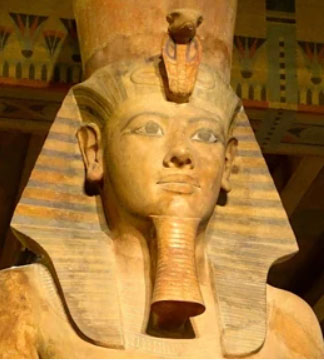
George Herbert, the 5th Earl of Carnarvon, the famous Egyptologist for whom Howard Carter discovered the tomb of Tutankhamun, inherited the property. He commenced breaking up the Bretby estate during World War I

In 1920, obsessed with his ongoing search for the tomb of Tutankhamen in Egypt, he sold the main estate to John Downing Wragg, a Swadlincote industrialist, to further fund Howard Carter’s legendary archaeological expedition in Egypt.

The Carnarvon’s never actually lived at Bretby Hall, preferring their home at Highclere Castle, near Newbury, Berkshire made famous by ‘Downton Abbey’. They did make regular visits, however, particularly for shooting.

 Derbyshire County Council purchased the Hall in 1926. It operated as a children’s sanatorium and later as a major orthopaedic hospital until closing on February 28, 1997 to be developed into luxury apartments.

Drakelowe Hall

Enjoy some full colour painstaking restorations of Drakelowe Hall of images taken around 1900

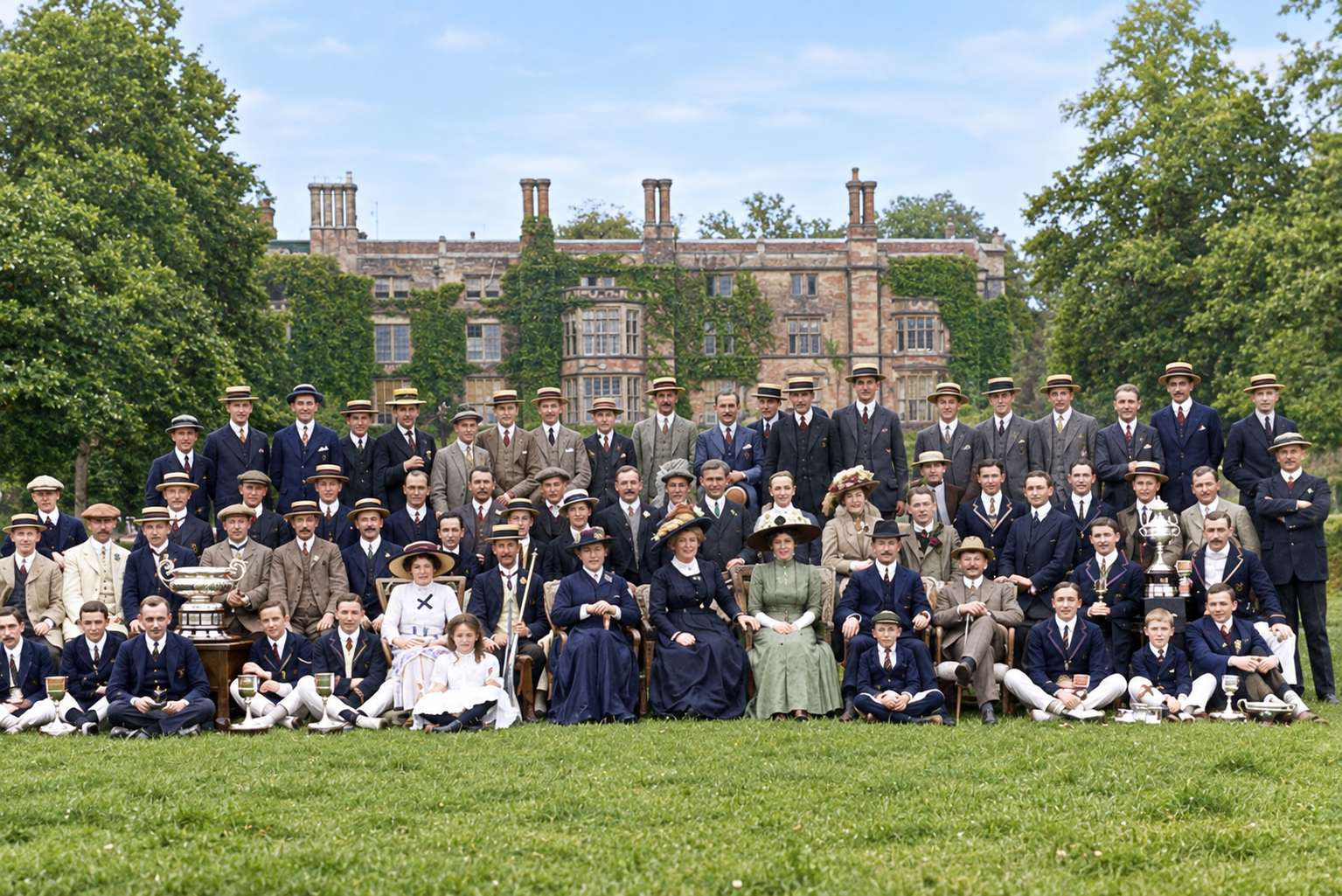
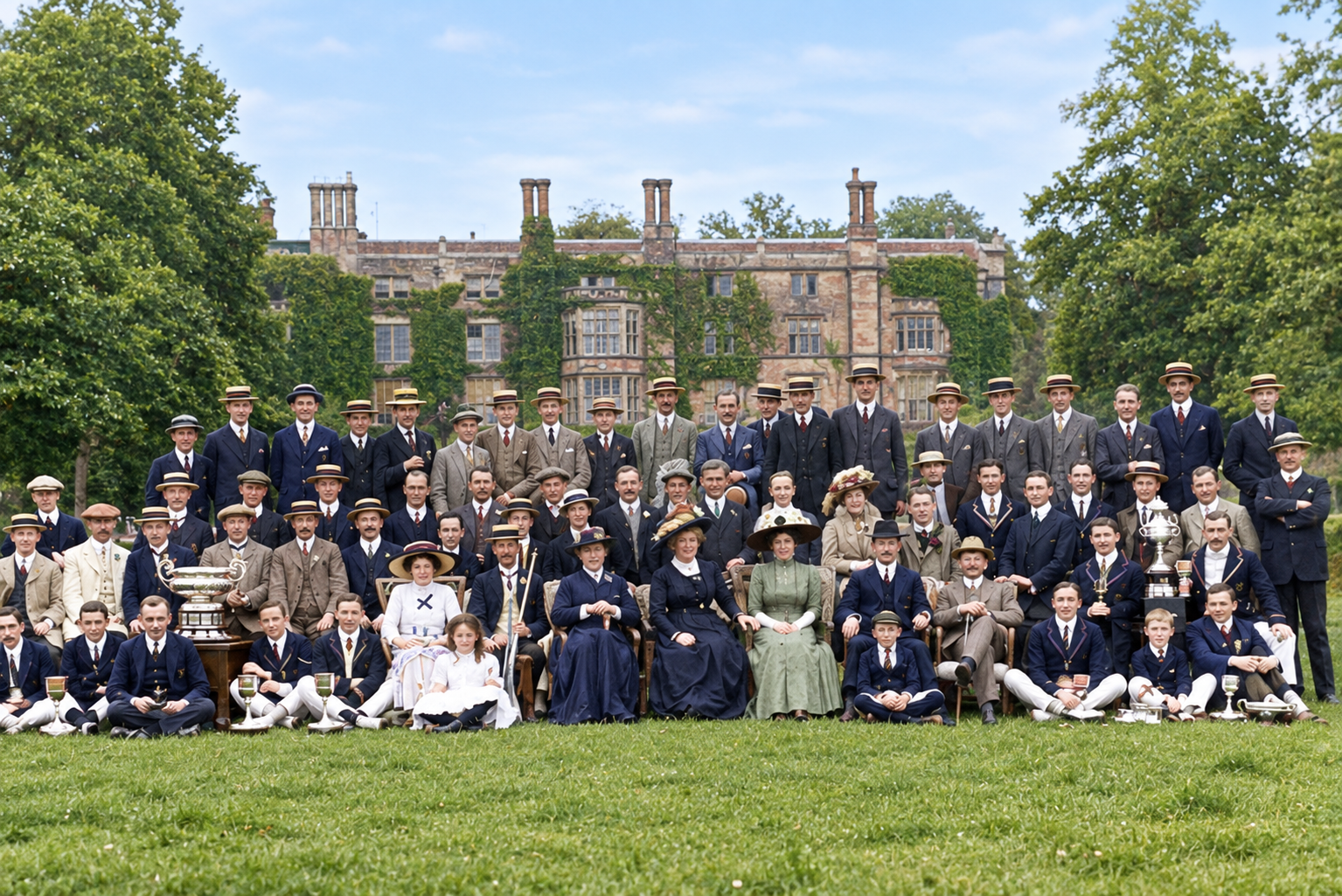
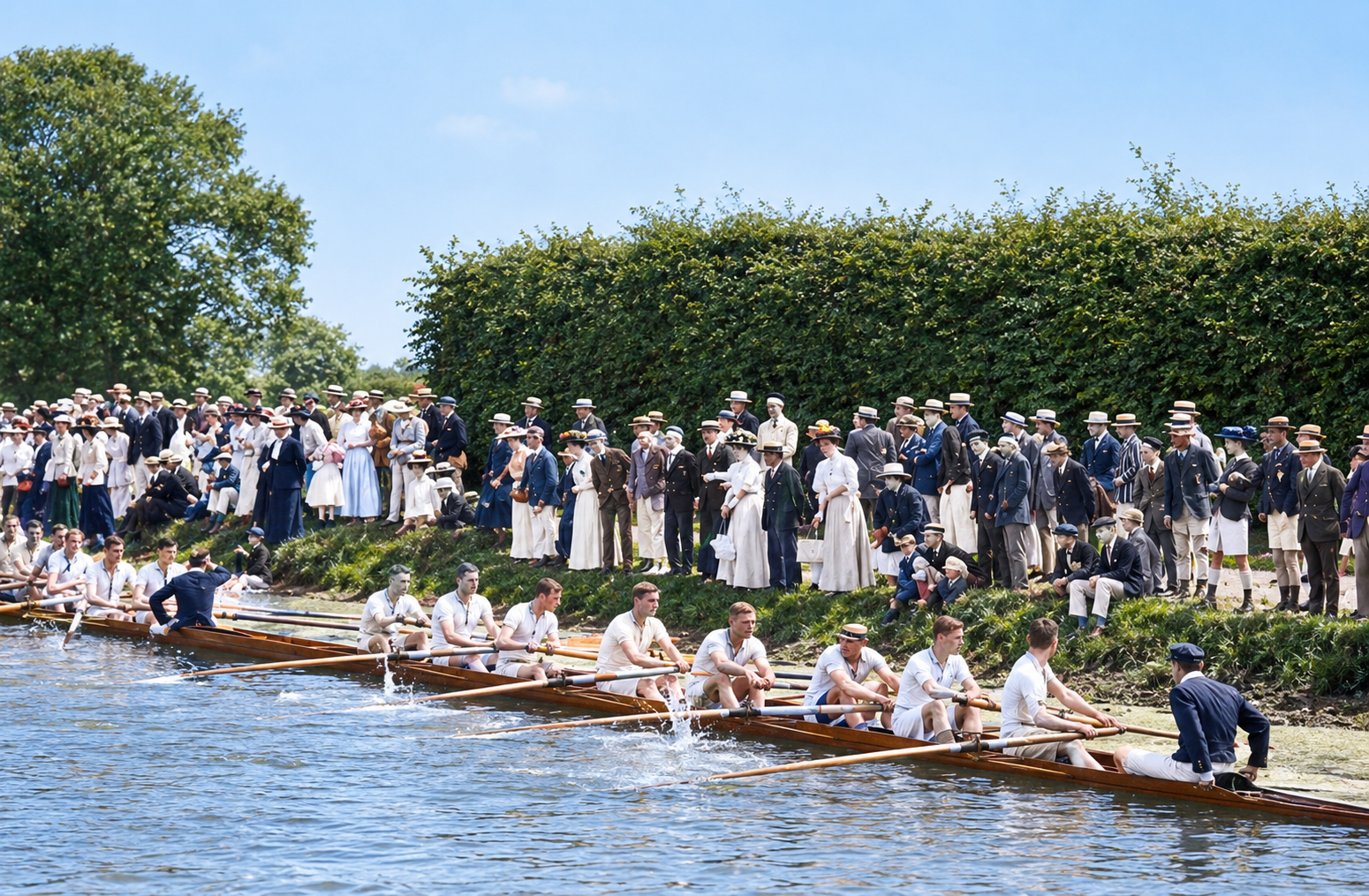
1910 Burton Leander Rowing Club assembled at Drakelowe Hall.

Burton Leander Rowing Club

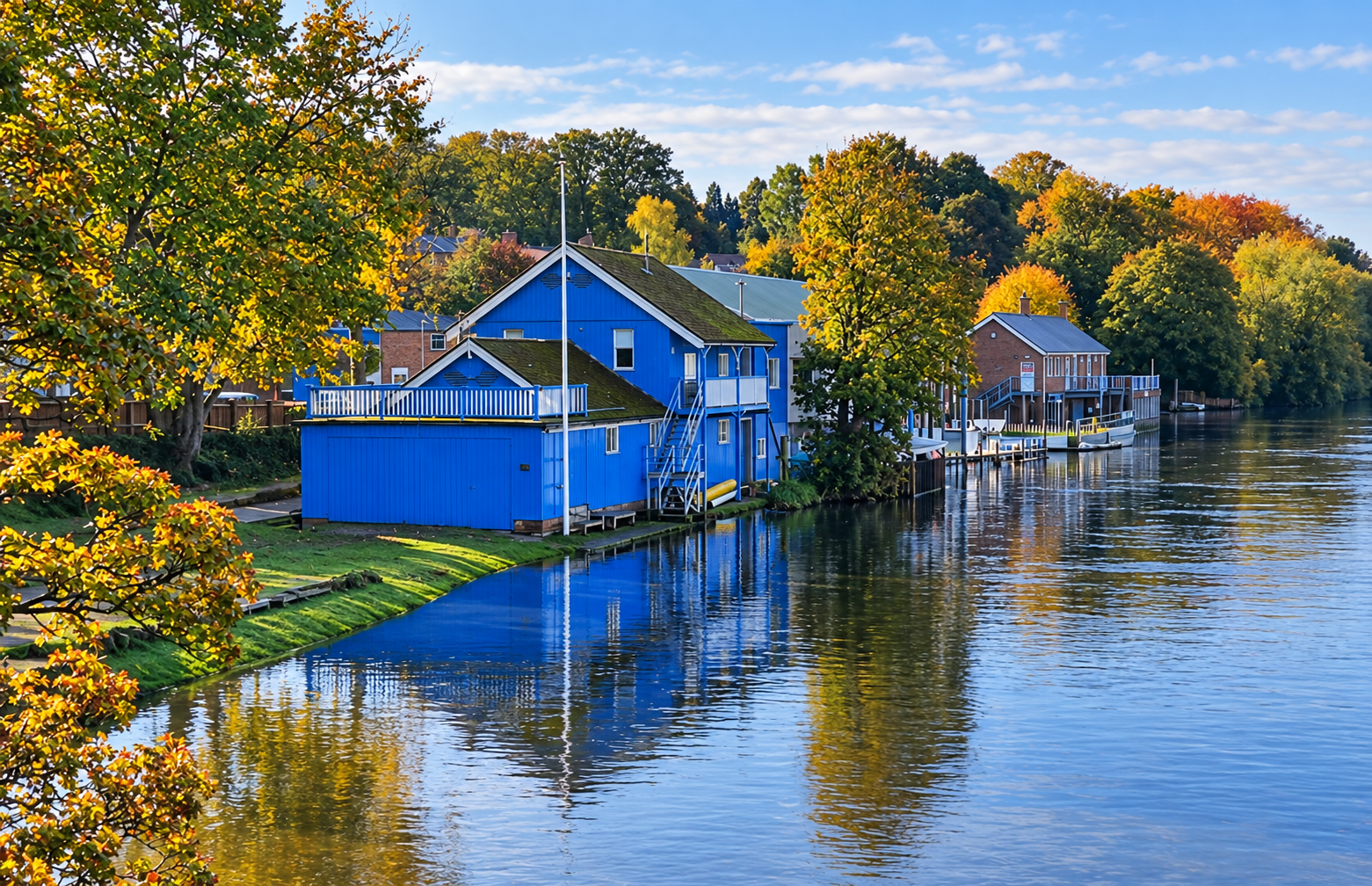
Rowing Burton Leander Rowing Club was established in 1847 with a clubhouse on the river bank near the corn mill in Winshill making it one of the oldest rowing clubs in the UK. The club’s two early wooden boats were named Frolic and Dodo.

Another club, Burton Anglesey, was established in 1848. The clubs competed in local events and in the same year, the first ‘unofficial’ regatta was staged. No further regattas took place for sixteen years until 1866 following the founding of both Burton Rowing Club and Trent Rowing Club in 1865 with boathouses built on the Stapenhill side of the river near Burton bridge. By that date the Leander and Anglesey clubs had been merged as the ‘New Leander Rowing Club’, but after a time, the name was simplified back to ‘Burton Leander’.

Below is a restoration of a photo of Burton Leander club taken at Drakelow Hall. Some impressive photos are on display but I haven’t been able to establish exact details of the event.

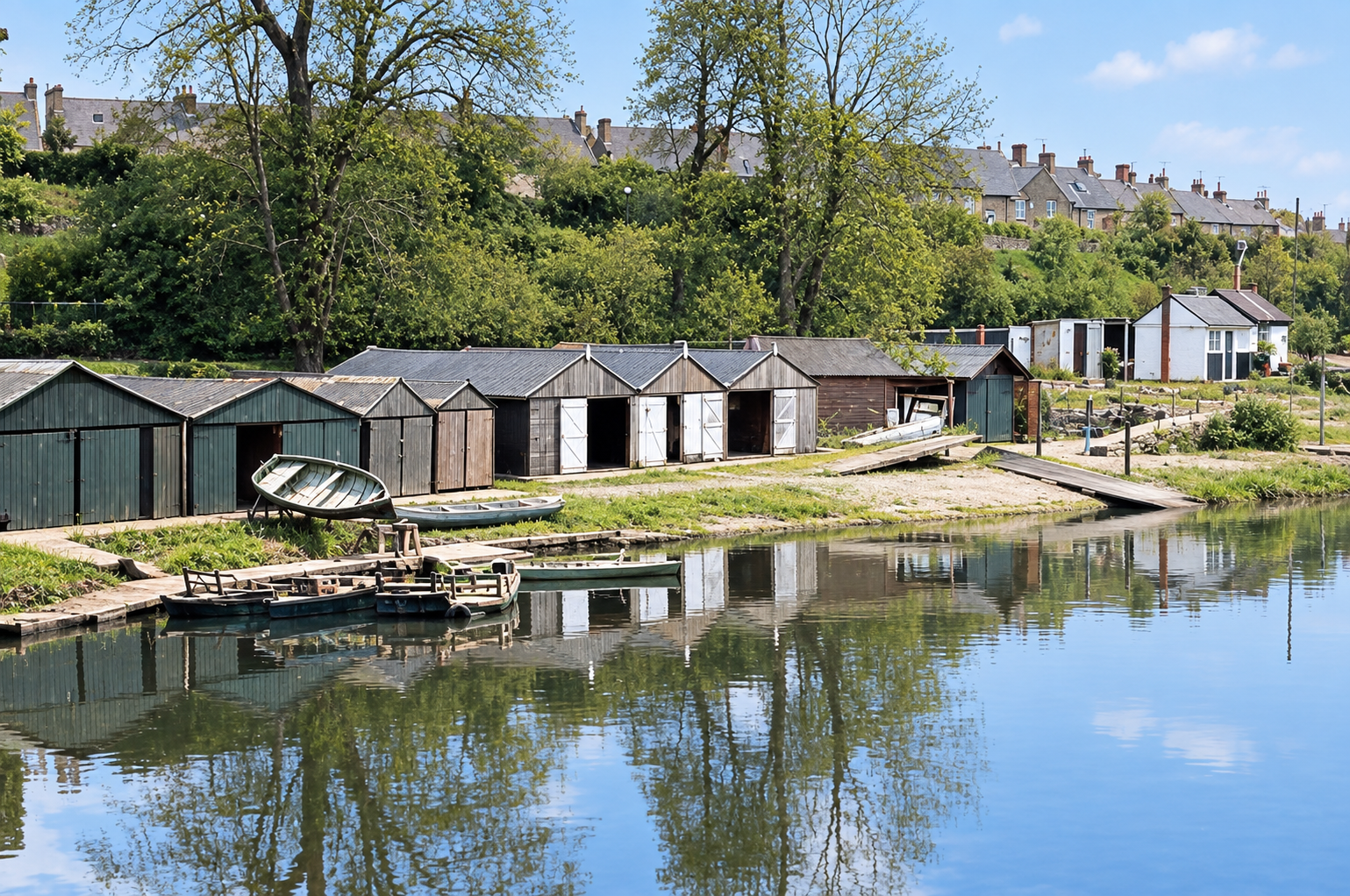
In September 1914 after the start of World War I, twenty members of the Burton RC and Burton Leander clubs volunteered for service with the London Rifle Brigade. This led to suggestions to amalgamate the club due to decreasing members, which initially failed on 28 May 1915. After World War I, Burton Rowing Club struggled to recruit crews and eventually disbanded in 1920 and Burton Leander, who were operating from sheds next to the Ferry Bridge, purchased their boathouse.

The above was site of Burton Leander Rowing Club in 1953 and below is a restoration from the Burton Regatta of the same year.

A major high point in the club’s competitive history came in 1958, when Burton Leander won the prestigious Wyfold Challenge Cup at the Henley Royal Regatta on the River Thames, at Henley-on-Thames, the countries most prestigious regatta. In 1993, the club secured another Henley trophy as part of a composite team with Walton Rowing Club (not Walton-on-Trent, but Walton-on-Thames!!), the Fawley Challenge Cup which was/is awarded for junior (U18) boys quadruple sculls.

Burton Leander and Trent Rowing clubs still exist (2026) and Burton Regatta has now been long established as one of the rowing calendars major two-day events.

Drakelowe Hall – Early History

EARLY HISTORY OF DRAKELOWE

Drakelowe is first recorded as Dracan Hlawe in a grant of land made by King Edward in 942 A.D. The place-name means “Dragon’s Mound”, indicating a burial place with a guardian spirit.

No trace of an early burial was found until January, 1962, when workmen with a mechanical digger were excavating gravel to make concrete for the construction of ‘C’ power station.
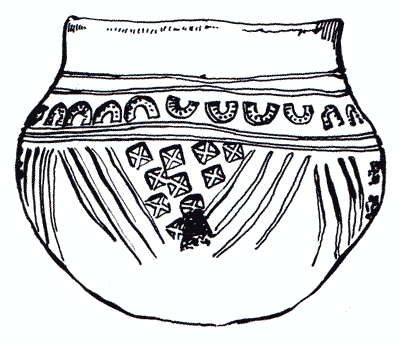
The site was in an orchard adjoining the former Warren Farmhouse and the “find” consisted of a small jar or bowl, globular in shape, with a base diameter of one and a half inches, and a height of two and a half inches. Made of well-fired grey-brown ware, it had a stamped decoration of horse shoes around the neck with incised chevrons and square stamps enclosing a cross on the body.

This small pot is a good example of a vessel containing a votive offering and is usually associated with a skeleton, but of the latter there was no trace.

The date of this vessel has been fixed at c550 A.D. and it is an interesting example of Friesian-Anglo-Saxon design. It is now in Derby Museum.

In the reign of Edward the Confessor, Drake-low was held by an Anglo-Saxon named Elric.

THE NORMAN CONQUEST AND AFTER
When this country was invaded by William the Conqueror in 1066 he was accompanied by the brothers Ralph and Robert de Toeni, who claimed descent from the Dukes of Normandy, with a pedigree extending back to Norse mythology.

Ralph, the elder, was hereditary Grand Standard Bearer to the Duke, but asked to be relieved of this duty so that he might fight in the battle of Hastings. He was rewarded with several manors in Norfolk and elsewhere, but spent most of his time on his ancestral estates in Normandy, Robert was given 81 manors in Staffordshire, 26 in Warwickshire, 20 in Lincolnshire and four elsewhere, and he adopted the surname of “de Stafford”.

Nigel, a younger brother or possibly a son of Robert, also assumed the surname of “de Stafford”, and held 13 manors in Staffordshire, 11 in Derbyshire, four in Leicestershire and one in Warwickshire. Among the Derbyshire manors held by Nigel at the time of the Domesday Survey in 1086 were those of Drakelow, Heathcote and Swadlincote, together with a pasturable wood two and a half miles long and two miles wide. There is no mention of Gresley in the Domesday Book.

Somewhere about the year 1090, Drakelow was stricken with pestilence and an account of this happening was written by Geoffrey, Abbot of Burton (1114-1151). Two of the Abbey servants living at Stapenhill fled to Drakelow desiring to live under the protection of Roger, Earl of Poictou, at that time holder of the great fief of Lancaster which included the manor of Drakelow.

The Abbey officials seized the seed corn of the servants, hoping this would induce them to return, but the Drakelow retainers came to Stapenhill and carried away all the seed corn in the Abbey barns. The Abbot refused to use armed force but went on naked feet to the shrine of St. Modwen in the Abbey Church to pray for guidance. It is recorded, however, that ten of the Abbot’s retainers met 60 Drakelow retainers at the “black pool by the Trent” and a fight took place (as this account was written by the Abbot it is possible the contestants were more equal in numbers).

The steward of Drakelow was killed and the offending servants were stricken with a mortal sickness. After their burial, horror upon horror fell upon the quiet village of Drakelow. Night after night the dead servants rose from their graves and rushed about the fields carrying their coffins on their shoulders and banging them on the walls of houses. Finally all the villagers were stricken with sickness. The Earl made repentance to the Abbot but the ghosts were not laid until the bodies of the offending servants had been dug up and burned “when an evil spirit in the form of a large black crow flew up out of the smoke and disappeared from view. Thereafter the village of Drakelow was forsaken and desolate, the surviving inhabitants fleeing to the nearest village which is called Gresley”.

William de Gresley’s grandson, also named William, returned from Gresley to Drakelow at the beginning of the 13th century. In a deed dated 1201 he is mentioned as holding Drakelow from King John by service of a bow, a quiver, and twelve arrows yearly, the bow to be unstrung, the quiver of Tutbury make, and the arms feathered, with the addition of a bozo or broad-headed shaft.

William died in 1220 and was succeeded by his son, Geoffrey, who became steward to the powerful William de Ferrers, 4th Earl of Derby and Constable of the High Peak. The Gresley arms which appear for the first time on Geoffrey’s seal are an adaptation of the Ferrers coat of arms.

Geoffrey’s grandson, also named Geoffrey, supported Simon de Montfort against Henry III and had to pay a large sum to redeem his forfeited estates. This Geoffrey de Gresley appears to have been of a turbulent disposition for he was accused several times of rioting and was fined for wounding Ralph le Messer at Lullington. He subsequently fought in France and Scotland and was knighted by Edward I and summoned to Parliament. He successfully claimed the right to erect a gallows at Drakelow for the execution of felons.

Sir Geoffrey had three sons, Peter, Robert and William, all of whom inherited the turbulent qualities of their father. Robert and William were outlawed for murder in 1293 and Peter, the eldest son, followed the example of his father by joining the army after many misdeameanours. He was knighted in 1307 and died in 1310.

Sir Peter’s wife, Joanna de Stafford, by whom he had six sons, was also not averse to violence. After her husband’s death she was forcibly adbucted from Drakelow and married to Sir Walter de Montgomery. The abductor was pardoned but in 1323 Joanna and her sons, Robert and Peter de Gresley, were accused of the murder of William de Montgomery, Sir Walter’s son by an earlier marriage.

The murder took place on “the high road in Overseale”, the fatal wound being inflicted by a “sword of Cologne worth 6/10.” All three persons accused were arrested – and acquitted.

In 1333 Joanna was accused of another murder and acquitted. Her eldest son, Peter, after robbing the parson of Walton and attempting to murder John Green, was slain a few years later. His brother Robert was accused of ten crimes including three of robbery and four of murder but he joined the King’s army in Scotland and fought so well that he was granted a free pardon for all his crimes, was knighted, and represented Derbyshire in Parliament.

In a deed executed by Peter’s grandson, John de Gresley, in 1394, it is stated: “Be it know that I, John de Gresley, have not had the use of my seal for a whole year. I therefore notify that, being of good memory and sound mind, I contradict and deny in all things any sealed writings until my seal is restored, and I have set to this deed the seal of Dean of Repton”.

Sir John had married as his second wife a wealthy heiresss, Joan de Wastneys, but they had no children. Nicholas, the son of his first marriage, died in 1390 and it appears that Sir John’s grandson, Thomas, was afraid the Wastney’s inheritance might go astray. A complaint was made by Joan to the Lord Chancellor that, while she and her husband were in possession of Drakelow, Thomas Gresley came there with 24 armed men and ransacked the chambers and chapel, breaking open 25 chests and carrying away £264 in gold as well as silver seal of arms belonging to Sir John and a quantity of linen and woollen clothes, furs and skins, worth £ 100, together with four score charters and muniments.

She went on to say that Sir John, in great infirmity (he was 80 years of age), was detained by Thomas and his people by main force so that she could not, and dare not go to his aid. The cause of the trouble was that Sir John had made her his executrix in place of Thomas, and with the family seal in his possession he might do as he liked. But Thomas eventually succeeded to all his grandfather’s property including the Wastney’s inheritance.

Nigel de Stafford, who retained that name all his life, had two sons, William and Nicholas. The latter married an heiress of the Longford family and went to reside there, but William, the elder son, remained at Gresley. His name first appears in a deed in 1129 and he died in 1166. In various deeds and charters he described himself as William, son of Nigel of Gresley, and this became the family name.

Somewhere about 1130, William de Gresley built a small priory dedicated to St. George for the use of canons of the Order of St. Augustine. Known as the “Black Canons” from their dress, these monks grew beards and wore little caps or birettas. They carried out the duties of parish priests but lived together on monastic lines.

The site of this priory was on another hill in the same large wood as the “motte and bailey” castle, and in the course of time the two settlements became known as Castle Gresley and Church Gresley. The present parish church of Gresley is on the site of the old monastic church, on the south side of which were the priory buildings.

That the Priory of Gresley was a small foundation is borne out by a grant which was confirmed by the Bishop of Lichfield in 1309 which states: “Although the Prior and Cannons of Gresley are bound to perform divine worship by day as well as by nights, and are compelled to exercise the burden of hospitality, yet from the fewness of the brethren which consist of only four in number, together with the Prior, and from the main estate of the house and the barrenness of its lands, and divers oppressions which daily gain strength as the malice of the world increases, they are unable to bear as is fitting the yoke of the Lord. So to augment the number of brethren we bestow upon them the parish church of Lullington, so that the aforesaid monks may increase their numbers by two canons”.

The Assize Rolls of Edward III contain an account of an unusual fatality which occurred in the Priory. “In the 14th year of the reign of the King’s father one William de Jorganville was sitting by the fire in the kitchen of the Prior of Gresley when suddenly his clothes caught fire and he was burned so badly that the third day afterwards he died. No one is suspected of his death. Verdict: Misadventure”.

THE WARS OF THE ROSES AND THE GRESLEY FAMILY
In the difficult times of the Wars of the Roses many wealthy landowners were ruined but the Gresleys contrived to keep their estates intact. Sir Thomas Gresley, a staunch Lancastrian, was knighted by Henry IV and at different times was Sheriff of Derbyshire and Staffordshire. He represented one or other of these counties in Parliament on no less than seven occasions.

Both Sir Thomas and his son John took part in the French expeditions of Henry V, Sir Thomas furnishing three men-at-arms and nine archers, while John contributed two men-at-arms and six archers. Among the family papers was an interesting indenture between Sir Thomas and John Bette, a yeoman of Rosliston, whereby the latter agreed to serve, follow and guard Sir Thomas in France for a wage of 6d. per day, and to be well mounted for service in the war.

On the death of Henry V, Jane Gresley, daughter of Sir Thomas, was appointed nurse to the infant Henry VI, then a few months old. On relinquishing her duties she was awarded a pension of £40 p.a. (equivalent to more than £2,000 p.a. today) and her successor, Dame Alice Botiller, was given permission by the Privy Council “reasonably to chastise the child from time to time as the case may require“. To have struck the King without such permission would have been a treasonable offence!

Sir John Gresley, a grandson of Sir Thomas, appears to have trimmed his sails to the prevailing wind. At one time a Lancastrian he afterwards supported Edward IV and accompanied him to Scotland. He attended the coronation of Richard III and subsequently accompanied Henry VII in his triumphal progress to the north.

Sir John had several disputes with the Abbot of Burton about fishing rights in the river Trent, and quarrelled violently with Sir William Vernon who owned land at Seale. This resulted in a fracas and the disputants were bound over to be of good behaviour, the following terms of compensation being fixed:
“For a sore wound on head or face 13/4d., an ordinary stroke 6/8d., a sore stroke on the leg if the bone was stricken asunder 40/-, a stroke on the foot 20/-, but if it results in maiming the compensation is to be 100/-, the latter amount also to be paid in respect of maiming hand or thumb”.

Sir John became Sheriff of Derbyshire and Nottinghamshire and represented Staffordshire in Parliament.

John’s grandson William, married a granddaughter of Sir William Vernon, thus uniting the disputing families, but they had no children. Sir William Gresley, however, had four sons by a lady named Alice Tawke, all of whom assumed the surname of Gresley. She afterwards married Sir John Savage and on Sir William’s death in 1521 she disputed the succession of Sir George Gresley (William’s brother) to the family estates.

The dispute was referred to Thomas Wolsey, Cardinal Archbishop of York, who decreed that Sir George should have possession of the family manors “as the rightful heir of his brother Sir William Gresley who died without lawful issue of his body begotten“. The documents were endorsed. “The decree against Lady Savage and her bastard sons for all the Gresley Lands“.

During the troublesome times of the Reformation the Gresleys managed to avoid persecution and forfeiture of their lands. Sir George was knighted by Henry VIII at the coronation of Anne Boleyn, and his son William was knighted by Queen Mary Tudor on the occasion of her accession, while William’s son, Thomas Gresley, was appointed Sheriff of Staffordshire by Elizabeth I and knighted by James I.

Thomas Gresley was appointed Sheriff for Staffordshire in 1583. This was an eventful year, for Mary Queen of Scots was moved from Sheffield to Wingfield and thence to Tutbury. The latter place was cold and damp, and Thomas Gresley, as Sheriff, was ordered to take an inventory of the goods belonging to Lord Paget at his house in Burton. Lord Paget, a Roman Catholic, and a suspected supporter of the Scottish queen, had fled to France. On receipt of the inventory the Sheriff was ordered to take some valuable hangings from the walls of Lord Paget’s house to render Tutbury Castle more comfortable.

It appears, however, that Thomas Gresley had sold some of the hangings and also some beds, and when Queen Mary complained of the cold at Tutbury he received an emphatic order that these hangings should be recovered and sent to Tutbury. Matters were adjusted, not without difficulty, and when the Scottish queen was removed to Fotheringhay, Thomas Gresley, as Sheriff, was ordered to attend her. The fact that he was present at her execution, however, did not impair his relations with her son, James I, who rewarded him with a knighthood on the occasion of his progress from Scotland toLondon.

Thomas Gresley took an active part in county affairs and was one of the signatories to a protest against a forced loan levied by Queen Elizabeth in 1590. Six year later two suspected Stapenhill witches were brought before him in his capacity as Justice of the Peace. A boy named Thomas Darby was suddenly attacked by fits and was supposed to have been bewitched either by Alice Gooderidge or her mother, Elizabeth Wright. The two unfortunate women were arrested and taken to Drakelow where they were searched for “witch-marks”, i.e. any blemish on face or body. These were found and a witness named Michael testified that when his cow was sick Elizabeth Wright cured it on payment of a penny fee.

Alice Gooderidge confessed she had bewitched the boy and was sent to Derby gaol. She was tried and condemned to death but died in prison before the date fixed for her execution. Three years later the boy confessed that his fits were frauds and he had never really been ill, adding “I did it to get myself a glory thereby“.
 

Drakelowe 17th and 18th Centuries

DRAKELOW IN THE 17th & 18th CENTURIES
Sir Thomas was succeeded by his son, George, who continued in high favour with James I and was included in the first list of baronets created by that monarch in 1611. Each applicant for this hereditary title had to provide thirty foot soldiers at 8ds. per day for three years for the settling of Ulster, or compound for this by a single payment of £1,095. The original number of baronets was 200, and they ranked above all knights except Knights of the Garter.

Sir George spent most of his time at Drakelow but was a member of the short-lived Parliament of 1628-9. Possibly this brief session shook his confidence in Charles I, for when the struggle between King and Parliament began in 1642, he took up arms on the latter side. This was a brave thing to do for Sir George was the only ‘gentleman of quality’ in South Derbyshire to join the Parliamentary forces at Derby where he commanded a troop of horse under Colonel Gell.

There were Royalist strongholds at Tutbury, Lichfield and Ashby de la Zouch which plundered and laid waste his estates including Drakelow, so that in 1644 Sir George had to apply to Parliament for financial assistance and was voted £4 per week. Although the Parliamentary forces were eventually victorious, Sir George suffered heavy losses and was the first of his line to sell some of his estates including the manors of Colton, Rosliston and Seale.

The following extract is from a MSS of Sir George Gresley formerly preserved at Drakelow. It is entitled “A true account of the raising and employing one foot regiment under Sir John Gell”.

“Now let any indifferent and impartial man judge whether our single regiment of foot hath been idle…..Prince Rupert with his army came once against us, the Earl of Newcastle in person twice, and the Queen when she lay as Ashby earnestly pressed the plunder of this town (Derby) as a reward to her soldiers, and yet we are safe.

Let wise men consider if this town had been lost and malignant lords and gentlemen in possession of this place what would have become of our neighbour Counties?

That the world may know we neither undertook this business with other men’s money nor have since employed any man’s estate to our profit. We had no advance money either from Parliament or our Country, or from any other man or woman, but went upon our own charges. Our Colonel hath since sold his stock, spent his revenue, and put himself into debt in maintenance of this cause. We are out of pocket many hundreds of pounds spent only on this business, not that we are weary of the cause but are absolutely resolved to continue and persevere so long as God shall give us lives to venture and estates to spend“.

One effect of the dissolution of the monasteries was to throw the burden of poor relief upon churchwardens and overseers of the poor and it was ordered that a general assessment for the relief of the poor should be made in every township.

In 1682 an appeal to the Quarter Sessions was made by the inhabitants of Church Gresley, Castle Gresley, Swadlincote, Oakthorpe and Donisthorpe, and parts of the parish of Gresley, that they were not able to raise enough money for the relief of the poor in their hamlets, but Sir Thomas Gresley and the inhabitants of the hamlet of Drakelow, having no poor, had claimed exemption from the rate and had paid nothing toward it. The Court ordered that Sir Thomas and the inhabitants of Drakelow should show cause why they should not be assessed to tax.

At the following Sessions it was ordered that as the manor of Drakelow of the yearly value of £400 is not charged with any poor, Sir Thomas Gresley will pay a third part of the levy, in other words, if the levy be fixed for £24, Sir Thomas shall pay £8, and the same rate for a greater or lesser amount to be paid to the overseers and churchwardens for the relief of the lame, impotent, old, blind, and such others being poor and unable to work.

Sir Thomas Gresley, the second baronet, had 14 children, two of whom made unusual marriages. Dorothy, the fourth daughter eloped with one of her father’s servants at 1 a.m. on June 18th, 1681, and was married by licence at Tutbury Church eight hours later. She was never forgiven by her mother.

The eldest son, William, at the age of 35, decided it was time he took a wife. So he journeyed into Shropshire and proposed to an heiress who refused him. Having made up his mind not to return without a wife he proposed to her eldest sister who accepted him. But the news did not please his parents when they learned that she was a widow with seven children.

However, ‘Squire Bill’, as he was known, declared he would have her “and that quickly too, for hunting is coming and then no time!” He also threatened to shoot his mother if she did not agree and she fled to Burton. But a reconciliation took place when his family learned that the widow had an income of £250 p.a. and invested funds worth £2,000, the children of her first marriage being otherwise provided for. Squire Bill, a man of few words, afterwards declared her “best wife in world”, and she presented him with three more children.

Sir Nigel, sixth baronet, grandson of Squire Bill, succeeded unexpectedly to the title and family estates when his elder brother died from smallpox at the age of 30. Nigel was a Captain in the Royal Navy and it was in his ship that Flora Macdonald, who aided the escape of “Bonnie Prince Charlie”, was conveyed to London after the abortive rebellion of 1745. As a reward for his kindness and courtesy, she presented him with her portrait which was hung in Drakelow Hall. An inscription on the back stated:

“This portrait of Flora Macdonald was given by herself to Sir Nigel Gresley, Captain in the Royal Navy, who captured her in flight from Scotland to France and from whom she experienced every courtesy and as a mark of her gratitude presented him with this picture in 1747”.

Sir Nigel inherited extensive property in Staffordshire from his mother, a daughter of Sir William Bowyer, and became a patron of James Brindley, the engineer. With his aid the “Gresley Canal” was built, nine miles in length, to convey coal and ironstone from mines at Apedale to the Grand Trunk Canal at Newcastle-under-Lyme, on condition that coal should be supplied to the inhabitants of the latter place at 5 shillings per ton.

Sir Nigel was a good-natured man of great size and an old inhabitant of Netherseale described him as the biggest man he ever saw in his life “except for a giant in a show”. When he worshipped in Netherseale Church it is said he had to wriggle sideways into the Hall pew!

Like his father, Sir Nigel Bowyer Gresley (1755-1808), the 7th baronet was interested in the improvement of his estates, and he endeavoured to improve the quality of local pottery.

At that time the pottery produced in Gresley and Swadlincote was a coarse brown earthenware made from a bluish-white superfine clay. In 1795, Sir Nigel, in collaboration with a relative. Mr. C.B. Adderley of Hams Hall, established a porcelain factory in buildings erected about fifty yards from Gresley Hall. The services of William Coffee, a modeller from the Derby China factory, were secured, and Sir Nigel’s daughters are said to have painted some of the patterns. But most of the pottery cracked in firing and the experiment proved a failure.

An order for a magnificent dinner service was obtained from Queen Charlotte through her Chamberlain, Col. Disbrowe, of Walton Hall, but it was never completed as the china came out of the ovens cracked and crazed. So far as the writer is aware Gresley china bore no distinctive markings. Specimens were preserved at Drakelow Hall and others can be seen in Museums at Derby and Birmingham. In the possession of Lord Gretton at Staple ford Hall, is a dessert service comprising 34 pieces with flower springs in colour on a yellow and gold background.


Picture Palace (Regent)

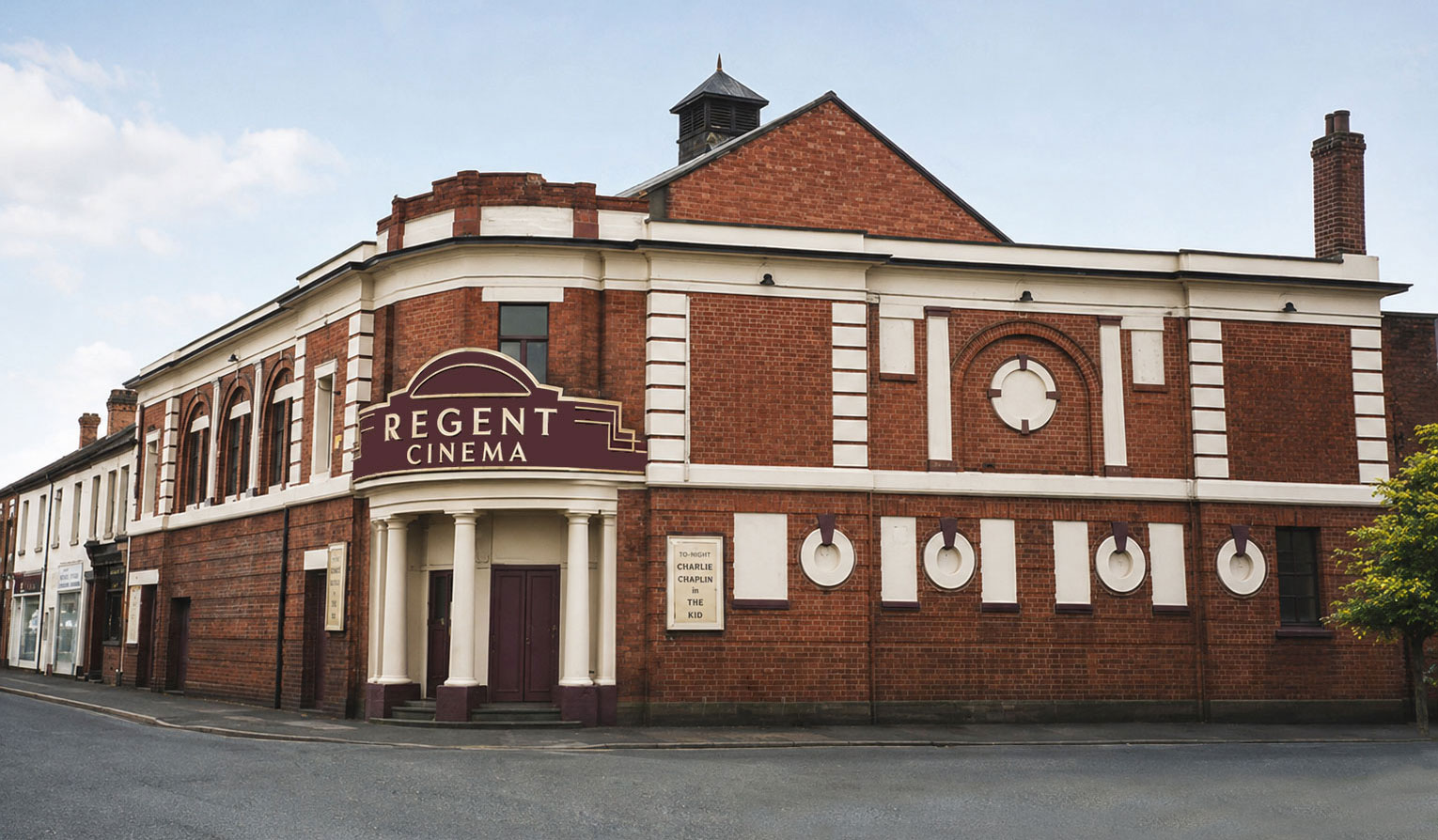
The Picture Palace was a 900-seat cinema that opened on November 17, 1920, at the junction of Dallow Street and Horninglow Road, the Derby Turn Picture Palace opened on Wednesday 17th November 1920. The proprietor was Derby Turn Picture Palace Company Ltd. and the manager was Alfred J. Wise. A 15ft deep stage was provided for variety acts. The proscenium was 30ft wide. There were 900 seats.

By 1922 the manager was S. A. Suffolk, who was later to set up Sheridan Films Services and run his own cinemas. Western Electric(WE) sound was installed; on 28th July 1930 the first ‘talkie’ was “Innocents of Paris” starring Maurice Chevalier. In 1932 the cinema was sold to opposition company Burton-on-Trent Picturedrome Company, who renamed it the Regent Cinema. At this time it is believed the seating capacity was reduced to 690.

The cinema closed in 1940 when it was requisitioned by the government as a Ministry storehouse. Post-war, it became a post office and later, a Bingo Hall.

The building was destroyed by a large fire whilst vacant in 2008.

Newton Hall

The Newton estate was granted to Norman de Solney in 1086 and appears in the Domesday Book. In 1205 Alured de Solennaia, a Norman knight, inherited Newton which by 1300 was known as Newton Solney.

Norman knights were passionately fond of hunting and the de Solneys established a large hunting park. There was a manor house with a nearby mill and fishing rights close to the location of what was to become Newton Hall. After the death of John, the last male de Solney in 1390, the manor passed through several important local families.

Newton Hall itself was established in 1798 by Burton attorney Abraham Hoskins the younger by enlarging and remodelling a pre-existing building. The bottom storey was shortly afterwards extended at both ends, and the whole facade refacing in ornamented Roman cement with stucco work designed by Francis designed by architect Francisco Bernasconi. The below shows the finished grander look and the house stood very much in this form from 1805 until 1880.

The house was drastically altered around 1880 following its purchase by Robert Ratcliff (1836-1912) of the now mighty ‘Bass, Ratcliff and Gretton’ combined brewery

Richard Ratcliff added an entire new range of rooms to the south side with asymmetric fenestration. Radical alterations were made to the interior and all of the external surface decoration was removed and renewed using a new details more fitting to the trend of Victorian houses. Another very significant change was the road that ran across the front of the building was lowered and redirected in a large arch around the estate at Robert Ratcliff’s expense so that it was not visible from the house.

William Worthington, another Burton brewer, rented and lived in the estate during the 19th century.

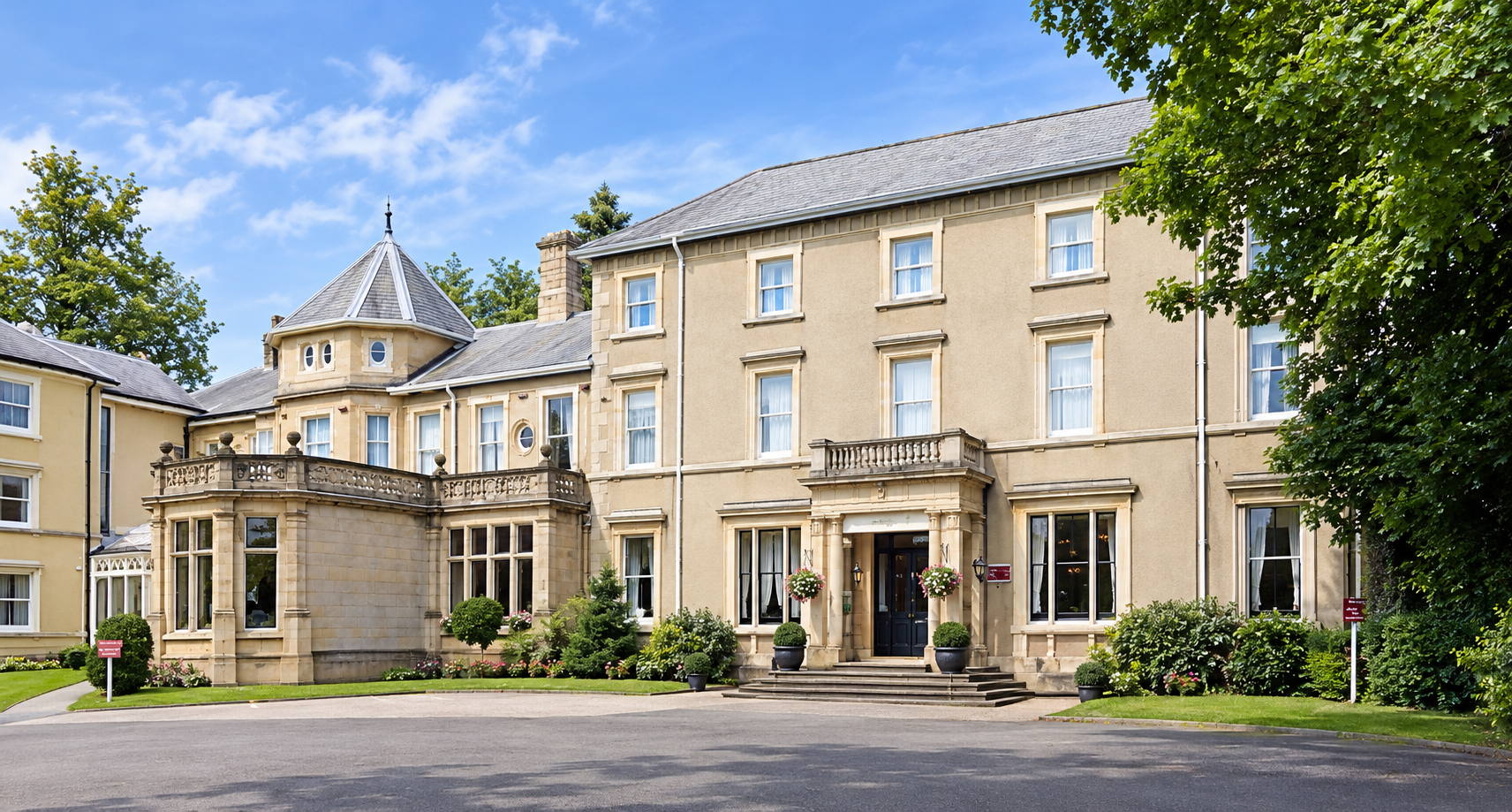
In 1955, following the death of Peter Ratcliff who now owned the estate by inheritance, the estate was sold. Part of the land was released for housing and the main house and immediate grounds opened as the Newton Park Hotel in 1966.

The further extended Newton Park Country House Hotel is a luxury hotel and is Grade II listed.

Orton & Spooner

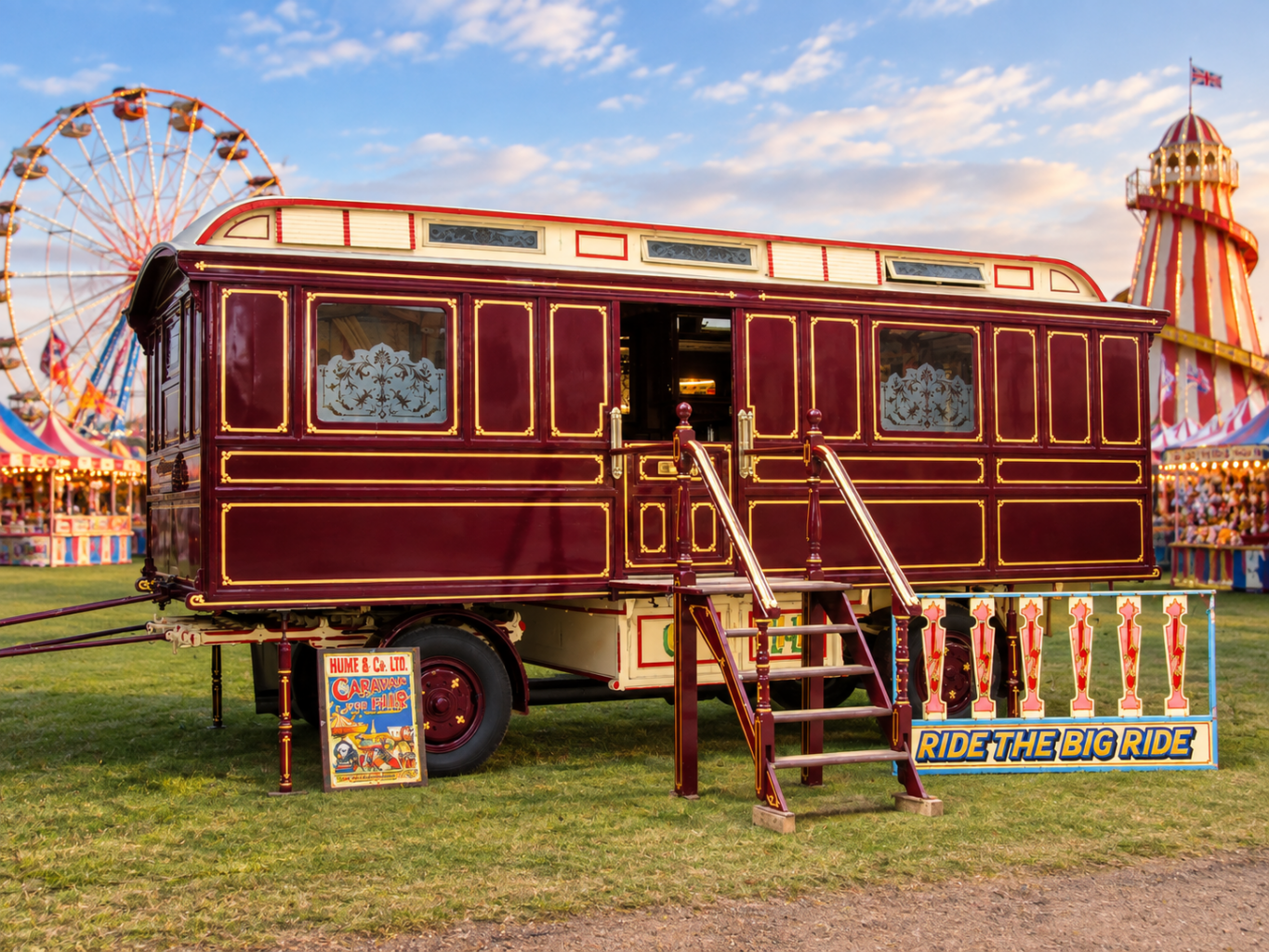
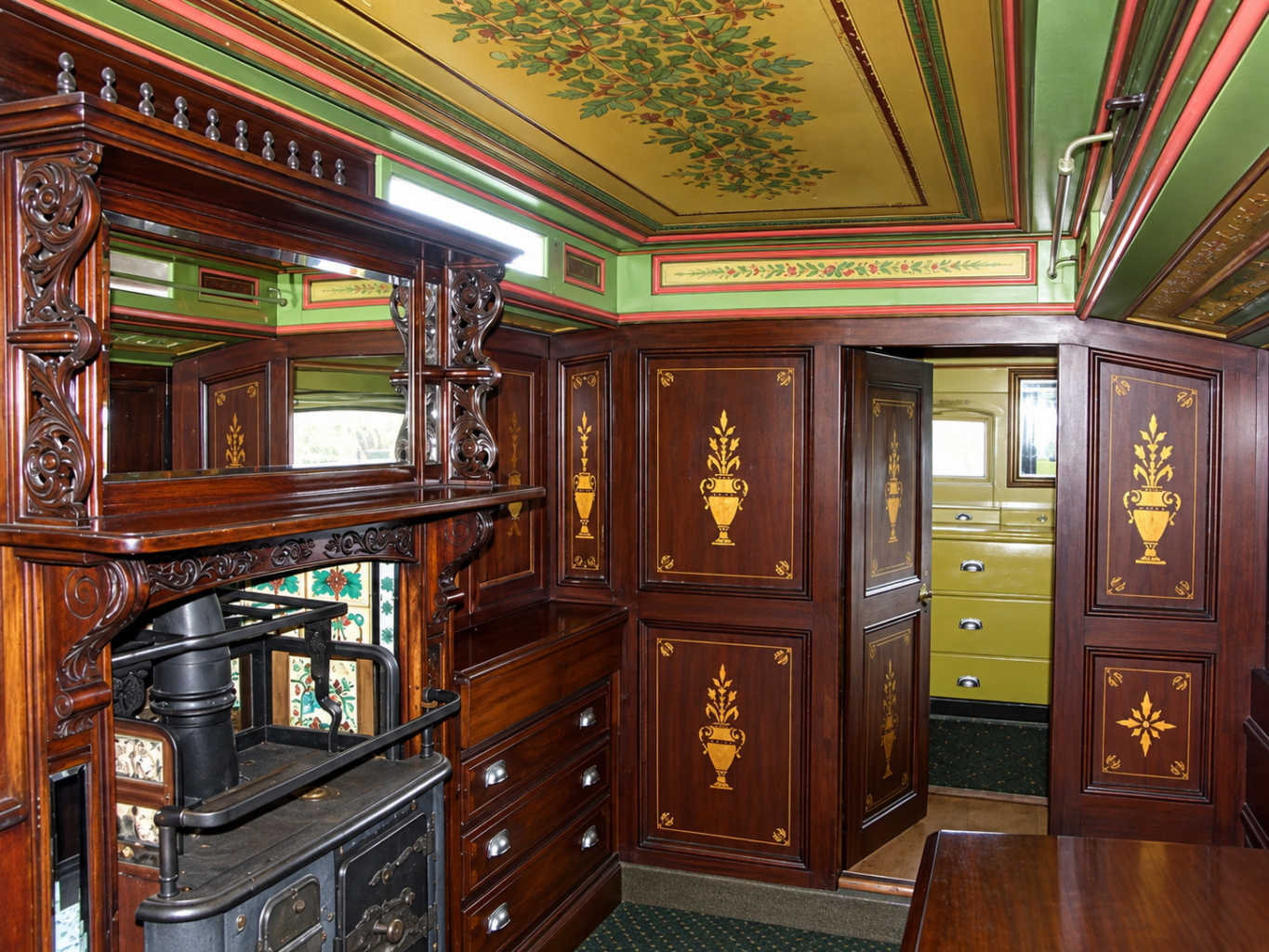
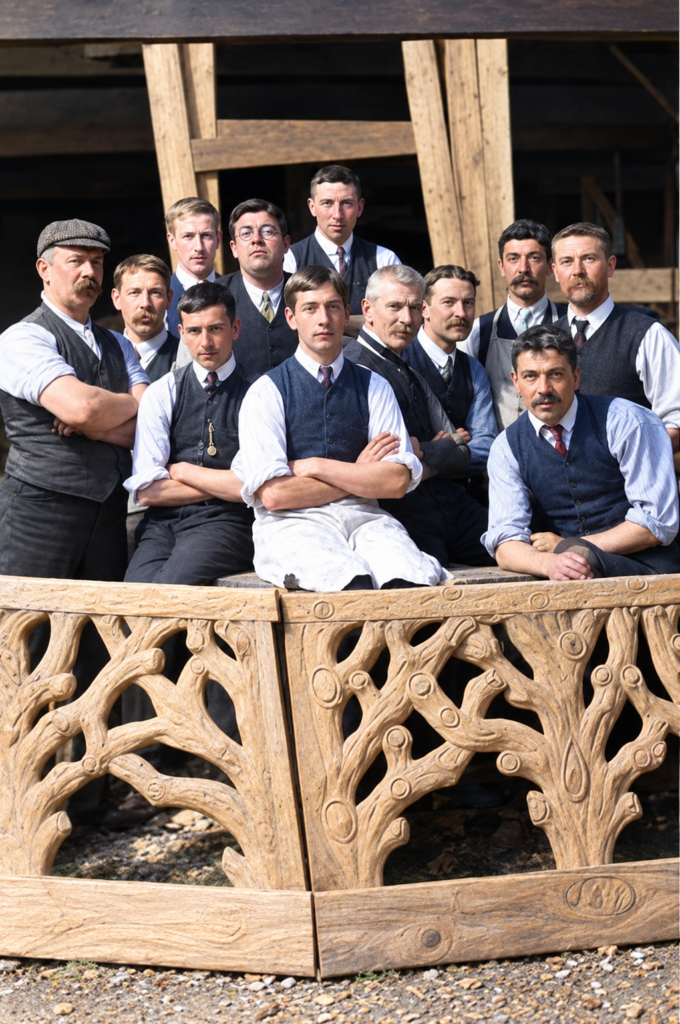
Orton & Spooner was a famous British engineering and fairground manufacturing company based in Burton upon Trent that operated from 1875 until 1977. The company built some of the world’s finest amusement rides, showfronts, and living wagons.

Origins and Partnership

George Orton (1843–1924) was born in Measham. He was a wheelwright and coachbuilder by trade and in 1875 he established the Lion Carriage Works in Victoria Cresent, Burton upon Trent to build transport wagons. From about 1883, he concentrated on building living decorative wagons for travelling showmen.

Charles Spooner (1871–1939) was born in Burton and was a wood-carver, and at first made drays and handcarts for brewing companies in the town. He set up in business in 1892 in a yard behind his father’s public house. The Swan. at the Winshill end of the Trent Bridge, and made carved work for showmen and builders of fairground rides, including animal figures for carousels. He was one of Orton’s main suppliers. From 1894 they worked almost exclusively together; their skills fit well together which would lead to a long partnership. In 1897 he married Orton’s daughter Rose Ann.

The two businesses officially joined to become George Orton, Sons and Spooner Ltd. in 1925.

George Orton retired in 1910, and the business was run by his sons Tom and Charles, his daughter Annie and Charles Spooner. The company in 1912 built erecting sheds on land he had bought in Victoria Crescent in Burton, large enough for a complete fairground ride. Elements for rides assembled here continued to be built at the Lion Work.

Fairground Golden Age

The most important fairground ride at this time was the ‘Circular Switchback’, powered by steam. Orton & Spooner’s main competitor was Frederick Savage of King’s Lynn; after the closure of Savage in 1910, Orton & Spooner dominated the market to become the top fairground ride manufacturers in the UK.


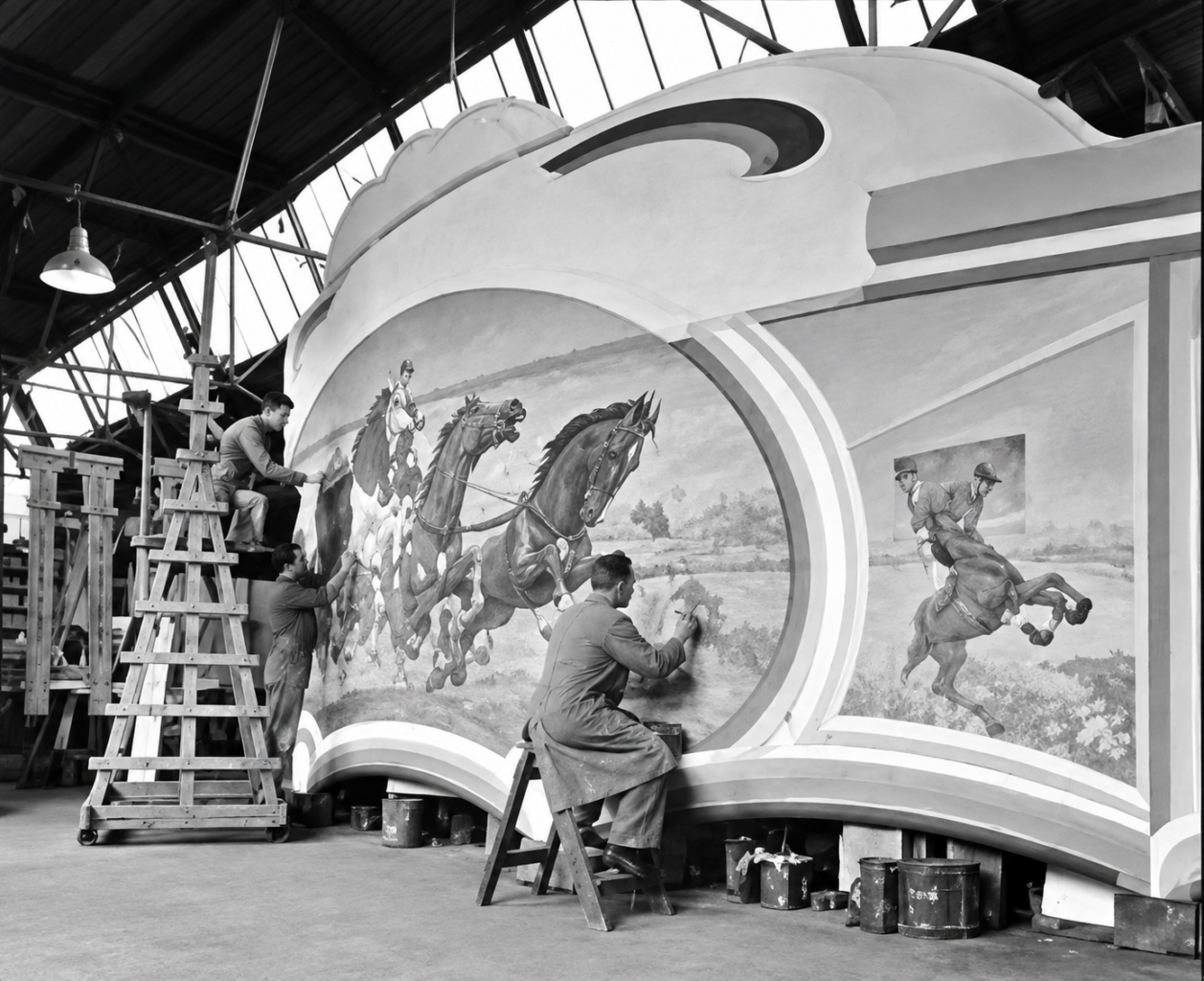
The elaborate panels for all of their rides of all sizes were hand painted at the Orton and Spooner factory.


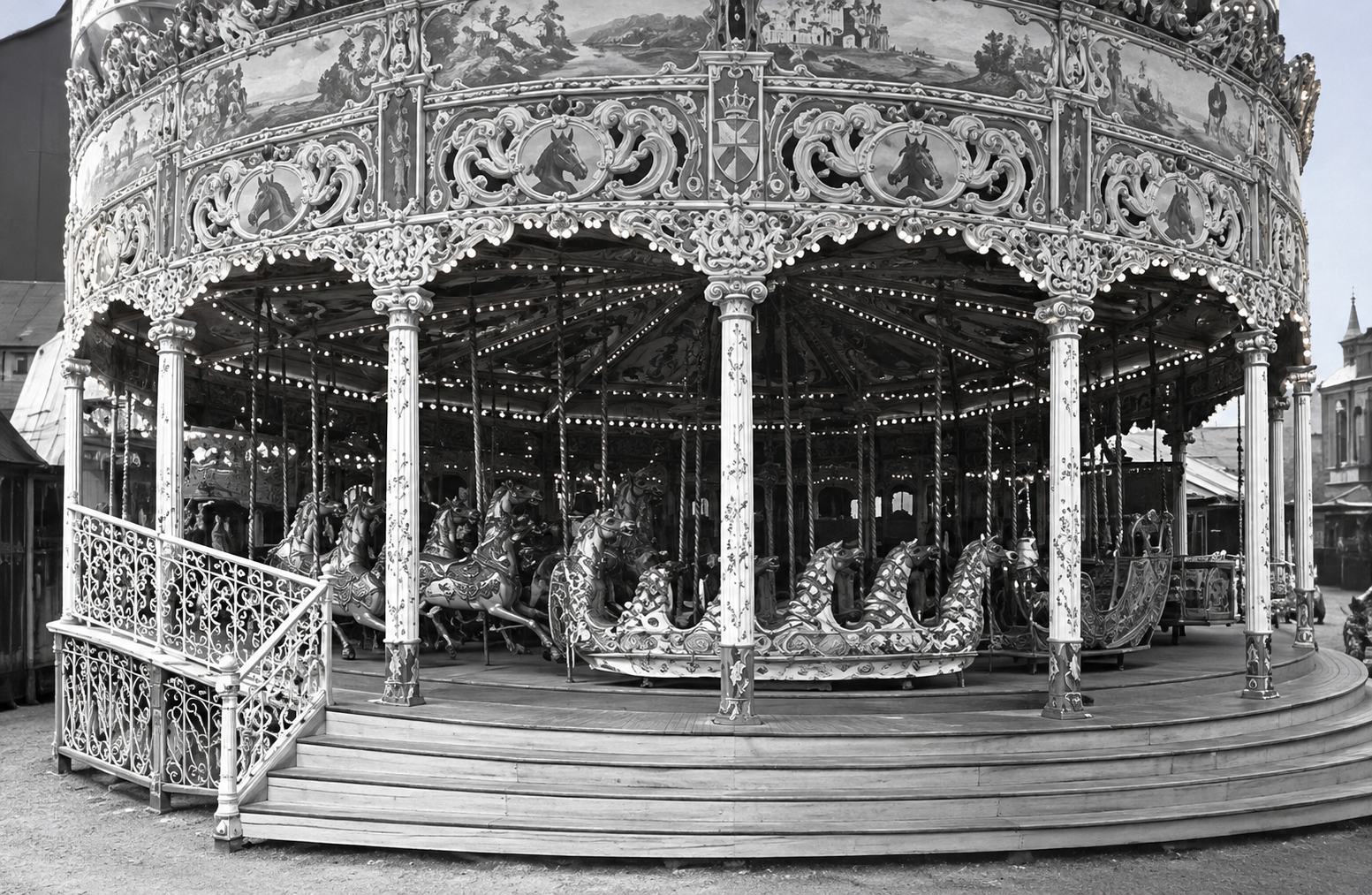
The magnificent four-abreast platform Galloper with a pagoda top, specially built by Orton and Spooner can be seen below at a 1900 Carnival in Glasgow. Amazingly, it was used as a travelling fairground attraction to large fairs such as the Nottingham Goose Fair. It finally ended up being shipped across the Atlantic to Coney Island, New York and was still there in the 1960s but minus the elaborate top.

In 1912, they built their first so called ‘Electric Scenic Railway’ fairground ride. They went on to make dozens of these large tracks. The ‘scenic railway’, powered by electricity, became important and it was Orton & Spooner that made the first such ride, with a circular undulating track. Over twenty years they built, rebuilt or modified 32 scenic railways. 

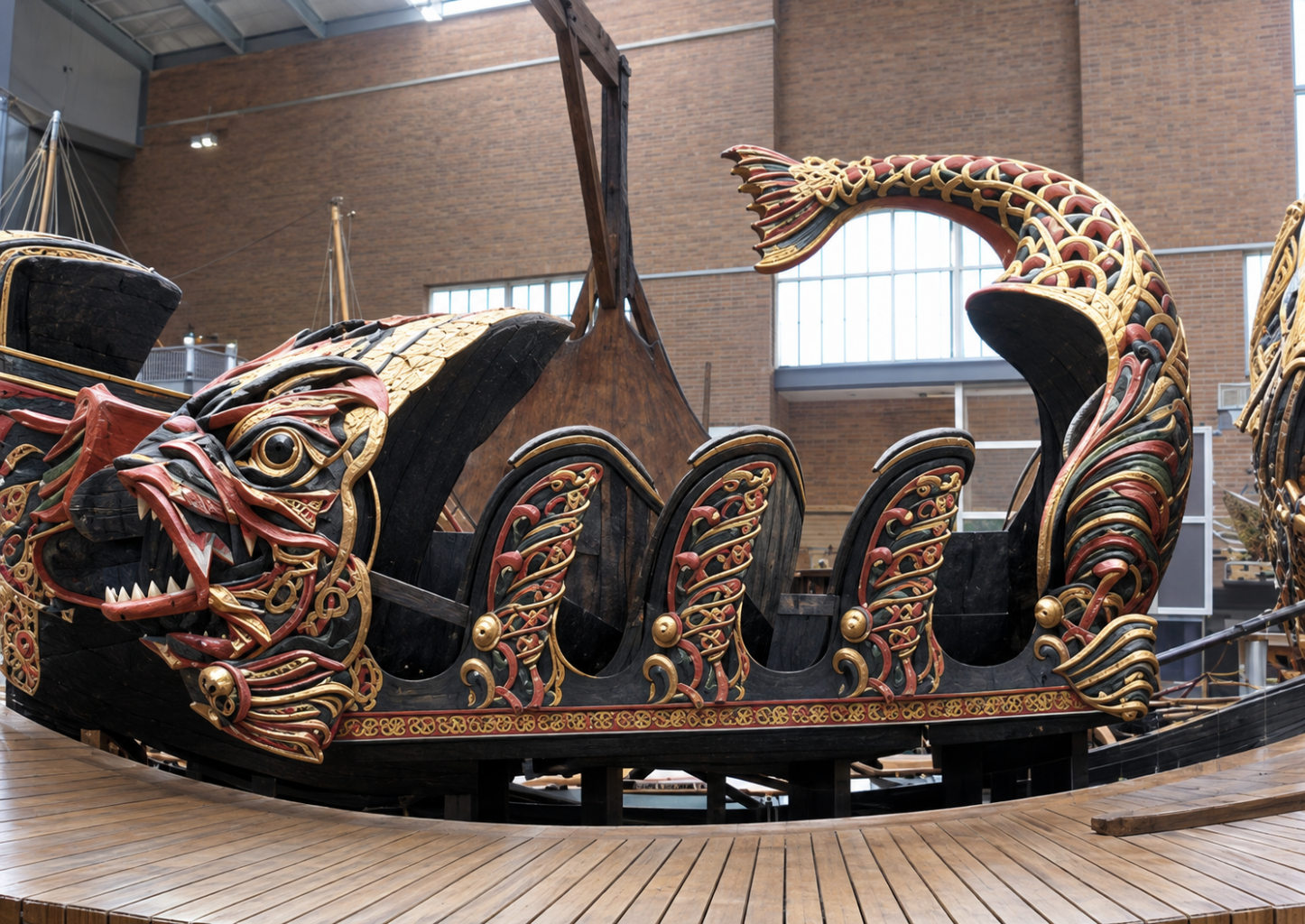
And below, a typical ‘Circular Railway’ carriage carved by Spooner. It was named ‘Whale’ though the teeth suggest something more sinister.

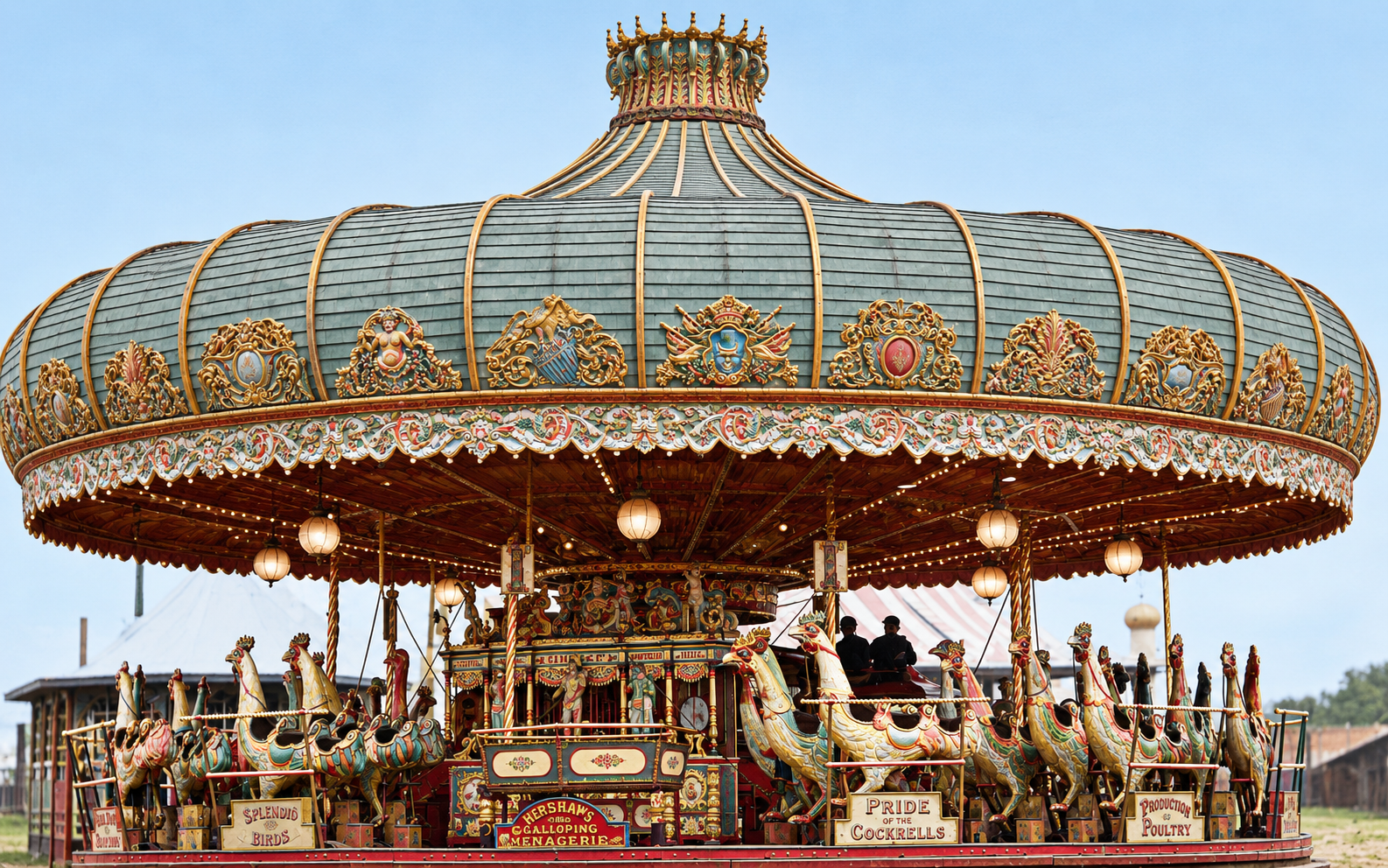
In the 1920s and 1930s, they shifted to smaller rides like Noah’s Arks, Dodgems, and Ghost Trains. Their hand-carved wooden animals and horses were famous for their high quality. From the late 1920s, the most important machines were smaller roundabouts, particularly ‘Noah’s Ark’, so called because of the various carved animals in the ride. They also made other fairground machines and side stalls.

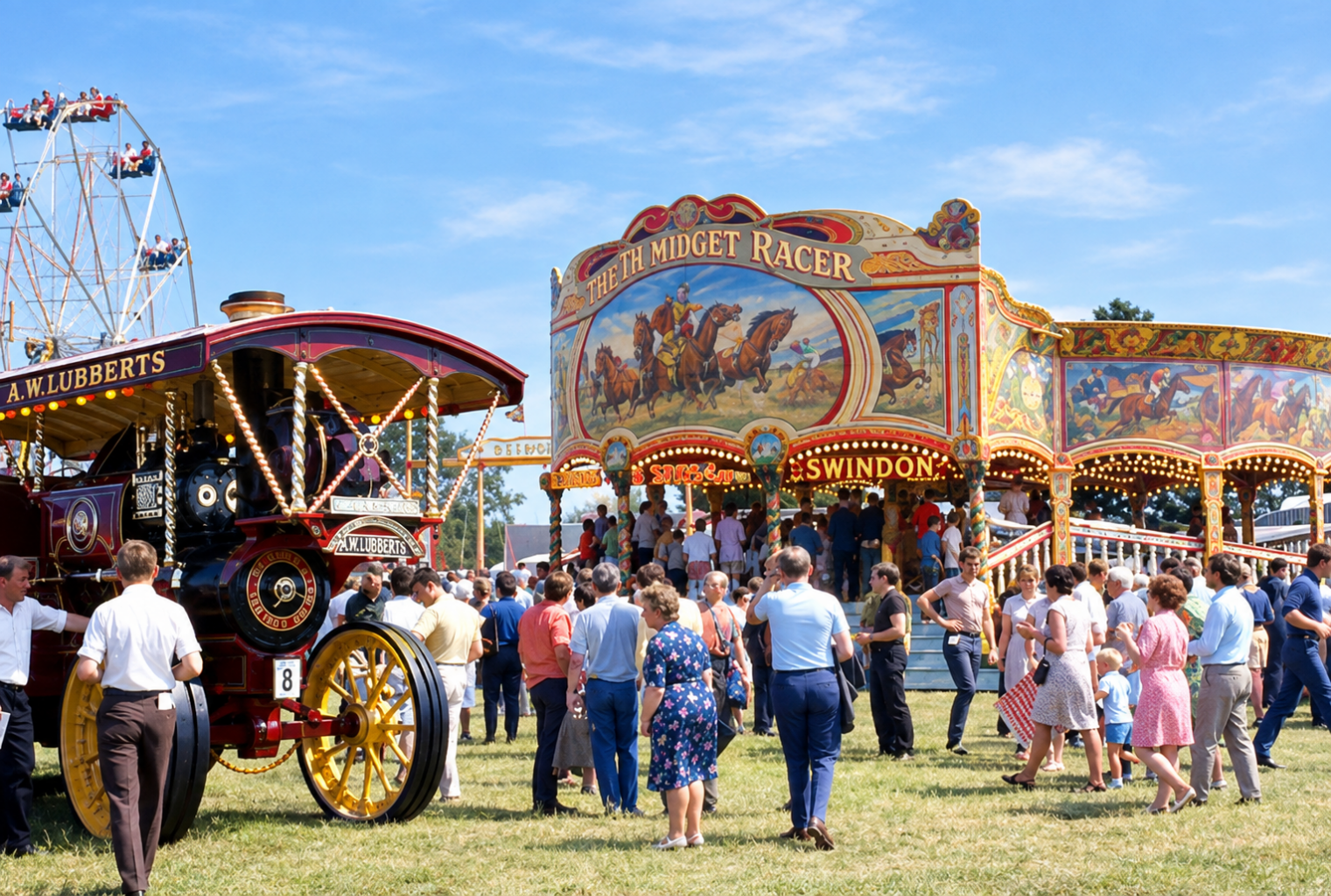
Another great Orton & Spooner ride on a fairground in 1968.

Wars and Final Years

The British government took over the Orton and Spooner factory during both World wars. They built portable aircraft hangars in World War I and military vehicles in World War II. After World War II, demand for fancy fairground rides dropped and the company stopped building fairground rides in 1954.

It survived until 1977 as a light engineering company until it was finally closed in 1977.

Electric Theatre

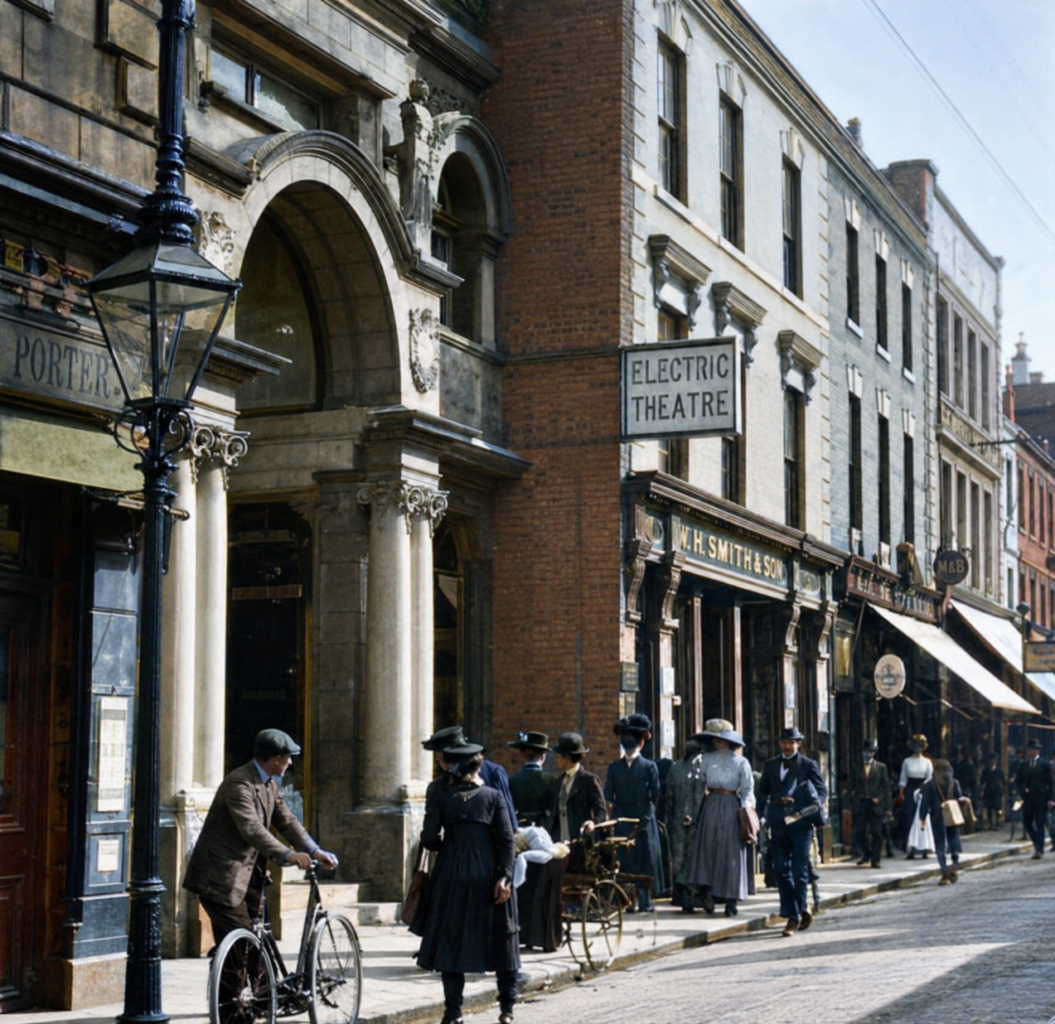
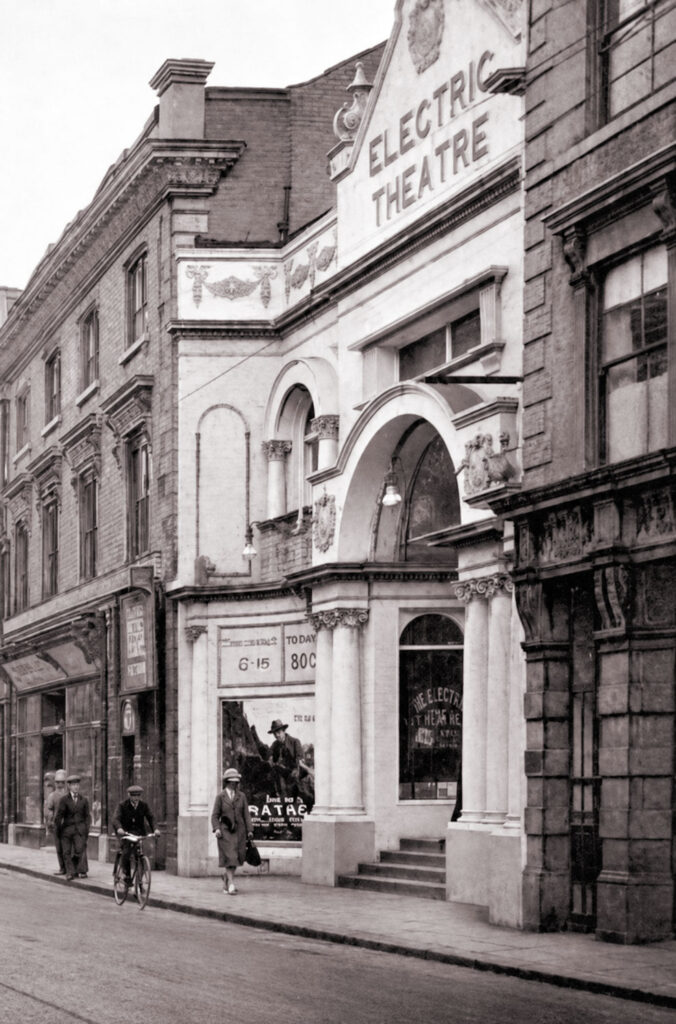
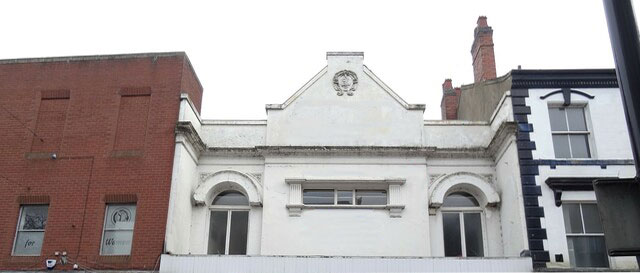
The Electric Theatre, generally known as simply ‘The Electric’, in High Street, was purpose-built on the site of the Empire Tea Store with its 750 velvet tip-up seats and tea lounge. It was opened on October 25, 1910, with the enticing ‘The Indiscretions of Betty’.

In 1928, it was taken over by Gaumont British Theatres chain and was closed for the auditorium to be reconstructed and reopened the same year with an increased seating capacity for 1,025. attached café was retained. The interior was remodelled in 1941 to make utilize unused space and increase the capacity to 1,050.

The first talkie (non-silent) picture, ‘King of the Khyber Rifles’, was shown to much excitement in 1929 which spelled the beginning of the end for the piano player.

The cinema closed for a few days, as did all cinemas, on the outbreak of the Second World War in 1939 but was soon reopened with a special showing of Sherlock Holmes starring Basil Rathbone.

It was acquired by Gaumont on November 28, 1949, and was closed on May 29, 1956.

If you glance up at the upper half of the buildings in High Street opposite the banks, you can still see this unassuming piece of history that has seen so much change.

Picturedrome

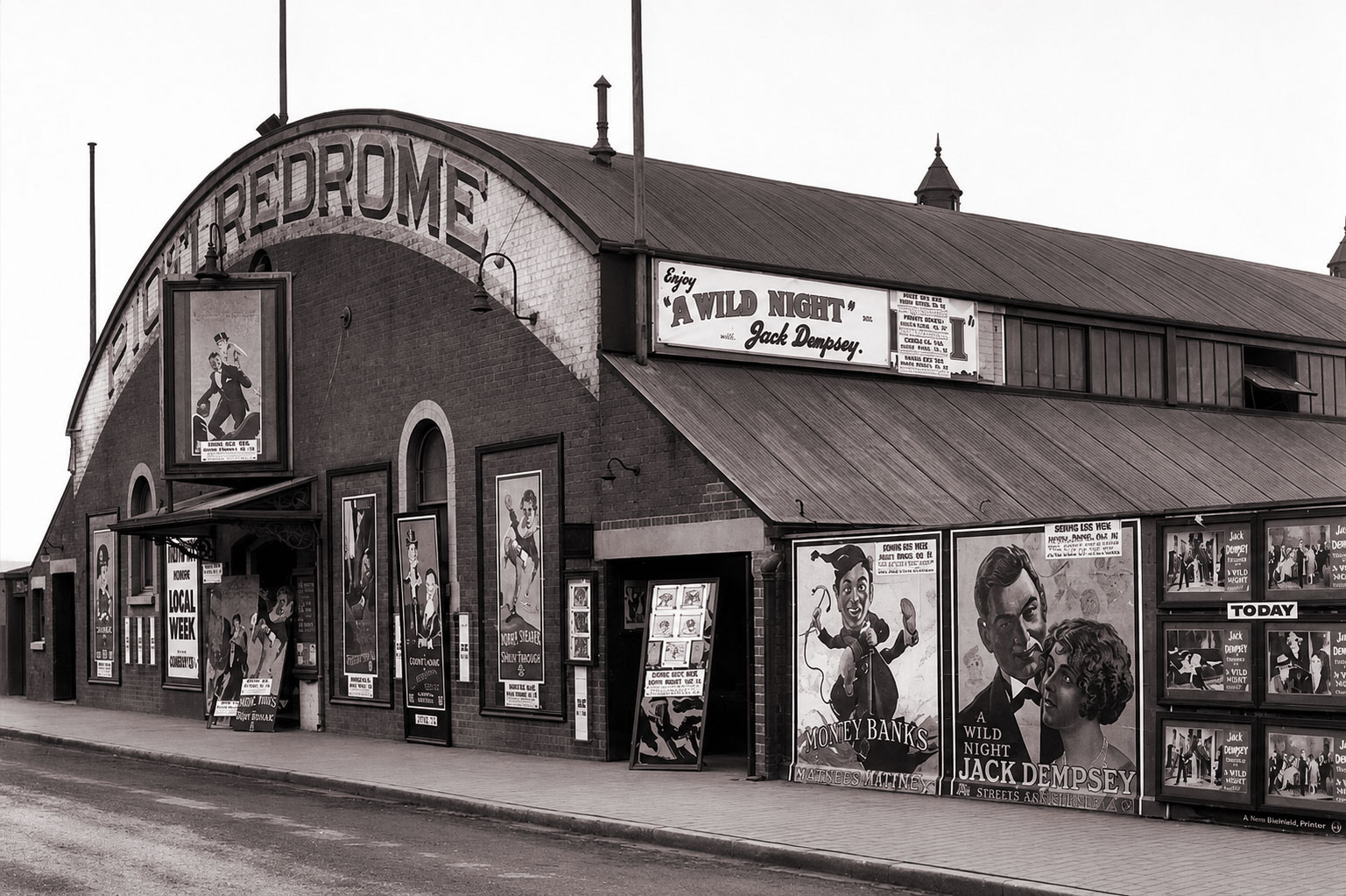
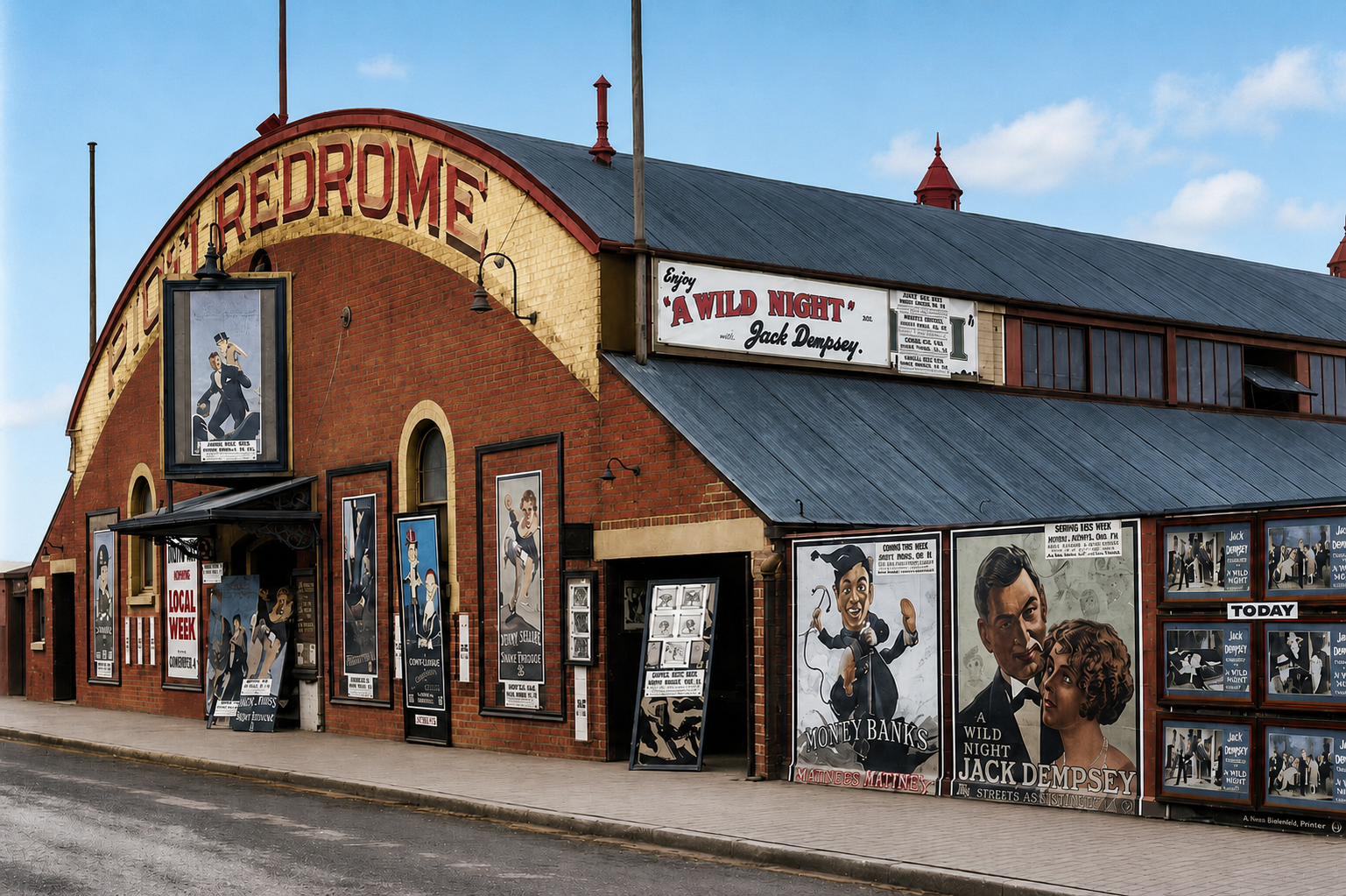
The Picturedrome opened in 1913. It was situated in Curzon Street, adjacent to the Railway Station.

Like other cinemas to follow, the cinema was established by local fairground entrepreneurs George Orton, Charles Spooner, and Orton’s sons. It was adapted from what was previously a roller skating rink that had fallen into dis-use and was being used as a Territorial Army venue.

It housed a church organ brought and transported from a London church which was played enthusiastically during the film, which itself of course was silent. In the late 1920s, the Picturedrome had the distinction of showing Burton’s first ever talking picture which was hugely attended. The cinema was serviced by a poster man whose task it was to regularly paste up new posters as the films changed.

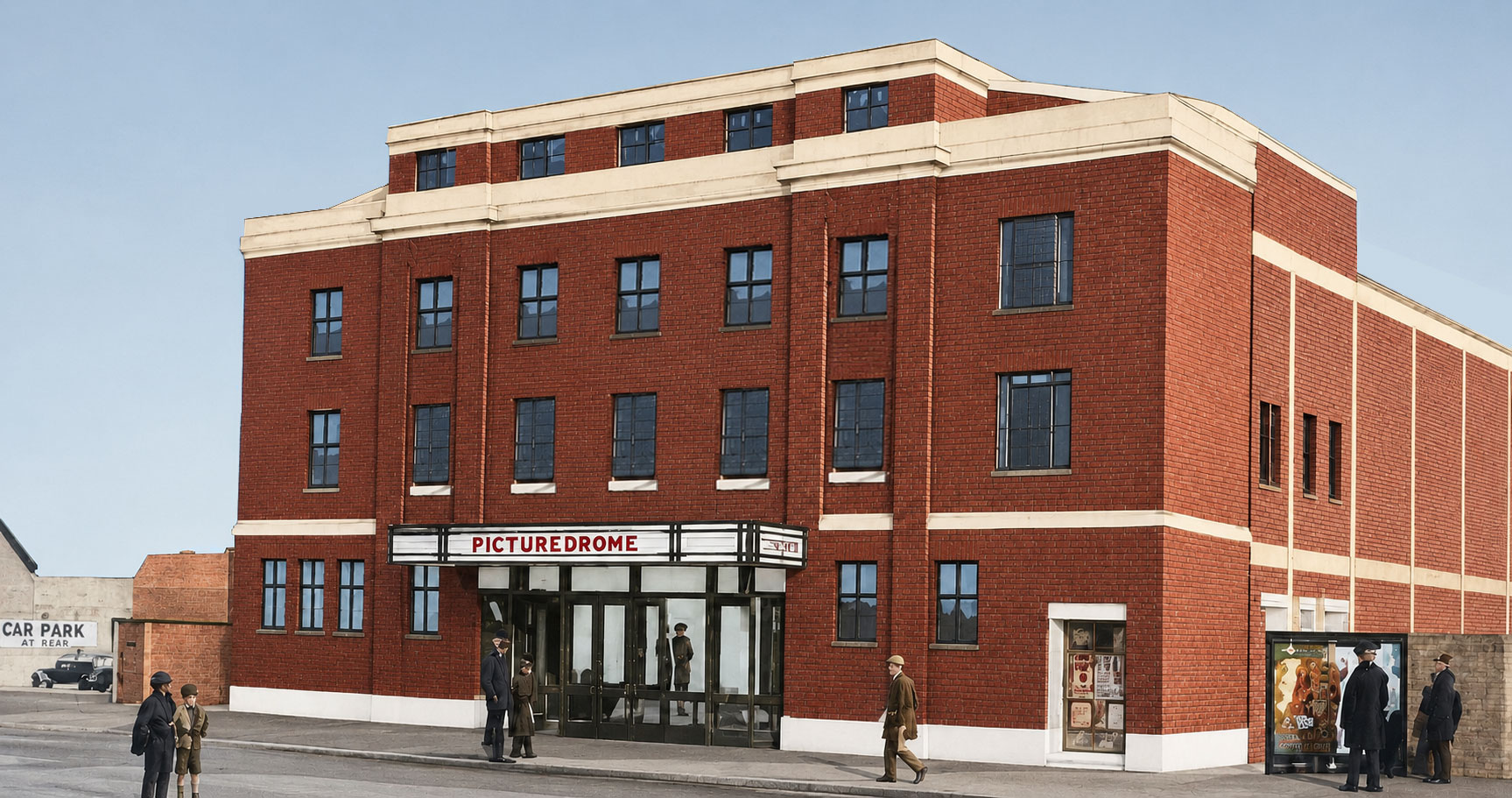
The original structure was demolished in August 1931, and a lavish, modern new building holding around 2,000 seats was constructed in just four months. It was designed by architect Alderman Thomas Jenkins and local builders. In 1955, it was acquired by Odeon Theatres Ltd in 1955 and was officially renamed the following year.

It closed as a cinema on June 5, 1965 and the building was transitioned into a Top Rank bingo club, later operating as Mecca Bingo until it closed in December 2003. The structure was subsequently demolished, and a block of flats now stands on the site.