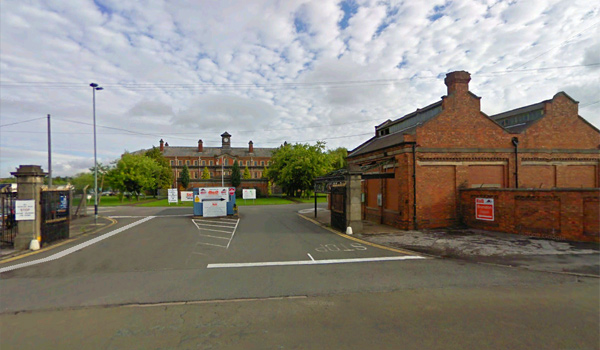
Below is a short history of what most Burtonians simply know as Branston Depot. With thanks to John Sarson.
During World War One, as a part of the National Factories Scheme, HM Government commissioned the Enfield Small Arms Factory to design a National Machine Gun Factory to be built on 150 acres of open fields along the North side of Burton Road in Branston. Amongst the reasons Branston was chosen was that it was out of reach of enemy aircraft. The site was being used at the time by the Burton Golf Club who moved to Bretby and also as Woodwards Farm.
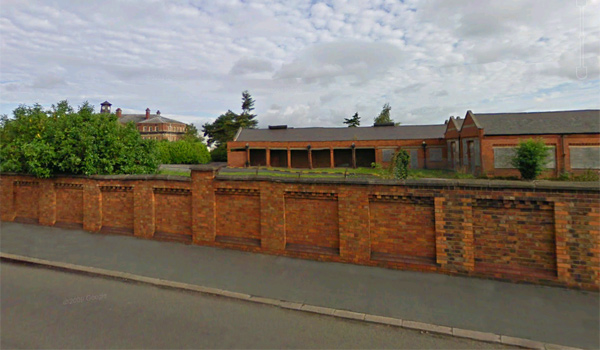
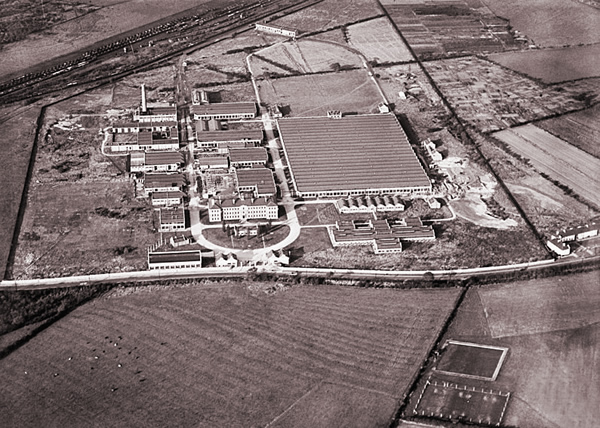
The Factory was built by local builder Thomas Lowe & Sons and was started in 1917 but not fully finished before the First World War ended in November 1918. Gun making machinery, much from the USA, was installed on the site but it was never used to produce machine guns although it was used to recondition about 1000 of them. The distinctive long brick wall fronting onto Burton Road was built by German prisoners of war who were housed in local brewery maltings buildings.
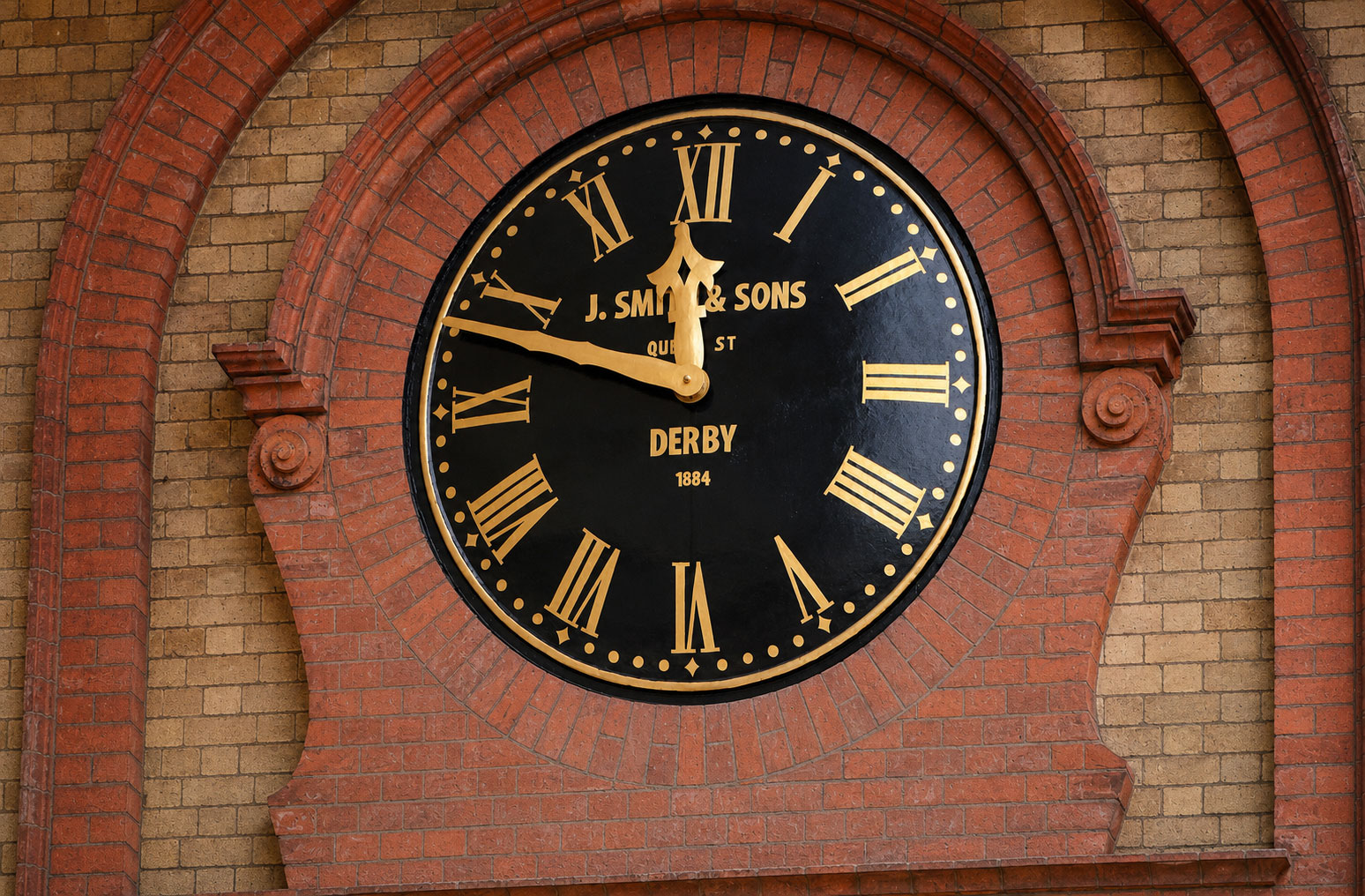
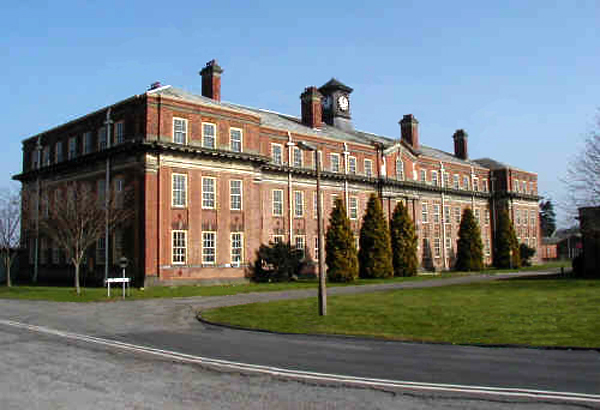
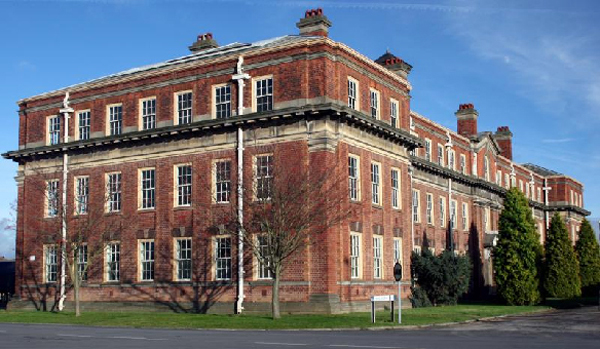
A large three storey office block was built near to the site entrance which featured a four faced clock on the top of it. The clock required winding regularly and although it is still in working order today the practice has fell into dis-use. Only one of the four large warehouses which were originally planned was constructed and had north facing roof windows to give an even light throughout the day.
The site had an internal railway system connected to the nearby Birmingham and Derby Junction railway. It also had a fire station situated on the left side of the main entrance which was demolished in 1995/6. The site also had a joinery, c6 air raid shelters, a pump house, a vehicle workshop and many other buildings totalling 118 in all. There was a rifle range running parallel to the Birmingham and Derby Junction railway line at the rear of the site which had a large brick wall and embankment at the target end of it (the range was closed in 1965).
Questions were asked in Parliament on the 3rd May 1920 about the future of the site and it was advised that a tender to purchase it for £550,000 had been made by M Girardot to turn it into a car factory but this offer had been declined. The Government offered to sell it to him for £600,000 but he had also declined. Subsequently, a bidding process went to sealed bids with Crosse & Blackwell making an offer of £612,856 and M Girardot offering £576,000. The bids were opened on the 29th April 1920 with a sale being agreed to Crosse & Blackwell.
Crosse & Blackwell finalised the purchase from the Disposals Board of HM Government in April 1921 after a dispute about the removal of machinery pledging to turn the Factory into the largest & best equipped food preserving plant in the British Empire. They called it their Chief Factory on the labels of their products.
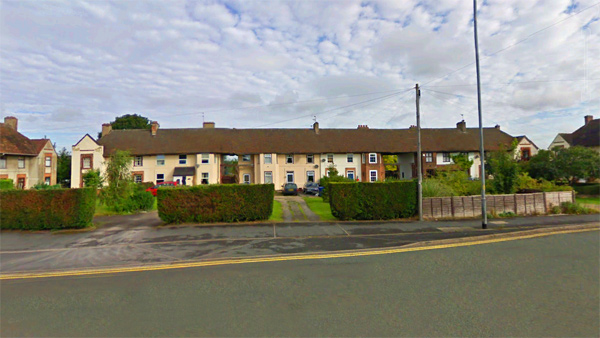
Alongside the purchase of the Factory Crosse & Blackwell also purchased Branston Lodge next to the Leicester line railway bridge in Burton Road as a residence for their single female workers (demolished in the 1960’s). They also built 26 houses along Burton Road for the use of the Factory foremen which were designed by Sir Aston Webb and known as the ‘Wayside’ Houses.
Crosse & Blackwell closed their Factory at Soho Square in London and commenced production of pickles at Branston in 1921 employing c600 people of which two thirds were women. Mrs Caroline Graham & her two daughters, Miss Evelyn & Miss Ermentrude are attributed with producing the Branston Pickle recipe at Branston Lodge and production of it started at the Factory in 1922. Most of the fruit & vegetable ingredients were sourced from Covent Garden in London and over half the production returned to London, much being for export.
During 1924 Crosse & Blackwell became under financial pressures and considered the Branston Factory was too costly and decided to move production back to London and completely finished production at Branston in January 1925. This precipitated a large loss of employment and many local people boycotted Crosse & Blackwell products for a considerable time.
In 1927, Mr Martin Coles Harman, a London financier, the owner of Lundy Island in the Bristol Channel at the time, formed the Branston Artificial Silk Company to produce Rayon. He initially employed a small staff with many being recruited from Courtaulds, some of whom who were housed in the Wayside Houses.
In 1927/8 a large chimney was built at a cost of £17,500 to carry away the unpleasant fumes from the Viscose manufacturing process which used Carbon Disulphide. The chimney was 360 feet high and had a 45 foot diameter at the base and 21 feet 9 inches diameter at the top and had a two foot sway. It was believed to be the second tallest chimney in the country at the time and considered to be a local wonder. It was built by Thomas Richardson and after construction had started it was found necessary to strengthen the foundations which lay on silver sand with 49 concrete piles. The chimney was built of perforated bricks which were twice the size of a normal house brick.
The Branston Artificial Silk Company started production in a blaze of publicity and expected to employ upto 4000 people but, in fact, it never exceeded 500. Amongst other things, it was famous for its buzzer which signalled the start and end of the day and lunch break and could be heard over much of Burton and beyond.
On the 23rd July 1929 the Prince of Wales (the future King Edward V111 / Duke of Windsor) visited the Factory on a visit to Burton and was presented with an artificial silk scarf which had been woven at the Factory and embroidered with the Princes initials in purple & gold together with white ostrich feathers.
The Branston Artificial Silk Company had ceased production by the end of 1930 and the Factory closed down. The administrators arranged some short term leases until July 1937 when the War Office (Ministry Of Defence, MOD) took over the site to supply mostly clothing and some small equipment to the Army. The distinctive chimney was demolished in 1937 as it was considered to be a hazard to aircraft and a landmark for any possible future enemy action. The remaining three large warehouses which were originally planned were built making four altogether with a total area of almost one million square feet all of which were heated and had fire sprinkler systems. Some other smaller buildings were also built at his time.
Six luxury houses, including tennis courts, were built for the use of senior Officers in Hill Road adjacent to the buildings at the southern side of the site. These houses were demolished in the early 1990’s as part of the Regents Park development. 12 semi-detached houses were built in Lonsdale Road and 22 were built in Mellor Road for lesser ranks all of which were sold to the local ESDC Council in 1977 and remain today. The 22 Mellor Road houses were purchased for £177,000. The Mellor Road and Hill Road houses were accessed through the main site entrance. The houses in Lonsdale Road were accessed through another secure gate near to the Leicester railway line bridge.
The roads within the site were named after senior military officers, Wilcock Road, Wall Road, Cleave Road, Gartan Road, Dibble Road, Stephens Road, Mellor Road, Harvey Road, Jephson Road.
Some of the buildings were as follows :
No 2 — Large warehouse, (c255,000 square feet internal, 199,549 cubic metres) 700 vehicles, including the Green Goddesses (258,925 square feet when re-built in 2007- see below)
No 4 — Large Warehouse, (221,214 square feet internal). MAFF flour and sugar.
No 5 — Large Warehouse, (220,008 square feet internal). Commercial stocks for the Prison Service
No 6 — Large Warehouse, (257,750 square feet internal, 123,145 cubic metres) Prison Dept clothing/equipment/riot gear
No 16 — Radiac building. Dosimeters, Prison Officers uniforms.
No 25 — Home Office newly purchased vehicles, including awaiting bodies to be modified.
No 37 — G1 Division. Mechanical parts for Emergency Road Vehicles.
No 45 — Three storey Office block.
No 50 — Vehicle Workshop.
No 51 — Fire Station
No 52 — Gatehouse
No 70 — Electric Sub Station in Mellor Road
No 121 — Pump House
During the Second World War the site was used as an Ordnance Depot for the supply of clothing and other small equipment to the Army including, clothing material, overcoats, roped soled sandals, bootlaces, enough boots upto size 15 to kit out much of the Army, buttons, belts, caps, under clothes, de-mob suits, wellingtons, etc. Qualified tailors were employed to inspect uniforms received from production factories such as Davisons in Derby. Many sundry items such as air raid sirens, fire bells, hand stirrup pumps, whistles, regimental flags, etc, were also stocked.
The site employed more than 2000 people during this time who were searched at random as they left the site. This number reduced to around 1000 people after the war. The site also had a Personnel department and Medical Centre with its own doctor and nurses.
A large bus station was situated on the opposite side of Burton Road (between the entrance to Paget School and the entrance to the Toad Hole) which was distinguished by its surface of cinders and rows of metal pole barriers for the various bus routes. A second smaller bus station opened in the late 1950’s which was accessed at Jephson Road through a security gate.
There were a number of large forklift trucks on site and also c12 BEV’s which were small but powerful ride on traction vehicles used to pull trolleys around the site.
Two railway lines running North to South either side of warehouses 5 & 6 accessed all four of the large warehouses. British Railways shunted the wagons from the main line into sidings on the site from where two MOD engines undertook the site shunting. The site included an engine shed.
In 1962 the War Office (MOD) decided to close its Branston operation and move most of the work to the Central Ordnance Depot (COD) at Bicester, Oxfordshire and over the following two years all the stores were transferred and the remaining 100 people lost their jobs.
In 1964 Branston Depot was taken over by ‘Ordnance Disposal and Storage’, a civilian run complex of the War Office (MOD). The main function was the receipt and issue of ammunition components for Royal Ordnance factories and the storage and preservation of machine tools with nearly all of it being transported by train. It also handled used brass gun shells, metal and wooden ammunition boxes. The Depot remained open until April 1975 when the site was again closed.
The Supply & Transport branch of the Home Office took over the site on the 22nd September 1975. A change of policy from storing equipment at strategically widely scattered sites such as hangars on airfields to one of central storage led to 11 small storage sites around the Midlands being closed and the items being consolidated at Branston.
From September 1976 large warehouse No 6, with the use of some racking stored 17,500 pallets plus some bulk storage area, was used to supply 18 prisons, borstals and detention centres around the Midlands with most of their needs with the exception of foodstuffs. The store included a large stock of textile material used in the manufacture of clothing at prison workshops. Other items such as wardrobes, chest of drawers and bed headboards were also received from prison workshops. By April 1987 36 prisons around the Midlands were being supplied.
From March 1976 warehouse No 2 was used to store 405 Auxiliary Fire Service (AFS) ‘Green Goddess’ fire engines. This number rose to 462 before they were moved to a third party contract warehouse at nearby Marchington in 1991. Also included were support vehicles such as pipe carriers, hose layers and Land Rovers. These Green Goddesses were used by the Military from November 1977 to January 1978 to provide fire cover around the UK during the Fire Service national strike. The Green Goddess’s have since been disposed of altogether by HM Government with many going to African countries. Some were believed to have been sold through the British Car Auctions at Measham.
From the late 1970’s until 1993 warehouse No 4 was used by the Ministry of Agriculture, Fisheries & Food (MAFF) to store sugar and unfinished flour for use in any future national emergency. The stock was rotated regularly with upto six vehicles a day being handled. The sugar was managed by the British Sugar Company and the flour by Rank, Hovis, McDougall.
During the 1970s 80s, local Auctioneers Arnolds held disposal sales around four times a year in warehouse No 4 when members of the public and others could purchase items no longer required by the Home Office.
One of the smaller buildings was given over to store items on behalf of the Womens Royal Voluntary Service (WRVS). Other buildings were used to store all manner of things such as petrol cans, polling station booths, riot equipment, etc.
One of the smaller buildings (No 16) was designated as the Radiac building where dosimeters were received from suppliers, checked and stored. This equipment was used by the Police, Royal Observer Corps, Fire Service, County Emergency Planning Officers & other various Government Departments to test for low levels of radiation. A radiation plaque was put on the wall at the entrance to the site which caused much consternation amongst the local people who thought the site was being used for storing nuclear bombs.
Building No 16 was also used to receive, inspect and store Prison Officers uniforms for both men and women. Around 21,000 uniforms were stored to supply every prison in England and Wales as well as the Channel Islands, Gibraltar and two Prison Training Schools.
The staff working at the site considered the pay to be good for women but poor for men compared to jobs in the local breweries. Many of the staff were members of the Transport & General Union (T&G).
The site was used by The Royal Navy, The Royal Air Force, HM Customs & Excise to train dogs to seek out drugs and is still occasionally used as a dog training centre in 2013. The site was used as a training location for Prison Officers, Prison Service Industries & Farms Gardens staff. The Royal Navy Midlands recruiting team was based at the site. The Staffordshire Fire & Rescue Service used the site as a training base.
There was a large canteen with men being served on one side and women on the other. It has a large dancehall as a part of the Social Club run by the employees and there was also a bowling green. Dances were held regularly on a Saturday night from the early 1960’s and proved to be very popular until they died out in the 1970’s.
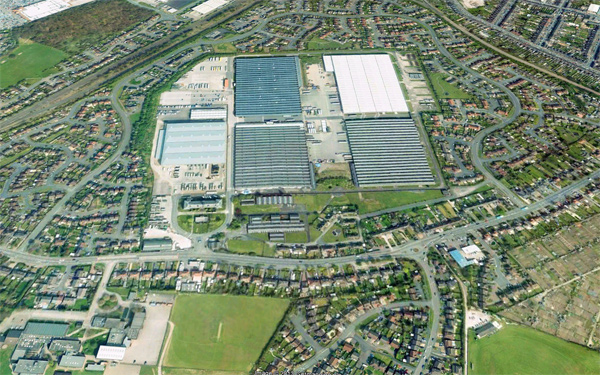
During the 1990’s most of the open land (84 acres) was sold for housing development with the c850 house ‘Regents Park’ estate being built on it. The link to the national railway system was removed. The remaining area on which most of the buildings stood was divided between an area for the Home Office use and an area for sub letting.
In 2002 many of the smaller brick buildings on the Home Office area (now the Ministry of Justice, MOJ) were demolished and a large 19,000 pallet modern high warehouse was constructed. It is primarily used as a supply facility for the prisons in England & Wales which supplys them with most of their needs with the exception of foodstuffs. Some items are also supplied to prisons in Northern Ireland. A smaller building (No16) is used as a records archive.
The vehicle workshop (No 50) is still used to service and modify/adapt vehicle bodies to MOJ specific needs. There are around 70 MOJ employees at the site in 2013.
In 2004 the four large warehouses were leased from HM Government by D.I.Y. chain B&Q for 5 years at a reputed cost of £13m for use as a distribution depot for kitchens & white goods (fridges / washing machines / cookers, etc) and employing over 400 people. Third party contractors including TNT, CEVA and Wincanton (from February 2013) operated the premises on behalf of B&Q. In February 2006 a major fire destroyed No 2 warehouse as well as inflicting damage to some nearby houses and causing millions of pounds worth of damage in total. The warehouse was the same warehouse which housed the Green Goddess fire engines and was later rebuilt. The lease to B&Q was renewed for another 5 years in 2009.
In 2012 plans were submitted by the current land owners, Bedell Estates Jersey, for the four large warehouses and certain other smaller buildings to be demolished and replaced with c450 houses, although this is unlikely to happen for a few years. The large office block (No 45), the canteen building and the pump house (No 121) are Grade 2 listed buildings and are not planned to be demolished.
The Ministry of Justice is a separate area from the possible housing development and will continue to use their part of the site.
Although much of the site remains intact after its numerous uses, it is the role as the Branston Pickle factory for which it is now most fondly remembered.