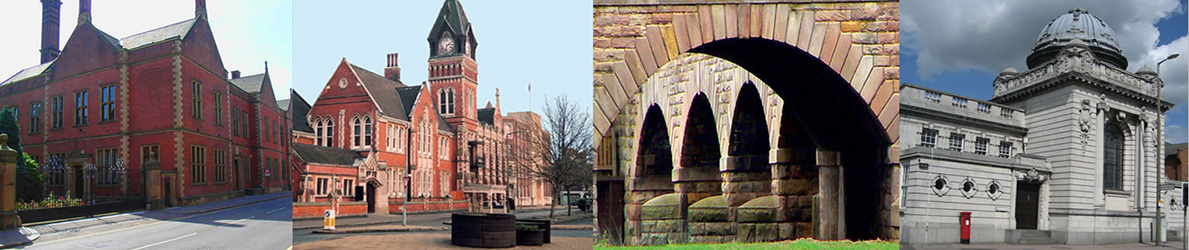
Orton & Spooner was a famous British engineering and fairground manufacturing company based in Burton upon Trent that operated from 1875 until 1977. The company built some of the world’s finest amusement rides, showfronts, and living wagons.
Origins and Partnership
George Orton (1843–1924) was born in Measham. He was a wheelwright and coachbuilder by trade and in 1875 he established the Lion Carriage Works in Victoria Cresent, Burton upon Trent to build transport wagons. From about 1883, he concentrated on building living decorative wagons for travelling showmen.
Charles Spooner (1871–1939) was born in Burton and was a wood-carver, and at first made drays and handcarts for brewing companies in the town. He set up in business in 1892 in a yard behind his father’s public house. The Swan. at the Winshill end of the Trent Bridge, and made carved work for showmen and builders of fairground rides, including animal figures for carousels. He was one of Orton’s main suppliers. From 1894 they worked almost exclusively together; their skills fit well together which would lead to a long partnership. In 1897 he married Orton’s daughter Rose Ann.
The two businesses officially joined to become George Orton, Sons and Spooner Ltd. in 1925.
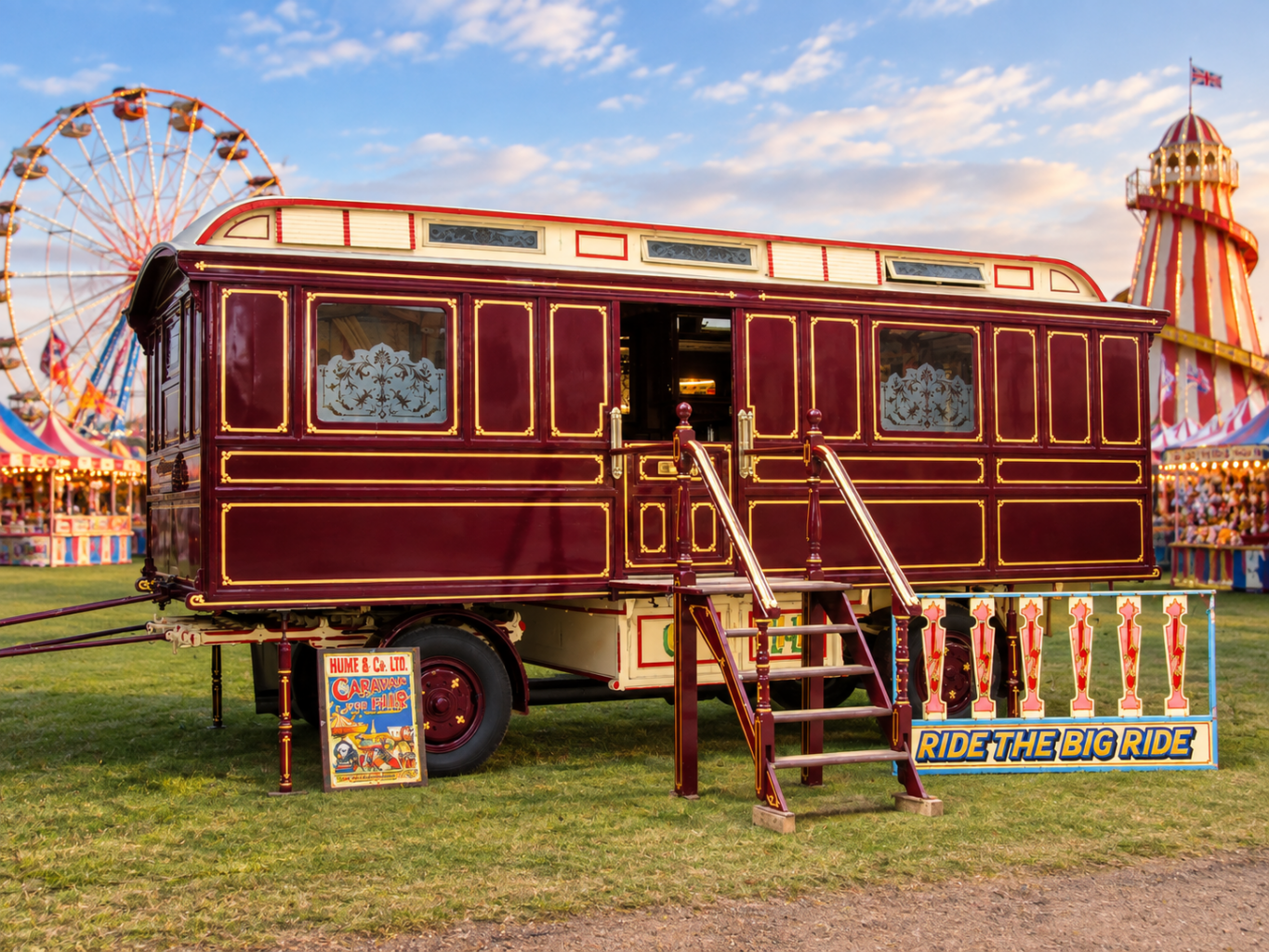
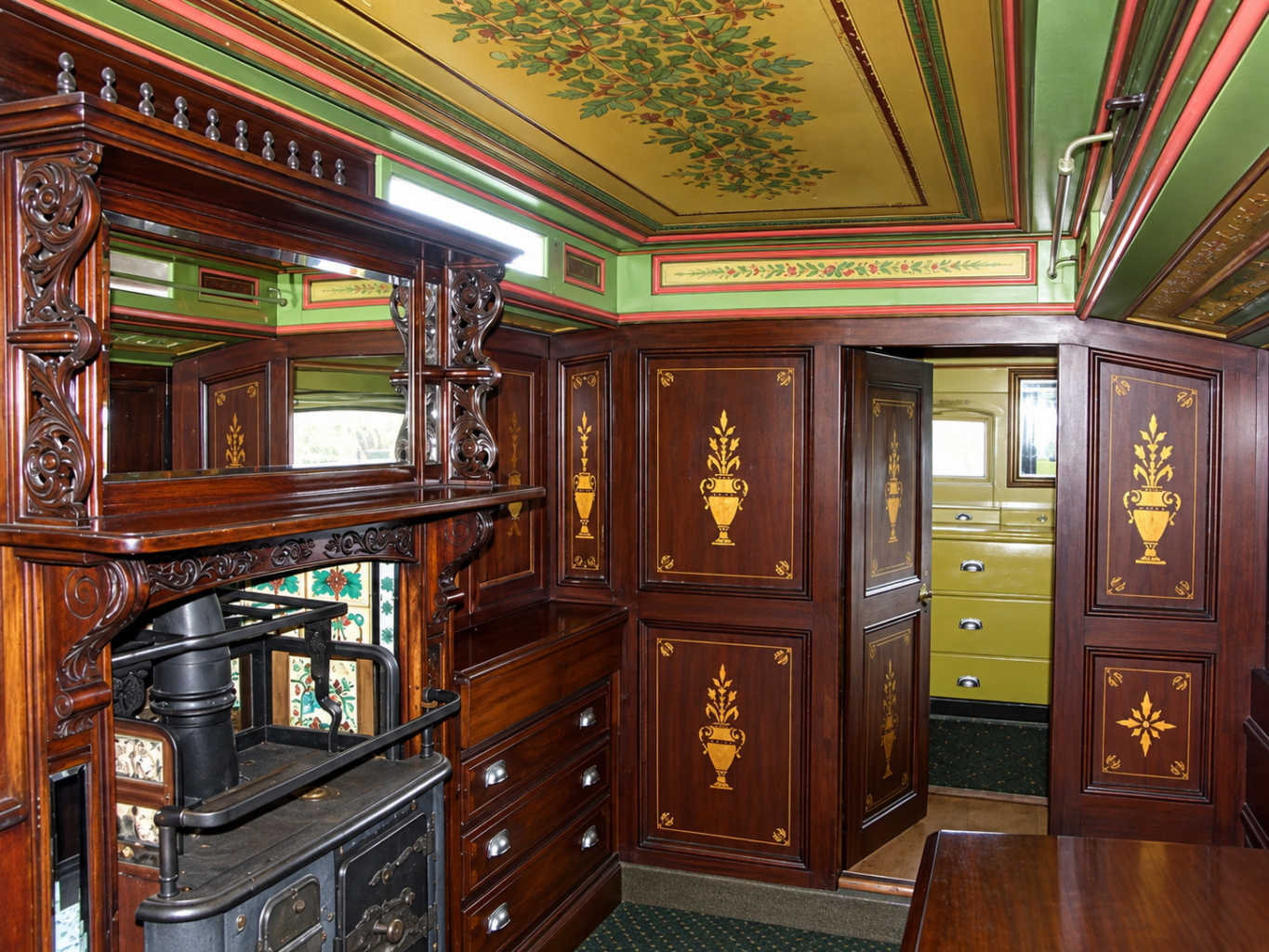
George Orton retired in 1910, and the business was run by his sons Tom and Charles, his daughter Annie and Charles Spooner. The company in 1912 built erecting sheds on land he had bought in Victoria Crescent in Burton, large enough for a complete fairground ride. Elements for rides assembled here continued to be built at the Lion Work.
Fairground Golden Age
The most important fairground ride at this time was the ‘Circular Switchback’, powered by steam. Orton & Spooner’s main competitor was Frederick Savage of King’s Lynn; after the closure of Savage in 1910, Orton & Spooner dominated the market to become the top fairground ride manufacturers in the UK.
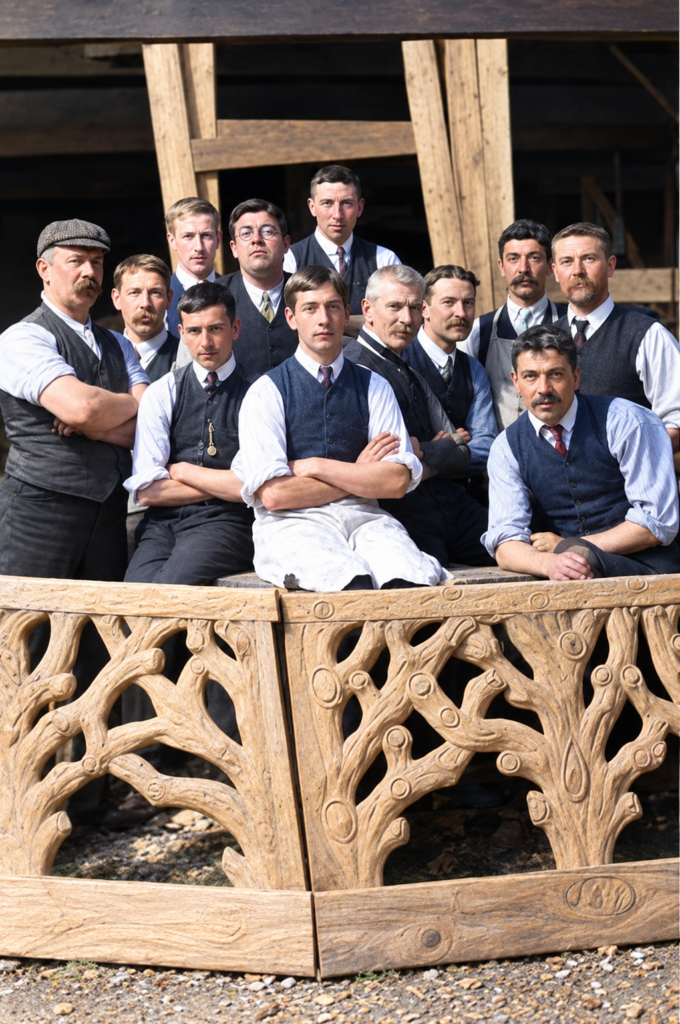
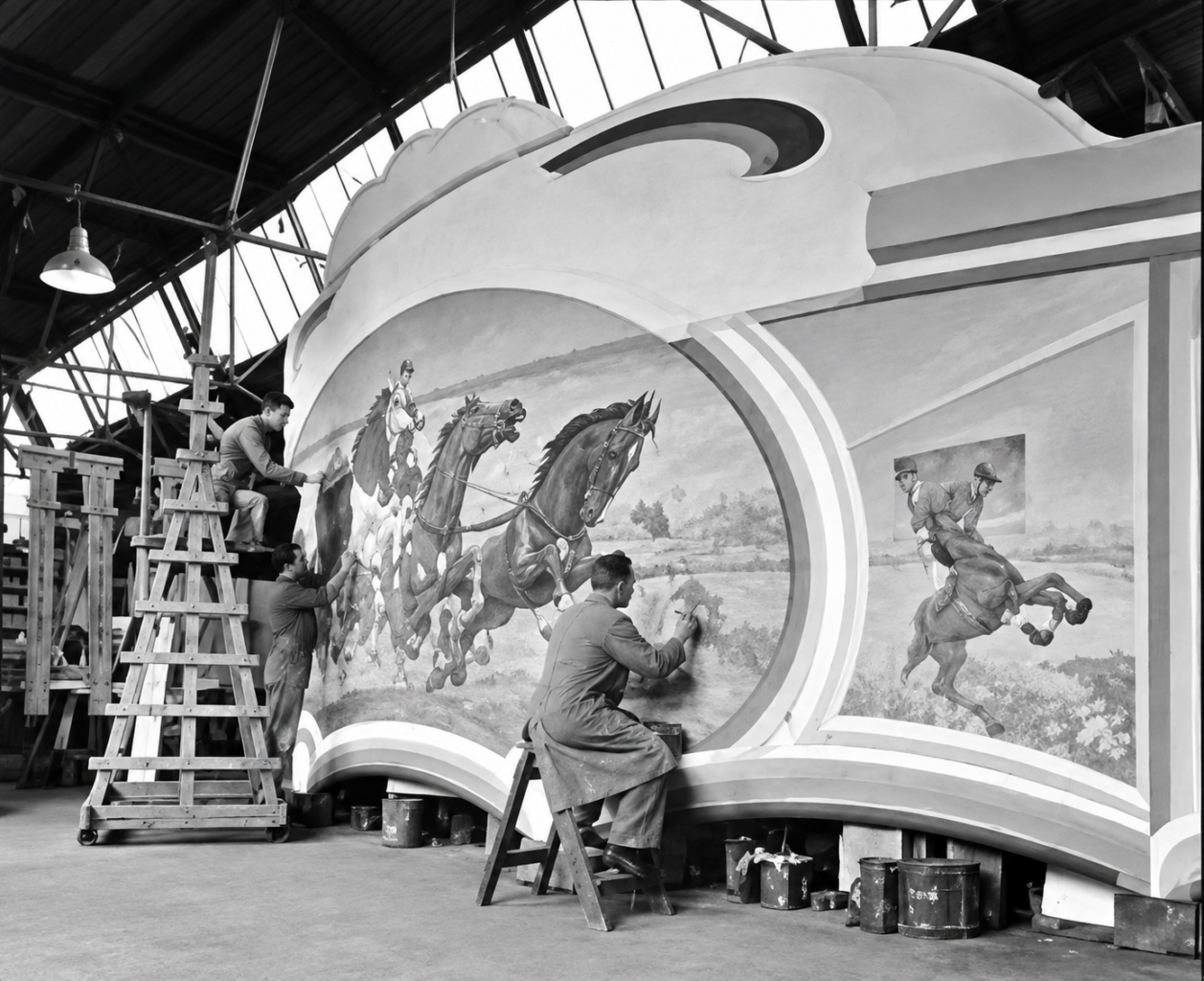
The elaborate panels for all of their rides of all sizes were hand painted at the Orton and Spooner factory.
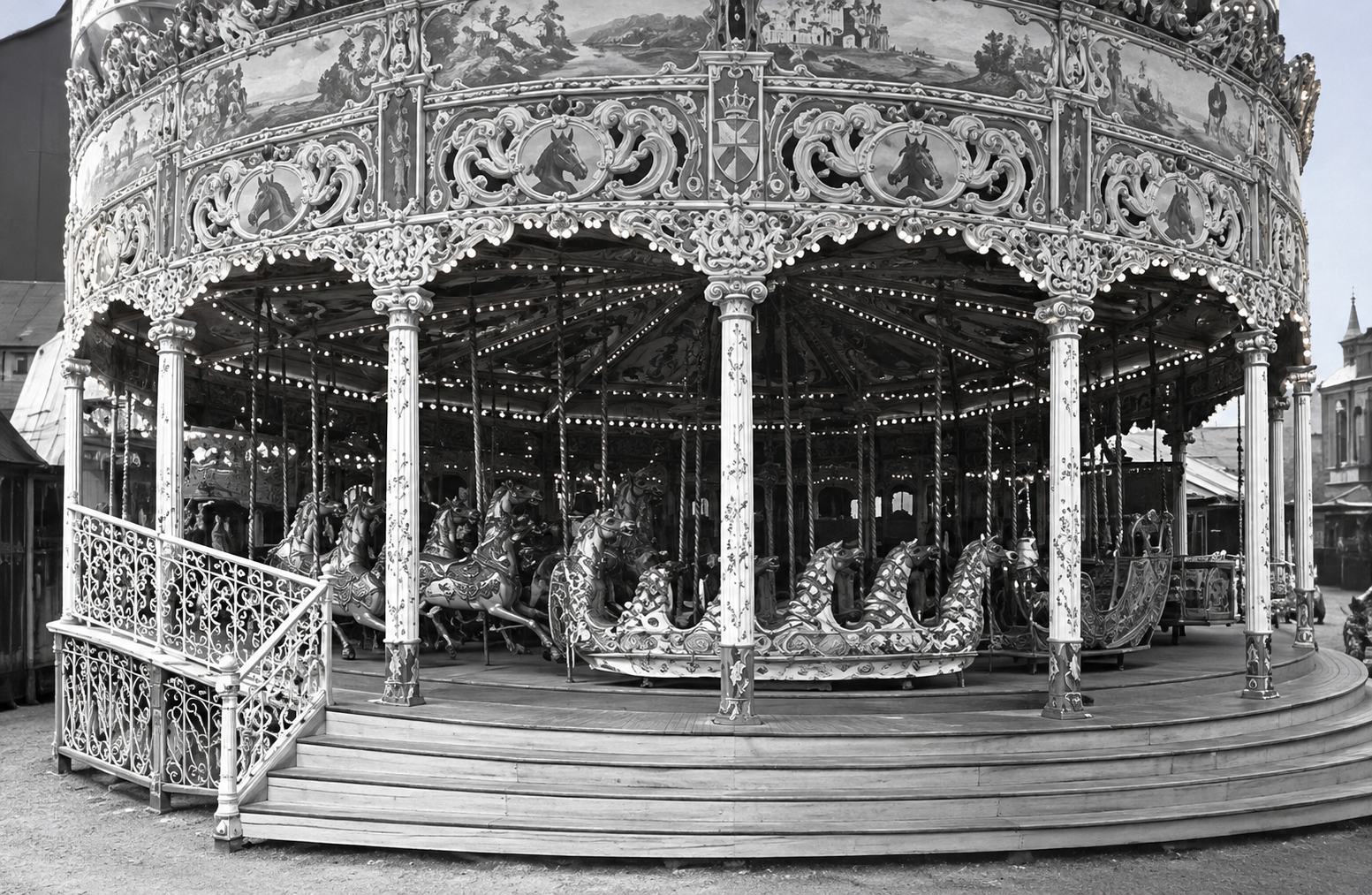
The magnificent four-abreast platform Galloper with a pagoda top, specially built by Orton and Spooner can be seen below at a 1900 Carnival in Glasgow. Amazingly, it was used as a travelling fairground attraction to large fairs such as the Nottingham Goose Fair. It finally ended up being shipped across the Atlantic to Coney Island, New York and was still there in the 1960s but minus the elaborate top.
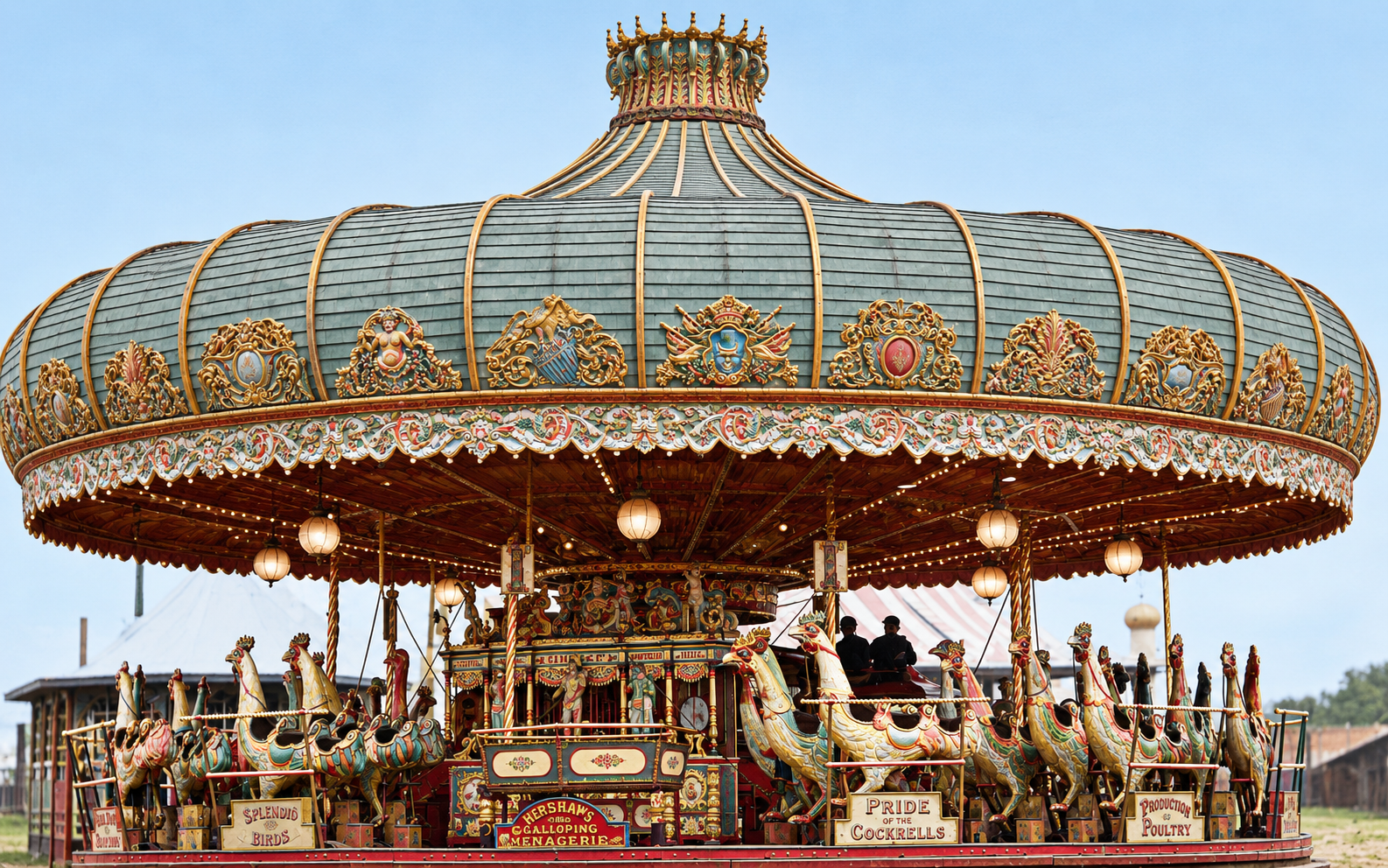
In 1912, they built their first so called ‘Electric Scenic Railway’ fairground ride. They went on to make dozens of these large tracks. The ‘scenic railway’, powered by electricity, became important and it was Orton & Spooner that made the first such ride, with a circular undulating track. Over twenty years they built, rebuilt or modified 32 scenic railways.
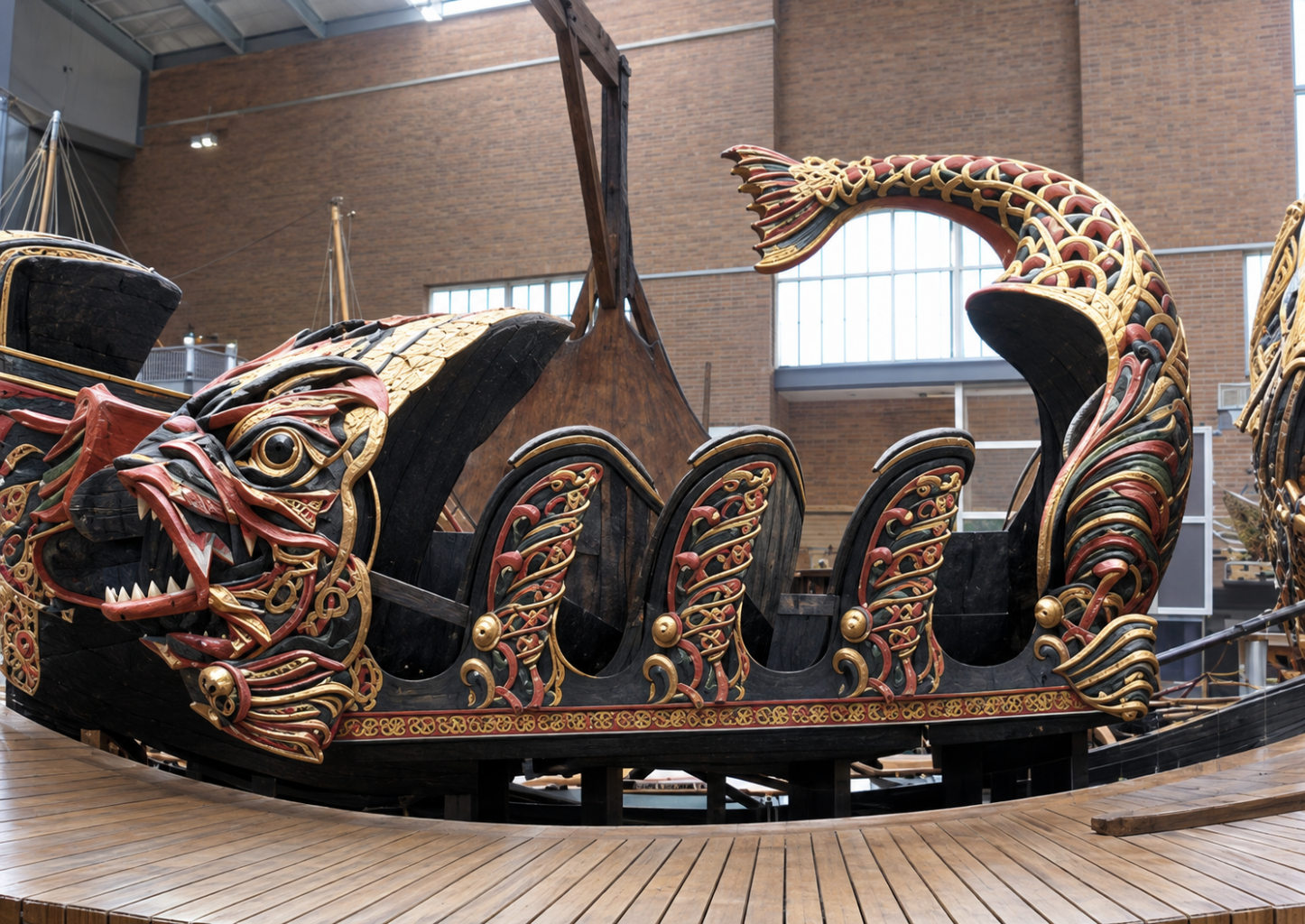
And below, a typical ‘Circular Railway’ carriage carved by Spooner. It was named ‘Whale’ though the teeth suggest something more sinister.
In the 1920s and 1930s, they shifted to smaller rides like Noah’s Arks, Dodgems, and Ghost Trains. Their hand-carved wooden animals and horses were famous for their high quality. From the late 1920s, the most important machines were smaller roundabouts, particularly ‘Noah’s Ark’, so called because of the various carved animals in the ride. They also made other fairground machines and side stalls.
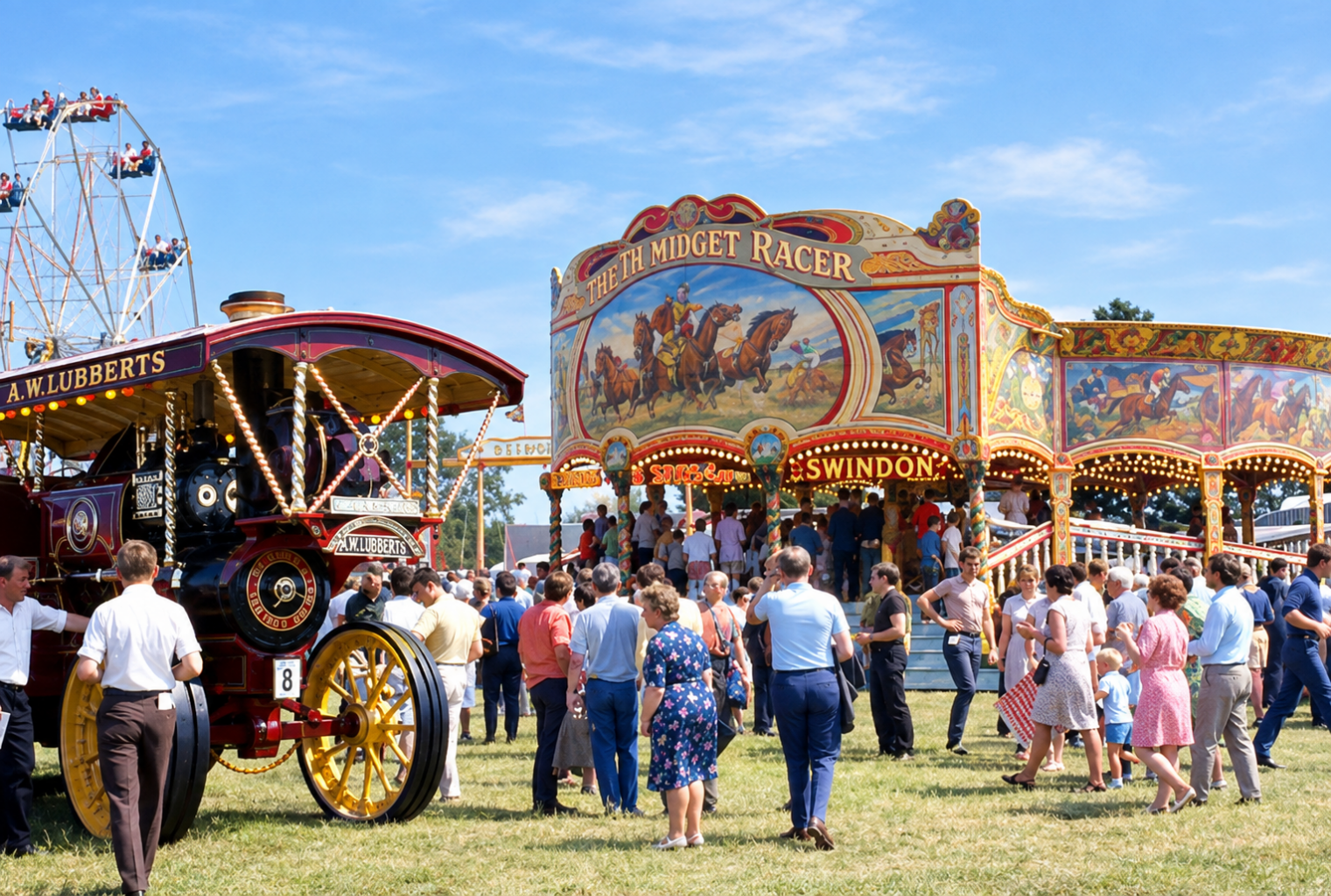
Another great Orton & Spooner ride on a fairground in 1968.
Wars and Final Years
The British government took over the Orton and Spooner factory during both World wars. They built portable aircraft hangars in World War I and military vehicles in World War II. After World War II, demand for fancy fairground rides dropped and the company stopped building fairground rides in 1954.
It survived until 1977 as a light engineering company until it was finally closed in 1977.