Tutbury Jinnie
Probably the best known train in Burton history is the ‘Tutbury Jinnie’. The service provided a push-pull service backwards and forwards between Burton’s first Station in Cat Street (later, Station Street) and Tutbury stopping at Horninglow, Stretton & Clay Mills and Rolleston. There were eight trains each way on weekdays and two on Sundays.
The North Staffordshire Railway locomotives were originally painted a bright green, followed by a deep ‘Victoria Brown’ (red-brown). Eventually, they adopted a very distinctive crimson shade known as ‘Madder Lake Red’ (deep maroon) with yellow and vermilion lining. The passenger coaches were also painted in Madder Lake Red.
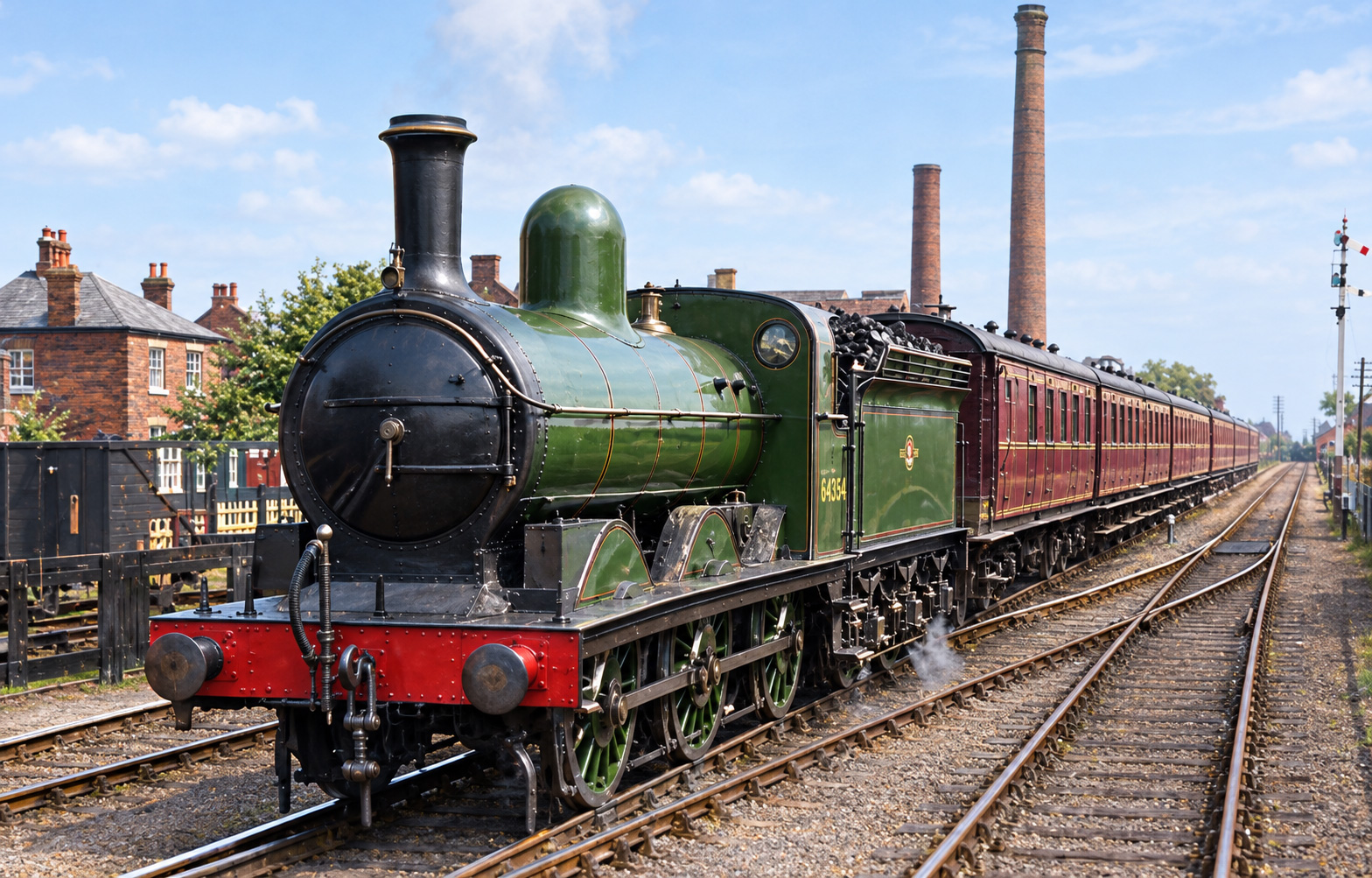 The First Tutbury Jinnie 1849
Robinson J11 class 0-6-0 steam locomotive
LMS Era (1923–1948): Under the London, Midland and Scottish Railway management, the service typically featured locomotives and coaches finished in standard LMS ‘Crimson Lake’ Maroon.British Railways Era (1948–1960): In its final years leading up to its closure in 1960, the service used an Ivatt and Standard Class tank engine (No. 41277), which was a rather less impressive black. This was a small tank engine which means that the water tanks and coal bunker were on the locomotive itself. The 2-6-2 wheel arrangement was particularly suitable for local passenger work.
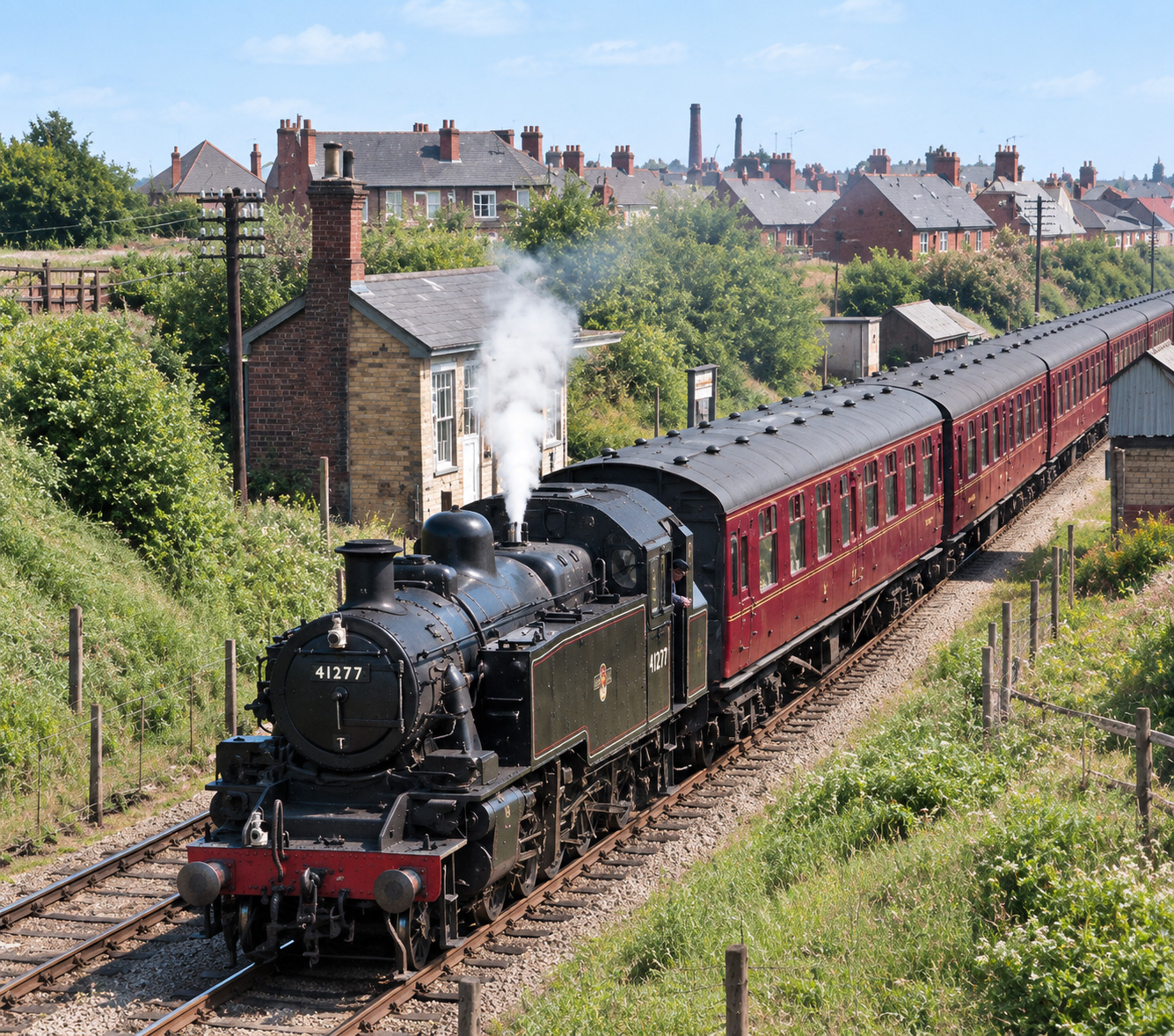 The Jinny in service approaching Clay Mills Station 1956
Robinson J11 class 0-6-0 steam locomotive
My original restoration also showed the later Jinnie as green but after research before publishing, I discovered that it was in fact black. Such a shame, it looked gorgeous in green!
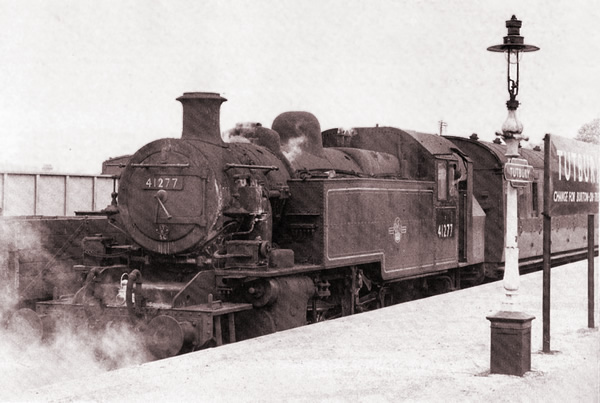 The Jinnie at Tutbury Station about to return to Burton 1958
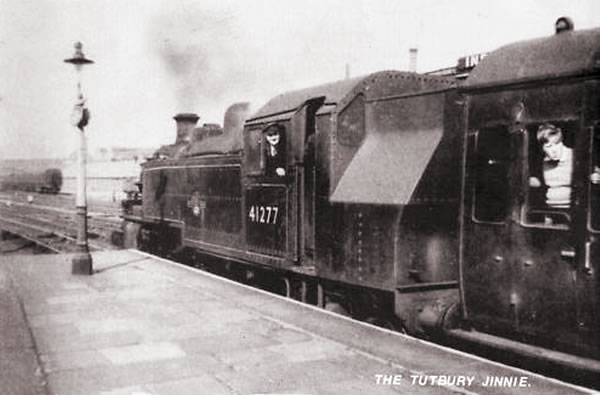 The end of the line for the Tutbury Jinnie, the line soon to be closed. 1960
Allsopp & Sons
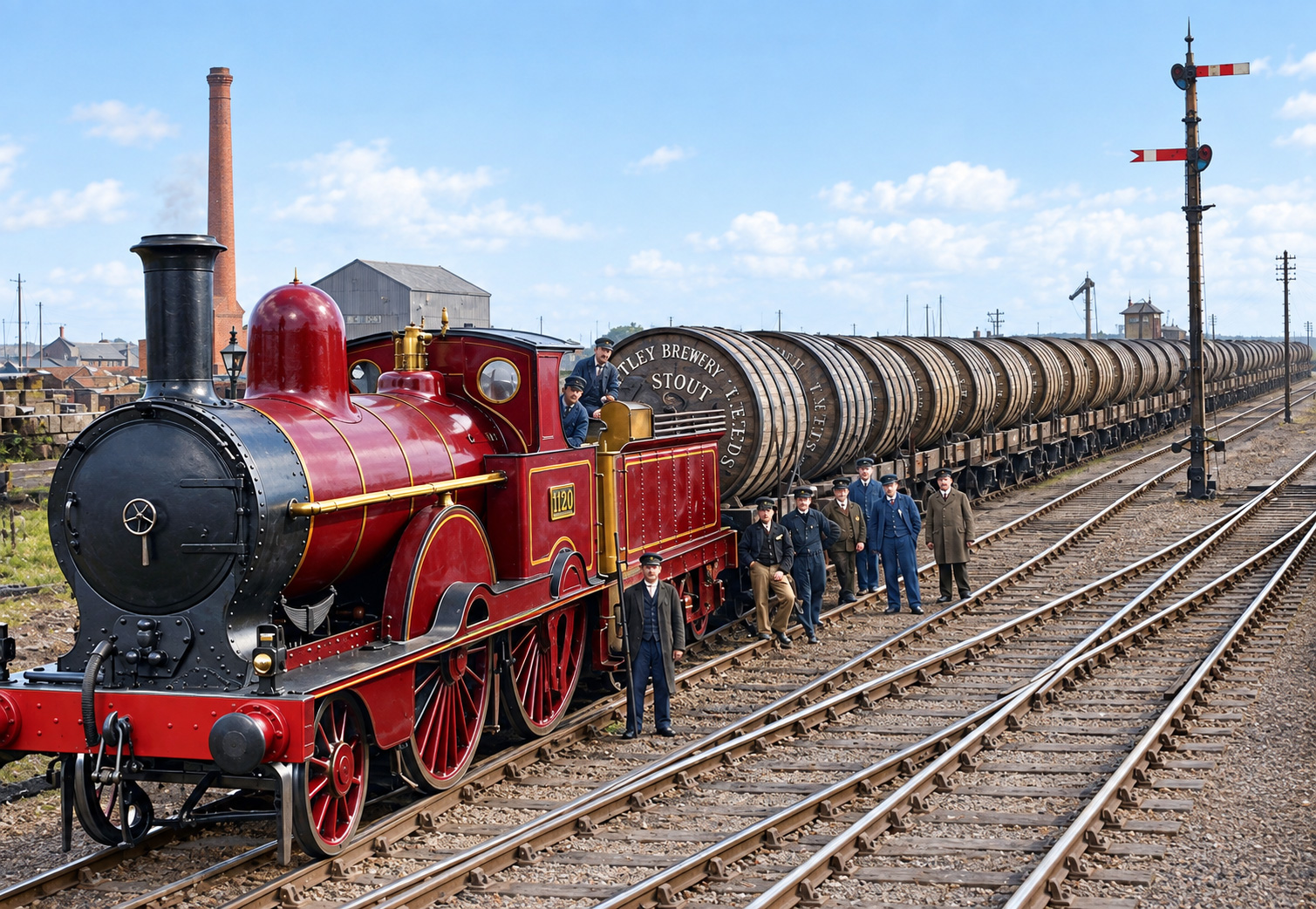 Used by Allsopp & Sons 1899
Tenderless Tank Locomotive Number 1120
Its gorgeous burgundy with gold piping livery makes it look way too nice for industrial use.
Sir Nigel Gresley
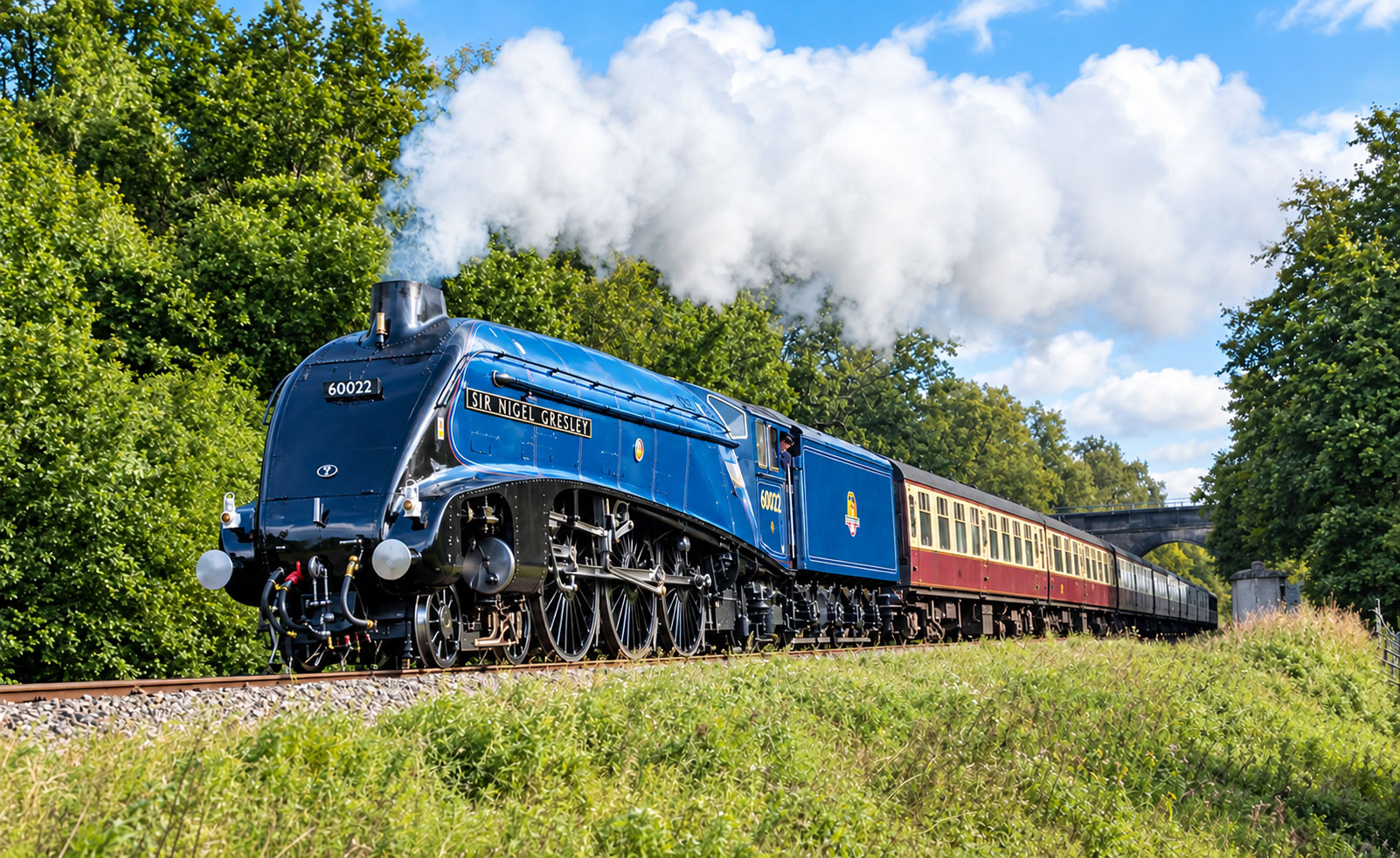 Sir Nigel Gresley in service 1938
LNER Class A4 Pacific steam locomotive No. 60022
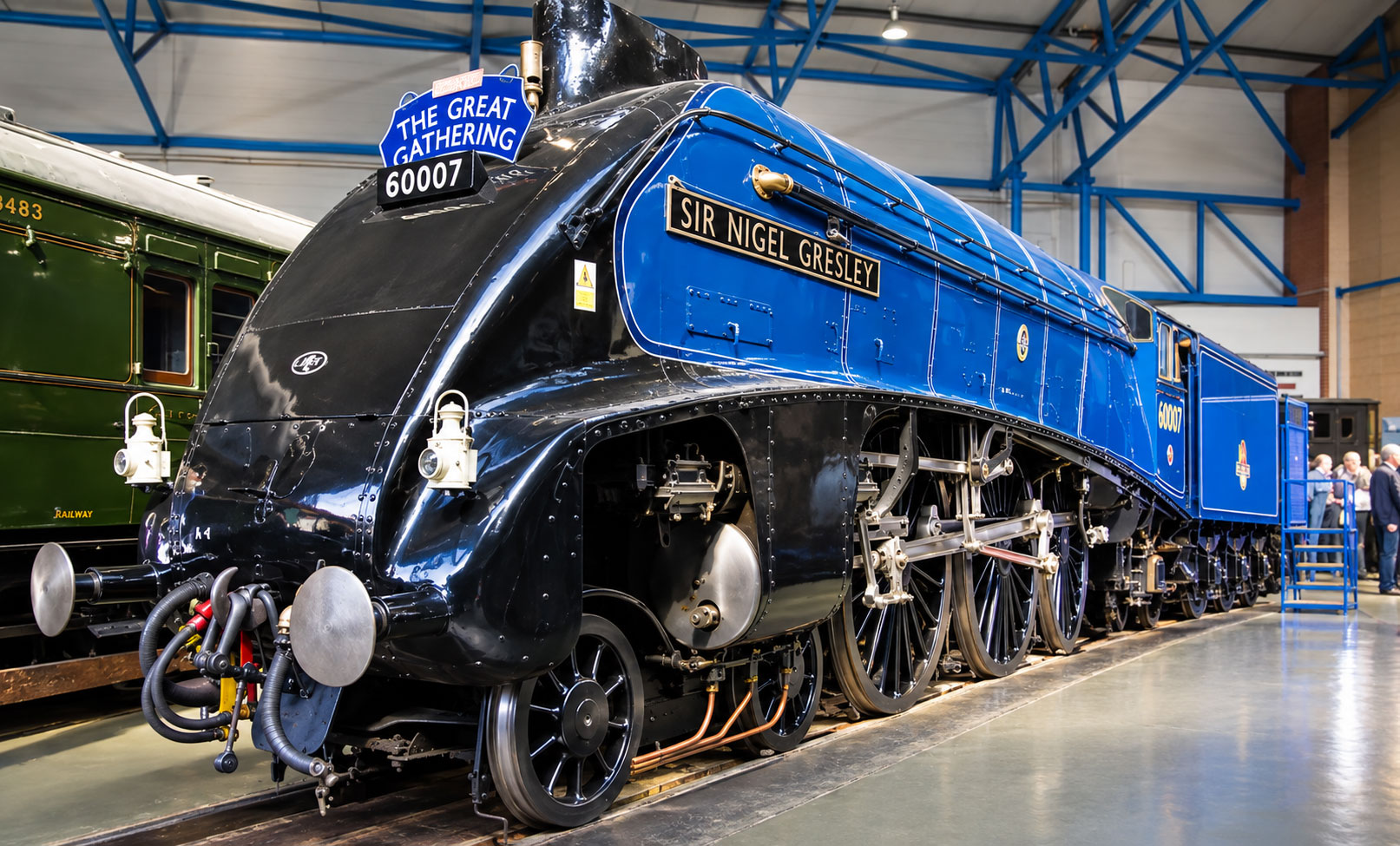 Sir Nigel Gresley in retirement
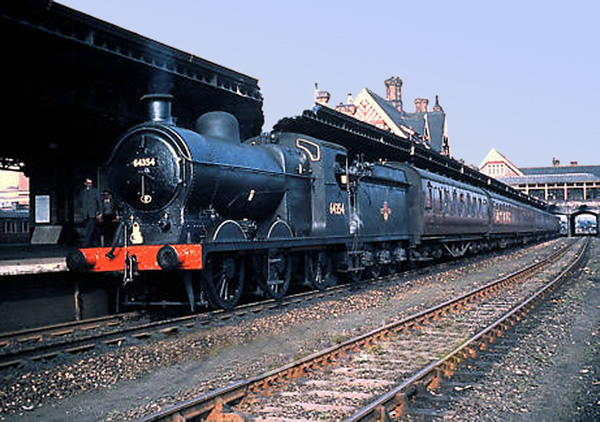 Passenger Train 1960
Steam Locomotive 64354 Class J11
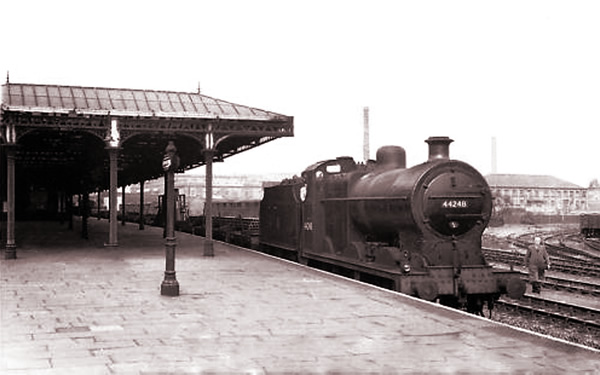 Goods Train c1960
Steam Locomotive 44248 Class 4F
In 1870 a new locomotive shed was built to the south of the station. This consisted of a roundhouse built round a 42 feet diameter turntable. In 1892 another roundhouse was added, with a 50 feet diameter turntable. In 1923 these were replaced by still larger 57 feet and 55 feet turntables respectively. It can be seen below, still in regular use in 1960 a few years before it fell into disuse.
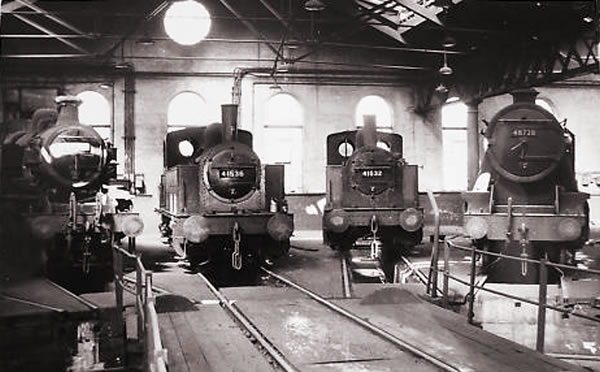
By 1948 it had 111 locomotives allocated to it, but with the arrival of diesel locomotives it became a sub-depot of Nottingham and was finally closed in 1968.
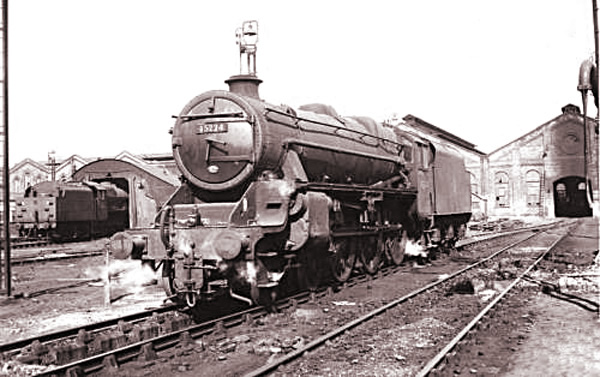 LMS Class 5-4-6-0 at Burton.
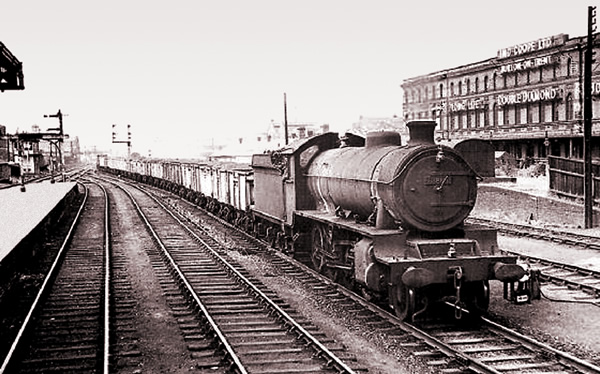
A few photos fortunately providing more or less the same view through the ages with the Ind Coope brewery building in the background.
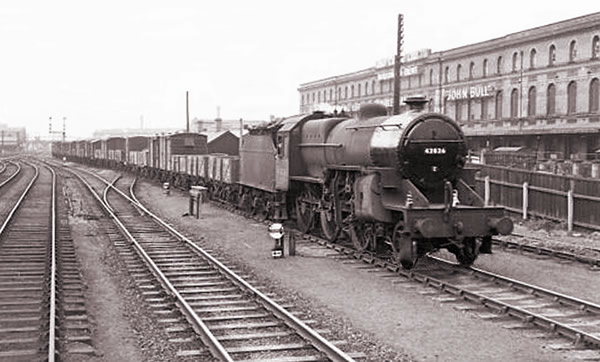 LMS Hughes/Fowler Crab 2-6-0 No. 42826
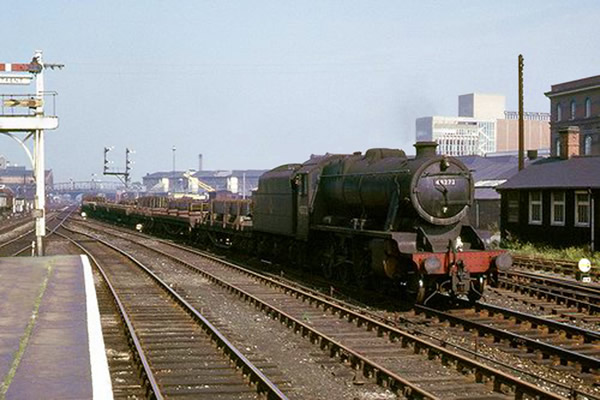 Number 45373 (?)
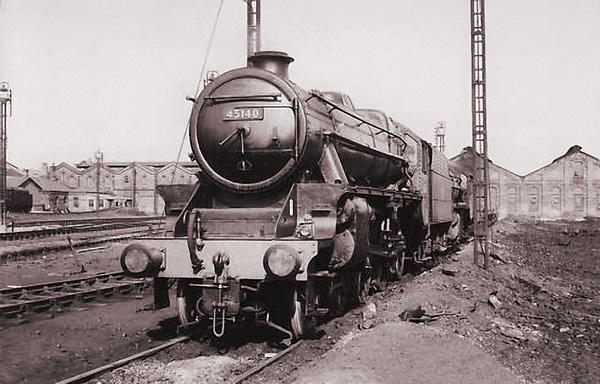 5MT number 45140 taken at Burton.
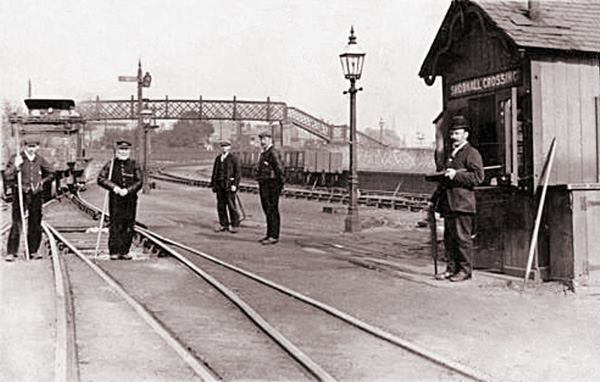
The above photo shows work at what was known as the Shobnall Crossing close to the present day Moor Street bridge.
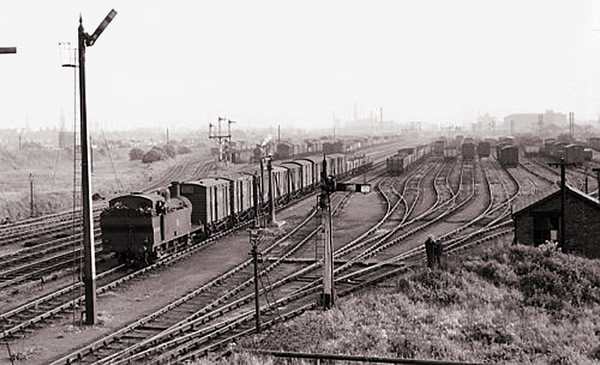 Wetmore Sidings.