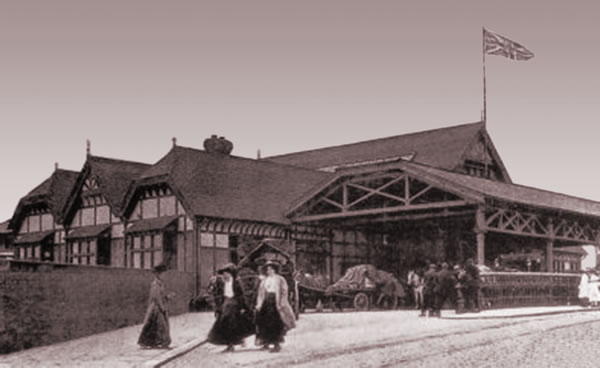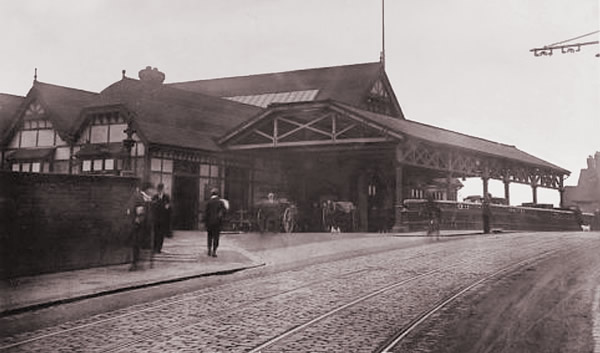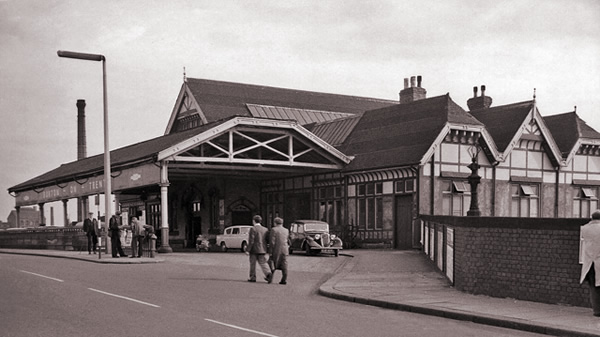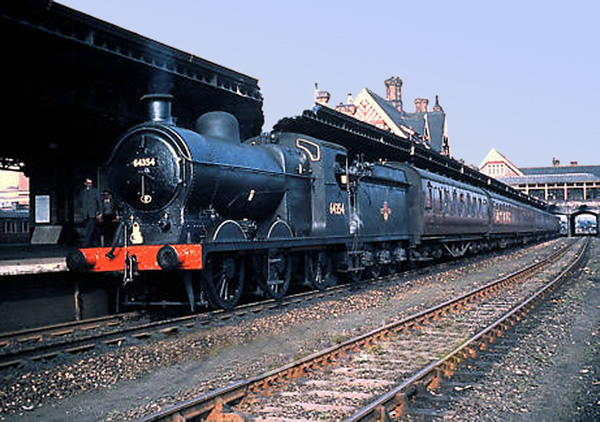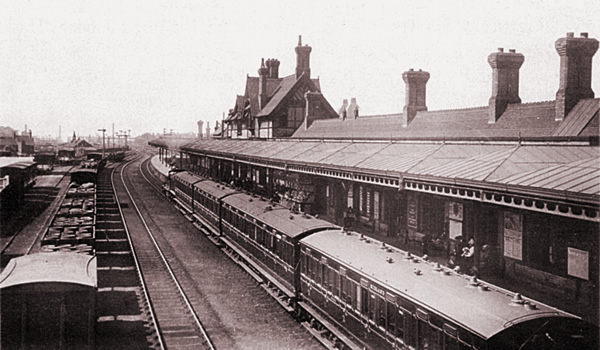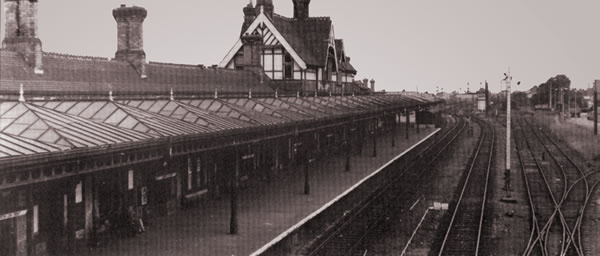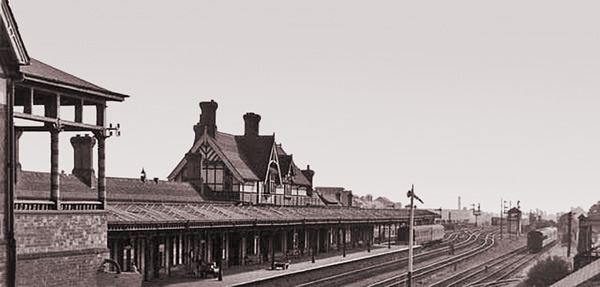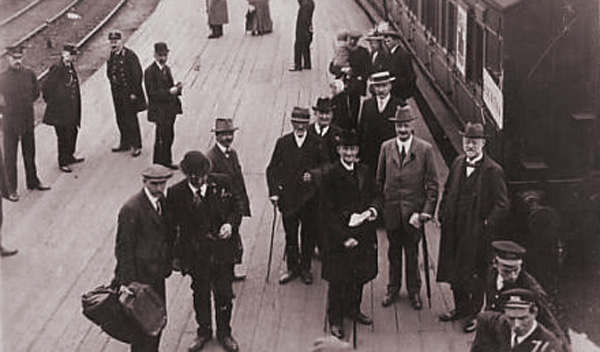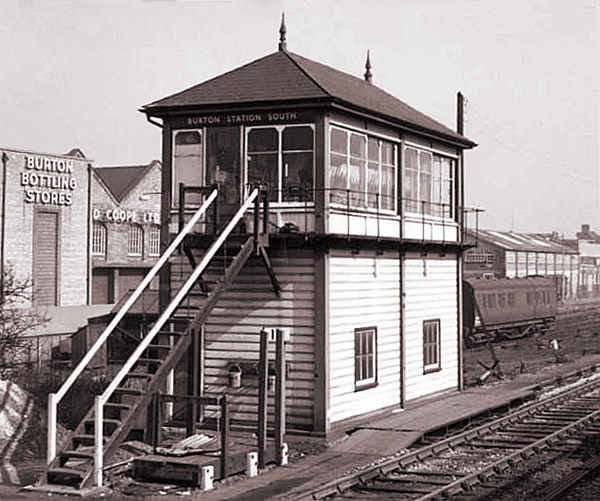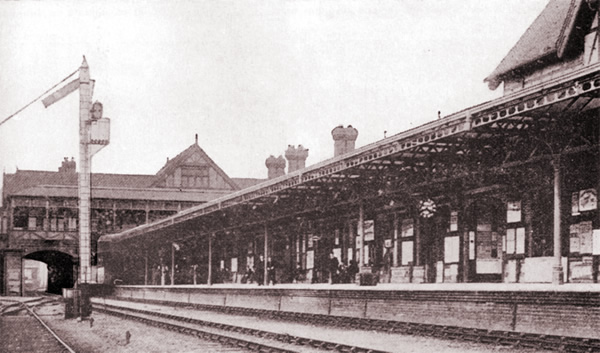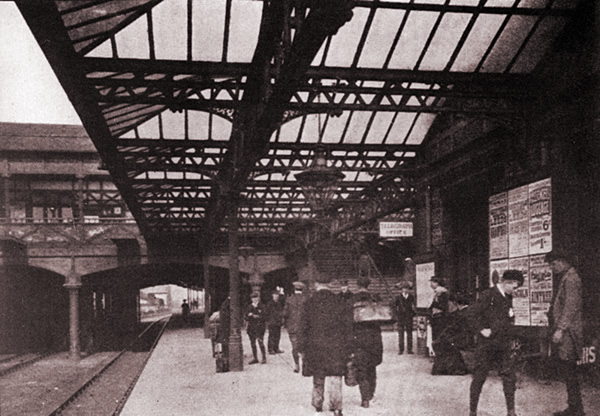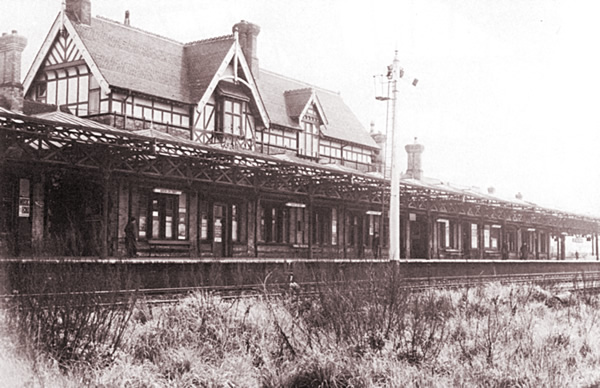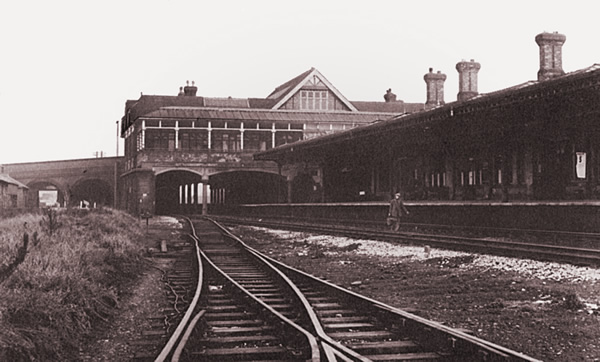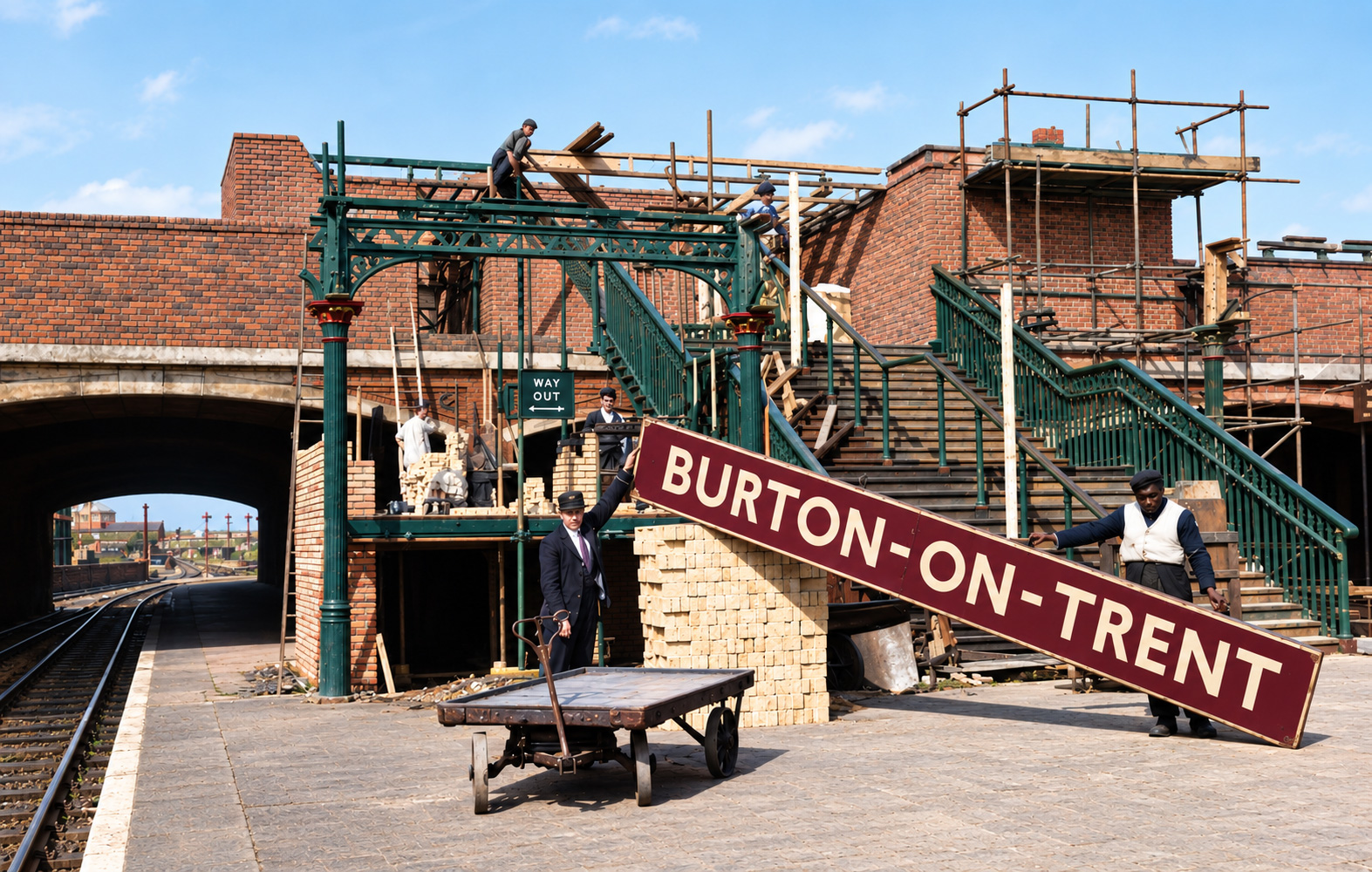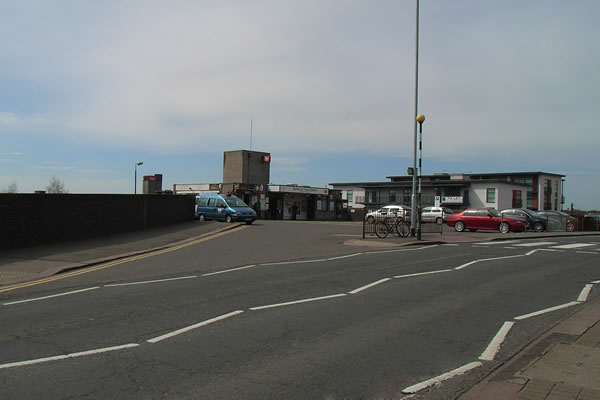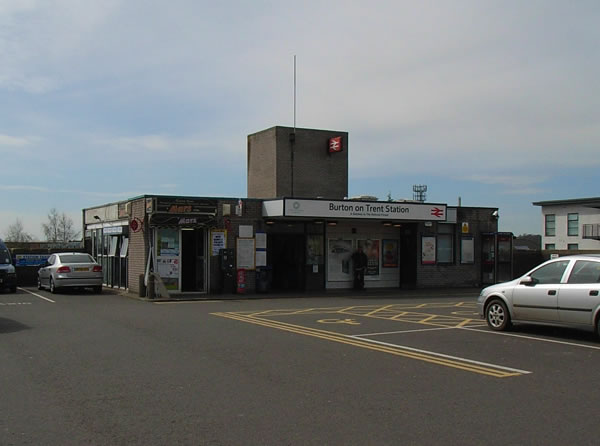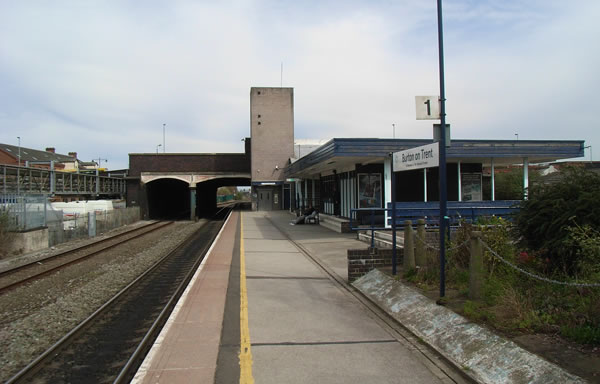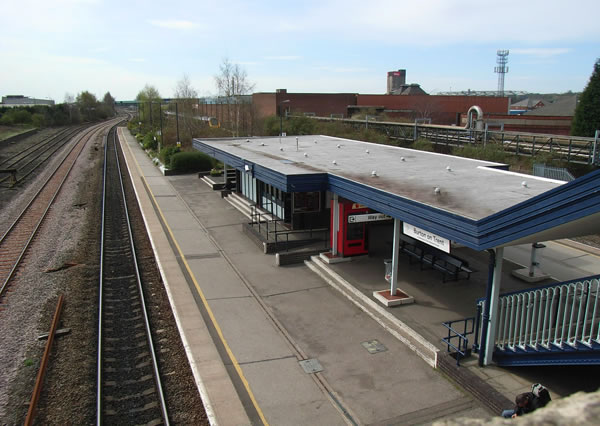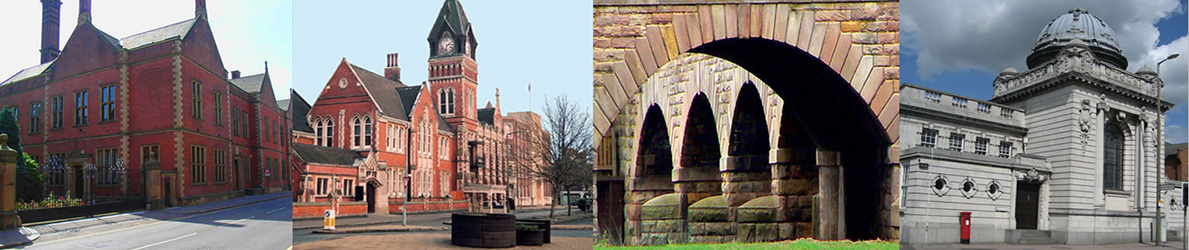
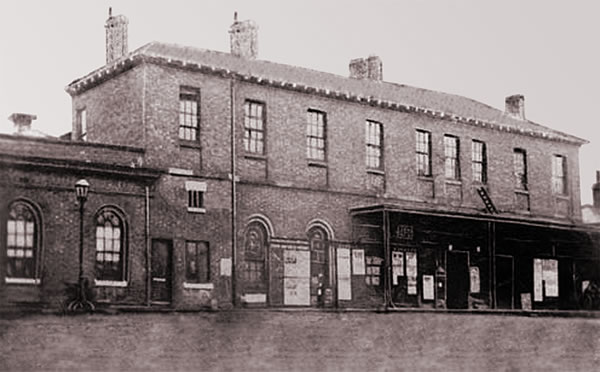
Though many will be able to remember the old railway station on the site of the current one, this was not the original Burton station. Burton’s first railway station was opened in 1839 by the Birmingham and Derby Junction Railway on its original route from Derby to Hampton-in-Arden meeting the London and Birmingham Railway for London. The station stood at end of what was then called Cat Street.
At the same time, the new Station Bridge was built prior to which, there was only a foot crossing between Station Street (Cat Street) and Borough Road where the new Saint Paul’s Institute and Liberal Club had recently been opened (later to become the Town Hall). The number of lines was also quadrupled to cater for much greater needs.
In 1844, Cat Street was renamed to the much more appropriate Station Street.
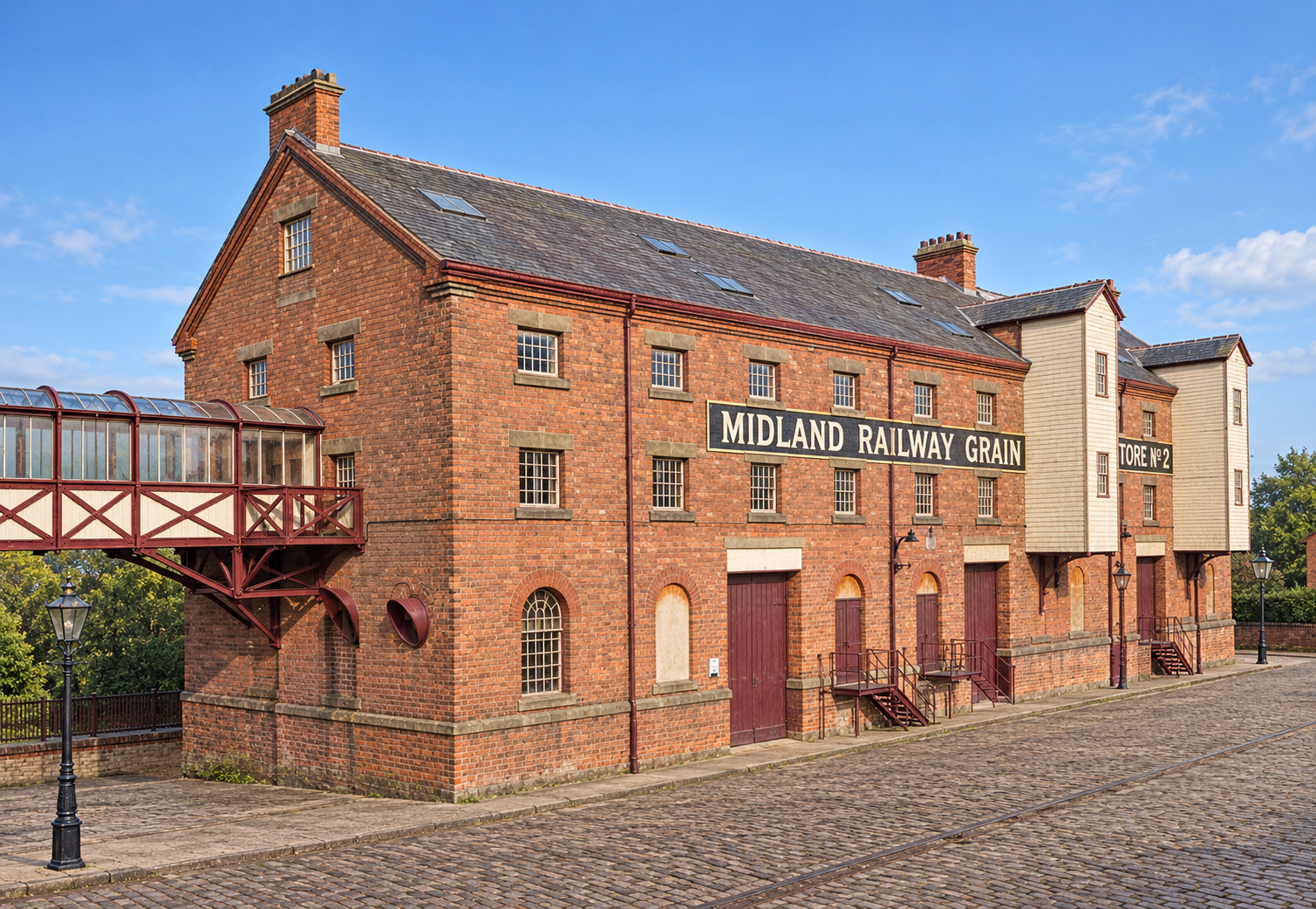
Once the station existed, local companies very soon adapted to its use. Midland Railway built a grain warehouse adjacent to the train track with its own siding comprising of three storeys and a basement, constructed from red brick with 11 bays and traditional weatherboarded grain hoists.
The building still exists and is Grade II listed.
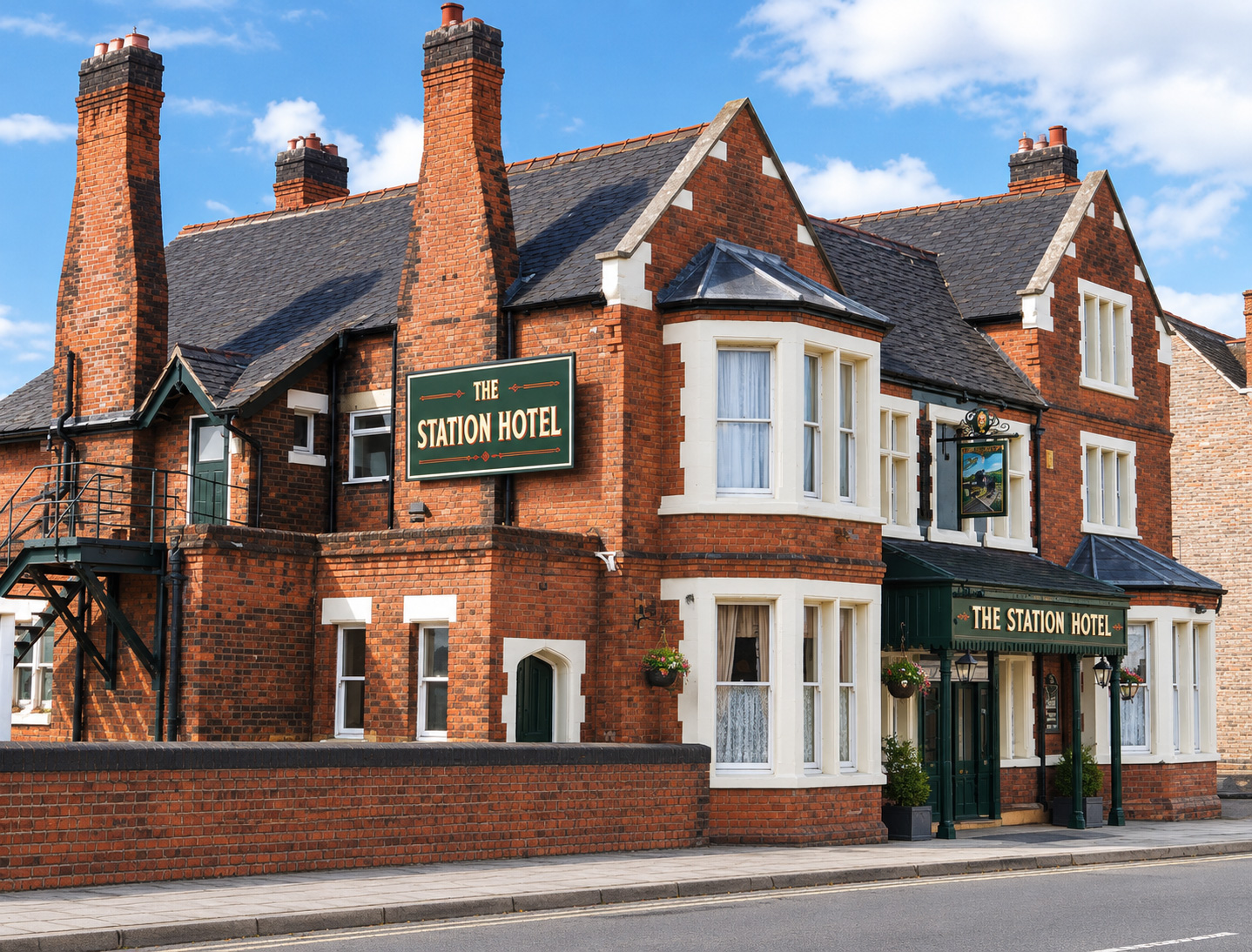
Also soon to appear was the Station Hotel to take up prime position for the future railway
In 1848, the North Staffordshire Railway Company opened a line from Crewe to Derby, with a branch line from Uttoxeter which connected Tutbury and Burton.
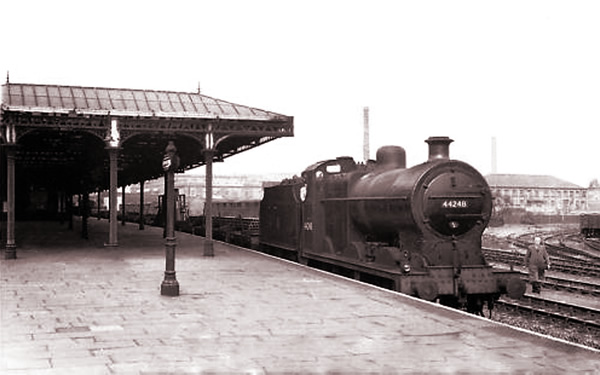
A small passenger train known affectionately as the Tutbury Jinny, seen below, was a popular sight at the old Burton station. With no means of turning the train, it operated a push-pull service between the two stations.
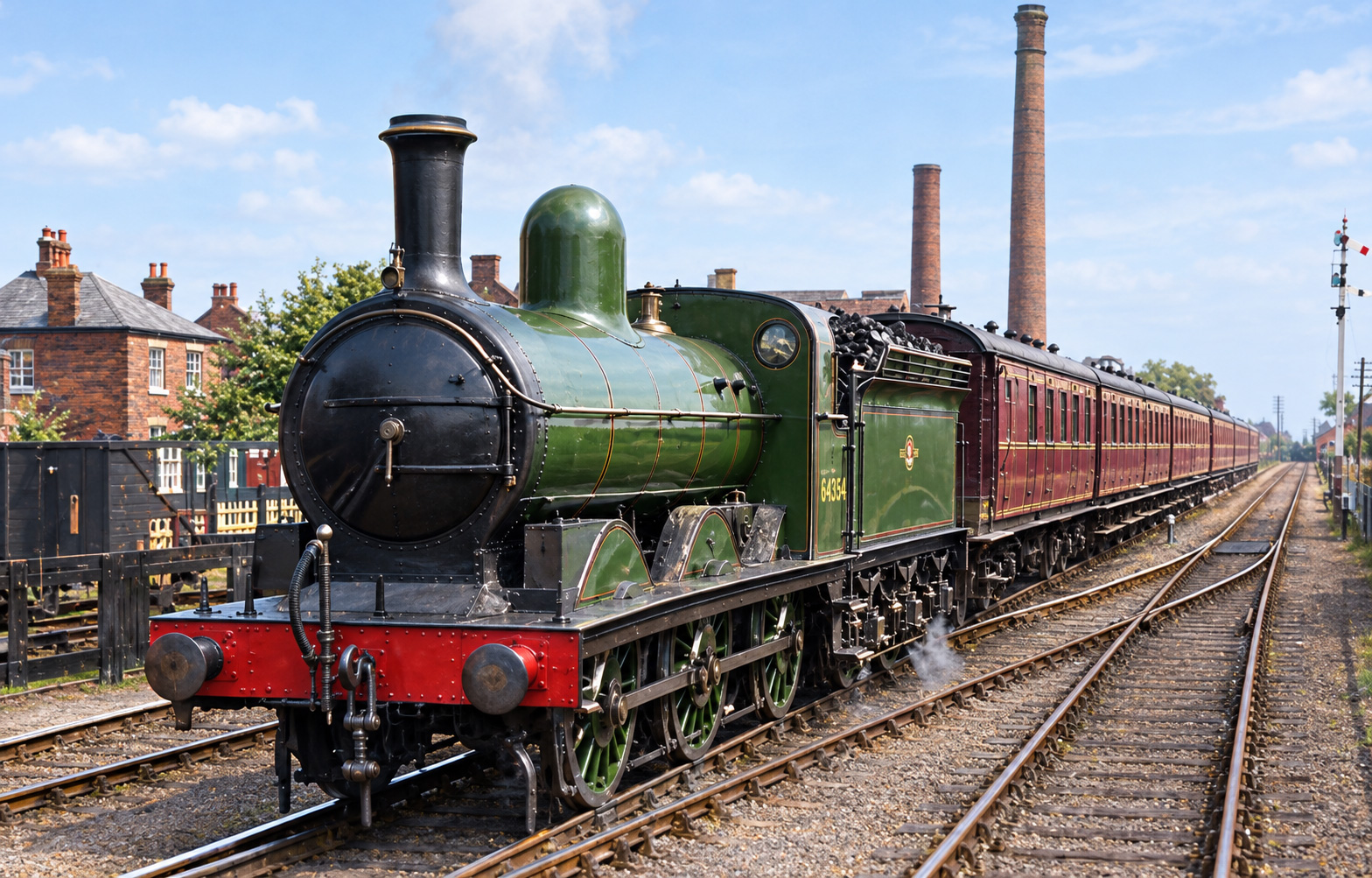 The First Tutbury Jinnie. 1849
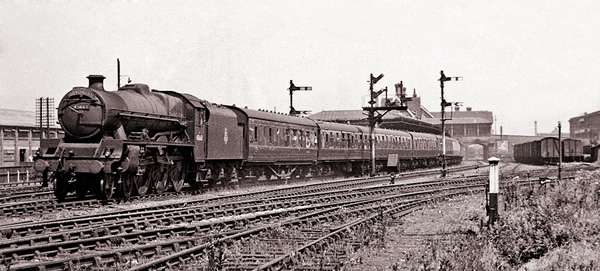
In its heyday, the ‘Tutbury Jinnie’ provided eight trains each way on weekdays and two on Sundays. However, as the motor car became more accessible, a survey in 1960 revealed that the service was only carrying an average of twelve passengers and running at a loss of around £7000, which was quite a significant sum at the time. The service managed to survive until it was withdrawn in 1960. The ceremoniously packed last train left Tutbury at 8:12pm on 11th June.
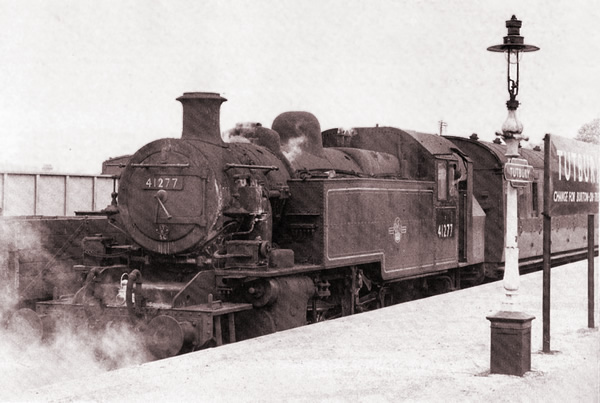 The Last Tutbury Jinnie. 1960
The line was closed in 1960. Tutbury station was fully closed in 1966 but was re-opened by popular request in 1990 and remains in use today.
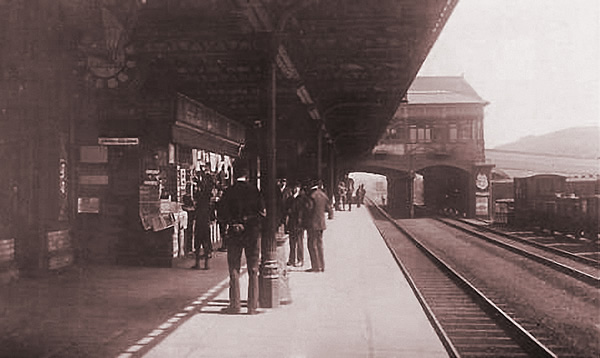
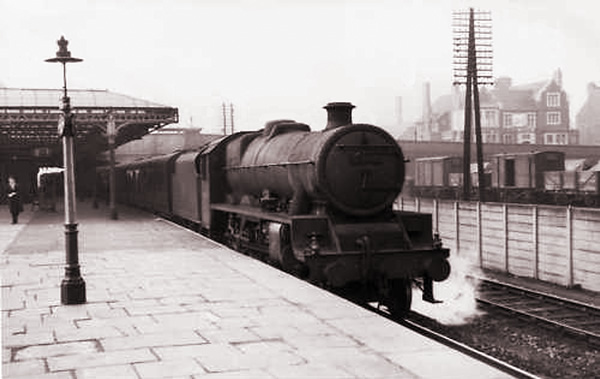
The below view provides one of the best views of the 1839 station platform and gives good feel for the position. On the other side of the Station Bridge you can see the recently completed Station Hotel to give you bearings.
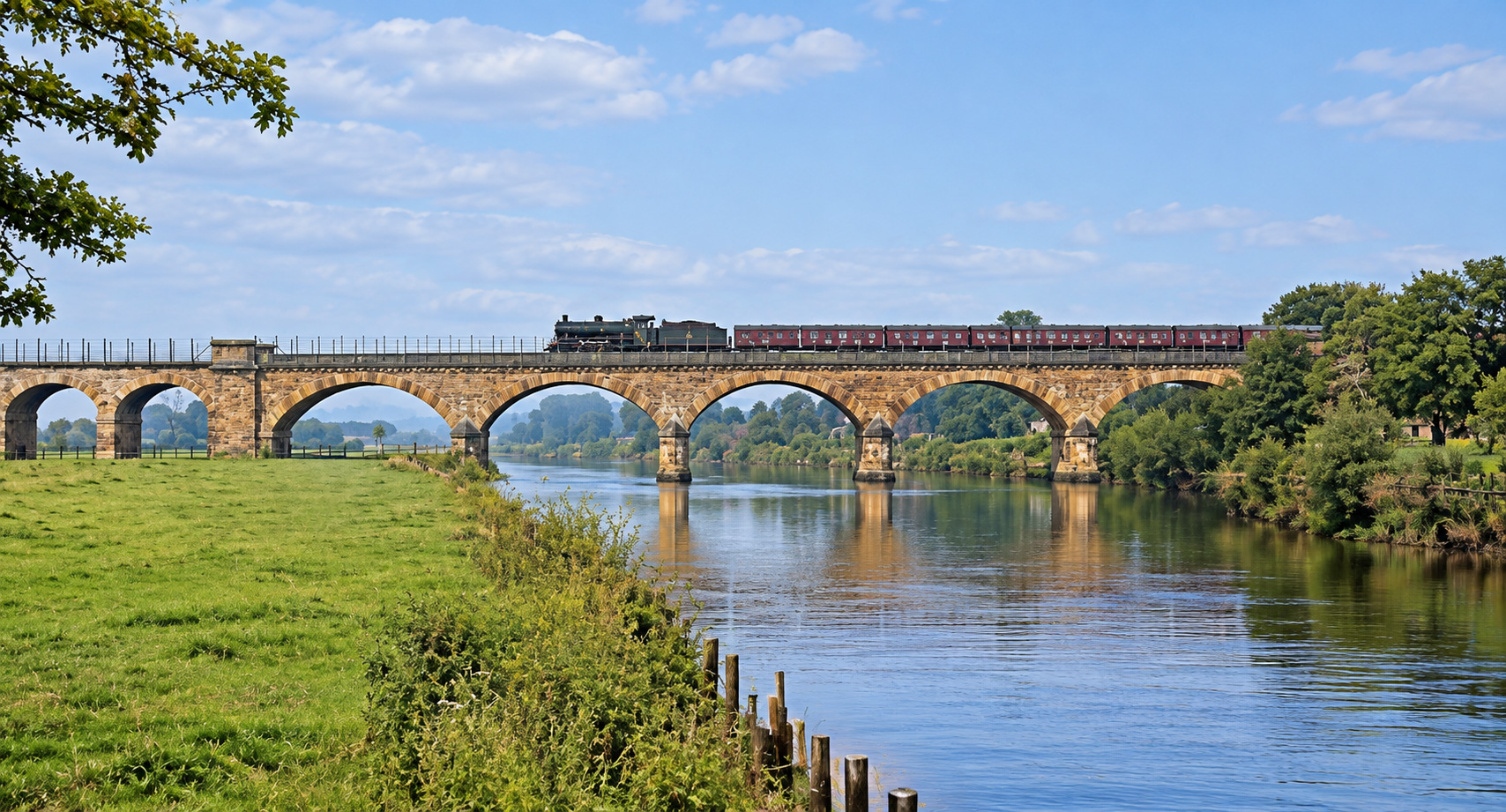
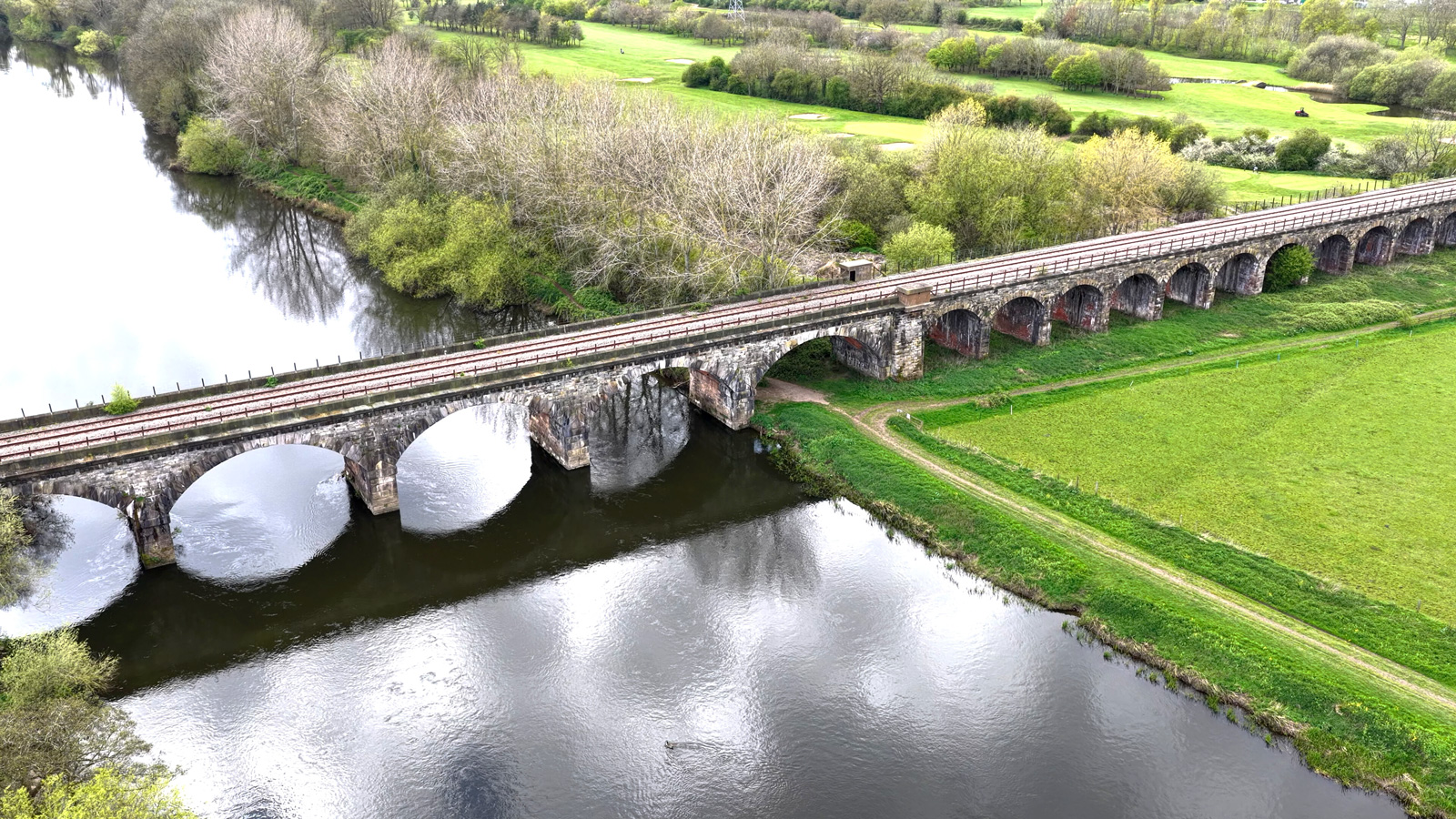
A year after the previous line, in 1849, the Midland Railway Company, which now owned and operated the Birmingham to Derby line, opened a line from Burton to Leicester which crossed the Trent by a substantial viaduct still known today as the Leicester Line Bridge or Drakelow Viaduct.
Burton’s main streets became congested by drays delivering barrels to the station from the breweries which were mostly located near the river. As early as 1853 it was proposed to lay a railway track from the main line south of Horninglow Street as far as the breweries in High Street to service them.
Under an Act of 1859 the Midland and other railway companies were authorised to construct two branches from the North Staffordshire line in Stretton, one running across Guild Street and High Street and the other under Hawkins Lane, across Anderstaff Lane (later Wetmore Road), and southwards along the west arm of the Trent. The branches met at sidings on the Hay behind the High Street breweries. A separate Act of 1860 authorised a private line from the Guild Street branch to serve Allsopp’s brewery on the north side of Horninglow Street. The construction of the Hay branch was instrumental in the demolition of the old medieval bridge over the Trent and its replacement by a new bridge opened in 1864.
Further lines in the central and eastern parts of the town were laid privately by brewing companies under an Act of 1862 and by the Midland Railway Company under Acts of 1864 and 1867. To serve brewery premises on the west side of town lines were laid by the Midland company in 1874, including one along the disused Bond End canal. Lastly, the London and North Western Railway Company in 1882 made a line along the east side of the Trent and Mersey canal between Shobnall and the Stretton junction.
The below extract from a map produced in 1865 shows the yet disjointed Station Street (now renamed from Cat Street) and Borough Road. It is also interesting to note that the soon to be demolished windmill is still in place on what would become the rear of the Station Hotel. It would also be a few years before Saint Paul’s Church followed by Saint Paul’s Institute and the Liberal Club (eventually destined to become the Town Hall) appeared.

As an ever increasing centre for beer brewing, Burton soon became criss-crossed brewery companies’ private lines and the numerous level crossings became the bain of the town!