Menu Close

Burton Regatta

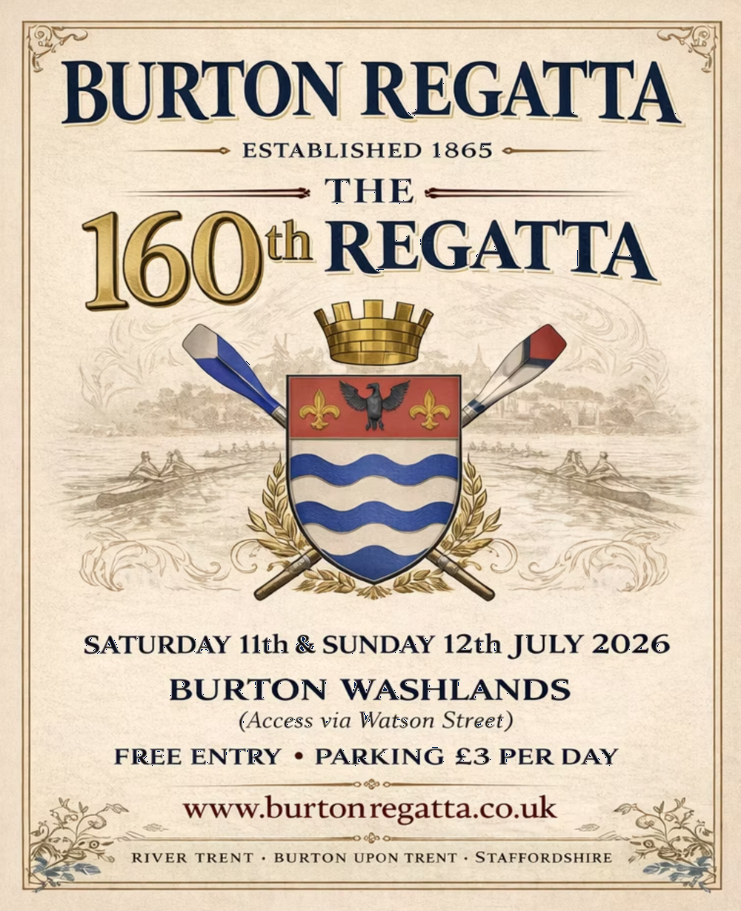
The Burton Regatta was first established in July 1865 on the River Trent, making it one of the oldest annual sporting events in the UK.

It is pretty much taken for granted in the town but few realise that because of the wide course between the Leicester Line and Ferry bridges and exceptional access to the river from its bank, it is one of the most major rowing regattas in the rowing calendar.

Rivalry has always been strong between Burton Leander and Trent rowing clubs both situated close to the Trent Bridge.

Penal System

FORMS OF PUNISHMENT

Gallows and Instruments of Punishment
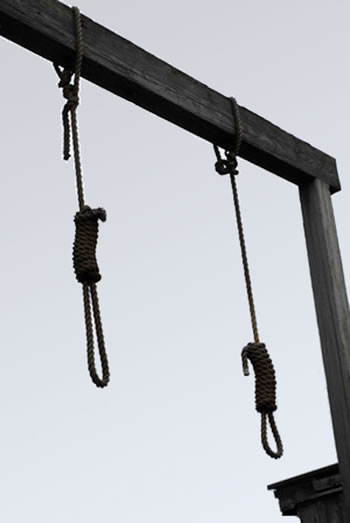
There is recorded to have been a gallows on Burton meadow dating back to 1012 – before the Norman invasion. In 1293 the Abbot successfully claimed the right to use a gallows. There was a gallows on the parish boundary with Tatenhill by 1395. The bridge which carried the road south from Branston village over the boundary brook was for this reason, known as ‘Gallow Bridge’. There may also have been a gallows in the Middle Ages on the boundary between Burton Extra and Horninglow. In 1757 land off Derby Road was known as ‘Gallows Flat’ which led to speculation that this was the site of a gallows.

Gallows also existed at the present day sites of the Derby Turn, Horninglow Road, and at the bottom of Scalpcliffe Road in Stapenhill (now Brizlincote). The latter is thought to be the site of the last hanging to take place in Burton.

Stocks mentioned in 1280 probably stood in the market place. The stocks in 1608 were inside the market hall, but later recordings in 1619 and 1708 indicate that they were outside next to the market cross. Stocks were also positioned at Bargates at the Horninglow Road end of High Street. The earliest record of the use of these was in 1610. There were still two pairs of stocks in 1826 but probably only one by 1839, when a pair stood on the Hay near the south-west end of Burton bridge.

Burton apparently had a pillory in the late 1570s. This was a wooden framework with a hole for the head and holes either side for the wrists holding the male or female offender so that they could be publically ridiculed. It was only erected when needed. Its last recorded use was in 1739, but I am sure there are still those that would be in favour of its re-introduction!

There is a Burton cuckstool mentioned in the 1590s; this was a form ‘ducking stool’ often used as a punishment for a nagging wife; I have not yet managed to establish its whereabouts. There was also a whipping post in the early 1610s to which offenders were strapped to receive lashes on the back. A new cuckstool was made in 1711, when there was still a whipping post in operation.

A wooden cage was made in 1622 and stood in the market place serving a similar role to pillory stocks where prisoners could be publically displayed where they could be taunted and ridiculed. Its last recorded mentioned was in 1720, when a payment was made for its removal, suggesting that it was in use until around this time.

Jail and House of Correction
There seems to have been a secure place of detention in Burton by the mid 1270s. It is recorded that a man who had committed murder in Alrewas was brought to Burton for detainment. In the early 1300s, there was a secure lock-up in Burton market place called ‘Helle’, no guesses for guessing what its nickname was. Although occupied by a townsman, it is likely that offenders were retained on the Abbot’s orders.

There was a prison in the mid 1550s, and repairs to the town gaol were made in 1641 and again in the late 1680s. What was called the Jail House or Prison House in 1762 stood at the south east corner of the market place. Together with the adjoining bowling green. It was let that year as an inn but the landlord had to agreed to guard prisoners in a cell and would be accountable to the lord of the manor if a prisoner escaped. Although still used as gaol in 1792, the building was let in 1795 to a brewer, John Sherratt, who used it as an inn, which later became known as the Bowling Green. It was demolished in or shortly before 1834, when a house called the Priory was built on the bowling green itself.

There is a ‘black hole’ lock-up mentioned in 1718. This is thought to have been on the same site as the 14th-century ‘Helle’. It was intended for temporary detention; a boy is known to have been detained there for a period of seven days in 1736. It was still in use in 1789.

Until 1729 the nearest house of correction to Burton was that at Walsall. One for Burton parish licensed that year was opened in part of the workhouse in Anderstaff Lane (now Wetmore Road). The Burton house of correction is last recorded in 1738, and may have been closed soon afterwards in order to avoid the implications of the 1740 Vagrancy Act.

COMMISSION OF THE PEACE
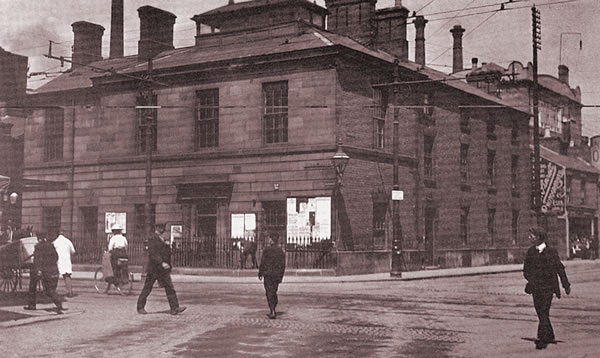
In the late 1840s petty sessions were held weekly in the Angel Inn and by 1851 in the combined county court house and police station at the corner of Station Street and Guild Street.

Borough magistrates were first empanelled in 1887, meeting weekly in the same place as the petty sessions’ justices but on a different day.

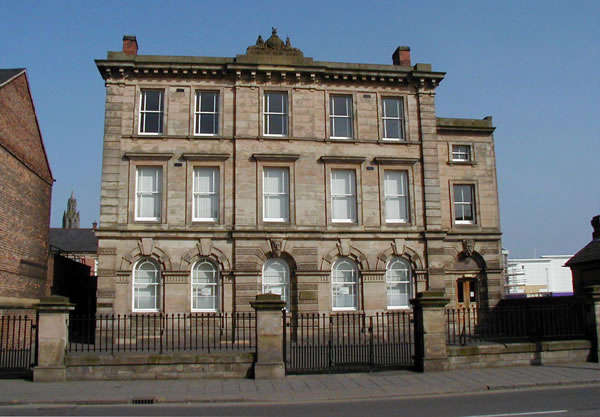
Sessions were transferred in 1910 to a newly built impressive magistrates’ court house in Horninglow Street. At this time, six strokes of the birch was common for such crimes as ‘stealing food’.

A separate quarter sessions for the county borough was granted by royal charter in 1912. It was abolished under the Courts Act, 1971, but Burton remained the meeting place for petty sessions. An office block for the magistrates and their clerk was added to the court house in 1991.

COURT OF RECORD AND COUNTY COURT
By 1585 a weekly court of record for the recovery of debts, called the Genters court, was held on Fridays.

Apparently still held in the earlier 18th century, the court later fell into disuse but had been re-established by 1794, when it was styled a court of requests. The upper limit of debts within its competence was 40s. in 1841, when it met every three weeks. The court apparently still met in the mid 1850s, although its function had been taken over by a county court held in Burton from 1847.

From 1848 the County Court met in a building also used as a police station at the corner of Station Street and Guild Street. The present Court Court House in Station Street, pictured below, was built in 1862.

All a long way removed from the present day magistrate’s court.

Fire Brigade – New Street

The idea of a new ‘more fitting’ Fire Station to replace the one in Union Street was first raised with the Borough Council in 1900. It was met with some enthususiasm and a number of possible land purchases were considered. The favourite proposal was for properties in New Street and Park Street, as long as a right of way could be established between the two. This done, the land was acquired and local building companies were invited to tender. Five tenders were submitted, the winning bid was submitted by R.Kershaw for £6,150.

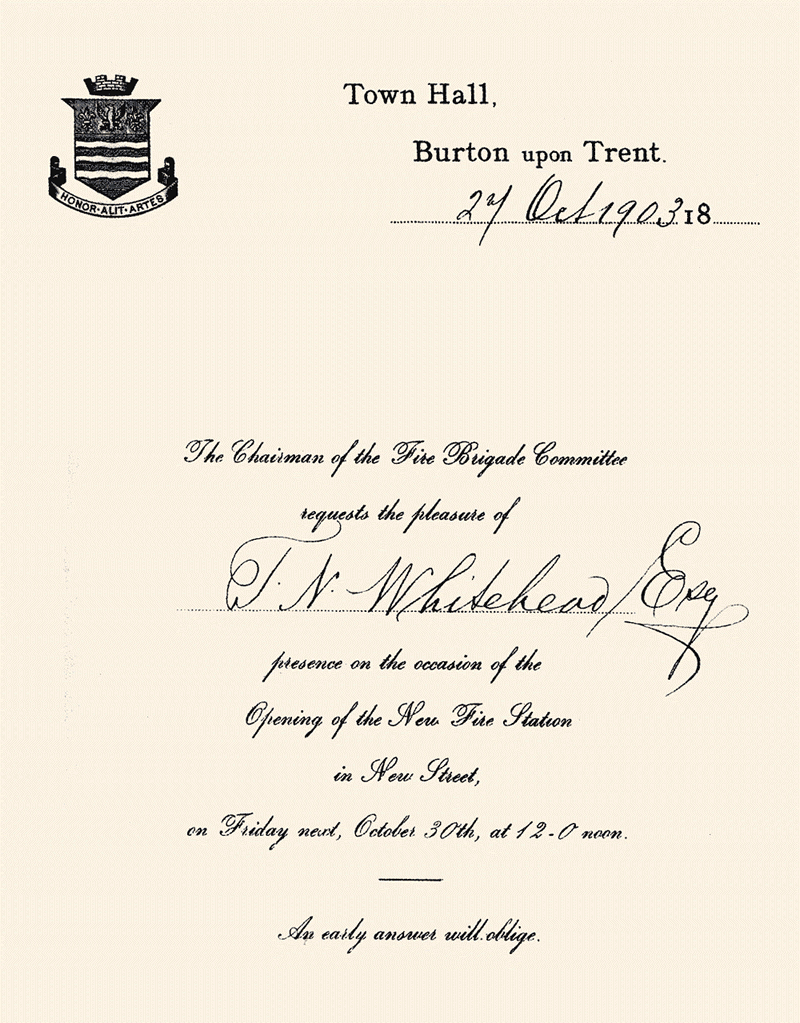
The station was completed in 1903 and the Grand Opening was scheduled for Friday, October 30th. The opening ceremony was performed by the Chairman of the Fire Brigade Committee, Harold Rugg. This full list of those who received official invitations such as the one shown above was: Deputy Major – J.R.Morris; Aldermen – Austin, Bassett, Croad, Glover, Hall, Harlow, Hutchinson, King, Lathbury, Lowe, Ordish, Parker, Rowland, Samble, Stack, Thanely, Tresise and Wilkison; Borough Surveyor – Mr Lynham; Town Clerk – Mr Whitehead.

Representing the Fire Brigade were Superintendents Robert William Gooch (Burton Borough Fire Brigade), Bailey (Allsopps Brewery Fire Brigade) and Bradshaw (Measham Fire Brigade). The opening also attracted very good support from the town’s residents. This was to be a good year for Burton crowds for the new tramway system had been opened to much acclaim a couple of months earlier.

The aforementioned Mr Gooch together with Alfred Wilkins (Engineer) and Ralph Harvey (Coachman/Driver) had accommodation within the new station. There were however, teething problems with faulty or incorrectly designed chimneys which rendered many parts of the building smoke logged rendering them uninhabitable until new taller chimneys could be built.

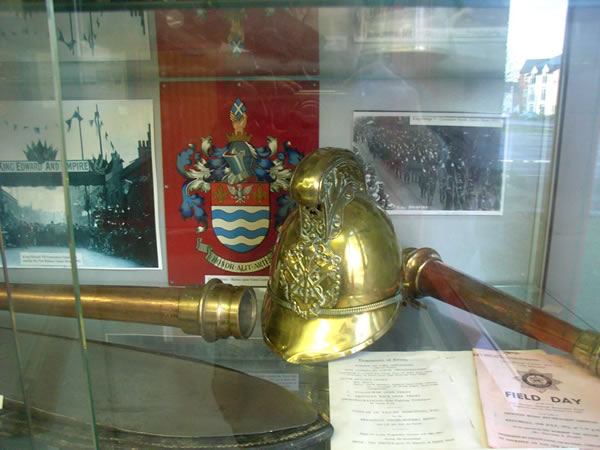
Full time firemen were employed for the first time and new uniforms, including bright new helmets were issued, though the latter proved to be unpopular in service.

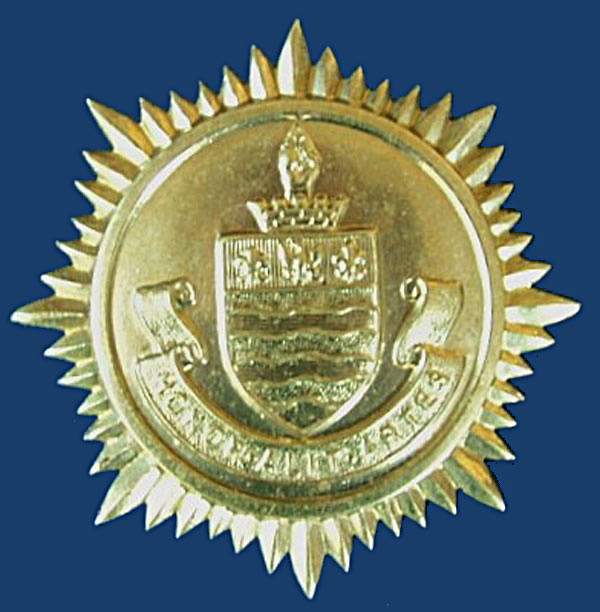
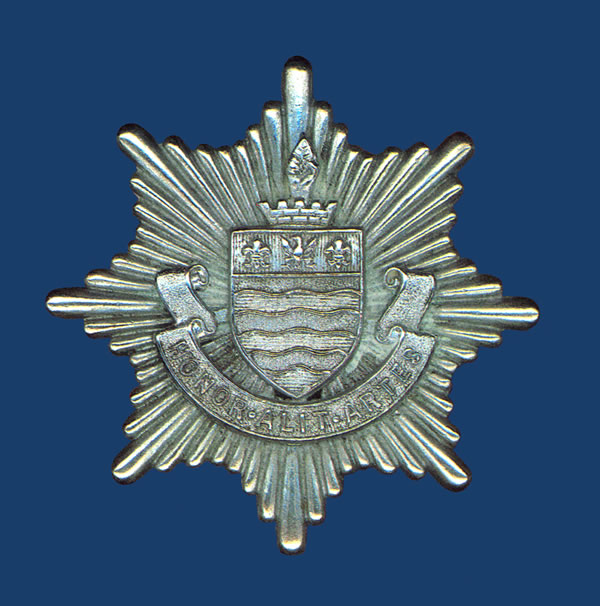
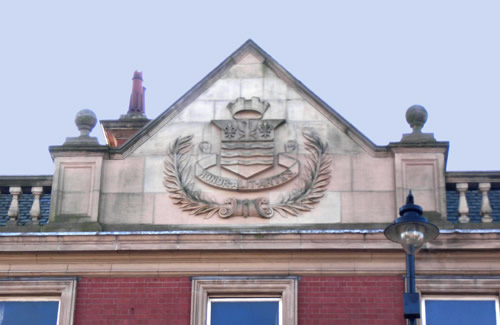
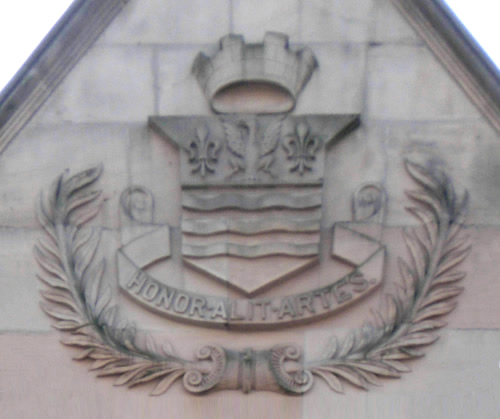
Two versions of the Burton Fire Brigade badge are a slight mystery at the moment thanks to an eagle-eyed visitor. I had imagined that one was introduced when the New Street station opened, to be later revised but, as has been pointed out, both bear the hand holding the saltire of Saint Andrew (as an allusion to the early medieval chapel on Andresey island founded by Saint Modwen) which was not added to the Burton Crest until the Grant of Arms in 1928, prior to that, it was simply a crown (answers welcome).

Both badges  bafflingly show the hand holding the saltire of Saint Andrew  not added to the Burton Crest until the Grant of Arms in 1928.

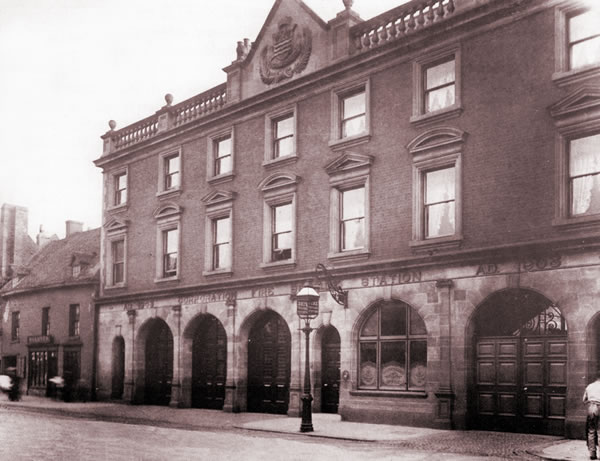
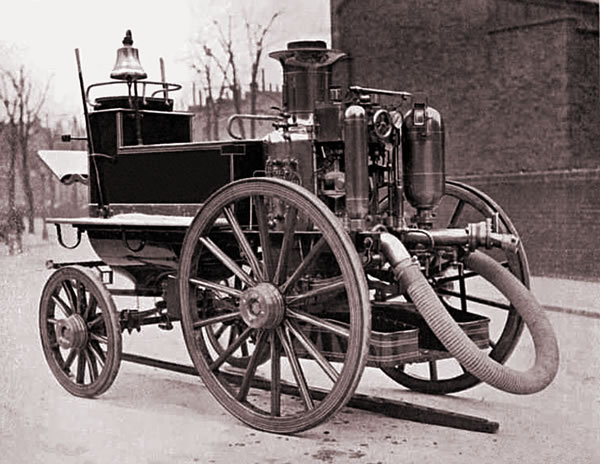
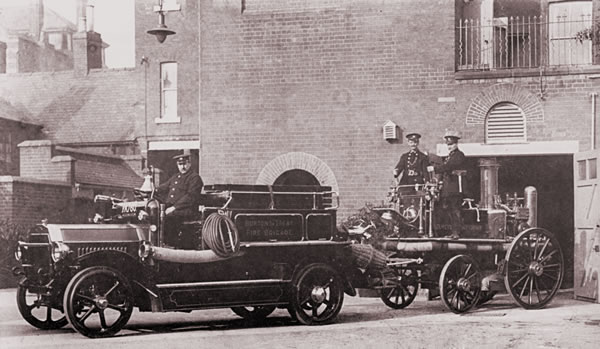
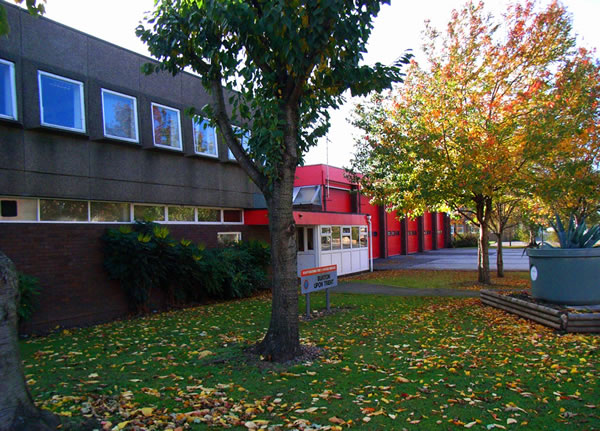
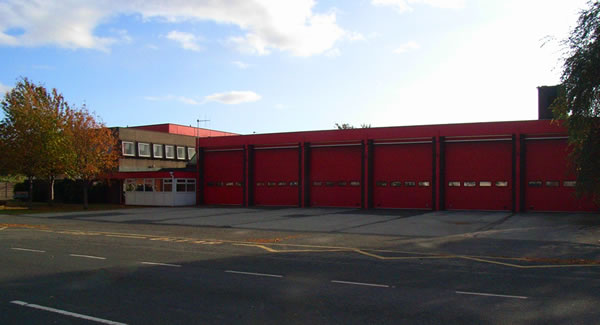
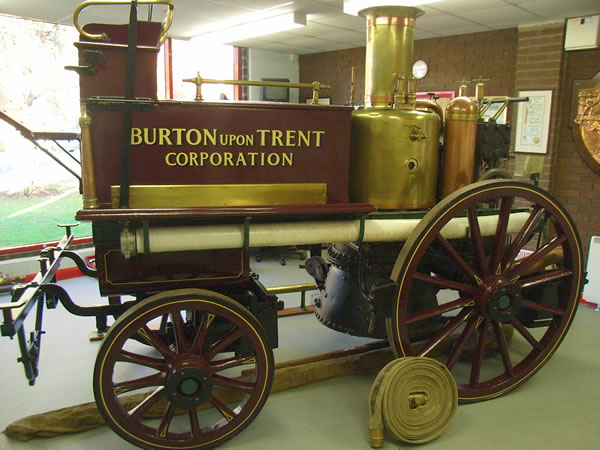
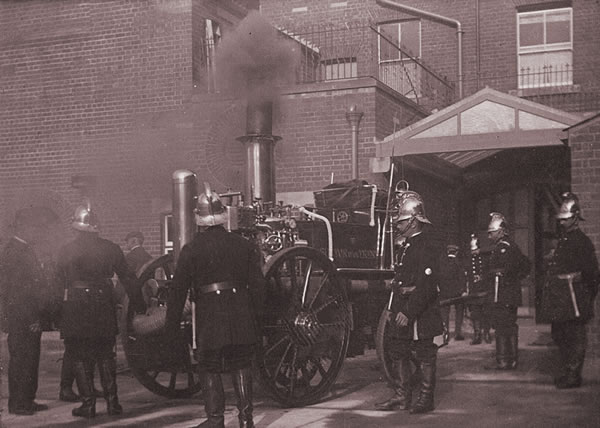
As a boy, I can remember seeing the Fire-Engines in their bays, not unlike the picture here. It is easy to forget that when the Fire Station was opened, no such vehicles existed. This was still very much the age of horse drawn transport with motorized transport only just beginning to become available. When the station opened, it only had one Shand, Mason & Co. Steam Fire Engine as shown below, together with one hand pump engine which could only produce a limited jet, unable to reach higher levels of buildings.

The Fire Brigade also now had its own horses instead of having to ‘hire’ them for each emergency!

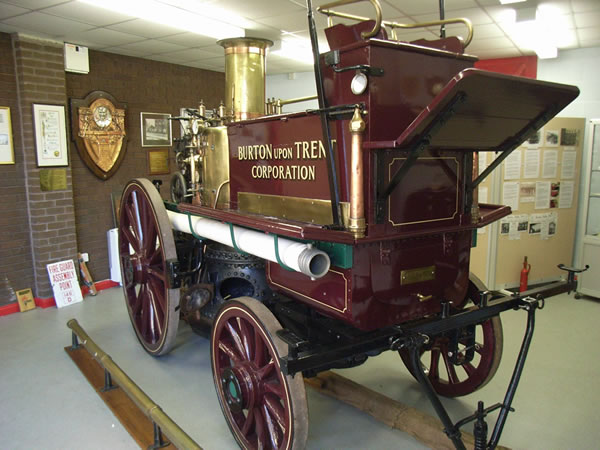
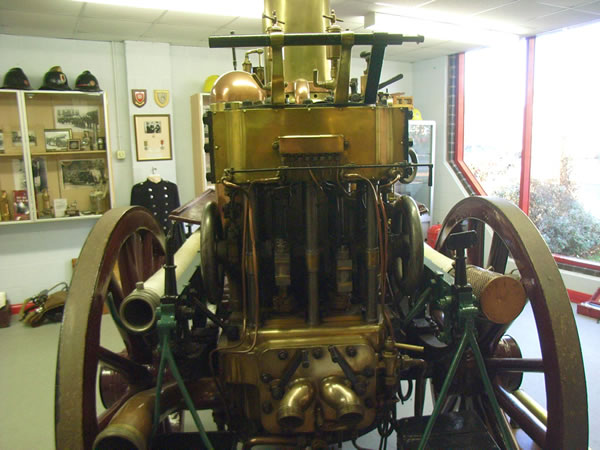
Below shows the Burton Steamer, preserved in excellent condition at the present day fire station.

The bays initially dwarfed THE Steam Fire Engine. Fortunately, it was built large enough to accommodate some of  the early Fire Engines but the Station’s eventual downfall was that the bays were simply too small to accommodate modern appliances.

In 1920, the first motorized Fire Engine was purchased. It was a 45hp Dennis Motor Pump and cost Burton Corporation the princely sum of £2,650 with a loan to be paid back over 10 years. It could also replace horses by towing the existing Shand Steamer to larger incidents where both pumps were called for. A second engine was delivered later in the year, this one being equipped with a wheeled ladder. A ‘proper’ fire engine at last!

By the 1960s, a variety of appliances were at the brigade’s dispossal.

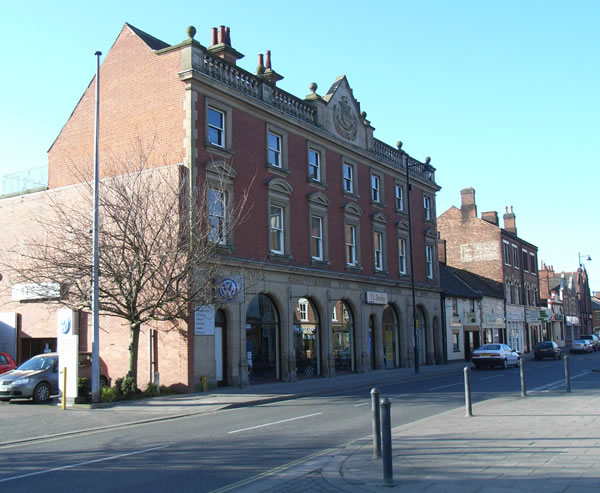
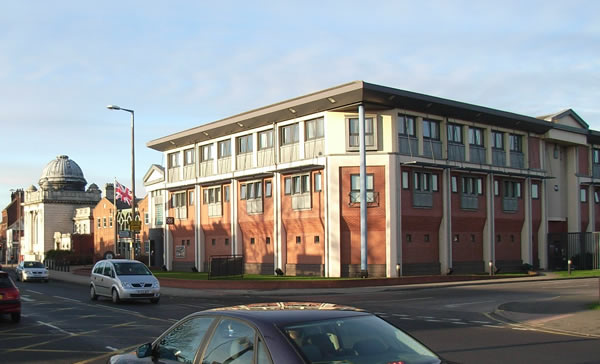
New Street Fire Station was finally closed in 1973 when it was transferred to the new Fire Station in Moor Street. For some years, the old Fire Station has been the home of T.L. Darby the Volkswagon car dealer who have made a beautiful job of keeping one of Burton’s favourite buildings in excellent order.

All of the Edwardian stonemasonary, once again, proudly featuring the new Coat of Arms, now make a very attractive feature.

Fire Brigade – Later History

Burton Fire Brigade was transferred from New Street to Moor Street in 1973. The new station was opened on 6th June by the Town Mayor, Harry Buckingham who was also Chairman of the Watch Committee.

March 31st 1974 marked the end of Burton Fire Brigade. With Burton no longer a County Borough and now coming under East Staffordshire District Council control, the brigade became part of the Staffordshire Fire Service.

A museum is proudly maintained at Moor Street Fire Station and may be viewed by the public by appointment.

In pride of place is the original Burton Steamer, which can be viewed through the window the next time you happen to be passing.

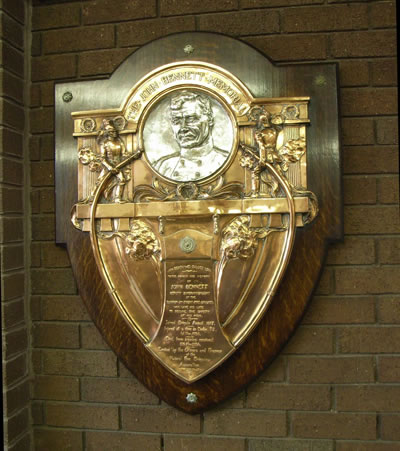
On the wall hangs the commemoration plaque to John Bennett, lost in service, as a reminder of the possible perils of the job.

Fire Brigade – Burton Steamer

SHAND MASON – MERRYWEATHER STEAM FIRE ENGINE

Whilst the steam Fire Engine had made its appearance in the early nineteenth century it was not until the latter half of the eighteen hundreds that it had developed into an efficient Firefighting machine.

There were two major makers in Britain. Mem weathers, and Shand Mason and Co. Research into Newspaper archives and local History sections at Burton Upon Trent Library uncovered a delivery of a steam Fire Appliance to Burton Corporation in 1876.

When Burton’s steamer reached the end of its days with the Brigade it was sold off, and acquired by a Sir Thomas Stafford Bazley, Bart. This change of homes probably occurred during the late twenties or early thirties.

In 1963 a Mr Bob Bonner founded the Fire Brigade society, and one of the earliest members, a Mr Geoff Bottomly was appointed as Museum Secretary, and started a two year project to acquire items of interest.

Early in 1966 Geoff discovered that an old steam Fire Engine was situated at Hatherop and negotiations with its owner, Sir Thomas Bazley resulted in the Engine being loaned to the Fire Brigade Society.

In November 1967 custody of the steamer was passed to Geoff and the Engine joined the now growing fleet of Appliances known as The Transville Fire Collection. The steamer was to remain in the fleet for twenty five years until its return to its home town of Burton upon Trent in 1992.

In the Summer of 1972 the steamer along with other Fire Appliances was featured in a Granada Television Film about the Fire Brigade Society.

On January the 29th 1992, Geoff was informed that the Engine was to be sold in a Sotheby’s auction at Hendon on 30th March. Concerned about its fate if it went to auction, Geoff thought that it should end its days in some appropriate locality. So at the beginning of March he wrote to Gloucester and the Staffordshire Fire and Rescue Service and to Bass Museum in Burton upon Trent informing them of the machine’s existence, and of its proposed disposal by auction at the end of the month.

A reply came from Staffordshire Fire and Rescue Service expressing an interest that if funds could be raised, it might be worthwhile contacting Sir Thomas with a view to a direct purchase. As an end result, it can still be enjoyed on display at the present day fire station.

Finally, a treasured photo that reminds that it was once a serious fire fighting machine, seen here on exercise in the New Street fire station yard.

Fire Brigade – Group Photos

This series of group photos provide a lovely glimpse of the Burton Fire Brigade through its history. The pictures and names are made possible through the research of Robert Cox and are a very small sample of the photos featured in his book. They appear here by his kind permission.
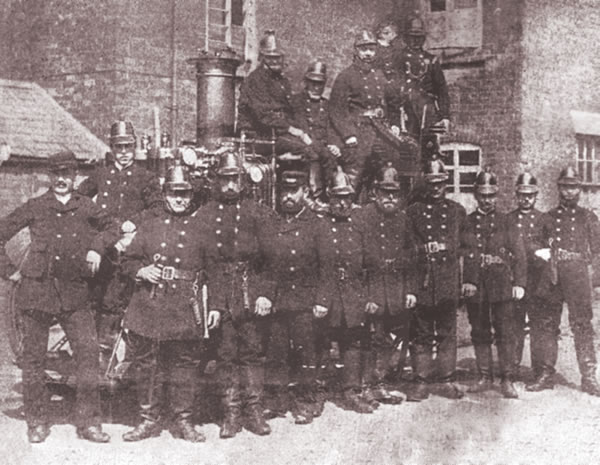

One of the oldest photos of the Burton Fire Brigade at the end of the ninteenth century. Though in poor condition, it is just too nice not to feature.
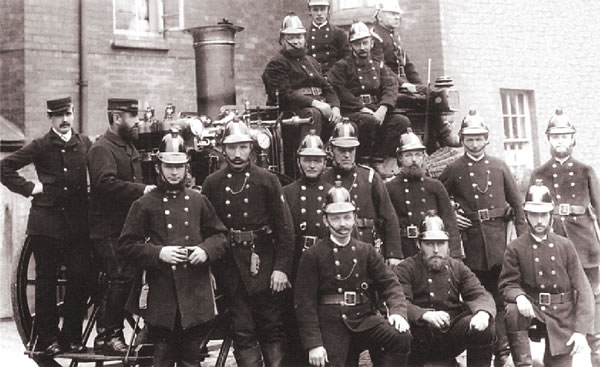
1892 Burton Fire Brigade at Union Street Fire Station
Back Row: John Watson, Albert Simnett, Samuel Smedley, Robert Gooch
Middle Row: Norman Hird, William Hird, Armshee Wallace, John Pass, David Twigg, George Green, Thomas Roberts, John Bennett, Harry Basford
Front Row: James Cox, William Thompson, Charles Siddals
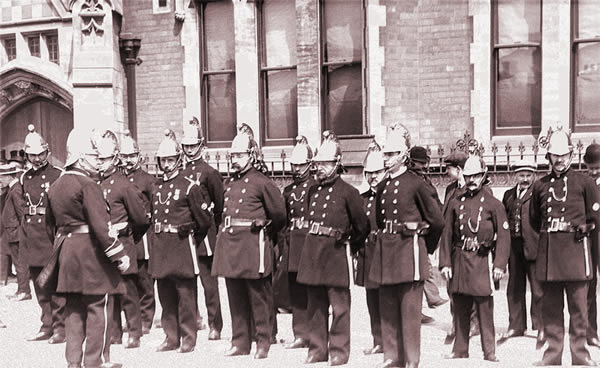
1908 Burton Fire Brigade at the Town Hall
Taking parade is Superintendent Robert Gooch. Facing him from left to right are:
John Bennett (Killed in service), Jack Inwood, Albert Simnett, George Green, James Smith, Armshee Wallace, George Shepherd, Joseph Ridgard, Fred Holford, William Gooch, William Hamp, Norman Hird
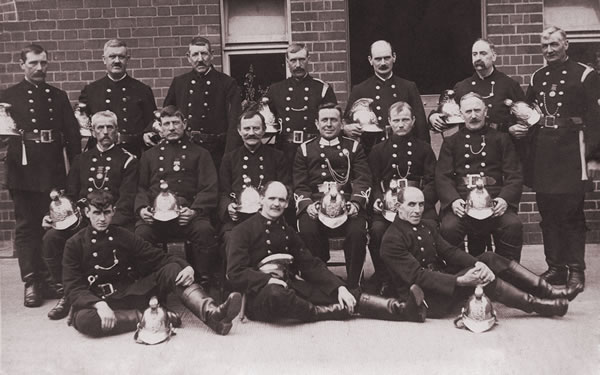
1919 Burton Fire Brigade at New Street Fire Station
Back Row: William Webster, Norman Hind, Ralph Harvey, Roland Paskin, Joseph Felthouse, Armshee Wallace, John Bennett
Middle Row: George Green, John Inwood, William Green, William Gooch, Edwin Tooby, Thomas Fletcher
Front Row: Joseph Croshaw, Timothy Banton, James Smith
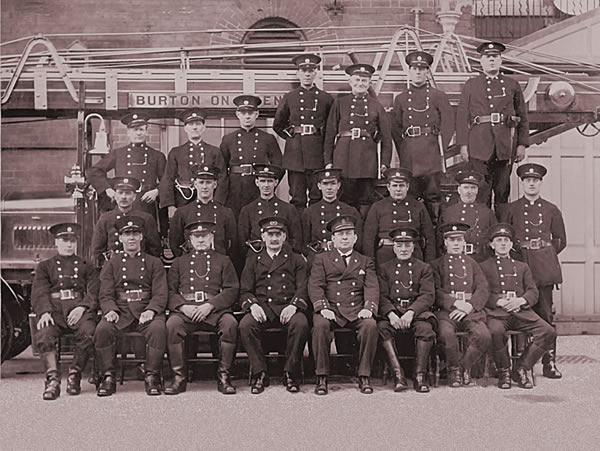
1929 Burton Fire Brigade at New Street Fire Station
Back Row: Percy Clarke, John Williams, Albert Sumsion, Noah Pegg, William Green, Herbert Paley, Olly Taylor
Middle Row: George Shepherd, Jim Sherratt, Joseph Croshaw, William Grice, John Neal, Roland Paskin, Charlie Dyche
Front Row: Sydney Marler, Harry Shelley, John Inwwod, Joe Felthouse, William Gooch (Supt.), William Hamp, John Yeomans, John Dyche
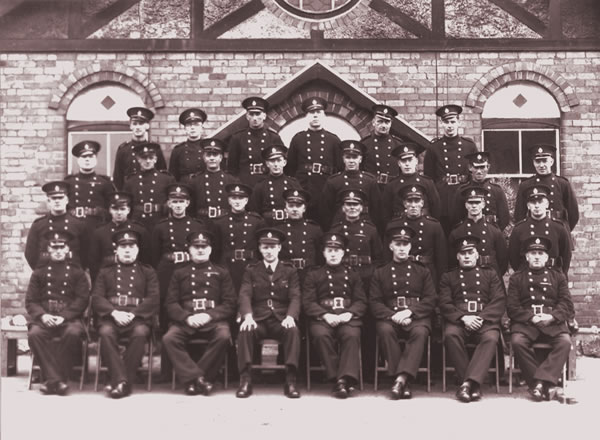
1947 Burton Fire Brigade
Back Row: Bill Haywood, Sidney Cliffe, Tom Bivens, Harry Appleby, JOe Chamberlain, Harry Porter
Third Row: George Ryder, T02, Bill Oakley, T04, Bill Binley, Alf Crampton, Reg Baldwin, T08
Second Row: Bill Gill, Arthur Beech, S03, S04, Les Wood, S06, George Lowe, S08, Fred Thorpe
Front Row: Fred Stimpson, George Roden, Charlie Dyche, Charlie Elliott, Fred Carnwell, Dick Edwards, George Bentley, John Dyche
Fire Brigade – Call of Duty

At 5:15pm on the Saturday afternoon of 1st November 1924, Burton Fire Brigade was called to assist the Bass and Allsops brigades at a large fire at the English Grains Warehouse in Derby Road. The warehouse was packed full of highly flammable dried Barley grain. After a few hours, the blaze was almost under control when an increase in wind from a changed direction fanned it back to life, re-igniting areas that had already been extinguished. The occasional crash could be heard as internal walls collapsed. Two firemen, William Hamp and Deputy Superintendent John Bennett were working off the flat roof of an adjacent building. John Bennett noticed that the nearby wall was starting to collapse, caused by the swelling og the grain due to being soaked in water. He shouted to his comrade warning that they should flee but John was struck by falling debris. A heavy coping stone and fallen across his legs.

William and other colleagues return to frantically get him clear and apply a tourniquet to his right leg which was bleeding badly. He was rushed to Burton Infirmary where he was diagnosed as suffering from a severe compound fracture. The decision to amputate was deferred and he was presented with a bottle of champagne in hospital to celebrate. The celebration proved to be premature however; after the build up of toxins, his leg had to be amputated and he deteriorated, dying a few days later with his wife and son by his hospital bed.

John Bennett’s funeral procession started from his house in Park Street to the Weslyyan Chapel on the corner of Union Street and Station Street and from there to Stapenhill cemetry. Hundreds of people lined the route. The cortege has headed by both members of the police and fire brigade. The coffin was carried on a Corporation fire engine. On top were John’s helmet, fireman’s belt and axe. A Bass engine followed covered in wreaths and tributes.

John came to Burton from Warwickshire and had been in the town’s Fire Brigade for 37 years and risen to Deputy Superintendent. This was the first ever fatality in the history of Burton Fire Brigade. In commemoration, a brass plaque was provided and hung in the fire station. It was unveiled by Captain Mitchell by removing a Union Jack and may still be seen in the existing museum at New Street Fire Station.

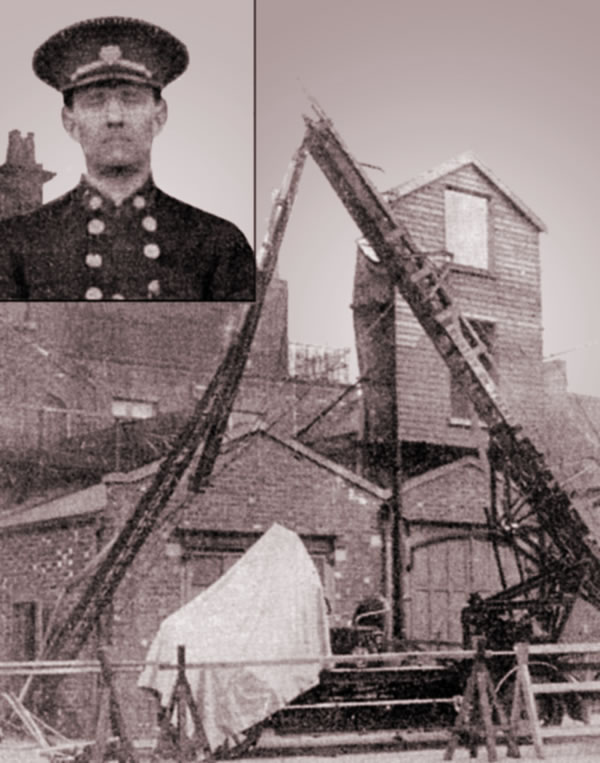
On the evening of February 8th 1832, Burton Fire Brigade carried out a practice drill. Thirty-five year old fireman, John Williams, who had been with the brigade for six years having joined from the Bass Brigade, was suspended by a rope and belt from the 60ft drill tower at the rear of the fire station in New Street.

The exercise was taking place in failing light, illuminated by search-lights. A number of successful similar exercises had been carried out in daylight.

Fireman Percy Clark was the turntable ladder operator for the exercise. It was one of the latest Merryweather motor turntables with a reach of 80ft. After a signal from John Richard Williams, he began to elevate the ladder away from the building. Unbeknown to Percy, one of the ladder’s extending wires had become snagged on a ledge of the building. Colleagues on the ground watched in horror as the ladder suddenly began to strain before giving way with a loud snap and the upper half plummeting to the ground with a crash, narrowly missing some of those observing. John fell to the ground from his position at the top of the tower to the concrete surface with the escape ladder falling on top of him. Dr Davidson appeared on the scene fairly quickly but pronounced John dead at the scene.

John was married with one child and had served in WWI as a transport driver stationed in France. His funeral took place St Paul’s church with a guard of honour being formed by his colleagues.

Fire Brigade – History Book

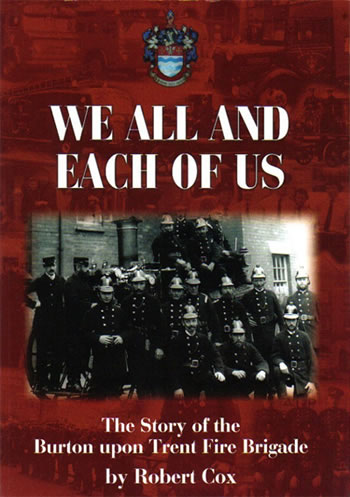
It is well beyond the scope of this website to provide a full and comprehensive history of the Burton upon Trent Fire Brigade; if however, you find these pages of interest, you would certainly enjoy the complete history in this excellent book available directly from the author.

The book is larger than A4 with over 180 pages of easy reading and many photographs.

“While being the scene of a “Great Fire” long before London’s headline grabbing effort, Burton upon Trent, with its undisputed title of “Brewing Capital of Britain” has also been able to boast of being in possession, throughout its years of prosperity, of one on the finest, if not the finest Fire Brigades in the land.

Formed more than 160 years ago, the Burton Brigade evolved from its purely voluntary roots to become a polished, professional, County Borough Brigade, right up to the cessation of local control in April 1974.

The recounting of the history of the Burton Brigade is not just a backward glance at time past, it is a walk through a period long gone.

All told with a Fire fighters detail and working knowledge, not to mention his observance of some of the more absurd aspects of the job. Illustrated throughout with page after page of evocative photographs.

The title came from a section of the first contract drawn up for the for Burton’s Firemen in 1854, which they all had to sign. Complete with an index of those who served, and a list of appliances that have seen service in the town.

To obtain a copyClick Here.

Public Library

The first Permanent Library, at a property owned by Mr. R. R. Bellamy in Bridge street, was opened in 1838. It was supported by a number of shareholders and just over 70 subscribers, and contained around 2,000 volumes. The shares were £10 each together with an annual subscription of 16 shillings. Subscribers who were not shareholders were allowed to join for a Guinea (21 shillings) a year subscription making it a fairly exclusive club.

The Burton Literary Society, High street, commenced in 1844 and had a reading room and a library of about 1,100 volumes mostly, but not exclusively, of a scientific nature. It was supported by a subscription of £1 per annum for first class, 8s 8d for second class, and 5 shillings per annum for third class. First class had the privilege of attending the reading room at all hours of the day, second class in the evenings only from 5:00 to 10:00pm, third class only had restricted access. The reading room also had London and provincial newspapers available together with most of the popular periodicals of the day. The Secretary and Librarian was Mr S. Simnett.

The Young Men’s Christian Association (YMCA) in Guild street, established around 1846, introduced a reading room, and library containing about 1,400 volumes. Mr. John W. Lomas was Secretary. In 1867 the (Church of England) Young Men’s Christian Association was transformed into the Mechanics’ Institute. By 1868 it had a reading room and a library of 4,000 books, and by 1871 it had been moved to premises in Station Street.

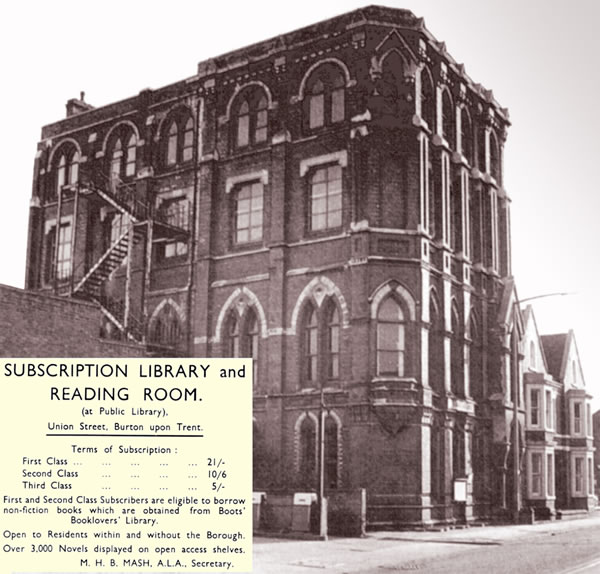
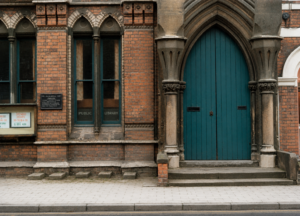
In 1876, the Mechanics’ Institute and the Burton Literary Society were amalgamated as the Burton Institute. This moved to new premises in Union Street in 1879. A very tall in its day, narrow building of four bays designed in Italian Gothic style, by Reginald Churchill of Burton as seen above. The institute occupied the ground floor with a library of now nearly 8,000 volumes and a reading room; the second floor was occupied by the School of Art and part of the third floor by the School of Science.

One of the features that sticks in my mind was the impressive green entrance doors.

The institute grew from 650 members in 1888 to 966 in 1896, when it was dissolved and its premises were acquired by Burton Municipal Corporation for use as Burton’s first Free Library, available to everyone. By this time, the collection had grown to 19,000 volumes together with an additional reference only section of 1,700 books.

Part of the building and 3,000 books, largely technical, was reserved as a subscription library. This had three levels of membership; first class at 21 shillings, second class at 10s 6d and third class at 5 shillings for an annual subscription, the different classes of subscription again being used to determine what hours of access were permitted.

In 1902, the Borough Librarian had salary of £120 plus an additional £45 for his additional duty of Secretary for both the Schools of Art and Design. If that wasn’t enough, he was also absent for some hours to fulfil his other duty as Museum Curator just up the road on the corner of Guild Street. At this time, the library was investing something like £50 (£8000 in 2026) a year on new books.

Aside from the main Union Street library, due to lack of space, branch reading rooms for newspapers were established at Uxbridge Street and Victoria Road schools which were open in the evening from 6:00 – 9:30pm.

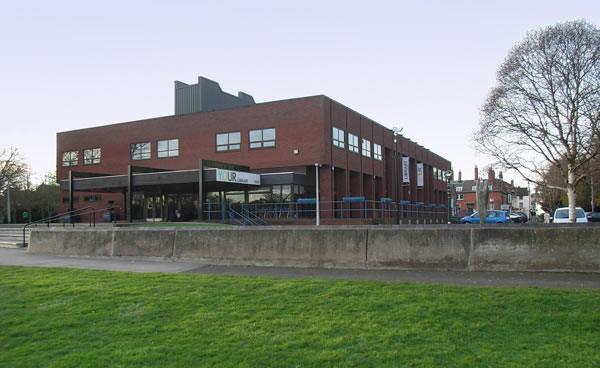
Towards the end of its time, the Union Street library was hopelessly inadequate and the later librarian, Kenneth Stanesby spent most of his energy leading campaigns for a replacement library (added to his duty of ejecting schoolboys from playing in the lift which was a popular free entertainment of the time). The new Burton library was finally opened in 1976 at Riverside, off High Street on the redundant Bass Maltings site. The Union Street building was unceremoniously demolished in 1977.