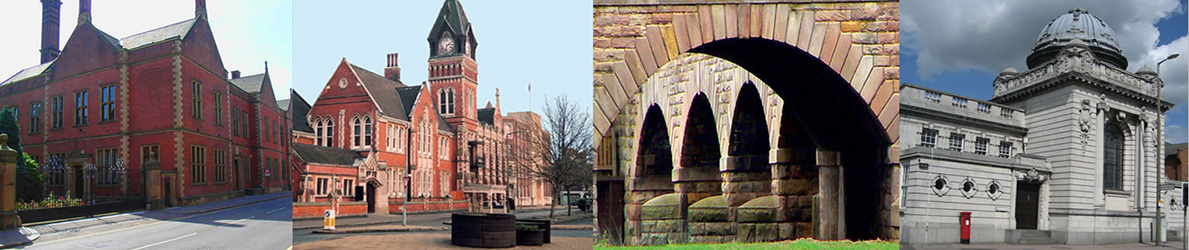
Bretby Hall is an historic Gothic-style country house that evolved from a medieval manor and castle into prominent seat for the Earls of Chesterfield, a hospital, and finally private luxury apartments.
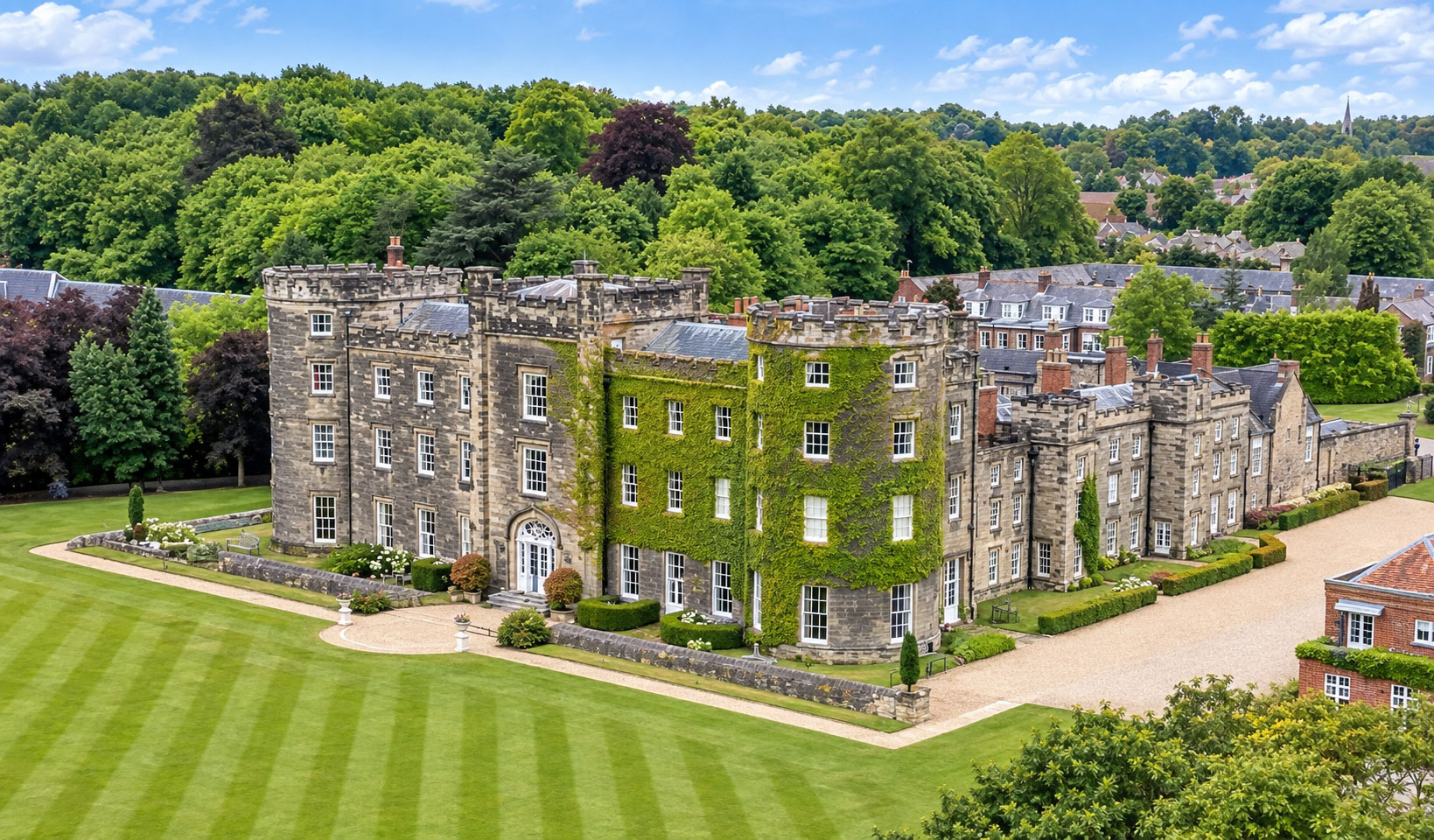
The manor of Bretby (Bretebi) is recorded in the 1086 Domesday book.
Around 1209, the land was granted to Stephen de Segrave by Ranulph de Blondeville, 4th Earl of Chester. He built an early mansion and church that later evolving as it expanded into Bretby Castle.
In 1585, the estate was purchased by the Stanhopes. Philip Stanhope, the 1st Earl of Chesterfield, received permission to enclose a park and built a new house nearby in the early 17th century, replacing the old castle.
‘Old’ Bretby Hall, during its relatively brief existence, was the second largest country house in Derbyshire after Chatsworth. Towards the end of the 16th century the Stanhopes of Shelford (Notts.) bought the estate and in 1610 Philip, 1st Lord Stanhope (in 1628 created 1st Earl of Chesterfield) obtained Royal Consent to enclose land to form a park. It was probably at this stage that an old castle was pulled down, and no doubt any usable stone re-cycled into the structure of a new house he began not long afterwards, the building of which occupied him until the 1630s.
In 1628, his grandson Philip was made Earl of Chesterfield by King Charles I of England which meant that Bretby Hall became the ancestral home of the Earls of Chesterfield. The first Bretby Hall was built in 1630 after Thomas Stanhope bought the manor of Bretby from the Stephen de Segrave family,
The 2nd Earl of Chesterfield developed lavish formal gardens which were much celebrated famous in the late 17th century and even compared with the gardens at Versailles. From all of the available materials, below is my best interpretation of both the Old Hall and Gardens.
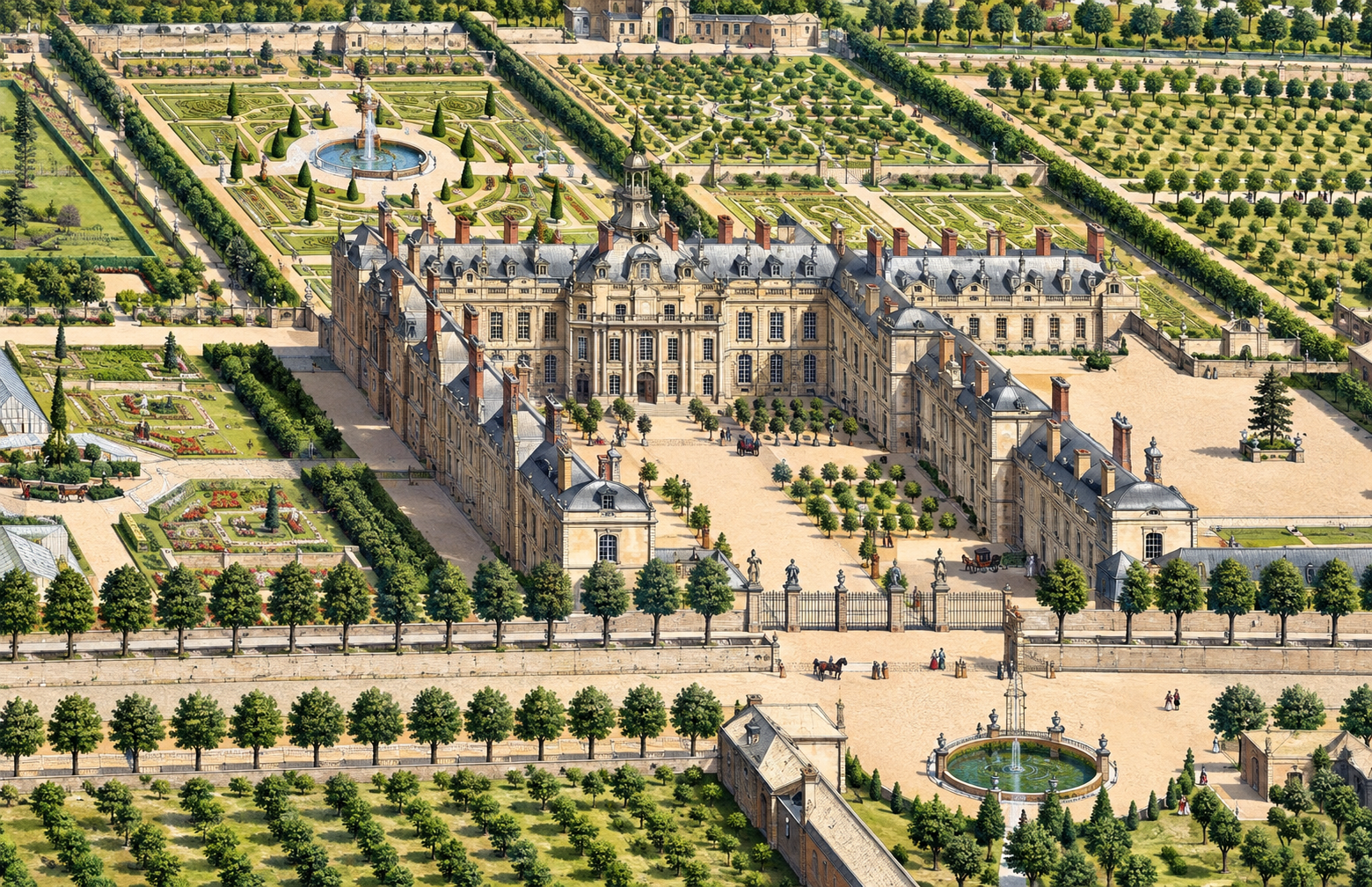
This magnificent ensemble fell into disuse by the family under the famous 4th Earl (who twice refused a dukedom), and his successor, Philip Stanhope, the 5th Earl of Chesterfield, was persuaded to allow it to be demolished between 1775-1781, by a mendacious resident agent, who greatly enriched himself through the sale of the materials.
The 5th Earl later had regrets and commissioned a grand new castellated Gothic mansion designed by architects Sir Jeffry Wyatt and W. Martin. Building commenced on a site several hundred yards further south of the previous hall. Unfortunately, the building project proved to be too ambitious and was a long way from being finished when the 5th Earl died in 1815 so he never got to see the completed works.
All that remains of the original hall are some of the architecturally workaday outbuildings and service accommodation. A new brick house was put up on the site of the old one to accommodate the wily agent’s successor, but this was swallowed up in the present Bretby estate in the early 19th century.
The sixth Earl, known as the ‘Racing Earl’, loved cricket and shooting, so he built a cricket pitch and raised game birds.
Following the death of the seventh Earl in 1871, the Estate passed to his widowed mother, Anne Elizabeth, Dowager Countess of Chesterfield, who was a close friend of Benjamin Disraeli who frequently visited the estate.
On the death of the Countess, her estates devolved upon Lord Porchester, the eldest son of her daughter, Evelyn (died 1875), who had married Henry Herbert, 4th Earl of Carnarvon in 1861.
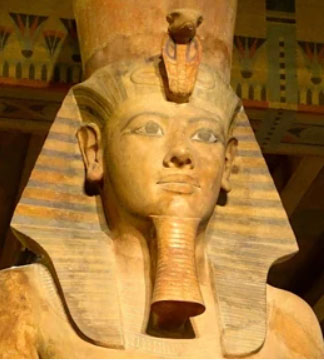
George Herbert, the 5th Earl of Carnarvon, the famous Egyptologist for whom Howard Carter discovered the tomb of Tutankhamun, inherited the property. He commenced breaking up the Bretby estate during World War I
In 1920, obsessed with his ongoing search for the tomb of Tutankhamen in Egypt, he sold the main estate to John Downing Wragg, a Swadlincote industrialist, to further fund Howard Carter’s legendary archaeological expedition in Egypt.
The Carnarvon’s never actually lived at Bretby Hall, preferring their home at Highclere Castle, near Newbury, Berkshire made famous by ‘Downton Abbey’. They did make regular visits, however, particularly for shooting.
Derbyshire County Council purchased the Hall in 1926. It operated as a children’s sanatorium and later as a major orthopaedic hospital until closing on February 28, 1997 to be developed into luxury apartments.