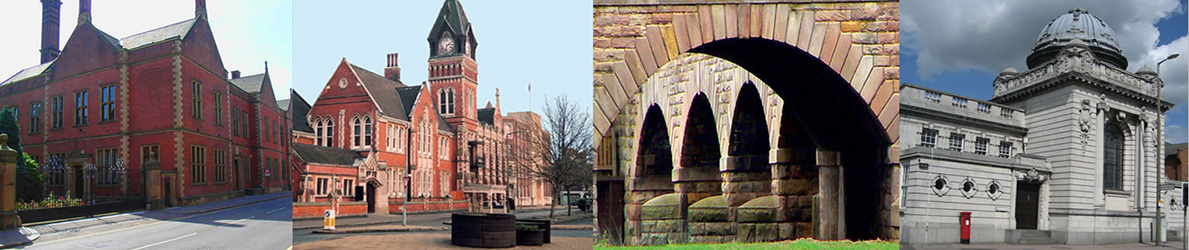
The impressive stone sculpture above the main market hall entrance depicts the scene of King John accompanied by two knights as he hands over a scroll to confirm the rights and liberties to the kneeling abbot, who is accompanied by two monks and a figure bearing a bishop’s crozier.
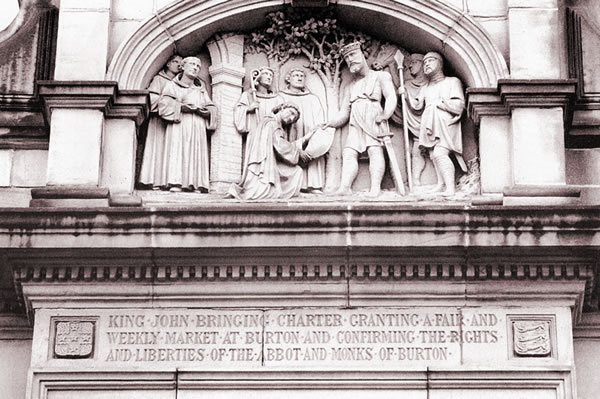
The inscription beneath is flanked by the coat of arms of King John on the right and those of Burton Abbey on the left. It reads…
KING JOHN BRINGING CHARTER GRANTING A FAIR AND
WEEKLY MARKET AT BURTON AND CONFIRMING THE RIGHTS
AND LIBERTIES OF THE ABBOT AND MONKS OF BURTON
There was also some debate about the type of lettering to be used for the inscription: there was a suggestion that it should be in Gothic script, but the architect felt this would be inappropriate to the Renaissance style of the building. At the time, there was also some dispute over that actual date with different sources claiming 1200, 1203 and 1204 so the date was not included as originally intended.
The carving was still uncompleted in August, with the sculptor, John Roddis arguing that he should receive an additional £60 for the work because the stone was much harder than the Coxbench stone originally agreed upon so took longer than planned.
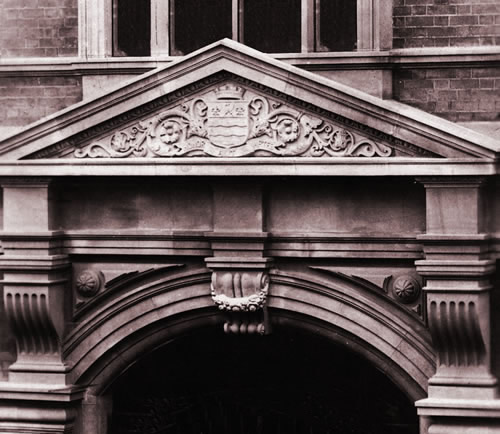
Above the doorway set into a triangular entrance pediment is a relief of the Burton upon Trent coat of arms, a shield, crest and motto. The shield is divided into lower and upper sections, with the lower one depicting six wavy lines across the shield that symbolise the Rivers Trent and Dove. The upper segment of the shield bears a spread-eagle flanked by two fleur-de-lys taken from the arms of the Paget family. The crest is a castellated crown, a symbol of civic government. The motto reads ‘HONOR ALIT ARTES’.
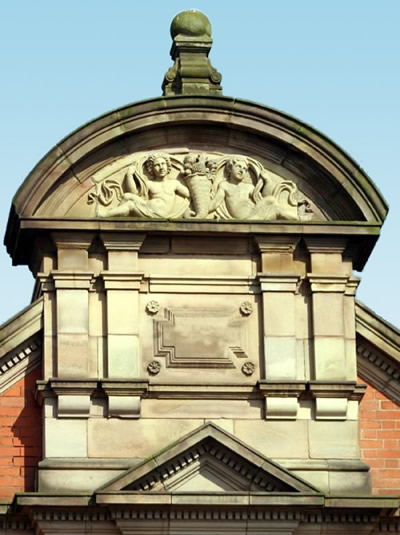
The upper facades on each wing of the building have semi-circular pediments each containing a pair of seated male figures holding fruit, a reference to the market products.
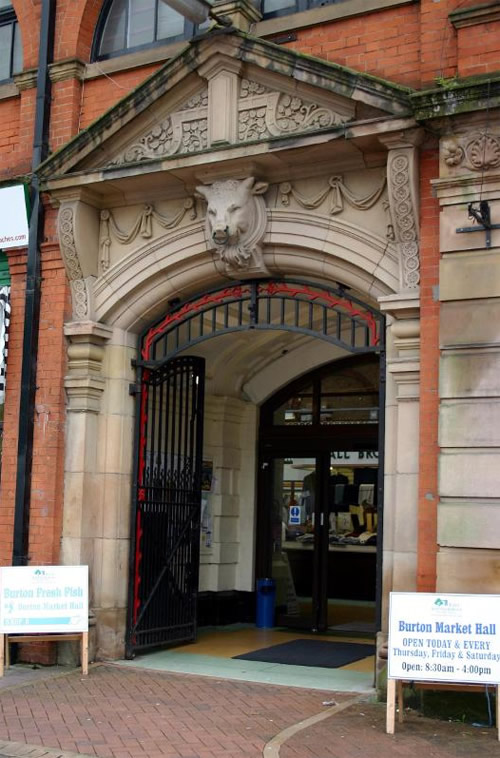
The side entrance of the market building has a sculptural relief of a bull’s head, complete with a ring through its nose. There are also smaller decorative features of garlands and faces at various points on the building.