Menu Close

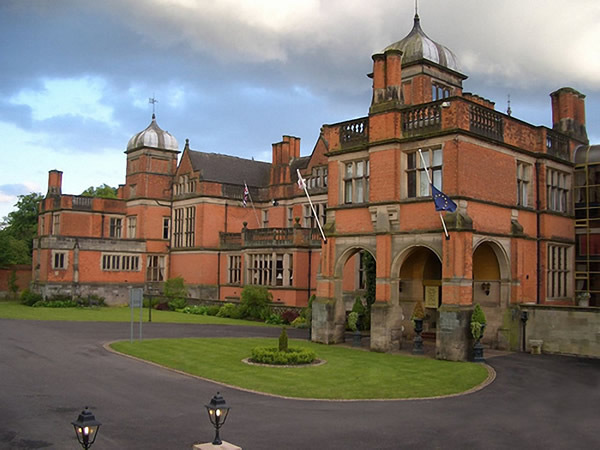
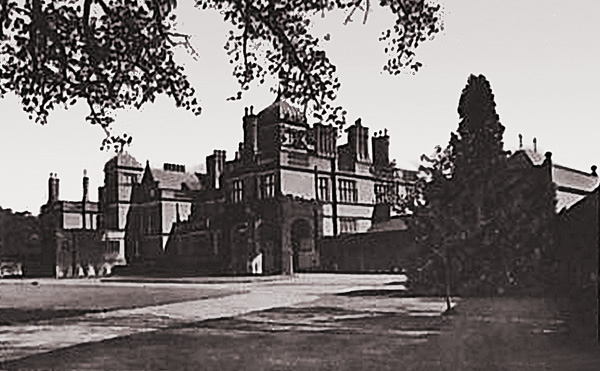
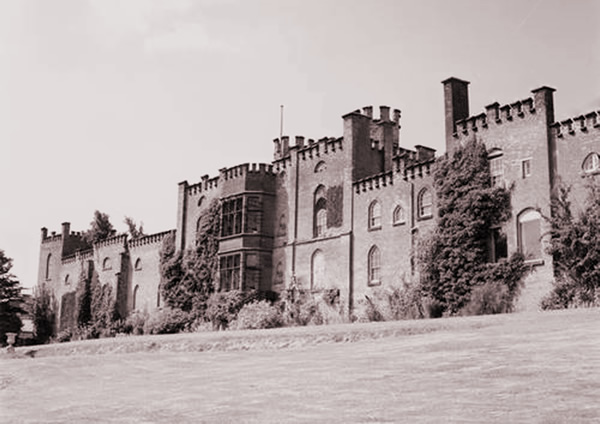
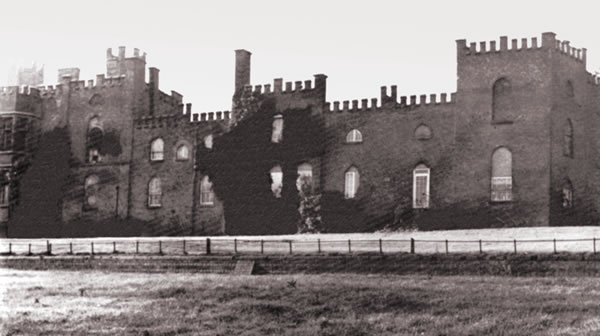
Drakelowe Hall after the Gresleys

DRAKELOW AFTER THE GRESLEYS
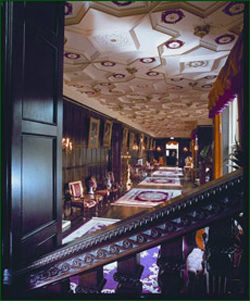
The contents of Drakelow Hall were sold in July, 1931, and with the consent of the auctioneers I had the privilege as president-elect of Burton Natural History and Archaeological Society, of taking a party of members around the Hall before the sale took place.

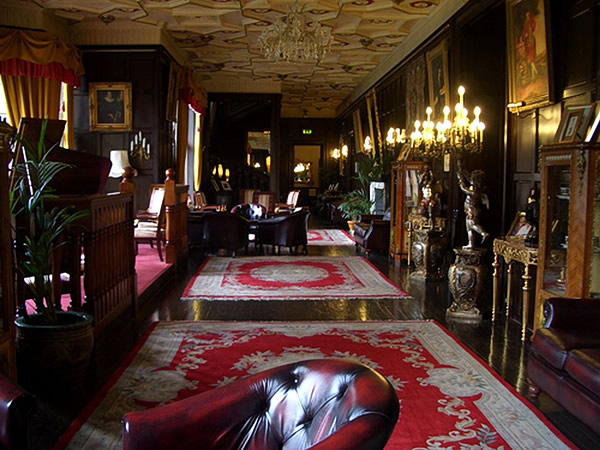
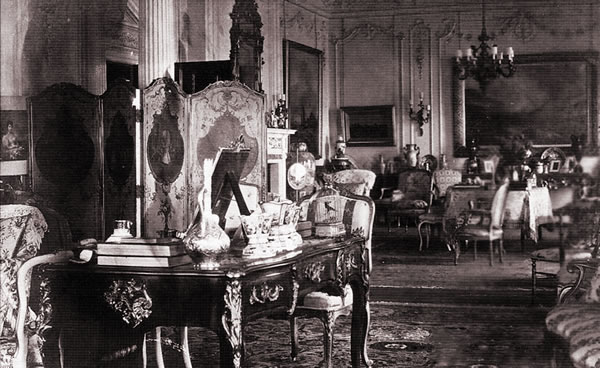
There were many panelled rooms with antique furniture, china, etc., and also a tapestry room. Five oaken beds dated from the reigns of Queen Elizabeth I and James I, while two early 17th century ebony beds were probably brought back from Spain by Walsingham Gresley (1585-1633) who was attached to the British Embassy in Madrid.

There were several pieces of armour and various weapons and a notable exhibit was a contemporary model of a 74-gun ship of the early 18th century, possibly the model of a ship in which Sir Nigel (sixth baronet) served. A valued heirloom was the Gresley Jewel, a fine specimen of the 16th century work in the form of a pendant, presented by Elizabeth I to Catherine Sutton, daughter of Lord Dudley, on the occasion of her marriage to Sir George Gresley, K.B.

There were many family portraits from the 16th century onwards as well as numerous other paintings. Many of these portraits are reproduced in the de-luxe edition of ‘The Gresleys of Drakelow’, by F.C. Madan (1899).

Following the sale of the contents of the Hall, an attempt was made to turn the Hall and park into a country club under the auspices of the Automobile Racing Association. It was proposed to open a “junior” road circuit of about three miles in the park by Whitsuntide, 1932, a further eight-mile circuit to be established later for motor racing.

The Hall was to become an A.R.A. country club house, the existing gardens and woodlands to be preserved in their original state. Tennis courts, a bowling green and a bathing pool were to be constructed while there would be boating and fishing facilities on a two and a half mile stretch of the River Trent with rights over a further one and a half miles of the river, giving a total stretch almost equal in length to the Boat Race course, where races and regattas could be held.

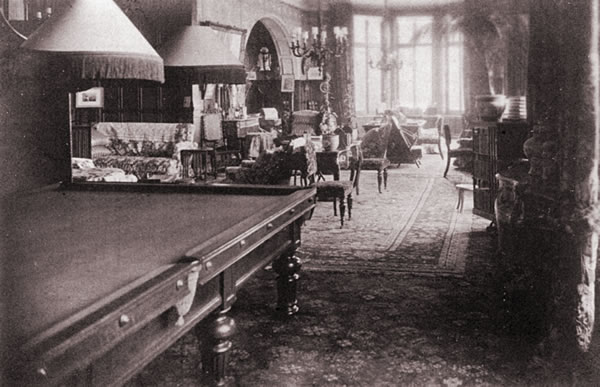
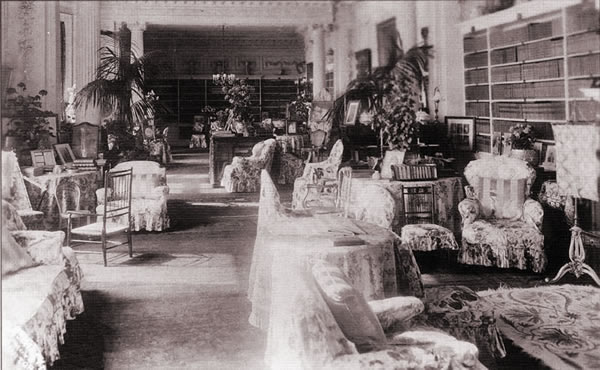
The mansion was to be altered to provide dining rooms, lounges, billiards rooms, card rooms, writing and reading rooms, a cocktail and other bars, tea rooms, dressing rooms, a gymnasium with skilled attendants of both sexes, and hairdressing salons.

There would be residential facilities, for there were already 14 bedrooms and nine bathrooms, in addition to those reserved for the staff.

Some of the stabling was to be retained for use as a riding school and two coach houses would be turned into squash racquet courts. The construction of an indoor lawn tennis court in the stable yard was under consideration and it was proposed to lay out an 18 hole golf course in the park.

For all these facilities ordinary membership would cost £5 5s 0d. p.a., while life membership could be purchased for £52 10s 0d An associate membership however, would cost only £1 1s (one guinea) p.a.

The official opening of the club was arranged to take place on Whit Monday (May 16th) 1932, and the attractions included a motor cycle dirt-track of 1,000 yards on which ‘Cannon Ball’ Baker would set up the first record. A motor cycle gymkhana was to be arranged by the Burton Motor Cycle and Light Car Club, and there were equestrain competitions and a boxing display.

The ground and Hall were open to the public on payment of 1s 3d but Whit Monday, 1932, proved to be a very wet day. The attendance was poor and the scheme proved a failure, the “Country Club Company” being evicted from the premises on 16th July, 1932.

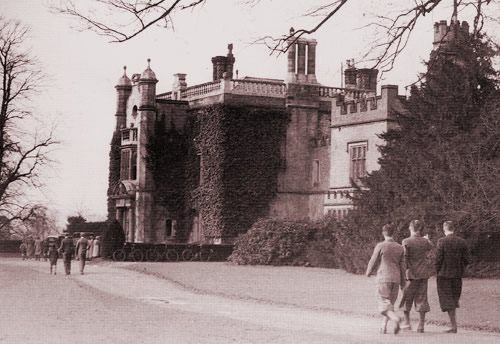
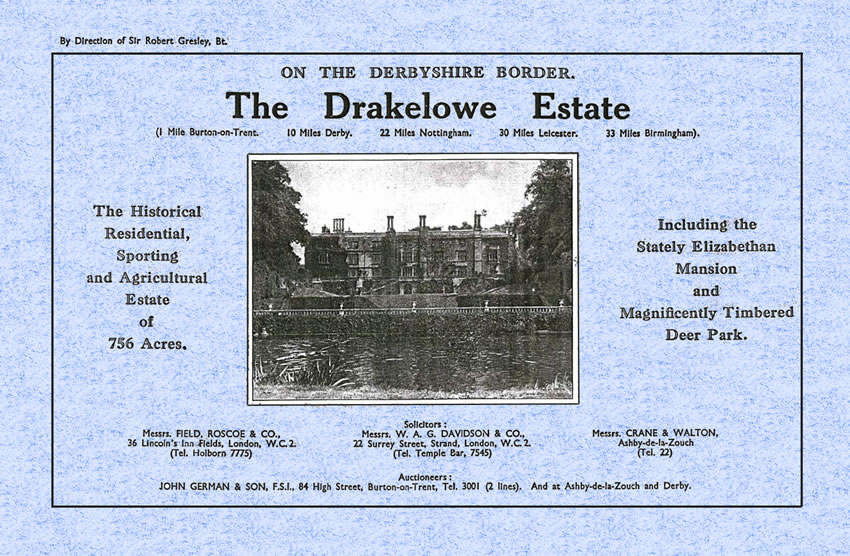
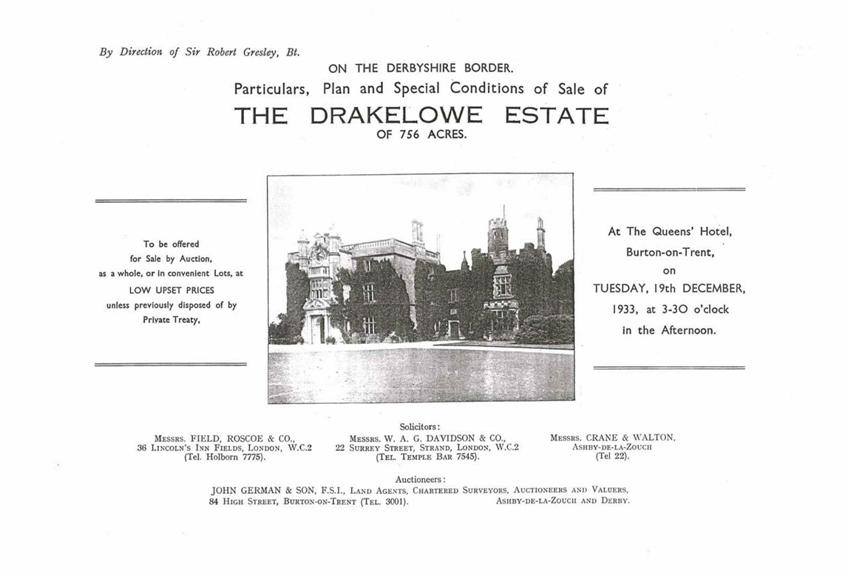
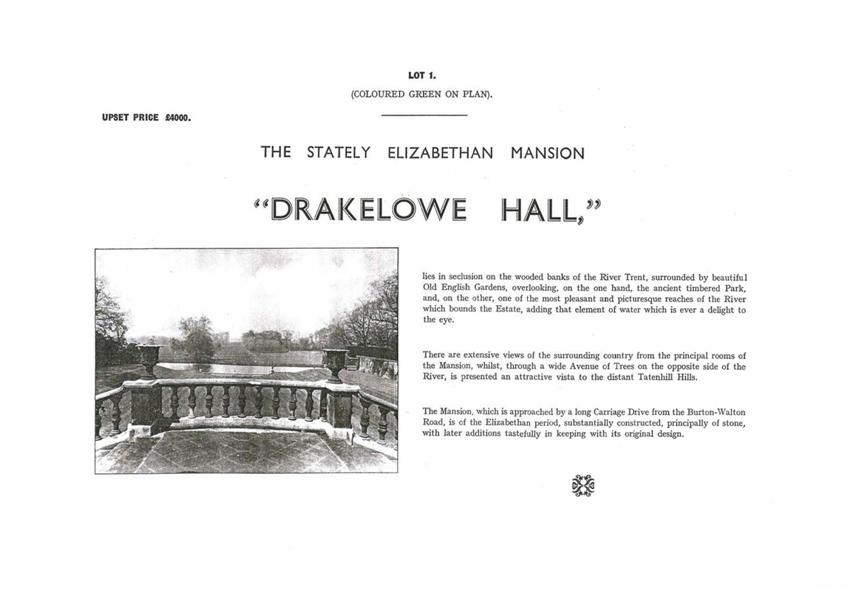
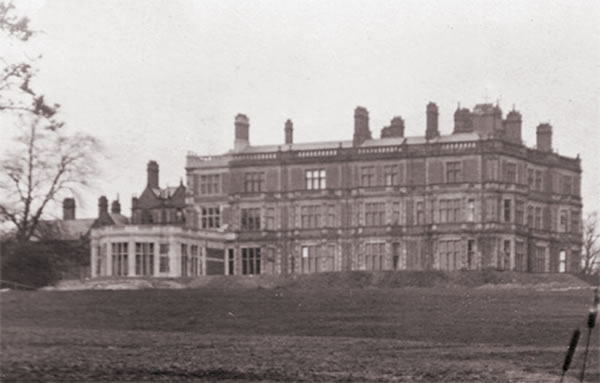
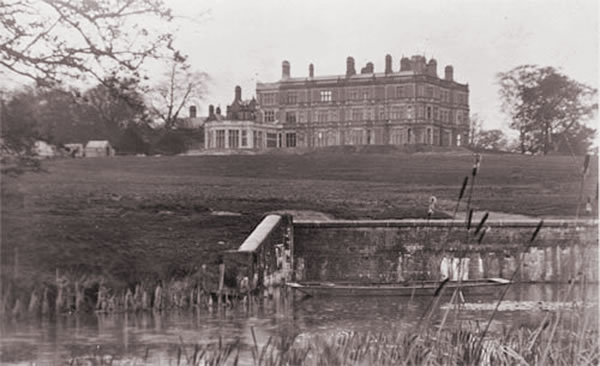
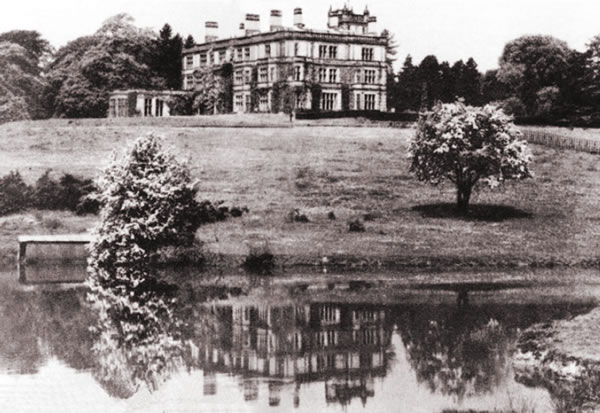
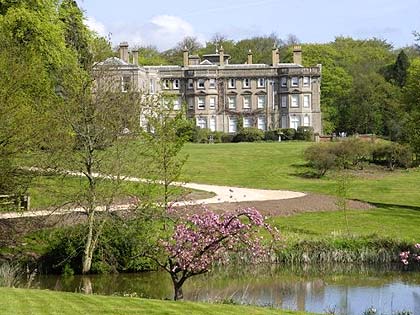
The outlying portions of the Drakelow Estate which covered 707 acres, were sold on 19th January, 1933, and the remainder, including the “stately Elizabethan Mansion and magnificently timbered deer park” was offered for sale at the Queen’s Hotel on December 19th, 1933. The auctioneers stated that the Hall, though mainly Elizabethan in character, had been altered and restored at different periods but never actually rebuilt.

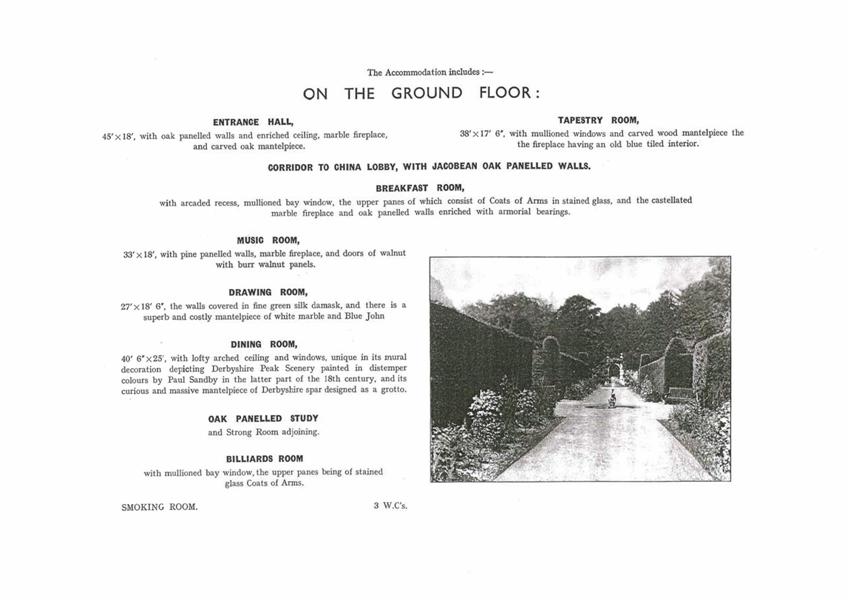
The accommodation on the ground floor included an entrance hall, 45 ft. by 18ft., with oakpanelled walls and a marble fire place, a tapestry room, 38ft. by 17ft. 6ins., with mullioned window and a corridor to a china lobby with Jacobean oak panelled walls. The windows of the breakfast room contained coats of arms in stained glass and the oak panelled walls are enriched with armorial bearings. The music room, 32ft. by 18ft., had pine panelled walls and doors of walnut with walnut burr panels. The walls of the drawing room were covered with fine green silk damask and there was a superb mantel piece of white marble and Blue John. There was also an oak panelled study and billiards room with mullioned bay windows containing glass coats of arms.

The most interesting feature of Drakelow Hall was undoubtedly the dining room known as the ‘Painted Room’. This was a room painted in the 18th century with a continuous landscape to create the illusion that the visitor was not in a room at all but outside, surrounded with picturesque scenery. A cornice was replaced by a coved ceiling which enabled the artist to run his trees up into an open sky, and real trellis work was set around the room and its apertures while the fireplace was disguised as a grotto.

The paintings represented scenery in the Peak district and were attributed to Pauly Sandby. Anna Seward, the ‘Swan of Lichfield’, who visited the Hall in 1794, thus described her impressions:

“Sir Nigel hath adorned one of his rooms with singular happiness. One side is painted with forest scenery whose majestic trees arch over the coved ceiling. The opposite side represents a Peak valley, while the front shows a prospect of more distant country. The chimney piece represents a grotto formed of spars, ores and shells. Read palings, breast high and painted green, are placed a few inches from the walls and increase the deception. In these are little wicket gates that half open, tempt the visitor to ascend the forest banks”.

It is pleasing to add that this room is now preserved in the Victoria and Albert Museum in London.

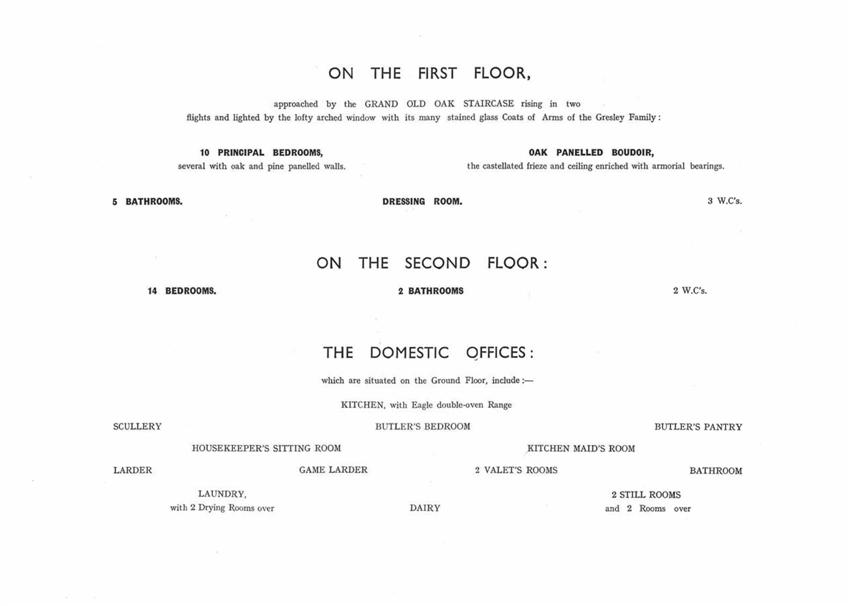
An old oak staircase rising in two flights and lit by a lofty arched window containing stained glass coats of arms of the Gresley family led to ten principal bedrooms, five bathrooms, a boudoir and dressing room, all of which were on the first floor. There were also 14 bedrooms and two bathrooms on the second floor.

The domestic offices on the ground floor included a large kitchen scullery, butler’s pantry, butler’s bedroom, housekeeper’s sitting room, kitchen maid’s room, two valets’ rooms, bathroom, larder, game larder, two still rooms, laundry and dairy.

The outbuildings included store rooms, game larders and brewhouse, while a detached block of stable buildings comprised three loose boxes, stabling for 21 horses, a saddle room and a heated garage, together with a gardener’s cottage.

The estate was purchased by Sir Albert Ball, of Nottingham, in conjunction with Messrs, Marshall Bros. (Timber Merchants) Limited, for £12,500.

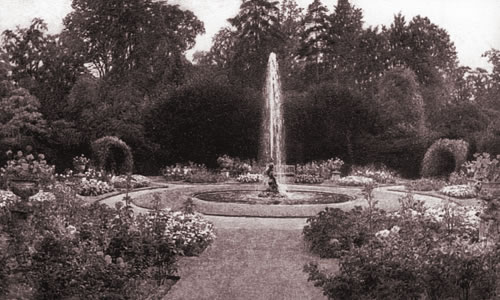
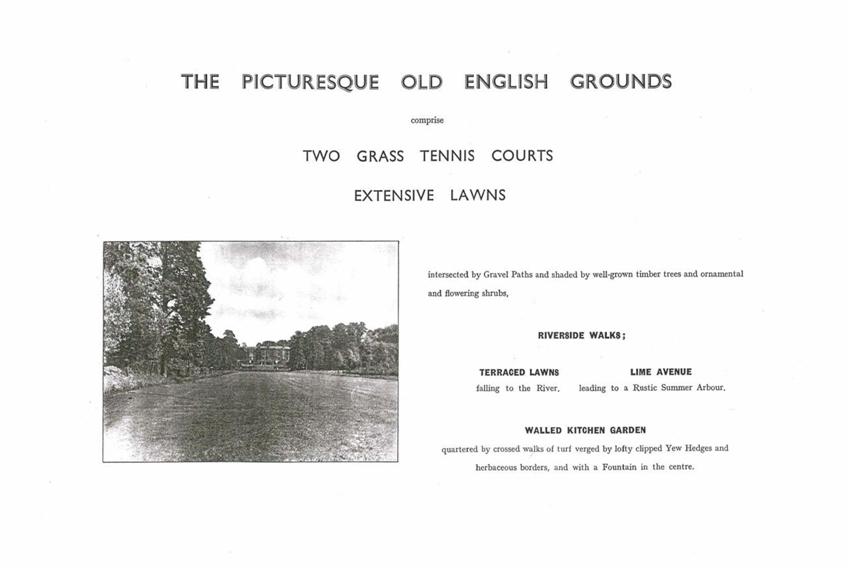
The extensive pleasure grounds adjoining the Hall were surrounded by a protective belt of trees and some of the hollies and yews were trimmed to a height of thirty feet. There were several separate small gardens and pleasaunces which were probably laid out in the 18th century.

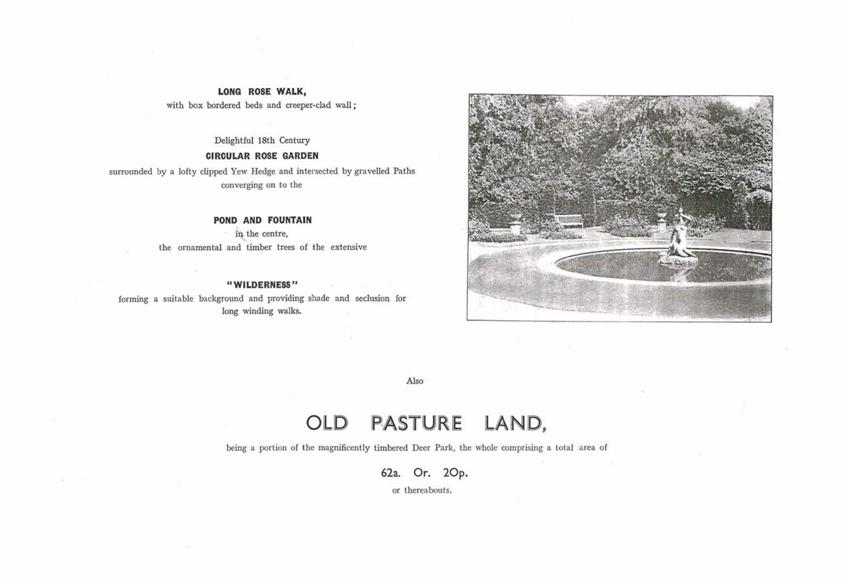
Of these the most notable was the round garden, in the middle of which was a circular stone edged basin with a central fountain in the form of a mermaid blowing water through a conch or shell. This old garden was improved by Sir Robert Gresley (eleventh baronet) who placed the fountain there. There were also several large stone vases filled with flowering plants.

In another garden, four wide grass walks converged upon a small stone basin also ornamented with a fountain. There was also a long box garden and a walled rose garden laid out in the reign of William III. The ‘temple’ at the end of the rose garden was built from the designs of Reginald Bloomfield, author of “The Formal Gardens of England”. Paintings of these gardens by Beatrice Parsons (1905) are still in existence. All the gardens were quite separate and at one time a staff of 30 gardeners was required for their maintenance.

In January, 1934, Drakelow Park and Warren Farm were purchased from Sir Albert Ball and Messrs. Marshall Bros, by Mr. C.F. Gothard of Bearwood House, Burton-on-Trent, who as a boy had been permitted by the Gresley family to ride in the park and fish the river Trent where it passed through the Drakelow estate of which he thus acquired pleasant memories.

The hall was carefully examined to see if any part of it could be modernised and made habitable, but acting upon expert advice it was decided that the mansion would have to be demolished and this was done.

Mr. Gothard also purchased separately the Barn Farm and the Grove Farm with outlying woods and other land, so that with his purchase of the park, Warren Farm and adjacent woodlands, almost the whole of the former Drakelow estate as it stood after the first World War passed into his possession.

Extensive stabling premises and other outbuildings forming the coach yard of the hall were left standing and part of this block, comprising mainly some of the harness rooms, was converted into a farm house by the new owner who was interested in farming, the preservation of wild life and also in game and wildfowl shooting. In course of time he hoped to take up farming on a larger scale, to build a small modern house near the site of the hall, and to beautify the banks of the river with flowering trees and shrubs. He farmed the whole of the park during the 1939-45 Second World War, but unfortunately the prospective development plans did not come to fruition.

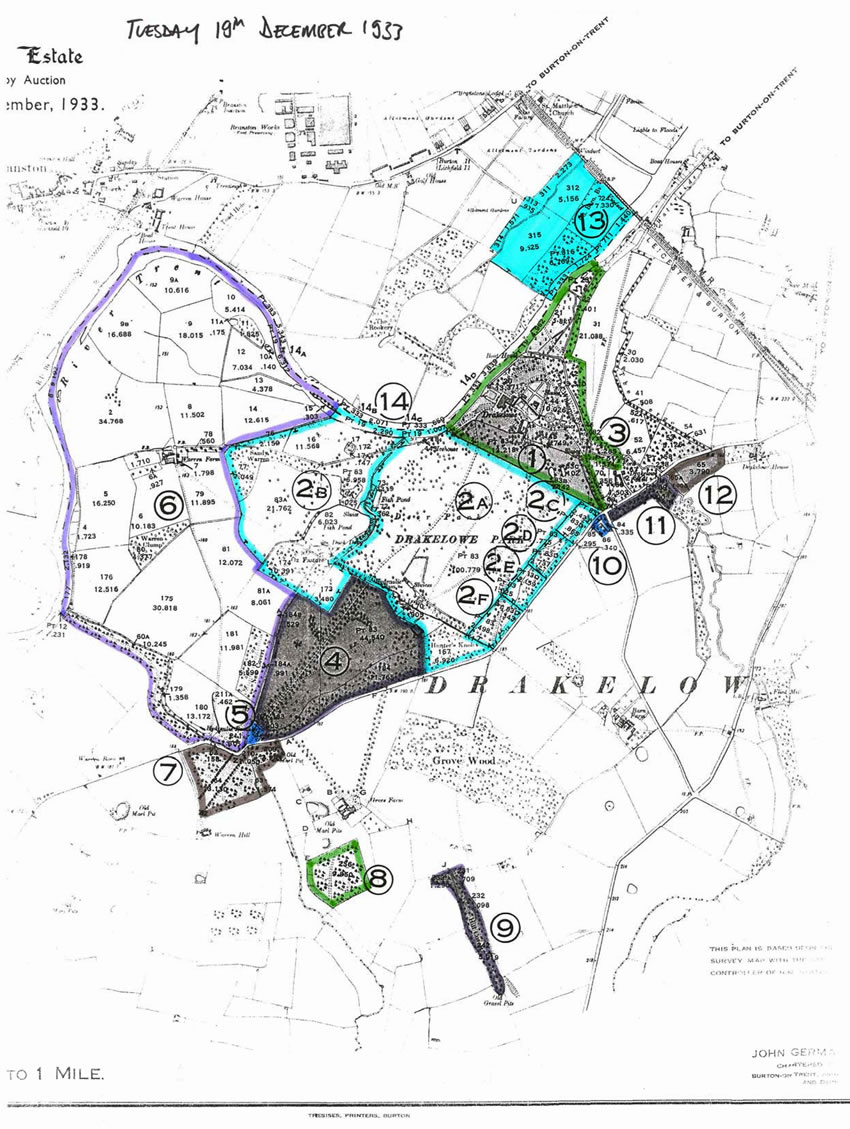
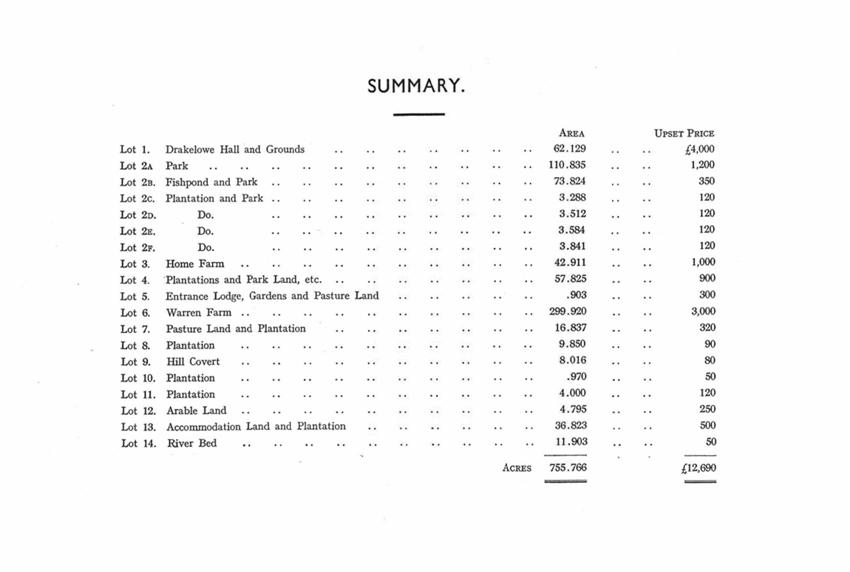
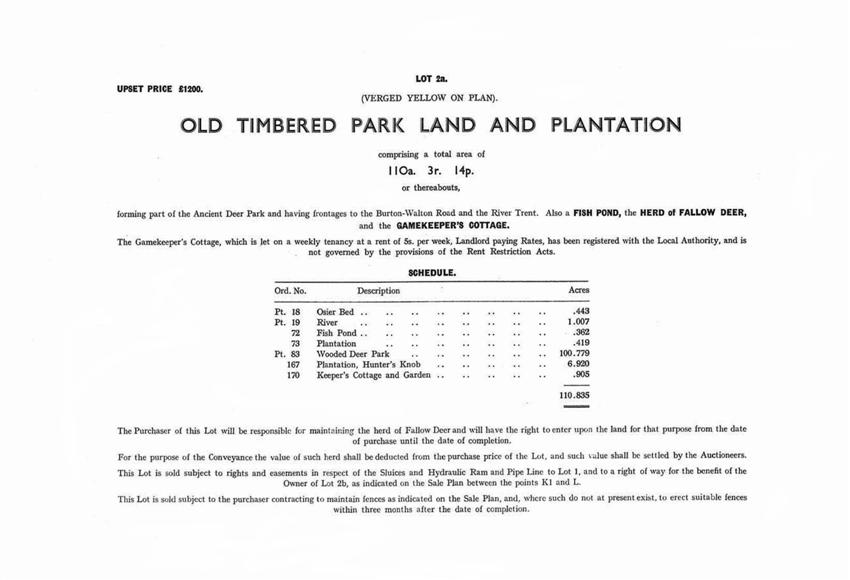
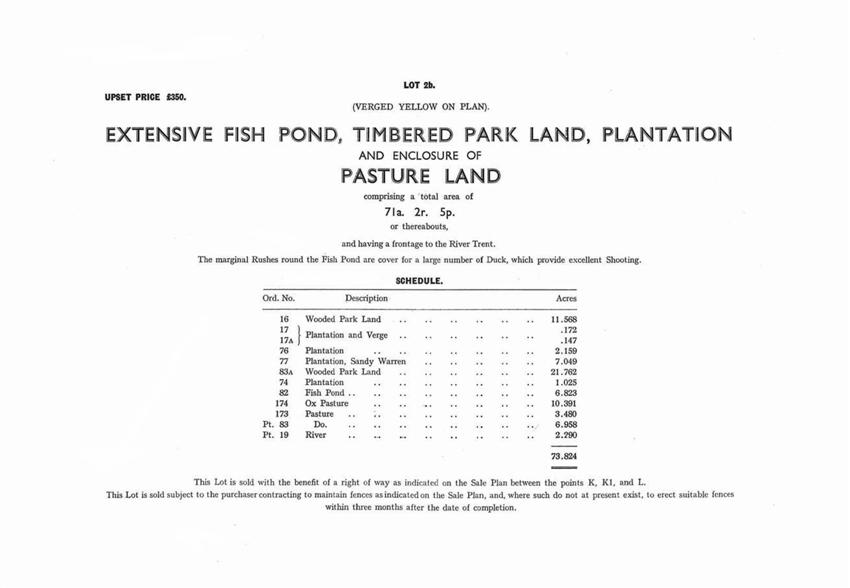
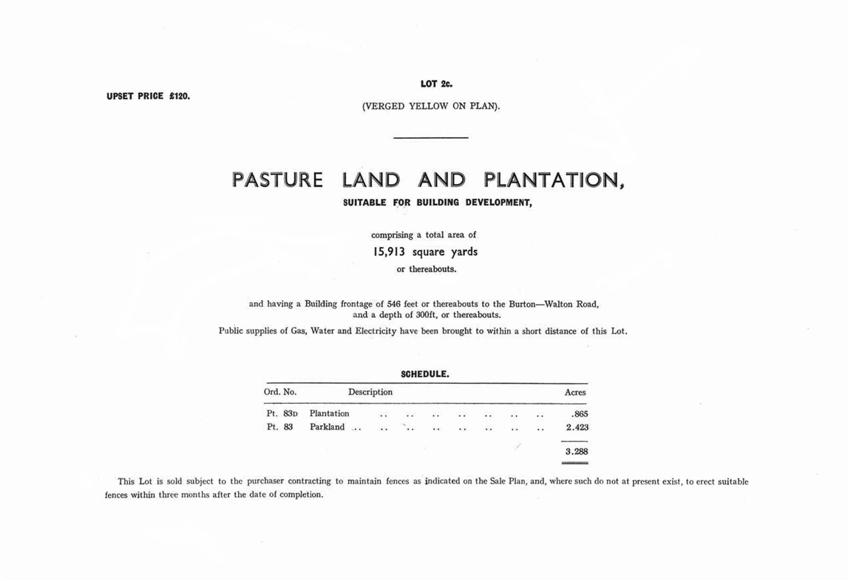
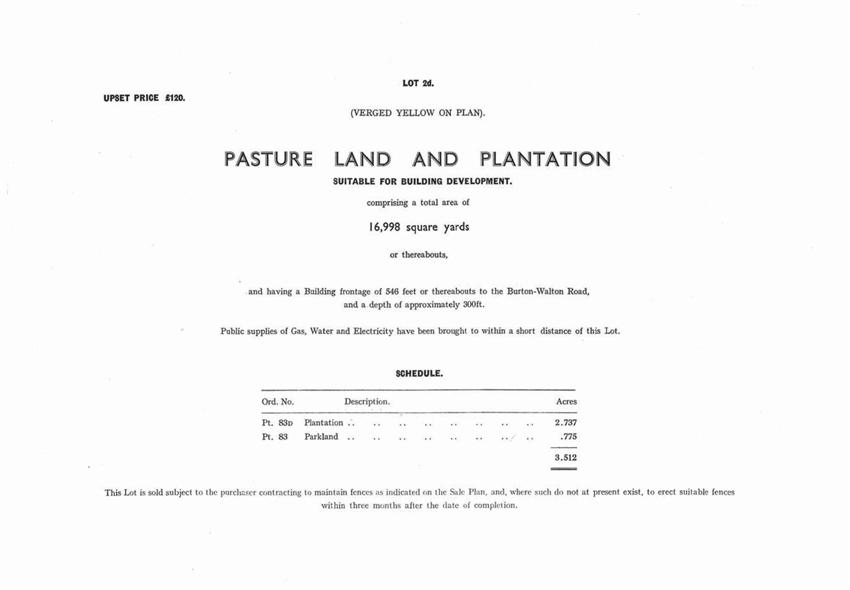
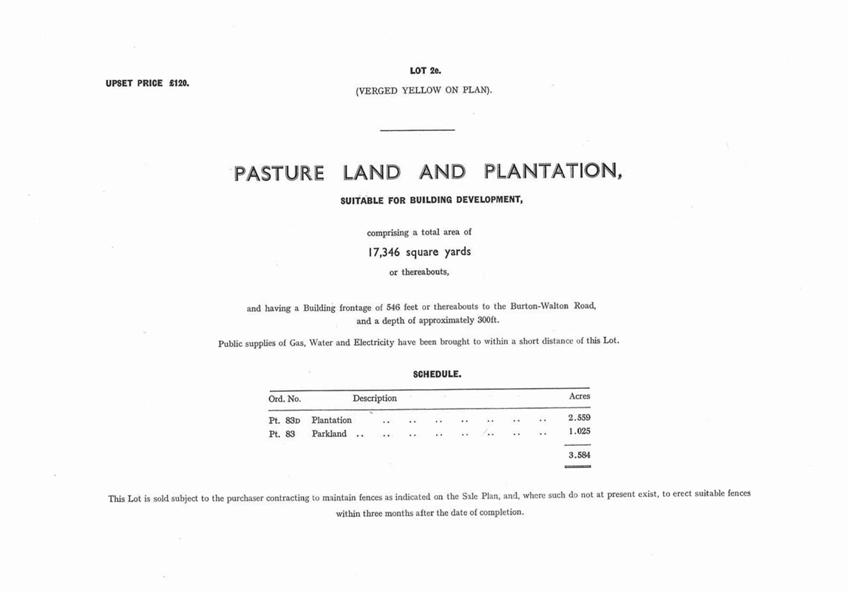
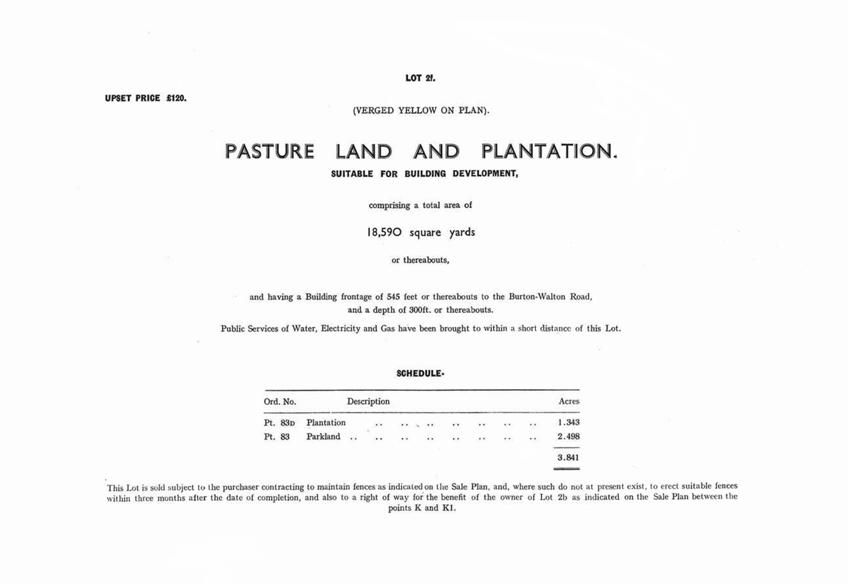
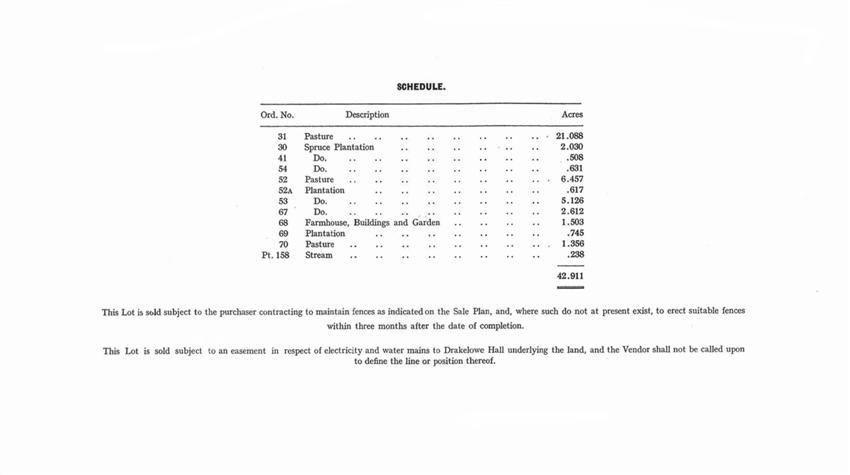
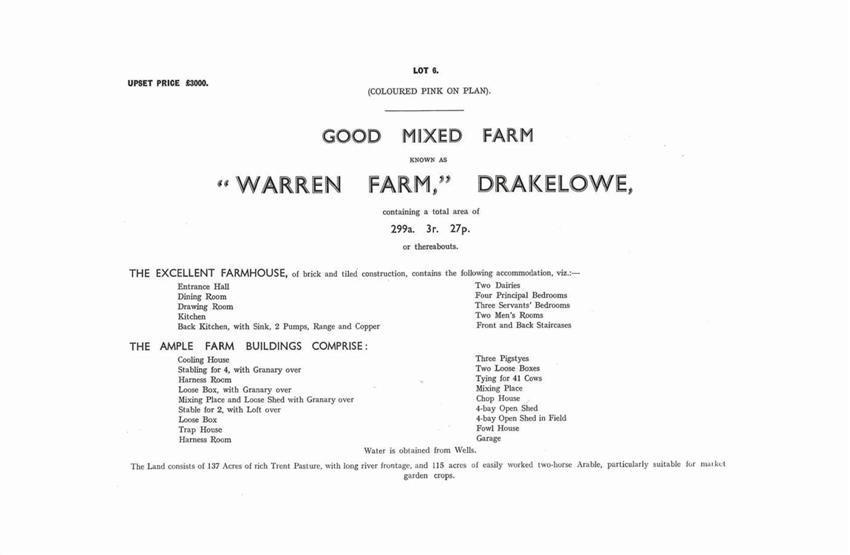
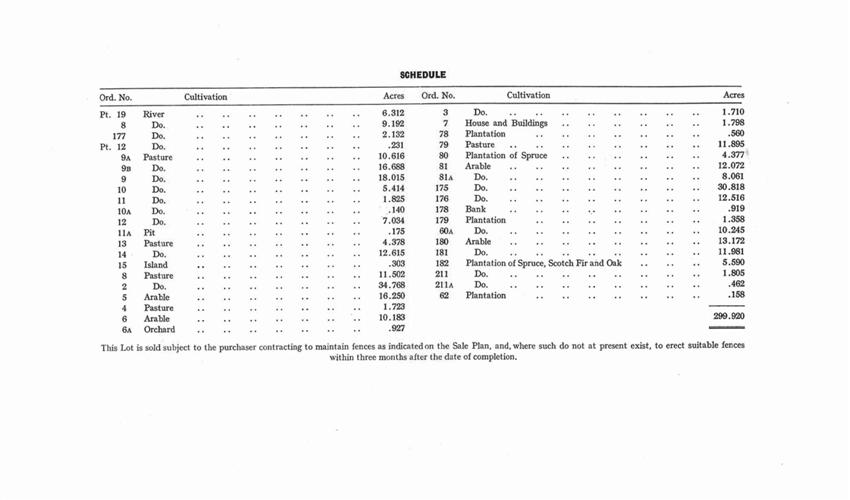
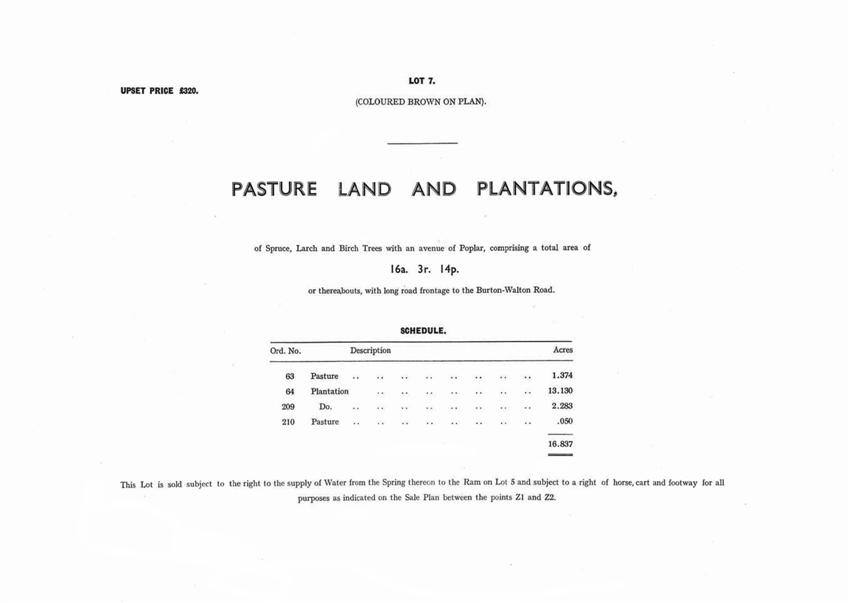
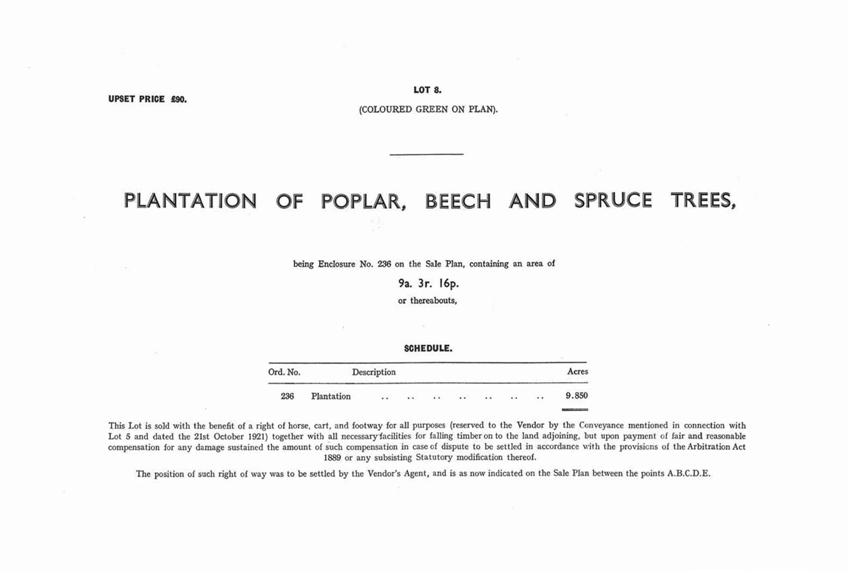
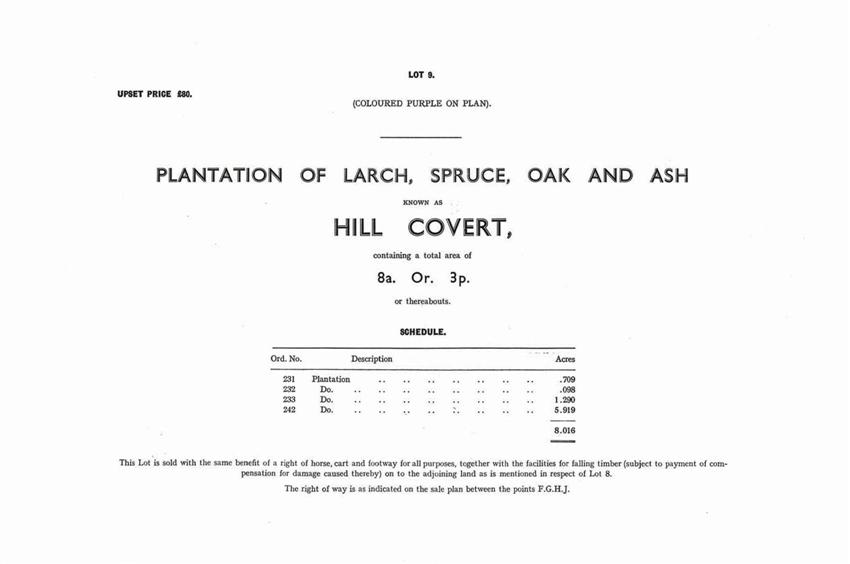
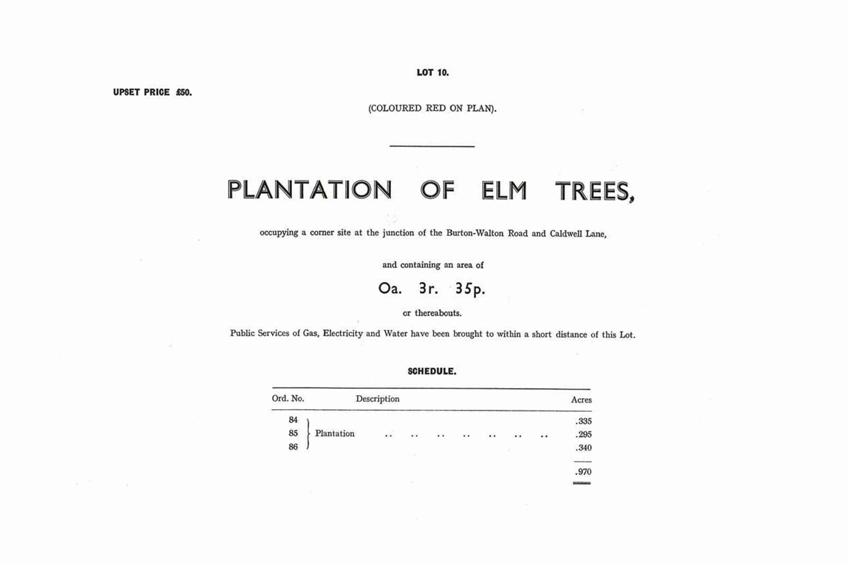
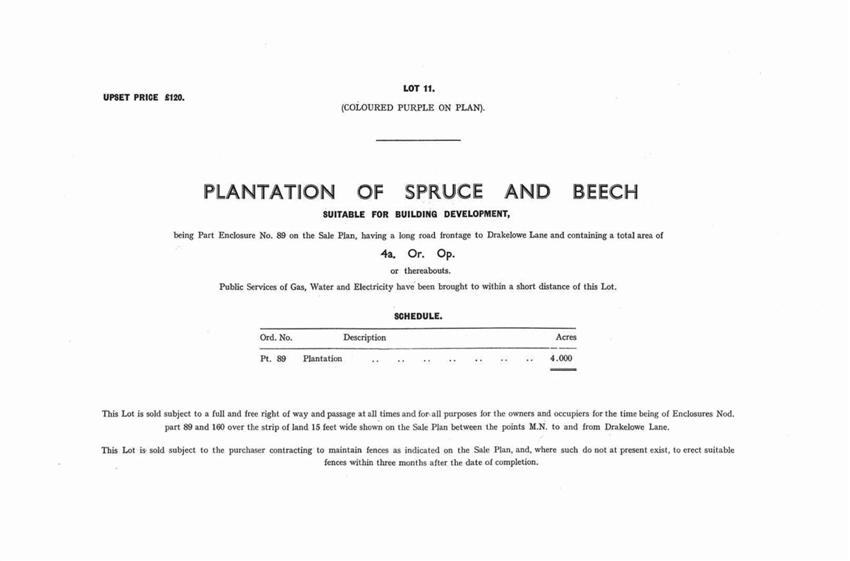
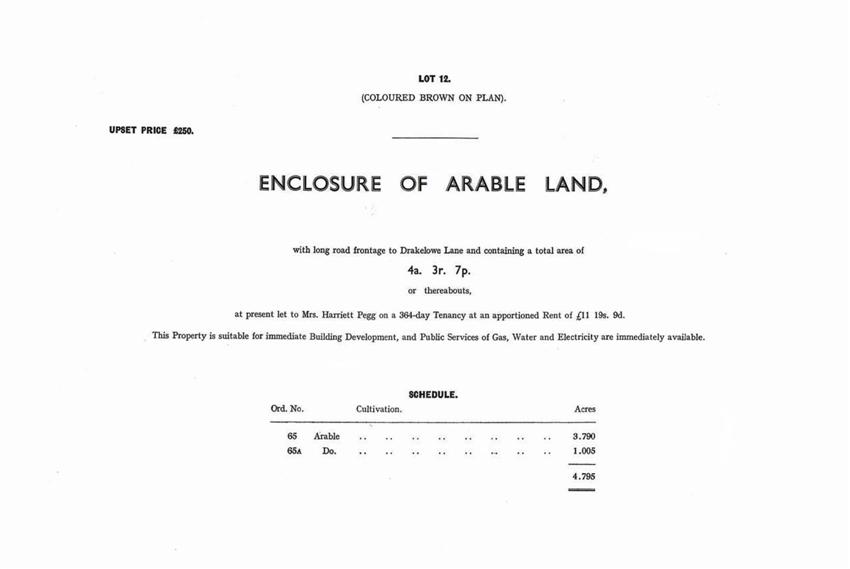
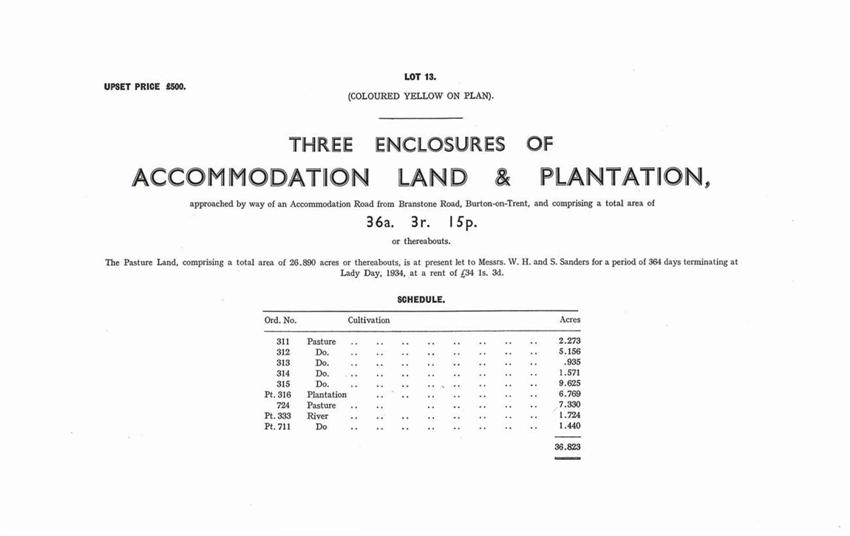
In 1933, there was an attempt to sell Drakelow Hall and its estates as a set of separate lots, the sales brochure of which can be seen in the ‘For Sale’ section, but the sale was unsuccessful. There followed, an unsuccessful attempt to turn it into an exclusive country club. Like many of Burton’s surrounding stately homes, it was demolished shortly afterwards.

Drakelow Park and Warren Farm were eventually acquired by the British Electricity Authority in 1950 to become the site of Drakelow Power Station.

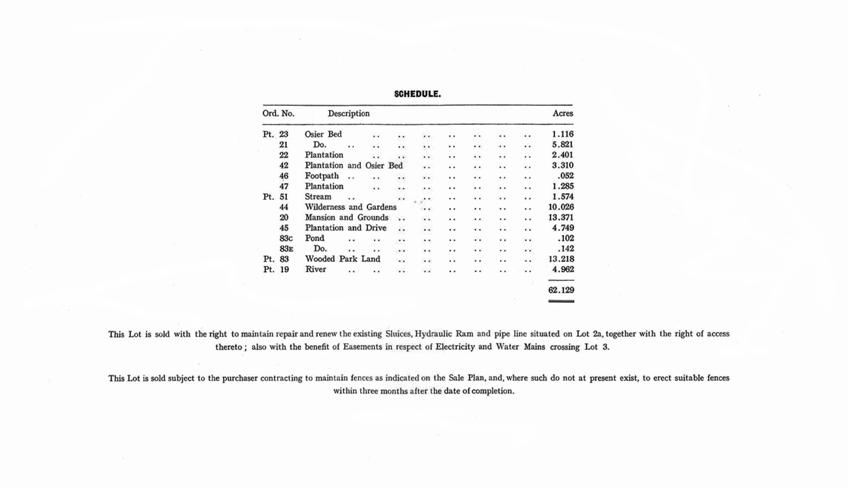
Drakelowe Estate Sale


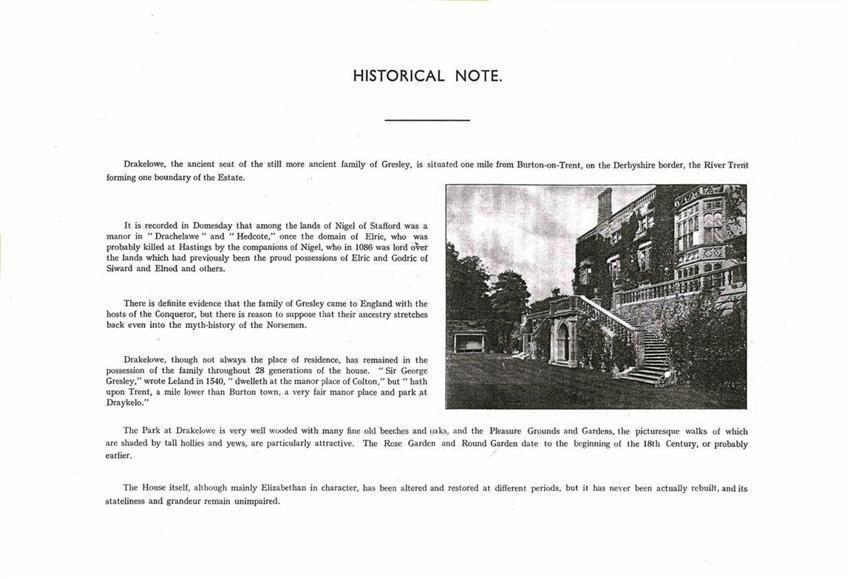
Transcription of above page:
HISTORICAL NOTE.
Drakelowe, the ancient seat of the still more ancient family of Gresley, is situated one mile from Burton-on-Trent, on the Derbyshire border, the River Trent forming one boundary of the Estate.

It is recorded in Domesday that among the lands of Nigel of Stafford was a manor in ” Drachelawe ” and ” Hedcote,” once the domain of Elric, who was probably killed at Hastings by the companions of Nigel, who in 1086 was lord over the lands which had previously been the proud possessions of Elric and Godric of Siward and Elnod and others.

There is definite evidence that the family of Grcsley came to England with the hosts of the Conqueror, but there is reason to suppose that their ancestry stretches back even into the myth-history of the Norsemen.
Drakelowe, though not always the place of residence, has remained in the possession of the family throughout 28 generations of the house. ” Sir George Gresley,” wrote Leland in 1540, ” dwelleth at the manor place of Colton,” but ” hath upon Trent, a mile lower than Burton town, a very fair manor place and park at Draykelo.”

The Park at Drakelowe is very well wooded with many fine old beeches and oaks, and the Pleasure Grounds and Gardens, the picturesque walks of which arc shaded by tall hollies and yews, arc particularly attractive. The Rose Garden and Round Garden date to the beginning of the 18th Century, or probably earlier.

The House itself, although mainly Elizabethan in character, has been altered and restored at different periods, but it has never been actually rebuilt, and its stateliness and grandeur remain unimpaired.


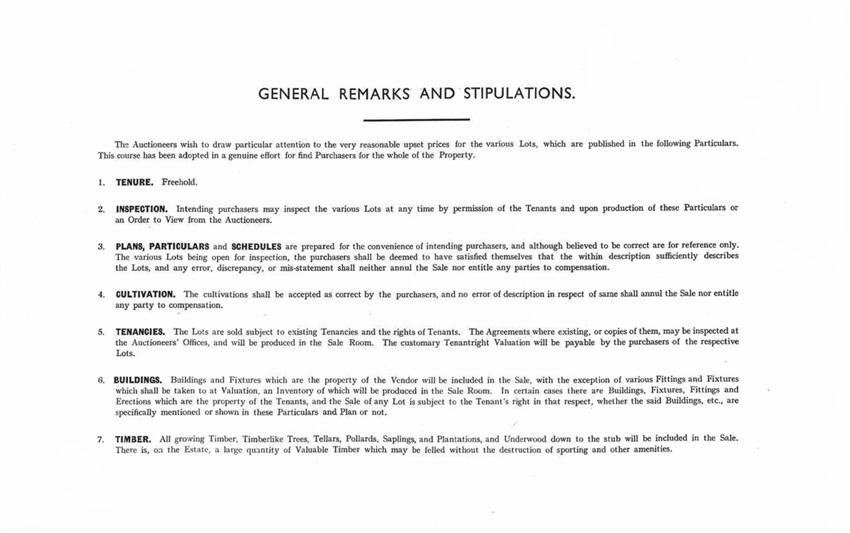
Transcription of above page:
GENERAL REMARKS AND STIPULATIONS.
The Auctioneers wish to draw particular attention to the very reasonable upset prices for the various Lots, which are published in the following Particulars. This course has been adopted in a genuine effort for find Purchasers for the whole of the Property.

1. TENURE. Freehold.

2. INSPECTION. Intending purchasers may inspect the various Lots at any time by permission of the Tenants and upon production of these Particulars or an Order to View from the Auctioneers.

3. PLANS, PARTICULARS and SCHEDULES are prepared for the convenience of intending purchasers, and although believed to be correct are for reference only. The various Lots being open for inspection, the purchasers shall be deemed to have satisfied themselves that the within description sufficiently describes the Lots, and any error, discrepancy, or mis-statement shall neither annul the Sale nor entitle any parties to compensation.

4. CULTIVATION. The cultivations shall be accepted as correct by the purchasers, and no error of description in respect of same shall annul the Sale nor entitle any party to compensation.

5. TENANCIES. The Lots are sold subject to existing Tenancies and the rights of Tenants. The Agreements where existing, or copies of them, may be inspected at the Auctioneers’ Offices, and will be produced in the Sale Room. The customary Tenantright Valuation will be payable by the purchasers of the respective Lots.

6. BUILDINGS. Buildings and Fixtures which are the property of the Vendor will be included in the Sale, with the exception of various Fittings and Fixtures which shall be taken to at Valuation, an Inventory of which will be produced in the Sale Room. In certain cases there are Buildings, Fixtures, Fittings and Erections which are the property of the Tenants, and the Sale of any Lot is subject to the Tenant’s right in that respect, whether the said Buildings, etc., arc specifically mentioned or shown in these Particulars and Plan or not.

7. TIMBER. All growing Timber. Timberlike Trees, Tellars, Pollards. Saplings, and Plantations, and Underwood down to the stub will be included in the Sale. There is, on the Estate, a large quantity of Valuable Timber which may be felled without the destruction of sporting and other amenities.


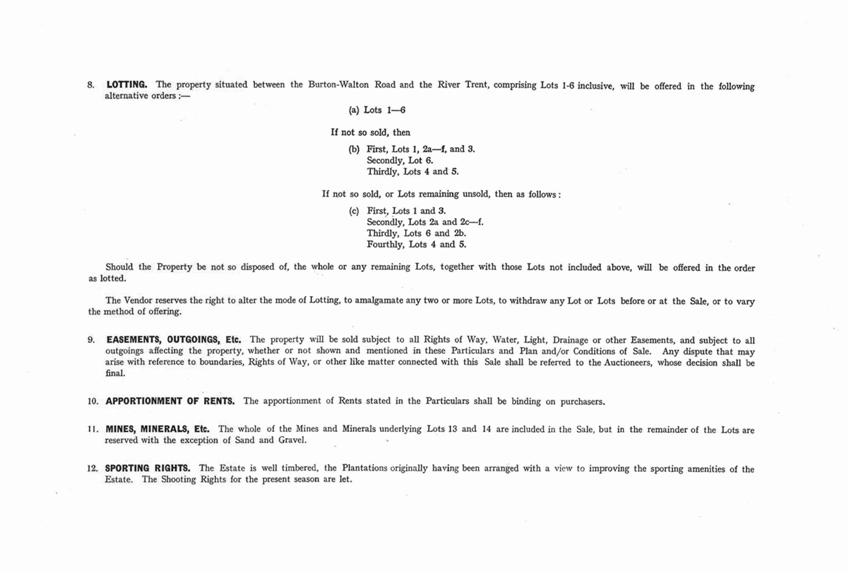
Transcription of above page:
8. LOTTING. The property situated between the Burton-Walton Road and the River Trent, comprising Lots 1-6 inclusive, will be offered in the following alternative orders:—
(a) Lots 1-6
If not so sold, then
(b) First, Lots 1, 2a-f, and 3. Secondly, Lot 6. Thirdly, Lots 4 and 5.
If not so sold, or Lots remaining unsold, then as follows:
(c) First, Lots 1 and 3. Secondly, Lots 2a and 2c-f. Thirdly, Lots 6 and 2b. Fourthly, Lots 4 and 5.

Should the Property be not so disposed of, the whole or any remaining Lots, together with those Lots not included above, will be offered in the order as lotted.

The Vendor reserves the right to alter the mode of Lotting, to amalgamate any two or more Lots, to withdraw any Lot or Lots before or at the Sale, or to vary the method of offering.

9. EASEMENTS, OUTGOINGS, Etc. The property will be sold subject to all Rights of Way, Water, Light, Drainage or other Easements, and subject to all outgoings affecting the property, whether or not shown and mentioned in these Particulars and Plan and/or Conditions of Sale. Any dispute that may arise with reference to boundaries. Rights of Way, or other like matter connected with this Sale shall be referred to the Auctioneers, whose decision shall be final.

10. APPORTIONMENT OF RENTS. The apportionment of Rents stated in the Particulars shall be binding on purchasers.

11. MINES, MINERALS, Etc. The whole of the Mines and Minerals underlying Lots 13 and 14 are included in the Sale, but in the remainder of the Lots are reserved with the exception of Sand and Gravel.

12. SPORTING RIGHTS. The Estate is well timbered, the Plantations originally having been arranged with a view to improving the sporting amenities of the Estate. The Shooting Rights for the present season are let.


Transcription of above page:
Lies in seclusion on the wooded banks of the River Trent, surrounded by beautiful Old English Gardens, overlooking, on the one hand, the ancient timbered Park, and, on the other, one of the most pleasant and picturesque reaches of the River which bounds the Estate, adding that element of water which is ever a delight to the eye.

There are extensive views of the surrounding country from the principal rooms of the Mansion, whilst, through a wide Avenue of Trees on the opposite side of the River, is presented an attractive vista to the distant Tatenhill Hills.

The Mansion, which is approached by a long Carriage Drive from the Burton-Walton Road, is of the Elizabethan period, substantially constructed, principally of stone, with later additions tastefully in keeping with its original design.


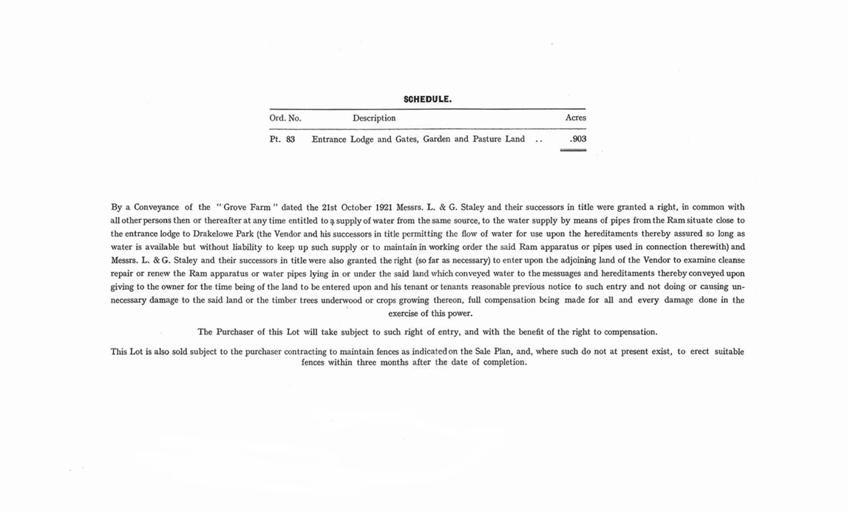
Transcription of above page:
By a Conveyance of the ” Grove Farm ” dated the 21st October 1921 Messrs. L. & G. Staley and their successors in title were granted a right, in common with all other persons then or thereafter at any time entitled to a supply of water from the same source, to the water supply by means of pipes from the Ram situate close to the entrance lodge to Drakelowe Park (the Vendor and his successors in title permitting the flow of water for use upon the hereditaments thereby assured so long as water is available but without liability to keep up such supply or to maintain in working order the said Ram apparatus or pipes used in connection therewith) and Messrs. L. & G. Staley and their successors in title were also granted the right (so far as necessary) to enter upon the adjoining land of the Vendor to examine cleanse repair or renew the Ram apparatus or water pipes lying in or under the said land which conveyed water to the messuages and hereditaments thereby conveyed upon giving to the owner for the time being of the land to be entered upon and his tenant or tenants reasonable previous notice to such entry and not doing or causing unnecessary damage to the said land or the timber trees underwood or crops growing thereon, full compensation being made for all and every damage done in the exercise of this power.

The Purchaser of this Lot will take subject to such right of entry, and with the benefit of the right to compensation.

This Lot is also sold subject to the purchaser contracting to maintain fences as indicated on the Sale Plan, and, where such do not at present exist, to erect suitable fences within three months after the date of completion.


Transcription of above page:
This Lot is sold subject to :—

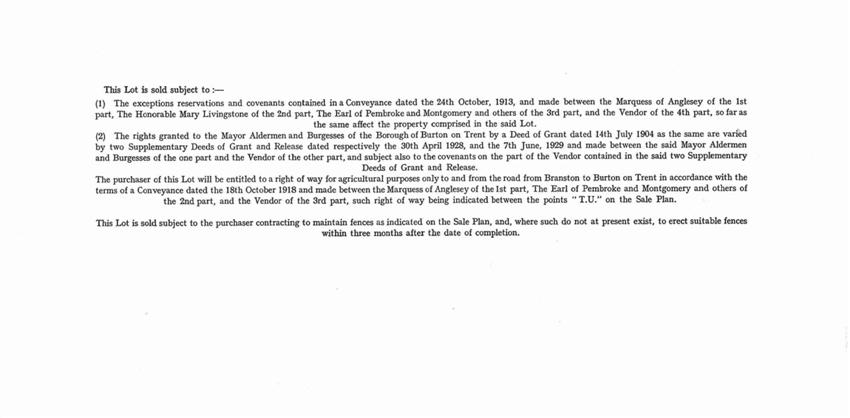
1) The exceptions reservations and covenants contained in a Conveyance dated the 24th October, 1913, and made between the Marquess of Anglesey of the 1st part. The Honorable Mary Livingstone of the 2nd part, The Earl of Pembroke and Montgomery and others of the 3rd part, and the Vendor of the 4th part, so far as
the same affect the property comprised in the said Lot.

2) The rights granted to the Mayor Aldermen and Burgesses of the Borough of Burton on Trent by a Deed of Grant dated 14th July 1904 as the same are varied by two Supplementary Deeds of Grant and Release dated respectively the 30th April 1928, and the 7th June, 1929 and made between the said Mayor Aldermen and Burgesses of the one part and the Vendor of the other part, and subject also to the covenants on the part of the Vendor contained in the said two Supplementary Deeds of Grant and Release.

The purchaser of this Lot will be entitled to a right of way for agricultural purposes only to and from the road from Branston to Burton on Trent in accordance with the terms of a Conveyance dated the 18th October 1918 and made between the Marquess of Anglesey of the 1st part, The Earl of Pembroke and Montgomery and others of the 2nd part, and the Vendor of the 3rd part, such right of way being indicated between the points ” T.U.” on the Sale Plan.

This Lot is sold subject to the purchaser contracting to maintain fences as indicated on the Sale Plan, and, where such do not at present exist, to erect suitable fences within three months after the date of completion.


Transcription of above page:
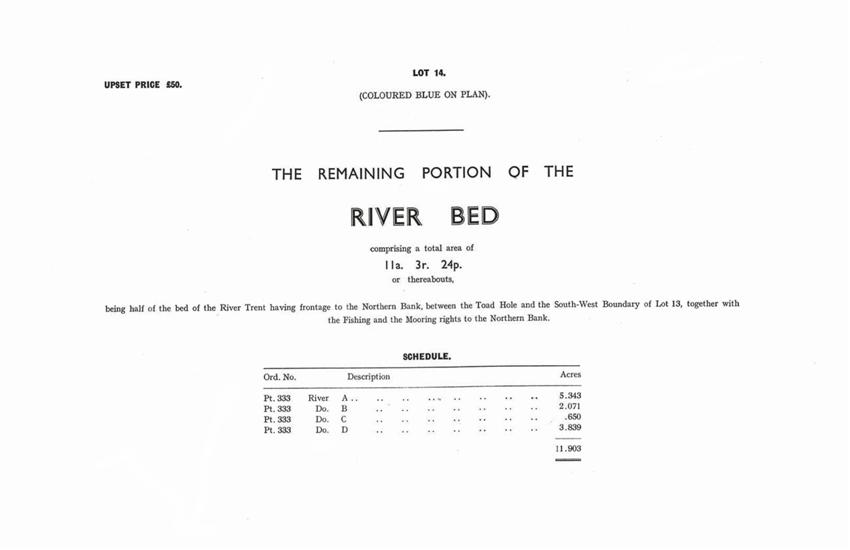
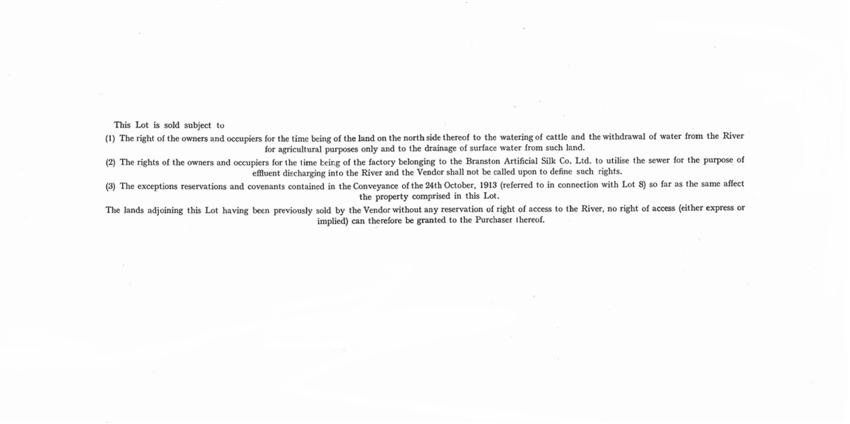
This Lot is sold subject to

1) The right of the owners and occupiers for the time being of the land on the north side thereof to the watering of cattle and the withdrawal of water from the River
for agricultural purposes only and to the drainage of surface water from such land.

2) The rights of the owners and occupiers for the lime being of the factory belonging to the Branston Artificial Silk Co. Ltd. to utilise the sewer for the purpose of
effluent discharging into the River and the Vendor shall not be called upon to define such rights.

3) The exceptions reservations and covenants contained in the Conveyance of the 24th October, 1913 (referred to in connection with Lot 8) so far as the same affect the property comprised in this Lot.

The lands adjoining this Lot having been previously sold by the Vendor without any reservation of right of access to the River, no right of access (either express or implied) can therefore be granted to the Purchaser thereof.


Transcription of above page:
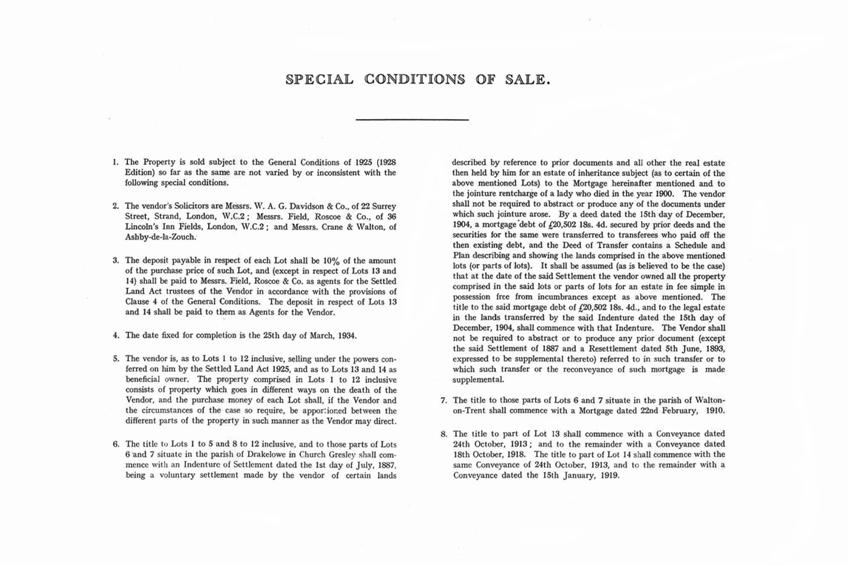
SPECIAL CONDITIONS OF SALE.

1. The Property is sold subject to the General Conditions of 1925 (1928 Edition) so far as the same are not varied by or inconsistent with the following special conditions.

2. The vendor’s Solicitors are Messrs. W. A. G. Davidson 6c Co., of 22 Surrey Street, Strand, London, W.C.2; Messrs. Field, Roscoe & Co., of 36 Lincoln’s Inn Fields, London. W.C.2; and Messrs. Crane & Walton, of Ashby-de-la-Zouch.

3. The deposit payable in respect of each Lot shall be 10% of the amount of the purchase price of such Lot, and (except in respect of Lots 13 and 14) shall be paid to Messrs. Field, Roscoe & Co. as agents for the Settled Land Act trustees of the Vendor in accordance with the provisions of Clause 4 of the General Conditions. The deposit in respect of Lois 13 and 14 shall be paid to them as Agents for the Vendor.

4. The date fixed for completion is the 25th day of March, 1934.

5. The vendor is, as to Lots 1 to 12 inclusive, selling under the powers conferred on him by the Settled Land Act 1925, and as to Lots 13 and 14 as beneficial owner. The property comprised in Lots 1 to 12 inclusive consists of property which goes in different ways on the death of the Vendor, and the purchase money of each Lot shall, if the Vendor and the circumstances of the case so require, be apportioned between the different parts of the property in such manner as the Vendor may direct.

6. The title to Lots 1 to 5 and 8 to 12 inclusive, and to those parts of Lots 6 and 7 situate in the parish of Drakclowe in Church Greslcy shall commence with an Indenture of Settlement dated the 1st day of July, 1887, being a voluntary settlement made by the vendor of certain lands described by reference to prior documents and all other the real estate then held by him for an estate of inheritance subject (as to certain of the above mentioned Lots) to the Mortgage hereinafter mentioned and to the jointure rentcharge of a lady who died in the year 1900. The vendor shall not be required to abstract or produce any of the documents under which such jointure arose. By a deed dated the 15th day of December, 1904, a mortgage “debt of £20,502 18s. 4d. secured by prior deeds and the securities for the same were transferred to transferees who paid off the then existing debt, and the Deed of Transfer contains a Schedule and Plan describing and showing the lands comprised in the above mentioned lots (or parts of lots). It shall be assumed (as is believed to be the case) that at the date of the said Settlement the vendor owned all the property comprised in the said lots or parts of lots for an estate in fee simple in possession free from incumbrances except as above mentioned. The title to the said mortgage debt of £20,502 18s. 4d., and to the legal estate in the lands transferred by the said Indenture dated the 15th day of December, 1904, shall commence with that Indenture. The Vendor shall not be required to abstract or to produce any prior document (except the said Settlement of 1887 and a Resettlement dated 5th June, 1893, expressed to be supplemental thereto) referred to in such transfer or to which such transfer or the reconveyance of such mortgage is made supplemental.

7. The title to those parts of Lots 6 and 7 situate in the parish of Walton-on-Trent shall commence with a Mortgage dated 22nd February, 1910.

8. The title to part of Lot 13 shall commence with a Conveyance dated 24th October, 1913; and to the remainder with a Conveyance dated 18th October, 1918. The title to part of Lot 14 shall commence with the same Conveyance of 24th October, 1913, and to the remainder with a Conveyance dated the 15th January, 1919.

Hoar Cross Hall

Hoar Cross Hall was, from the early 17th century, the second seat of the Ingram family whose principal residence was Temple Newsam in Yorkshire. In 1661 Henry Ingram was raised as Baron Ingram and Viscount of Irvine. On the death of the 9th Viscount in 1778 the Viscountcy became extinct. The estates descended to his daughters and in 1841 to Hugo Charles Meynell (grandson of Hugo Meynell and son of Sir Hugo Meynell who had married Elizabeth Ingram in 1782). Upon inheritance Meynell incorporated Ingram into his surname to become Meynell Ingram.

The old house was rebuilt in the 1860s in much grander style, most of which comprises the existing Hoar Cross Hall.

His son Hugo Francis Meynell Ingram married Emily Charlotte Wood, daughter of Charles Wood, 1st Viscount Halifax. Meynell Ingram died in 1871 and Emily Charlotte built the church in his memory. She remained in occupation of the Hall until her death in 1904 when her nephew Fredreick George Lindley Wood (later Meynell) inherited the estate.

Hoar Cross Hall has thankfully managed to survive as an hotel and health spa and is a Grade II listed building.

1873 – Rolleston Hall Celebrations

In 1873, just two years after the great fire that almost destroyed it, Rolleston Hall was the site of great festivities. Around one hundred and twenty guests celebrated the superbly restored hall at the occasion of the marriage of Sir Tonman Mosely’s son, Oswald.
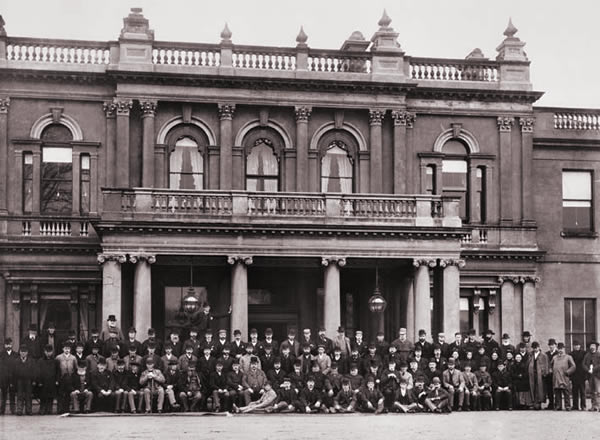
The event was attended and reported by the Derby Mercury and below is a transaction from the detailed report that appeared in an article dated Wednesday, August 20th, 1873.

On Tuesday last the tenantry of Sir Tonman Mosley Bart., were invited to dine at his residence to commemorate the restoration and improvement of the hall; also the marriage of his eldest son, Oswald Mosley Esq. Our readers will undoubtedly remember the serious fire which occurred here almost two years ago. Its owner has now built a noble mansion on the site of the old one, Messrs. Giles and Brookhurst being the architects.

At half past two o’clock on the above day about one hundred and twenty sat down in a commodious marquee which had been beautifully decorated by Mr Buck, head gardener, to a splendid repast. Grace having been said by the Reverend Canon Ram, the dinner commenced in good earnest, under the presidency of their worthy landlord, who was supported on the right by his eldest son, Oswald Mosley Esq., Drs. Belcher and Wolfenden, Messrs Radford, Stretton, M Walker, S Walker, D. Walker, Hodgkinson and Strutt; and on the left by the Rev. Canon Ram and Messrs. Holbrook, Giles, Crump and Pakeman.

The vice chairs were respectively filled by Tonman and Ernald Mosley, Esqs. The bill of fare was a most sumptious one, and we need scarcely add that ample justice was done to it. During the dinner the company were enlivened by Mr Stagg’s efficient quadrille band, which played the following selections in a highly creditable style:

  • Overture ‘Zampa’
  • Valse ‘Blush Rose’
  • Piano Fantasia
  • Quadrille ‘Grand Duchess’
  • Valse ‘Christine’
  • Cornet Solo
  • Galop ‘Cliquot’
  • Viola Solo
  • Valse ‘Beautiful Spring’

On the cloth being drawn, Sir Tonman proposed the healths of the Queen (Victoria), Prince and Princess of Wales and the Royal Family, which was most enthusiastically received.

The next toast was given by the Reverend Canon Ram, who said;- “I hope you will be somewhat forbearing with me this evening, although I shall endeavour to make all hear. I am quite aware that a great strain upon the voice is requisite for such a numerous assemblage, and especially under a tent.

At the same time, the circumstances under which we are met today would make anyone strive to use every effort for the occasion. I do not for one moment expect I can do justice to the toast of the day, which is entrusted to me… Long life, prosperity and happiness to our host (Loud cheers) But permit me to add I am sure it gives us all very great pleasure to see Sir Tonman in his proper place, and that it is at the head of a large and opulent tenantry. Indeed such a sight as the present is a truly English one, for now can be seen at one view the real backbone of our country, viz., the agriculturists and landlords side by side”.

This was drunk most cordially, the band playing’Musical Honours’ and the ‘Fine Old English Gentleman’.

SIR TONMAN MOSLEY then rose and addressed the company as friends, neighbours and tenants, stating that he was much obliged to his friend the Reverend Canon Ram, for the kind manner in which he had proposed his health. He could scarcely find words to express his feelings. The Canon had spoken of him as a proud landlord, and indeed he was proud as anyone could be of such a respectable and honourable tenancy (Cheers) He trusted he would always be proud of his tenancy, but not proud of himself (Cheers) Such gatherings as the present were a source of great pleasure to him. Landlords and tenants to be successful must pull together. Although he wished to avoid politics he could not let the opportunity slip. There had just been an election, and he was proud to see on the present occasion voters of both sides, for he always wished his tenants to vote according to their consciences (Loud cheers)

He would be very sorry to use undue influence with anyone; and he might safely add that when he met a tenant, it never entered his head as to the political opinions of that tenant (Cheers) At the same time he would add that if a tenant were undecided in his political opinions he considered the landlord was the best tutor for him. He would never canvass, and he trusted that now the Ballot Act was passed the old system of canvassing would become a thing of the past. Again, he thought landlords should not endeavour to influence their neighbours’ tenantry in such matters (Cheers)

With respect to the Game Laws, he had faith to believe that tenants would always protect sufficient game for the sons of their landlord.

Landlords had brought the punishment on themselves by binding their tenants under such severe restrictions and having the produce greatly damaged by the game.(Cheers)

Lastly there was a cry for long leases. He was against treating land as a commercial commodity. In such cases the land would be given to the highest bidder under stringent leases, and do away with all the good feeling that had previously existed. He would conclude by proposing all their healths coupled with the name of Mr Holbrook, their esteemed steward (Cheers.) He asked for the latter gentleman to be excused standing as he was suffering from the effect of an accident.

MR HOLBROOK said that he was very pleased to hear Sir Tonman Mosley explain his views with respect to landlord and tenant so clearly. A good understanding put them on a firm footing for years to come(Cheers) He had the honour to propose the healths of Mr and Mrs Mosley, and congratulate them on the occasion of their marriage, and to take the opportunity of presenting him with the offerings of the tenantry of Rolleston, Needwood and Tutbury.

These had taken the form of a beautiful timepiece, silver tankard, and silver tea and coffee service. He concluded by asking the company to drink long live and happineass to Mr. and Mrs. Mosley.

This was immediately followed with musical honours.

OSWALD MOSLEY, Esq. was received with loud cheers. He thanked all of them for the presents they had so kindly given Mrs. Mosley and himself on the event of their marriage. He was sorry that his wife was unable, through illness, to be present that day. His father, however, had given him a cordial invitation to Rolleston Hall, which he should from time to time accept, especially in the hunting season (Cheers)

He was sorry that last year he was not so frequently in the field, but the fact was hunting did not agree with love-making (Cheers) He added that he was not an orator, but they would accept the best thanks of himself and wife for the kind manner in which their health had been proposed and received.(Loud cheers)

The next toast was given by the CHAIRMAN, who said, “Gentlemen, it falls upon my lot to propose the Bishop and Clergy, coupled with the Rev. Canon Ram, our worthy Rector. He was not going too far when he said, that the Canon had, by his assiduous work made himself many friends in Rolleston and neighbourhood (Cheers) He had learned from many sources of the efficacy of the rector’s service among the tenantry, who was in that position that he could serve them both spiritually and temporally. He had known him ever since he could remember, hence he claimed him as one of his oldest friends”.

The above toast was then drunk with cheers and musical honours.

The Rev. CANON RAM responded by stating that he was grateful to Sir Tonman for the kind manner in which he had proposed his health. He went on to say that the baronet had done him justice when he said that ‘best intentions were not wanting in his work’ (Cheers) He referred to his old associations with Rolleston, how that some years before Sir Tonman could remember, he spent many happy hours fishing in Rolleston brook with the late squire, the host’s brother. It was owing to the kindness of Sir Oswald that he now held the position of Rector of Rolleston. Such a position naturally brought pleasant and unpleasant remembrances. During the five years he had been amongst them as their pastor, he trusted he had served them faithfully, and he hoped all good feelings and blessings would continue to crown the hall, church, and yes, and every house in the parish, as proof of God’s mercies to them.(Hear hear). There were persons now- a -day who tried to separate classes, but he considered such meetings as the present one went far to put down their evil attempts, He must, however, conclude, but when once on his feet and among his friends, he was like the Irishman who was asked the secret of being such a good speaker, I put my heart to the tip of my tongue, and then I can’t help it. He must, however, say one word more, and that was something which was very pleasing to them, viz., to propose the health of Lady Mosley (Loud cheers). He knew it would be well received. The tenantry had only to look at her, and then listen, and they might rest assured that her influence with Sir Tonman was always used when required on their behalf. Indeed all of them would be very poor creatures without their wives, daughters and sisters. He then, amidst loud cheers, proposed ‘The health and happiness of the Lady Mosley, as wife and consort of Sir Tonman Mosley, Bart’. (Loud cheers)

After musical honours had been accorded, Sir Tonman rose, and in a short humorous address, thanked them on behalf of his lady, whom he had on this occasion deserted for the first time in her life; she had declined to thank his friends for their good wishes. He trusted she had not made up her mind to desert him altogether (Renewed cheers) he quite agreed with the Canon as to the value of wives, and he trusted that all his friends present who had not entered the matrimonial state would immediately fix their attention on a suitable lady, and get married at once. (Cheers)

Dr. BELCHER then rose, and in a pithy speech proposed ‘The health of Tonman and Ernald Mosley Esqrs,’ the younger sons of their worthy host. He trusted the tenancy would fill their glasses and do their duty by the toast. (cheers and musical honours)

TONMAN MOSLEY Esq., replied as follows; The Reverend Canon Ram has made a pointed remark in his speech which has given me a new and very humble opinion of myself. He said “All men without wives were poor creatures, and still more so if they had no sisters or daughters” Now I have no wife, no sister no daughter, therefore pray pity me, for I must be a very poor creature indeed (Laughter and cheers.)

Again I can assure you I tremble in my shoes, for my father in his speech says thast the sooner men get wives the better for them; and I of course conclude from that he must have someone in his eye for me! I humbly offer you my sincere thanks for myself and my younger brother, and I trust you have all been happy and will spend the remainder of the day in perfect enjoyment. In a short time I hope to be called to the bar, and I ask you after I have so done to get into as many lawsuits as you possibly can and put a corresponding number of guineas into my pocket (Cheers.) One more point;-My ambition may induce me in course of time to become a candidate for your votes as a member of parliament. In that case I have no doubt all of you will give me your support, and place me at the head of the poll. I feel most deeply the honour which has conferred upon me is being entrusted to a toast which ought never to be left out, and is always received with great eclat. My toast, gentlemen is one you will all respond to most heartily, viz.,”The Ladies”(Cheers.) Gentlemen, they are our better halves, but dear me I must beg your pardon, as I ought to have said your better halves. Still I beg to propose the health of your wives, your daughters and your sisters. At the same time I think you will agree with me that an able orator by late reputation, is the fittest person to answer for those whose absence is our loss and whose health we shall drink most heartily (Cheers.) I therefore call upon Mr. Samuel Walker, who is considered an orator in this neighbourhood, to respond.

MR S. WALKER immediately rose and said he wished to contradict Mr. Tonman Mosley upon one point in his speech, viz., that of being an orator; and he thought the compliment of returning thanks might have been placed in abler hands, as he was suffering from overwork, the result of canvassing in company with Messrs. Higgot and Hopkins, when they had had many strange questions put to them relating to the gun tax, tenants rights, school boards, ladies as voters &c. But he must revert to the toast viz., “The Ladies” He had tried housekeeping and bachelorship for five years, but could endure it no longer, so took unto himself his better half, and had no hesitation in stating that it was the best day’s work of his life. He now had his slippers placed for him every evening, and his bed warmed when required, and many things which a bachelor could not expect, and did not deserve. He hoped that Mr Tonman would soon follow his example and so become a useful member of society.

SIR TONMAN next proposed the healths of the master workmen who had been employed at the hall during it’s restoration, coupled with the name of MR GILES, who responded as follows- Gentlemen- this is indeed a very happy gathering through the generosity of Sir Tonman. He has spared no trouble or pains to secure a pleasant afternoon for us, and I can safely add that during the restoration of the hall, it has been his constant endeavour to make all who were employed on the works very comfortable. He (Mr Giles) had never undertaken a work that had given him so much pleasure, and it mainly arose from the frankness and generosity of their noble employer. He begged to offer the best thanks of his co-workers for the manner in which their healths had been proposed and received, and he trusted Sir Tonman and her Ladyship would live for many many years to enjoy it’s beauties, conveniences and pleasures (Loud cheers.)

Music and songs now became the order of the evening, among which we noticed ” The Old English Gentleman” by Messrs. M and S Walker ; Turn of the tide” by Mr. Pakeman; “John Barleycorn” by Mr. G Hanson: “Paddy’s courtship” or “The Whistling thief by Mr. Strutt; Men of Merry England”, by Mr. Hodgkinson; and “Nought else to do” by Mr.Greatorex. The latter was highly amusing and well executed, and caused great laughter.

The company broke up about half past seven o’clock after singing the National Anthem.

We need scarcely add that the afternoon was spent in a most enjoyable manner and nothing was wanting to add to their happiness that money would procure.

The oldest parishioner of Rolleston who was present said that he “had never seen such doings in all his life.” We trust such gatherings may become more frequent, and may we add annual ones. Sir Thomas kindly threw his grounds and gardens open, and was lustily cheered by his tenantry from the marquee to the mansion.

The following day, the workmen, numbering 165, were invited to dinner, which was equally sumptuous to that of the previous day The “Roast Beef of Old England” was punished by a class of men who well know how to do their duty with a knife and fork , accompanied with copious draughts of nut-brown ale , and fine selections of music which on such occasions improve the appetite and assists digestion. No comment is needed as to the justice they did to the good things.
After the cloth was drawn,

SIR TONMAN briefly proposed the healths of the Queen and Royal Family.

THE REVEREND CANON RAM, after a telling speech, proposed the healths of Sit Tonman Mosley, Bart., the Lady Mosley, and |Mr. And Mrs. Mosley, to which the worthy baronet responded, followed by Mr. Mosley and Mr. Tonman Mosley.

On the retirement of Sir Tonman Mosley from the chair, speeches and songs followed in rapid succession. A little momentary unpleasantness was occasioned at times by two or three amateurs endeavouring to give their fellow workmen a specimen of their musical prowess simultaneously . Of course this created much mirth, and the cases had to be referred to the chair, which was now ably filled by Tonman Mosley Esq.

MR BRATT made a speech which will not be easily forgotten by those who had the advantage of listening to his oratory.

The proceedings came to a close by the chairman expressing his best thanks to them for their excellent conduct during the afternoon, and trusted they had all thoroughly enjoyed themselves, leading them to believe this was only the first of similar entertainments. The marquee was momentarily filled with loud cheers and good wishes for their noble master.

On Thursday a large company of visitors were invited to an entertainment, and to witness the sports of the Rolleston, Tutbury and Anslow schools whom the liberality of Sir Tonman Mosley would not permit to be overlooked. The following were amongst the number; Sir Henry Every, The Masters Every, Rev. Rowland and Mrs Mosley and family, the Rev. Canon, Lady Jane and the Misses Ram, Mrs Stone, Mrs.Fox, Miss Isobel Mosley, Miss Penelope Mosley, the Misses Bott (3) Miss Wearg, , Mr/ and Mrs. Willoughby Wood,, Mr. and Mrs Wm. Bott, Mr and Mrs Rumboldt, Mr. and Mrs. N Curzon, and the Masters Ewart.

Also the annexed were among the number as resident at the Hall for the week; Mr. Mosley of Beaumaris, Anglesea, Miss Foster, Miss Halliwell, Miss Rigby, mr & Mrs Campbell, Mr. Lucas Broadhurst, Mr Lindesay Young, &etc.

The Rolleston and Anslow children arrived first, and were conducted through the gardens. At two o’clock the Tutbury children, under the control of the Rev. H. Clunn, Miss Bray and Mr. Parrick, started from their respective schools, the route being by High Street and Burton Street. The youths belonging to the Endowed School halted at the residence of Miss Mosley (Sir Tonman’s sister) and sang “The Red, White and Blue” and “Musical Honours” in a highly creditable style, under the able guidance of their respected master, Mr. Parrick. Many of the inhabitants turned out to listen to the songs and witness the procession of the children who were bent on an afternoon’s pleasure.

Miss Mosley very kindly thanked the master, teachers, and pupils for their courtesy. The girls, who waited in the Burton-street during this show, now proceeded in excellent order towards Rolleston, amidst cheers of the crowd. On approaching the Hall Gardens, it was understood by the excessive “Hurrahs” that it was a gala afternoon at Rolleston. Mr. Buck met them at the reservoir, and led them through most refreshing shady walks through in the garden, and finally to the front of the Hall, explaining, as they proceeded, the various orchard and hot-houses, with their uses. He earned and received many hearty thanks by his thorough and genuine kindness from both teachers and scholars. In about ten minutes they took their places on the croquet ground for singing. The company quickly congregated around the little band to hear the following songs which were executed in such excellent tune and time that praises were awarded in all directions:

  • God Bless The Prince of Wales
  • The Spider and The Fly
  • The Red, White and Blue
  • Work

Musical Honours followed with the words:

Sir Tonman is our faithful friend,
And that we all do know,
He always helps us cheerfully,
Which nobody can deny,
The Lady Mosley we do thank,
For all her kindnesses,
We wish them every happiness,
And so say all of us.

SIR TONMAN MOSLEY expressed his best thanks to Mr. Parrick and gave orders for the pupils to be conducted to the Park , in which the following games were prepared;- Cricket, Football, Bag racing, pole climbing, wheelbarrow races etc., Prizes were awarded by various gentlemen who witnessed the sports. Mr. Tonman Mosley superintended the cricketing, while Mr. Mosley undertook the racing and Mr. Ernald the football.

At five o’clock the bell rang for tea, to which they immediately responded. Mr. White, butler, was exceedingly kind throughout the evening, and most anxious to do everything possible for the enjoyment and comfort of the children. Many thanks are due to him for his attention. Grace having been sung, they set to work in earnest to clear the tables of the tempting eatable commodities, consisting of buns, ginger bread, plum cake, preserves, grapes, currants, gooseberries &c. Half an hour sufficed to see the end of this department.

After the Grace had been sung, Sir Tonman entered the marquee, accompanied by the Lady Mosley and The Rev. Canon Ram.

The Reverend Canon, in speaking to the children assembled asked them whom they had to thank for their tea. Their answer was “God.” The rev. gentleman said it was a very good answer, and he was glad to hear them award the praise to God. He then asked who they were next indebted to. Their answer was “Sir Tonman.” He gave them good advice, in which he cautioned them against bad company, and concluded by asking for three cheers for Sir Tonman and Lady Mosley, which was given in a thoroughly English style. Mr Tonman, in a short address, informed the children of the very great pleasure it afforded Lady Mosley and himself to meet them in such pleasing circumstances. He had invited them to tea and games to commemorate the restoration and improvements to his residence, Rolleston Hall. He had trusted that they would all be good children, not only for that afternoon, but for many future ones. He was glad to see such a goodly number present but was sorry to be obliged to hear that some were absent, not being allowed to come through irregular attendance at school. He went on to show that as a rule the parents were the cause of the irregularity, and it was greatly deplored that in these enlightened times they did not take a far greater interest in the future welfare of their children. A child now-a-days without education was no-where in the world. Again he was proud to refer to the fact that in each of the schools present instructions in the Holy Bible formed part of the daily routine. He remembered well the words of his father to the effect that school instruction was quite valueless without it was based on God’s word and he should use his influence to maintain those principles. “Shut out the Bible from the school and you will undermine it’s true utility.” He thanked the teachers for the excellent discipline which their children exhibited, and concluded by trusting that this meeting was only a fore runner of many similar ones. (Loud cheers.)

The children then sang several songs and dispersed to enjoy the several amusements prepared for them. At a later hour dancing commenced in good earnest, and was kept up till dusk. Mrs. Smythe, the Anslow schoolmistress,collected her little band the first, and they were well attended by the gentry, previous to their departure, with nuts and biscuits. Later on the Tutbury schools were arranged in front of Mr. Stagg’s quadrille band, and after musical honours for their host and hostess, sang the National Anthem. Mr. Parrick addressed the children, and thanked Sir Tonman and Lady Mosley for their great kindness, and trusted Mr. And Mrs. Mosley would follow in their worthy parents’ footsteps especially with regard to the aid they most generously bestowed on the schools . He concluded by calling for cheers for the above. On arriving at Tutbury, they proceeded to the residence of Miss Mosley and sang a song or two, after which the order was given to dismiss. The Rolleston children, under their efficient master and mistress Mr Eley and Miss Ellis, were dispersed later on in the evening. Such a day’s enjoyment has seldom, if ever, been accorded to these schools.

The following evening a ball was given. Through the liberality of Sir Tonman all the servants of the neighbourhood (200) were invited to the hall. Carriages arrived in rapid succession at eight o’clock, and the respective occupants were escorted to the cloak room by Mr. White. Tea and coffee were set out in the smoke room, and all new arrivals were invited to refresh themselves preparatory to the dance. At nine o’clock the strains of Mr. Stagg’s efficient quadrille band were heard, and a general movement was made towards the saloon, which was in itself worthy of a visit. It was illuninated with two sun lights, and as the company arrived in their various coloured costumes the effect was exceedingly pretty. This room was most tastefully decorated with flowers, evergreens. flags and shields under the able superintendence of Mr. Buck.

The motto “Mos Legem Regit” came out most prominently on the North Wall. The floor deserves a word of notice, being of the very best oak, polished, all of which has been grown on the Rolleston Estate. The stewards of the evening were Tonman Mosley, Esq., and Mr. White, who were quite at home with their duties.

At a quarter past nine o’clock the ball was opened by Mr. Kirk and the Lady Mosley, followed by Tonman Mosley, Esq., and Mrs. Stevens. About 150 joined in this, it being the well known country dance “Triumph”. Mr Cornish’s perfect mastership of the cornet deserves special mention.

The next was a Polka in which Mr. Joseoh Barton had the honour of dancing with her Ladyship. The following was the programme which was well carried out, and a Scotch Reel or two were added by special request :-

  • Country dance “Triumph”
  • Polka “Sultan”
  • Country dance “Valse”
  • Schottische “Moldovian”
  • Quadrille “Christmas Echoes”
  • Polka “Jolly Dogs”
  • “Pop Goes the Weasel”
  • Galop “Cliquot”
  • “Spanish Valse”
  • “Patanella”
  • “Scotch Reel”
  • Country dance “Tempete”
  • “Polka”
  • Country dance “Haste to the wedding”
  • “Galop”
  • “Lancers”
  • “Sir Roger de Coverley”

At one o’clock the company sat down to an excellent supper, which was set out in the marquee. The tables were laden with good things, and bore ample proof that the week’s festivities had not drained the vineries. Grace having been sung, about half an hour was occupied with toasts.

Mr. Abby proposed the healths of Sir Tonman, the Lady Mosley, and mr. And Mrs, mosley, which was responded to by Tonman Mosley Esq,.who asked for a little fore bearance as it was the fourth speech he had been credited with in the past few days .

He said that nothing would have given his father greater pleasure than to have been present on this occasion, but lameness prevented him. He hoped they would all thoroughly enjoy themselves and dance to their hearts content, He concluded by proposing the health of all his father’s servants, who had been most severely taxed with over work during the week, coupled with the name of his esteemed friend, Mr. White,

This was drunk most cordially with musical honours, led by Mr. Parrick,

MR. WHITE acknowledged the compliment in an able manner.

After Mr. Stagg had said a few words on behalf of the visitors, the company, like giants refreshed, returned to the charge, and the small hours of the morning smiled on the throng. Slowly and reluctantly the company broke up to return to their homes by the morning light, and to regret the fleeting haste of our old enemy, Time.

On Saturday about 100 of the old parishioners were invited to tea on the lawn. Various amusements were engaged in and the garden and grounds thrown open.
Thus ended a weeks festivities, the like of which has never been seen by the present generation of Rolleston.

We conclude our report by by sincerely wishing that the worthy owner and his lady will live long to enjoy each other’s friendship in their princely mansion.
Byrkley Park – Early History

The name Byrkley, which has changed a few times over the centuries, is derived from the family De Berkeley of Berkeley Castle in Gloucestershire. In the 13th century there was a hunting lodge on the site which was in the heart of the ancient Forest of Needwood. Thomas de Berkeley was keeper of the Tutbury ward and occasionally stayed there.

Needwood Chase, as it was then known, had become the hunting preserve of the powerful Norman family de Ferrers, Earls of Derby, whose collective estates were known as the Honour of Tutbury. In 1267 the daughter of William de Ferrers married Thomas de Berkeley.

Because the Ferrers allied themselves with Simon de Montford in his rebellion against Henry 111 they were forced to forfeit their extensive estates to the crown. These subsequently became part of the Duchy of Lancaster which passed to the crown again in 1399.

Those were bloody times but Byrkley Lodge saw the coming and going of generations of monarchs, of charters and changing laws, was controlled by numerous keepers and saw the births, marriages and deaths of numerous tenants.

The hunting lodge was usually the residence of the keeper who was appointed by the King. It was also used on occasions by the monarch on hunting expeditions. Edward IV, who was a particularly keen huntsman, spent lavishly on extensions and repairs. Byrkley Lodge alternated with Tutbury Castle at one time as a venue for the wood mote or forest court. At such times miscreants would be brought before officials who would levy fines for trespass, poaching and other forest offences.

King James I often visited his much loved lodge at Byrkley. The ‘Woodmote Court’ was the only local judicial body. On 19 May 1337 the Chief Forester (Judge) dealt with the following cases:

– A person of Tatenhill fined 2 shillings for stealing three tops of fallen oak trees near Byrkley fishpond.
– Robert Clerk fined 12 pennies for taking one oak tree top from Dunstall Hill.
– Robert Dicon fined 6 pennies for cutting down lime trees.
– Richard Merriot fined 6 pennies for trespassing two colts in the lord’s fenced Byrkley Park.
– The Rector of Tatenhill Church fined 12 pennies for trespassing 140 sheep in Byrkley Park.
– Henry Brown fined 3 pennies for breaking down park palings in Highlands Park half a mile from Byrkley.

All offenders were held in the mercy of the court under surety of the Chief Forester.These courts were no longer necessary once the disafforestation of Needwood was affected after the enclosure in 1801. By this time the forest had changed. Once the home of the wolf, wild boar and wild fallow deer, it was now exploited for timber and pasture. On the lush meadows and grassland grazed the stock and dairy herds and the horses of the Earls and manorial lords. Plentiful oaks supplied acorns for pigs, and where oaks and timber trees were felled underwood and thorn were planted to provide cover for game. Venison, fish from the ponds, and honey from Needwood supplied the Lancastrian households and provided rewards for their supporters and officials.

In 1754 Lord Townshend, whose wife Lady Charlotte Compton had inherited Tamworth Castle and succeeded to the Ferrers barony, acquired the leasehold of Byrkley Lodge as his hunting seat. Here he built a house more extensive and somewhat more elegant than the earlier lodge, where they could retire in peace for a few months of the year.

It had become fashionable in the early 18th century to seek quiet, for some even solitude, in a country retreat, and Byrkley Lodge was ideally situated. Needwood Forest became the haunt of poets, philosophers and painters in search of the picturesque, as well as those in pursuit of the regular sporting pleasures of the forest.

Byrkley Lodge

The residents of Byrkley Lodge, like those at Yoxall Lodge lying little more than a mile south on Linbrook, found the natural brook, the valleys and plains, the fertile soils and the picturesque gnarled oaks all lent themselves well to the designs of landscape gardeners. Before he sold Yoxall Lodge to John Gisborne in the mid 18th century Sir Nathaniel Curzon had Ernes, a landscape gardener following the tradition of ‘Capability’ Brown, design improvements for the grounds there. Brown himself was planning the complete rebuilding and landscaping of Fisherwick for the Marquis of Donegal. The Marquis purchased Byrkley Lodge from Lord Townshend and the watercolours of the house and grounds in 1786 show clearly the influence of these gardeners who blended their cultivated art with nature.

On a 1775 map to the nobility Byrkley Lodge is the only building in the wooded area of the Needwood Forest Plateau except for Yoxall Lodge. Its only neighbour at this time was Hanbury Park Farm some 3 miles north.

The inhabitants of many of the great houses in the vicinity were closely associated by ties of friendship and marriage. They shared enthusiasm for hunting and fishing, archery and battledore, books and poetry, music and painting, and exchanged ideas on gardening developments. Many interesting figures of this period found pleasure in this company: William Wilberforce, Erasmus Darwin, Joseph Wright, Richard Lovell Edgeworth (2 of whose 4 wives were sisters of Edward Sneyd) and the novalist Maria Edgeworth.

Richard Edgeworth had 22 children. Edward Sneyd had only one and Mary Emma Sneyd did not marry. But one of her close friends, one of the 6 sons of Thomas Gisborne of Yoxall Lodge, married the daughter of Michael Bass of Burton-on-Trent. Mary (Bass) Gisborne’s brother, another Michael Bass, eventually rented Byrkley Lodge from Emma Sneyd in 1850.

The deeds of this lease are interesting in the detail of care for the property stipulated by Miss Sneyd. Of particular interest are the gardens and greenhouses mentioned, hothouses, shrubberies and pleasure grounds. Michael Bass had to spend £350 for improvements and reparations and ‘keep the gardens and garden grounds belonging to the Mansion House cropped and manured and managed the same according to the most approved methods of gardening’.

Sir Oswald Mosley wrote in his 1863 ‘Natural History of Tutbury’ that: “At Byrkley Lodge, for some years, families of pure white rabbits have been produced in the park where they make a very striking appearance”.

Before the Bass family rebuilt the Lodge, previous occupants had tried to make Byrkley different. Albino rabbits were bred and released in large numbers into the grounds. Byrkley Park was the only country estate in existence to have true white rabbits running wild. When the Bass family lived at the Lodge, workers were not allowed to shoot any of these white rabbits.

Brykley Lodge was completely re-built between 1887 and 1891 for Hamar Bass.


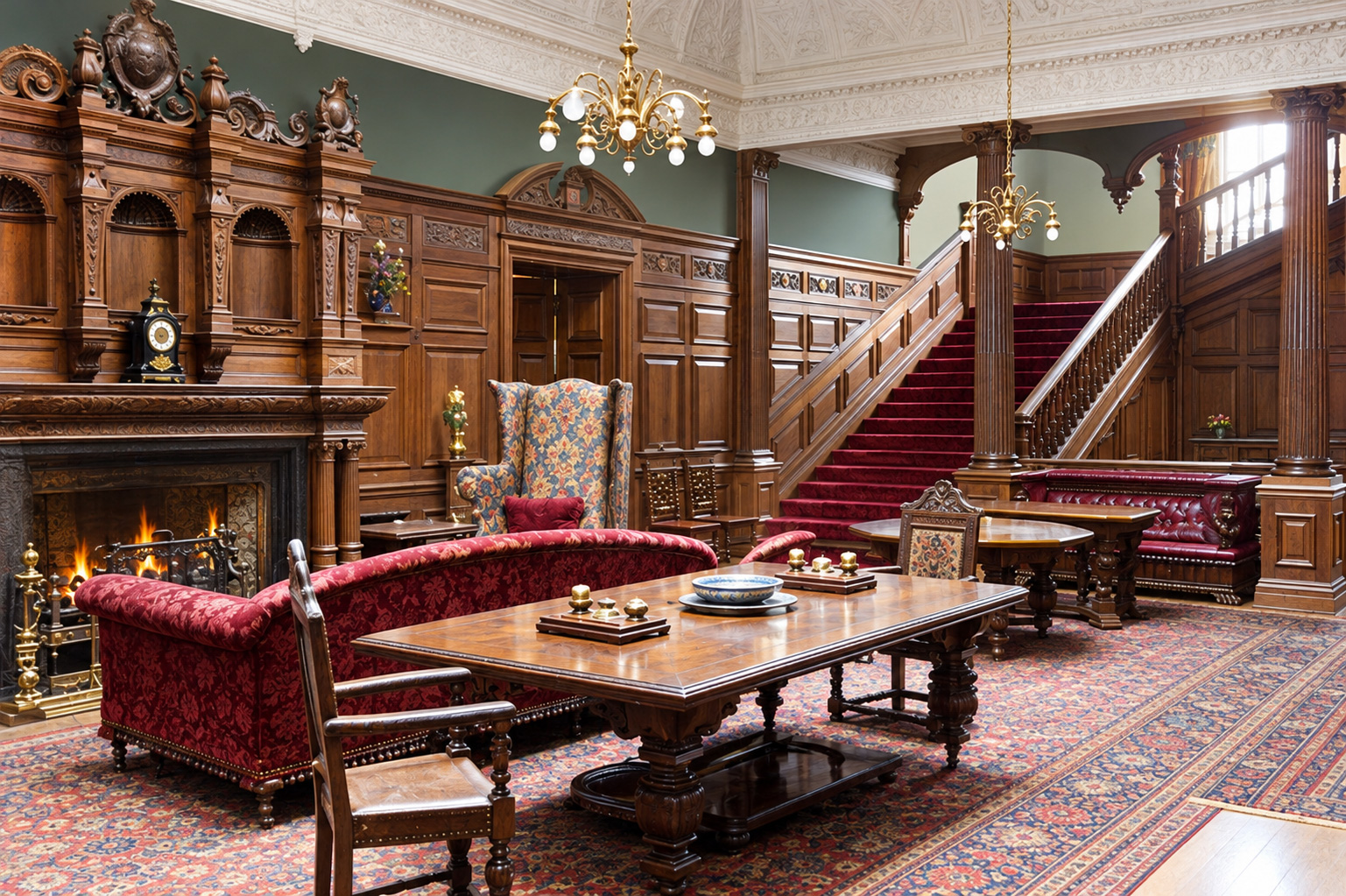
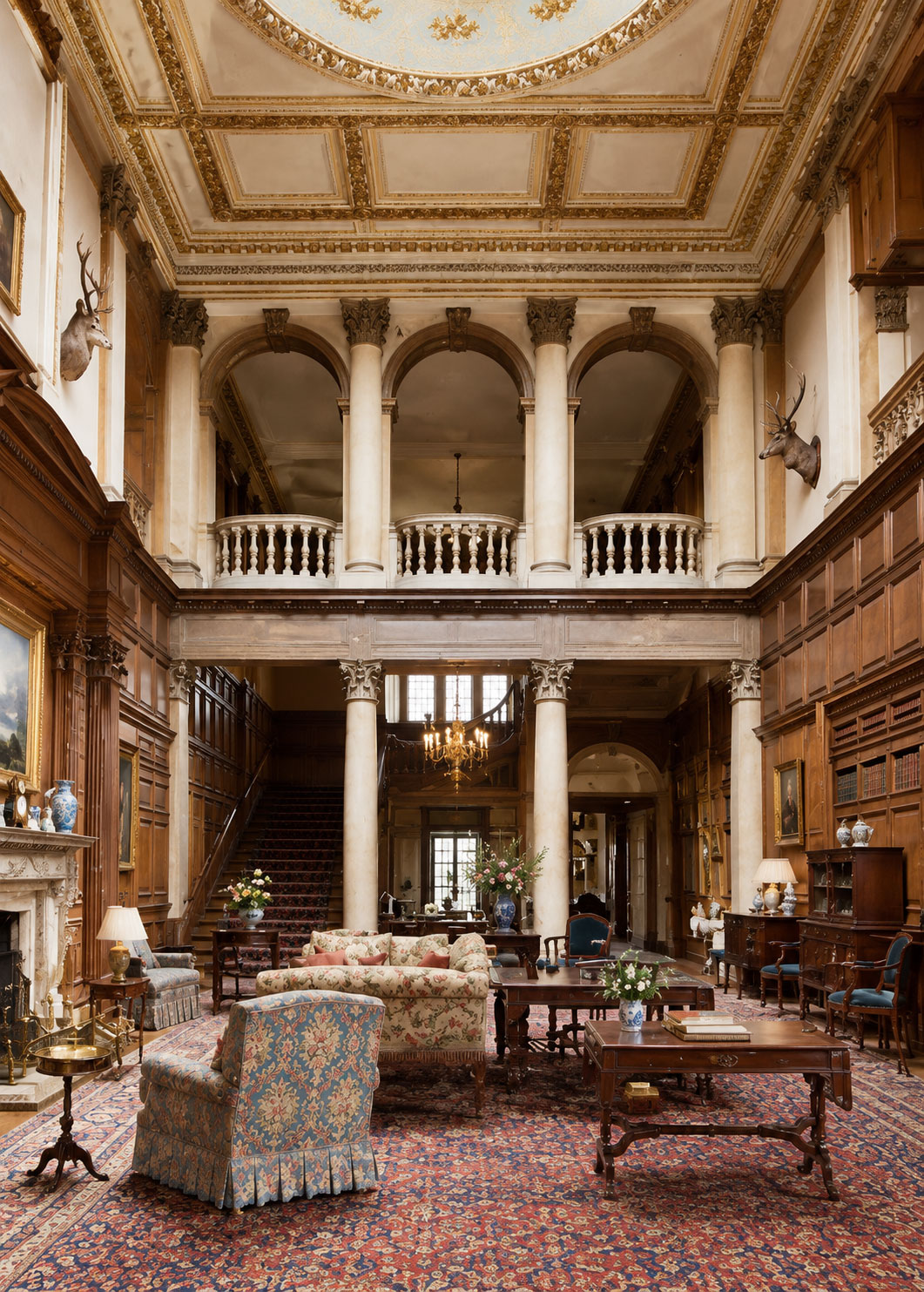
The impressive Entrance Hall and stairway


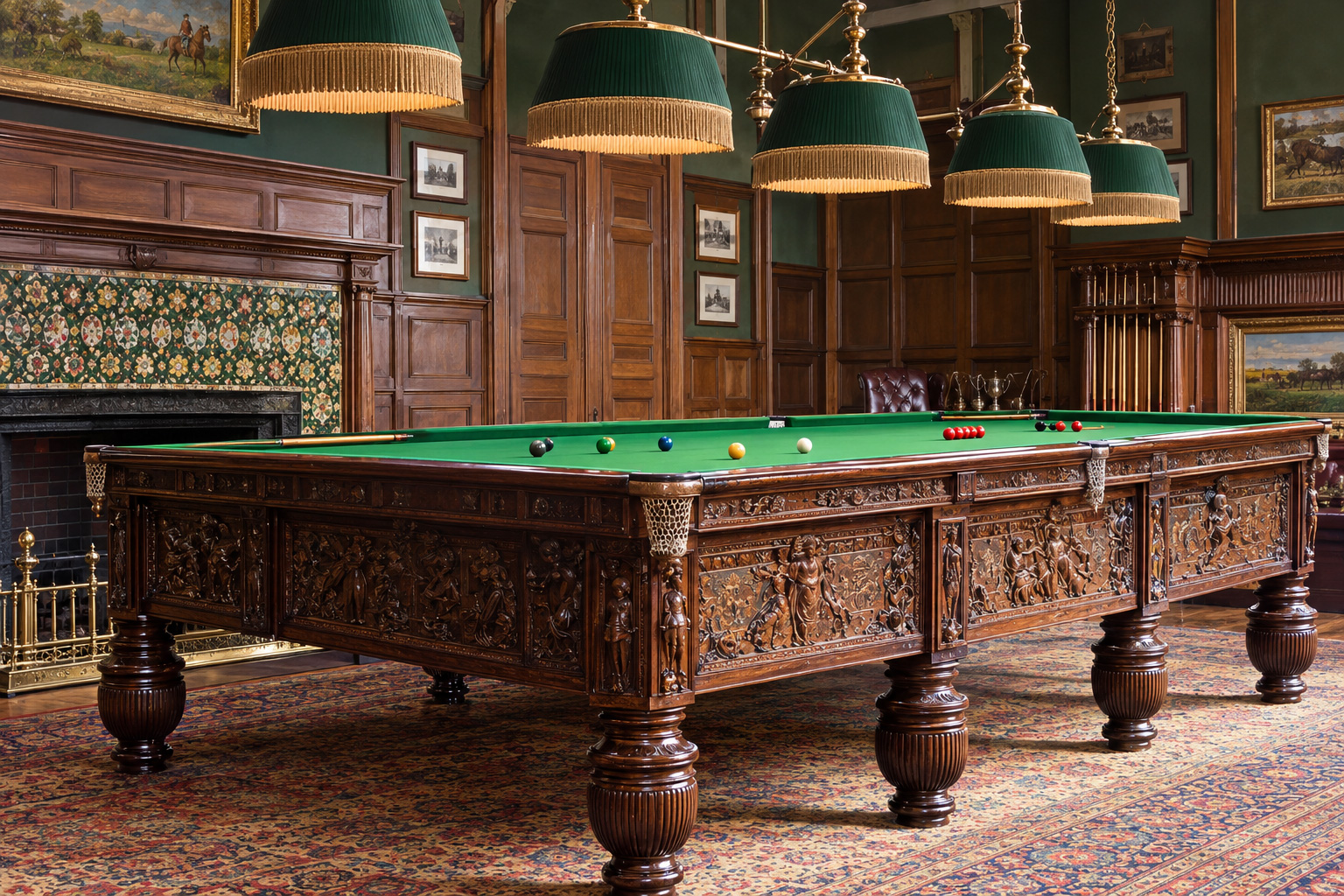
The Billiard Room with its magnificent billiard table.


A 10 year later view of the entrance hall and impressive stairway after a large renovation.
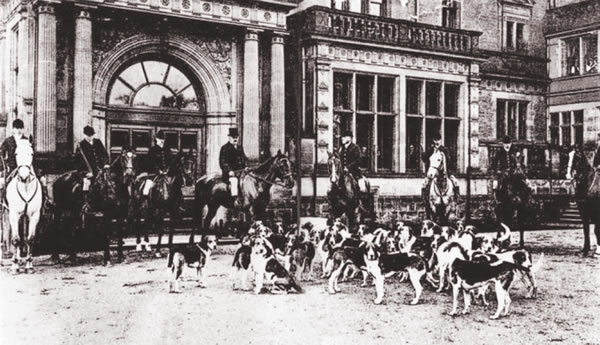
The stables at Byrkley Lodge, which survived for some time after the main house eventually demolished, enjoyed some fame and success. The Byrkley Stud produced ‘Love Wisely’ which won the Ascot Gold Cup in 1896. Hamar Bass was also the master of the Meynell (Fox) Hunt for 12 years so the hunt started at the front of the lodge.

Hamar’s son, William, succeeded in his uncle’s baronetcy according to special remainder and inherited Byrkley Lodge. The great mansion left by Sir William Bass and sold in 1952 was demolished.

Caldwell Hall

Early History
The earliest recorded history of the Caldwell Hall site dates back to 942 AD as an Anglo-Saxon settlement. At this time, it is recorded as Caldewaellan. Close to the modern day hall, there is what appeared to be an important building surrounded by a moat. A small ancient part of the church on the estate are reputed to date back to these pre-Norman times.

After the Norman Conquest, William I, better known as William the Conqueror, was crowned King of England and the whole area effectively fell under his control. Two years later, in 1068, the Manor of Caldwell was one of numerous estates gifted by William to Burton Abbey. There was a significant Manor House at Caldwell. Richard de Calingewood was recorded as keeper in 1351.

As part of the Dissolution of Abbeys by Henry VIII, on 4th November 1540, Abbot Edys was finally forced to surrender Burton Abbey whereupon it was gifted with many lands, which included Caldwell and its manor, to Sir William Paget – a close adviser to Henry VIII who later became 1st Baron Paget of Beaudesert and was a descendant of the Marquis of Anglesey.

On William Paget’s death, Caldwell fell to his son, Henry Lord Paget and it was sold around 1560 to Peter Collingwood. Marriage between the Collinwood and Gresley families led to a relationship between Caldwell Hall and nearby Drakelowe Hall.

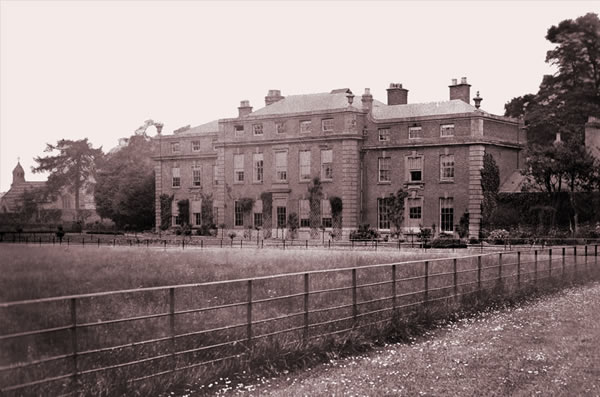
Another family associated with Caldwell Hall is the Sanders. Most famously, Thomas Sanders who was a Colonel in the Roundheads and led an army against Charles I in the Civil War. The Sanders family were responsible for replacing the Manor House with the much more substancial Caldwell Hall on the same site with the oldest existing parts dating back to 1678. The majority of what still stands is, however, Georgian.

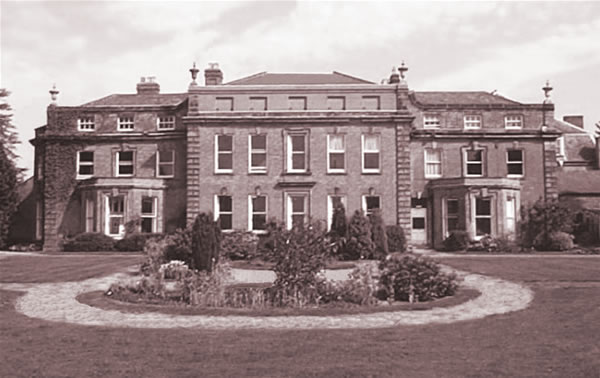
The bow-windowed room on the left was the main drawing room; in the centre section were rooms which included the library and study; the bow-windowed room on the right was the dining room. The first floor housed a principal bathroom and bedrooms. The attic was primarily used for servants quarters. There were a total of 18 bedrooms.

After passing to Thomas Sander’s son, Caldwell Hall was eventually bequeathed to his grand-daughter, Elizabeth, who married local MP, John Mortimer. Their son sold the hall in turn to Henry Evans, a brewer from Burton upon Trent.

Henry Des Voeux
Henry Evans’ daughter, Miss Rebecca Evans, took over the Hall when Henry died but died herself, unmarried, in 1857 and the estate was sold by trustees to one of the most colourful characters to have lived there – Sir Henry des Voeux, 3rd Baronet. Sir Henry married the widow of Sir Roger Gresley, once again, establishing a link between Caldwell and Drakelowe.

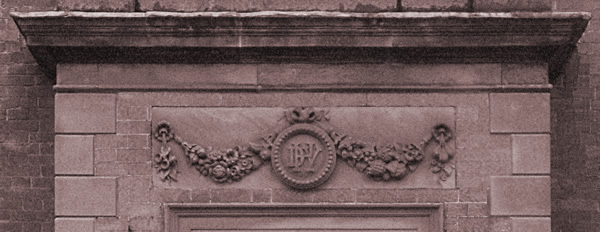
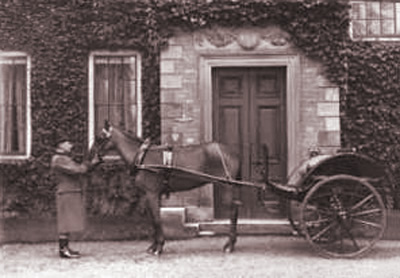
One of the first things he did was to have a stonework insignia, proudly bearing his HDV initials installed over the main entrance as can be seen above.

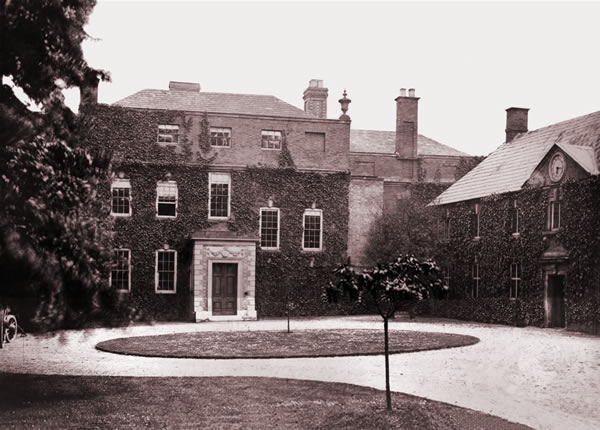
The Henry Des Voeux monogram can still be seen as the carriage waits outside the front door for Miss Milligan. The feature remains in good condition today and preserves his name.

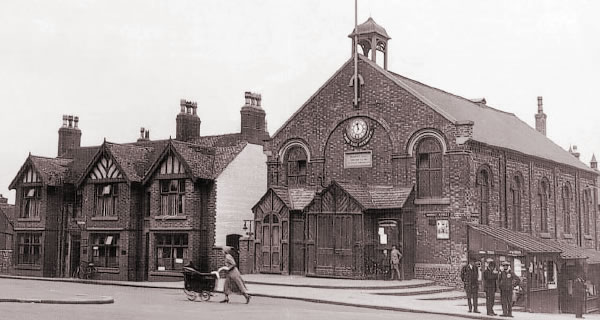
Another well publicised gesture by Henry des Voeux was his donation of the large hall clock for use in the new Swadlincote Market Hall after a plea from local reverend. The original Caldwell Hall clock can be seen in the above 1933 photograph and once again, has survived the test of time and can still be seen today.

The Des Voeuxs lived at the hall until he died in 1858, whereupon his wife moved to London but retained ownership of the hall.

The Milligans
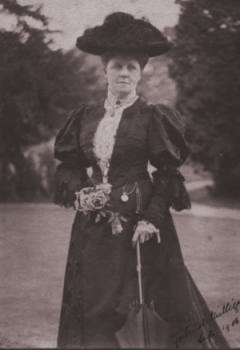
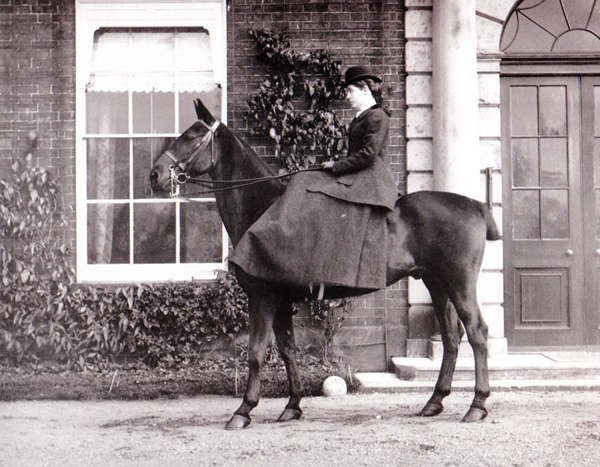
In 1875, on the death of Henry Des Voeux’s wife, the hall passed to Sir Henry’s nephew, Colonel Charles Milligan, who had served with the 39th Regiment. Aside from Charles, the family that moved into the hall was comprised of his wife Gertrude, who can be seen here on the left in a photograph taken at the hall in 1906.

Aside from Charles and Gertrude, the resident family was also comprised of their son Frank William; four daughters Ada Katherine, Blanche Justina, Eva Gertrude and Hilda Caroline; and a relative George, who was better known by his surname Dunbar. It is told that the use of his surname was to completed the first initals sequence of all of the residents as A, B, C, D, E, F, G and H.

The son, Frank, became a Lieutenant with the Rhodesia Frontier Force but was killed in action in 1900.

In 1934, the Milligan’s had an indoor staff of twelve, comprised of the housekeeper, cook, butler, two ladies’ maids; and more lower ranking footman, three housemaids, kitchen maid and scullery maid and hall boy. These two groups would eat separately in different rooms.

Aside from this, there were nine permanent outdoor staff being made up of head gardner, five gardners, groom, chauffer and farm bailiff.

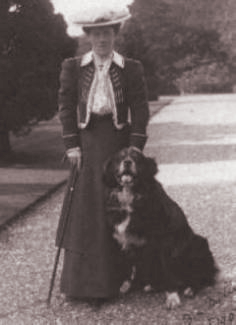
Although Eva was the eldest, it was Blanche who was the best known and most dominant figure and in later years, was rarely seen out without her faithfull dog ‘Ben’; the two of them can be seen in the photograph on the right.

Blanche became a well known local figure during the Second World War years as a leading organiser of the Women’s Land Army, putting the Caldwell estate to good use in support.

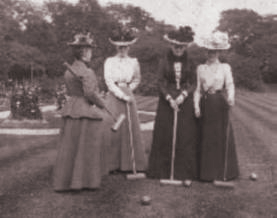
Eventually, only Ada, Blanche and Eva remained and Caldwell Hall was famously, the hall of the three sisters. They can be seen below, some years earlier with their mother, Gertrude, enjoying a game of croquet at the hall.

They died respectively in 1951, 1953 and 1960 which brought to an end, the final era of Caldwell Hall being enjoyed as a private residence.

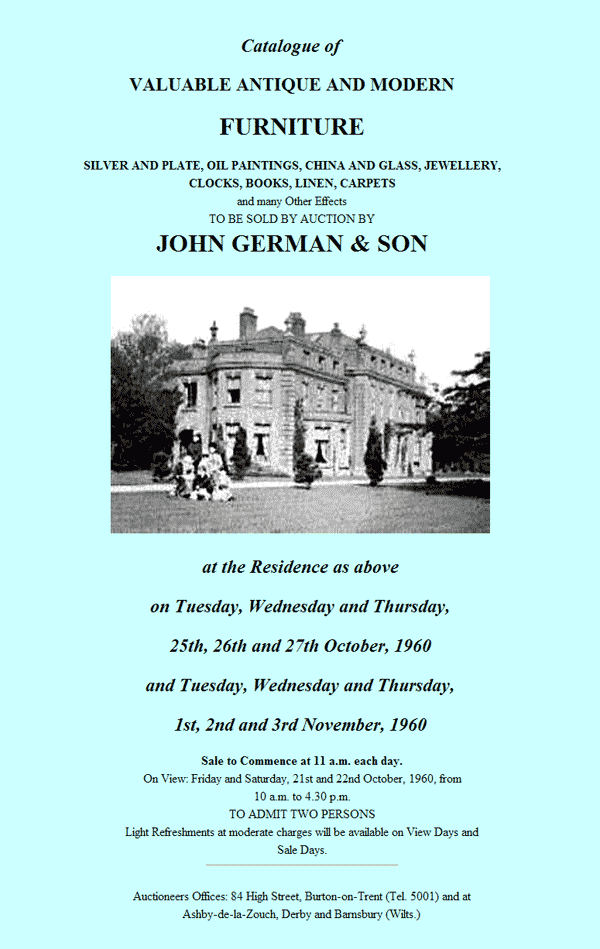
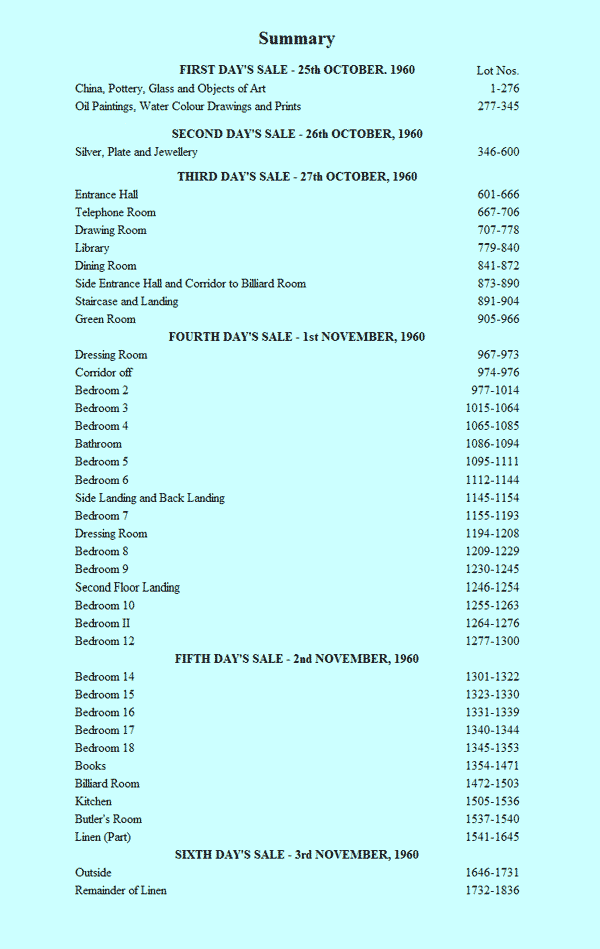
Following the death of the last surving Milligan sister, Eva, in 1960, the entire contents were auctioned off over a six day period from 25th October to 3rd November in 1836 different lots.

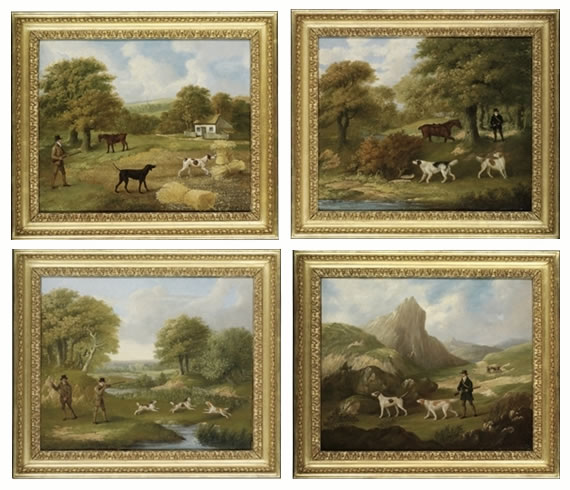
Among the prize items was a set of four hunting pictures by John Nost Satorius, originally bought for Caldwell Hall by Miss Milligan. They took pride of place in Caldwell Hall and are now of considerable value.

The Hall itself was auctioned by John German auctioneers and it became a business premises.

Caldwell Hall still survives today as a special school for children with behavioural difficulties and remains an integral part of the small village of Caldwell.

The final pictures provides a good feel for the main Caldwell Hall grounds complete with its own lake which, in its heyday, had a boathouse.

Rangemore Hall

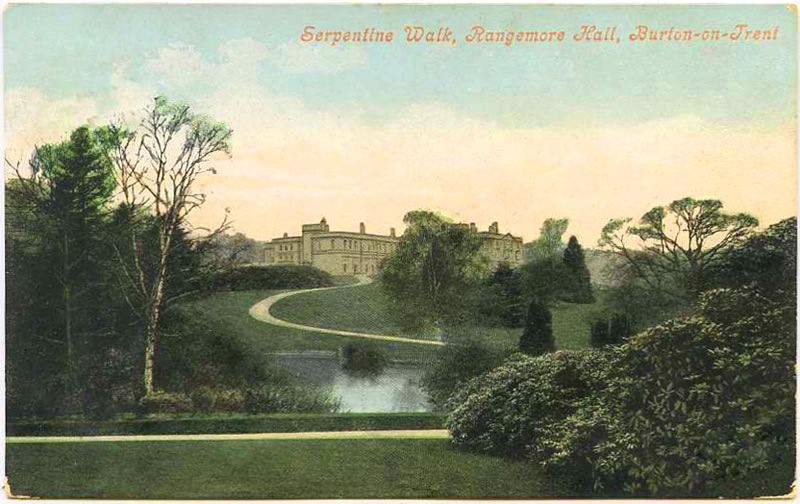
When Michael Thomas Bass II, grandson of William Bass, the founder of Bass Brewery, became head of the combined Bass, Ratcliff and Gretton Brewery, he had Rangemore Hall built in the late 1850s. During the rebuilding, the main road use to run outside the main house, it was diverted to accommodate the new buildings, that is why, what was once a straight road between the two public houses has a bend outside Rangemore Hall. In 1860 Michael Thomas Bass and his family moved in. The grounds and gardens were beautifully laid by a famous landscape gardener Edward Milner and it became the subject of a number of Burton postcards.

Rangemore Hall was reconstructed and extended by his son, Michael Arthur Bass, when he inherited it from his father. A large part of the estate was leased by the Duchy of Lancaster it was subsequently purchased outright by Lord Burton in 1884. The work on the house began in 1898, it was carried out in the Italian style of architecture. During the reconstruction it was fitted out with all mod cons of the time from electric lights to electric lifts. The walls in the dining room were made high enough to hang seven Gobelin tapestries. Below, is a view of the much used drawing room.

The billiard room, not the snooker room as would be the case in later grand residencies, because snooker had noy yet gained popularity. This room was well used by Gentlemen staying at the house after dinner. Staff and servants were taught to listen at the door when game was in play, and to enter after hearing a shot had been played so as not to disturb the players at an inopportune time.

And the very light and airy library.

When the work was completed in 1902, the extension was twelve times bigger than the original manor it was attached to.

King Edward VII made his first public visit to Burton on Trent since his accession to the throne, where he stayed at Rangemore Hall from Friday February 21st till Monday the 24th.  The King was accompanied by one of his well known travelling mistresses, Lilly Langtry, for whom a special one-bedroom flat with discrete access was prepared.

During his stay on the Saturday, he made a public visit to Burton and the brewery where he started a special brew to commemorate his visit, known as “The Kings Ale”. On Sunday, his Majesty attended a public service at Rangemore Church before returning to London on Monday morning.

Just beyond the lake, Lord Burton had a mound constructed and a gap cleared in the forest with two bullet-proof booths one on either side of the clearing connected by rail tracks. The mound was made of shale covered with earth and lawn. A local blacksmith who was persuaded by the Baron to work for him full time, made a magnificent stag out of iron and hide with beautiful head and horns. The servants in the booths would pull the stag along the tracks by rope for Lord Burton and his guests to shoot. The mound has long since disappeared.

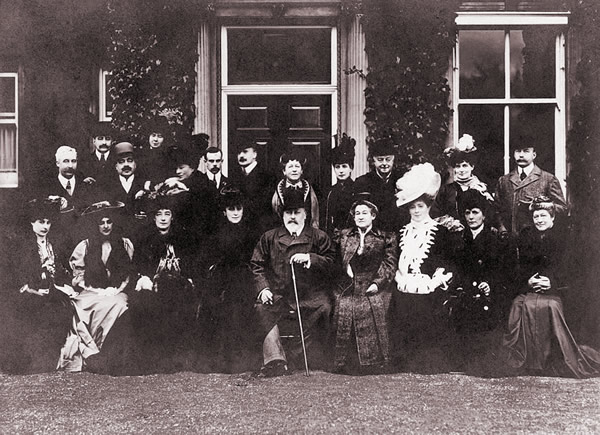
Guests were often from very high society. The below Royal Party, for example, was taken on January 5th, 1907 in front of Rangemore Hall with guests including a return visit from King Edward VII, last there in 1902, together with Queen Alexandra. Tantilizingly, it also features Mrs Keppel, another of the King’s well-known mistresses, seated while Queen Alexandra (now deaf) stands behind. Also of note, Mres Keppel was the great-grandmother of Camilla Parker-Bowles, second wife of Charles, Prince of Wales.

Rear: Austro-Hungarian Ambassador, Lady Alice Stanley.
Back Row: Hon. Col. Legge, Marquis of Soveral, Duchess of Devonshire, Mr Hamar Alfred Bass, Lord Elcho, Miss Jane Thornewill, H.M. Queen Alexandra, Lord Burton (Michael Arthur Bass), Lady Mar & Kellie, Prince Henry of Pless
Front Row: Lady Noreen Bass, Miss Muriel Wilson, Lady Desborough, Lady de Grey, H.M. King Edward VII, Lady Burton (Harriett Bass), Princess Henry of Pless, Mrs Alice Fredrica Keppel, Miss Bunny Thornewill

Nellie Lisa Bass, seen above, inherited Rangemore Hall and the title of Baroness Burton after the death of her father, Lord Burton in 1909. For 70 years Baroness Burton divided her time between Rangemore Hall and her two Scottish homes. Rangemore Hall was becoming too large for her, she once complained of having to cut her servants to seventy. She sold it to Staffordshire County Council on 24th October 1949 for £40,000.

In 1944 the American GIs occupied Rangemore Hall until 1945, some have left their names inscribed on the walls and door of one of the outhouses behind the caretaker’s lodge.

The Baroness moved to Needwood House, still on the estate just one mile from Rangemore Hall, she still travelled to her Scotland homes, always taking her beloved Cairn Terriers with her. The Baroness Burton, born in 1873, led a very active life and died in 1962.

In January 27th 1954 Rangemore Hall was opened as ‘Needwood School for the Partially Deaf’ with 46 children all of whom have been transferred from other deaf schools. The average total number of pupils has been approximately 120 (the maximum number of pupils that could be taken in was 150). During the 1980s the number of pupils coming to Needwood was getting smaller, at the time it closed in 1985 the number of attendants was down to 26.

Just before the school’s closure, over 500 former pupils and staff came to the last grand reunion to say their farewell. The Hall still exists today as luxury apartments.

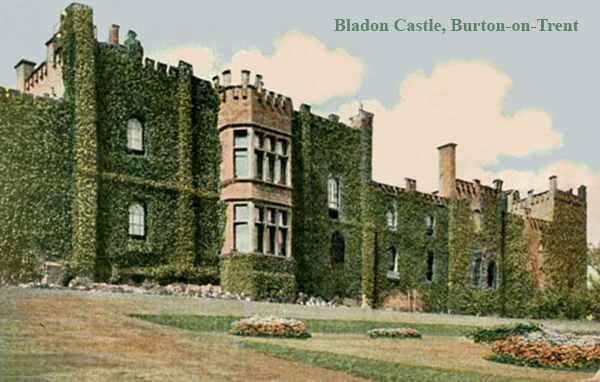
Bladon Castle

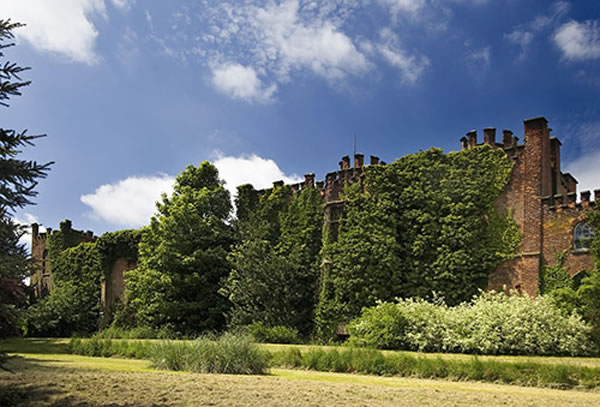
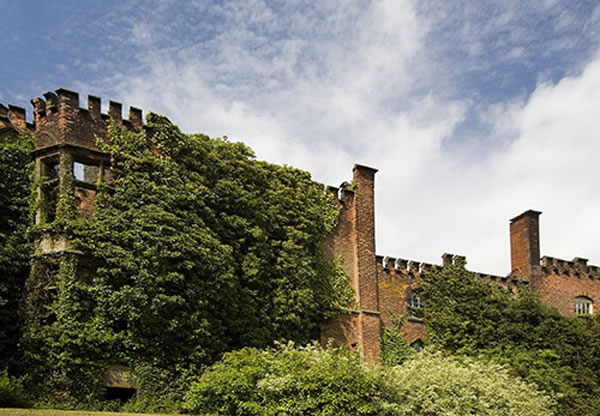
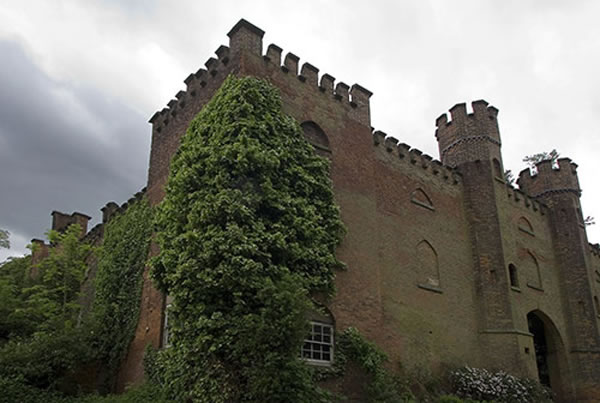
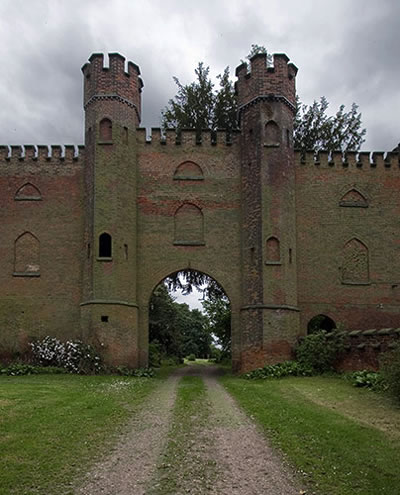
‘Bladon Castle’, just outside of Newton Solney, is not really a castle at all but an extravagant joke by a well-known local landowner that went very wrong!

At the end of the eighteenth century, domestic service was the most common occupation which effectively made the upper and middle classes the country’s largest employer. With society organised very much by class, some people lived lives of unimaginable privilege but with status came responsibility.

It had just been demonstrated in the strongest possible way how things could turn very badly when status was seen to be abused. England’s aristrocats were suddenly very self-aware of conspicuous consumption. Local High Bailiff, Abraham Hoskins, was about to make a serious mis-judgement in this regard.
Hoskins had risen through the ranks from being a successful solicitor with a number of lucrative business interests to become the High Baliff of Burton upon Trent. He was also a director of the Burton Boat Company which leased shipping rights on the River Trent from Lord Paget. A respected pillar of society, his daughter, Sarah Hoskins, married Michael Thomas Bass senior the head of Bass brewery.

In 1795, aged 66, he was winding down and wanted to enjoy the leisurely lifestyle of a land-owning squire. He purchased land at Newton Solney from Sir Henry Every. Designer and architect, Francis Bernasconi, produced plans for an impressive Italianate mansion, Newton Hall, set in landscaped parkland.

At this time, there was a fashion for elaborate architectural conceits known as follies (from French folie meaning a delight or favourite place). Rich landowners, with plenty of leisure and money to burn built elaborate structures such as mock Greek temples, Roman arches, Swiss bridges, Chinese pagodas, and impressive towers in the grounds of their great houses.

Abraham Hoskins, believed to have been strongly influenced by his very much ‘indulged’ and fashionable eldest son, Abraham Hoskins junior, who in his late thirties, still lived at Newton Hall, commissioned a folly on land which formed part of the estate, on the summit of Bladon Hill which was very visible and looked down at the river trent.

The folly, designed by leading architect Sir Jeffrey Wyatville, looked for the world like a castle with pointer armoury windows and full battlements but was in fact, no more than a single long wall, rather like a film set.

In the climate of the Napoleanic war in mainland Europe, England was suffering hardship and was under serious threat of being invaded by Napolean’s Grande Armee. Hoskins had completely under-estimated how antagonistic his fake ‘castle’ would be and there was absolute upcry.

With such strong local reaction, the Hoskins family tried to defuse the situation by hurriedly building blocks of rooms behind the castle frontage an moved in claiming that this had always been the intended purpose. This was however, a far from popular idea with the Hoskins themselves. They had left the great comforts of Newton Hall to live at a site that had no services, including running water, and no sensible access. Daily supplies had to be hauled uphill by mule. Added to that, in tough times, the unexpected expense of having to turn the folly into an habitable ‘Bladon Castle’ had seriously stretched family finances with even talk of having to sell Newton Hall. Abraham senior died soon afterwards, in 1805. A marble tablet in Burton’s Saint Modwen’s church commemorates his life. Abraham junior was left in charge of the family’s very dwindling fortune. It turned out to be an extremely expensive folly!

Abraham Hoskins junior, with strong interests in betting and country sports, invested in hare coursing with characteristic over-the-top exuberance. He set up his own breeding pack of hounds, all with names beginning with ‘H’, such as Hasty, Highlander, Hermes, High Flyer, Huntingdon and Henrietta. Although he achieved some fame, the huge sums lavished on his ‘hobby’ bore no relation to the relatively modest money generated and prizes took the form of trophies rather than cash. Inevitably, the money soon drained away and in 1836, Hoskins was forced to sell Newton Hall to his neighbour, Lord Chesterfield, and move to a ‘much more modest’ house in Uttoxeter.

Lord Chesterfield rented Newton Hall to Burton brewer, William Worthington but in 1890s another local brewer, Richard Ratcliff of the highly successful merged Bass, Ratcliff and Gretton Brewery, purchased the property. It was sold by the Ratcliff estate and became the Newton Park Hotel in 1966.

Ratcliff’s brewing partner, John Gretton, accompanied him to Newton Solney and moved into Bladon Castle. By this time, the property had been made much more comfortable and was equipped with efficient pumps to supply water and had a good access track.

The War Office requisitioned Bladon Castle during the Second World War following which, it was purchased by Air Chief Marshall Sir Ralph Cochrane who most famously, led the dam busters raid and Berlin airlift and who became Managing Director of Atlantic Shipbuilding Co. (1953 – 56), Rolls Royce Ltd. (1956 – 61) and Chairman of RJM Exports Ltd. (1962). It was later owned by neighbouring Sheperd’s farm.

As if still sensitive of public disapproval, ‘Bladon Castle’ is now completely shielded from view by ‘Castle Woods’.

With its interesting if chequered history, Bladon Castle was the subject of a Burton postcard.