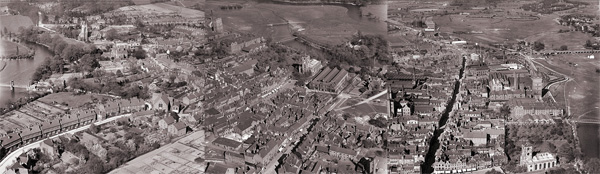
1920s Burton from Above
Select page to view:
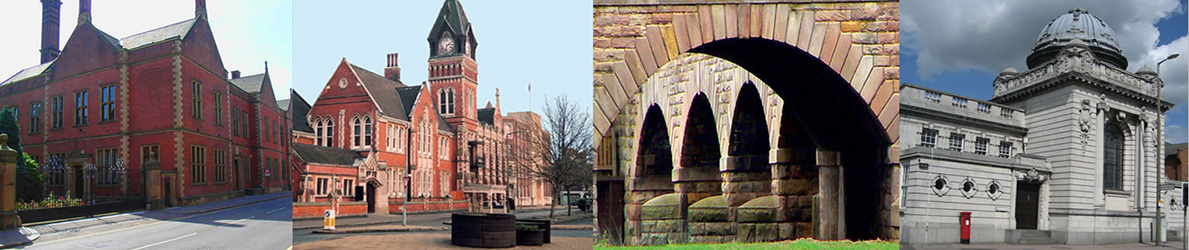
1920s Burton from Above
Select page to view:
Burton upon Trent when renown as one of the most significant brewing towns in the country, was famous for having its own internal railway system solely to serve the breweries.
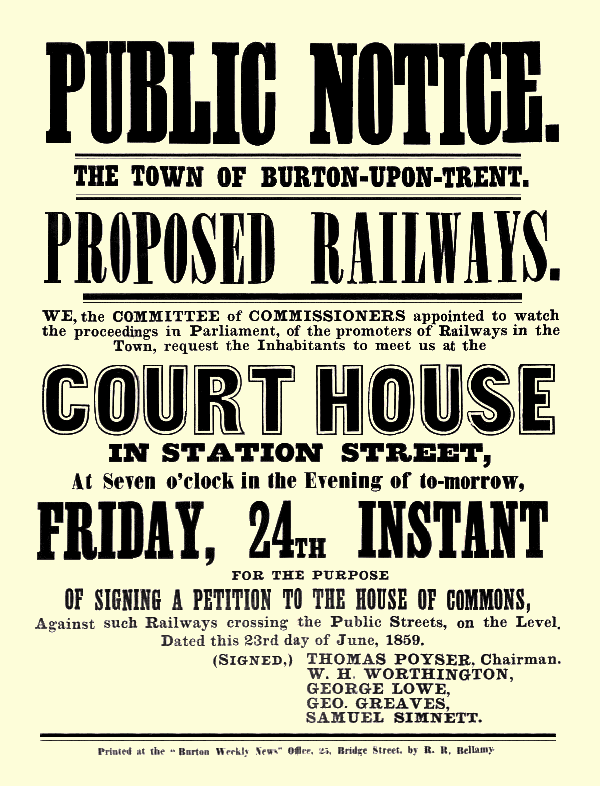
Brewers aside however, the plans were not met with enthusiasm, largely because of the many proposed railway crossing that would disrupt the traffic. In 1859, notices were posted all over the town prompting readers to meet at the Court House in Station Street to sign a petition to the House of Commons “Against such railways crossing the Public Streets”. Slightly surprisingly, one of the signatories was W.H.Worthington (who would eventually go on to become Burton’s first Mayor). This might suggest that the Worthington Brewery could manage without them more than some of its competitors!
As anticipated, the town’s internal railway had become more infamous than famous with vehicle drivers and pedestrians alike by the time it had reached its peak of 32 railway crossings.
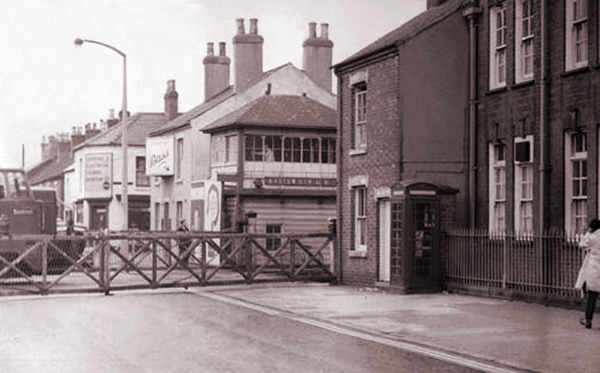
The crossing in New Street with Burton General Hospital in the foreground.
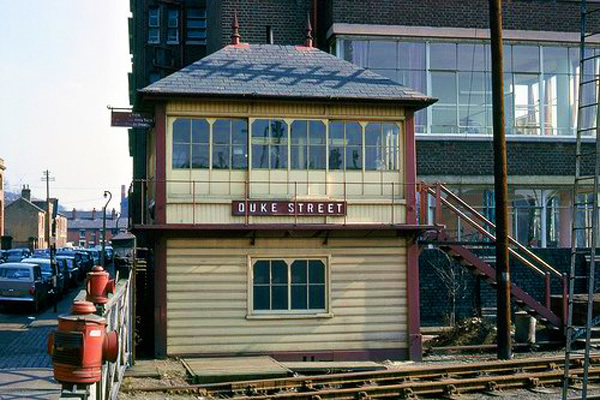
A later photo from a little further down from the New Street Crossing above, this time in Duke Street with the ‘new’ wing of the Burton General Hospital behind.
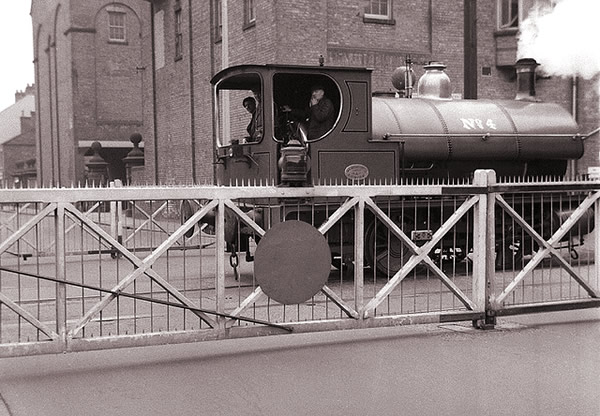
A view of the Station Street crossing in action.
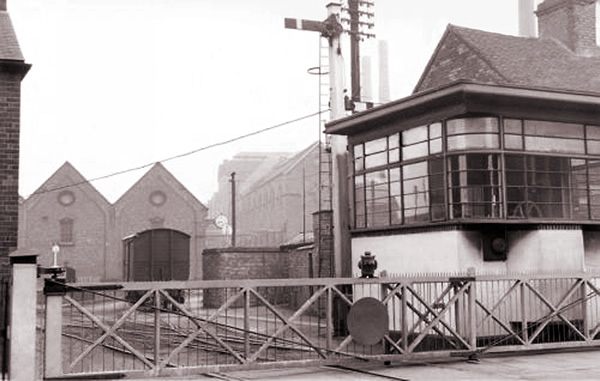
A view of the opposite side of the road reveals one of the more ‘modern’ style of control box.
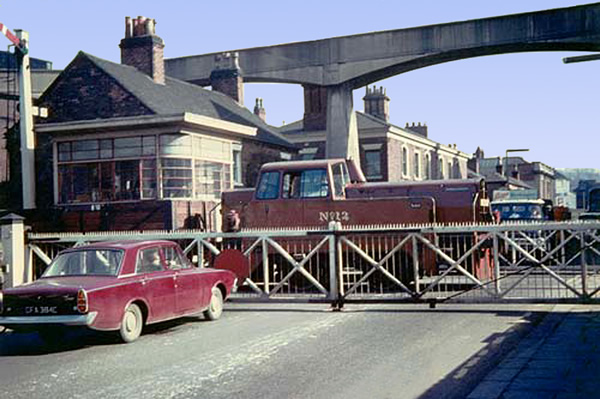
A later view of the same Station Street crossing. I am not too hot on brewery trains but I CAN say that the car waiting is a 1965 Ford Corsair with its distinctive pointed front.
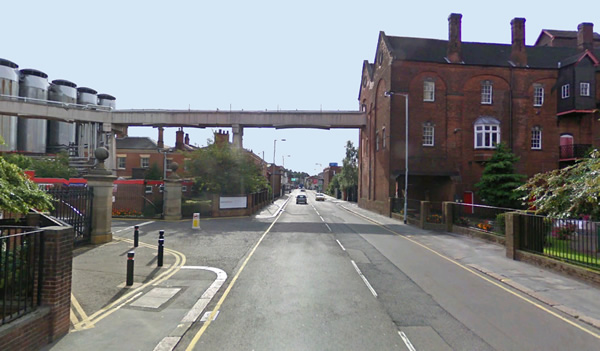
The present day site of the Station Street crossing still has lots of features that can be picked out from the photos above but even still, it is difficult to image trains running back and forth across the road all day.
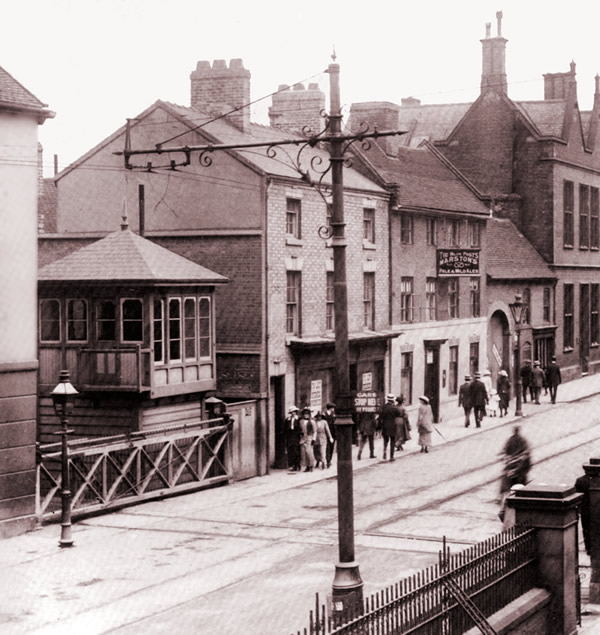
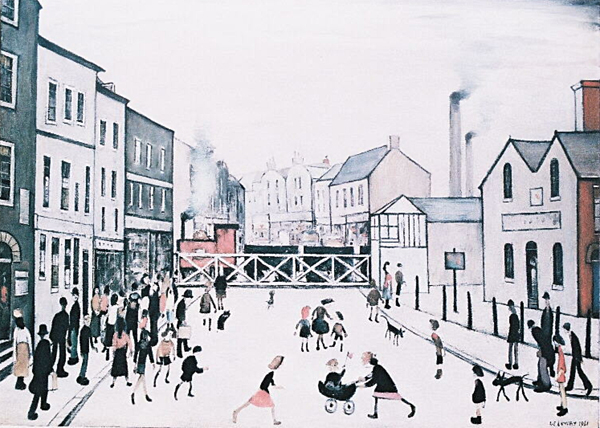
The crossing next to the Blue Posts in High Street was some time later immortalised by being featured in an L.S. Lowry painting, ‘The Crossing’.
THE GRESLEYS OF NETHERSEALE
The Manor of Seale was purchased from Sir George Gresley by Gilbert Morewood, a London merchant and friend of Sir John Moore, who built a school at Appleby in Leicestershire. Seale derives its name from ‘Scegel’ which meant ‘a small wood’. This wood divided the manor into two parts – upper and lower, now known as Overseal and Netherseal.
This manor was soon restored to the family by the marriage of Gilbert Morewood’s daughter to Sir Thomas Gresley, the second baronet, and in due course it was settled upon the second son of the marriage. By this means a branch of the Gresley family became established at Netherseale and when the main line of the family died out in 1837 with the death of the 8th baronet, a descendant of this branch succeeded to the title and the family estates.
Frances Morewood, Lady Gresley, appears to have been a forceful character. In a letter to Sir John Moore concerning Mr. Waite, a schoolmaster who lived within a mile of Drakelow and had been recommended for the head mastership of Appleby School, she remarked that Sir John was right not to appoint any one to that position for life but only while of good behaviour, adding that Repton School had been ruined by the opposite principle. In their old age Frances and her husband acquired the reputation of being miserly and a tradition arose that large sums of gold and silver were hidden in Drakelowe Hall – but none was discovered when the mansion was demolished in 1926.
SIR NIGEL GRESLEY, 6th BARONET
Sir Nigel Gresley, 6th Baronet (1726-1787) was born at Drakelowe Hall.
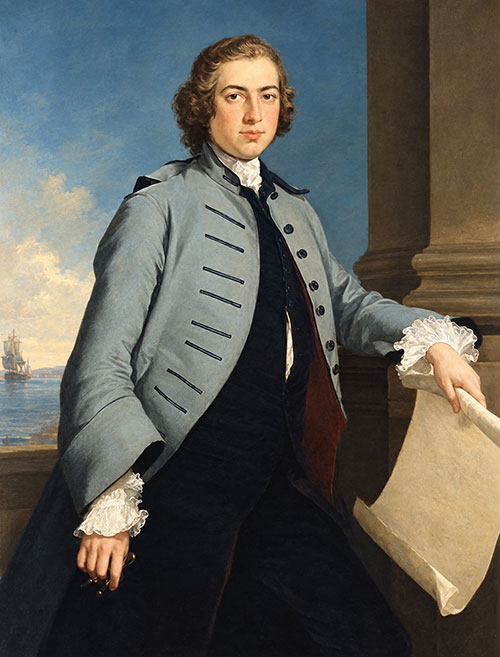
In 1953, Nigel Gresley succeeded his elder brother Sir Thomas Gresley, 5th Baronet who died of smallpox without issue. As well as Drakelowe, Gresley inherited from his mother’s family their home of Knypersley Hall at Biddulph, Staffordshire. Drakelowe Hall was still inhabited by Dame Wilmot Gresley, and so Nigel lived at Knypersley. As part of these he owned several coal and iron ore mines. James Brindley he had him build a water engine for draining the mines there in 1752.
He enrolled in the Royal Naval Academy and, by the end of 1746, Gresley was serving in the 24-gun frigate HMS Bridgewater, a prison ship stationed in the Firth of Forth, as a volunteer. Bridgewater transported the Jacobite rising rebel Flora MacDonald to London, leaving on 7 November and arriving in the River Thames on 29 November. Gresley, who was suggested to be a quiet supporter of the Jacobites, was gifted a Richard Wilson portrait of her in thanks for the kindness shown to her in captivity. He was then promoted to lieutenant on 22 April 1748 and was appointed to serve on the 22-gun frigate HMS Inverness, which he did until she was paid off on 14 November of the same year, having served only in home waters. He did not serve again in the Royal Navy due to increasing rheumatic issues, and declined a posting to the 24-gun frigate HMS Mercury in March of 1749 or 1750.
Retired from the Navy, he became High Sheriff of Staffordshire in 1759, serving out his year-long term of office.
In 1765 he and his family moved from Knypersley to Worcester both to allow his children better access to education and to help Gresley lessen the weight of some debts, accrued from unsuccessful business ventures. He subsequently sold Knypersley via the Gresley’s Estate Act 1767 in a further effort to pay off his debts.
Sir Nigel Gresley’s Canal Act 1775 was passed allowing Gresley and his son to build a private canal from Apedale to Newcastle-under-Lyme so that he could more easily transport the mine’s products of coal and iron ore. The canal opened in 1776 and was named Sir Nigel Gresley’s Canal; the act provided Gresley with a monopoly over coal in Newcastle, with all coal apart from that used for pottery coming from his mines and canal for a period of forty-two years. Mostly built on land already owned by Gresley, the project resulted in the price of coal being set at the same rate until the expiration of the act, greatly to the benefit of the local public.
After moving to Bath for health reasons, Gresley died there in 1787 from what was then known as dropsy; he was buried in Bath Abbey where he is remembered by a plaque within the Abbey.
SIR ROGER GRESLEY, 8th BARONET
Sir Roger Gresley, 8th Baronet, succeeded to the title when eight years old. He grew up to be a man of many parts, a politician, a dandy, an author, a virtuoso, a sportsman, a country gentleman, and an antiquary. He became High Sheriff of Derbyshire and a Captain in the Staffordshire Yeomanry. Sir Roger fought several Parliamentary elections and incurred considerable debts thereby. In 1828 he sold the site of the Priory at Gresley, as well as the Castle Knob and Gresley Hall. In 1836 he sustained severe injuries by a fall from his horse and died from the effects a year later.
Sir Roger, against his mother’s wishes, married Sophia, youngest daughter of the Earl of Coventry, and their only child leved only a few weeks. So, on Roger’s death, the title and family estates passed to his cousin, the Rev. William Nigel Gresley, Reactor of Seale, with the exception of a life interest in Drakelow which passed to Roger’s widow.
Lady Sophia married as her second husband Sir Hentry des Voeux Bt., who lived with her at Drakelow Hall, and as she did not die until 1875, the ninth and tenth baronets never resided there.
Concerning Sir Henry des Voeux while living at Drakelow, there are two good stories told. When Swadlincote market hall was built by public subscription in 1861, the money was insufficient to install a clock and the Vicar, the Rev. J.R. Stevens, undertook to ask Sir Henry for a donation. Unfortunately, Sir Henry, suffering from gout, had just received news of the loss of a lawsuit, so the Vicar’s request met with a curt refusal. On second thoughts however, Sir Henry added: “You can have your clock if these words are placed beneath it, ‘TIME THE AVENGER’. I’ll beat these lawyers yet”.
The other story was related to me by the late Charles Hanson, a noted local sportsman (1836-1931). Sir Henry gave him permission to shoot wildfowl on the Trent at Drakelow provided certain ducks were left alone. But when one of these birds suddenly rose before him he brought it down with a quick shot. Unluckily Sir Hentry saw this happen and summoned him to the Hall. On arrival the butler warned him Sir Henry was very angry. As he entered the room he was greeted by the words “What the devil do you mean by shooting that duck, you will not shoot here again”. After this wigging he was dismissed and met the butler on his way out. “What did the old man say?” he queried. “Oh it’s all right”, was the reply “he told me to ask you for a drink!”
Some time late Sir Henry said to the butler “Has that young devil gone?” “Yes, Sir Henry”, was the reply, “and I gave him a drink as instructed”. This amused Sir Henry so much that he sat down and penned a letter restoring permission to shoot on the estate again.
The Rev. Sir William Nigel Gresley, who succeeded his cousin Roger as ninth baronet, had followed his father as Rector of Netherseal in 1830 and spent the remainder of his life there. To pay Sir Roger’s debts the manor of Lullington was sold to C.R. Colville for £98,000.
Devoted to hunting, Sir William was forced to give this up owing to ill health and on his death in 1847 he was succeeded by his son Thomas as tenth baronet, who was at that time a Captain in the 1st Dragoon Guards and an aide-de-camp to the Lord Lieutenant of Ireland.
More of the Gresley inheritance was sold by him, including Coton Park and land at Church Gresley and Linton. He was elected to represent South Derbyshire in Parliament in November, 1868, but died a month later. As Drakelow was still occupied by Lady Sophia, he resided at Caldwell Hall, lent to him by Sir Henry des Voeux Sir Thomas was succeeded as eleventh baronet by his son, Robert, who was then only two years old.
On the death of Lady Sophia des Voeux in 1885 the Drakelow estate came into the possession the new baronet. As he was still a minor, Drake-low Hall was let for a time to John Gretton, the brewer, who came there with his family from Bladen House, near Burton-on-Trent. The family included John Gretton junior (afterwards the 1st Baron Gretton of Stapleford Park) and his brothers Frederick and Rupert and his sister Katherin.
On attaining his majority Sir Robert Gresley took up residence at Drakelow and in 1893 he married the eldest daughter of the eight Duke of Marlborough. A Deputy Lieutenant for Derbyshire and later High Sheriff, he took an active part in county affairs.
Sir Robert made many improvements in the mansion and gardens at Drakelow and was. responsible for the construction of the terraced river frontage of the hall. He was one of the best shots in England and reared game on a large scale, but increasing taxation and dwindling resources finally compelled him to sell the estate of his ancestors of which he was so proud.
He died in 1936 and was succeeded by his eldest son Nigel (born 1894) as the twelfth baronet. The heir to the baronetcy is Sir Nigel’s brother Laurence(born 1896).
A notable member of the family was the Rev. John Morewood Gresley, the son of the Rev. William Gresley and half brother of the ninth baronet. Educated at Appleby Grammar School and Harrow, he graduated M.A. at Oxford and took Holy Orders, becoming Reactor of Seale and subsequently Master of Etwall Hospital. A Fellow of the Society of Antiquaries and an archeologist of some renown, he married a great granddaughter of Dr. William Stukeley, the celebrated antiquary.
The Rev. J.M. Gresley was a founder of the Leicester Archaeological Society and of the Anastatic Drawing Society. In 1861 he carried out an extensive and systematic excavation of the foundations of Gresley Priory. He also compiled “Stemmata Gresleyana” and gathered together a large number of family papers which were extensively used in the compilation of ‘The Gresleys of Drakelowe’ by F.C. Madan in 1899.
During the course of a Parliamentary election at Ashby de la Zouch in 1865 he imprudently drove into the town with his horses and carriage decorated with blue ribbons. These Conservative colours infuriated some people so much they surrounded his carriage and followed him into a house in Wood Street where he was handled so roughly that he died a few months later.
SIR NIGEL GRESLEY
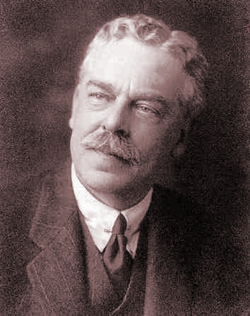
Probably the most notable member of the family from today’s perspective was Sir Herbert Nigel Gresley, C.B.E., D.SC, M.I.C.E., M.I.MECH.E., M.I.E.E. shown here. He was born in 1876 he was the fourth son of the Rev. Nigel Gresley (9th baronet) and nephew of Sir Thomas Gresley (10th baronet) and cousin of Sir Robert Gresley (11th baronet).
Sir Nigel, as he preferred to be called, was educated at Marlborough and early evinced an interest in railway locomotives, sketching them at the age of 13. After serving as an apprentice in the railway works at Crewe, he entered the service of the L. & Y. Railway at Horwick, and in 1905, at the age of 31, was appointed carriage and wagon superintendent of the G.N. Railway at Doncaster.
Sir Herbert Nigel Gresley first worked on the railways as an apprentice at Crewe eventually working for the Lancashire and Yorkshire Railway. Appointed carriage and wagon superintendent of the Great Northern Railway in 1905. In 1911 he was appointed locomotive engineer, being then in his thirty-sixth year and in the same year, he succeeded H.A. Ivatt as Chief Mechanical Engineer. In 1923 he was appointed Chief Mechanical Engineer of the London & North Eastern Railway, being knighted in 1936. He was also president of the Institute of Mechanical Engineers in 1936.
During the First World War of 1914-18 war, he was responsible for the design of armoured trains and held the rank of Lt. Colonel in the Royal Engineers. On the grouping of the railways he became chief mechanical engineer of the L.N.E. Railway and had the task of integrating the technical staffs of the constituent companies into one team. For over 30 years he exercised an influence over the design of British locomotives in a career which has no parallel.
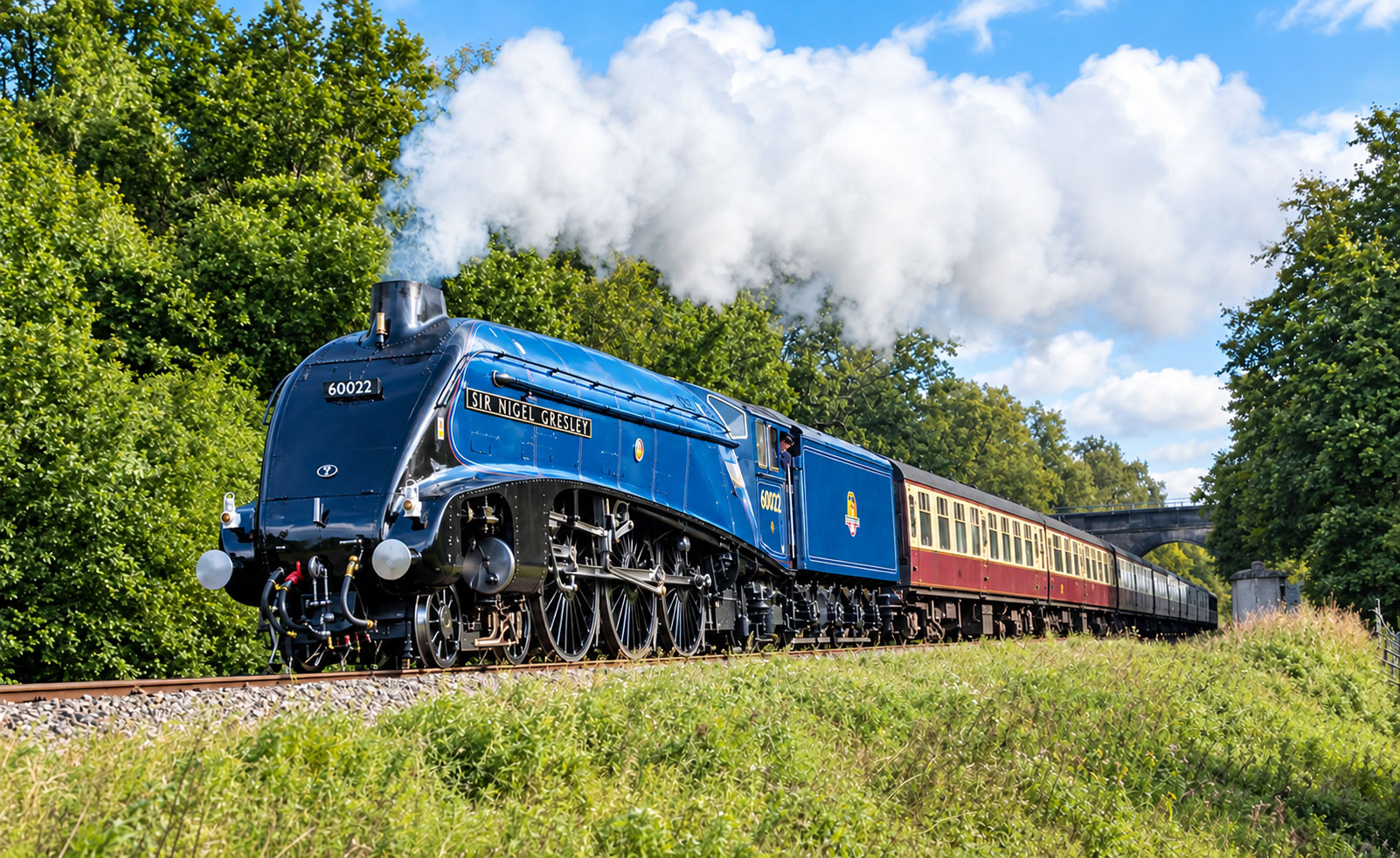
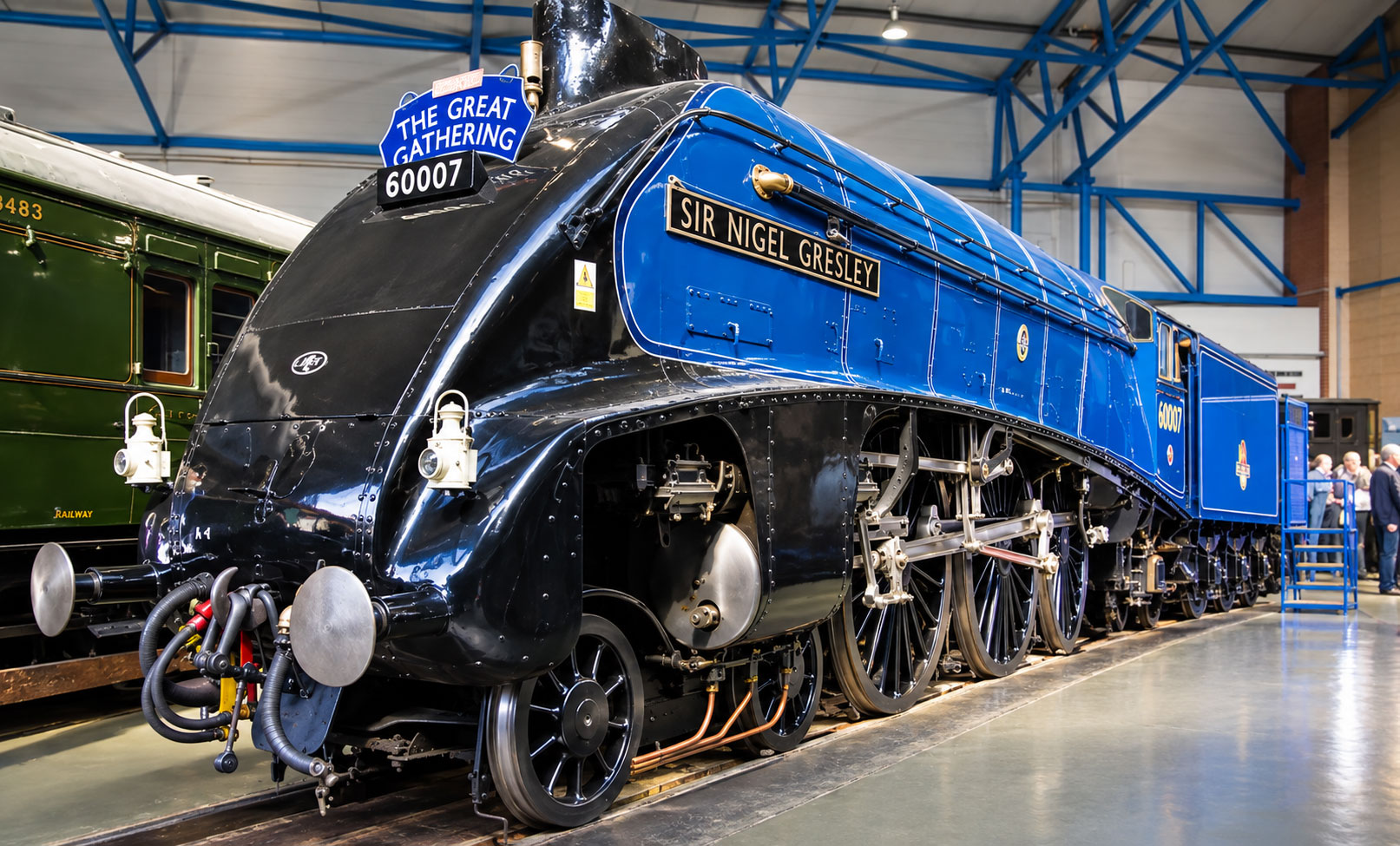
He designed the silver jubilee trains of 1935 and on November 26th, 1937, the name-plate “Sir Nigel Gresley”, affixed to his 100th “Pacific” locomotive, was unveiled by the chairman of the L.N.E. Railway – a tribute never before paid to any living locomotive engineer. This picture shows the 100th Pacific locomotive, which was named after him.
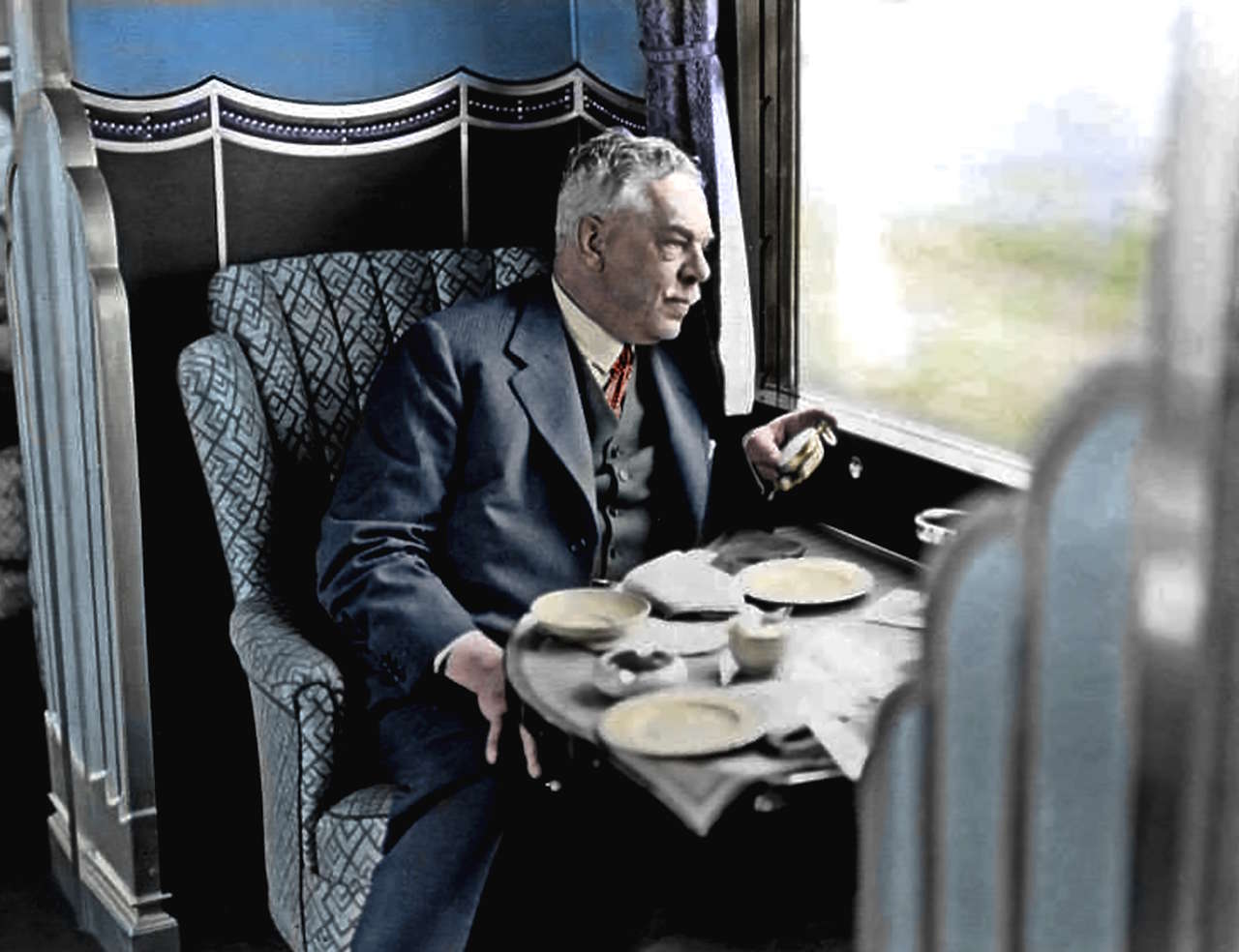
The interior also enjoyed the grandeur of the day with salubrious ‘Art Deco’ styling. Sir Nigel can be seen below enjoying the results of his labour.
Sir Nigel was created C.B.E. in 1920 and knighted in 1936. He died in 1941, three months before he was due to retire, and is buried in Netherseal church near the home of his ancestors.
THE GRESLEY COAT OF ARMS
The Gresley Arms are “Vaire, ermine and gules” (i.e. silver and red). Armorial bearings came into use during the last quarter of the 12th century and it was not unusual for a tenant at that time to adopt the arms of his feudal lord.
It is therefore probable that William de Gresley, who was exempted from all but nominal service to his feudal overlord, William Ferrers, 4th Earl of Derby, in 1200, assumed the Ferrers Coat of Arms “Vaire or and gules” (i.e. gold and red) with a change of tincture.
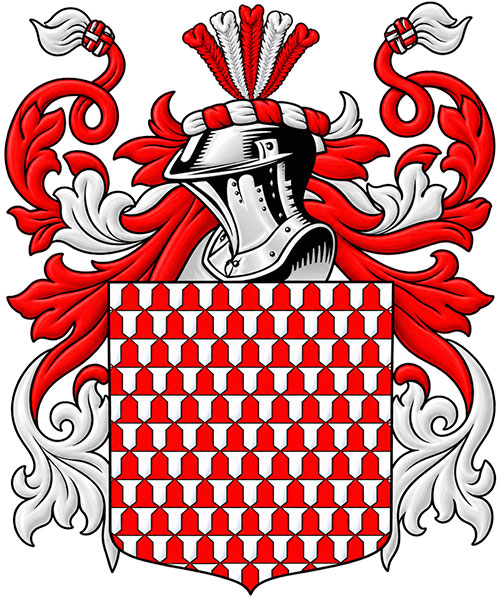
These arms appear for the first time on the family seal of Geoffrey de Gresley circa 1240. With the creation of the baronetcy in 1611, the badge of Ulster was added to the cost of arms borne by the head of the family.
The family crest is a “lion passant, ermine, armed, langed and collared gules” the first occurs in 1513.
The family motto was meliore guam fortuna – “More faithful than fortunate”
DRAKELOWE HALL, GRESLEY HALL AND GRESLEY CHURCH
The site of the earliest mansion or castle at Drakelow is unknown, but there is evidence of an early structure at the junction of the Walton and Rosliston roads. The site of the moat is clearly visible and it enclosed an area measuring 75 yards by 75 yards. This site was outside Drakelow Park, which was enclosed at a much later date. Excavation would probably reveal traces of foundations of a structure which may have been built by William de Gresley on his return from Castle Gresley in 1201.
It was notable that this piece of land was excluded from the sale of the Barn Farm, of which it forms part, in 1933. At the final sale of the remainder of the Drakelow Estate it was purchased by Mr. J. Hulse, of the Barn Farm, who felled the trees growing on it and eventually sold the land to Sir Clifford Gothard the present owner of the farm.
At present the land is covered with a thick growth of scrub but it is hoped that at some future date a systematic excavation of the site may yet take place to throw some light upon its past history.
It would appear that between 1086 and 1090 a motte and bailey castle of the usual Norman type had been built in a clearing in the large wood mentioned in the Domesday Survey, and that Nigel de Stafford was in residence there. Of 51 of these Norman structures, 36 were built in places insignificant before the Norman Conquest. These strongholds were erected to overawe the Anglo-Saxons, and to serve as a place of refuge in case of any uprisings.
A wide ditch of considerable depth was dug in a circle, the earth being thrown inwards to form a lofty mound, advantage being taken of a natural mound if this was available. On the flattened top of the mound, or ‘motte’, a wooden tower was erected to serve as a residence for the lord and his family.
In addition to the ditch, which was crossed by a drawbridge, the mound was protected by a wooden stockade. Outside the ditch a “baily” or courtyard, of varying extent but usually of half-moon shape, was surrounded by a further ditch and also protected by a stockade. Within this space, huts, barns and cattle shelters were erected for labourers attached to the manor. As the structure and palisades were of wood there are no visible remains except the mound which is now known as ‘Castle Knob’. It is from this ‘motte and bailey’ castle erected in a ‘Grassy Lea’ in the large wood that the place-name of GRESLEY is derived.
Concerning the late hall in Drakelow Park, Sir Robert Gresley (eleventh baronet) stated that the date of foundation of this structure was not known, nor was it easy to determine from the available evidence. Described in the sale catalogue as ‘Elizabethan’, it may have contained some earlier work, but during successive centuries considerable alterations and improvements had been effected.
The greater part of the mansion was apparently rebuilt by Sir William Gresley (fourth baronet) in 1723 for this date appeared on several leaden waste-pipe heads.
Sir Roger Gresley (eighth baronet) altered the west front considerably and built a billiard room and the bedrooms above it c1830. Sir Robert (eleventh baronet) also effected some alterations and improvements both in the mansion and the gardens, the most notable being the construction of terraces leading down to the river front which were completed in 1902 in memory of his mother.
On the dissolution of Gresley Priory in 1543 the buildings were sold to Henry Criche, a speculator in monastic properties. Thirteen years later they were purchased by Sir Christopher Alleyne, son of Sir John Alleyne, twice Lord Mayor of London. Sir Christopher, who had property in Kent, married a daughter of Sir William Paget, who had acquired the monastic properties of Burton Abbey, and possibly this influenced his purchase of Gresley Priory.
He pulled down the Priory buildings, except for the church, and used the material to build a residence known as Gresley Hall. There is no foundation for the belief that the Hall was connected to the Priory by an underground passage.
It would appear the Hall was rebuilt in the Flemish style in the early 18th century and it has some interesting architectural features which have been carefully preserved.
On the death of Samuel Alleyne in 1734 the property passed into the possession of the Meynell family. It was purchased by Sir Nigel Gresley in 1775 and the outbuildings were converted into a pottery in 1794. Gresley Hall was sold by Sir Roger Gresley in 1828 and was converted into a farmhouse and subsequently became a tenement building.
After changing hands several times it was purchased by the National Coal Board in 1953 and converted into a Miners’ Welfare Club. In 1957 the premises were extended to cater for five collieries in the district.
That there was a chapel at Drakelow in the 12th century is proved by a grant to Burton Abbey of the ‘vil’ and church at Stapenhill together with the chapels and tithes of Drakelow, Heathcote and Newhall. This grant was confirmed by Pope Lucius III in 1185. The sites of these three chapels are not known for none was in existence in the 16th century.
In 1650 a Parliamentary Commission stated that: “Drakelow supposed to be a member of Stapenhill is lately united to Gresley and fit so it continue”. The Gresley family always maintained a close connection with Gresley priory from the date of its foundation and the nomination of the Prior was in their hands.
After the Dissolution the Priory buildings were demolished and the nave of the monastic church became the parish church of Gresley and the family association was continued. Although Gresley Church has undergone considerable alterations at different times, it still contains many memorials of the Gresley family, the most notable being an ornate alabaster tomb erected to the memory of Sir Thomas (second baronet) who died in 1699. Under an arch in the centre kneels a life-sized figure of the baronet and round the tomb are impaled the arms of every marriage of his ancestors.
Following the establishment of the Netherseale branch at the beginning of the 18th century, several members have been Rectors of Seale and there are various family memorials in that church. Sir Robert (11th baronet) worshipped at Caldwell Church and is buried there while Sir Nigel, the L.N.E.R. engineer, is buried at Netherseale.
In 1540 Leland wrote: “Sir George Gresley hath upon Trent, a mile lower than Burton, a very large manor place and park at DRAEKELO”. Concerning the park, Sir Robert Gresley (eleventh baronet) wrote: “This park, including the pleasure grounds and that part called the Warren (in older times known as the Hare Park) is 580 acres in extent of which the deer park comprises 297 acres”, It may be of interest to note that the coneygreave or rabbit warren is mentioned in a deed dated 1328.
The deer park was well wooded and contained some fine old trees, a notable feature being the “one mile avenue”, a double row of trees leading to the Hall from a thatched entrance lodge on the Walton Road. There was a large pond in the park and a curious castellated cottage occupied by a gamekeeper.
In addition to a number of Galloway cattle there was a herd of 160 fallow deer, the average weight of a buck being 84 lbs. When the timber was felled in 1934 the remaining deer escaped to the woods where they were eventually killed off.
Burtonians of an older generation will remember with delight the pleasant walk by the riverside from Stapenhill which crossed the Burton-Leicester railway and continued through a meadow into a spinney over a brook crossed by a narrow wooden bridge. Thence a path through the park led to the lodge on the Walton Road.
Old Station (1839)
Burton’s first railway station was opened in 1839 by the Birmingham and Derby Junction Railway on its original route from Derby to Hampton-in-Arden meeting the London and Birmingham Railway for London. The station stood at end of what was then called Cat Street, which was eventually renamed in 1844 to the now much more familiar Station Street.
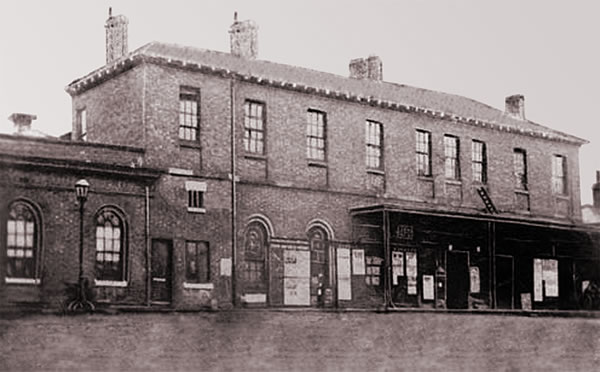
In 1848, the North Staffordshire Railway Company opened a line from Crewe to Derby, with a branch line from Uttoxeter which connected Tutbury and Burton. A small passenger train known affectionately as the Tutbury Jinny, seen below, was a popular sight at the old Burton station. It operated a push-pull service between the two stations.
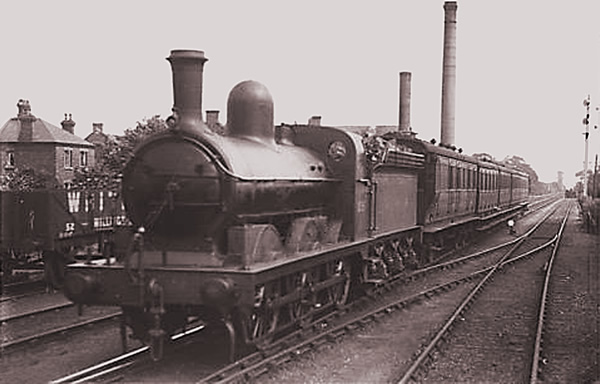
This later became known as the more colloquial ‘Tutbury Jinnie’ and became important for commuters and shoppers, who travelled from Tutbury to Burton.
In its heydey, the ‘Tutbury Jinnie’ provided eight trains each way on weekdays and two on Sundays. However, as the motor car became more accessible, a survey in 1960 revealed that the service was only carrying an average of twelve passengers and running at a loss of around £7000, which was quite a significant sum at the time. The service managed to survive until it was withdrawn in 1960 when a ceremonious packed last train left Tutbury at 8:12pm on 11th June.
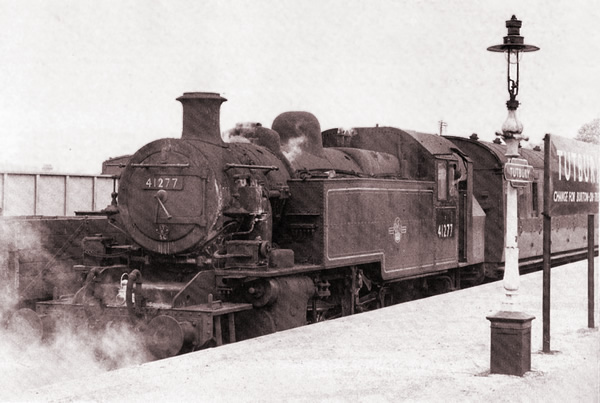
It can be seen above and below in its more ‘modern’ guise in its final years.
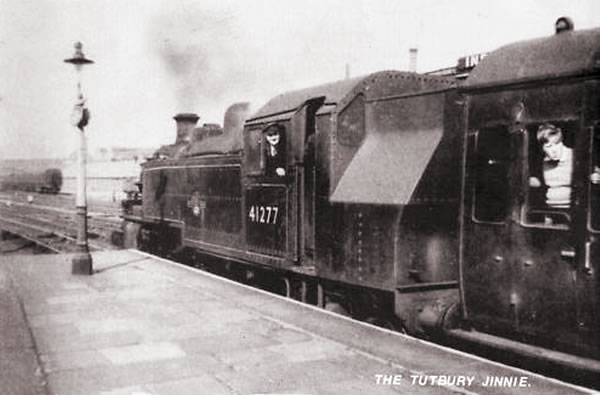
Tutbury station was fully closed in 1966 but was re-opened by popular request in 1990 and remains in use today.
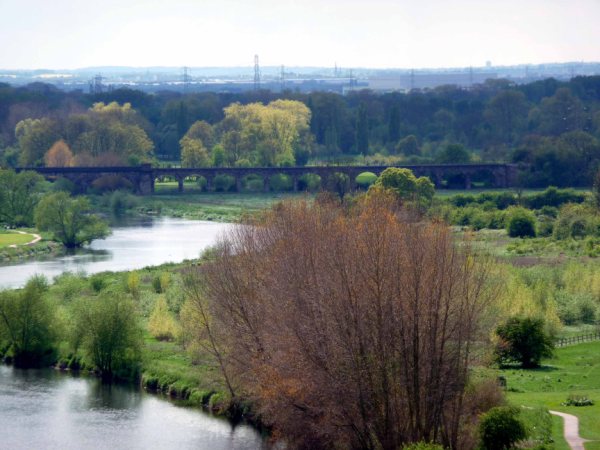
A year after the previous line, in 1849, the Midland Railway Company, which now owned and operated the Birmingham to Derby line, opened a line from Burton to Leicester which crossed the Trent by a substancial viaduct still known today as the Leicester Line Bridge.
Burton’s main streets became congested by drays delivering barrels to the station from the breweries which were mostly located near the river. As early as 1853 it was proposed to lay a railway track from the main line south of Horninglow Street as far as the breweries in High Street to service them.
Under an Act of 1859 the Midland and other railway companies were authorised to construct two branches from the North Staffordshire line in Stretton, one running across Guild Street and High Street and the other under Hawkins Lane, across Anderstaff Lane (later Wetmore Road), and southwards along the west arm of the Trent. The branches met at sidings on the Hay behind the High Street breweries. A separate Act of 1860 authorised a private line from the Guild Street branch to serve Allsopp’s brewery on the north side of Horninglow Street. The construction of the Hay branch was instrumental in the demolition of the old medieval bridge over the Trent and its replacement by a new bridge opened in 1864.
Further lines in the central and eastern parts of the town were laid privately by brewing companies under an Act of 1862 and by the Midland Railway Company under Acts of 1864 and 1867. To serve brewery premises on the west side of town lines were laid by the Midland company in 1874, including one along the disused Bond End canal. Lastly, the London and North Western Railway Company in 1882 made a line along the east side of the Trent and Mersey canal between Shobnall and the Stretton junction.
The below extract from a map produced in 1865 shows the yet disjointed Station Street (now renamed from Cat Street) and Borough Road. It is also interesting to note that the soon to be demolished windmill is still in place on what would become the rear of the Station Hotel. It would also be a few years before Saint Paul’s Church followed by Saint Paul’s Institute and the Liberal Club (eventually destined to become the Town Hall) appeared.

As an ever increasing centre for beer brewing, Burton soon became criss-crossed brewery companies’ private lines and the numerous level crossings became the bain of the town!
New Station (1883)
A construction of a new much needed station was agreed in 1881. The first part of the plan necessitated the Station Bridge to be constructed to join the top of Cat Street (Station Street) to Borough Road, prior to which, there was only a foot crossing. The new station was built 150 yards down the line. It was built as an island platform with bays at each end, with substancial buildings along its length. At the same time, the number of tracks was quadrupled to cater for much greater needs.
Buildings, including freight handling and a booking hall, were built at the upper bridge level. They were built in early English retro-style, partly timbered to look older than they actually were. Access down to the platforms was reached by a wide flight of steps with one side for ascending, the other for descending.
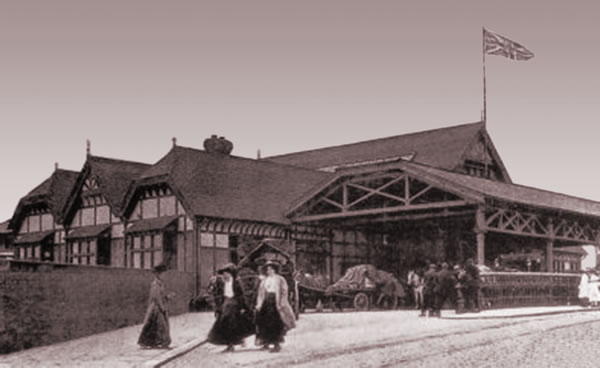
The new station was opened in 1883 and the old station was demolished. It had much larger buildings at the upper level and a large canopy provided shelter at the front.
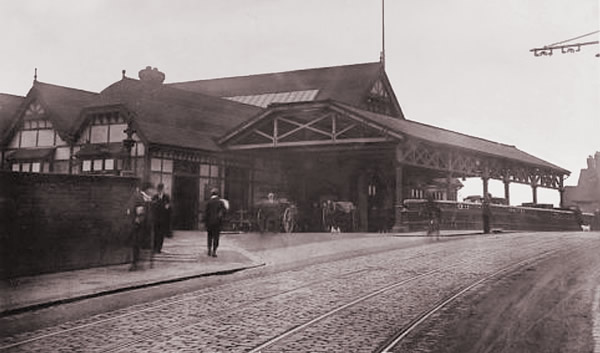
The distinctive canopy survived pretty much unchanged by the time the above 1910 photograph was taken. Trams had by now replaced horse drawn hanson cabs. The canopy was eventually removed to meet the demand for car parking.
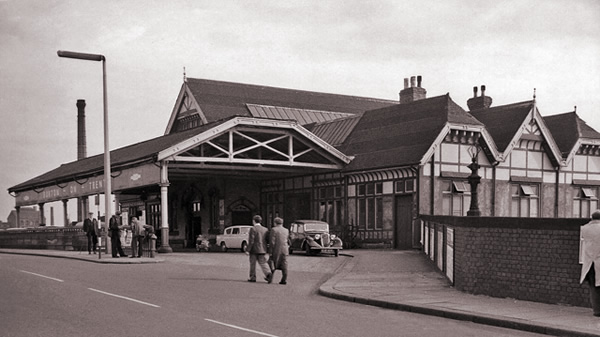
Still little changed by 1960. The tramlines were of course, long replaced by a suitable surface for cars together with improved street lighting. The lattice work of the canopy had been replaced with simpler boarding.
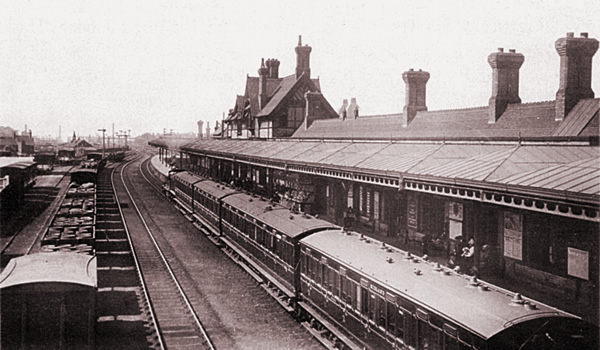
Views of either side of the platform looking in the Branston direction from viewpoints at the upper level which used to be inside the station buildings but now form part of the car park.
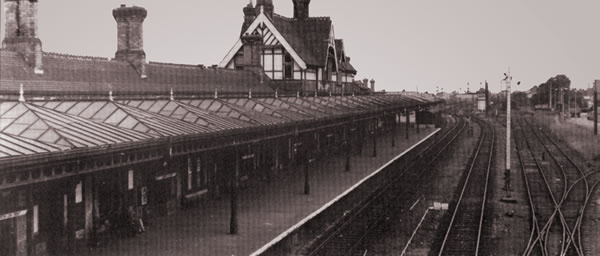
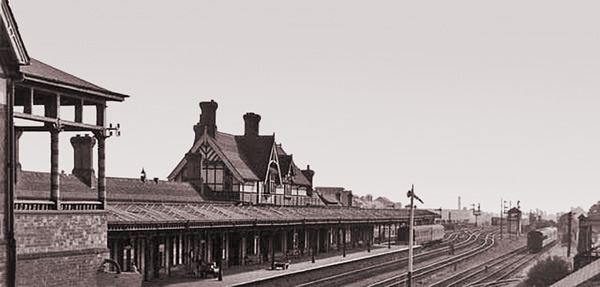
And a marvellous wider view to put everything in perspective.
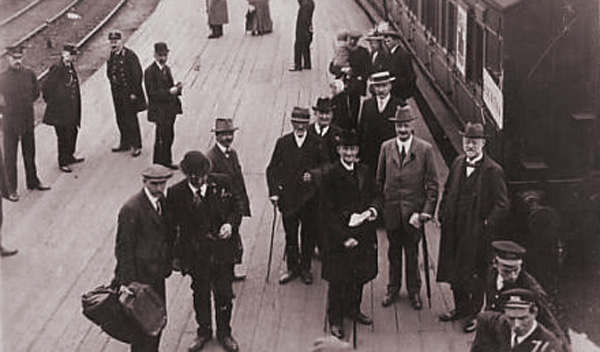
A posed picture by some of the senior staff from the Bass Brewery prior to a trip financed by the company. Bass trips, with other breweries following suit, became legendary with numerous trains being specially commissioned for trips to various seaside resorts.
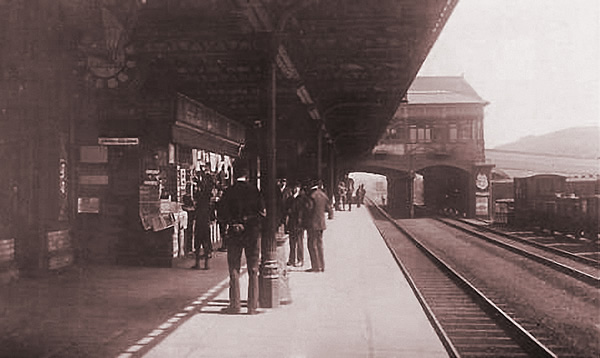
A view of the distinctive platform clock which I am sure I can remember, together with the news kiosk which did a brisk trade in newspapers, confectionery and cigarettes.
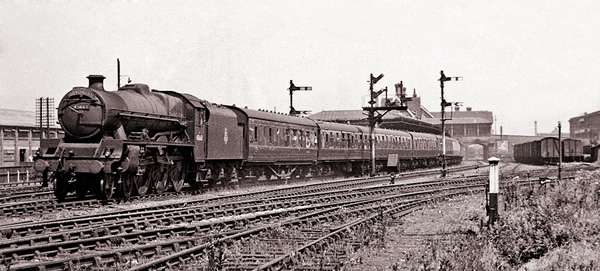
Before being whisked away in old fashioned style. Burton Station still very recognisable as the express train heads south towards Branston.
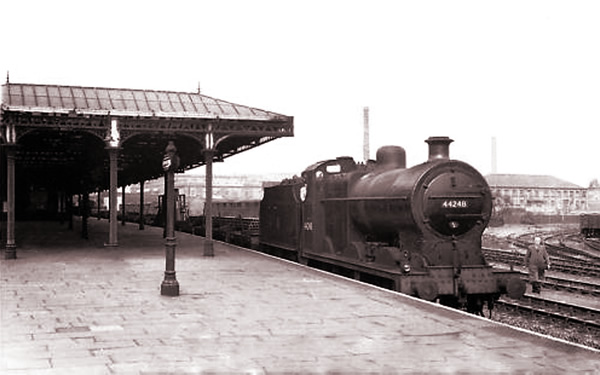
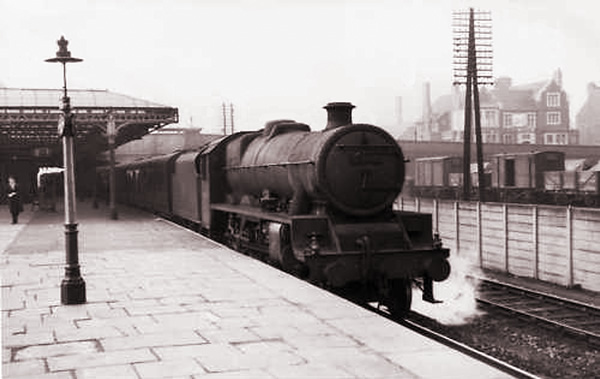
Two views of the platform in around the 1950s. The above one shows the most familiar view with brewery buildings having taken over the site of the original station. The below view shows that at the time, the platform extended on the other side of the Station Bridge, showing the Station Hotel which still stands, built soon after the station to take advantage of the new prime position.
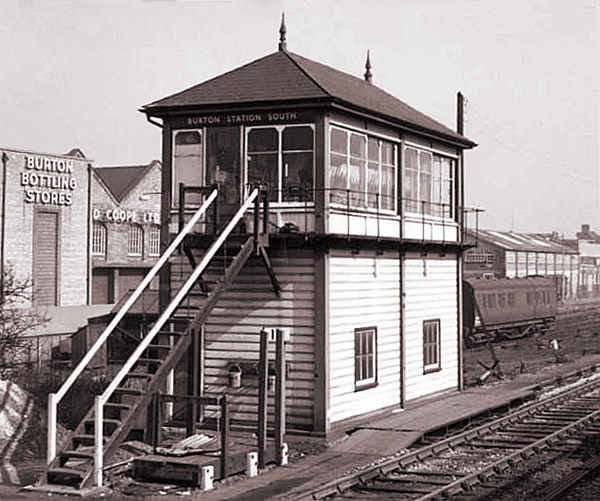
Just down the line, visible from the station platform in its day, in front of what was Ind Coope Ltd, bottling store (now IMEX Business Park) was a typical signal box.
In 1870 a new locomotive shed was built to the south of the station. This consisted of a roundhouse built round a 42 feet diameter turntable. In 1892 another roundhouse was added, with a 50 feet diameter turntable. In 1923 these were replaced by still larger 57 feet and 55 feet turntables respectively. It can be seen below, still in regular use in 1960 a few years before it fell into disuse.
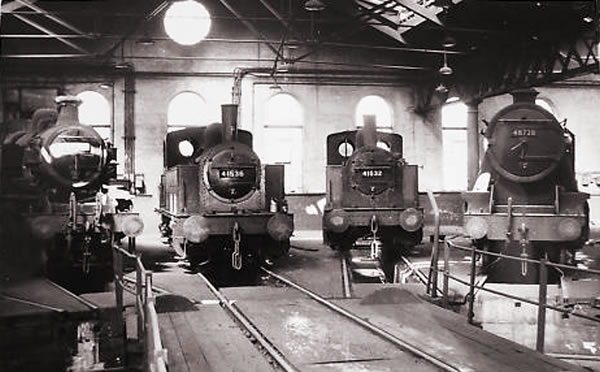
By 1948 it had 111 locomotives allocated to it, but with the arrival of diesel locomotives it became a sub-depot of Nottingham and was finally closed in 1968.
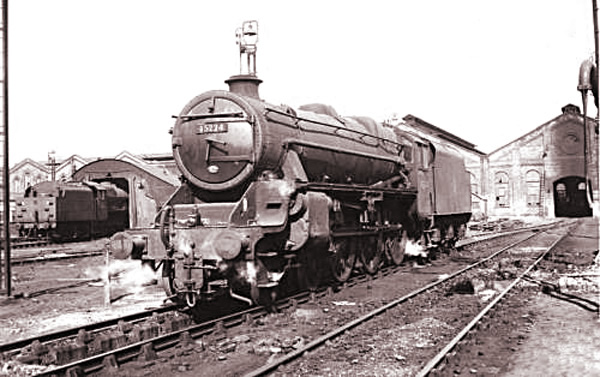
I am reliably informed that the above photo shows an LMS Class 5-4-6-0 at Burton.
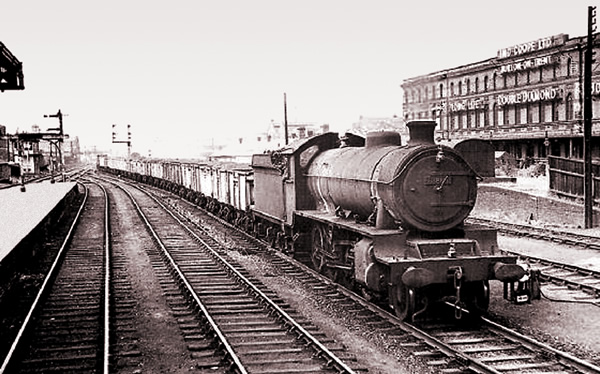
A few photos fortunately providing more or less the same view through the ages with the Ind Coope brewery building in the background.
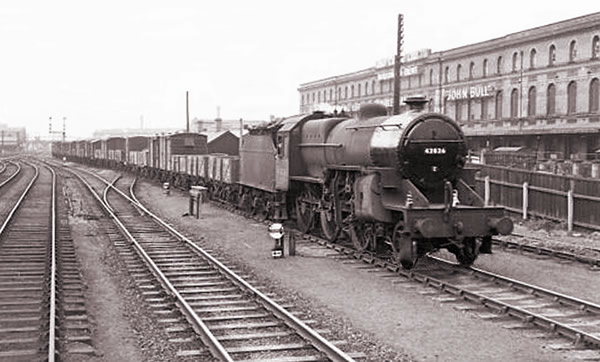
The second, I am informed by enthusiasts, is an LMS Hughes/Fowler Crab 2-6-0 No. 42826 with the same building little changed other than the signage to advertise its new usage.
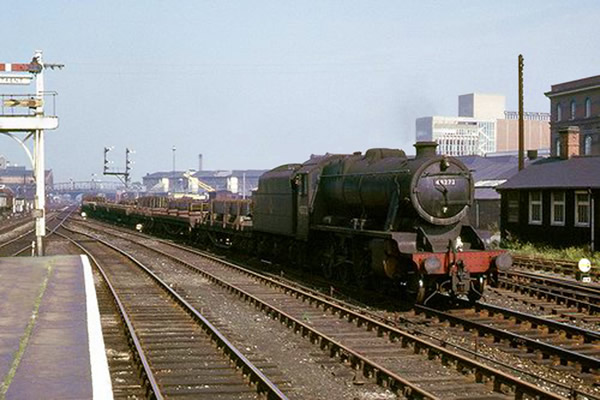
The final photo, in more modern times. The building still survives but with less prominence as the town has developed around it.
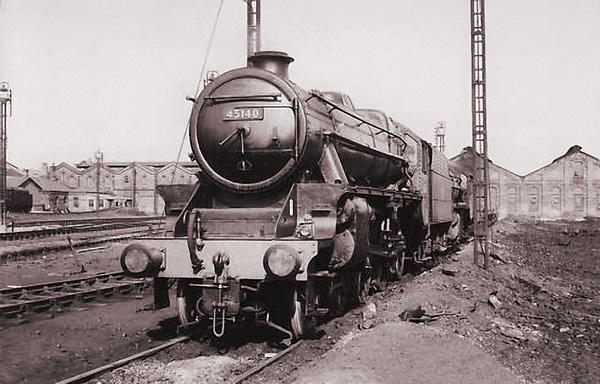
For the enthusiasts, 5MT number 45140 again taken at Burton. Though having little knowledge of trains, I can very vaguely remember the days when trains looked like proper trains.
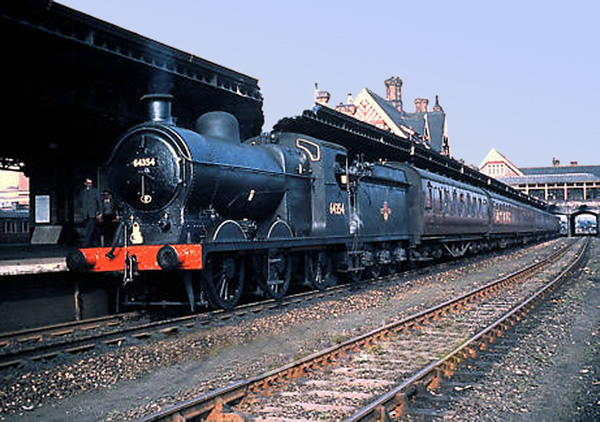
And, an early colour photo showing locomotive 64354 sitting at Burton Station – enough to bring the schoolboy out in anyone!
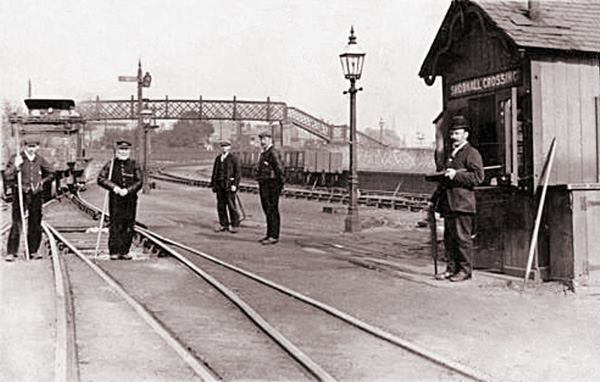
The above photo shows work at what was known as the Shobnall Crossing close to the present day Moor Street bridge.
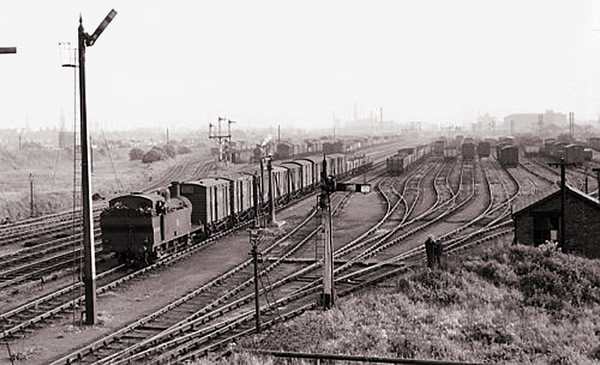
And at the other, Northern, end of town, a view over Wetmore Sidings.
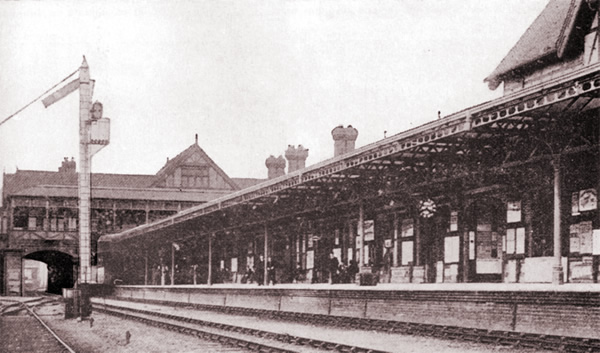
Only just about making it through quality control – but two photos too good to omit showing the north-bound platform.
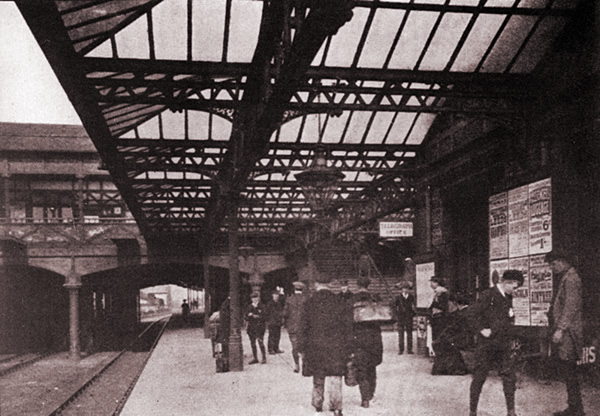
Finally, a few more photos towards the end of its life.
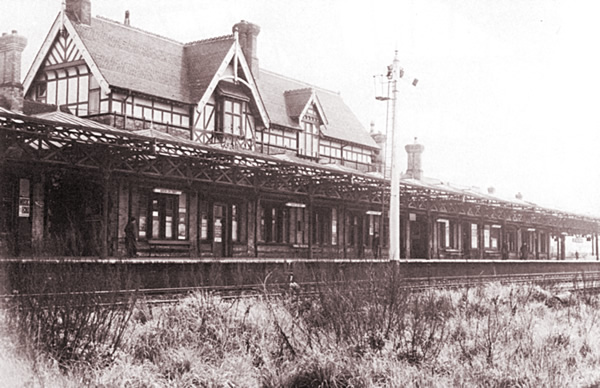
One of the very last photographs taken of the distinctive platform building.
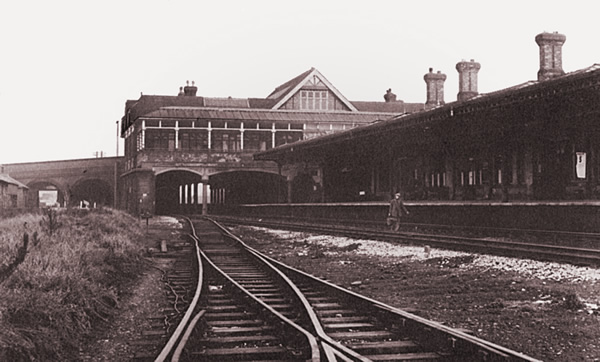
Most of the private brewery railway lines were closed between 1963 and 1968 and the tracks were removed, with road transport now far more preferred.
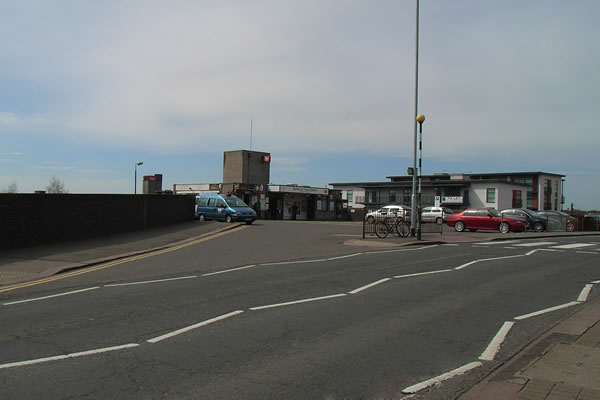
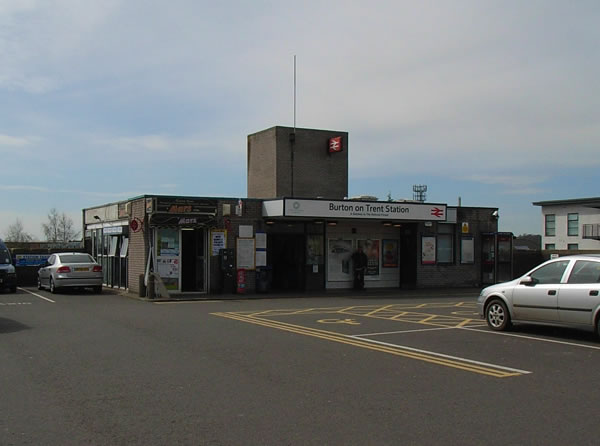
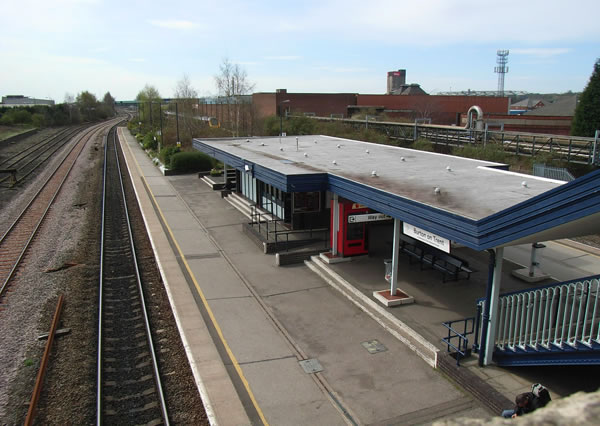
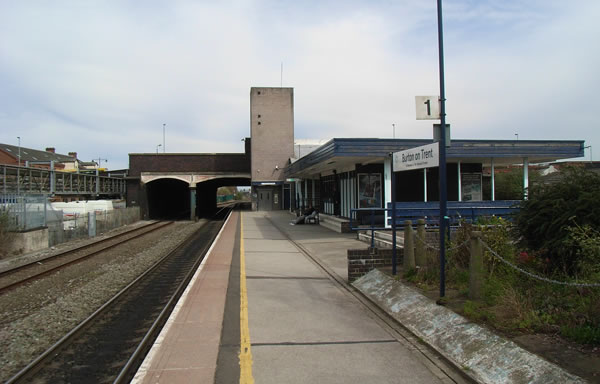
The station was rebuilt yet again in 1971. The booking office remains in around the same place and the platform stairs are largely original to the previous station. The final photos show the present station for comparison.
The Sinai Park site, due to its elevated strategic position, has a history dating back to Roman times and before. The hilltop site enjoyed commanding views over the Trent Valley in both directions making it an ideal outpost being mid-way on a day’s march from Derby to Lichfield.
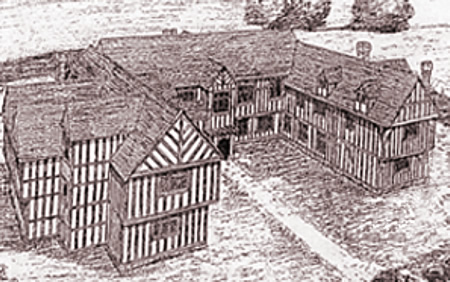
The Saxons also used the location as a stronghold and, in Medieval times, the fortified manor of the de Schobenhale family, dominated the area. A large house preceded the existing one but the most evident feature from this period is the 14th Century moat, dated by one source to 1334, which pre-dates the house and has special importance. The de Schobenhales gave Sinai Park to the monks of Burton Abbey in 1004. At the time, this was one of the most significant monastic seats in England.
In 1334, Abbot William Bromley of Burton Abbey gave five days indulgence from the bloodletting at Schobenhale Park with increased allowance of bread and beer for convalescence and recuperation. The origin of ‘Sinai’ is thought to be ‘saignée’, the French word for bloodletting and nothing to do with the Biblical ‘Mount Sinai’ due to its elevation. On a 1410 map, it is however, marked as ‘Seyne Park’.
Around this time the monks were responsible for establishing two timber houses on the site which would later form the two wings of one large building when the two became joined together by a central section. There has long been a legend of a secret tunnel between Sanai and Burton Abbey but this is pretty clearly nonsense.
Rest and recuperation seems to have gained quite a wide definition by the time of the Dissolution of the Monasteries in the 1530s. By then, the Abbot had his own parlour in the northeast wing, his monks were hunting for deer in the park and engaging in a number of highly frivalous activities, which even resulted in the occasional murder. These were cited in some of the reports back to Henry VIII to re-enforce the need for a dissolution.
As a result of the Dissolution, Sinai was included in the many estates acquired by the William Paget family in 1546. William Paget, one of Henry VIII’s chief ministers, was also installed as the first Baron of Beaudesert. The Paget family would continue to own Sinai for almost 400 years during which time, they would also become earls of Uxbridge and marquises of Anglesey.
Sinai was never the Pagets’ main house. This was originally their country house at Beaudesert and eventually their grand new home in Anglesey, Plas Newydd, designed in the 18th century by James Wyatt. Even within Burton, the Manor House (now offices close to the Winery) was their preferred residence so Sinai was used principally as a hunting lodge with its own deer park. It did though, enjoy a number of important guests including the earl of Essex during Elizabeth I’s reign.
The main central section which joined the two existing wings together to form a much larger property, was built by the Pagets in 1605 which elevated the house to a much grander status. In the 1700s there was still more building work with large Tudor-style chimneys being erected which added further to its grandeur. Also from this period is what was then a very fashionable plunge pool (waterfall lake), built in the grounds, using as its source the Chalybeate well below the house.
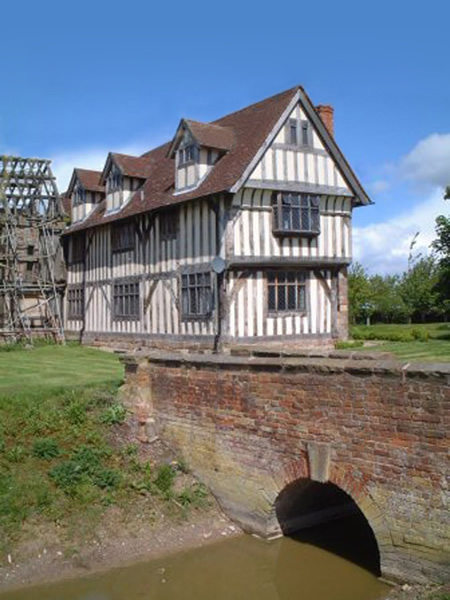
In 1732, a more impressive bridge over the moat was built to replace an existing one on the same site. The original bridge was one of four similar ones and the location of a skirmish between the Paget men and the Bagots of neighbouring Blithfield during the English Civil War.
While the architect, James Wyatt, was being commissioned by the Pagets to build a new principal seat, Plas Newydd on the Isle of Anglesey, his brother William became the tenant of Sinai. William’s daughter was married there to John Smith who was working with James Brindley on the new canal network, and his son who took over the tenancy and stewardship of the house but was eventually fired and asked to leave for spending too much unauthorised money on its development.
The last Paget to own Sinai was Henry Cyril Paget, 5th Marquess of Anglesey (1875 – 1905) who was known as ‘Toppy’. The ‘Black Sheep’ of the Paget family; a British Peer notable during his short lifetime for squandering away the Paget inheritance on a lavish social life and amateur theatricals accumulating massive debts.
On the death of his father in 1898, as well as Sinai Park, he inherited the title and family estates which included Beaudesert in Staffordshire, formely the family’s principal residence, Plas Newydd on the Isle of Anglesey and other estates in Derbyshire and Dorset totalling over 30,000 acres and providing an annual income of £110,000. Someone would have to work very hard to make this fail!
He spend very little time at Sinai which, on his death, was one of many parts of the estate that had to be sold as part of the settlement of family debt. After being sold, the house was converted to six ‘cottages’. For a while, it provided a billet accommodation for the RAF. In a gravely deteriorated state, it eventually slumped to becoming a makeshift shelter for pigs, sheep and hens.
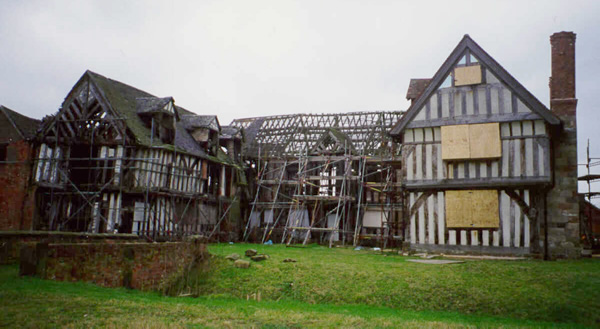
It was described as “The most important house in England to be in such a state”. In recent years, thankfully, it has undergone major restoration with help from the English Hertitage and is listed as a Grade II* listed building. The 13th century moat is separately listed as an ancient monument.
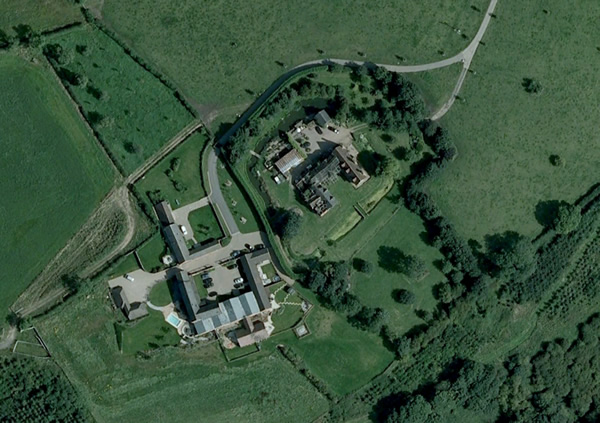
Adjacent to Sinai Park House is the present day farm house and associated buildings.
General Town
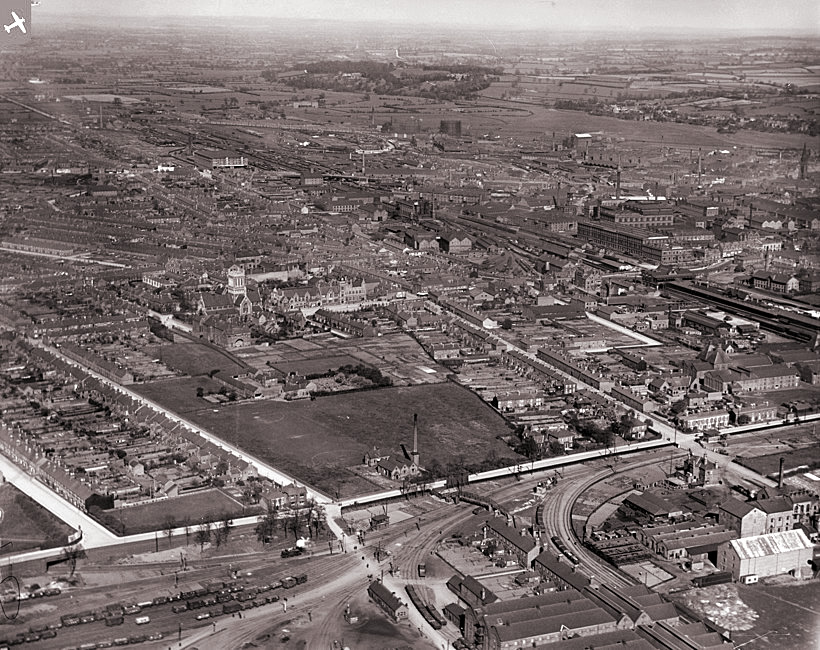
1921 View From South West #1
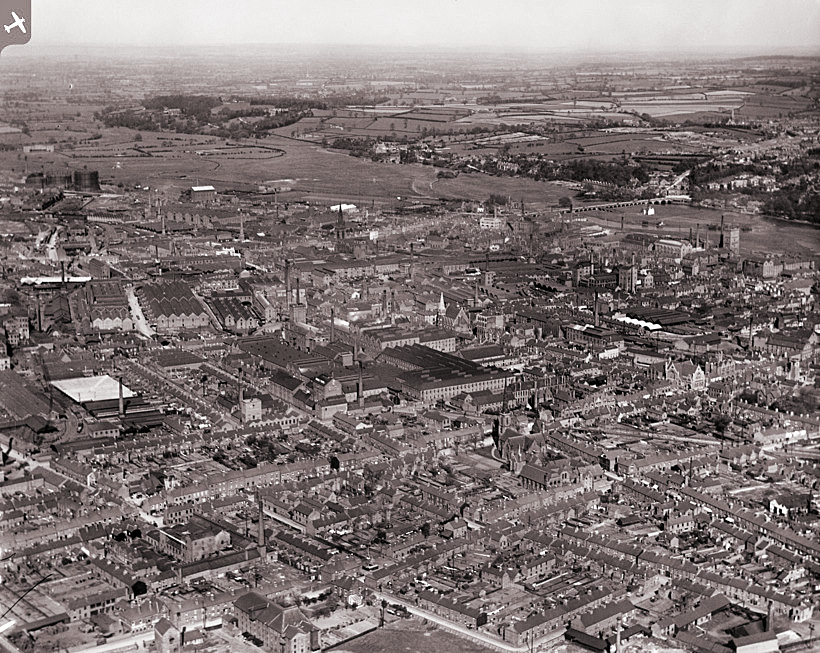
1921 View From South West #2
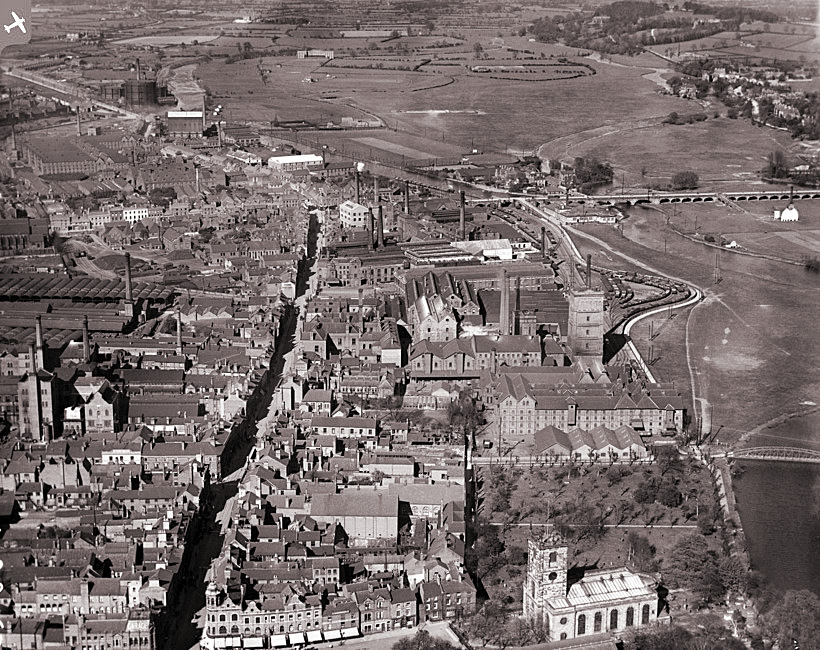
1921 High Street and Malthouses
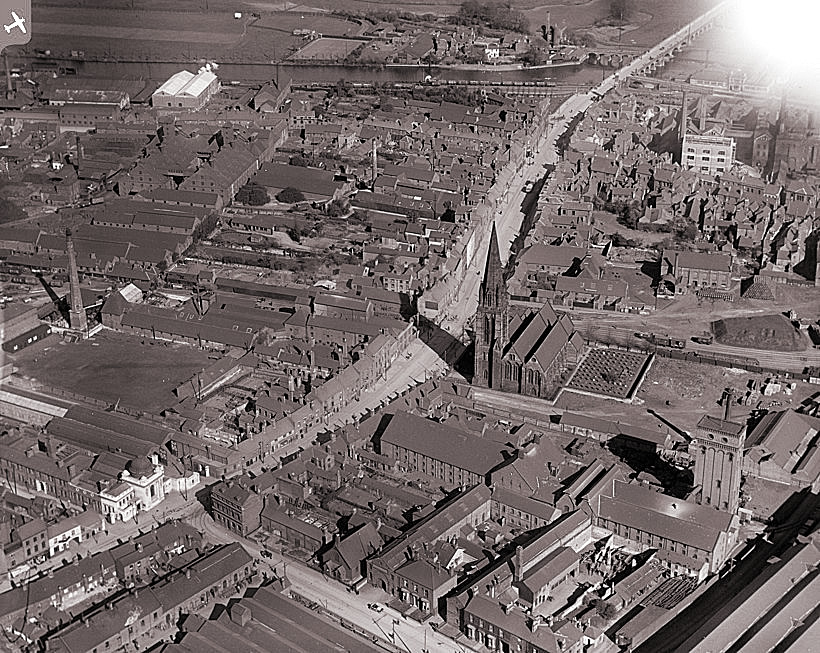
1921 Horninglow Street #1

1921 Horninglow Street #2
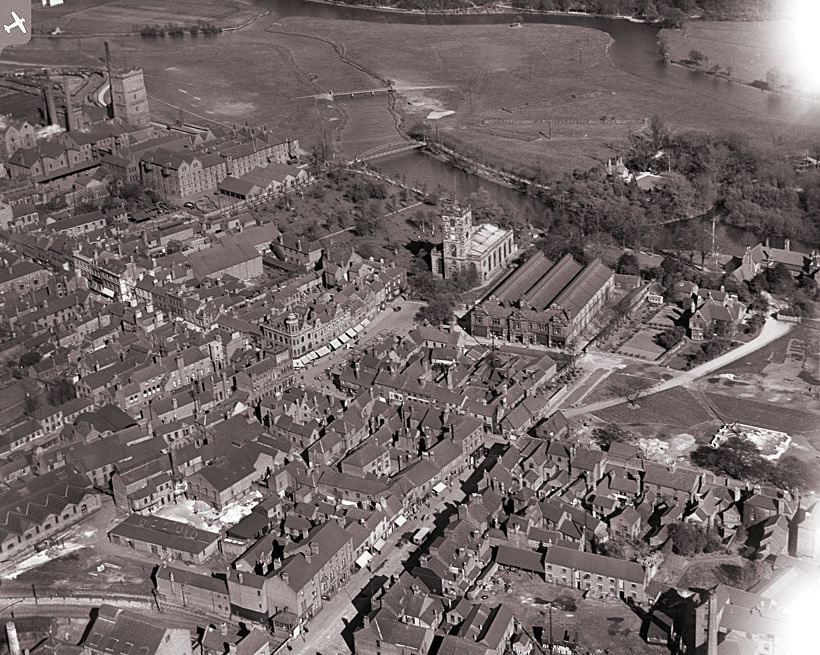
1921 Market Place
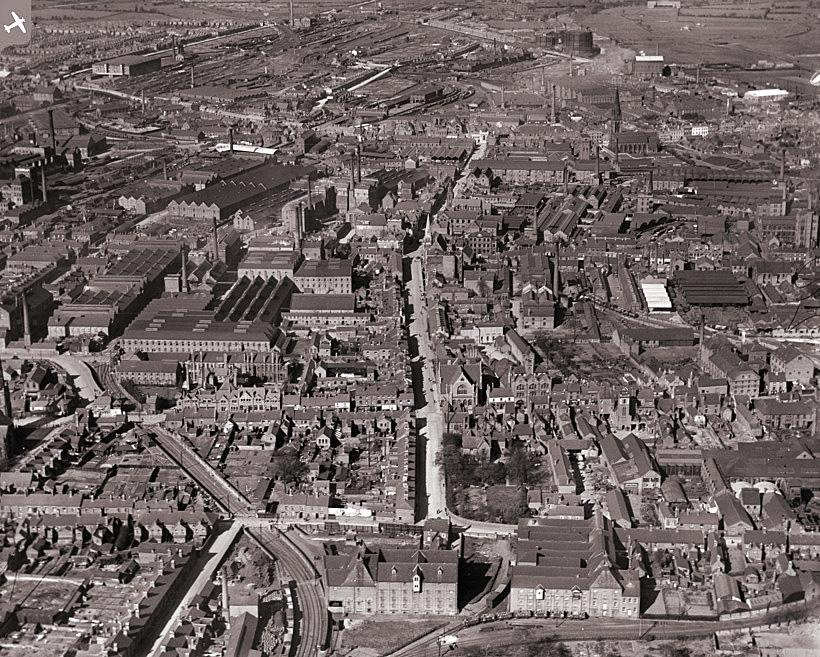
1921 Union Street
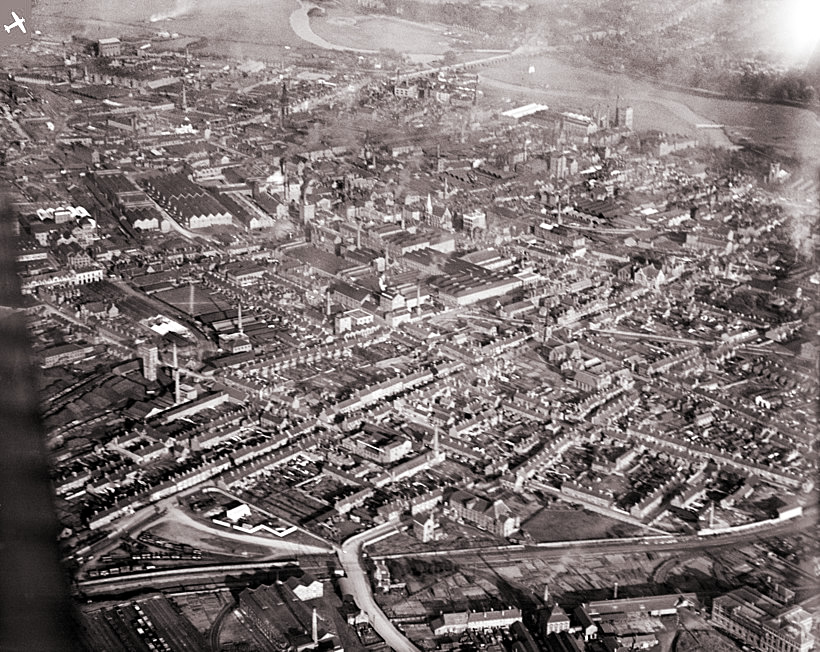
1927 Moor Street
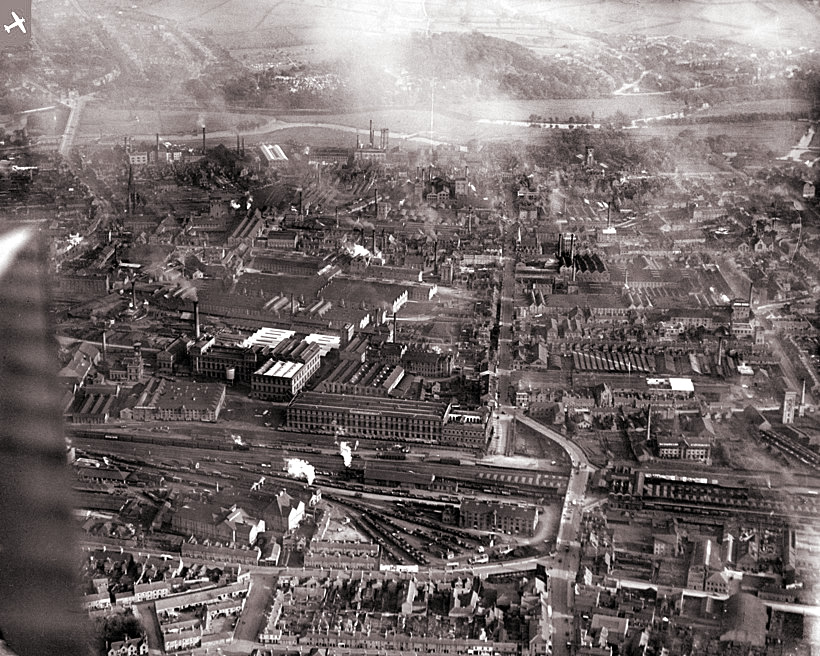
1927 Railway Station
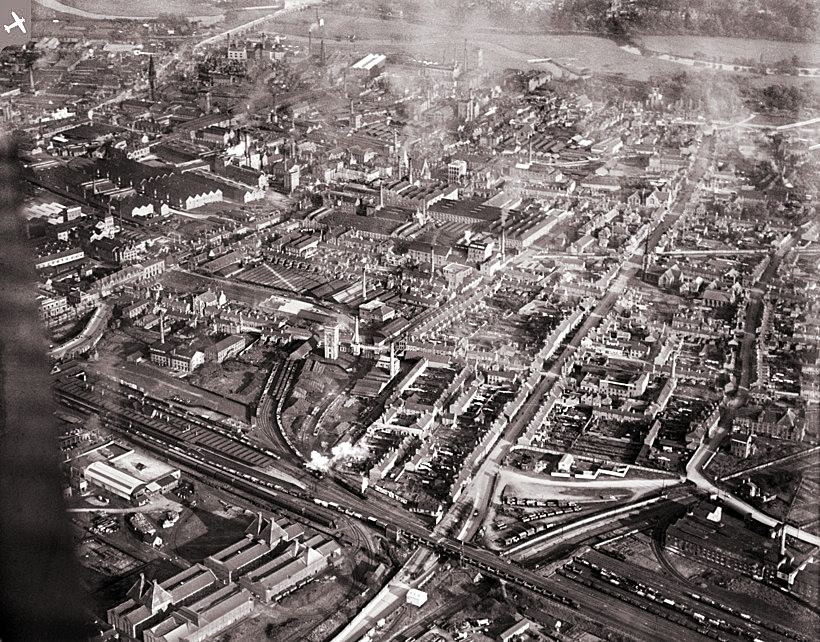
1927 Town
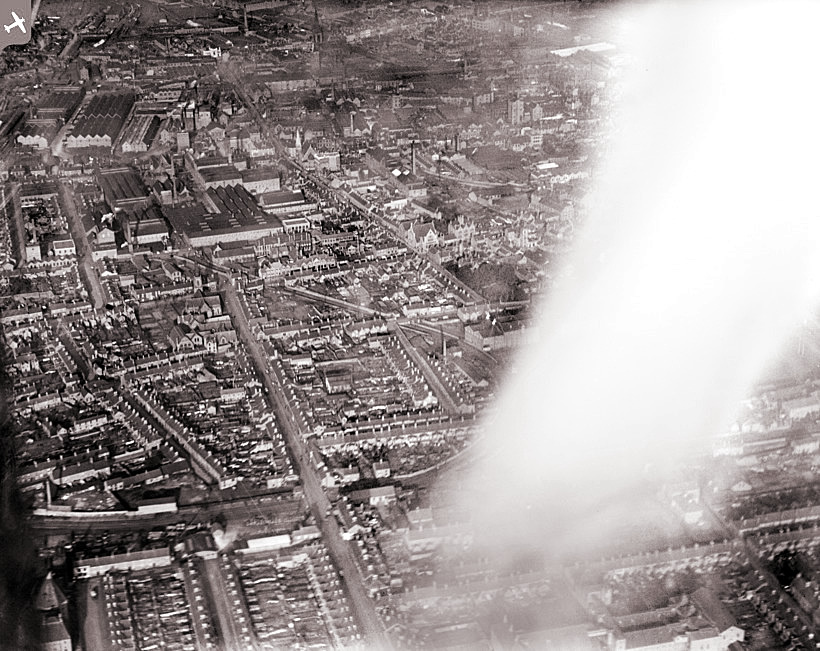
1927 Uxbridge Street
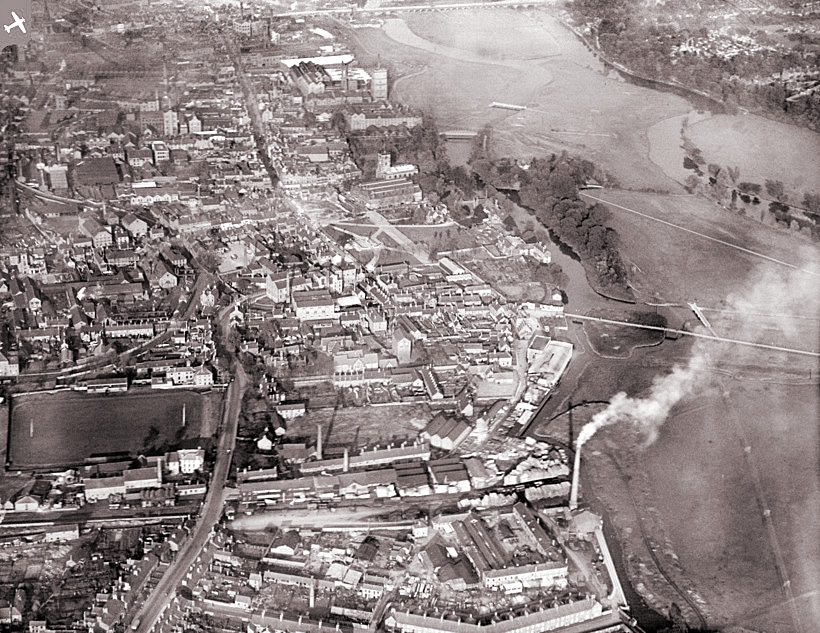
1927 Washlands
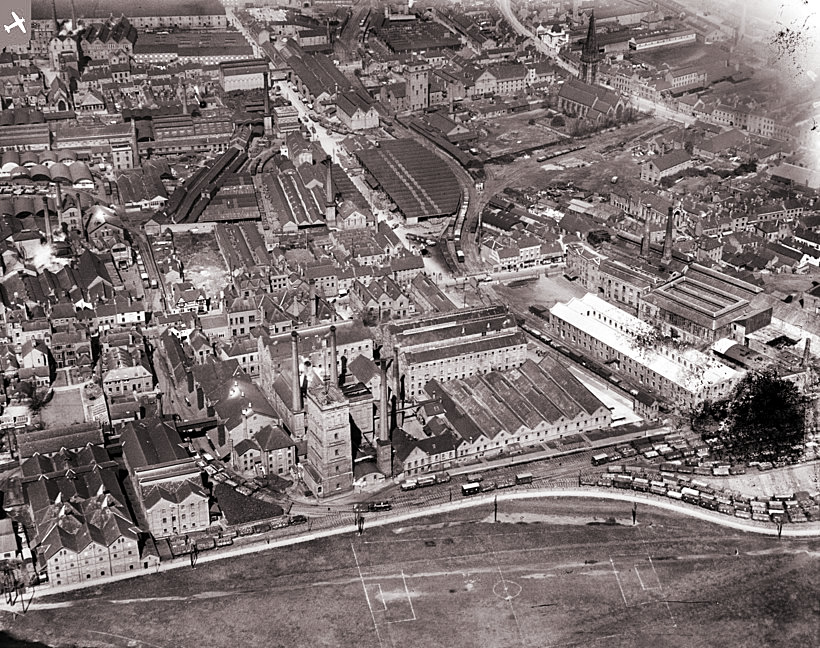
1928 Middle New Breweries #1
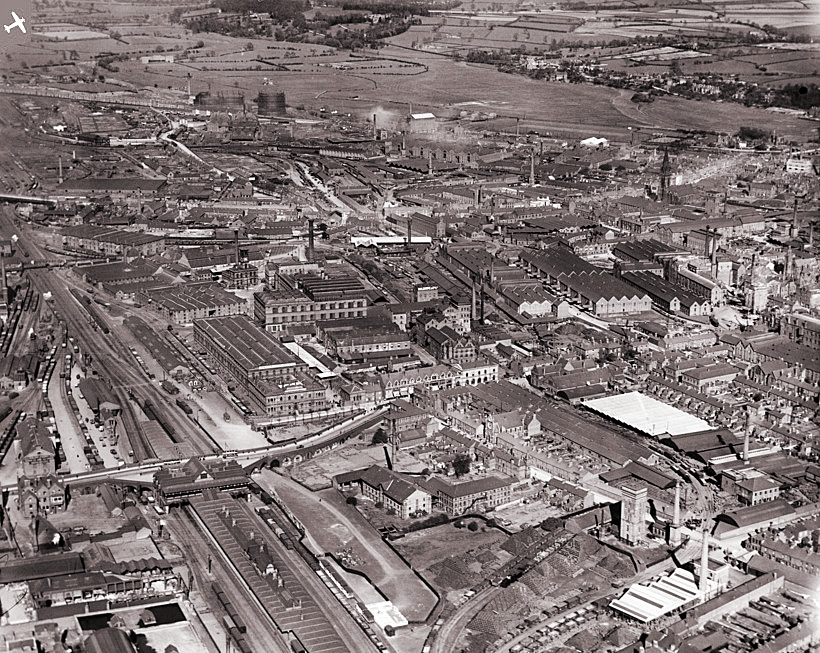
1928 Middle New Breweries #2
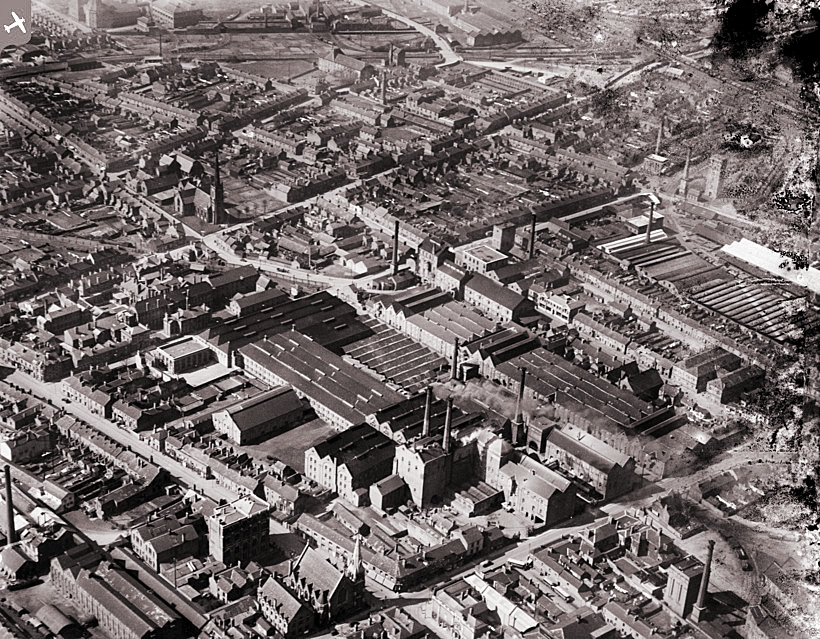
1928 New Brewery
Burton Abbey featured in the Domesday Book in 1086 where it appeared as the abbey of Saint Mary. It was recorded as also controlling lands outside of Burton, included Mickleover, Appleby Magna, Coton in the Elms, Caldwell and Ticknall.
By 1310, the abbey had been reduced to one of the smallest and poorest Benedictine monastery in England, suffering a number of severe financial difficulties often due to mismanagement and outright criminal behaviour. At this time, the number of monks had been reduced to around thirty. Even so, as an abbot, the holder of the position between 1295 and 1322 was summoned to attend the ‘Parliament of England’.
By the 1520s, the number of monks had been reduced to less than twenty but, almost contradictary, the abbey was the most important in Staffordshire and by the 1530s had the highest revenue. The abbot was both a secular lord and, “exercised an independent spiritual jurisdiction”. He was a figure of some standing, regularly serving on papal and royal commissions and acting as a collector of clerical taxes within the diocese.
There have been a number of Royal visits to the abbey. William I came on a visit to the shrine of St. Modwen; Henry II was at Burton in 1155, John in 1200, 1204, and 1208, Henry III in 1235 and 1251, Edward I in 1275 and 1284, and Edward II in 1322 during the campaign against Thomas Plantagenet, earl of Lancaster.
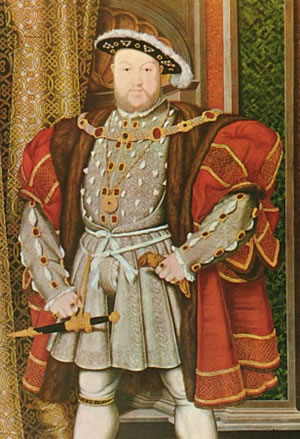
By the early 1530s the abbot was paying procurement fees to the bishop for Burton, Abbots Bromley, and Mickleover as well as for Ilam and Austrey; he also paid similar fees to the archdeacon for Abbots Bromley and to the bishop for visitations of the abbey.
Although there was general fear for the future of major religious establishments as Henry VIII wrangled with the pope over his ‘Great Matter’, this was temporarily overshadowed by the election of a new Burton abbot in 1533 following the promotion of the current Abbot de Bronston to Abbot of Westminster. This caused some excitement because it was the highest office ever attained by any monk of Burton.
Bishop Lee, under instructions from Thomas Cromwell, went to Burton in June with Richard Strete, Archdeacon of Derby, and David Pole, the vicar general, and “so sped the election” that the community agreed to leave the choice of a new abbot to the bishop and the archdeacon, stipulating only that one of themselves should be chosen before the 1st August. Cromwell’s original candidate seems to have been ‘the monk Baylye’, but William Edys, the ‘third prior’, was actually appointed.
By 1536, Henry was installed as Head of the Church of England and had laws, now known as the first dissolution, had been enacted to allow the King to seize any church building with an income of less than £200. Many were confiscated. Some were pillaged and destroyed, other smaller ones were turned into graineries, barns and stables.
Early in 1538 Francis, Lord Hastings, wrote to Thomas Cromwell to point out that Burton Abbey “lay very conveniently” for him, adding that he would have asked for it earlier but for an attack of measles. Later the same year the Crown tried to secure the tithes of Austrey for a royal official, but the abbot replied to Cromwell that the income was “so necessary to our house that we cannot do without it”. The Abbey was the centre of life in Burton; it was also a place of pilgramage to the shrine of Saint Modwen and received around £2 per year in offerings. The suppression of ‘Idolatry’ (worship of false idols) was one of the leverages used by the crown.
Sir William Bassett of Meynell Langley, a manor a few miles to the North-West of Derby, received instructions from Thomas Cromwell at the end of August 1538 “that such images as you know… so abused with pilgrimages or offerings… you shall for avoiding that most detestable offence of Idolatry forthwith take down”. Sir William carried out his task and replied to Cromwell in a letter, as follows:
Right honourable my inespecial good lord, according to my bounden duty and the tenor of your lordship’s letter lately to me directed, I have sent unto your good lordship by this bearer, my brother Francis Bassett, the images of St Anne of Buxton and St Modwen of Burton upon Trent which images I did take from the places where they did stand, and brought them to my own house within 48 hours after contemplation of your said lordship’s letter, in as sober manner as my little and rude wits would serve me. And for that there should no more idolatry and superstition be there used I did not only deface the tabernacles and places, where they stand but also did take away the crutches, shirts and sheets with wax offered, being things that did allure and intice the ignorant people to the said offerings, also giving the keepers of both places admonition and charge that no more offerings should be made in those places till the King’s pleasure and your lordships be further known in that behalf. My lord, I have locked up and sealed the baths and wells at Buxton and none shall enter to wash them till your lordship’s pleasure be further known. Whereof I beseech your lordship that I may be ascertained again at your pleasure and I shall not fail to execute your lordship’s commandment to the uttermost of my little witt and power. And the trust that they did put in those images and the vanity of the things, this bearer, my brother can tell your lordship better at large than I can write for he was with me at the doing of all and in all places, as knoweth good Jesus, whom ever good lordship in his blessed keeping. Written at Langley with the rude and simple hand of your assured and faithful orator and as one ever at your commandment, next unto the King to the uttermost of my little power.
Signed William Bassett (Knight)
William employed his brother, Francis Bassett – a servant to Thomas Cranmer, archbishop of Canterbury, to physically remove the statue. The statue was removed, its receptacle heavily defaced and further pilramages and offerings were outlawed.
On 1st September, Thomas Thacker, Steward to Cromwell, wrote to his Master telling him that Francis Bassett had delivered to Austin Friars (Thomas Cromwell’s main residence) in London, “the image of Saint Modwyn with her red cow and her staff which women labouring of child in those parts were desirous to have with them to lean upon and to walk with“. This is the best available description of the object.
Thomas Cromwell fell from grace a few years later and was arrested being accused of many crimes, most significantly treason. Cromwell was condemned to death without trial and beheaded on Tower Hill on 28 July 1540 (the day of the King Henry VIII’s marriage to Kathryn Howard). Following his death, an inventory was taken of his belongings which showed an extensive collection of treasures that had been confiscated from the church for supposed destruction. It has not been possible to identify the images of St Anne and St Modwen mentioned in the letter from Sir William Bassett.
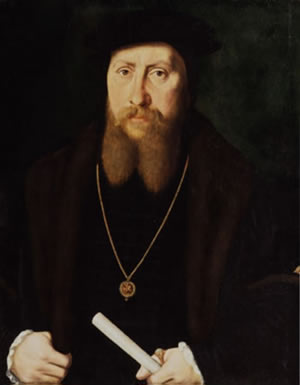 As the Dissolution continued, many great Abbeys such as Glastonbury, Shaftesbury and Canterbury which had flourished as pilgrimage sites were reduced to ruins. Some were gifted to the Kings most ‘loyal subjects’. In 1539, Abbot Edys was finally forced to surrender Burton Abbey. Rather than being destroyed like most abbeys, it was later gifted, together with extensive grants to lands including what is now Cannock Chase, to Sir William Paget (pictured) – a close adviser to Henry VIII who later became 1st Baron Paget of Beaudesert. This fortunate survival left the abbey one of the largest in the country. The abbot’s probate jurisdiction in Burton also passed to the Pagets, who continued to exercise it until 1858.
In February 1539 Dr. John London was at Burton and on 14th November the abbot and community surrendered their house and its possessions to Dr. Thomas Legh. Pensions ranging from £6 13s 4d to £2 were assigned to 7 monks: 5 priests, a deacon, and a novice. The abbot and probably four remaining monks became members of the new college at Burton which was already being planned, though it was not actually founded until 1541. Robert Heathcote, one of the deacons, and Humphrey Cotton, the novice, were recorded as in receipt of their pensions when they died in 1552 and 1563.
The chronology of the dissolution of Burton Abbey was as follows:
A descendent of William Paget became the 1st Marquess of Anglesey in 1815. The title still exists and the current Marquess still has title to most of the land in Burton.
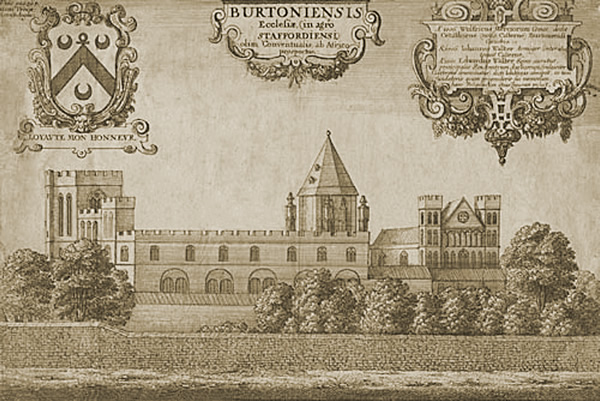
I was dumbfounded to first learn of the sheer scale of Burton Abbey which occupied a 14 acre site. I remain amazed that I could have lived in Burton for decades before discovering that such a huge structure ever existed. What I had always known as the Abbey was in fact, a relatively small annex which spent at least some of its time as an infirmary. The complete Abbey in fact extended to include all of what is now the Market Hall and Saint Modwen’s church.
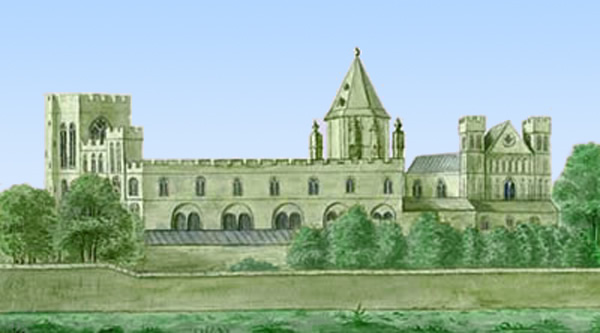
The above picture is my re-creation based on the below 1661 engraving by W. Hollar that appears in numerous sources and can be found on a plaque of the outside wall of the Coopers Shopping Centre close to the ‘Market Entrance’.
Select page to view:
There were 38 Abbots of Burton (although not to be caught out as with American Presidents, this includes one Abbot who served two non-consecutive terms making 37 different ones).
| Abbot | From | Until | Notes |
|---|---|---|---|
| Wulfgeat | 1004 | 1027 | Formerly of Winchester. |
| Brihtric I | 1027 | 1050 | Formerly of Winchester. |
| Leofric | 1051 | 1066 | Also Abbot of Peterborough (1052–1066), as well as Coventry, Crowland, and Thorney, he was the nephew of Leofric, Earl of Mercia. |
| Brihtric II | 1067 | 1085 | Formerly Abbot of Malmesbury, he was appointed by William the Conqueror soon after Abbot Leofric’s death in 1066. |
| Geoffrey de Mala Terra | 1085 | 1094 | Formerly of Winchester. Expelled for dissipating lands and goods of the abbey. |
| Niel (or Nigel) | 1094 | 1114 | Formerly of Winchester. Began building west end of church. |
| Geoffrey | 1114 | 1150 | Formerly of Winchester. Began building tower over choir. Wrote ‘Life of Saint Modwen’. |
| Robert I | 1150 | 1159 | Expelled for dissipating abbey lands but restored in 1176. |
| Bernard | 1160 | 1174 | Formerly Abbot of Cerne. |
| Robert I (Repeated!) | 1176 | 1177 | Restored but died within a year. |
| Roger Mal-Branche | 1177 | 1182 | Formerly prior of Great Malvern. |
| Richard | 1182 | 1187 | Formerly prior of Rochester. |
| Nicholas | 1187 | 1197 | Formerly prior of Abington. Founded burgage tenure; endowed chamberlain’s and kitchener’s departments. |
| William Melburne | 1200 | 1213 | Formerly of Reading. Endowed St Andrew’s chapel; received Royal Charter to establish the borough and began Horninglow Street. |
| Stephen de Lucy | 1214 | 1214 | Elected but resigned shortly afterwards. |
| Roger | 1214 | 1216 | Formerly prior of Winchester. |
| Nicholas de Wallingford | 1216 | 1222 | Formerly prior of Burton. Endowed almonry. |
| Richard de Insula | 1222 | 1229 | Formerly prior of Bury St Edmonds. Granted mills on Trent; established borough at Abbots Bromley. Returned to Bury St Edmonds to take up post of abbot. |
| Laurence de St Edward | 1229 | 1260 | Formerly kitchener of Burton abbey. Gave stone house next to the church to the poor; began building St Mary’s chapel. Summoned to King’s council in 1257. |
| John de Stafford | 1260 | 1281 | Formerly prior of Burton. Extended the borough; built Monk’s Bridge over the river Dove at Clay Mills. |
| Thomas de Packington | 1281 | 1305 | Formerly prior of Burton. Rebuilt chancel; enlarged borough. |
| John de Burton | 1305 | 1316 | Formerly prior of Burton. Built guest house between tower and sacristry; built Helle – house with paintings depicting heaven and hell. |
| William de Bromley | 1316 | 1329 | Formerly cellarer of Burton. Built a hall and infirmary annex. |
| Robert de Longdon | 1329 | 1340 | Formerly monk of Burton and Prior of Tutbury. Started the chapter-house. |
| Robert de Bryknell | 1340 | 1347 | Former prior of Burton. Completed chapter-house; built window over high alter and barn at Shobnall Grange. |
| John of Ibstock | 1347 | 1366 | Formerly almoner of Burton. Rebuilt north side of lower church. |
| Thomas of Southam | 1366 | 1400 | Formerly chaplain to abbot of Burton. Recast three bells in tower of the lower church. |
| John de Sudbury | 1400 | 1424 | Formerly sacrist of Burton. Pardoned in 1407 for violence and theft and found guilty of rape. Charged with mis-administration in 1422; found guilty of adultery; resigned amid financial crisis! |
| William Matthewe | 1424 | 1430 | Formerly almoner of Burton. Built abbey gates and constructed causeway. |
| Robert Ownesby | 1430 | 1433 | Formerly of St Albans – imposed by bishop for who he had been chaplain. |
| Ralph Henley | 1433 | 1455 | Formerly of Burton. Impoved abbey gates; suspended by bishop for mis-administration, absence, gambling and drunkeness. |
| William de Bronston | 1455 | 1473 | Formerly cellarer of Burton. |
| Thomas de Feld | 1473 | 1493 | Formerly of Burton. Repaired church after tower collapsed in 1474; built abbot’s chamber; built Guild Hall. |
| William Flegh | 1493 | 1502 | Formerly kitchener of Burton. |
| William Beyne | 1502 | 1531 | Formerly prior of Burton. Founded Burton Grammar School. |
| William Benson | 1531 | 1533 | Formerly of Peterborough. Friend of Thomas Cromwell. Became Abbot of Westminster. |
| John Beaton | 1533 | 1534 | Formerly prior of Burton. |
| William Edys | 1534 | 1539 | Formerly prior of Burton. Last abbot who surrendered the abbey as part of the dissolution by Henry VIII |