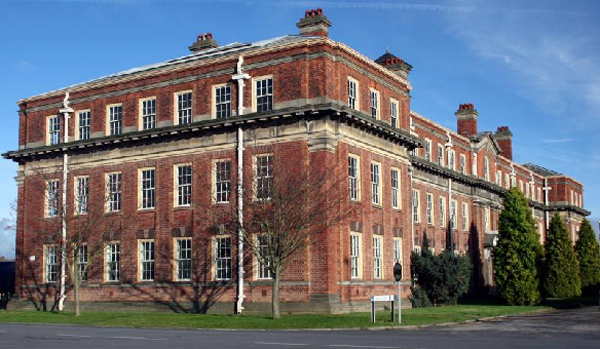
The large site known as Branston Depot on Branston Road was designed by armaments manufacturers, The Enfield Company, for the manufacture of machine guns and built by local builders Thomas Lowe and Sons in 1915. Many believe the factory was built by German prisoners of war – while there is some truth in this tale, the prisoners only built the long wall facing Burton Road while they were housed at the Peach Maltings, in Anglesey Road.
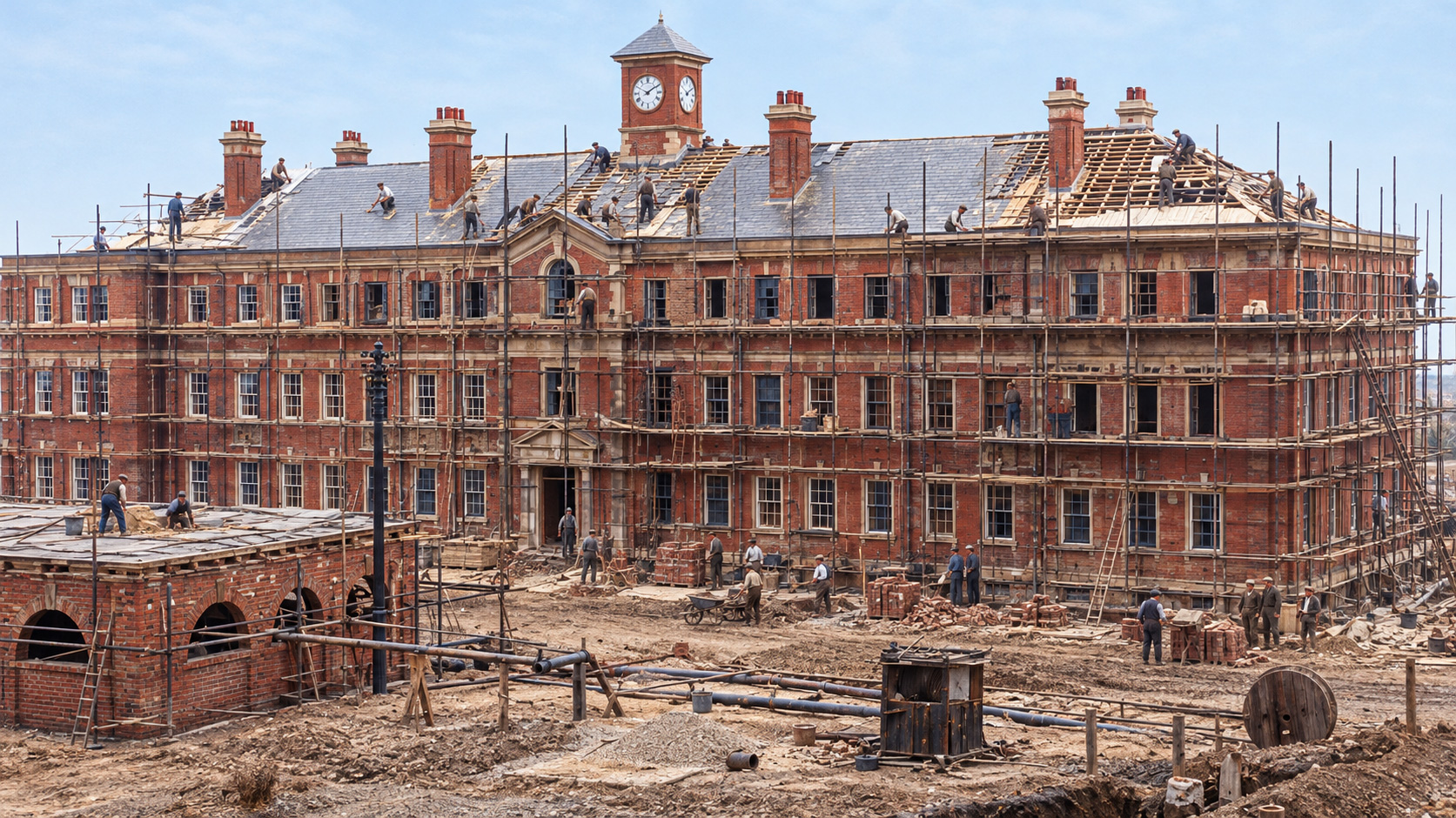
During the First World War, machinery was brought over from America for the production of machine guns but this was never used as the factory was still only half-complete by the time the war ended. Instead, the factory’s contribution to the war effort was the reconditioning of about 1,000 guns. After the war, in 1921, the building and site were no longer required so was vacated and put up for sale.
Crosse & Blackwell was a fast growing food Company around this time with take overs and mergers including Keillers marmalade and Thomas & Edward Pinks jam & pickle business. Their Soho Square factory was deemed too small and they were also advised they would also have to make way for redevelopment in the area.
In April 1921 Crosse & Blackwell finalised the purchase of the 150 acre site from the Disposals Board of HM Government after a dispute about the removal of machinery. They pledged to turn it into the largest and best equipped food preserving plant in the British Empire.
Alongside the purchase of the Factory they also purchased Branston Lodge in Burton Road (demolished in the 1960’s to make way for Lonsdale Road) as a residence for single female workers. They also built 26 houses along Burton Road for the use of the Factory foremen which were designed by Sir Aston Webb and known as the ‘Wayside’ houses.
In 1921 Crosse & Blackwell closed their Soho Square Factory in London and moved production of preserves & pickles to their new Branston Factory. Those staff who had completed seven years service received one weeks redundancy pay per year served at a total cost to Crosse & Blackwell of £22,500.
In 1922, the recipe for famous pickle was invented by Caroline Graham, who lived at Branstone Lodge with her daughters Evelyn and Ermentrude. Mrs Graham was involved in biological research and it is thought this helped her to perfectly mix and blend the pickle’s closely-guarded original secret recipe of 23 ingredients included dates from Iran and Pakistan, gherkins from India, onions from Holland, lemon juice from Sicily and rutabaga seeds from Canada. The recipe remains unchanged today.
Branston pickle went into production in the same year at the Branston Factory which employed around 600 people two thirds of whom were women.
Ironically, the success of ‘Branston Pickle’ was the downfall of the factory. The majority of the ingredients were bought at Covent Garden and were then transported by rail to the factory with the final pickle then returning to London for export. This inconvenience and expense caused the company to return to London in 1924 and close the Branston factory with the loss of around 1500 jobs which was an enormous blow to the town in difficult post-was years.
Production breturned to the London Thomas & Edwards Pinks factory in Crimscott Street, Bermondsey and completely ceased production at Branston in January 1925 selling the site in 1927 to Martin Coles Harman (at the time the owner of Lundy Island in the Bristol Channel) for use as the Branston Artificial Silk Company. This caused a substantial loss of work for local people and many people boycotted Crosse & Blackwell products.

The ‘Branston’ trade mark was registered by Crosse &Blackwell in 1929
During 1933/34 production of Branston Pickle was moved to the Keillers marmalade factory in Tay Wharf, Silvertown, London and the old Bermondsey factory was demolished in 1935 Crosse & Blackwell was bought by Nestle in 1960.
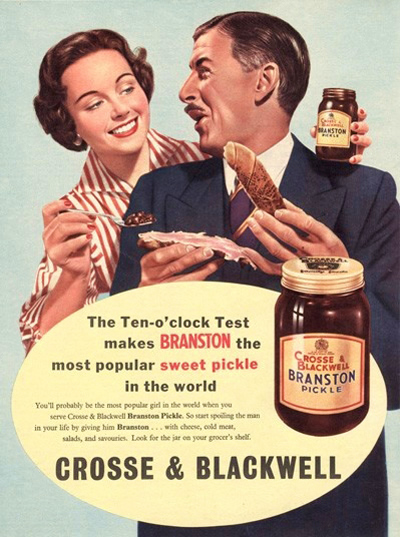
An early advert informs: “The Ten O’Clock Test makes Branston the most popular sweet pickle in the world. You’ll probably be the most popular girl when you serve Cross & Blackwell Branston Pickle. So start spoiling the man in your life by giving him Branston… with cheese, cold meat, salads, and savouries. Look for the jar on your grocer’s shelf”. Give the age of the advert, it is unlikely that the modern day phallic connotation is deliberate!
A television advert was launched in 1972 to promote the product with the lyric ‘Bring out the Branston’. Although the advert finished in 1985 it still remains a familiar lyric to many people to this day.
Production of the pickle was transferred to the Crosse & Blackwell factory in Peterhead, Aberdeen in 1992 where items such as tinned baked beans and tinned sausages were being produced (170 employees). The factory closed in 1998 in an efficiency drive by Nestle. Production of Branston pickle was then transferred to the Rowntree Mackintosh / Gales Honey factory at Hadfield, Glossop, Derbyshire.
Branston Pickle was voted as one of the top 50 UK brands of the 20th century in 1999. In 2002 Walkers launched a Cheese & Branston Pickle flavoured crisps.
In 2002 it was time for a change of ownership again with certain Crosse &Blackwell brands, including the Crosse &Blackwell Branston brand, being purchased from Nestle by Hicks Muse, Tate & Furst (a USA private equity enterprise) to become a part of their UK based Premier Foods Company. J M Smucker & Co took over elements of the Crosse &Blackwell brand in the USA. Premier Foods transferred the production to a factory in Mildenhall Road, Bury St Edmunds, Suffolk in 2004 (365 employees). A factory fire at the site in October of the same year temporarily halved the availability of Branston Pickle causing panic buying across the country.
From 2005 the ‘Branston’ brand was extended to include baked beans, beetroot, pickled onions, relishes, mayonnaise, etc. Branston Pickle alone sold over 28 million jars in 2006 and was available in over 50 countries around the world and can claim to be a world famous product.
The ownership again changed in 2012 with the ‘Branston’ brand being sold by Premier Foods to Japanese food firm Mizkan, based in Burntwood, Staffs, for £92.5m including the Bury St Edmunds Factory. Premier Foods had rapidly expanded, mostly through takeovers, to become the UK’s largest food producer and had found itself struggling under a large amount of debt and wanted to focus its recovery on other key brands.
Branston Depot After Branston Pickle
In October 1925, the site which had cost £650,000, was sold for a bargain £200,000 and was taken over by the Branston Artificial Silk Company. Production of rayon started in 1928 with the amitious aim of eventually employing upto 4,000 people.
In 1929, the famous Gladstone 360 feet high chimney was built which was thought to be second tallest in the country at the time. The chimney, built by Thomas Richardson, of Milburn cost between £17,000 and £25,500 to build and was 45 feet at the base tapering to 21ft and nine inches at the top.
The Branston Artificial Silk Company workforce never actually reached 800 and, with strong from Derby based Courtalds and Celanese, the factory closed in 1930.
After the demise of the silk business, the building was part-leased in 1930s to a company called Commercial Lead but again this proved unsuccessful. While the prospect of war had inspired the demolition of the chimney, the threat also gave the factory a new purpose. The War Office took over the factory in July 1937 and erected more buildings.
The chimney, after seeing less than a year of service, was demolished on Monday, November 1, 1937 as it was seen as a hazard for airplanes and a target for another war which seemed looming. Its most famous product during its short history was a silk scarf presented to the Prince of Wales on July 23, 1929 which led to high demand.
During the WW II years, the factory became an Ordnance Depot and employed more than 2,000 people. However, in 1962, it was decided to scale down the depot and make Bicester the main Ordnance supply depot. Burton’s MP at the time, John Jennings, put forward objections to the Bicester move. The closure of the depot was gradual with many of the staff leaving through resignations or retirement rather than through compulsory redundancy.
A Home Office depot remained on the site for years after the Ordnance depot closure and the centre was later used as the home for Green Goddess fire engines. Another sad day came in September 1991 when it was announced that the Royal Army Ordnance Corps Association, which was established in 1946, was finally closing.
With the association down to just three members, time was called on the group and the branch standard was returned to headquarters. Speaking in 1991, Walter Bullock, the last secretary and treasurer of the Royal Army Ordnance Corps Association (RAOC), spoke about the social-side of the site.
He said popular and well attended dances were run at Branston in the 1950s and 1960s with dance band favourites Bill Roulstone, Sydney Roy, Joe Fearn and Roy Norton providing tunes.
Association dinners used to be held in the staff canteen and guest speakers included boxer Henry Cooper who served in the RAOC during the Second World War.
In more recent decades, the site has been used for a major housing development and is also home to the distribution arm of DIY chain B&Q.
Over the past 30 years the site has also been used by the Ministry of Agriculture, Fisheries and Food, as a storage unit for prison supplies, as a training base for the fire service, as a base to train Royal Navy and Royal Air Force dogs, and also as a centre for checking radiation equipment.
Many of the original buildings have now been demolished or were destroyed in a fire in 2006. The site is of such historical importance that there have been calls for the site to be listed which may one day come to fruition.
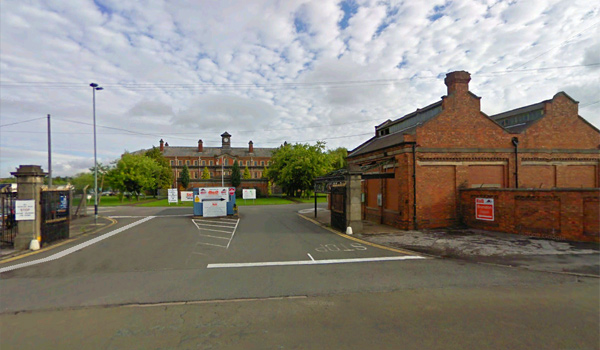
The site today still allows many glimpses into the past; the main entrance is little changed.
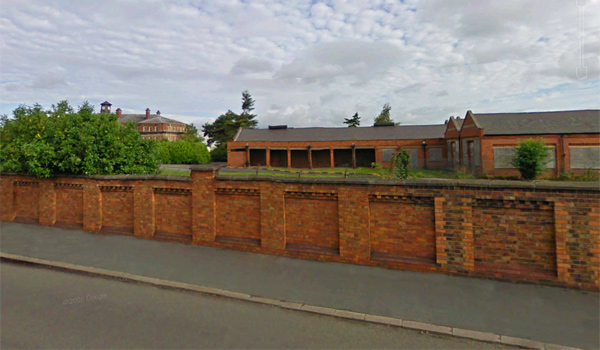
The characteristic border wall which still dominates much of Branston Road marks the boundary but a peep over the wall reminds of grander years.
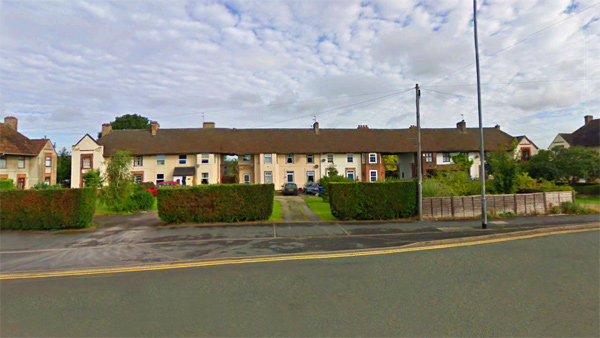
The distinctive row of houses at the end of the main Branston Depot site also belonged to the factory and housed some of its most important staff.