Menu Close

Baguley Engineers Limited

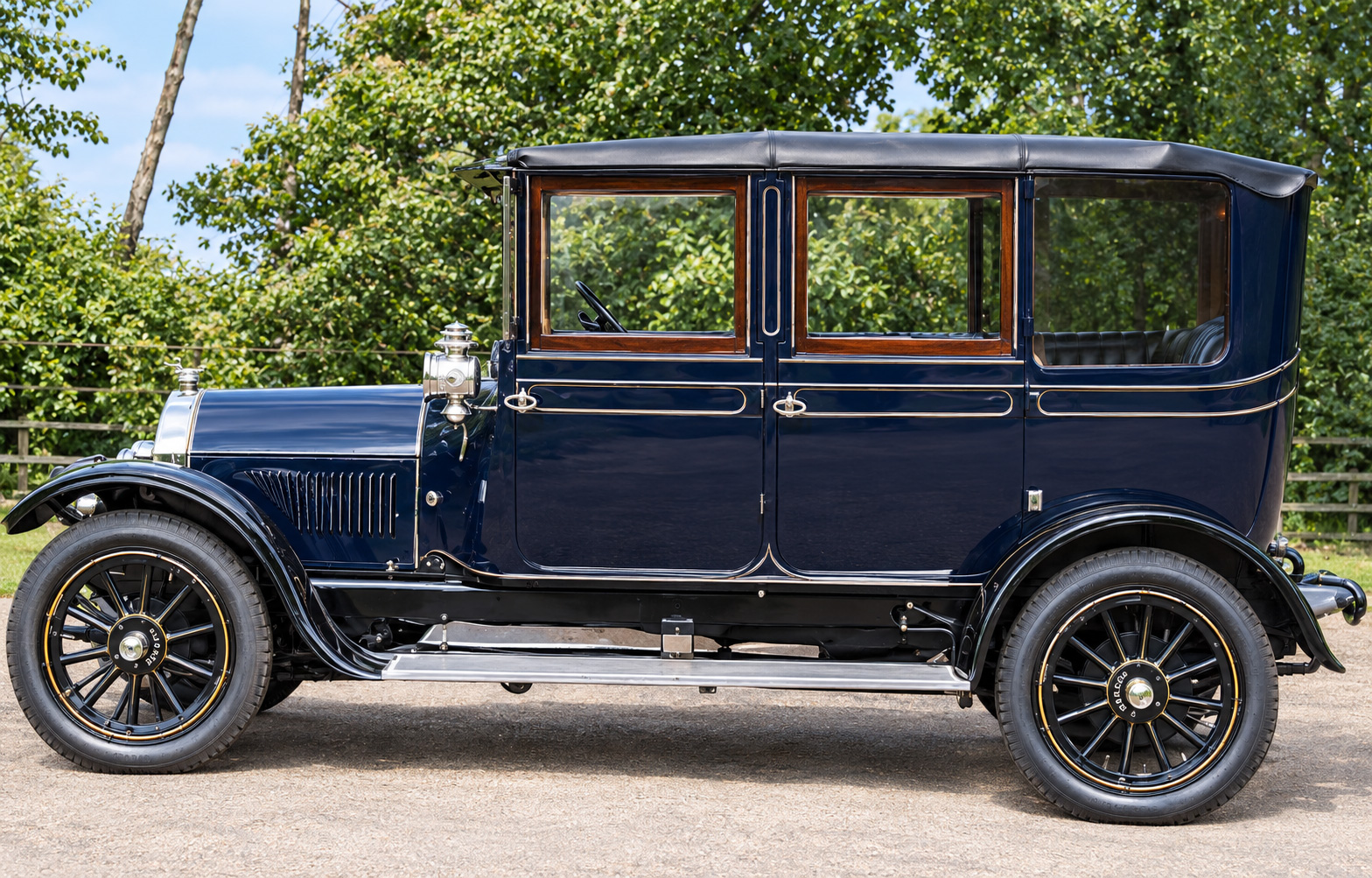
In 1911, engineer Ernest E. Baguley set up Baguley Cars Ltd, taking over the assets of the defunct Ryknield Motor Company on Shobnall. The company continued production of a range of motor vehicles with now superior four cylinder petrol engines.

Baguley four cylinder car. 1912

In 1912, Baguley entered an agreement to manufacture railcars for Drewry Company. The same year, Baguley acquired the stock, order books, designs and patents of McEwan Pratt which was in liquidation. Baguley formed a new subsidiary – McEwan Pratt Ltd – to fulfil existing orders. Leonard Bentall, the McEwan Pratt draughtsman, became the chief draughtsman of Baguley and led the design of future locomotives.

Baguley started to build its first petrol hydraulic locomotive in 1919 but because the production of large transmission components had been severely disrupted by World War I leading to long delays, it was converted mid-production to a steam engine. The company went on to build 31 steam locomotives.

After the War there was a decline in the production of road vehicles due to competition from other larger manufacturers. This was balanced by an increase in the demand for railway equipment. This shift led to the company name being changed to Baguley Engineers Ltd on 10 April 1923.

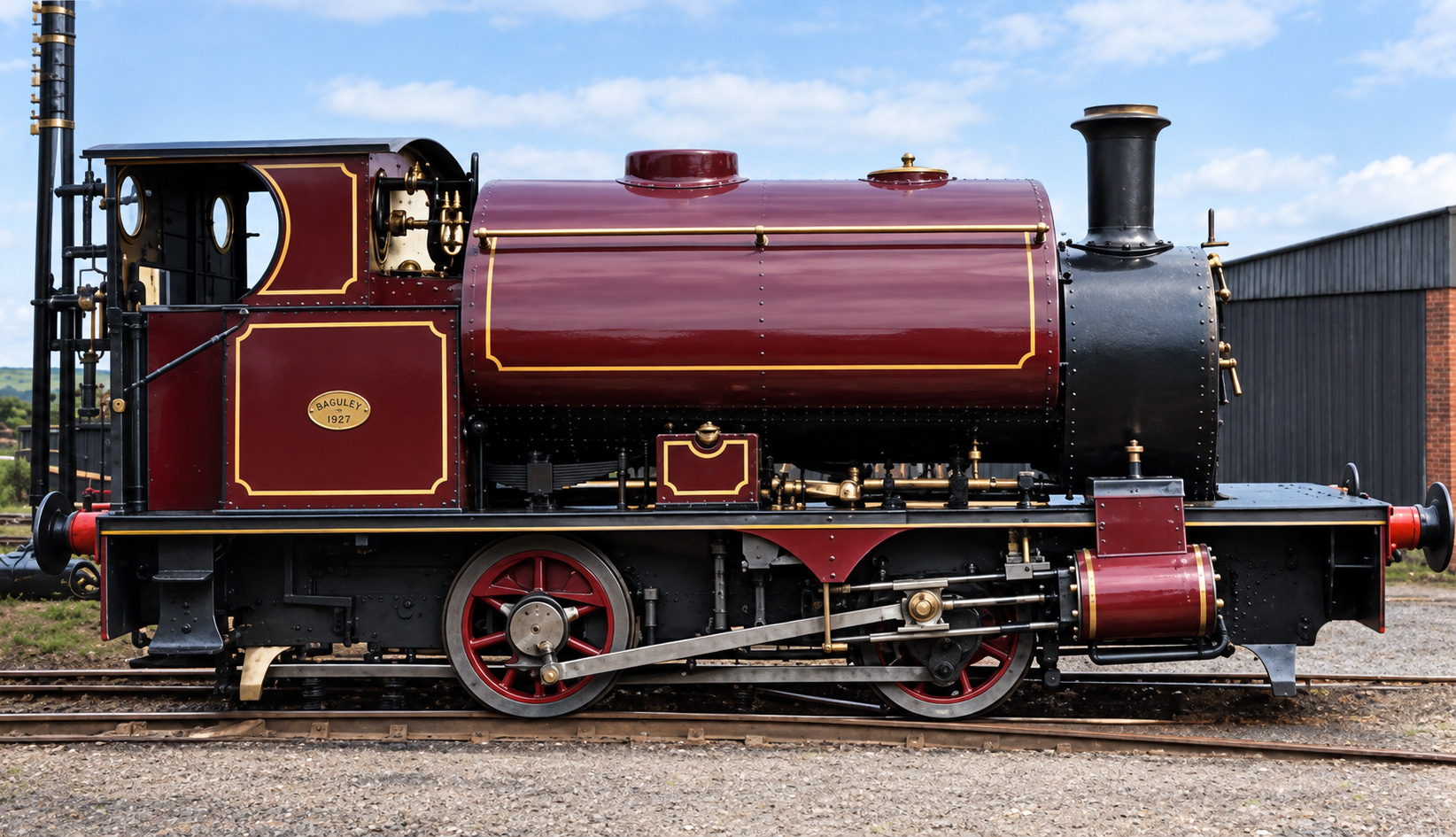
Baguley steam locomotive. 1927

During the 1920s there was some friction because Drewry complained that Baguley was failing to produce more modern designs of engine and chassis. Drewry began to move their business to the English Electric Company but went into decline before finally going into liquidation in 1931. Most of the plant and effects were sold at auction on 10 November 1931.

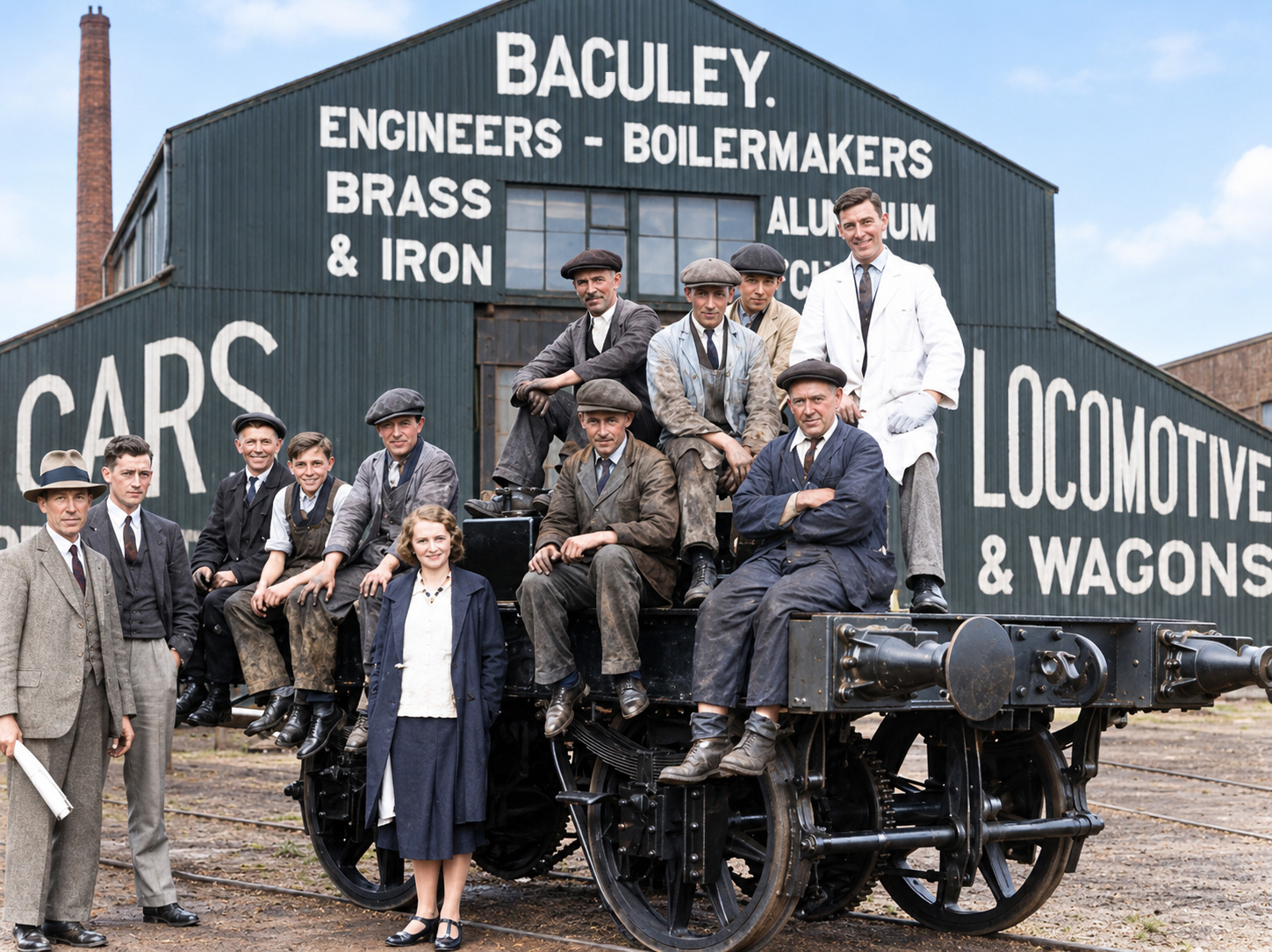
Baguley employees who built the last locomotive before the company closed in 1931.

W.E.C Souster, the previous Managing Director, and his brother Frederick C. Souster, revived the company shortly after its liquidation with W.E.C Souster serving as chairman and the brothers as co-managing directors. The new company, registered on 30 April 1932, was named E. E. Baguley Ltd. located in Clarence Street, a smaller premises still in Burton. It was initially set up as a maintenance and repair business for Baguley locomotives but soon expanded into production of diesel locomotives and rail inspection vehicles for Drewry.

In 1934 E. E. Baguley Ltd. moved to larger premises at Uxbridge Street, Burton-on-Trent where it survived until January 1964 when it was acquired by Drewry Ltd to form Baguley-Drewry Limited. The company finally closed in 1984.

Early Workhouses

Before the 1834 Poor Law Amendment Act and the formation of larger unions, individual or grouped parishes maintained local poorhouses.

Bond End (then Burton Extra) had a township workhouse from 1727. Stanton had a workhouse which in the 1770s could house up to 20 inmates.

Burton set up a workhouse in 1728 in a converted barn at the west side of Anderstaff Lane (now Wetmore Road), by 1776, it could house 60 inmates. In 1782, Thomas Hopkins and his wife were appointed as Governor and Governess at a salary of £20. In 1835, William Coxon was the master of the establishment. The building was sold in 1847 and later became a brewery warehouse.

In around 1802, six local parishes formed a union under the terms of Gilbert’s Act of 1782. The union erected a workhouse at Rosliston and arrangements were made for its use with a further parishes in the area. The three-storey building could accommodate 82 inmates. It had gardens, orchards, and land for keeping hens and a cow. In its final year of operation in 1838 it was being run by John Campion and his daughter whose combined salary was over £36 per annum.

In 1840, the workhouse ceased functioning and the site was sold off to Joshua Hardy for the sum of £200 who converted the building into a terrace of houses. The buildings were demolished in the early 1960s to make way for wider development.

Union Workhouse

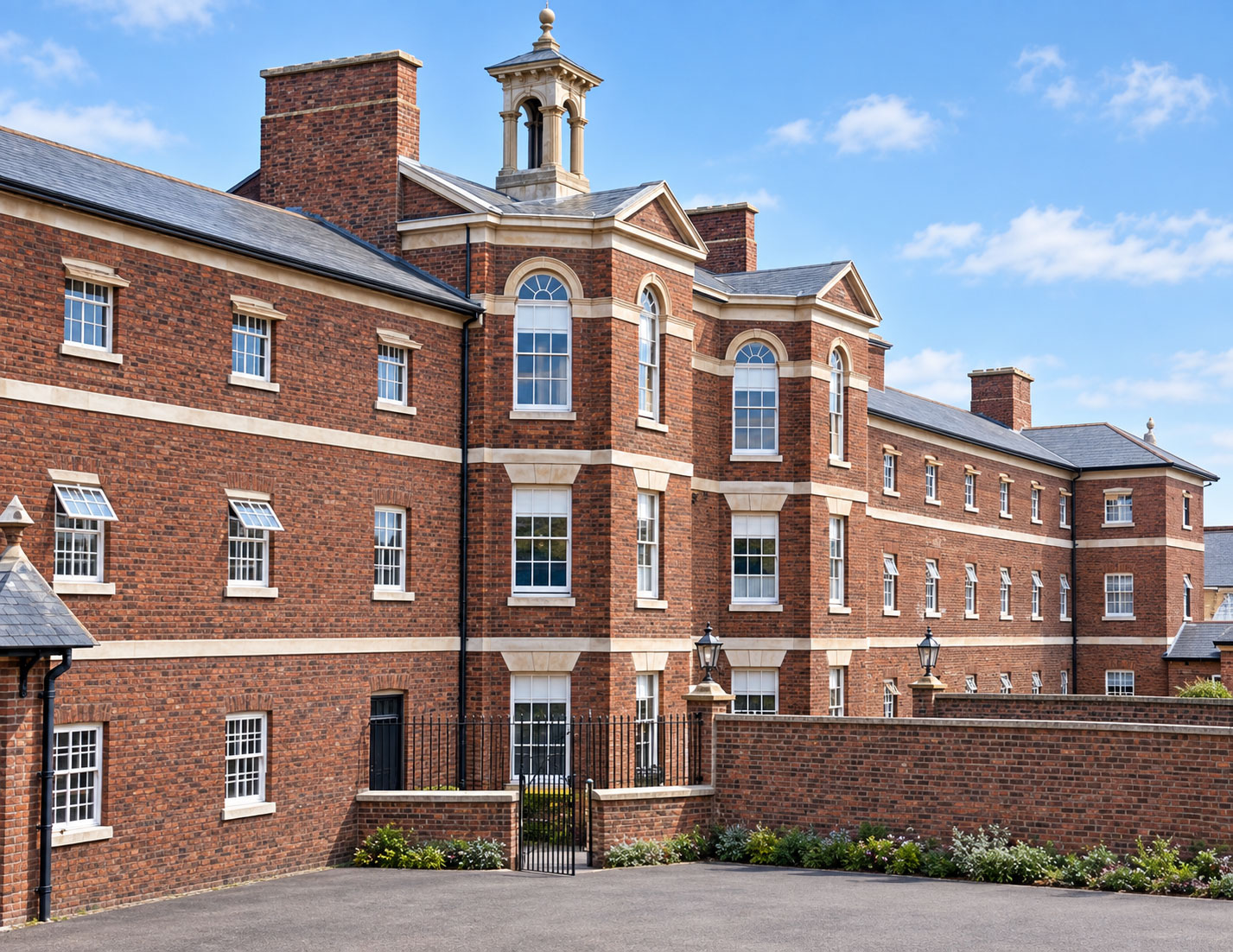
The first Burton-upon-Trent Union workhouse was built in 1838 between Horninglow Street and Hawkins Lane in Burton. It was designed by George Gilbert Scott and William Bonython Moffatt. The Poor Law Commissioners authorised an expenditure of £5,400 on construction of the building which was intended to accommodate up to 300 inmates.

The building had a single-storey entrance block at the west. This had a central archway and would have contained a porter’s lodge, board-room, offices and a chapel. To the rear, the main accommodation block was three storeys high, with the Master and Matron’s accommodation at the centre, with males housed to one side and females to the other. An H-shaped infirmary block was build at the rear. The site also included various workshops, utility rooms and a laundry.


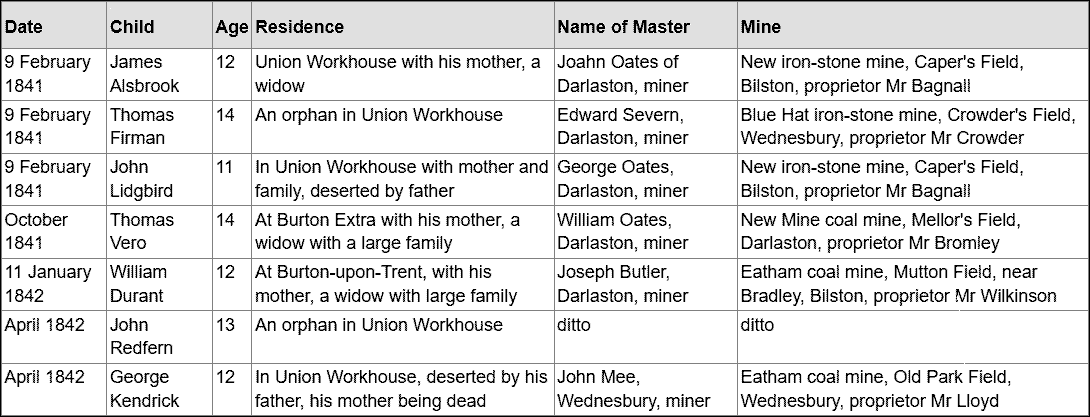
In 1842, the Commissioners investigating the employment and conditions of children in mines and factory and discovered that workhouse boys, some as young as eight, were being sent on ‘apprenticeships’ of up to twelve years working in coal mines. As a result the Union Workhouse was requested to provide detailed information on the children who had been apprenticed in the mining industry in recent years. The return for the Burton-upon-Trent covering the years 1841-42 is included below.

The Burton Guardians were at pains to point out the care they employed when placing children for apprenticeship: premiums in money were not allowed and the boys were instead provided with two full suits of clothes; any master applying for a boy was required to produce a certificate of character from the minister and officers of the parish in which he resides; a trial period of at least six weeks was required, at the end of which the boy was brought before the magistrates and strictly questioned as to his food, lodging, moral and religious instruction, and especially whether he had any objection to the apprenticeship being formalised.

By 1880, this had become inadequate and plans were produced for a larger workhouse to be constructed on the Belvedere site. Following the opening of a new workhouse on Belevedere Road in 1884, the Union Workhouse infirmary was used as an infectious diseases hospital.

The building eventually fell into dis-use in 1891 and the site was sold to Messrs. Bass, Ratcliff and Gretton, June 1891 for the princely sum of £3000

Market Hall History

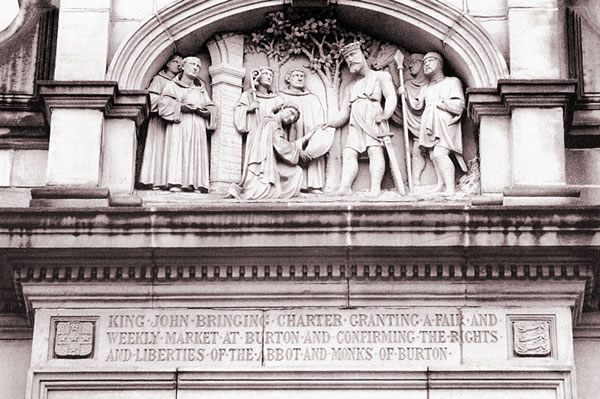
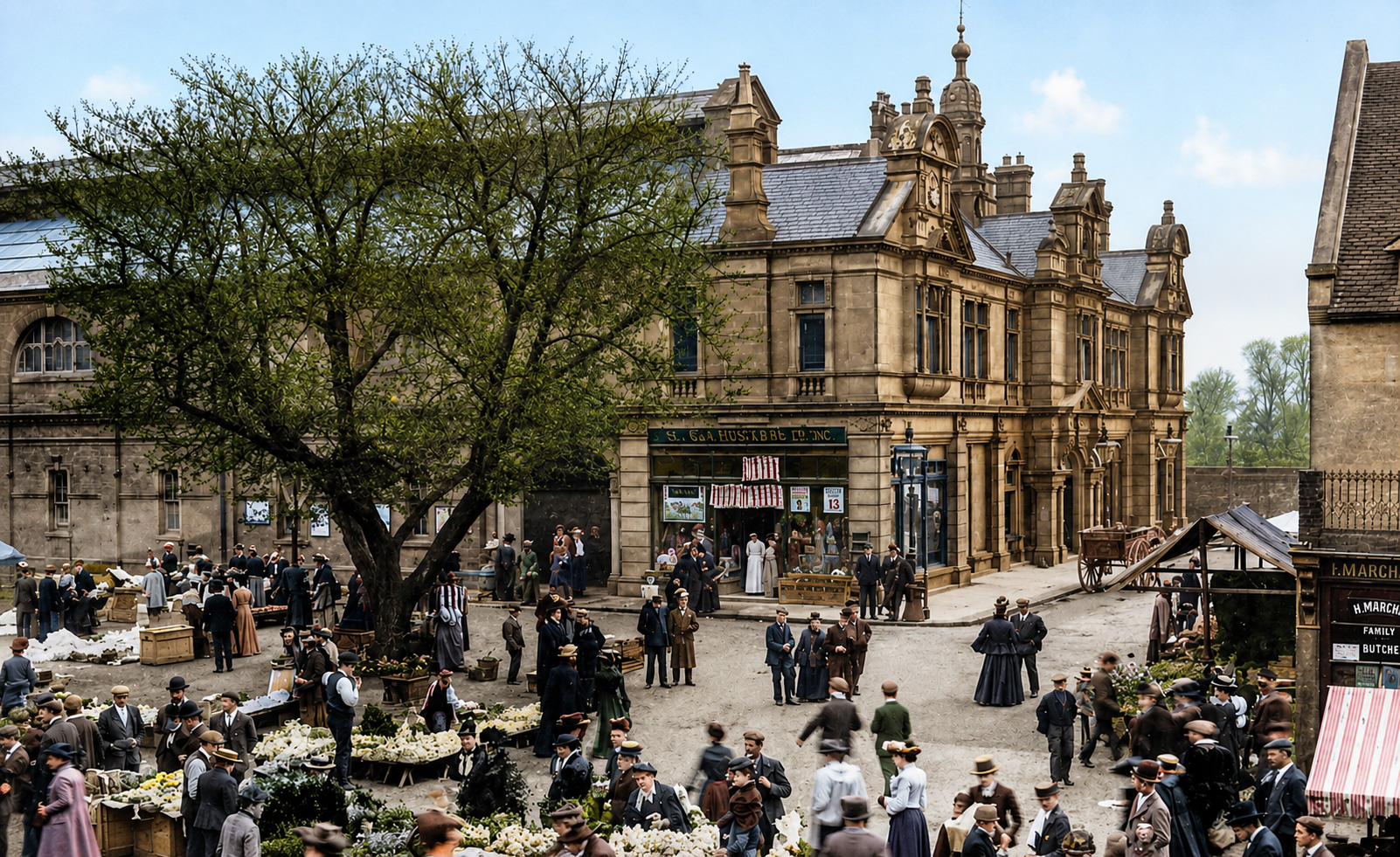
On 12th April, 1200, King John, son of Henry II, younger brother of Richard I (Lionheart) probably most famous for being forced to sign the Magna Carta in 1215, is recorded as granting the necessary charter to allow Burton to have a weekly market. The date of the charter seems to have been authenticated but at this time, King John was on the continent and arrived in England in early October with his child bride before they were crowned together at Westminster Abbey on 8th. If the date is correct therefore, the charter would therefore have been handled by the king’s administration. King John did however, visit Burton that autumn during a grand tour around the country which included Staffordshire to Nottingham along the river Trent.

This allowed permission for a weekly Thursday market and a three-day festival on the eve, day and morrow of St Modwen’s Day (28th-30th October) to the Abbot William Melbourne.

The first Market House was built by Thomas Feylde, Abbot of Burton 1472-93. This actually survived until 1772 when it was finally demolished to make space for a new Town Hall built by Lord Paget in 1883.

Belvedere Workhouse History

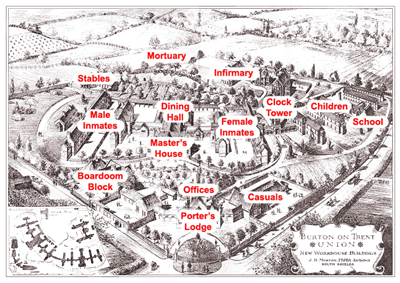
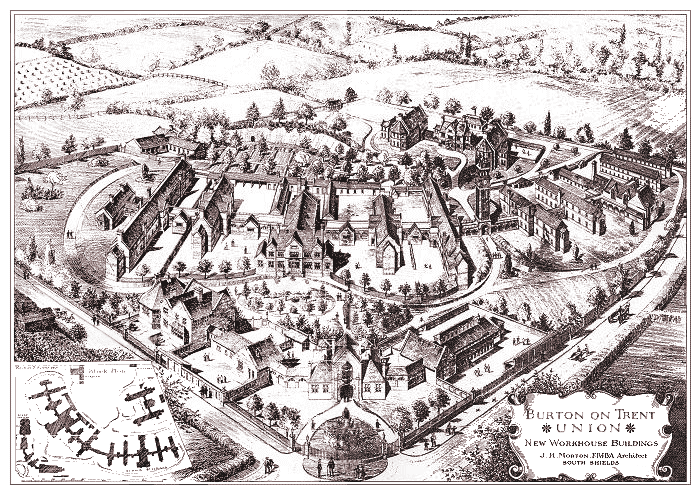
In 1880, construction began of a new larger workhouse to accommodate 550 inmates at a site to the north-west of the town on the south side of Belvedere Road at Outwoods. As can be seen from the Architects drawing, it was designed by J.H. Morton from South Shields. It was, like all workhouses, designed much like a prison. The workhouse campus followed the designs of other workhouses of the time and was finally built by Walker and Slater, an established builders from Derby.

The total cost of the building was £43,000. It was completed in 1884 and formally opened on 23rd October by the Chairman of the appointed Board of Guardians, Major Bindley.

The main entrance was at the junction Belvoir Road and Belvedere Road. In and Out gates led to a Reception and Porter’s Lodge; passing through these were the general offices. A large archway at the rear led to the Master’s House which was the most impressive building on the campus. Behind that stood the main hall, predominantly used as a dining-hall but also used to address the inmates en masse. Adjacent to the hall were a kitchen block and laundry.

Heading to the left was the two storey Boardroom Block, which aside from the obvious board room, housed the most senior members of staff and Board of Guardian Offices.

Inmates were separated into blocks with males, females and children being kept apart, even when from the same family. Within the children’s block, boys and girls were further segregated. Next to the children’s block was a school house. To the right was the Casuals block for short-term inmates. This also included secure accommodation for tramps and vagabonds.

At the rear of the site was an Infirmary and close by, a mortuary. Also at the rear was a stable block since this was before motorised transport. Almost certainly, the site would have included a chapel with its own chaplain but, at the time of writing, I have not been able to establish exactly were this was.

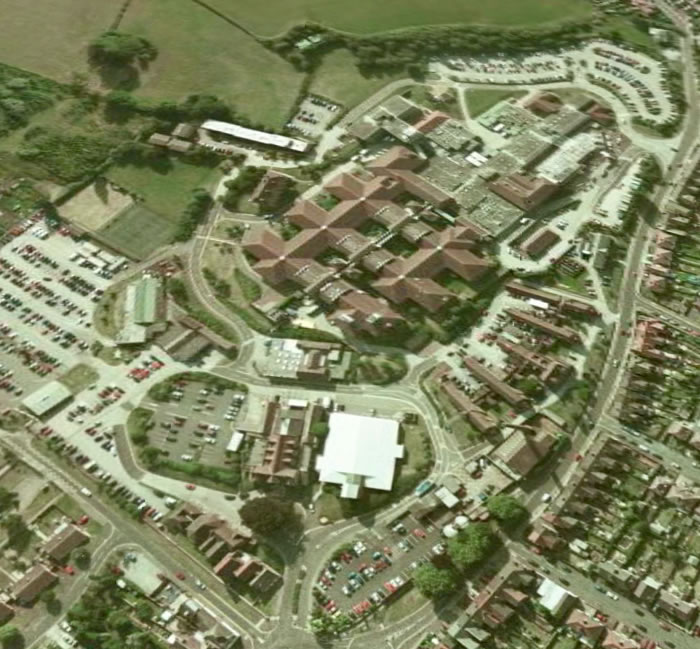
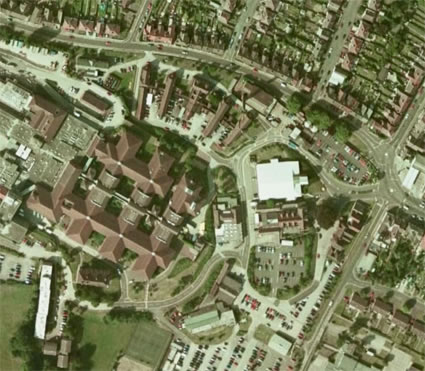
A present day aerial photo shows that the general footprint of the original Belvedere Workhouse site is still very much in evidence.

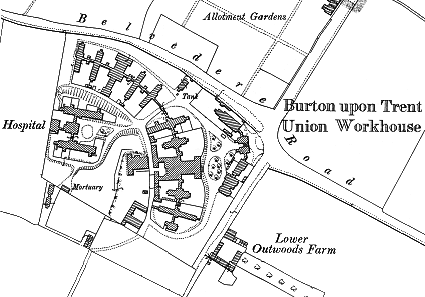
Though still not finished, the Belvedere workhouse made it onto the 1882 Ordinance Survey map and extract of which can be seen below.

A closer look still looks fairly familiar.

The same area is now much more developed but it is still quite easy to place it and fragments of the original site can easily be identified.

In 1930, the workhouse became Burton-upon-Trent Public Assistance Institution. In 1948, the whole site was transferred to the National Health Service for the building of Burton District Hospital.

Life at Belvedere Road Workhouse
Workhouse conditions were harsh so as to deter the able-bodied idle poor from relying on them. Men and women were segregated and children were separated from their parents. Aged pauper couples who by definition were neither idle nor criminal were not allowed to share a bedroom. By entering a workhouse paupers were held to have forfeited responsibility for their children. On admission, inmates surrendered their own clothes, any money or possessions were confiscated and they were issued with a plain uniform and single blanket which added to the depression.

At Belvedere, after rising at 6:00am for breakast, inmates worked from 7:00am to 12:00am before breaking for lunch. Work resumed from 1:00pm to 6:00pm. After dinner, inmates were confined to their accommodation from 8:00pm. This was actually less severe than many workhouses of the time. I have not been able to accurately establish what work inmates actually did but there are a few instances of resentment and hosility from Burton Companies not able to compete with Belvedere’s cheap labour.

Discipline was strictly enforced with typical punishments being a beating on the open hand or rear. Though food was very restrictive in the first place, it could also result in a reduction of food rations. In extreme cases, an inmate could be confined to a cell for a set period. Another form of both punishment and reward was through the appointment of different jobs. The worst jobs for offenders and more pleasant jobs for those that deserved it. Generally, treatment in the workhouse was very little different to being in prison with inmates being effectively punished for finding themselves in poverty. The only difference was that inmates could ‘discharge’ themselves and leave if they so wished but of course, invariably, they had no better option than being there in the first place.

The diet was also deliberately poor quality because it was not intended to attract inmates. An early breakfast is separate sittings consisted of a piece of bread and bowl of gruel. No second helpings were permitted except on Christmas Day. Lunch was a rationed bowl of poor-quality vegetable soup though this was a Belvedere luxury not seen in most workhouses. Dinners were dull, predictable & tasteless and Supper usually took the form of a crust of bread and cheese. Members of the workhouse generally suffered from malnutition. All meals were eaten in observed silence and, in the early days, no cutlery was provided. Again, workhouse inmates fared worse than their prison counterparts. The official ration in HM Prisons was 300 ounces of food a week. The workhouse diet was often around 180 ounces a week only.

Inmates had to be pretty sick before being admitted to the infirmary. Treatment was basic and many left to the mortuary rather than back to the workhouse. Schooling was also very elementary though this improved when it was realised that an educated pauper child was less likely to return to the workhouse as an adult. Although Belvedere Workhouse enjoyed the luxury of a school, this was not the case in all workhouses. Children were often forcibly apprenticed to coalmines and local factories without the permission or knowledge of their parents. Many Belvedere children found themselves apprenticed to South Derbyshire coalmines from as young as eight.

This was largely due to the fact that the money to ‘Poor Law Commissioners’ was very poor, relying on an element of charity. The Workhouse Master for example, had a salary of around £80 where his counterpart, the Governor of a prison would have been paid around £600. Doctors and teachers were paid around half what they could earn outside of the workhouse and nurses were often unpaid and untrained inmates themselves.

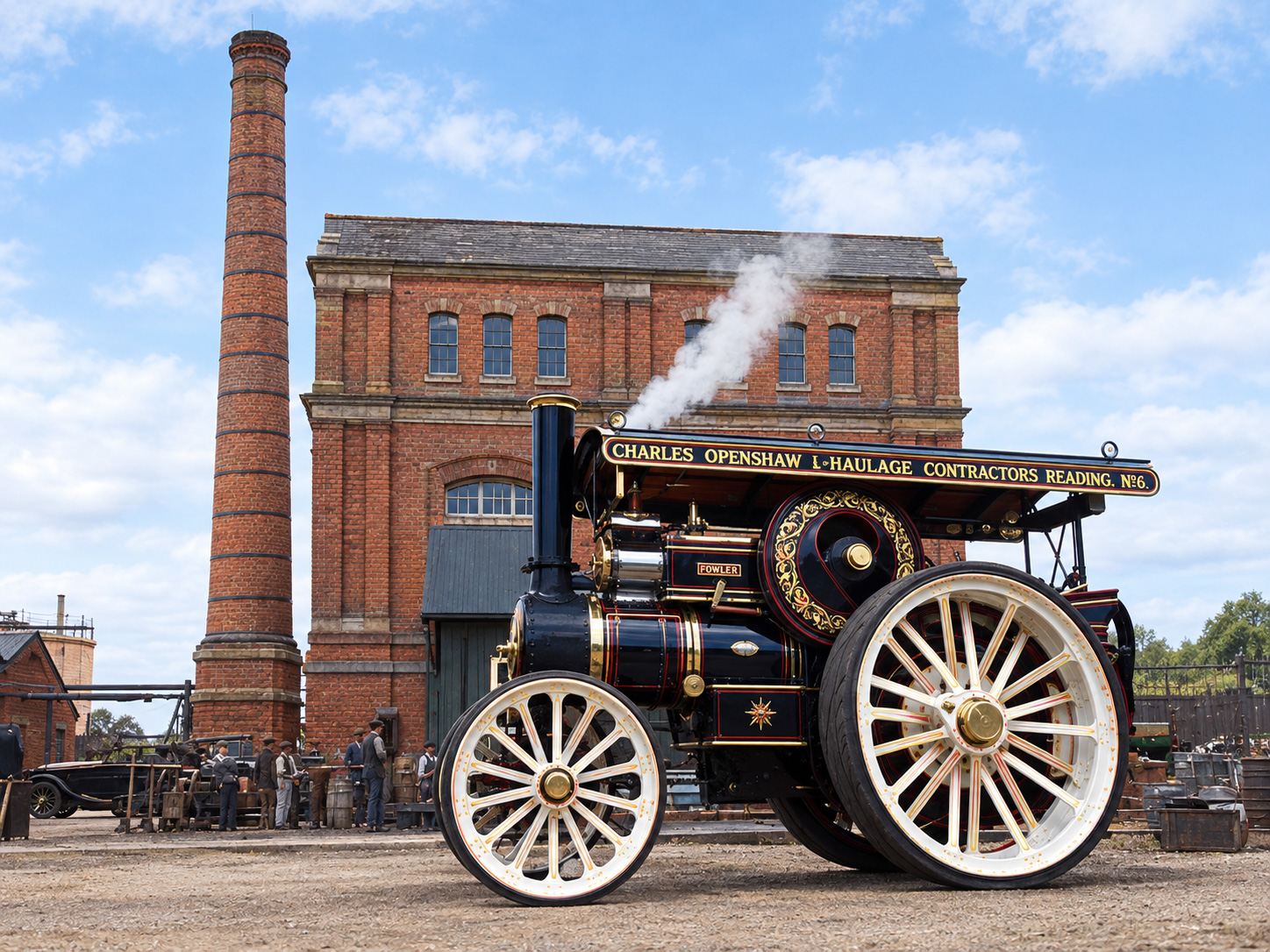
Claymills Pumping Station

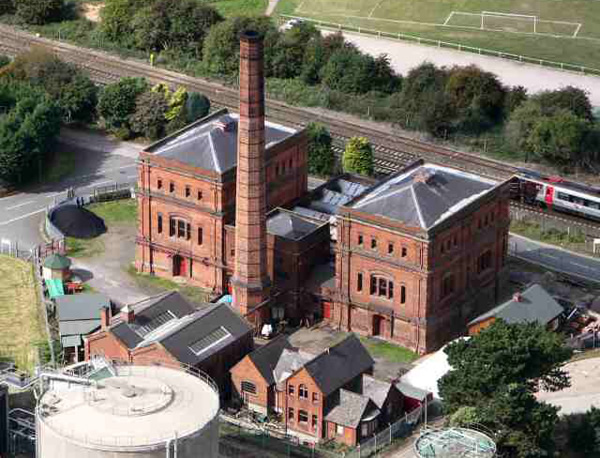
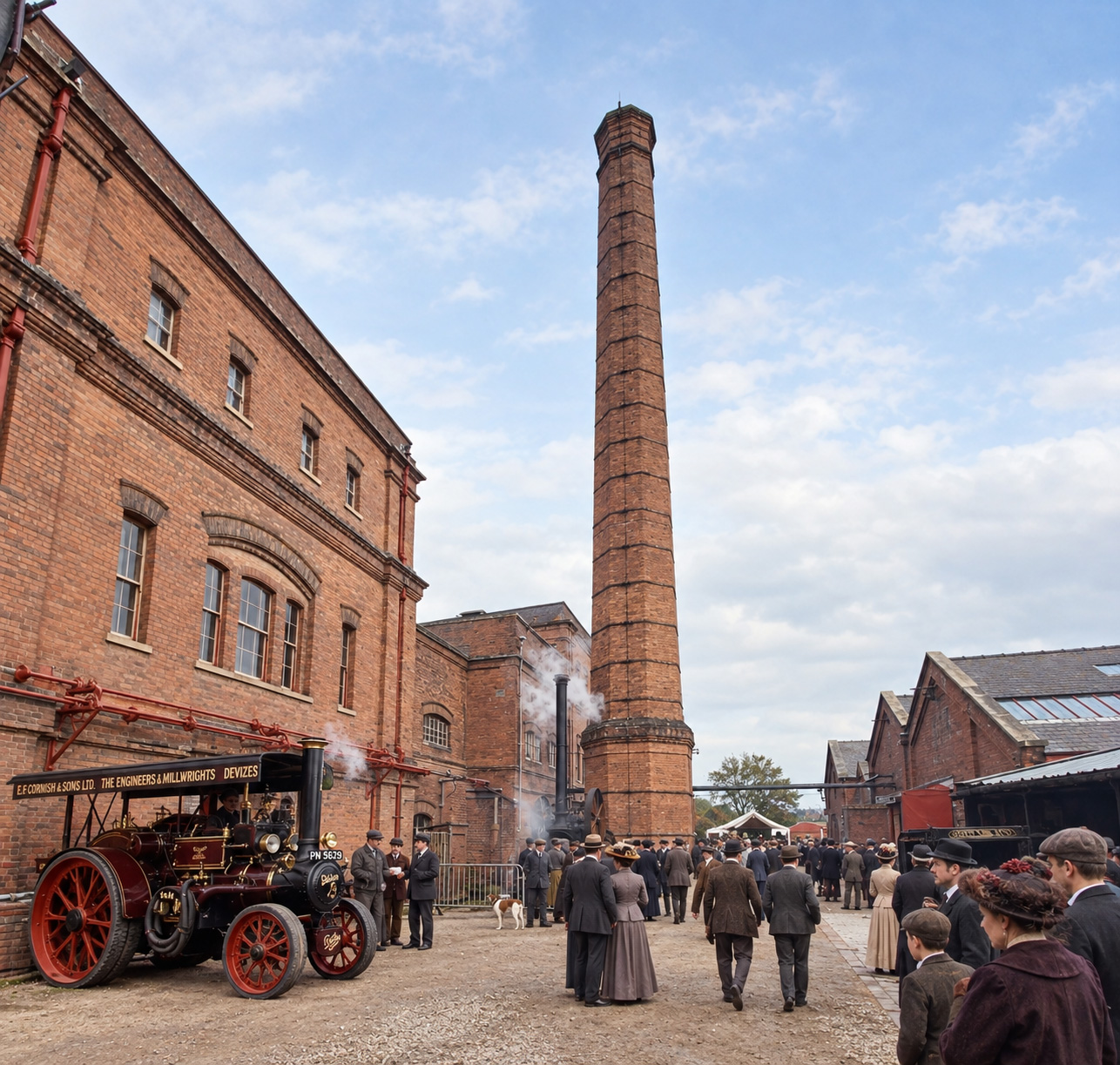
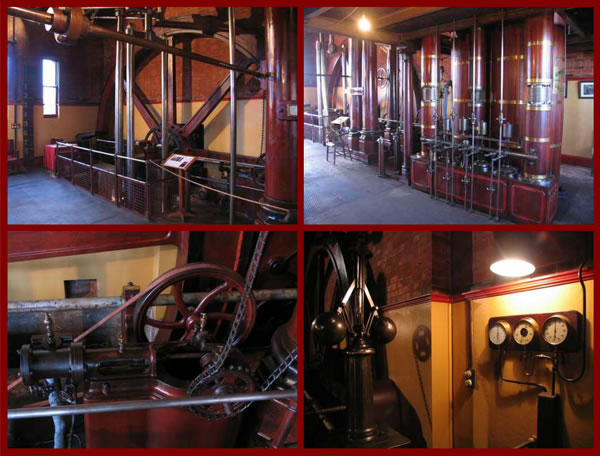
Claymills Pumping Station is an excellent example of Victorian engineering and has buildings dating back to 1885. It was important in the development of Burton upon Trent during the Victorian age, bringing much needed improvements to local sewerage handling.

The magnificent traction engines are still lovingly maintained by enthusiasts.

At the heart of Claymills are its magnificent beam engines, boilers and historic machinery which are still original very well maintained providing a fascinating look into the past.

It has been preserved as a museum offering a varied programme of talks, guided tours and hands on learning, and is described by English Heritage as ‘the most complete site of its kind in the UK’.

It has an informative website of its own so, rather than replicate, I will provide the link:  Claymills Pumping Station Website

Market Hall 1883

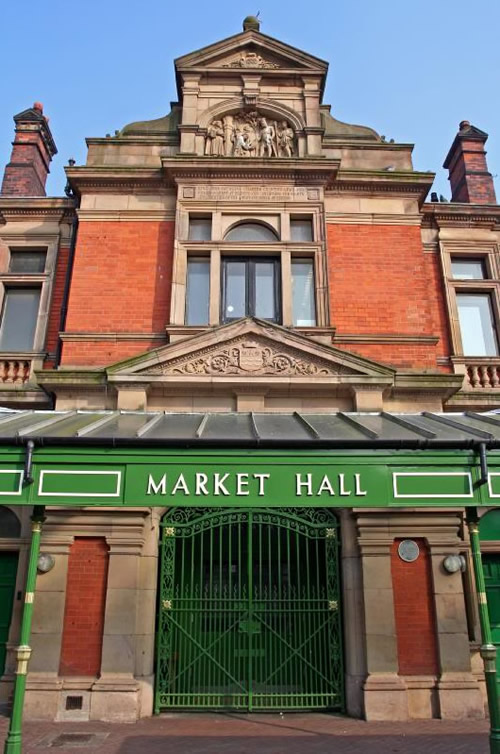
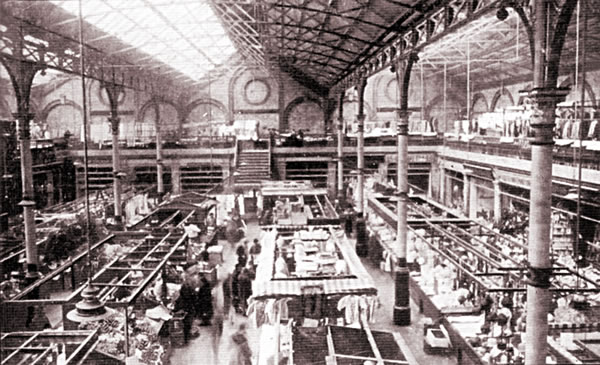
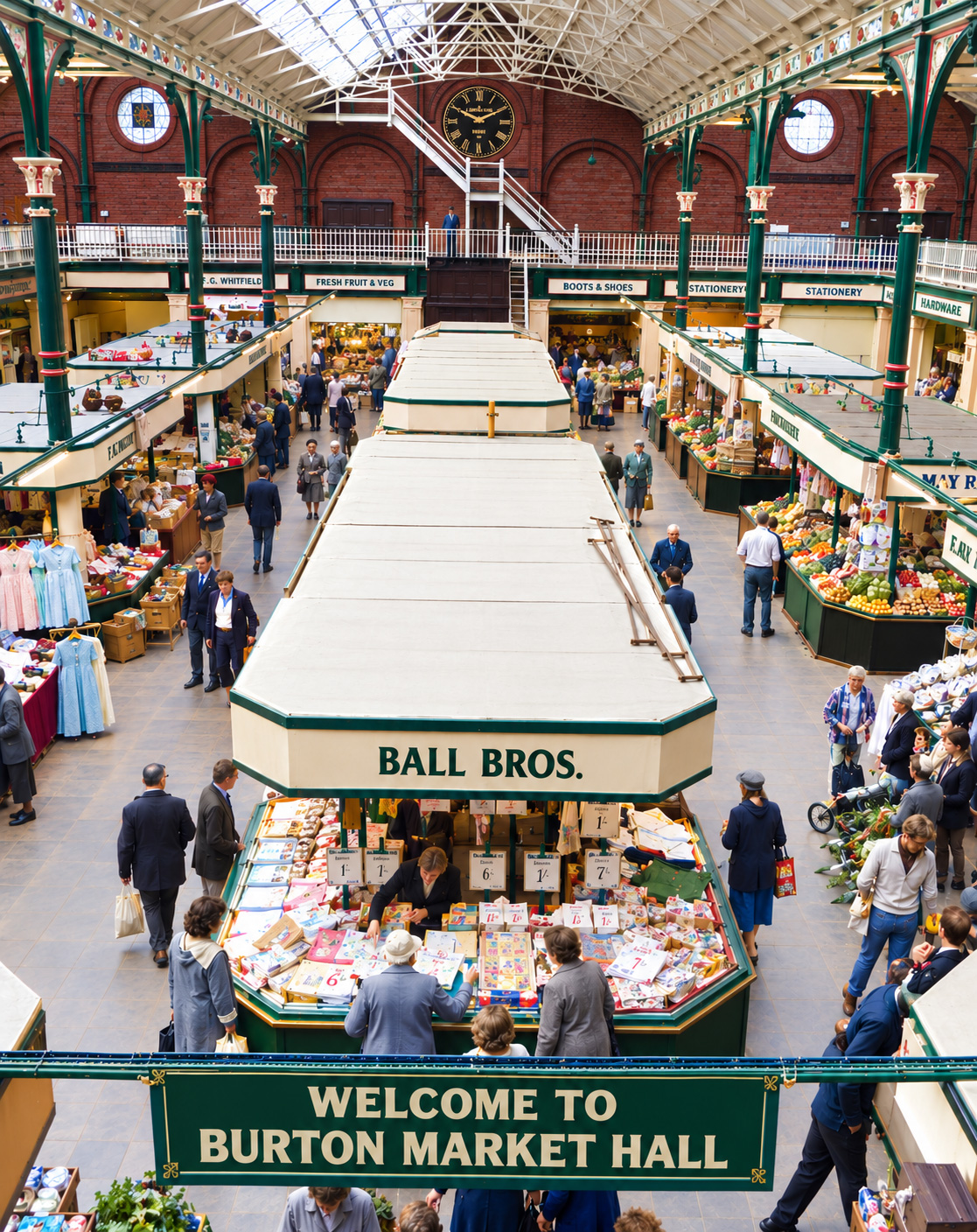
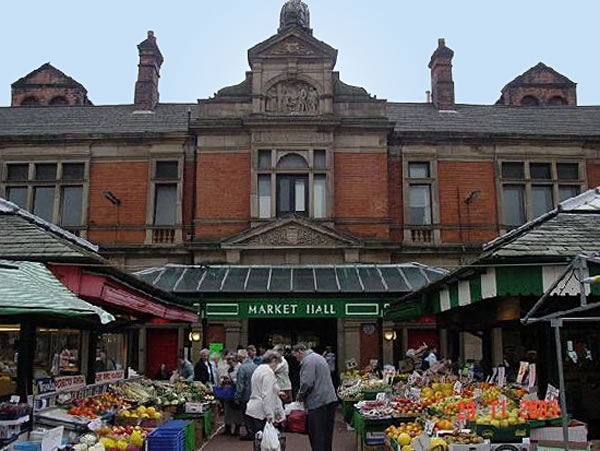
A competition for architectural designs was launched in May 1880, with one of its terms being the inclusion of an ornamental design connected with the history of the town over the west entrance. The competition was won by Dixon and Moxon of Barnsley, and tenders for the building of the new market hall were invited by 19 December 1881. A model of the main sculpted panel was approved by the Fire Brigade, Markets and Fairs Committee on 23 May 1883. Work was commenced and the Market Hall was officially opened later the same year.


Originally, as well as stalls laid out pretty much as in the current day, the Market Hall interior used to have stalls around the whole of the upstairs balcony, accessible by stairs at the far end. The balcony is actually still there but, since it is no longer used, it goes largely unnoticed. I bet you look up the next time you visit!

A fish market was added to the Market Hall in 1925.

In the twenty-first century, the Market remains an important feature of Burton’s identity.

Bretby Hall

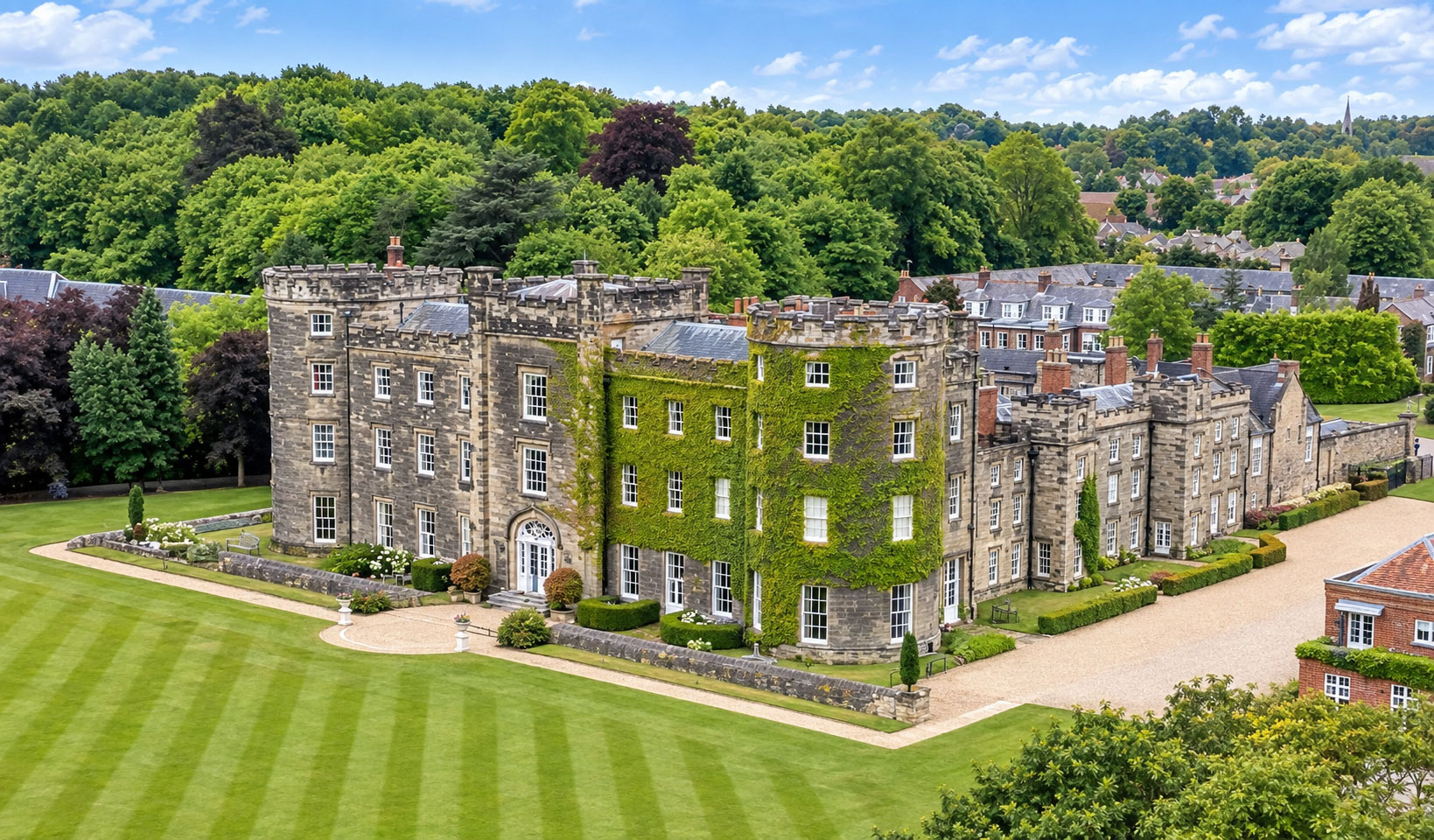
Bretby Hall is an historic Gothic-style country house that evolved from a medieval manor and castle into prominent seat for the Earls of Chesterfield, a hospital, and finally private luxury apartments.

The manor of Bretby (Bretebi) is recorded in the 1086 Domesday book.

Around 1209, the land was granted to Stephen de Segrave by Ranulph de Blondeville, 4th Earl of Chester. He built an early mansion and church that later evolving as it expanded into Bretby Castle.

In 1585, the estate was purchased by the Stanhopes. Philip Stanhope, the 1st Earl of Chesterfield, received permission to enclose a park and built a new house nearby in the early 17th century, replacing the old castle. 

‘Old’ Bretby Hall, during its relatively brief existence, was the second largest country house in Derbyshire after Chatsworth. Towards the end of the 16th century the Stanhopes of Shelford (Notts.) bought the estate and in 1610 Philip, 1st Lord Stanhope (in 1628 created 1st Earl of Chesterfield) obtained Royal Consent to enclose land to form a park. It was probably at this stage that an old castle was pulled down, and no doubt any usable stone re-cycled into the structure of a new house he began not long afterwards, the building of which occupied him until the 1630s.

In 1628, his grandson Philip was made Earl of Chesterfield by King Charles I of England which meant that Bretby Hall became the ancestral home of the Earls of Chesterfield. The first Bretby Hall was built in 1630 after Thomas Stanhope bought the manor of Bretby from the Stephen de Segrave family,

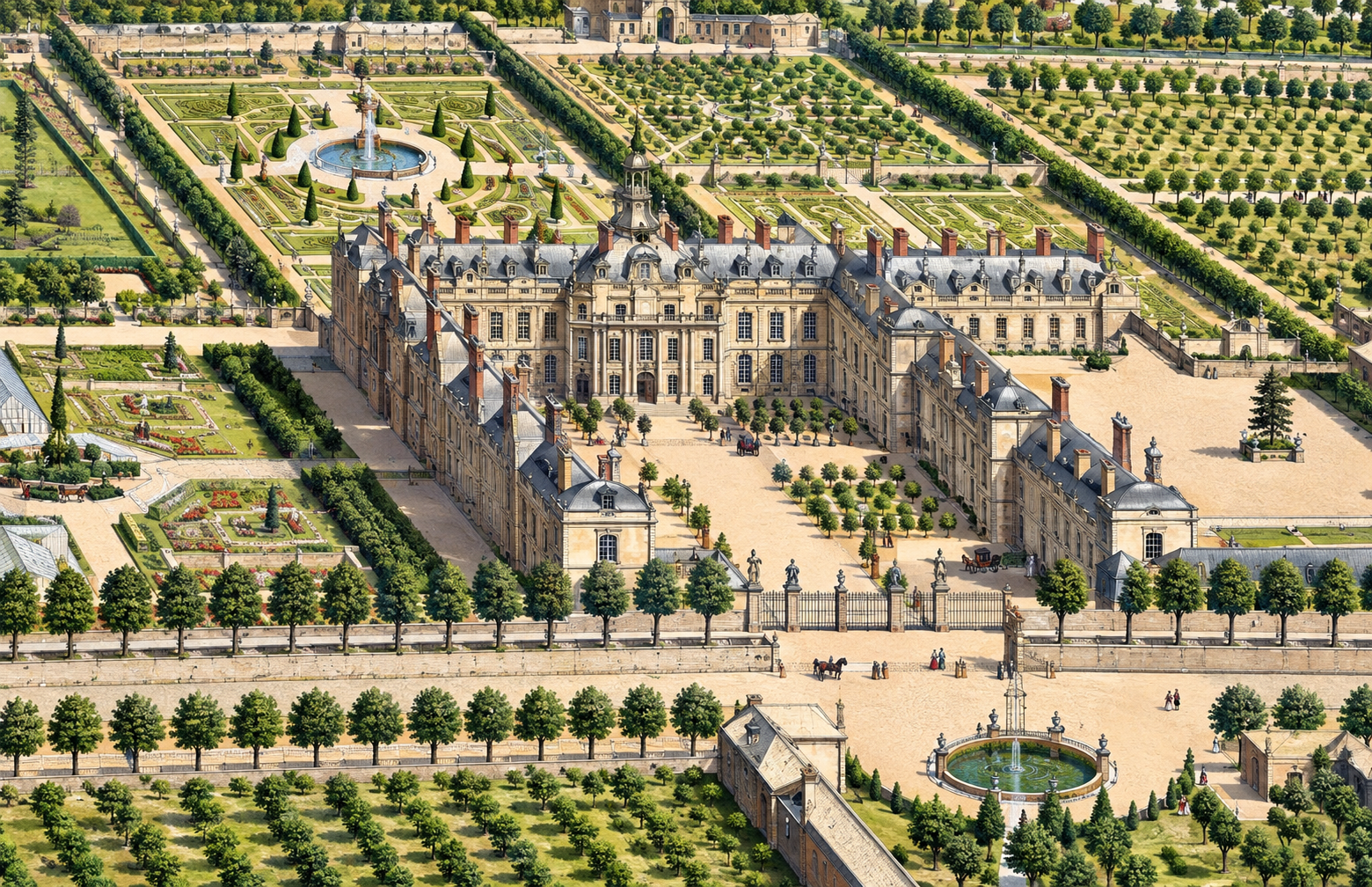
The 2nd Earl of Chesterfield developed lavish formal gardens which were much celebrated famous in the late 17th century and even compared with the gardens at Versailles. From all of the available materials, below is my best interpretation of both the Old Hall and Gardens.

This magnificent ensemble fell into disuse by the family under the famous 4th Earl (who twice refused a dukedom), and his successor, Philip Stanhope, the 5th Earl of Chesterfield, was persuaded to allow it to be demolished between 1775-1781, by a mendacious resident agent, who greatly enriched himself through the sale of the materials.

The 5th Earl later had regrets and commissioned a grand new castellated Gothic mansion designed by architects Sir Jeffry Wyatt and W. Martin. Building commenced on a site several hundred yards further south of the previous hall. Unfortunately, the building project proved to be too ambitious and was a long way from being finished when the 5th Earl died in 1815 so he never got to see the completed works.

All that remains of the original hall are some of the architecturally workaday outbuildings and service accommodation. A new brick house was put up on the site of the old one to accommodate the wily agent’s successor, but this was swallowed up in the present Bretby estate in the early 19th century.

The sixth Earl, known as the ‘Racing Earl’, loved cricket and shooting, so he built a cricket pitch and raised game birds.

Following the death of the seventh Earl in 1871, the Estate passed to his widowed mother, Anne Elizabeth, Dowager Countess of Chesterfield, who was a close friend of Benjamin Disraeli who frequently visited the estate.

On the death of the Countess, her estates devolved upon Lord Porchester, the eldest son of her daughter, Evelyn (died 1875), who had married Henry Herbert, 4th Earl of Carnarvon in 1861.

George Herbert, the 5th Earl of Carnarvon, the famous Egyptologist for whom Howard Carter discovered the tomb of Tutankhamun, inherited the property. He commenced breaking up the Bretby estate during World War I

In 1920, obsessed with his ongoing search for the tomb of Tutankhamen in Egypt, he sold the main estate to John Downing Wragg, a Swadlincote industrialist, to further fund Howard Carter’s legendary archaeological expedition in Egypt.

The Carnarvon’s never actually lived at Bretby Hall, preferring their home at Highclere Castle, near Newbury, Berkshire made famous by ‘Downton Abbey’. They did make regular visits, however, particularly for shooting.

 Derbyshire County Council purchased the Hall in 1926. It operated as a children’s sanatorium and later as a major orthopaedic hospital until closing on February 28, 1997 to be developed into luxury apartments.

Drakelowe Hall – Early History

EARLY HISTORY OF DRAKELOWE

Drakelowe is first recorded as Dracan Hlawe in a grant of land made by King Edward in 942 A.D. The place-name means “Dragon’s Mound”, indicating a burial place with a guardian spirit.

No trace of an early burial was found until January, 1962, when workmen with a mechanical digger were excavating gravel to make concrete for the construction of ‘C’ power station.
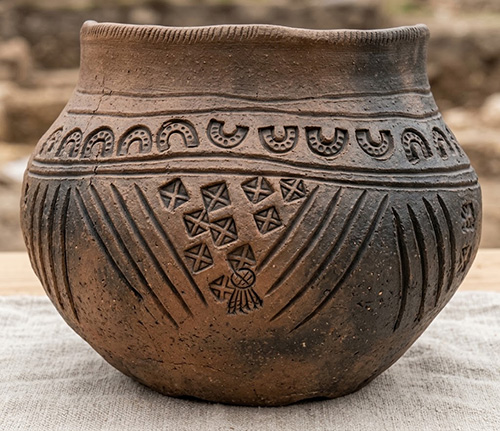
The site was in an orchard adjoining the former Warren Farmhouse and the “find” consisted of a small jar or bowl, globular in shape, with a base diameter of one and a half inches, and a height of two and a half inches. Made of well-fired grey-brown ware, it had a stamped decoration of horse shoes around the neck with incised chevrons and square stamps enclosing a cross on the body.

This small pot is a good example of a vessel containing a votive offering and is usually associated with a skeleton, but of the latter there was no trace.

The date of this vessel has been fixed at c550 A.D. and it is an interesting example of Friesian-Anglo-Saxon design. It is now in Derby Museum.

In the reign of Edward the Confessor, Drake-low was held by an Anglo-Saxon named Elric.

THE NORMAN CONQUEST AND AFTER
When this country was invaded by William the Conqueror in 1066 he was accompanied by the brothers Ralph and Robert de Toeni, who claimed descent from the Dukes of Normandy, with a pedigree extending back to Norse mythology.

Ralph, the elder, was hereditary Grand Standard Bearer to the Duke, but asked to be relieved of this duty so that he might fight in the battle of Hastings. He was rewarded with several manors in Norfolk and elsewhere, but spent most of his time on his ancestral estates in Normandy, Robert was given 81 manors in Staffordshire, 26 in Warwickshire, 20 in Lincolnshire and four elsewhere, and he adopted the surname of “de Stafford”.

Nigel, a younger brother or possibly a son of Robert, also assumed the surname of “de Stafford”, and held 13 manors in Staffordshire, 11 in Derbyshire, four in Leicestershire and one in Warwickshire. Among the Derbyshire manors held by Nigel at the time of the Domesday Survey in 1086 were those of Drakelow, Heathcote and Swadlincote, together with a pasturable wood two and a half miles long and two miles wide. There is no mention of Gresley in the Domesday Book.

Somewhere about the year 1090, Drakelow was stricken with pestilence and an account of this happening was written by Geoffrey, Abbot of Burton (1114-1151). Two of the Abbey servants living at Stapenhill fled to Drakelow desiring to live under the protection of Roger, Earl of Poictou, at that time holder of the great fief of Lancaster which included the manor of Drakelow.

The Abbey officials seized the seed corn of the servants, hoping this would induce them to return, but the Drakelow retainers came to Stapenhill and carried away all the seed corn in the Abbey barns. The Abbot refused to use armed force but went on naked feet to the shrine of St. Modwen in the Abbey Church to pray for guidance. It is recorded, however, that ten of the Abbot’s retainers met 60 Drakelow retainers at the “black pool by the Trent” and a fight took place (as this account was written by the Abbot it is possible the contestants were more equal in numbers).

The steward of Drakelow was killed and the offending servants were stricken with a mortal sickness. After their burial, horror upon horror fell upon the quiet village of Drakelow. Night after night the dead servants rose from their graves and rushed about the fields carrying their coffins on their shoulders and banging them on the walls of houses. Finally all the villagers were stricken with sickness. The Earl made repentance to the Abbot but the ghosts were not laid until the bodies of the offending servants had been dug up and burned “when an evil spirit in the form of a large black crow flew up out of the smoke and disappeared from view. Thereafter the village of Drakelow was forsaken and desolate, the surviving inhabitants fleeing to the nearest village which is called Gresley”.

William de Gresley’s grandson, also named William, returned from Gresley to Drakelow at the beginning of the 13th century. In a deed dated 1201 he is mentioned as holding Drakelow from King John by service of a bow, a quiver, and twelve arrows yearly, the bow to be unstrung, the quiver of Tutbury make, and the arms feathered, with the addition of a bozo or broad-headed shaft.

William died in 1220 and was succeeded by his son, Geoffrey, who became steward to the powerful William de Ferrers, 4th Earl of Derby and Constable of the High Peak. The Gresley arms which appear for the first time on Geoffrey’s seal are an adaptation of the Ferrers coat of arms.

Geoffrey’s grandson, also named Geoffrey, supported Simon de Montfort against Henry III and had to pay a large sum to redeem his forfeited estates. This Geoffrey de Gresley appears to have been of a turbulent disposition for he was accused several times of rioting and was fined for wounding Ralph le Messer at Lullington. He subsequently fought in France and Scotland and was knighted by Edward I and summoned to Parliament. He successfully claimed the right to erect a gallows at Drakelow for the execution of felons.

Sir Geoffrey had three sons, Peter, Robert and William, all of whom inherited the turbulent qualities of their father. Robert and William were outlawed for murder in 1293 and Peter, the eldest son, followed the example of his father by joining the army after many misdeameanours. He was knighted in 1307 and died in 1310.

Sir Peter’s wife, Joanna de Stafford, by whom he had six sons, was also not averse to violence. After her husband’s death she was forcibly adbucted from Drakelow and married to Sir Walter de Montgomery. The abductor was pardoned but in 1323 Joanna and her sons, Robert and Peter de Gresley, were accused of the murder of William de Montgomery, Sir Walter’s son by an earlier marriage.

The murder took place on “the high road in Overseale”, the fatal wound being inflicted by a “sword of Cologne worth 6/10.” All three persons accused were arrested – and acquitted.

In 1333 Joanna was accused of another murder and acquitted. Her eldest son, Peter, after robbing the parson of Walton and attempting to murder John Green, was slain a few years later. His brother Robert was accused of ten crimes including three of robbery and four of murder but he joined the King’s army in Scotland and fought so well that he was granted a free pardon for all his crimes, was knighted, and represented Derbyshire in Parliament.

In a deed executed by Peter’s grandson, John de Gresley, in 1394, it is stated: “Be it know that I, John de Gresley, have not had the use of my seal for a whole year. I therefore notify that, being of good memory and sound mind, I contradict and deny in all things any sealed writings until my seal is restored, and I have set to this deed the seal of Dean of Repton”.

Sir John had married as his second wife a wealthy heiresss, Joan de Wastneys, but they had no children. Nicholas, the son of his first marriage, died in 1390 and it appears that Sir John’s grandson, Thomas, was afraid the Wastney’s inheritance might go astray. A complaint was made by Joan to the Lord Chancellor that, while she and her husband were in possession of Drakelow, Thomas Gresley came there with 24 armed men and ransacked the chambers and chapel, breaking open 25 chests and carrying away £264 in gold as well as silver seal of arms belonging to Sir John and a quantity of linen and woollen clothes, furs and skins, worth £ 100, together with four score charters and muniments.

She went on to say that Sir John, in great infirmity (he was 80 years of age), was detained by Thomas and his people by main force so that she could not, and dare not go to his aid. The cause of the trouble was that Sir John had made her his executrix in place of Thomas, and with the family seal in his possession he might do as he liked. But Thomas eventually succeeded to all his grandfather’s property including the Wastney’s inheritance.

Nigel de Stafford, who retained that name all his life, had two sons, William and Nicholas. The latter married an heiress of the Longford family and went to reside there, but William, the elder son, remained at Gresley. His name first appears in a deed in 1129 and he died in 1166. In various deeds and charters he described himself as William, son of Nigel of Gresley, and this became the family name.

Somewhere about 1130, William de Gresley built a small priory dedicated to St. George for the use of canons of the Order of St. Augustine. Known as the “Black Canons” from their dress, these monks grew beards and wore little caps or birettas. They carried out the duties of parish priests but lived together on monastic lines.

The site of this priory was on another hill in the same large wood as the “motte and bailey” castle, and in the course of time the two settlements became known as Castle Gresley and Church Gresley. The present parish church of Gresley is on the site of the old monastic church, on the south side of which were the priory buildings.

That the Priory of Gresley was a small foundation is borne out by a grant which was confirmed by the Bishop of Lichfield in 1309 which states: “Although the Prior and Cannons of Gresley are bound to perform divine worship by day as well as by nights, and are compelled to exercise the burden of hospitality, yet from the fewness of the brethren which consist of only four in number, together with the Prior, and from the main estate of the house and the barrenness of its lands, and divers oppressions which daily gain strength as the malice of the world increases, they are unable to bear as is fitting the yoke of the Lord. So to augment the number of brethren we bestow upon them the parish church of Lullington, so that the aforesaid monks may increase their numbers by two canons”.

The Assize Rolls of Edward III contain an account of an unusual fatality which occurred in the Priory. “In the 14th year of the reign of the King’s father one William de Jorganville was sitting by the fire in the kitchen of the Prior of Gresley when suddenly his clothes caught fire and he was burned so badly that the third day afterwards he died. No one is suspected of his death. Verdict: Misadventure”.

THE WARS OF THE ROSES AND THE GRESLEY FAMILY
In the difficult times of the Wars of the Roses many wealthy landowners were ruined but the Gresleys contrived to keep their estates intact. Sir Thomas Gresley, a staunch Lancastrian, was knighted by Henry IV and at different times was Sheriff of Derbyshire and Staffordshire. He represented one or other of these counties in Parliament on no less than seven occasions.

Both Sir Thomas and his son John took part in the French expeditions of Henry V, Sir Thomas furnishing three men-at-arms and nine archers, while John contributed two men-at-arms and six archers. Among the family papers was an interesting indenture between Sir Thomas and John Bette, a yeoman of Rosliston, whereby the latter agreed to serve, follow and guard Sir Thomas in France for a wage of 6d. per day, and to be well mounted for service in the war.

On the death of Henry V, Jane Gresley, daughter of Sir Thomas, was appointed nurse to the infant Henry VI, then a few months old. On relinquishing her duties she was awarded a pension of £40 p.a. (equivalent to more than £2,000 p.a. today) and her successor, Dame Alice Botiller, was given permission by the Privy Council “reasonably to chastise the child from time to time as the case may require“. To have struck the King without such permission would have been a treasonable offence!

Sir John Gresley, a grandson of Sir Thomas, appears to have trimmed his sails to the prevailing wind. At one time a Lancastrian he afterwards supported Edward IV and accompanied him to Scotland. He attended the coronation of Richard III and subsequently accompanied Henry VII in his triumphal progress to the north.

Sir John had several disputes with the Abbot of Burton about fishing rights in the river Trent, and quarrelled violently with Sir William Vernon who owned land at Seale. This resulted in a fracas and the disputants were bound over to be of good behaviour, the following terms of compensation being fixed:
“For a sore wound on head or face 13/4d., an ordinary stroke 6/8d., a sore stroke on the leg if the bone was stricken asunder 40/-, a stroke on the foot 20/-, but if it results in maiming the compensation is to be 100/-, the latter amount also to be paid in respect of maiming hand or thumb”.

Sir John became Sheriff of Derbyshire and Nottinghamshire and represented Staffordshire in Parliament.

John’s grandson William, married a granddaughter of Sir William Vernon, thus uniting the disputing families, but they had no children. Sir William Gresley, however, had four sons by a lady named Alice Tawke, all of whom assumed the surname of Gresley. She afterwards married Sir John Savage and on Sir William’s death in 1521 she disputed the succession of Sir George Gresley (William’s brother) to the family estates.

The dispute was referred to Thomas Wolsey, Cardinal Archbishop of York, who decreed that Sir George should have possession of the family manors “as the rightful heir of his brother Sir William Gresley who died without lawful issue of his body begotten“. The documents were endorsed. “The decree against Lady Savage and her bastard sons for all the Gresley Lands“.

During the troublesome times of the Reformation the Gresleys managed to avoid persecution and forfeiture of their lands. Sir George was knighted by Henry VIII at the coronation of Anne Boleyn, and his son William was knighted by Queen Mary Tudor on the occasion of her accession, while William’s son, Thomas Gresley, was appointed Sheriff of Staffordshire by Elizabeth I and knighted by James I.

Thomas Gresley was appointed Sheriff for Staffordshire in 1583. This was an eventful year, for Mary Queen of Scots was moved from Sheffield to Wingfield and thence to Tutbury. The latter place was cold and damp, and Thomas Gresley, as Sheriff, was ordered to take an inventory of the goods belonging to Lord Paget at his house in Burton. Lord Paget, a Roman Catholic, and a suspected supporter of the Scottish queen, had fled to France. On receipt of the inventory the Sheriff was ordered to take some valuable hangings from the walls of Lord Paget’s house to render Tutbury Castle more comfortable.

It appears, however, that Thomas Gresley had sold some of the hangings and also some beds, and when Queen Mary complained of the cold at Tutbury he received an emphatic order that these hangings should be recovered and sent to Tutbury. Matters were adjusted, not without difficulty, and when the Scottish queen was removed to Fotheringhay, Thomas Gresley, as Sheriff, was ordered to attend her. The fact that he was present at her execution, however, did not impair his relations with her son, James I, who rewarded him with a knighthood on the occasion of his progress from Scotland toLondon.

Thomas Gresley took an active part in county affairs and was one of the signatories to a protest against a forced loan levied by Queen Elizabeth in 1590. Six year later two suspected Stapenhill witches were brought before him in his capacity as Justice of the Peace. A boy named Thomas Darby was suddenly attacked by fits and was supposed to have been bewitched either by Alice Gooderidge or her mother, Elizabeth Wright. The two unfortunate women were arrested and taken to Drakelow where they were searched for “witch-marks”, i.e. any blemish on face or body. These were found and a witness named Michael testified that when his cow was sick Elizabeth Wright cured it on payment of a penny fee.

Alice Gooderidge confessed she had bewitched the boy and was sent to Derby gaol. She was tried and condemned to death but died in prison before the date fixed for her execution. Three years later the boy confessed that his fits were frauds and he had never really been ill, adding “I did it to get myself a glory thereby“.
 

Burton Leander Rowing Club

Rowing Burton Leander Rowing Club was established in 1847 with a clubhouse on the river bank near the corn mill in Winshill making it one of the oldest rowing clubs in the UK. The club’s two early wooden boats were named Frolic and Dodo.

Another club, Burton Anglesey, was established in 1848. The clubs competed in local events and in the same year, the first ‘unofficial’ regatta was staged. No further regattas took place for sixteen years until 1866 following the founding of both Burton Rowing Club and Trent Rowing Club in 1865 with boathouses built on the Stapenhill side of the river near Burton bridge. By that date the Leander and Anglesey clubs had been merged as the ‘New Leander Rowing Club’, but after a time, the name was simplified back to ‘Burton Leander’.

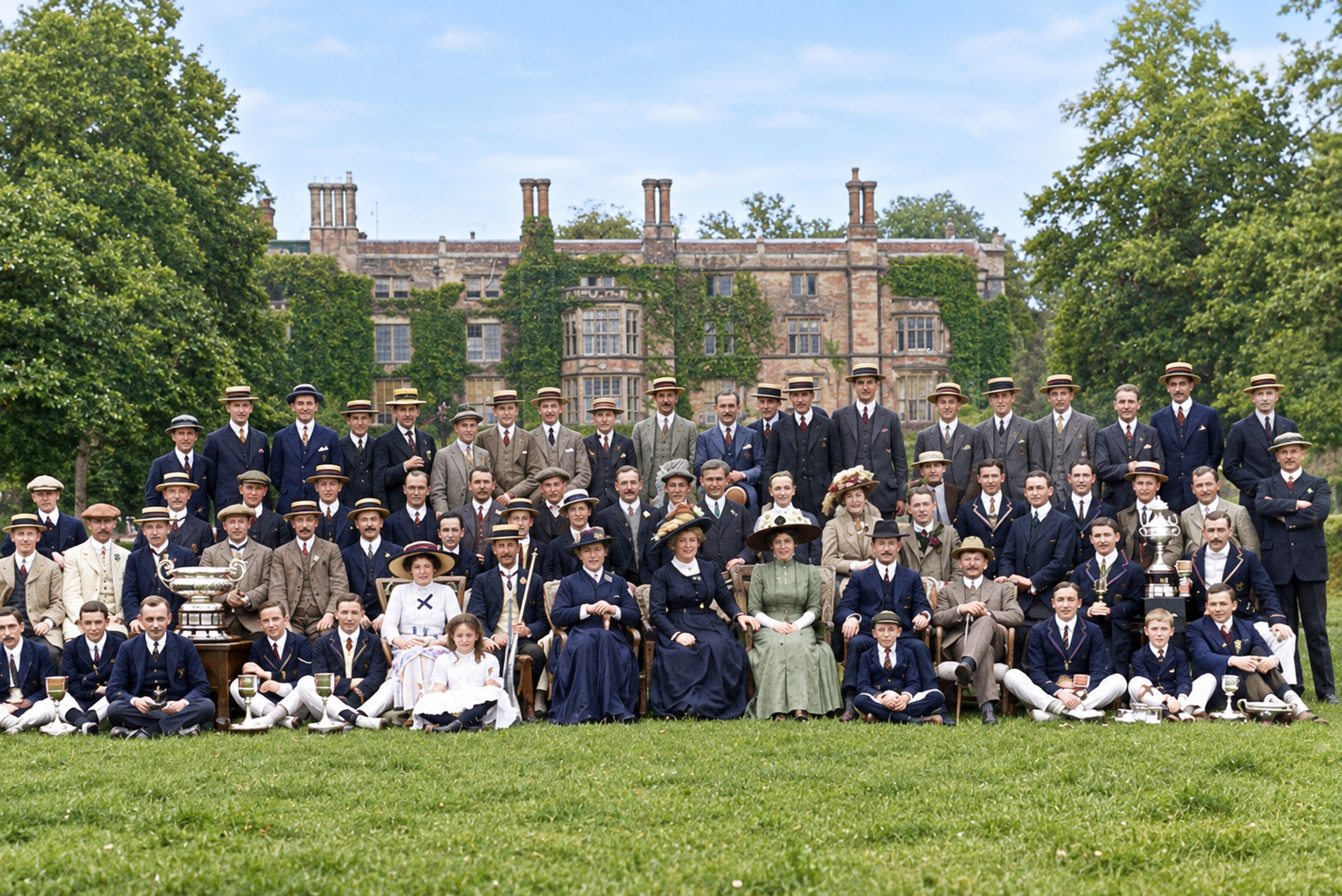
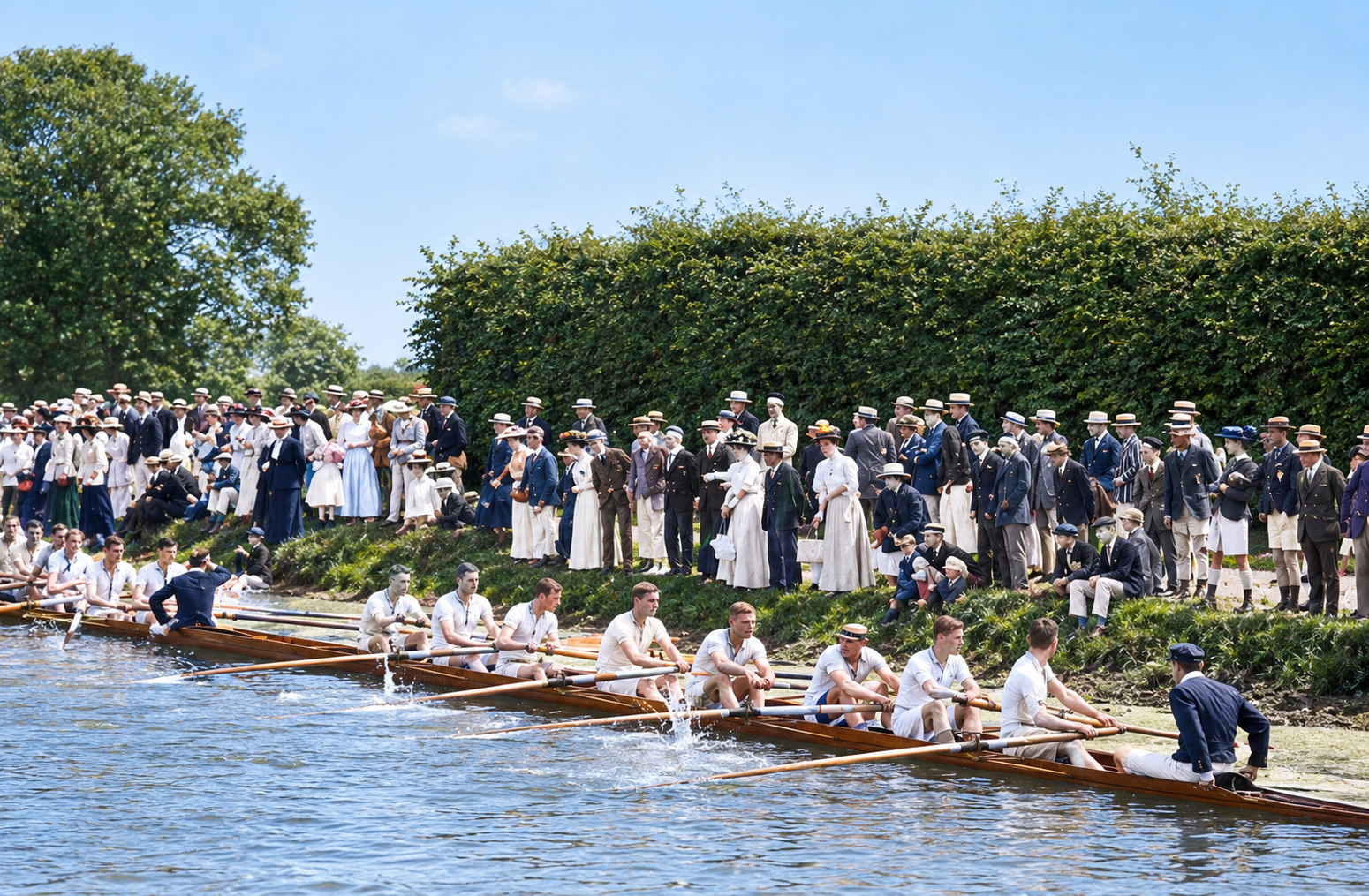
Below is a restoration of a photo of Burton Leander club taken at Drakelow Hall. Some impressive photos are on display but I haven’t been able to establish exact details of the event.

In September 1914 after the start of World War I, twenty members of the Burton RC and Burton Leander clubs volunteered for service with the London Rifle Brigade. This led to suggestions to amalgamate the club due to decreasing members, which initially failed on 28 May 1915. After World War I, Burton Rowing Club struggled to recruit crews and eventually disbanded in 1920 and Burton Leander, who were operating from sheds next to the Ferry Bridge, purchased their boathouse.

The above was site of Burton Leander Rowing Club in 1953 and below is a restoration from the Burton Regatta of the same year.

A major high point in the club’s competitive history came in 1958, when Burton Leander won the prestigious Wyfold Challenge Cup at the Henley Royal Regatta on the River Thames, at Henley-on-Thames, the countries most prestigious regatta. In 1993, the club secured another Henley trophy as part of a composite team with Walton Rowing Club (not Walton-on-Trent, but Walton-on-Thames!!), the Fawley Challenge Cup which was/is awarded for junior (U18) boys quadruple sculls.

Burton Leander and Trent Rowing clubs still exist (2026) and Burton Regatta has now been long established as one of the rowing calendars major two-day events.