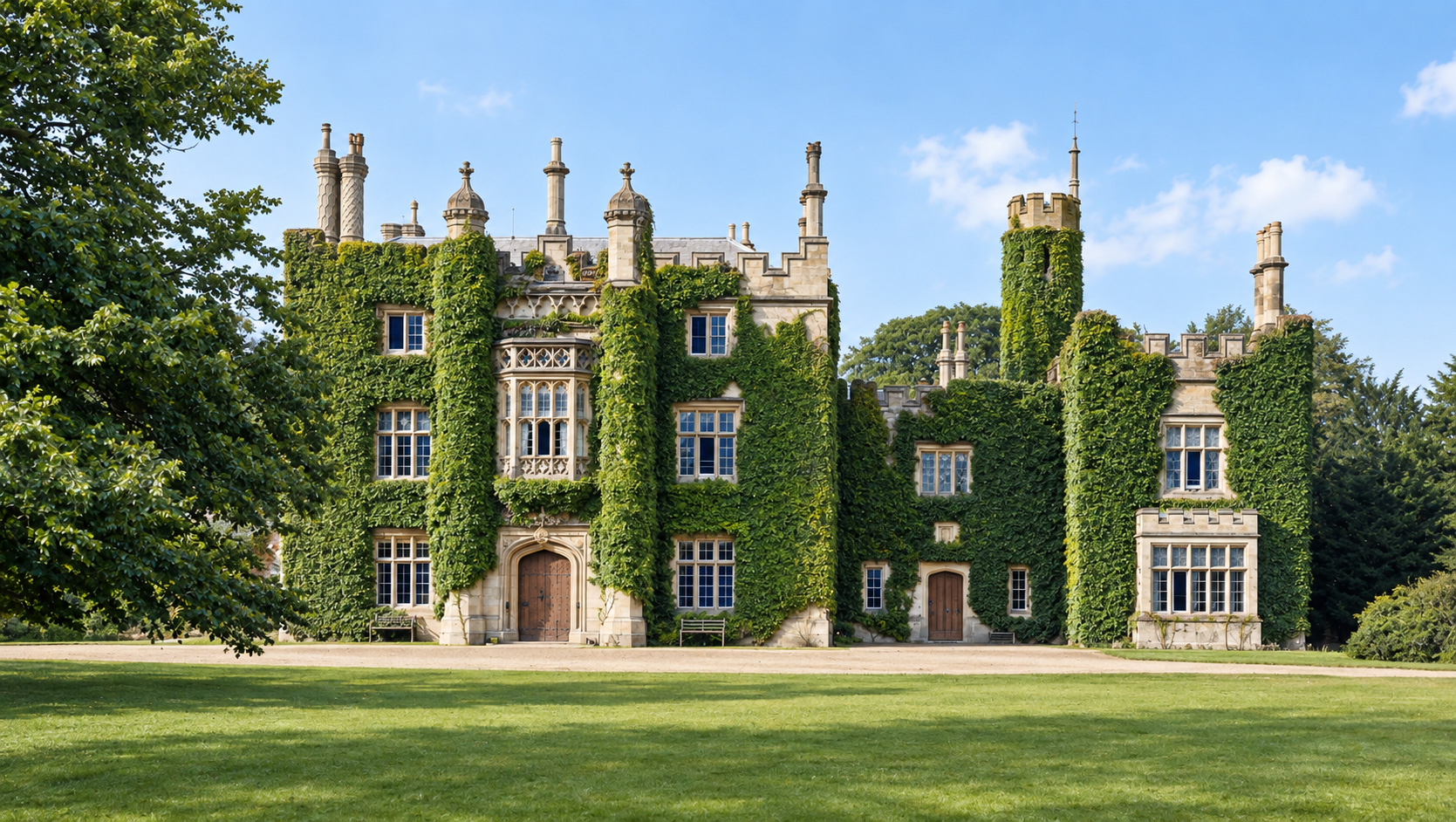
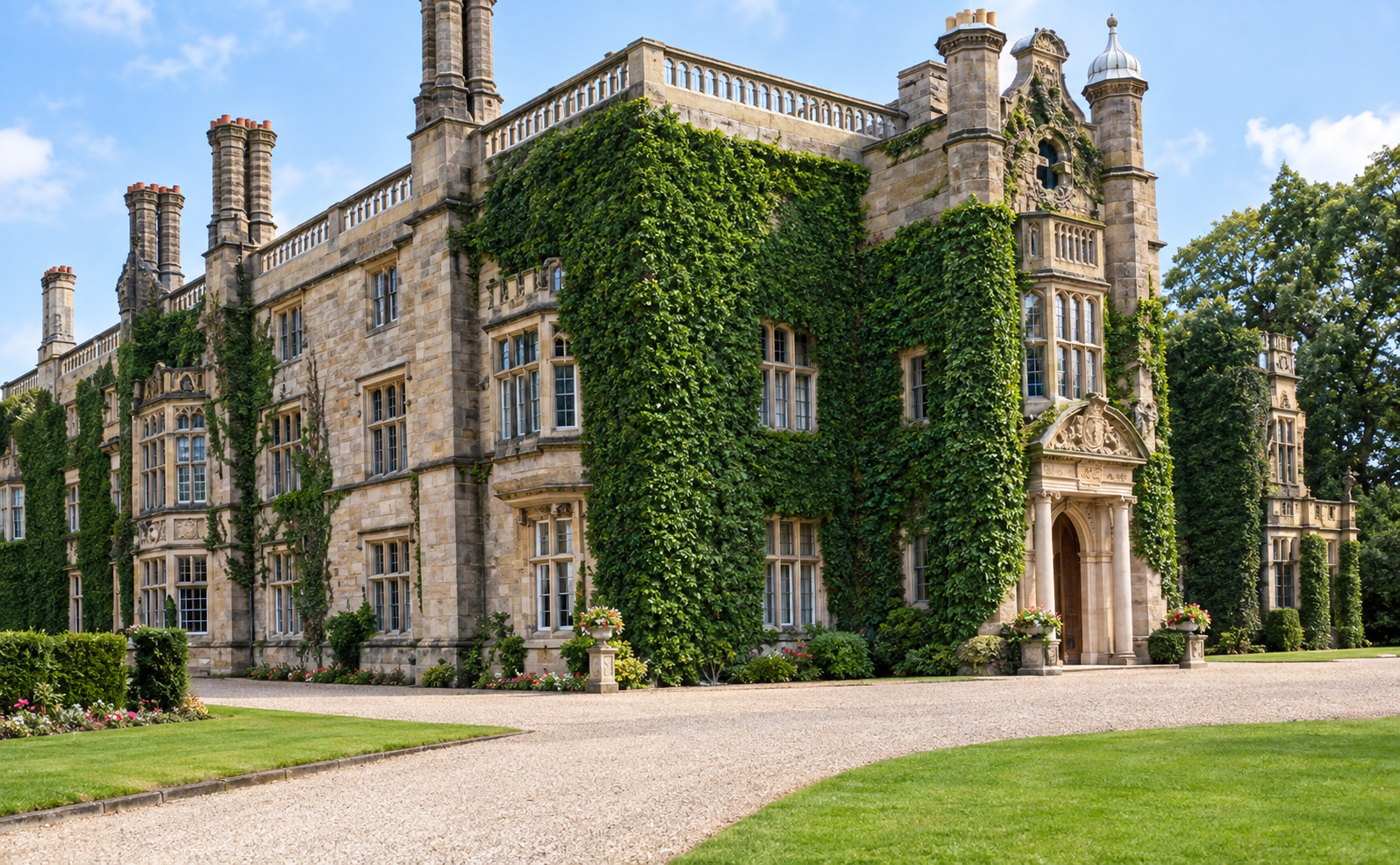
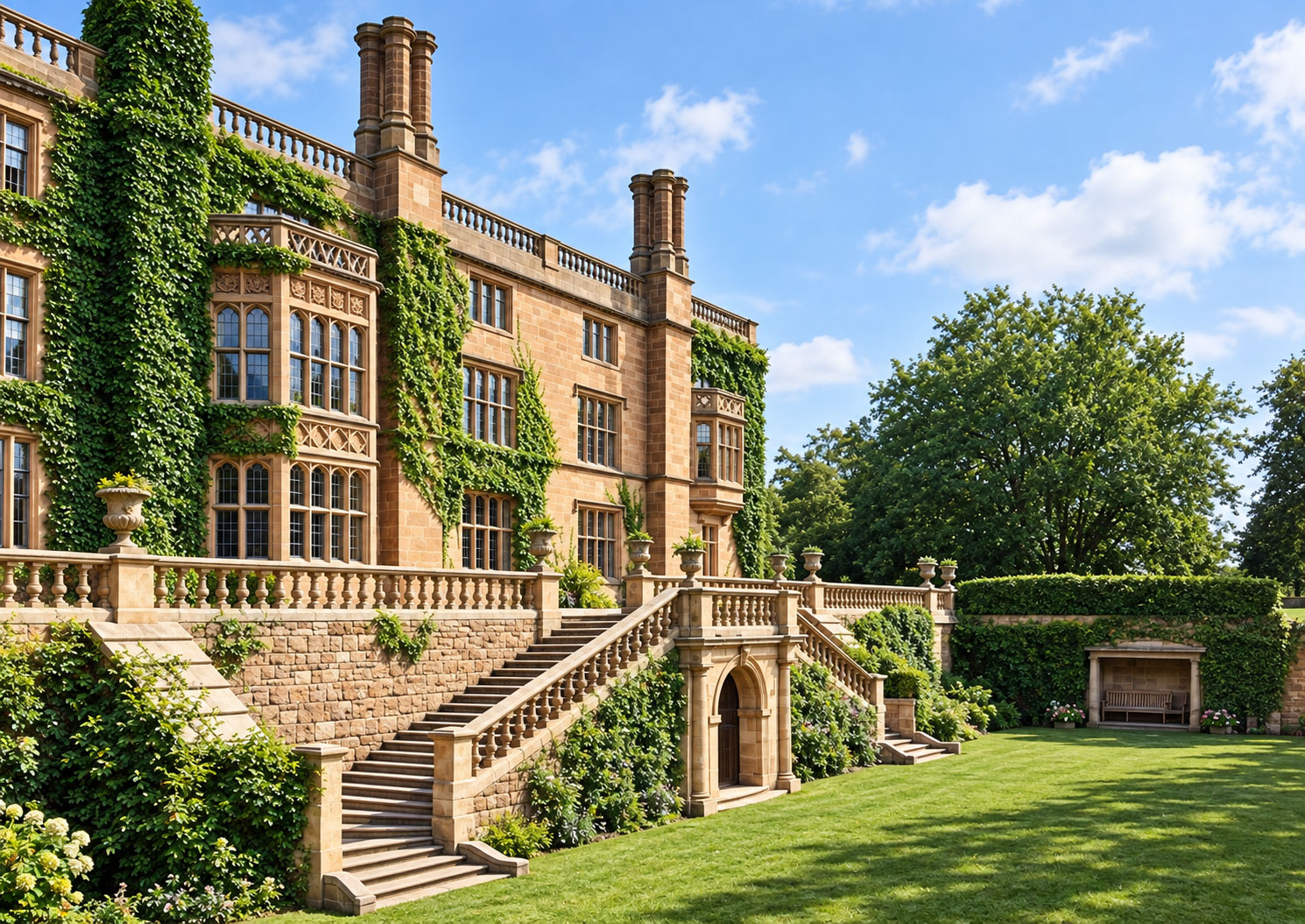
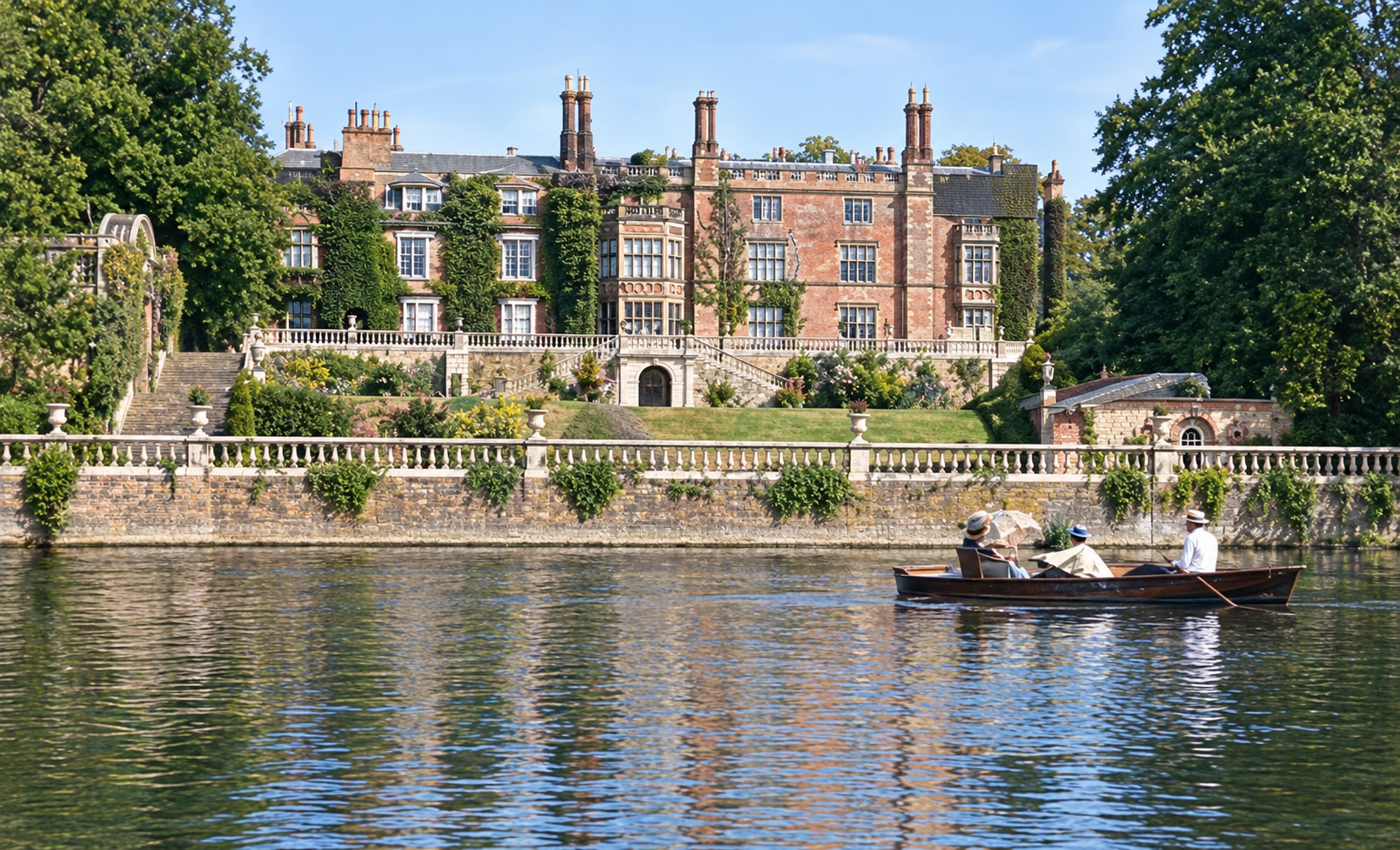
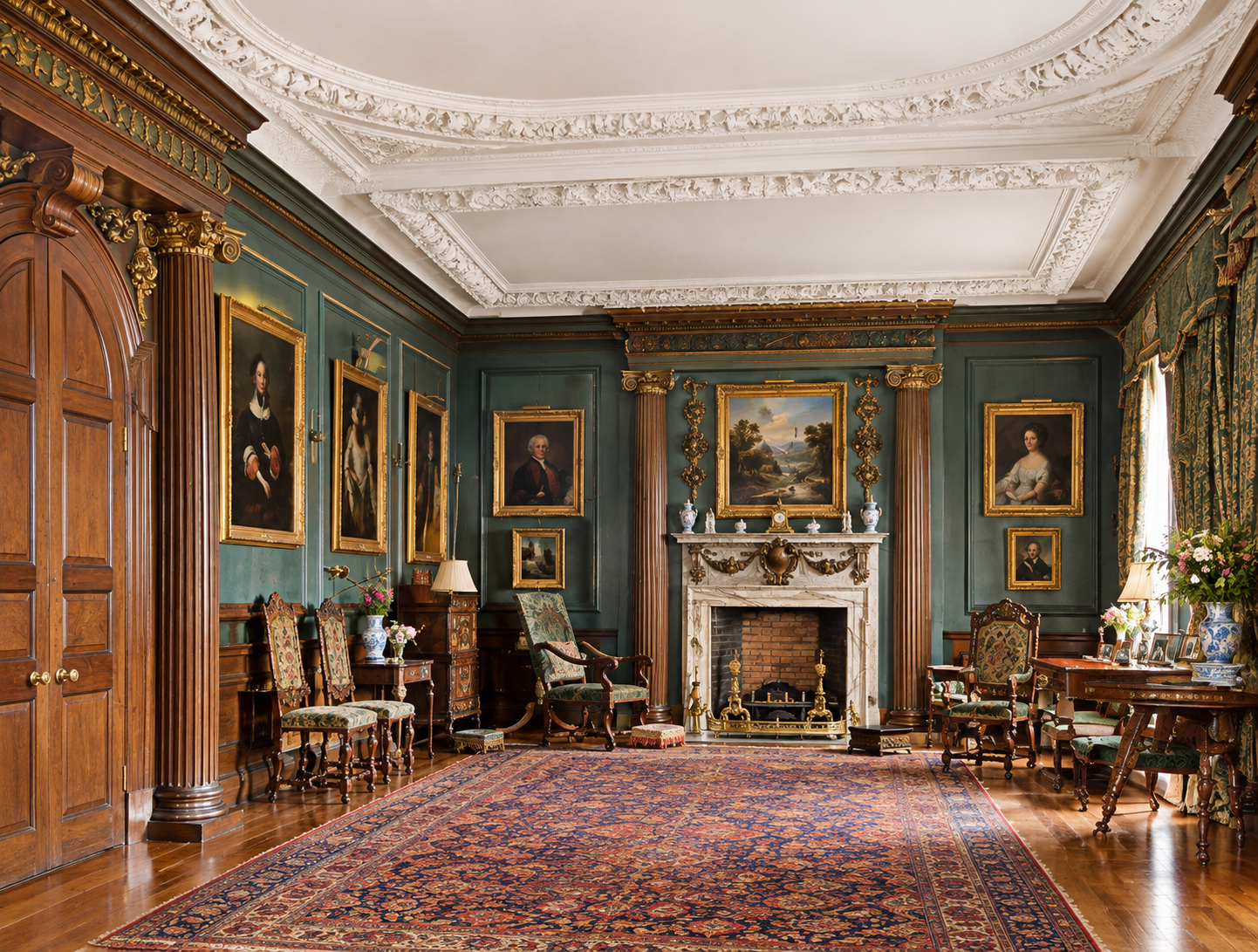
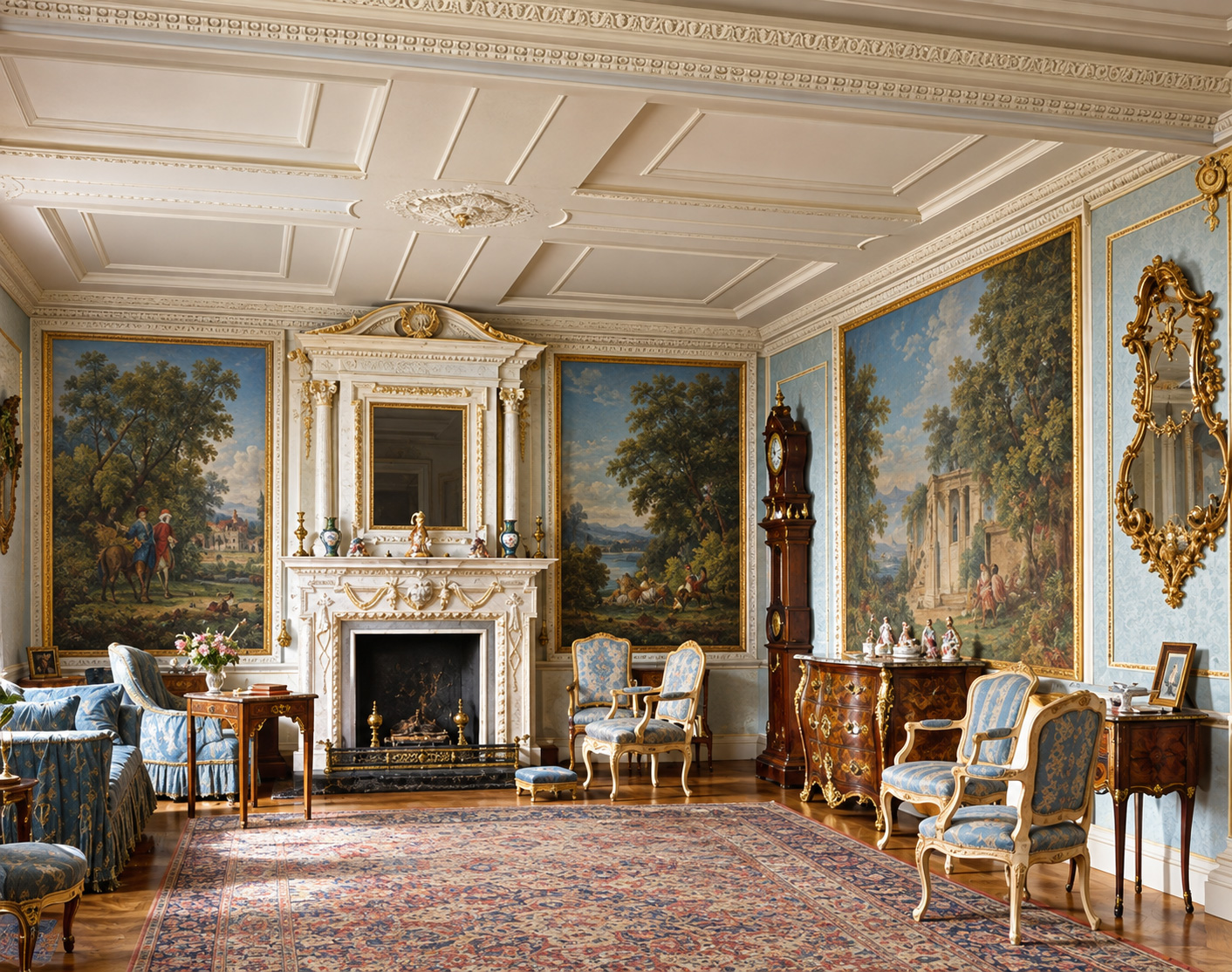
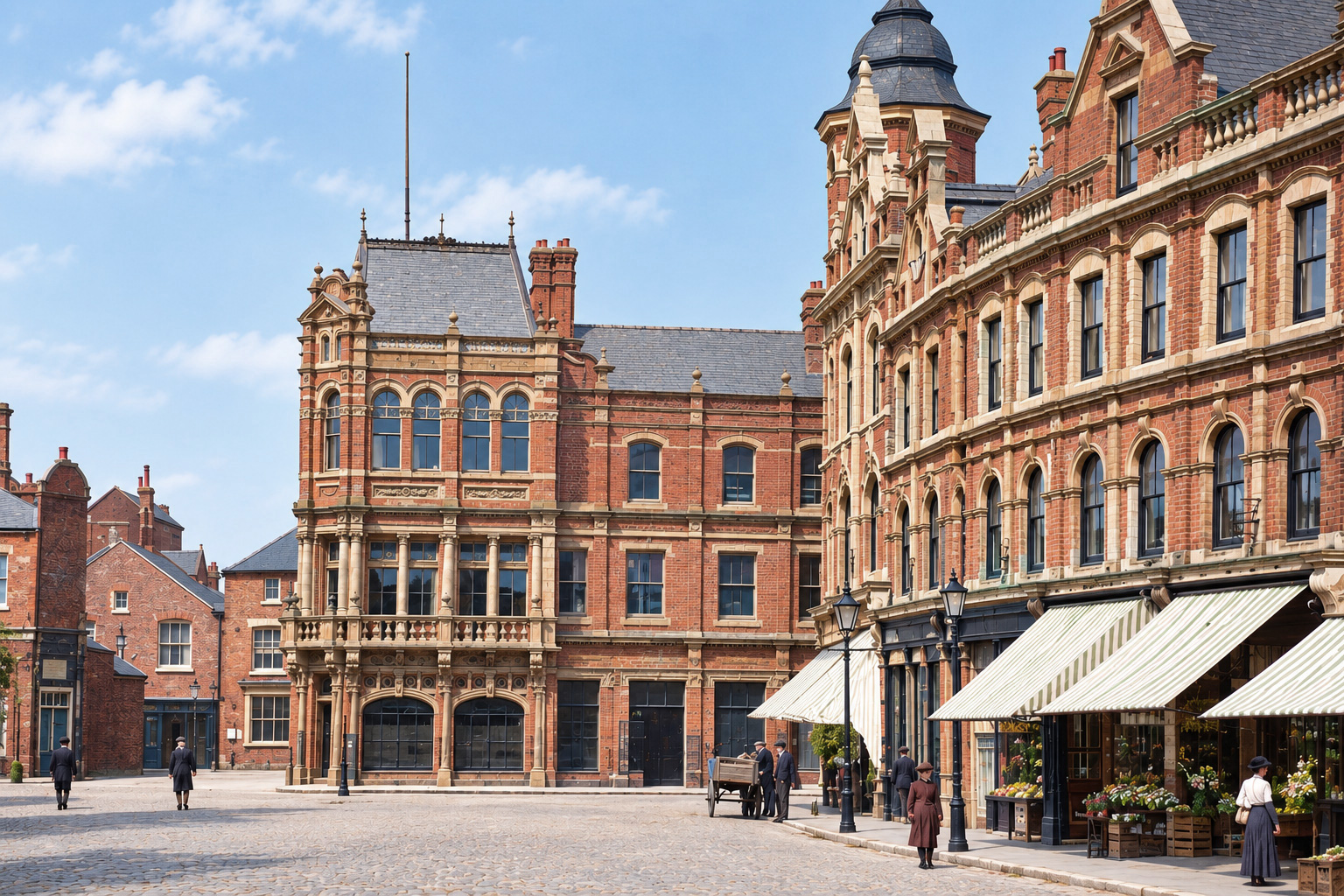
Enjoy some painstaking restorations of Drakelowe Hall taken in around 1900.
Drakelowe Hall Frontage
Drakelowe Hall Side Entrance
Drakelowe Hall Sunken Garden
Drakelow Hall from the River Trent
The Grand Entrance Hall
The Tapestry Room
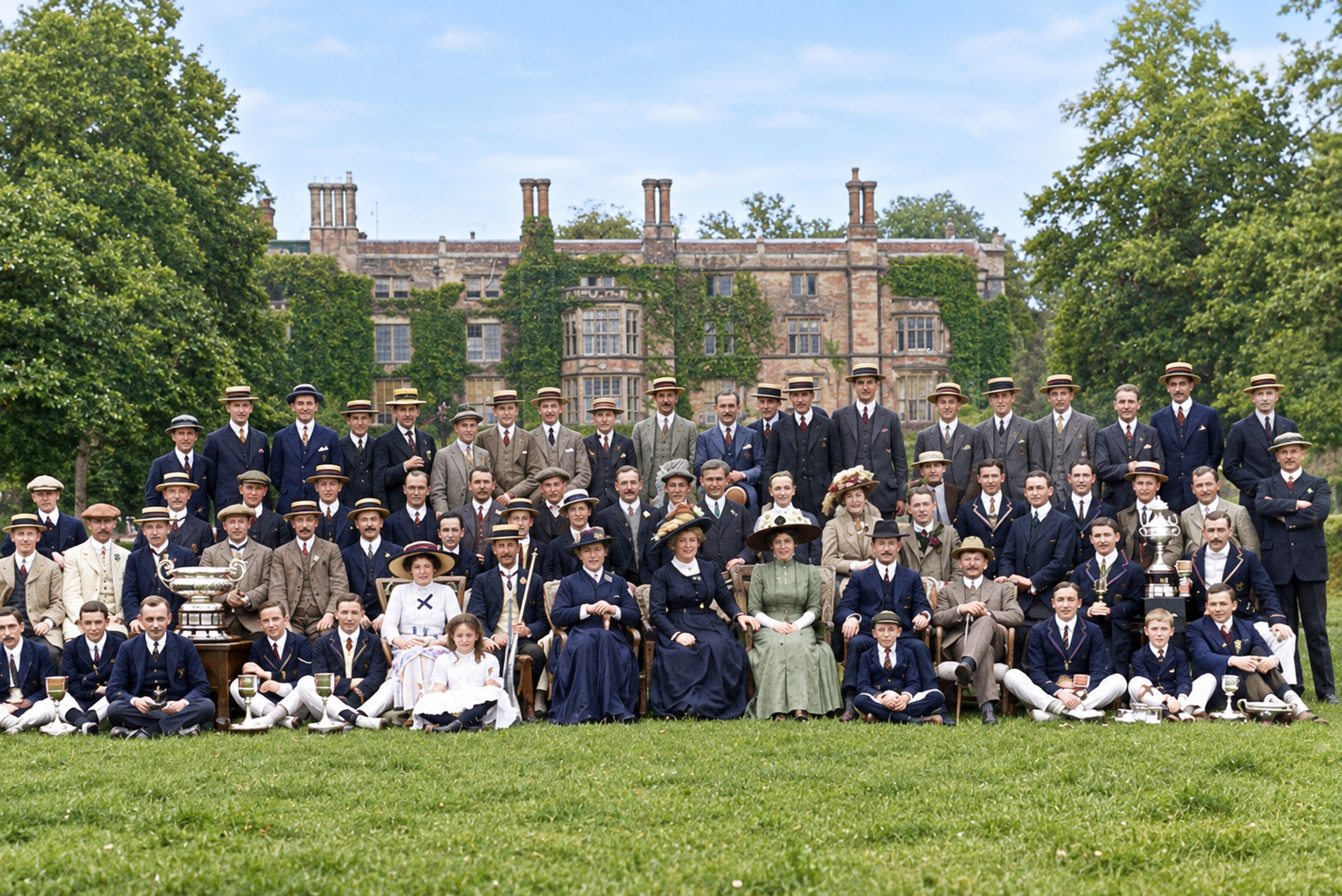
Burton Leander Rowing Club. 1910
A photo of Burton Leander Rowing Club taken at Drakelowe Hall in 1910. There are some impressive trophies on display but I have not been able to find details of the actual event.
DRAKELOW IN THE 17th & 18th CENTURIES Sir Thomas was succeeded by his son, George, who continued in high favour with James I and was included in the first list of baronets created by that monarch in 1611. Each applicant for this hereditary title had to provide thirty foot soldiers at 8ds. per day for three years for the settling of Ulster, or compound for this by a single payment of £1,095. The original number of baronets was 200, and they ranked above all knights except Knights of the Garter.
Sir George spent most of his time at Drakelow but was a member of the short-lived Parliament of 1628-9. Possibly this brief session shook his confidence in Charles I, for when the struggle between King and Parliament began in 1642, he took up arms on the latter side. This was a brave thing to do for Sir George was the only ‘gentleman of quality’ in South Derbyshire to join the Parliamentary forces at Derby where he commanded a troop of horse under Colonel Gell.
There were Royalist strongholds at Tutbury, Lichfield and Ashby de la Zouch which plundered and laid waste his estates including Drakelow, so that in 1644 Sir George had to apply to Parliament for financial assistance and was voted £4 per week. Although the Parliamentary forces were eventually victorious, Sir George suffered heavy losses and was the first of his line to sell some of his estates including the manors of Colton, Rosliston and Seale.
The following extract is from a MSS of Sir George Gresley formerly preserved at Drakelow. It is entitled “A true account of the raising and employing one foot regiment under Sir John Gell”.
“Now let any indifferent and impartial man judge whether our single regiment of foot hath been idle…..Prince Rupert with his army came once against us, the Earl of Newcastle in person twice, and the Queen when she lay as Ashby earnestly pressed the plunder of this town (Derby) as a reward to her soldiers, and yet we are safe.
Let wise men consider if this town had been lost and malignant lords and gentlemen in possession of this place what would have become of our neighbour Counties?
That the world may know we neither undertook this business with other men’s money nor have since employed any man’s estate to our profit. We had no advance money either from Parliament or our Country, or from any other man or woman, but went upon our own charges. Our Colonel hath since sold his stock, spent his revenue, and put himself into debt in maintenance of this cause. We are out of pocket many hundreds of pounds spent only on this business, not that we are weary of the cause but are absolutely resolved to continue and persevere so long as God shall give us lives to venture and estates to spend“.
One effect of the dissolution of the monasteries was to throw the burden of poor relief upon churchwardens and overseers of the poor and it was ordered that a general assessment for the relief of the poor should be made in every township.
In 1682 an appeal to the Quarter Sessions was made by the inhabitants of Church Gresley, Castle Gresley, Swadlincote, Oakthorpe and Donisthorpe, and parts of the parish of Gresley, that they were not able to raise enough money for the relief of the poor in their hamlets, but Sir Thomas Gresley and the inhabitants of the hamlet of Drakelow, having no poor, had claimed exemption from the rate and had paid nothing toward it. The Court ordered that Sir Thomas and the inhabitants of Drakelow should show cause why they should not be assessed to tax.
At the following Sessions it was ordered that as the manor of Drakelow of the yearly value of £400 is not charged with any poor, Sir Thomas Gresley will pay a third part of the levy, in other words, if the levy be fixed for £24, Sir Thomas shall pay £8, and the same rate for a greater or lesser amount to be paid to the overseers and churchwardens for the relief of the lame, impotent, old, blind, and such others being poor and unable to work.
Sir Thomas Gresley, the second baronet, had 14 children, two of whom made unusual marriages. Dorothy, the fourth daughter eloped with one of her father’s servants at 1 a.m. on June 18th, 1681, and was married by licence at Tutbury Church eight hours later. She was never forgiven by her mother.
The eldest son, William, at the age of 35, decided it was time he took a wife. So he journeyed into Shropshire and proposed to an heiress who refused him. Having made up his mind not to return without a wife he proposed to her eldest sister who accepted him. But the news did not please his parents when they learned that she was a widow with seven children.
However, ‘Squire Bill’, as he was known, declared he would have her “and that quickly too, for hunting is coming and then no time!” He also threatened to shoot his mother if she did not agree and she fled to Burton. But a reconciliation took place when his family learned that the widow had an income of £250 p.a. and invested funds worth £2,000, the children of her first marriage being otherwise provided for. Squire Bill, a man of few words, afterwards declared her “best wife in world”, and she presented him with three more children.
Sir Nigel, sixth baronet, grandson of Squire Bill, succeeded unexpectedly to the title and family estates when his elder brother died from smallpox at the age of 30. Nigel was a Captain in the Royal Navy and it was in his ship that Flora Macdonald, who aided the escape of “Bonnie Prince Charlie”, was conveyed to London after the abortive rebellion of 1745. As a reward for his kindness and courtesy, she presented him with her portrait which was hung in Drakelow Hall. An inscription on the back stated:
“This portrait of Flora Macdonald was given by herself to Sir Nigel Gresley, Captain in the Royal Navy, who captured her in flight from Scotland to France and from whom she experienced every courtesy and as a mark of her gratitude presented him with this picture in 1747”.
Sir Nigel inherited extensive property in Staffordshire from his mother, a daughter of Sir William Bowyer, and became a patron of James Brindley, the engineer. With his aid the “Gresley Canal” was built, nine miles in length, to convey coal and ironstone from mines at Apedale to the Grand Trunk Canal at Newcastle-under-Lyme, on condition that coal should be supplied to the inhabitants of the latter place at 5 shillings per ton.
Sir Nigel was a good-natured man of great size and an old inhabitant of Netherseale described him as the biggest man he ever saw in his life “except for a giant in a show”. When he worshipped in Netherseale Church it is said he had to wriggle sideways into the Hall pew!
Like his father, Sir Nigel Bowyer Gresley (1755-1808), the 7th baronet was interested in the improvement of his estates, and he endeavoured to improve the quality of local pottery.
At that time the pottery produced in Gresley and Swadlincote was a coarse brown earthenware made from a bluish-white superfine clay. In 1795, Sir Nigel, in collaboration with a relative. Mr. C.B. Adderley of Hams Hall, established a porcelain factory in buildings erected about fifty yards from Gresley Hall. The services of William Coffee, a modeller from the Derby China factory, were secured, and Sir Nigel’s daughters are said to have painted some of the patterns. But most of the pottery cracked in firing and the experiment proved a failure.
An order for a magnificent dinner service was obtained from Queen Charlotte through her Chamberlain, Col. Disbrowe, of Walton Hall, but it was never completed as the china came out of the ovens cracked and crazed. So far as the writer is aware Gresley china bore no distinctive markings. Specimens were preserved at Drakelow Hall and others can be seen in Museums at Derby and Birmingham. In the possession of Lord Gretton at Staple ford Hall, is a dessert service comprising 34 pieces with flower springs in colour on a yellow and gold background.
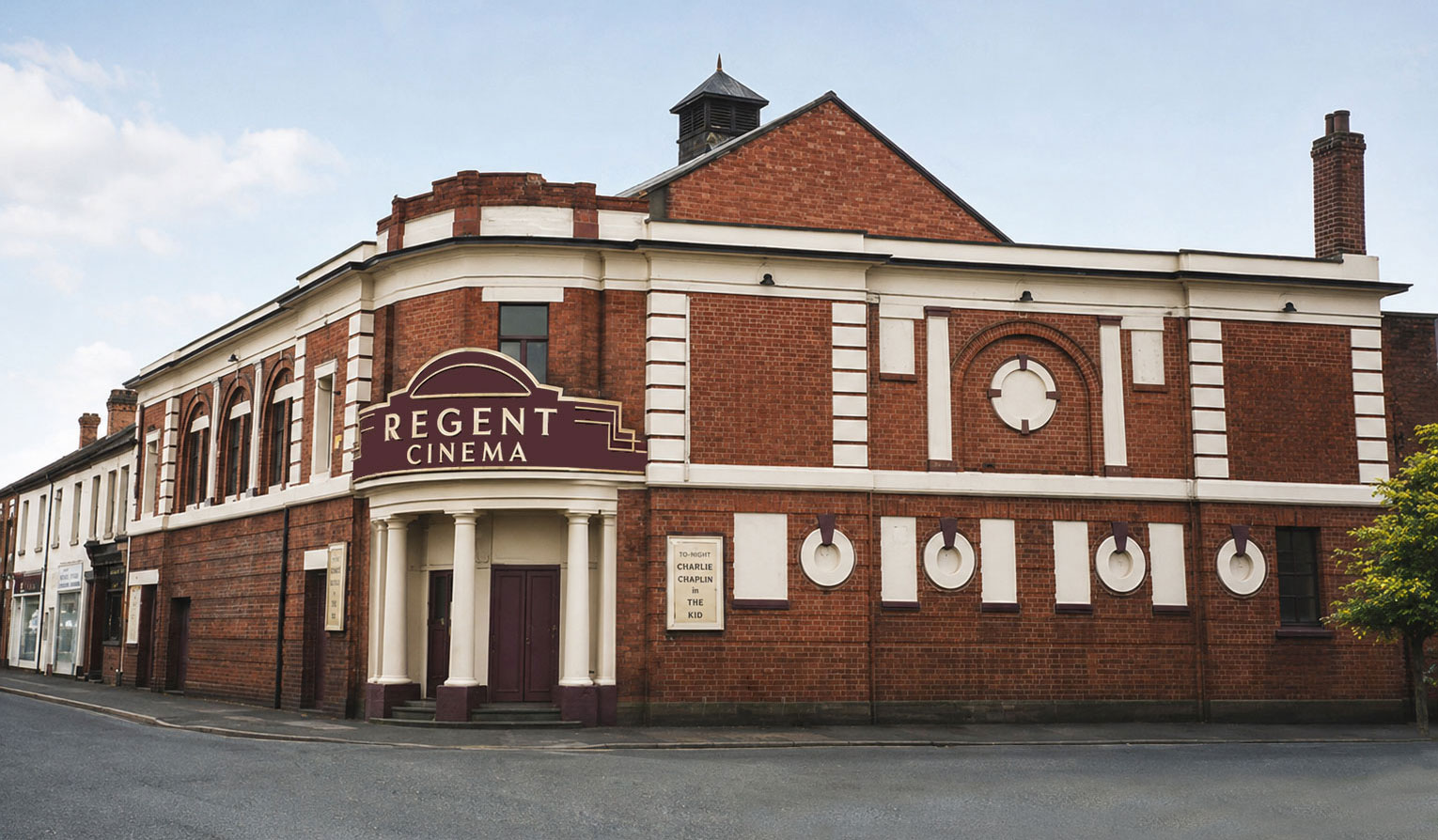
The Picture Palace was a 900-seat cinema that opened on November 17, 1920, at the junction of Dallow Street and Horninglow Road, the Derby Turn Picture Palace opened on Wednesday 17th November 1920. The proprietor was Derby Turn Picture Palace Company Ltd. and the manager was Alfred J. Wise. A 15ft deep stage was provided for variety acts. The proscenium was 30ft wide. There were 900 seats.
By 1922 the manager was S. A. Suffolk, who was later to set up Sheridan Films Services and run his own cinemas. Western Electric(WE) sound was installed; on 28th July 1930 the first ‘talkie’ was “Innocents of Paris” starring Maurice Chevalier. In 1932 the cinema was sold to opposition company Burton-on-Trent Picturedrome Company, who renamed it the Regent Cinema. At this time it is believed the seating capacity was reduced to 690.
The cinema closed in 1940 when it was requisitioned by the government as a Ministry storehouse. Post-war, it became a post office and later, a Bingo Hall.
The building was destroyed by a large fire whilst vacant in 2008.
The Newton estate was granted to Norman de Solney in 1086 and appears in the Domesday Book. In 1205 Alured de Solennaia, a Norman knight, inherited Newton which by 1300 was known as Newton Solney.
Norman knights were passionately fond of hunting and the de Solneys established a large hunting park. There was a manor house with a nearby mill and fishing rights close to the location of what was to become Newton Hall. After the death of John, the last male de Solney in 1390, the manor passed through several important local families.
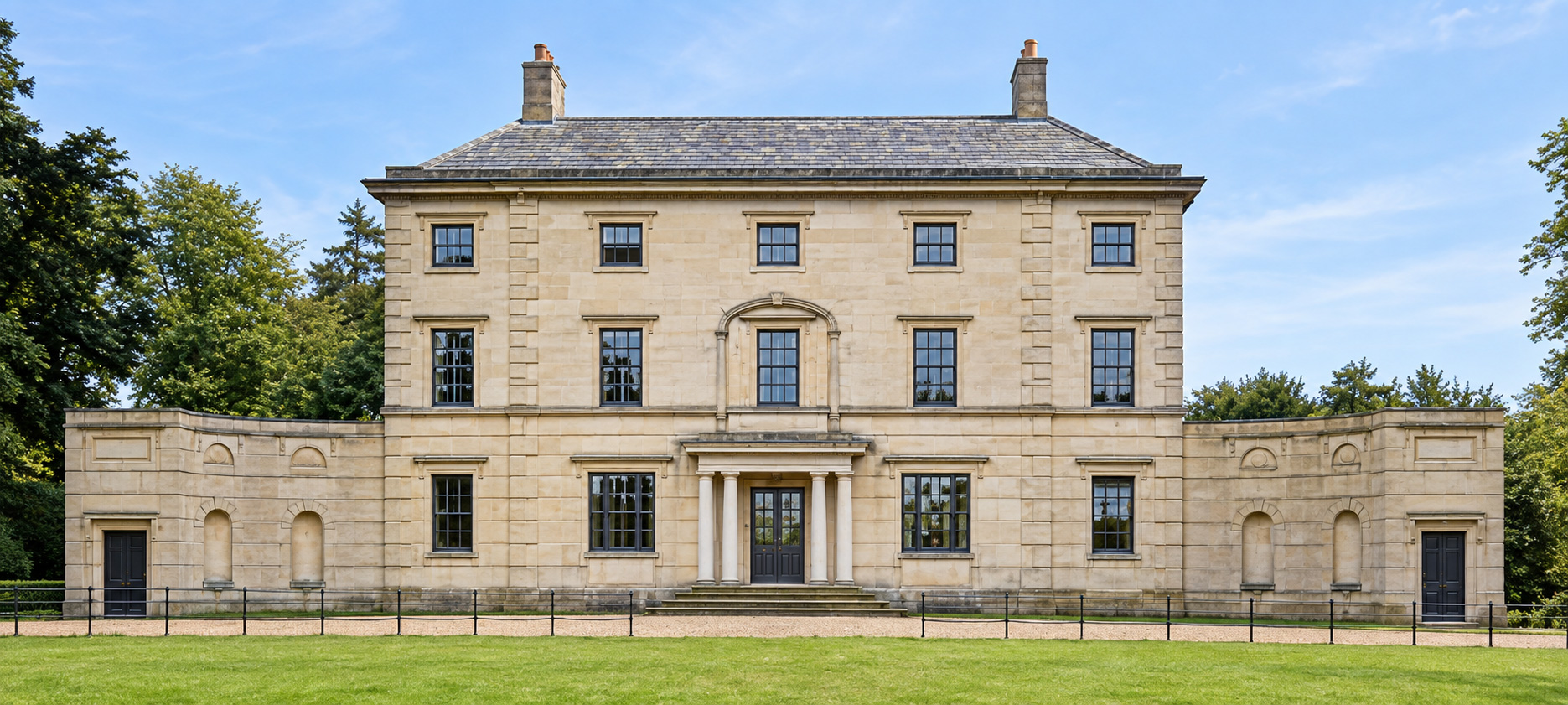
Newton Hall itself was established in 1798 by Burton attorney Abraham Hoskins the younger by enlarging and remodelling a pre-existing building. The bottom storey was shortly afterwards extended at both ends, and the whole facade refacing in ornamented Roman cement with stucco work designed by Francis designed by architect Francisco Bernasconi. The below shows the finished grander look and the house stood very much in this form from 1805 until 1880.
The house was drastically altered around 1880 following its purchase by Robert Ratcliff (1836-1912) of the now mighty ‘Bass, Ratcliff and Gretton’ combined brewery
Richard Ratcliff added an entire new range of rooms to the south side with asymmetric fenestration. Radical alterations were made to the interior and all of the external surface decoration was removed and renewed using a new details more fitting to the trend of Victorian houses. Another very significant change was the road that ran across the front of the building was lowered and redirected in a large arch around the estate at Robert Ratcliff’s expense so that it was not visible from the house.
William Worthington, another Burton brewer, rented and lived in the estate during the 19th century.
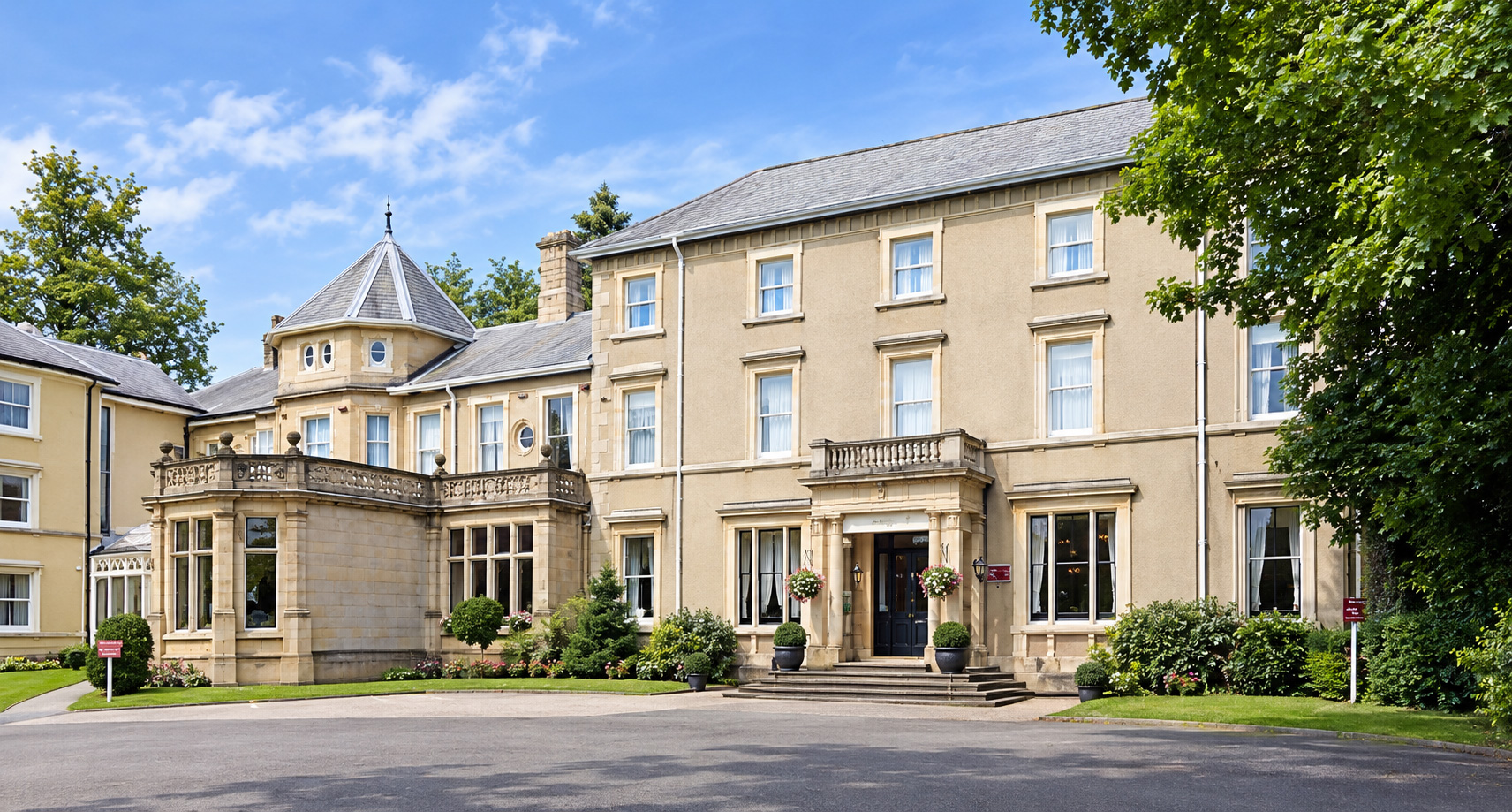
In 1955, following the death of Peter Ratcliff who now owned the estate by inheritance, the estate was sold. Part of the land was released for housing and the main house and immediate grounds opened as the Newton Park Hotel in 1966.
The further extended Newton Park Country House Hotel is a luxury hotel and is Grade II listed.
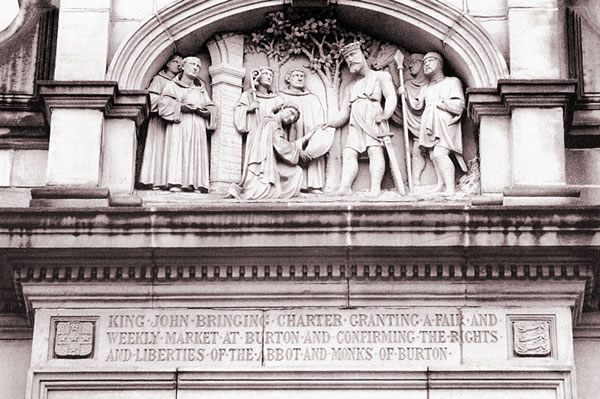
The impressive stone sculpture above the main market hall entrance depicts the scene of King John accompanied by two knights as he hands over a scroll to confirm the rights and liberties to the kneeling abbot, who is accompanied by two monks and a figure bearing a bishop’s crozier.
The inscription beneath is flanked by the coat of arms of King John on the right and those of Burton Abbey on the left. It reads…
KING JOHN BRINGING CHARTER GRANTING A FAIR AND WEEKLY MARKET AT BURTON AND CONFIRMING THE RIGHTS AND LIBERTIES OF THE ABBOT AND MONKS OF BURTON
There was also some debate about the type of lettering to be used for the inscription: there was a suggestion that it should be in Gothic script, but the architect felt this would be inappropriate to the Renaissance style of the building. At the time, there was also some dispute over that actual date with different sources claiming 1200, 1203 and 1204 so the date was not included as originally intended.
The carving was still uncompleted in August, with the sculptor, John Roddis arguing that he should receive an additional £60 for the work because the stone was much harder than the Coxbench stone originally agreed upon so took longer than planned.
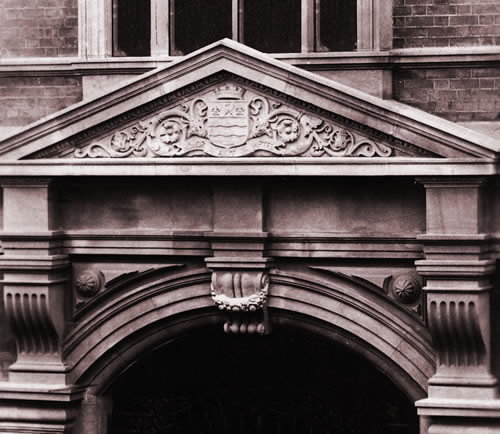
Above the doorway set into a triangular entrance pediment is a relief of the Burton upon Trent coat of arms, a shield, crest and motto. The shield is divided into lower and upper sections, with the lower one depicting six wavy lines across the shield that symbolise the Rivers Trent and Dove. The upper segment of the shield bears a spread-eagle flanked by two fleur-de-lys taken from the arms of the Paget family. The crest is a castellated crown, a symbol of civic government. The motto reads ‘HONOR ALIT ARTES’.
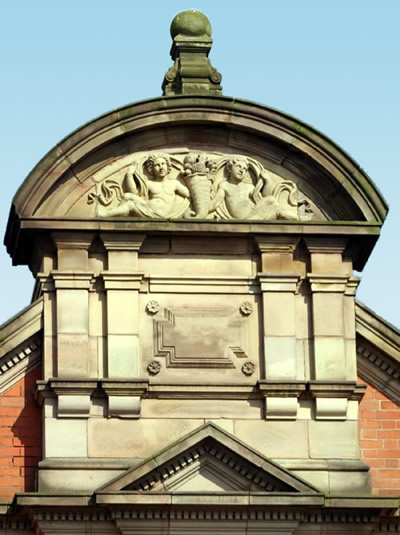
The upper facades on each wing of the building have semi-circular pediments each containing a pair of seated male figures holding fruit, a reference to the market products.
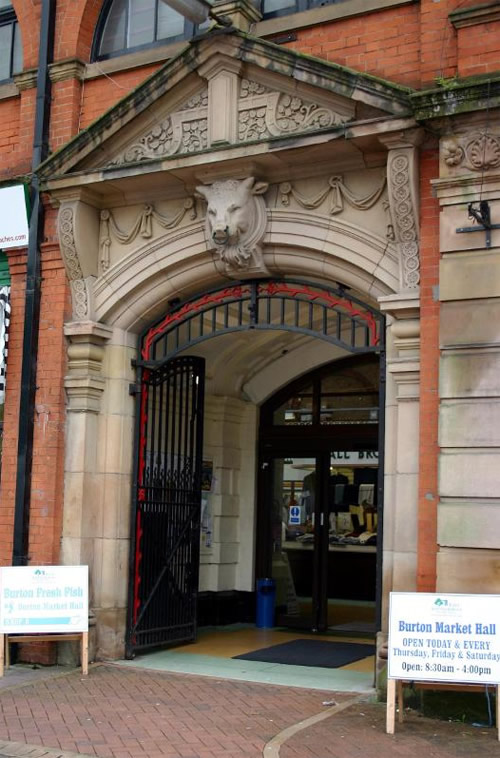
The side entrance of the market building has a sculptural relief of a bull’s head, complete with a ring through its nose. There are also smaller decorative features of garlands and faces at various points on the building.
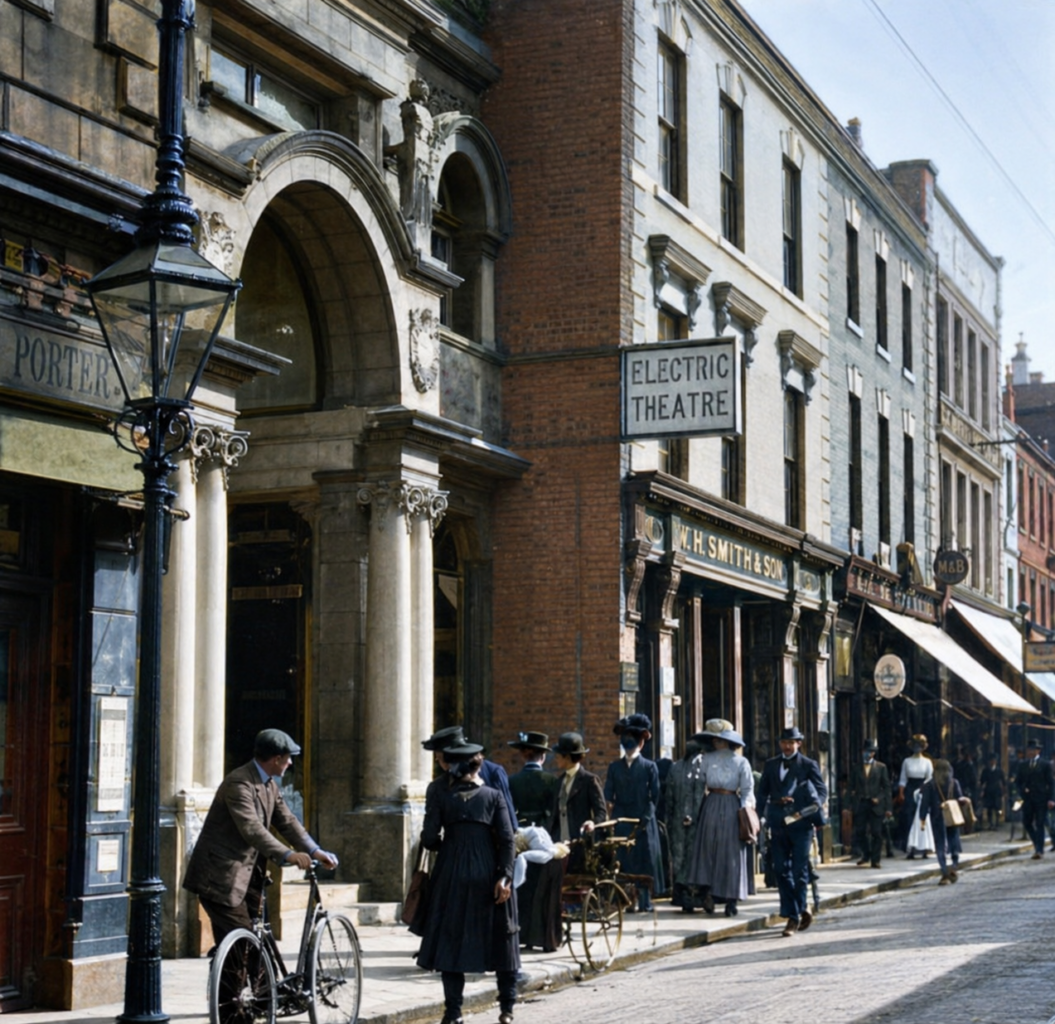
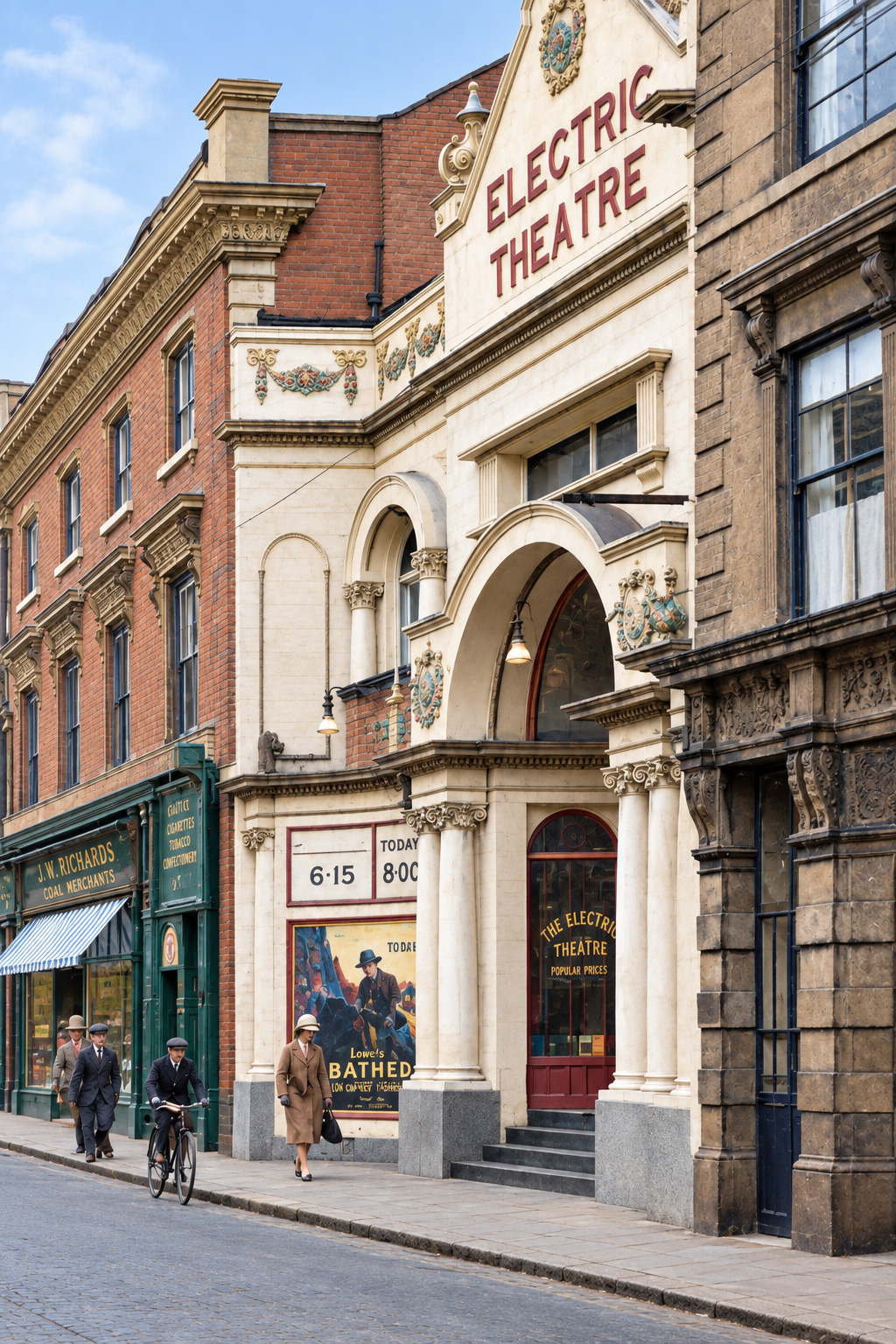
The Electric Theatre, generally known as simply ‘The Electric’, in High Street, was purpose-built on the site of the Empire Tea Store with its 750 velvet tip-up seats and tea lounge. It was opened on October 25, 1910, with the enticing ‘The Indiscretions of Betty’.
In 1928, it was taken over by Gaumont British Theatres chain and was closed for the auditorium to be reconstructed and reopened the same year with an increased seating capacity for 1,025. attached café was retained. The interior was remodelled in 1941 to make utilize unused space and increase the capacity to 1,050.
The first talkie (non-silent) picture, ‘King of the Khyber Rifles’, was shown to much excitement in 1929 which spelled the beginning of the end for the piano player.
The cinema closed for a few days, as did all cinemas, on the outbreak of the Second World War in 1939 but was soon reopened with a special showing of Sherlock Holmes starring Basil Rathbone.
It was acquired by Gaumont on November 28, 1949, and was closed on May 29, 1956.
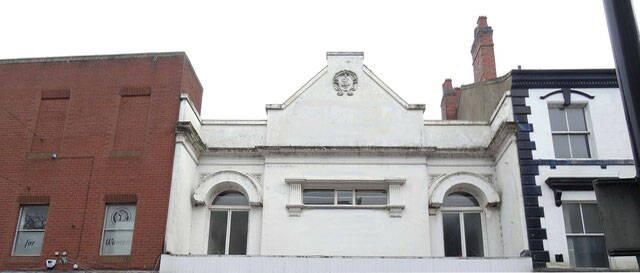
If you glance up at the upper half of the buildings in High Street opposite the banks, you can still see this unassuming piece of history that has seen so much change.
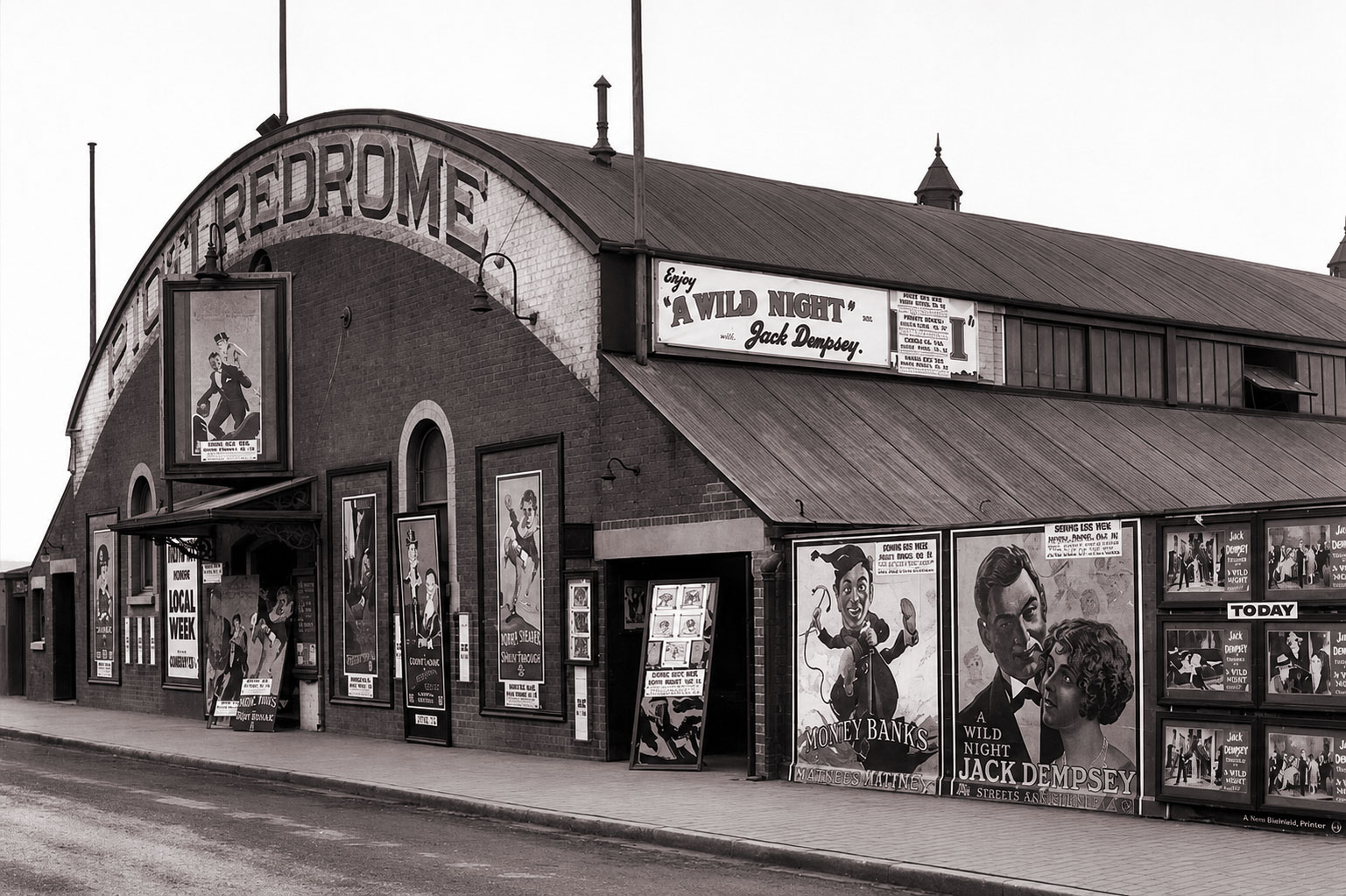
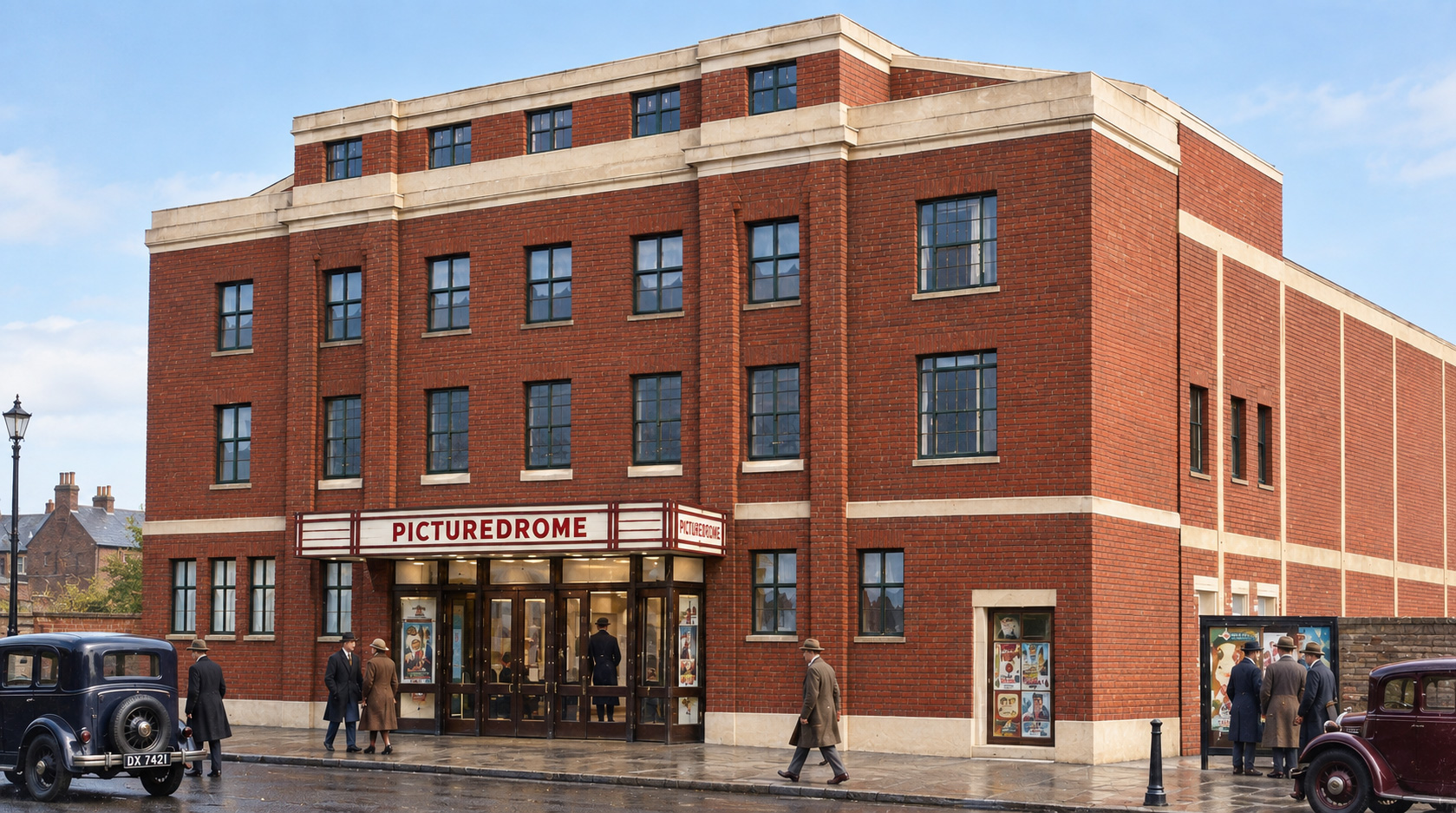
The Picturedrome opened in 1913. It was situated in Curzon Street, adjacent to the Railway Station. Like other cinemas to follow, the cinema was established by local fairground entrepreneurs George Orton, Charles Spooner, and Orton’s sons. It was adapted from what was previously a roller skating rink before being used by the Territorial Army. The building was acquired when it had fallen into disuse after the territorials moved to a superior home at the rear of the police station.
It housed a church organ brought and transported from a London church which was played enthusiastically during the film, which itself of course was silent. In the late 1920s, the Picturedrome had the distinction of showing Burton’s first ever talking picture which was hugely attended. The cinema was serviced by a poster man whose task it was to regularly paste up new posters as the films changed.
The original structure was demolished in August 1931, and a lavish, modern new building holding around 2,000 seats was constructed in just four months. It was designed by architect Alderman Thomas Jenkins and local builders. In 1955, it was acquired by Odeon Theatres Ltd in 1955 and was officially renamed the following year.
It closed as a cinema on June 5, 1965 and the building was transitioned into a Top Rank bingo club, later operating as Mecca Bingo until it closed in December 2003. The structure was subsequently demolished, and a block of flats now stands on the site.
The Ritz Cinema was built in 1935. It was, commissioned by Orton & Spooner, a company based in Burton which earlier in the century had made fairground rides and shows, and later owned the Burton Picturedrome Company. Also so[[prting and involved was Thomas Jenkins, a local architect who had designed the Electric Theatre, of 1910, and conveniently, Mayor of Burton at the time.
It was built on the site of the New Theatre and Opera House, of 1902, which showed films from 1930 which was demolished in 1934. This was a rebuilding of St George’s Hall, a concert hall of 1868. Interestingly, the front of this building was in George Street and the back in Guils Street: the reverse of the buildiding that replaced it.
The cinema is a steel-framed brick building in Modernist style; the façade on Guild Street has above the ground floor entrance a central section projecting forwards, which features five square Crittall Windows, and a row of smaller windows above.
The interior was designed in Art Deco style by Annie Orton, a relation of the owner and after buying a ticket, you entered the door to the left to the stalls and up the stairs through the door to the right for the balcony.
The first film shown at the Ritz Cinema was ‘Blossom Time’. A staple was the ‘Saturday Morning Club’ with a variety of films including the likes of ‘Old Mother Riley’.
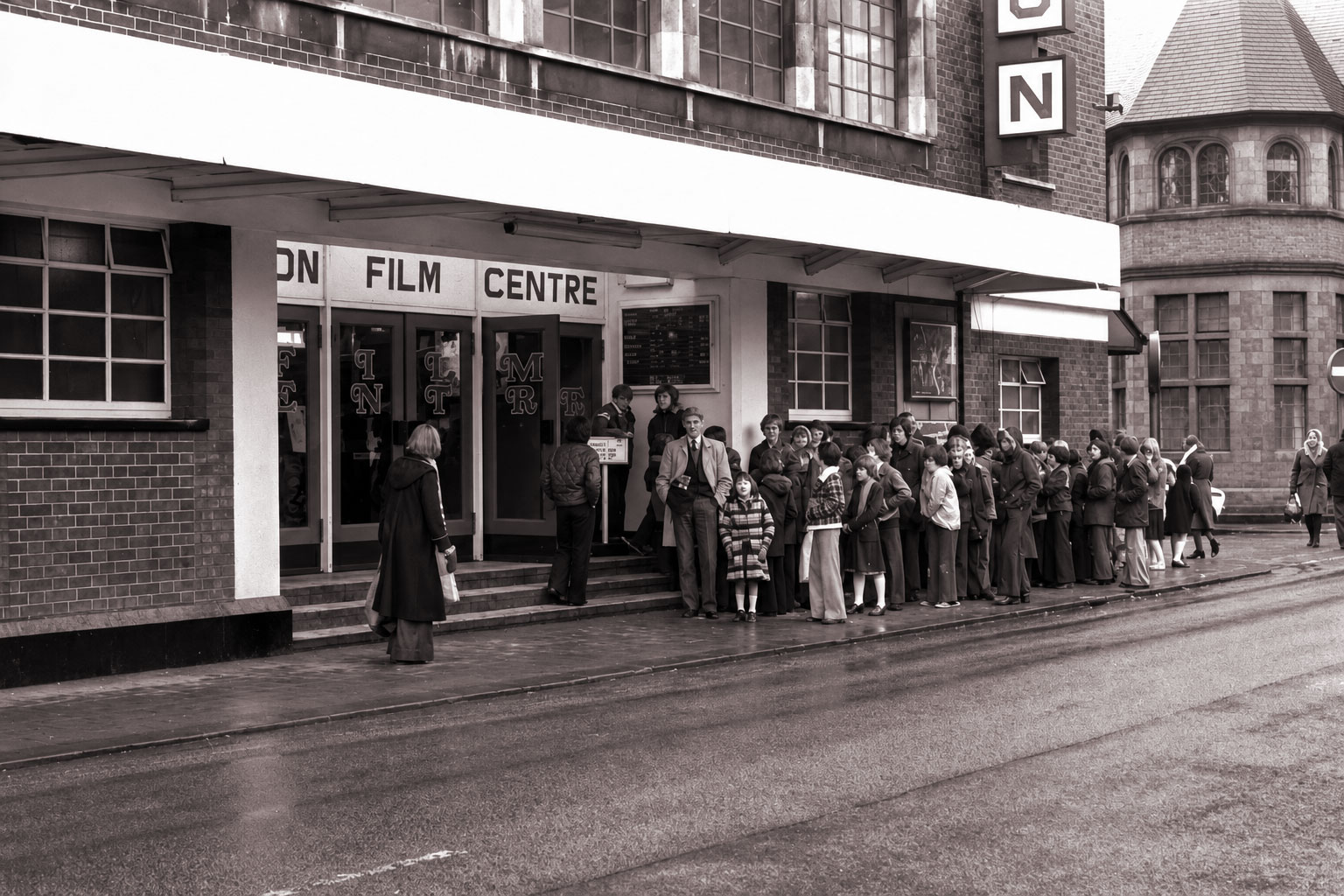
In 1957, it changed ownership and became known as ‘The Gaumont’. It changed again in 1957 to become a member of the ‘Odeon’. Finally, in 1966, it changed to become the ‘Robins Cinema’ although, as can be seen in the above 1870s photo, the Odeon signage remained. It was re-designed in 1974 to have three separate screens.
It was the most successfull and longest lasting cinema in the town, largely due to its central location, but closed as a cinema in 1999.
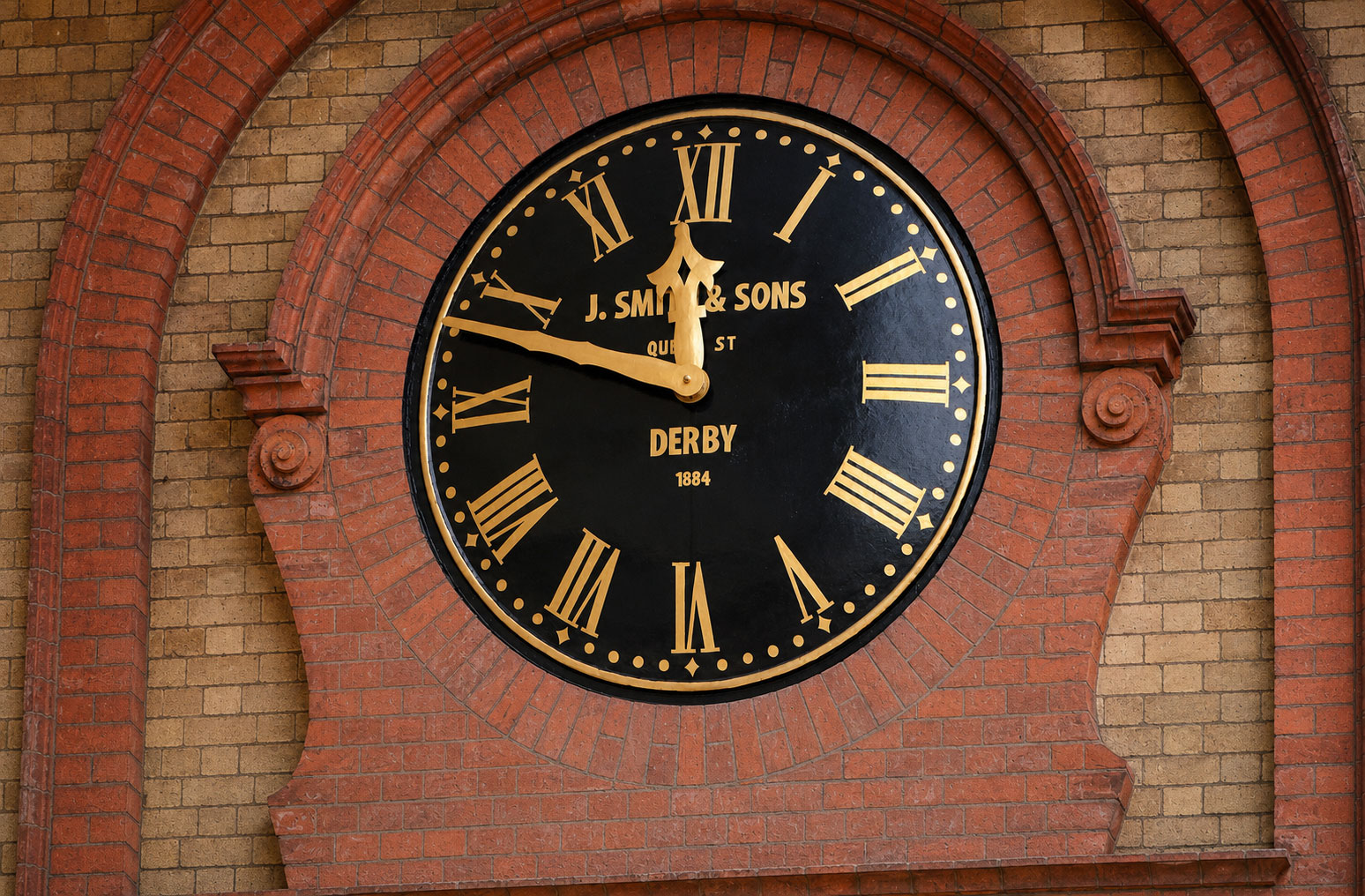
It is easy to overlook the clock in the Market Hall other than to check the time to see if it is correct. The clock was custom commissioned by Derby based J. Smith & Son in 1884, the clock tells its own story so far!
The clock company was though, one of the most renown in the country so was very prestigious at the time of install with no expense spared.
To name but a few of a long list. During the war, the company was commandeered to manufacture dashboard clocks and precision instruments for military vehicles and aircraft including spitfires. After the war, it returned to become a staple manufacturer of large clocks for major buildings, churches, railway stations, schools and colleges etc.
It is comforting that the company still exists and that the Market Hall clock still keeps perfect time but needs regular winding.
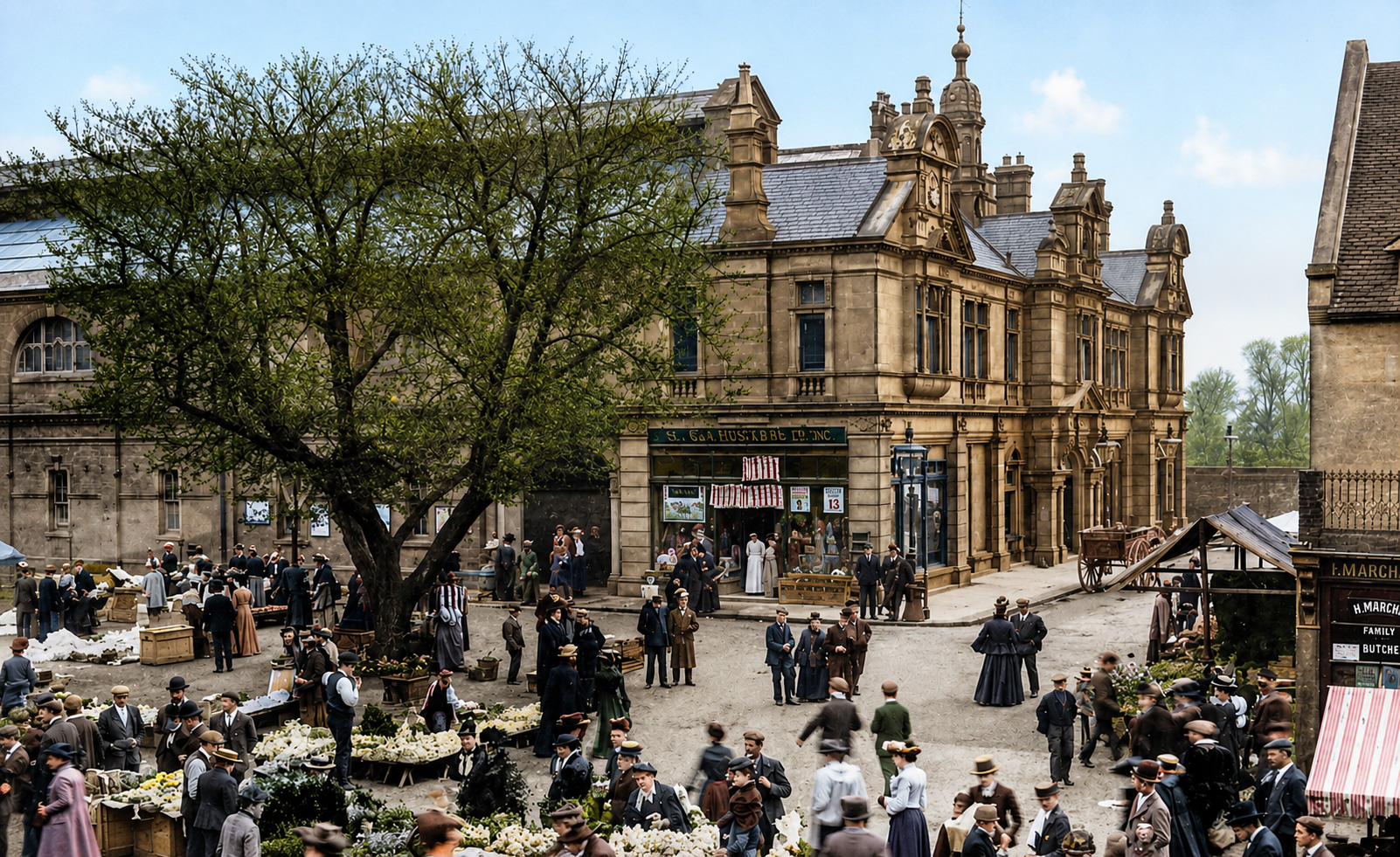
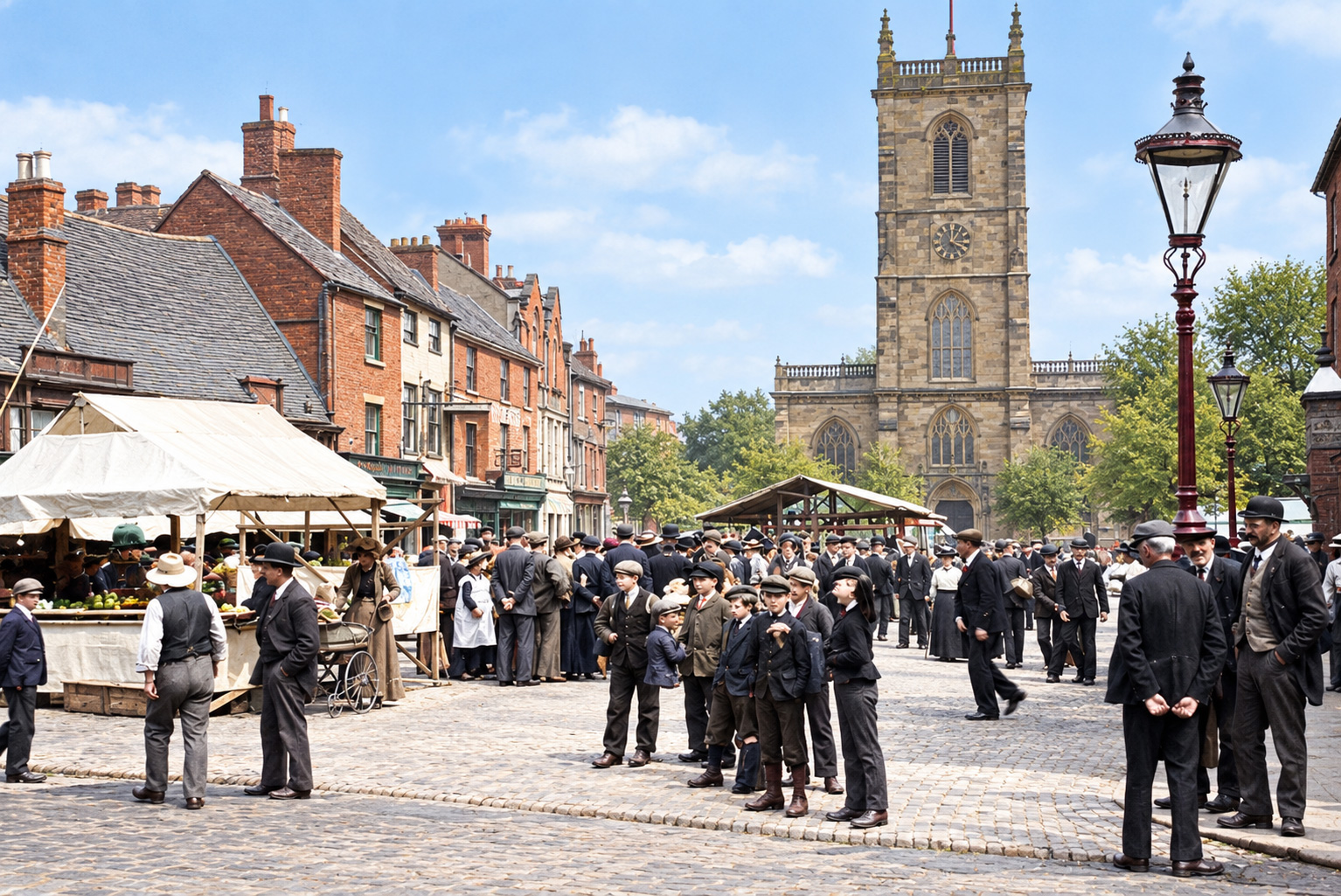
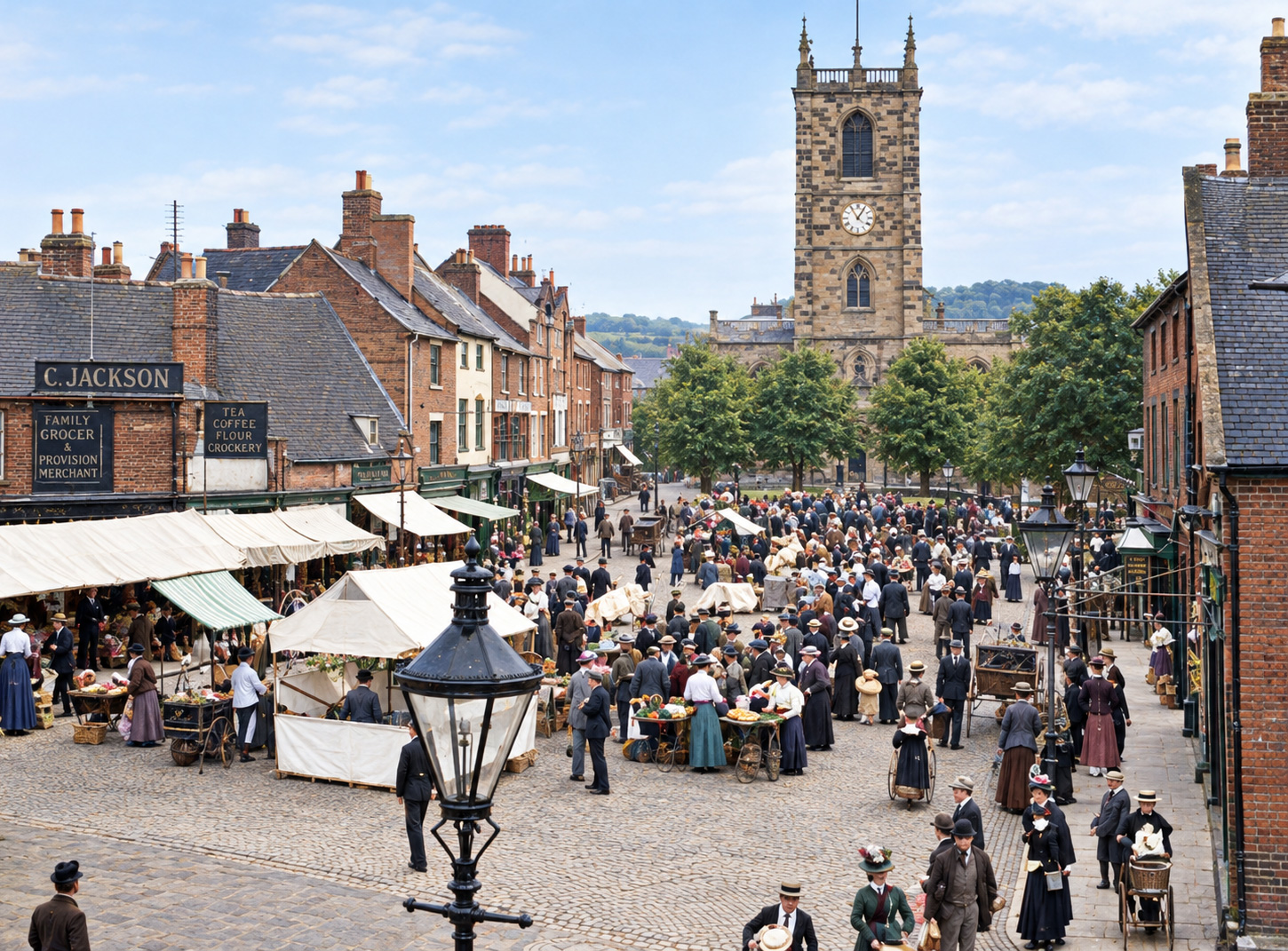
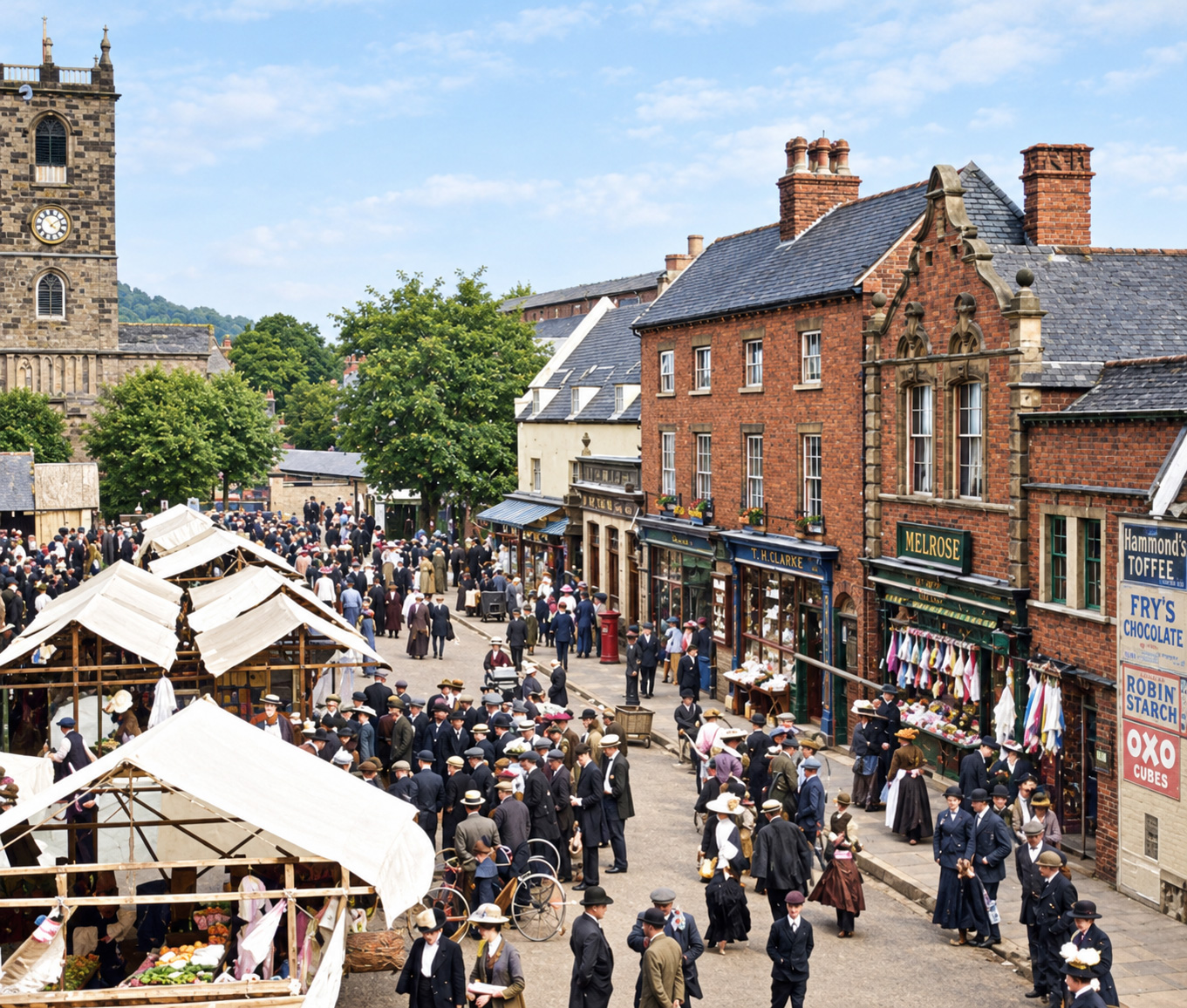
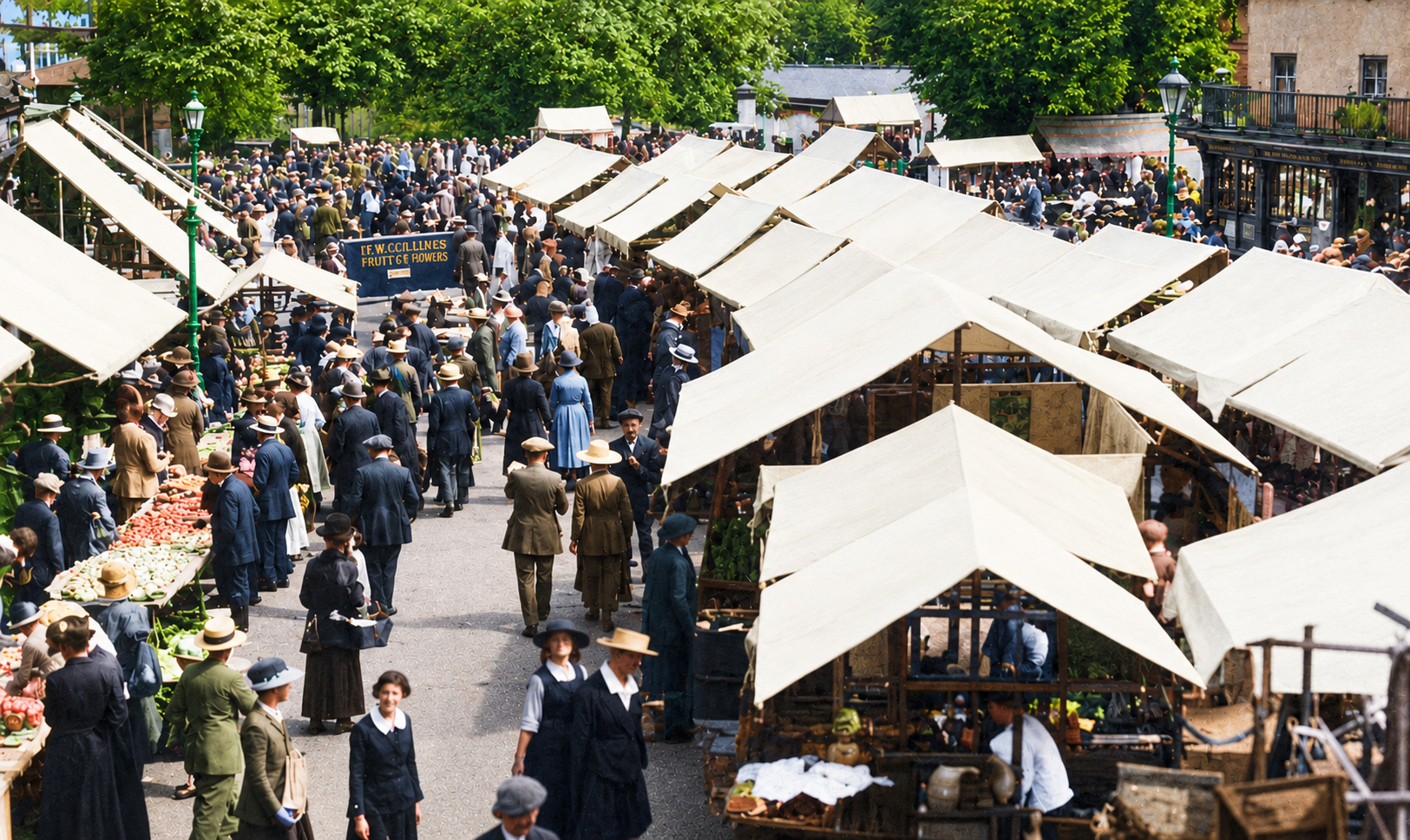
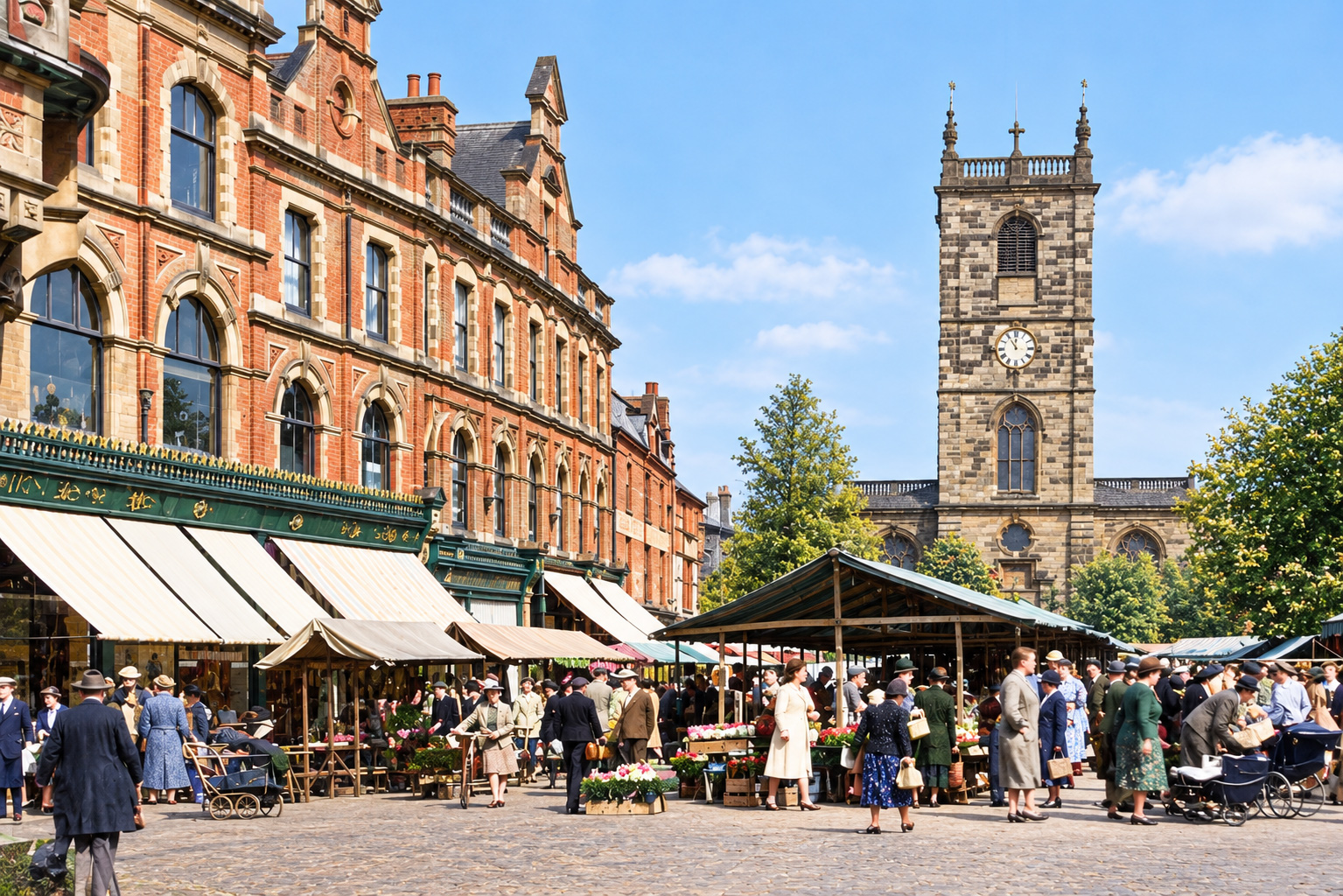
Some wonderful (if you will allow me to say so) restorations of early photographs of Burton Market from 1890 to 1920
The outdoor market adjacent to the recently completed Market Hall, the new pride of the town.
The Statutes fair held on the first Monday following Michaelmas, was originally a hiring fair to match employers looking for workers with those seeking employment.
Bustling market but not yet many formal stalls.
The market busier than ever now with formal lines of permanent stalls which traders were allowed to rent.
The market in its heyday in the 1920s after the recovery from World War I
The market towards the end of the 1950s.
Finally, a view that I really like: a view looking out of the Market looking into High Street. There are so many historic images looking towards Saint Modwen’s church but views in this direction are very rare.