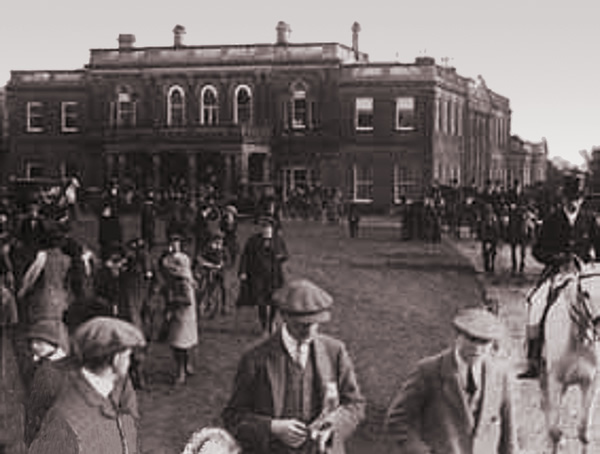
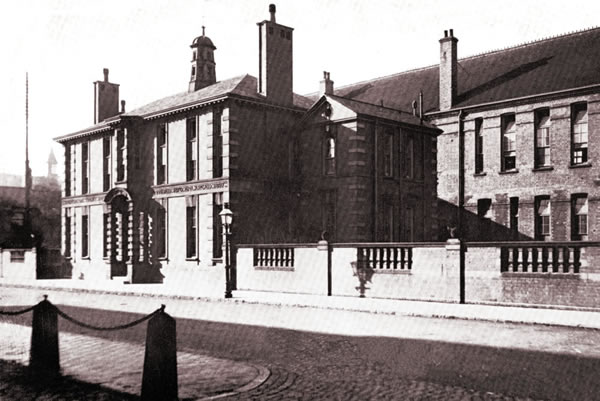
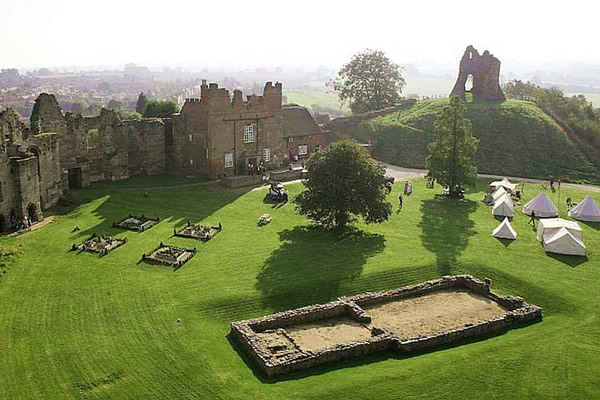
In the early 1800s, a number of publishers produced county directories, a sort of forerunner of the Yellow Pages, which have become a valuable source of historic information. Among the most popular were Bradshaw & Parsons Directory of Staffordshire, Bagshaw’s Derbyshire Directory and White’s Directory of Derbyshire.
Below is an extract from the 1857 Whites’s Directory of Derbyshire. Burton upon Trent, at this time lying in both Staffordshire and Derbyshire with the county line being formed by the river Trent, appeared in the Derbyshire edition. It was organised by Town and each was described in some detail so providing an invaluable record. The Burton upon Trent entry is fully transcribed below, surrounding townships were in separate sections, I have included Winshill as an example:
BURTON-UPON-TRENT is an extensive parish, principally in the Offlow Hundred, Staffordshire, and partly in Repton and Gresley Hundred, Derbyshire. The entire parish comprises 7 townships, viz. : Burton-upon-Trent, Burton Extra, Branstone, Horninglow, and Stretton, in Staffordshire, with Winshill, and part of Stapenhill, which are in Derbyshire, with about 10,000 acres of land, and in 1851 had 2,250 houses, and 12,373 inhabitants, of whom 6,189 were males, and 6,184 females. The manor of Burton-upon-Trent, with several hamlets, was granted in the 37th Henry VIII. to an ancestor of the present Marquis of Anglesey, who is lord of the manor, principal owner of the soil, and te impropriator of the great tithes of the whole parish. The east and west sides of the parish swell gradually into hills, and have a strong red loamy soil, suitable for the growth of barley and wheat, the former of which is extensively cultivated, and sold to the numerous malting establishments at Burton. The rest of the land is chiefly meadow, forming rich loamly pastures, which are often flooded by the waters of the Trent and Dove, which latter flows on the north side of the parish.
A well-built market town of considerable antiquity, is pleasantly situated on the west bank of the Trent, which here flows in two broad streams, and is crossed by an ancient stone bridge of 36 arches, in the centre of which is a stone which marks the boundaries between the counties of Derby and Stafford. It is in 52o 53’ north latitude, and 1o 35’ west longitude, and is distant 11 miles S.W. of Derby, 13 miles N.E. of Lichfield, 24 E. of Stafford, and 125 N.W. of London by the road, and 129 by the railway. The town of Burton has been considerably improved during the last 25 years, several New Streets have been made, many old buildings removed, and handsome houses erected on the sites. The principal streets are, High Street, Horninglow Street, New Street, Station Street, Lichfield Street, and Bridge Street; the former is the principal thoroughfare, been well flagged and paved, and contains many handsome houses, shops, and excellent inns; it is of considerable length, and runs paralell with the river from north to south. In 1851, it had (including Burton Extra and part of Horninglow) 1604 inhabited houses, 50 uninhabited, and 22 building; with 7,934 inhabitants, of whom 3,943 were males, and 3,991 females. Burton has long been celebrated for the excellence of its ale, and immense quantities are sent to all parts of Great Britain, to many foreign countries, the East and West Indies, Australia, and to all parts of the world. During thc reign of the second Catherine of Russia, great quantities were exported to the Continent, it being the favourite beverage of that queen, but this trade was extinguished by the Berlin Decree, which shut out our manufactures from the Continent, but the taste for pale ale has greatly increased in this country, and most of the brewers are now employed in supplying the home market. The first Brewery established here was in 1610, but 30 years ago the number was only 5, it is now 19; and a greater extent of business is done at some of the older establishments than was done by the whole town at that time. The superior properties of Burton ale is partly attributable to the excellent hard water which is obtained from the neighbouring hills; and Dr. Darwin ingeniously supposes that some of the saccharine acid in the malt combines with the calcareous earth of hard water, and forms a sort of mineral sugar, which is convertible into spirits. Most of the breweries have also very extensive malting establishments, the consumption of which during the season, 1855-56, amounted to 1,216,000 bushels, of which quantity 704,000 bushels were made in the town. The cotton spinning and power-loom weaving were carried on to a considerable extent by Messrs. Peel & Co. till within the last few years. One of the factories is now occupied by Mr. John Taverner, tape manufacturer; another is used as stores by the brewers, and the others are unoccupied. There are also three Iron foundries, and an Engineer and Millwright’s establishments here. The river Trent is Navigable for barges up to the town, and the canal, which connects that river with the Mersey, opens a water communication with all the principal towns in the kingdom. The town has several times been inundated by the Trent, particularly in the years 1771, 1792, 1795, and 1798, when most of the streets were laid under water.
The New Sewer, formed in 1843, is a very great improvement to the town of Burton, and has effectually removed those continual nuisances so detrimental to the health and comfort of the inhabitants. Previous to the year 1788, High Street was not paved, nor had it a sewer of any kind, and the centre of the street was so low that it fanned a general receptacle for the refuse water from all the houses. At intervals, stepping stones were placed to enable persons to cross. In that year, an act of parliament was obtained for paving, repairing, cleansing, and lighting the town, and for removing and preventing nuisances, soon after which, a sewer of about two feet diameter was formed from the Bridge to High Street, but not being properly constructed, was continually stopping up for want of a regular fall. In 1843, however, it was determined to employ an engineer to see how far it was practicable to carry out the sewerage, so as effectually to drain the town; the result was satisfactory, and the Feoffees liberally responded to the wants of the town, by a grant of £400. The sewerage extends a distance of 2,159 yards, and the most sanguine expectations of the projectors have been fully realised. Each time a boat passes into the lock, which may be estimated at 12 times a day, the lock full of water is turned down the sewer, from Bond-end Wharf to the Bridge, by which means no filth can possibly accumulate, or offensive effiuvia be omitted.
The Town Hall, in the Market Place, is a commodious structure, created in 1772, by the late Lord Paget, father of the Marquis of Anglesey, the present owner of the manor, to whose ancestors it was granted in the reign of Henry VIII., and all such privileges, liberties, and franchises belonging to the same, as had heretofore been enjoyed by the abbots of Burton. In the exercise of these privileges, the lord of the manor appoints a steward and a bailiff, who retain their office during his pleasure. The steward presides as judge in a court for the recovery of debts under 40s., called the Genter’s Court. This court was judicially acknowledged by the Court of King’s Bench, on an information in the nature of a quo warranto, brought by the attorney-general in the reign of Queen Elizabeth against Thomas, then Lord Paget, who claimed the same as a prescriptive right in the abbots of Burton beyond the memory of man. The Genter’s court is held in the Town hall every third Friday, and has exclusive jurisdiction over the manor. The bailiff, John Richardson, Esq., in right of his office, is coroner; he has also a concurrent juriadiction with the county magistrates as a justice of the peace, but being a practicing attorney, he does not act in that capacity. In addition to the Genter’s court, the lord of the manor annually holds a Court leet and view of frank-pledge, at which the election of officers takes place, among whom are six decimers, and three constables. The Market is on Thursday. Here are four annual Fairs—held on Candlemas day, April 5, Holy Thursday, and October 22 to 29. The latter was granted by King John, and is noted for the sale of horses and cheese, A Hiring for servants is held on the Monday after New Michaelmas day, and a Feast on the nearest Sunday to Street Modeven’s day. Races were formerly held here, but have been discontinued some years.
The Gas Works, in Station Street, were erected in 1832 by a proprietary of £20 shareholders, at a cost of £2,500, and were leased at that time for a period of 21 years, to Mr. Samuel Sanders, since which period they have, by an act of parliament, come into the hands of the Town commissioners, who, in 1854, erected New works, in Anderstaff Lane, the original works having become too small for the requirements of the town. The Birmingham and Derby branch of the Midland railway has a convenient Station on the west side of the town, and communicates with the North and South Staffordshire, the Burton and Leicester and other lines.
The Bridge is the most interesting object of antiquity which the town possesses, and is supposed to have been erected by Bernard, Abbott of Burton, about the year 1174; others assign the erection to a much earlier period, Its zig-zag form stretches across the two steams of the Trent, and the adjoining low meadows, which are subject to inundation, a distance of 1,545 feet, and has 36 arches, three of which are entirely blocked up, and five more of them are only visited by the water in the time of floods, From its extreme narrowness and unnecessary length, many serious accidents have occurred, and it is a matter of consideration with the inhabitants how the danger shall be obviated. A battle was fought upon the bridge in 1322, when Edward III. obtained a decisive victory over the Earl of Lancaster; and it is supposed that the chapel which formerly stood at the end of the bridge was built to commemorate this victory. Mass was frequently said, in order to raise funds to defray the expenses of the bridge.
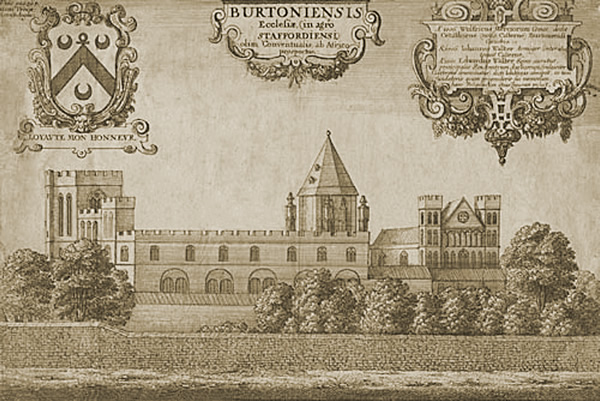
The Abbey appears to have been a place of some magnitude, from the few vestiges that are still to be seen. Tanner says: Ulfric Spot, finished and endowed, A.D. 1004, an abbey here for monks of the order of Street Benedict. It was dedicated to the blessed Virgin Mary and Street Modoven, and valued 26th Henry VIII., at £267 14s. 5d. per annum. But on the record in the first fruit’s office, the yearly valuation of this monastery is given at £501 7s. The Abbey and its dependencies were exempt from all exactions, duties, and services, except trinodas necessitas, the erection of fortresses and bridges, the repairing of highways, and the repelling of invasions. The abbot and convent surrendered this house Nov. 14th, 1539, and in 1541, Henry VIII, who, after robbing it of part of its estates, refounded it as a Collegiate Church, dedicated to Jesus Christ and his mother Mary; and granted for their support, the manor of Burton, and thirteen other manors, & Co., belonging to the monastery. This Church was but of short continuance, for it was dissolved in 1545, when all the lands and endowments of the same then worth £356 16s. 3d. per annum were conveyed by the said king to Sir William Paget, an ancestor of their present owner, the Marquis of Anglesey. The seal of this college is one of the most beautiful specimens of that style of engraving now extant. It represents our Saviour and his disciples at the last supper, with the arms of Ulfric, the founder, at the bottom. On the margin is a Latin inscription, signifying it to be.
The common seal of the dean and chapter of the collegiate church of Christ, at Burton-upon-Trent. Several abbots, at different periods, were returned as members of parliament, and they were empowered to hold a weekly market, collect tolls, and institute fairs. The Church was a handsome structure, 228 feet long and 52 feet wide, ornamented with an elegant tower at each end. The cloisters measured 100 feet square. Portions of the walls are still visible near the present Church, and the dormitory, fraytor, and all the other buildings, were on a scale of proportionable magnitude. The anicient mansion called the Abbey House is said to have been that part of the building which formed tbe private residence of the abbot, it is now occupied and held on lease by Thomas Thornewill, Esq., who has, at great expense nearly restored it to its pristine beauty, which had been destroyed by modern additions and repairs. The porter’s lodge is now converted into a blacksmith’s shop, and fragments of the wall which surrounded the abbey and its extensive gardens may still be seen. There are two other houses in the grounds, called the Priory and the Manor; the latter is occupied by the Marquis of Anglesey’s agent.
The Parish Church, dedicated to Street Modwen, is a handsome structure with a fine tower and was built in 1720, on the site of the ancient Church, which had been greatly dilapidated during the parliamentary war. It has 8 bells, a set of musical chimes, and a good organ, erected in 1771. The Churchyard is now very spacious, 1½ acres of land on the margin of the Trent being added in 1830, by the Marquis of Anglesey. Several stone coffins have been dug up; one of which is placed in an upright position, on the margin of the Trent, and a lid ornamented with rude sculpture is placed against the wall on the south side of the Church. The Marquis of Anglesey is impropriator and patron of the living, which is a perpetual curacy, but is now called a vicarage, value £192; the Rev. Samual Stead, M.A., incumbent.
Holy Trinity Church, Horninglow Street, is a beautiful edifice, in the florid Gothic style of architecture. It is partly built of brick cemented so as to correspond with the stone buttresses, pinnacles, and other ornamental portions of the building. The interior is exceedingly neat and has a richly foliated Gothic window of stained glass, with representations of Street Peter and the four evangelists. It was built in 1824, by the executors of the late Isaac Hawkins, Esq., at a cost of £7,000, and will accommodate about 1,000 hearers; 700 sittings are free. There is an endowment of about £80 per annum from Queen Anne’s bounty, and from a small sum in the funds from other sources. The Marquis of Anglesey is the patron, and the Rev. Peter French, M.A., is the incumbent.
Christ Church, New Street, is an elegant cruciform structure in the early English style, with a tower surmounted by an elegant spire. It was consecrated in September, 1844, and was built at a cost of £2,750, raised by private subscriptions and a grant from the Incorporated Society for building churches. It has 600 sittings on the ground floor, and 400 in the galleries, and the whole of the sittings both free and appropriated, have carved stall ends; but the latter have small low doors. The living is a perpetual curacy, value £200 in the patronage of the vicar, and the incumbency of the Rev. William Morgan, B.A., who resides at the parsonage, a neat house in the Tudor style, erected between the church and its schools. Catholic Chapel, Guild Streetreet, is a neat brick building, erected a few years ago, the Rev. Thomas Telford is the priest.
Independent Chapel, High Street, occupies the site of a nonconformist meeting-house, built in 166l, when the Rev. Thomas Bakewell was ejected from the rectory of Rolleston. This chapel, however, was rebuilt about 80 years ago. The present edifice is in the Gothic style, and was rebuilt in 1842, at a cost of £2,200. The front is of hewn stone, and has a large window of beautiful proportions, filled with Gothic tracery which gives it a chaste and noble appearance. The interior fittings are all of oak, and it will seat 600 persons. The Rev. Daniel Horscraft is the pastor. The Wesleyan Chapel, Horninglow Street is a neat brick building, rebuilt in 1813; it is neatly fitted up with galleries, and the body of the chapel has been recently pewed; attached to it are two neat houses for the ministers. The Particular Baptist Chapel, Station Street, was erected in 1793, and was considerably enlarged and beautified with a Grecian portico, in 1842, at a cost of £1,150. The General Baptist Chapel, Burton Extra, was opened in 1825; Zion Chapel, (General Baptists) Union Street, was erected 1855; it is a handsome brick building, capable of seating 600 persons. The Primitive Methodist Chapel, Station Street, is a neat brick building, erected in 1829. And the Wesleyan reformers have a small chapel in George Sunday Schools are attached to all the churches and chapels, and are numerously attended.
The Free Grammar School, Friar’s walk, adjoining the church-yard, was founded in 1520, by William Beyne, Abbot of Burton, who built a school house on ground belonging to the Abbey. The endowment consists of a farm of 120 acres at Orton-on-the-Hill, in Leicestershire, let for £250 a year, and 111 acres of land at Breaston, let for £202 per annum. The head masteter receives two-thirds of the rents arising from the lands, and the second master one-third. The former has also £3, and the lattir £6 a year, from the bequest of Elizabeth Paulett. The school is free to sons of parishioners, with preference to those who apply for classical instruction. The number is limited to 65. The present school was built in 1834, atthe cost of £600. It contains an ancient carved oak desk, supposed to have been in use ever since the foundation of the school. The Rev. Henry Day is Head master, and Mr. Henry Hodson, second master.
Allsopp’s Charity School is endowed with land now let for £24 per annum; left by Rd. Allsopp, in 1728, for the instruction of 30 poor boys. Six of the scholars are clothed out of the rents of the land now let for £6 a year, left by Francis Astle, in 1735. The feofees of the Town Lands are trustees of this school and the 30 poor boys are now instructed at the large and handsome National Schools, (Christ Church) Church street, erected in 1844, at the cost of about £1000. They form a handsome building in the Tudor style, and will accommodate about 400 children; the average attendance is 130 boys, and about the same number of girls, and 100 infants.
The National Schools, (Holy Trinity) Horninglow Street, were built by subscription, in 1827, and are supported by voluntary contributions; about 100 boys and 70 girls receive instruction; and an Infant school was erected in 1846, by subscriptions, and a grant of £100 from the National Society, in Anderstaff Lane, the average attendance is about 95.
The British Schools, Guild Streetreet, were built in 1843, on land given by the Marquis of Anglesey, at the cost of about £900, raised by subscriptions, and a Parliantentry grant of £274 12s. 19d. They are substantial buildings, and comprise a good house for the master and mistress, and two spacious rooms for about 160 boys and 100 girls.
The Burton Literary Society, High Street, commenced in 1844, has a reading room and a library of about 1,100 volumes on various scientific and interesting subjects. It is supported by a subscription of 20s. per annum from the first class, and a quarterly subscription of 2s. 2d. from the second class, and 5s. per annum the third class. The former have the privilege of attending the reading room at all hours of the day, the other from 5 o’clock in the evening until 10; but the latter have only the use of the library. The reading room is well supplied with London and provincial newspapers, and the most popular periodicals of the day; Mr. S. Simnett, Secretary and Librarian.
Natural History Society and Museum, High Street, established in 1842, contains a valuable collection of British and foreign birds, insects, fishes, fossils, minerals, and antiquities. This interesting exhibition is at all times open to the public free.
The Self-supporting Dispensary, in High Street, is a valuable institution, established in 1830, by which means the poor have the best medical and surgical aid, for the small charge of a 1d. a week, and also the privilege of choosing their own surgeon. The total receipts for the year ending Oct. 31, 1855, was £657 7s. 6d. The disbursements £653 16s. 3d. Mr. Thomas Ash is the dispenser.
The Savings’ Bank, established in 1818, is held at the Town Hall, which is open every Saturday, from 2 to 3 o’clock. The amount of deposits for the year ending 20th Nov. 1855, was £36,078 1s. 8d., and the number of depositors 1,352, of whom 24 were charitable and 29 friendly societies. The respective balances of 763 depositors did not exceed £20. 354 not exceeding £50, 131 not exceeding £100, 37 which did not exceed £150, 13 not exceeding £200, and 1 which exceeded that sum. William Coxon, actuary.
The Permanent Library, at Mr. R. R. Bellamy’s, Bridge Street, was commenced in 1838; it is supported by a number of shareholders and upwards of 70 subscribers, and contains 2000 volumes. The shares are £10 each, and an annual subscription of 16s. Subscribers, not being shareholders, pay 21s. a year.
Young Men’s Christian Association, Guild Streetreet, established about 11 years ago, has a reading room, and library containing about 1,400 volumes. Mr. John W. Lomas, Secretary.
Petty Sessions are held every Tuesday, at the County Court House, and Police, Station, Station Street. The magistrates for the district are—Sir Oswald Mosley, Bart., Robt. John Peel, Esq., Michael Thomas Bass, Esq., M.P., John Bott, Esq., Charles Walter Lyon, Esq., and Henry Allsopp, Esq. Mr. Jno. Thornewill, clerk to the magistrates; Jno. Anderson, inspector of police; here are also two constables.
The Stamp Office, High Street, is at Mr. Samuel Whitehead’s; it is open from nine to five o’clock.
The Inland Revenue and Corn Returns’ Office, Market Place; Mr. Ambrose Martin, supervisor.
The New Small Debts Act, or County Courts.This important act, which superseded the Court of Requests, came into operation on the 15th March, 1847.
Burton-upon-Trent County Court is held at the Court House, Station Street, Monthly, and the district comprises the following places:Anslow, Barton Blount, Barton-under-Needwood, Branstone, Bretby, Burton Extra, Burton-upon-Trent, Castle Gresley, Catton, Caldwell, Church Broughton, Church Gresley, Coton in the Elms, Drakelow, Dunstall, Egginton, Foston and Scropton, Hanbury, Hatton, Hilton, Hoon, Horninglow, Linton, Lullington, Marston-upon-Dove, Milton, Newton Solney, Osleston, Repton Rolleston, Rosliston, Stanton and Newhall, Stapenhill, Stretton, Sutton-on-the-Hill, Swadlincote, Tatenhill, Thurvaston (Upper), Tutbury, Walton-upon-Trent, Wichnor, Winshill. J. T. Cantrell, Esq., Judge Philip Hubbersty, Esq., Wirksworth and John Thornewill, Esq., Burton-upon-Trent, registrars. George Ley, High bailiff, Burton-upon-Trent.
THE BURTON-UPON-TRENT POOR LAW UNION, formed in 1837, comprises 53 parishes and townships, of which 40 are in Derbyshire and 13 in Staffordshire, with an area of 90,652 acres of land, and a population of 31,843 souls. The following is an enumeration of the parishes and townships in the county of Derby, viz: Ash, Barton Blount, Bearwardcote, Bretby, Burnaston, Castle Gresley, Catton, Caldwell, Church Broughton, Church Gresley, Coton-in-the-Elms, Dalbury with Lees, Drakelow, Egginton, Etwall, Findern, Foremark, Foston and Scropton, Hatton, Hilton, Hoon, Ingleby, Linton, Lullington, Marston-upon-Dove, Mickleover, Newton Solney, Osleston and Thurvastan, Radbourn, Repton, Rosliston, Stanton and Newhall, Stapenhill, Sutton-on-the-Hill, Swadlincote, Trusley, Twyford and Stenson, Walton-upon-Trent, Willington, and Winshill. The 13 parishes and townships in the county of Stafford are, Anslow, Barton-under-Needwood, Branstone, Burton-upon-Trent, Burton Extra, Dunstall, Hanbury, Horninglow, Rolleston, Stretton, Tatenhill, Tutbury, and Wichnor.
The Union Workhouse, erected in 1839, is a handsome brick building, ornmented with stone, situated at the west end of Horninglow Street. It was erected at a cost of £8,300, and, with an additional sum of £700 expended for furniture, will make a total of £9,000. It contains ample accommodation for 400 inmates, and is well ventilated and supplied with fittings of the most substantial character. The present number of inmates is 165. William Coxon in clerk and superintendent registrar; Alex. and Jane Phillips, master and matron; William Freeman, schoolmaster, and Emma Oakden, schoolmistress; Robt. R. Bellamy, registrar of marriages; John Killingby, relieving officer and registrar of births and deaths for the South district; Gervase Smedley, relieving officer, and registrar of births and deaths for the North district: Richard Stone, Esq., of Derby, auditor; and John Dawson, porter. The following is a list of the surgeons : Robert Shirley, Belcher, Burton-upon-Trent district; Robt. John Bell, Mickleover; Benjamin Miller, Barton-under-Needwood; George Ambrose Cope, Etwall; H. Edwards, Tutbury; George Lowe, Rosliston; Arthur Hewgill, M.D., Repton; and Spencer Thomson, M.D., Gresley district. The average weekly cost of the in-door paupers for the half-year ending March, 1856, was 2s. 5¾d. for food, and 3½d. for clothing.
WINSHILL township and small village, upon a declivity 1½ miles E. by N. from Burton-upon-Trent. to which parish it belongs, contains 1,150 acres of fertile land, 88 houses and 405 inhabitants, of whom 196 were males and 209 females, in 1851; rateable value, £2,313. The Marquis of Anglesey is lord of the manor and principal owner. There is an extensive corn mill on the Trent bank, and a factory for manufacturing tape, occupied by Mr. John Taverner; also Bladon House, a respectable boarding school. This manor belonged to the monastery of Burton, and having been granted after the dissolution to the first Lord Paget, is now the property of his descendant. The Anglesey Coal Company, established in 1856, have extensive collieries here, situated on the Burton and Ashby-de-la-Zouch road, 1¾ miles E. from the former, and 7¼ miles N.W. from the latter. The coal obtained here is of a superior quality for making coke for malting, and also for steel converting; it is likewise in great demand for household purposes. The men employed are assisted by a steam engine of 20 horses power. Messrs. Bond, Brailsford, Hunt, & Wigfall are the proprietors. In 1846, a small National school was built by subscription; it a neat brick building, and is licensed for divine service, as a Chapel of Ease to Holy Trinity. The Wesleyans have also a chapel here. (For Directory, see end of Burton.)
The Towns Lands consist of about 40 acres in small detached parcels, with several tenements, producing an income of £190 a year, including the rent of Finney’s close and the Workhouse garden. For a long period they have from time to time been conveyed together to trustees or feoffees, for the common benefit of the inhabitants of Burton. The feoffees are also entitled to the sum of £1,800, which has been accumulated from fines received on different renewals of leases for lives. The interest of this money, £84 a year, is applied with the other income. The rents of the town lands are collected by the town masters, (to whose office the constables of the preceding year, appointed at the Court-leet, succeed as a matter of course,) and are paid by them to the treasurer of the feoffees, at their general annual meeting, held annually on the 21st December.
CHARITIES,(under the management of the feoffees of the Town Lands). Mr. Finney gave a close in Anderstaff Lane, and directed the rents to be given in apprenticing yearly some poor boy. The close is let for £11 18s. 8d.
The Workhouse Garden, in Anderstaff Lane, is let for £5 8s. a year, in respect of which it had long been customary to furnish annually six coats for poor men, but the practice was discontinued about 30 years ago. The rent is carried to the general account of the town lands.
The Pavement House consists of a messuage, shop, two cottages, and 36 perches of land, the rents of which are appropriated by ancient usage to the reparation of the pavement of the inferior inhabitants in High Street.
The New Close is a piece of lands of about 20 acres, formerly part of the town moors. It is now let in leys or gates for depasturing cows, and the clear profits have been applied since 1815 for repairing the pavements in Burton and Bond End.
Daniel Watson, in 1779, left a stable, coach house, and stable yard, in Cat street, and directed the rents to be given to the poor on Whit-Monday.
Isaac Hawkins, in 1712, left £100 to be laid out in land, for the maintenance of some poor man in Burton. This legacy was expended in land called the Low Gate Piece, now let for £7 7s. a year.
Mrs. Almond’s gift. There appears to be no original writings respecting this charity. It consists of a farmhouse and 30A, of land at Aston, a close 6A. 2R, called Blackwells, at Rolleston, and an allotment in Horninglow of 1A. 1R. 19P. The rents amount to £71 18s. 8d. In addition to the above, there belongs to this charity a part of certain lands in Rolleston, which were received in exchange from Sir Oswald Mosley, Bart., for land belonging to this charity. The annual value of this land was £2 2s. a year, but through mistake the rents have been carried since the enclosure to the account of Parker’s almshouses. Of the above rents, £5 17s. is paid for weekly distribution of bread; £6 6s. to the poor of Horninglow, Stretton and Branston, in sums of 3s. each and under; and £29 17s. to the poor of Burton and Burton Extra, chosen by the feoffees in sums of 5s. each.
William Hawkins, in 1724, left a rent charge of £5 a year to be distributed in bread. This amount has for some time been paid, towards furnishing 12 poor women of Burton with gowns.
Richard Steele left a rent charge of 21s. per annum, which is divided equally between the poor of Burton, Branston and Stretton.
Richard Caldwell, M.D., in 1582, left in trust with the bailiff of Lichfield £160, to be lent free of interest to clothiers of small wealth and ability, or else to other handicraftmen, dwelling in Burton-upon-Trent. The sum of £40 is lent from five years to five years, and the sum of £120 alternately, in four sums of £30, aud twenty of £6 for five years. The bailiffs of Lichfield go over to Burton at the time when the securities are to be renewed, and they receive applications for, and advance the loans.
The Almshouses in the Swine market, for five poor women, were founded by Elizabeth Paulett, in 1591. The endowment consists of 25A. 1R. 22P. of land at Fenny Bentley, and several dwellings and shops adjoining the almshouses, producing an annual sum of £81 17s. The same donor also bequeathed a rent charge of £10 a year, of which £1 is given to the almswomen, and the remainder as noticed, with the Grammar school. The rent charge was exchanged in 1795, for £333 6s. 8d., three-per cent. consols. Each of the inmates receive 6s. per week, paid quarterly, and a supply of coals out of the rents of the town lands.
Parker’s Almshouses, High Street, were founded in 1634, by Ellen Parker, who left £800 in trust to build 6 almshouses for 6 poor widows or old maids of Burton and Stretton. The property consists of buildings and land in Anderstaff Lane, Horninglow, and Rolleston, let for £54 5s. 3d. per annum. The inmates have each 4s. weekly, and about £6 added from the funds of the town lands.
LIST OF STREETS, & Co., BURTON-UPON-TRENT 1857
Abbey Street, High Street
Anderstaff Lane, Horninglow Street
Bank square, High Street
Bond End, Abbey Street
Bond Street, Green st
Bridge Street., Horninglow Street
Brook Street, Horninglow Street
Church Street, New Street
Cross Street., Station Street
Dale Street, Park Street
Derby Lane, Station Street
Duke Street., New Street
Fennell Street, High Street
Fleet Street, Abbey Street
Friar walk, Market Place
George Street, Guild Street
Green Street, Bond End
Guild Street., Horninglow Street
Hawkins Lane, Horninglow Street
High Street, Market Place
Horninglow Street., High Street
Lichfield road, Lichfield Street
Lichfield Street, High Street
Market Place, High Street
Moor Street, New Street
Mosley Street, Station Street
Orchard Street, New Street
Nelson Terrace, Station Street
New Street., High Street
Paget Street, Station Street
Park Street, High Street
Stanley Street, Mosley Street
Station Street, High Street
Union Street, Station Street
Victoria Crescent, Horninglow Road
Wellington Street, Derby Lane
MISCELLANY, consisting of Gentry, Clergy, Partners in Firms, and others not arranged in the classification of Trades and Professions.
Post Office, High Street; Mr. John Whitehurst, postmaster.
Letters arrive from:
Derby, Leeds, & Co., (1st mail) at 1 a.m., (2nd mail) at 11 a.m.
London and all parts, (1st mail) at 2 30 a.m., (2nd mail) at 1 p.m.
Letters despatched to:
Birmingham, Tamworth, & Co., at 10 15 am.
Derby, Leeds, & Co., at 12 noon.
London, and all parts, at 10 p.m.
Money Order Office, open from 9 to 6 o’clock.
Branch Post Office, at William Peace’s, Victoria crescent.
BURTON UPON TRENT DIRECTORY 1857
Adams Mr. Edmund, Station Street
Alcock Edward scripture reader, Horninglow Street
Allen Charles, clerk, Station Street
Allen Francis Chawner, clerk, Lichfield Road
Allen James, clerk, Station Street
Allen John, brushmaker, New Street
Allsopp Henry, Esq., High Street
Atkins Michael, coach builder, Station Street
Bagnall Ann, furrier, Horninglow Street
Ballard William, manager of gas works, Anderstaff Lane
Barratt & Son, gun makers, High Street
Batkin Henry, cutler, High Street
Baxter Mr. Benjamin, Horninglow Street
Bell Adam, clerk, Lichfield Street
Bennett Edwin, joiner, & Co.; Cross Street
Birch Mrs. Sarah, Bank square
Birkin Chamberlain, horse breaker, Guild Street
Bishop Mr. William, Station Street
Bladon James, lessee of the market, and inspector of weights & measures, Market Place
Booth Mrs. Mary, Horninglow Street
Bloor John, cooper, High Street
Brooks Moreton, gents., Lichfield Road
Broster George, tripe dresser, High Street
Brown Henry, bank manager, High Street
Bryan Jesse, slater, Anderstaff Lane
Carter Mrs. Elizabeth, Station Street
Carter Thomas, coml. trav., Abbey Street
Chappells John, national schoolmster, Station Street
Chatterton John, pawnbroker, Union Street
Child John, inland revenue officer, Horninglow Street
Clark Henry, timber & Co. merchant, The Priory
Cliff James, engineer, High Street
Cooke Mark, agent, Horninglow Street
Cox Thomas, clerk, Union Street
Coxon James, clerk, Guild Street
Crichley Rev. Thomas, curate of Christ Church, Union Street
Davies Rev. Samuel, (baptist) Alma house
Dawson John, porter, Workhouse
Day Rev, Henry, headmaster grammar school, Lichfield Street
Dilworth Richard, station master, (M. R.) Station Street
Earp Thomas, agent, Horninglow Street
Farmer Mrs. Ellen, Brook Street
Ford Miss Ann, Horninglow Street
Franklin William, dyer, New Street
French Rev. Peter, M.A., incumbent of Holy Trinity, Horninglow Street
Gates Mrs. Elizabeth, Lichfield Street
George John Joseph, building surveyor, Nelson Terrace
Goer Thomas, cheese factor, High Street
Gorton Thomas, assistant overseer, Mosley Street
Govan Andrew, farm bailiff, Station Street
Green Rev. Walter, curate of Trinity Church Union Street
Gregg Rev. John Robert, curate, Market Place
Gretton Miss Fanny, Horninglow Street
Gretton John, Esq., High Street
Grundy Richard, inland revenue officer, Horninglow Street
Hales Thomas, commercial traveller, Station Street
Hanson Thomas, bird preserver and fishing tackle maker, High Street
Hanson Mr. John Nicholas, Station Street
Harris Edward, brewer; Lichfield Road
Harris Mr. William, High Street
Haywood Rev. George, (reform) George Street
Heafield Thomas, clerk, Station Street
Healey John, clerk, Station Street
Hill John, brewer, Lichfield Road
Hill William, clerk, Station Street
Hill Robert, commercial traveller, Station Street
Hodgson Stanley, surveyor of taxes, Guild Street
Hodson Miss Ann, Horninglow Street
Hodson Henry, 2nd master Grammar school, Station Street
Hodson Mr. Thomas, High Street
Holloway Mr. Charles, Lichfield Road
Holmes Ed., assistant brewer, Horninglow Street
Horscraft Rev. Daniel, (Ind.) High Street
Hunter John, joiner & Co., Duke Street
Jackson Mr. Henry, Horninglow Street
James Ezra, sup. brewer, Horninglow Street
Johnson Eliza, berlin wool and fancy repository, High Street
Jefford John, clerk, Horninglow Street
Johnson Miss Elizabeth, High Street
Jones William Esq., M.D., Lichfield Street
Keenan John, trav, draper, New Street
Kenney Rev. Richard, (baptist) Lichfield Road
Kent William, maltster, Horninglow Street
Killingley John, relieving officer and regr. of births and deaths, Horninglow Street
Lander Thomas, land agent, Manor House
Lathbury Miss Elizabeth, Nelson Terrace
Leigh Henry B., Esq., Hunter’s Lodge
Martin Ambrose, supervisor Inland revenue, Market Place
Martin William Shubrick, managing brewer, New Street
Massey Richard, brewer’s clerk, Mosley Street
Miller Mrs., Union Street
Mathews John, head brewer, High Street
Mayberry Richard M., clerk, High Street
Meakin Francis Lewis, brewer, Lichfield Street
Meakin George, brewer, Abbey Street
Merry Charles, accountant, Station Street
Moor Mrs., Horninglow Street
Morgan Rev. William, B.A., incumbent of Christ church, Church Street
Morris Samuel Coates, Esq., Bridge Street
Morris William, manager, Station Street
Mortimer Joseph, grocer’s manager, New Street
Moth John, Inland revenue officer, Station Street
Moulder Mrs. Elizabeth, Horninglow Street
Ordish Mrs. Ann, keeper of museum, High Street
Osborne William, clerk, Horninglow Street
Parsons Fredk. Joseph., wine & spirit merchant, High Street
Peel Street John, Esq., Lichfield Street
Pendleton William, brewer, High Street
Payne Mrs. Maria, High Street
Phillips Alex. and Jane, master & matron, Workhouse, Horninglow Street
Poyser Thomas, Esq., Horninglow Street
Pratt Joseph, fruiterer, High Street
Pratt Miss Sarah, High Street
Proudman John, manager at Burton Brewery Co., High Street
Radford Mr. James, Lichfield Street
Ratcliff Samuel, Esq., Horninglow Street
Richardson Mrs. Caroline, High Street
Richardson John, solicitor, high bailiff and coroner for the borough, High Street
Richardson Mrs. Mary, Station Street
Robinson Rhd., accountant, Horninglow Street
Robinson Thomas, clerk, Lichfield road
Robinson Thomas, brewer; h. High Street
Salloway Mr. Edward, Horninglow Street
Salt James, carrier to Derby, Monday, Wednesday, and Friday, New Street
Saunders Mrs. Mary, Horninglow Street
Shardlow William, carriers agent, Station Street
Shipley Samuel, inland revenue officer, Mosley Street
Shreeve William Henry, inland revenue officer, Lichfield Street
Simnet John, temperance hotel, Union Street
Small William, solicitor, Lichfield Road
Smith David, clerk, Horninglow Street
Smith Robert Thomas, accountant, Cross Street
Stanley Miss Mary, Horninglow Street
Stanley Mr. William Day, High Street
Stanley William, painter, Market Place
Staton John, plaster, cement, and gypsum manufacturer, Park Street
Stubbs Mr. Solomon, Guild Street
Taylor Miss Frances, Horninglow Street
Taylor James, woodman, Abbey Street
Telford Rev. Thomas, Catholic Priest, Cross Street
Thompson John, brewer, Horninglow Street
Thornewill Robert, ironfounder, & Co., The Abbey
Townsend Mrs. Susannah, Station Street
Townsend William, clerk, Lichfield Road
Tranmer Rev. Francis T., (Wesleyan), Horninglow Street
Treace John, commercial traveller, Station Street
Trease Mr. John, Horninglow Street
Turton Henry, Engineer, Station Street
Wall Richard, highway overseer, Station Street
Warham John Robson, ironfounder, & Co., New Street
Whitehead Mrs. Cath., Lichfield Street
Williams Mr. David, Hawkins Lane
Whitehead Samuel, solicitor’s clerk, and stamp distributor, High Street
Wilson, Rev. John, (Wesleyan), Horninglow Street
Wilson Bateman, clerk, Horninglow Street
Wood Halder, managing brewer, Guild Street
Wright Joseph, ironfounder, and inventor of the patent reciprocating vertical fire bars, Horninglow Street
Wright Joseph George, librarian Young men’s Christian association; Guild Street
Wright Joseph, merchant’s clerk, High Street
Wyllie Stewart Eaton, brewer, Lichfield Street
Wyllie William, brewer; h. Lichfield road
Yates Mrs. Elizabeth, High Street
BURTON UPON TRENT BUSINESS DIRECTORY, 1857
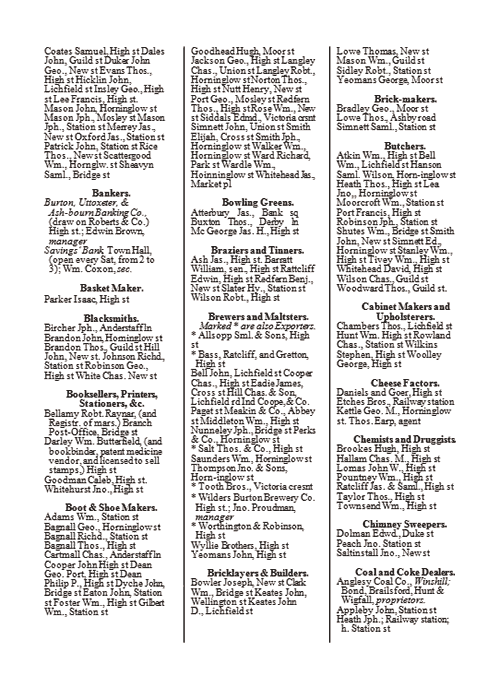
ACADAMIES (Marked ** take Boarders).
British, Guild Street., Jas. Samble and Anne Standley
Cleaver Mary, Horninglow Street
Cooke Jane, Horninglow Street
Dunwell William, High Street **
Dyche Mary Ann, Bridge Street
Free Grammar, Friar’s walk, Rev. Henry Day, head master; and Henry Hodson, second master
Graggs Mary & Jane, Horninglow Street
King Matilda, Station Street
Leedham Mary Jane, Horninglow Street **
National, (Christ Church,) Church Street, John Chappell & Ann Ford; Harriet Cox, infant mistress
Trinity, Horninglow Street., Henry Taylor & Sarah Ann Gould.
Infant’s, Anderstaff Lane, Mary Hoose
Union, Horninglow Street., William Freeman & Emma Oakden
Wragg Jemima, Market Place
ATTORNIES
Bass Abraham, Bridge Street
Coxon William, (& clerk to the Union,) Horninglow Street
Drewry James, High Street
Goodyer Henry, Guild Street
Perks John, Lichfield Street
Richardson & Small, High Street
Thornewill John, (and clerk to County Court, and to Magistrates,) Station Street, Green street
AUCTIONEERS
Leedham Fras., Nelson terrace
Wilkins Stephen, High Street
Bakers & Flour Dealers.
Burton William, Park Street
Coates Samuel, High Street
Dales John, Guild Street
Duker John George. New Street
Evans Thomas, High Street
Hicklin John, Lichfield Street
Insley George, High Street
Lee Francis, High Street
Mason John, Horninglow Street
Mason Joseph, Mosley Street
Mason Joseph, Station Street
Merrey Jas., New Street
Oxford Jas., Station Street
Patrick John, Station Street
Rice Thomas, New Street
Scattergood William, Horninglow Street
Sheavyn Samuel, Bridge Street
BANKERS
Burton, Uttoxeter, & Ashbourn Banking Co., (draw on Roberts & Co.) High Street.; Edwin Brown, manager
Savings’ Bank, Town Hall, (open every Sat, from 2 to 3); William Coxon, sec.
BASKET MAKER
Parker Isaac, High Street
BLACKSMITHS
Bircher Joseph, Anderstaff Lane
Brandon John, Horninglow Street
Brandon Thomas, Guild Street
Hill John, New Street
Johnson Richard, Station Street
Robinson George, High Street
White Charles, New Street
BOOKMAKERS, PRINTERS & CO.
Bellamy Robt. Raynar, (and Registr. of mars.) Branch Post-Office, Bridge Street
Darley William Butterfield, (and bookbinder, patent medicine vendor, and licensed to sell stamps,) High Street
Goodman Caleb, High Street
Whitehurst Jno., High Street
BOOT AND SHOE MAKERS
Adams William, Station Street
Bagnall George, Horninglow Street
Bagnall Richard, Station Street
Bagnall Thomas, High Street
Cartmall Charles, Anderstaff Lane
Cooper John, High Street
Dean George Port, High Street
Dean Philip, High Street
Dyche John, Bridge Street
Eaton John, Station Street
Foster William, High Street
Gilbert William, Station Street
Goodhead Hugh, Moor Street
Jackson George, High Street
Langley Charles, Union Street
Langley Robert, Horninglow Street
Norton Thomas, High Street
Nutt Henry, New Street
Port George, Mosley Street
Redfern Thomas, High Street
Rose William, New Street
Siddals Edmond, Victoria Cresent
Simnett John, Union Street
Smith Elijah, Cross Street
Smith Joseph, Horninglow Street
Walker William, Horninglow Street
Ward Richard, Park Street
Wardle William, Horninglow Street
Whitehead Jas., Market Place
BOWLING GREENS
Atterbury Jas., Bank Square
Buxton Thomas, Derby Lane
Mc George Jas. H., High Street
BRAZIERS AND TINNERS
Ash Jas., High Street
Barratt William, sen., High Street
Rattcliff Edwin, High Street
Redfern Benj., New Street
Slater Henry, Station Street
Wilson Robert, High Street
BREWERS AND MALTSTERS (Marked ** are also Exporters).
Allsopp Samuel & Sons, High Street **
Bass, Ratcliff, and Gretton, High Street **
Bell John, Lichfield Street
Cooper Charles, High Street
Eadie James, Cross Street
Hill Charles & Son, Lichfield Road
Ind Coope,& Co. Paget Street
Meakin & Co., Abbey Street
Middleton William, High Street
Nunneley Joseph, Bridge Street
Perks & Co., Horninglow Street
Salt Thomas & Co., High Street **
Saunders William, Horninglow Street
Thompson Jno. & Sons, Horninglow Street
Tooth Bros., Victoria Cresent **
Wilders Burton Brewery Co., High Street **
Worthington & Robinson, High Street **
Wyllie Brothers, High Street
Yeomans John, High Street
BRICKLAYERS AND BUILDERS
Bowler Joseph, New Street
Clark William, Bridge Street
Keates John, Wellington Street
Keates John D., Lichfield Street
Lowe Thomas, New Street
Mason William, Guild Street
Sidley Robt., Station Street
Yeomans George, Moor Street
BRICKMAKERS
Bradley George, Moor Street
Lowe Thomas, Ashby Road
Simnett Samuel, Station Street
BUTCHERS
Atkin William, High Street
Bell William, Lichfield Street
Hanson Samuel Wilson, Horninglow Street
Heath Thomas, High Street
Lea Jno, Horninglow Street
Moorcroft William, Station Street
Port Francis, High Street
Robinson Joseph, Station Street
Shutes William, Bridge Street
Smith John, New Street
Simnett Ed., Horninglow Street
Stanley William, High Street
Tivey William, High Street
Whitehead David, High Street
Wilson Charles, Guild Street
Woodward Thomas, Guild Street
CABINET MAKERS AND UPHOLSTERERS
Chambers Thomas, Lichfield Street
Hunt William High Street
Rowland Charles, Station Street
Wilkins Stephen, High Street
Woolley George, High Street
CHEESE FACTORS
Daniels and Goer, High Street
Etches Bros., Railway station
Kettle George M., Horninglow Street. Thomas Earp, agent
CHEMISTS AND DRUGGISTS
Brookes Hugh, High Street
Hallam Charles M., High Street
Lomas John W., High Street
Pountney William, High Street
Ratcliff Jas. & Samuel, High Street
Taylor Thomas, High Street
Townsend William, High Street
CHIMNEY SWEEPERS
Dolman Edward, Duke Street
Peach Jno., Station Street
Saltinstall Jno., New Street
COAL AND COKE MERCHANTS
Anglesy Coal Co., Winshill; Bond, Brailsford, Hunt & Wigfall, proprietors.
Appleby John, Station Street
Heath Joseph, Railway Station, Station Street
Jenkins Lambert, Railway Station, High Street
Walker William, Railway Station, Station Street
CONFECTIONERS
Bickley John, High Street
Coates Samuel, High Street
Lee Francis, High Street
Oxford James, Station Street
Scattergood William, Horninglow Street
Whittingham John, High Street
Wright William, High Street
COOPERS
Dearle Edward, Union Street
Ewers John, High Street
Jelly William, Cross Street
Johnson Chpr., Horninglow Street
Morris John, (and vat maker), Horninglow Street
Southerns Thomas, High Street
CORK CUTTERS
Cashman Michael, (and sock manufacturer) wholesale and retail, Horninglow Street
Wilders Henry, Market Place, Victoria crescent
CORN MERCHANTS
Bailey William, High Street
Douglas James, (and flour) Station Street
CORN MILLERS
Buxton John, Derby Lane
Wilson Joseph & Co., Burton Mill
CURRIERS AND LEATHER CUTTERS
Elliott Robert Spencer, (and Tanner), High Street
Marshall William, High Street
Pountney Thomas, Bridge Street
ENGINEERS AND MILLWRIGHTS
Capes & Burton, (and portable and steam engine manufacturers, Britannia Foundry, Horninglow Street
FARMERS
Greaves Elizabeth, Horninglow Road
Lathbury John, Whetmore House
Ordish James, Park Street
Parker Rd., (cowkeeper) George Street
Port John, Lichfield Road
Shutes William, Bridge Street
Wood William, Lichfield Road
FIRE AND LIFE OFFICES
Birmingham District, (Fire) William Nichols, Guild Street
County, (Fire) William Coxon, Horninglow Street
European, (Life) John W. Lomas, High Street
Industral & General, (Life) William Pountney, High Street
Mutual, (Life) C. Goodman, High Street
National Economic Hail Storm, John Riley, High Street
Norwich Union, William Scott Goodger, Bridge Street
People’s Provident, John Riley, High Street
Provident (Life) William Coxon, Horninglow Street
Royal Exchange, Henry W. Hodson, High Street
Scottish Amicable (Life) W. Dunwell, High Street
Star, Thomas Lowe, New Street
Traveller & Marines, John Riley, High Street
Times, Robert Thomas Smith, Cross Street
Unity, (Fire) John Riley, High Street
Yorkshire, John Whitehurst, High Street
FISHMONGERS
Appleby William, High Street
Wilson John, High Street
GARDENERS AND SEEDSMEN
Appleby William, Station Street
Heath Richard, High Street
Staley Thomas, New Street
Wardle William, Station Street
GLASS AND CHINA DEALERS
Abbott Richard, Bridge Street
Wildman Sarah, High Street
GREENGROCERS
Appleby Henry, Lichfield Street
Bagnall Richard, Guild Street
Bladon Mary, High Street
Brown Oliver, Park Street
Redfern Thomas, High Street
Young Robert, High Street
GROCERS AND TEA DEALERS
Adams John & Son, High Street
Bickley John, High Street
Birch Henry High Street
Brookes James, (wholesale & retail), New Street
Burton John, Guild Street
Buxton Joseph, Moor Street and Station Street
Buxton William, Park Street
Dales John, Guild Street
Dams Allen, Horninglow Street
Dickinson John, High Street
Dukes John George, New Street
Evans Thomas, High Street
Gane Elizabeth, New Street
Goodhead Samuel, Horninglow Street
Goodger William & Son, Bridge Street
Haddon Martha & Son, (John), Moor st and Horninglow Street
Hickling John, Lichfield Street
Hudson William, Horninglow Street
Killeen Charles, New Street
Lathbury Richard, High Street
Leedam William Whittingham, High Street
Mason John, Horninglow Street
Mason Joseph, Moseley Street
Mason Joseph, Station Street
Ratcliff Jas. & Samuel, High Street
Sanders Charles, New Street
Scattergood William, Horninglow Street
Streeter Harriet, Lichfield Street
Wayte Ann M., High Street and Lichfield Street
Whittingham John, High Street
Worsey Thomas, High Street
Wright William, High Street
HAIR DRESSERS
Bradley William, New Street
Foster Henry, Horninglow Street
Goodwin John, High Street
Hanson Thomas, High Street
Lakin Charles, Horninglow Street
Martin John, Station Street
Port Horatio, Lichfield Street
HATTERS
Hawkins John, Bridge Street
Kelsey John, High Street
HOOP (Wood) MAKERS
Riley Charles, Victoria Crescent
Riley William, Moor Street
Tunnadine Henry, Horninglow Street
HORSE AND GIG AND CAB PROPRIETORS
Eardley Ellen, Bridge Street
Teat Samuel, Horninglow Street
HOSIERS
Cooper John, High Street
Fitchett Benjamin, Horninglow Street
Herratt Samuel, (and toy dealer) High Street
Jackson George, High Street
Mansfield Ann, Horninglow Street
Roe Thomas, High Street
INNS AND TAVERNS
Anchor, Joseph Bowler, New Street
Angel Commercial Inn, Jas.
Atterbury, Bank square
Barley Mow, William Wood, Park Street
Bear Inn, Thomas Frederick Dugmore, Horninglow Street
Bell, Joseph Phillips, Horninglow Street
Black Horse, John Oakden, Moor Street
Blue Posts, Mary Yeomans, High Street
Boot, Fras. Whitby, High Street
Bowling Green Inn, Thomas Buxton, Derby Lane
Carpenters’ Arms, William Gretton, New Street
Coach & Horses, John Redfern, High Street
Devonshire Arms, William Appleby, Station Street
Dog, Jno. Carder, Lichfield Street
Dingo, Joseph Bircher, Victoria Crescent
Fox & Goose, Ellen Eardley, Bridge Street
George Inn, Henry Townsend, High Street
Guild Tavern, Ann Greves, Guild Street
King of Prussia, William Gibson, New Street
Lamb, William Milward, High Street
Leopard, William Swindale, Abbey Street
Midland Coml. Hotel, Michael Atkins, Station Street
Nag’s Head, John Ducker Keats, Lichfield Street
Old White Lion, Frederick Dickinson, Lichfield Street
Plough, Thomas Soar, Horninglow Street
Queen’s Commercial & Posting Hotel, John Witton Lees, Bridge Street
Rising Sun, Robert Smith, Horninglow Street
Royal Oak. John Hooper, Market Place
Sarcen’s Head, William Hoult, Bridge Street
Spirit Vaults, William Chambers, Bridge Street
Spread Eagle, Joseph Baker, New Street
Spread Eagle, Joseph Hill, Lichfield Street
Star, Sarah Meason, High Street
Swan, Thomas Johnson, Anderstaff Lane
Talbot, Martha Blood, Horninglow Street
Union Inn, James Gaunt, Horninglow Street
Wheat Sheaf, Edward Morrall. High Street
White Hart, commercial and posting Hotel, James Henderson Mc George, High Street
White Horse, Frances Woolley, High Street
White Lion, John Downing, High Street
BEERHOUSES
Annable Benj., Horninglow Street
Allard Samuel, Green Street
Appleby John, Station Street
Atkin Edward, New Street
Atkin Abraham, Victoria Cresent
Barnes Abraham, Cross Street
Beddows Thomas, New Street
Bircher William, Anderstaff Lane
Bond William, Station Street
Blant Joseph, New Street
Brailsford John, Guild Street
Cookes William, Union Street
Cooper Charles, High Street
Cross Thomas, Lichfield Street
Dyche Samuel, Horninglow Street
Elson George, Anderstaff Lane
Fern John, Lichfield Road
Finch George, Victoria Cresent
Fisher Peter, Duke Street
Goodhead James, Station Street
Harrison Joseph, High Street
Jeffcoat Enoch, Cross Street
Johnson Richard, Station Street
Johnson William, New Street
Marlow William, Guild Street
Orme Thomas, New Street
Orton Richard, Park Street
Robinson Fras., Lichfield Road
Sandars Samuel, Anderstaff Lane
Smith Henry, Moor Street
Southern William, Lichfield Street
Strettan Thomas, Anderstaff Lane
Stringer Elizabeth, Horninglow Street
Thacker John, Horninglow Street
Turner David, Victoria Cresent
Turner Edwin, Anderstaff Lane
Ward John, Abbey Street
Watson George, Mosley Street
Winfield Williams, High Street
Yeomans Thomas, Lichfield Street
IRONFOUNDERS AND ENGINEERS
Halbard Philip, (and stove grate manufacturer), Horninglow Street
Thornewill & Warham, New Street
Wright, Salisbury & Co., (and stove grate manufacturers) ,Anderstaff Lane
IRONMONGERS
Ash James, High Street
Barratt William, senior, (and letter cutter, stove grate, kitchen range, and cooking apparatus manufacturer), High Street
Bindley Thomas, High Street
Ratcliff Edward, High Street
Smith George, High Street
Wilson Robert, High Street
JOINERS AND BUILDERS
Bagnall Thomas, Mosley Street
Corder John, Lichfield Street
Deville Samuel, George Street
Dickinson Daniel, (and boatbuilder), Lichfield Street
Heath Richard, High Street
Hunter & Bennett, Duke Street
Mason Henry, Station Street
Sherwin Joseph, Union Street
Stratton John, Lichfield Street
LIBRARIES
Darley William B., (circulating), High Street
Permanent Library, Bridge Street, Robert Bellamy, librarian
Young Men’s Christian Association, Guild Street.; Joseph G. Wright, librarian
LINEN AND WOOLEN DRAPERS
Douglas George, High Street
Hawkins, Son, and Nephew, Horninglow Street
Jones William. High Street
Kelsey John, High Street
Ordish Walter Daniel, High Street
Robinson John, High Street
Sowter Thomas, Station Street
Styan John Chpr., High Street
Walker William, High Street
MILLINERS
Bladon Mary, High Street
Bryan Mary, High Street
Carter Elizabeth, Station Street
Evans & Ordish, High Street
Ewers Eliza, New Street
Fitzsimons John, High Street
Gaunt Diana, Horninglow Street
Glover Elizabeth, Market Place
Heginbotham Elizabeth, Lichfield Street
Jefford Ann, Horninglow Street
Jones Rebecca, High Street
Milner Lucy & Elizabeth, High Street
Morris Amelia, Station Street
Redfern Jane, High Street
Robinson Mary, (and silk mercer), High Street
Rose, High Street
Southerns Ann and Sarah, Horninglow Street
Wheatcroft Ann, High Street
Willsher Sarah Ann, Orchard Street
NAIL AND RIVET MAKERS
Jackson George Frederick, New Street
Renwick Thomas, New Street
Stringer Elizabeth, Horninglow Street
Whiteman, Brett, and Bartle, Horninglow Street
NEWSPAPERS
Burton Times, published every Saturday, by John Whitehurst, High Street
Burton Weekly News, published by Robt. R. Bellamy, every Friday, High Street
PAINTERS & CO.
Green John, High Street
Harrard Math., Anderstaff Lane
Newbold George, Lichfield Street
Rastall Joseph, Horninglow Street
Stanley William, High Street
PLASTERERS
Simpson John, New Street
Simpson, John, jun., Moor Street
PLUMBERS AND GLAZIERS
Fitchett William, High Street
Fletcher Samuel, Lichfield Street
Knight Frederick, New Street
Nichols William, (& gas fitter & coppersmith) Guild Street
Sandars Samuel, Station Street
Turner James, Guild Street
PROFESSORS OF MUSIC
Barratt George Paul, (and organist and teacher of the
pianoforte, thorough bass, harmony, and composition), Station Street
Day Lewis, Lichfield Road
Orme George, High Street
REFRESHMENT ROOMS
Doherty Laura, Maria, (and dealer in British wines), Station Street
Whittingham John, High Street
REGISTER OFFICES FOR SERVANTS
Doherty L. M., Station Street
Jackson George, High Street
Simnett William Henry, Guild Street
ROPE AND TWINE MAKERS
Elson James, High Street
Lowe John, Fleet Street
SADDLERS AND HARNESS MAKERS
Brooke William, High Street
Gibson Thomas, High Street
Newbold Thomas, High Street
Orme Thornas, New Street
Ward William, High Street
SHOPKEEPERS
Bannister S., Horninglow Street
Collier William, Cross Street
Cox Thomas, Moor Street
Dales Robert, Station Street
Dickinson Daniel, Lichfield Street
Elson George, Anderstaff Lane
Elson Thomas, Anderstaff Lane
Harris Jas. Kellem, Station Street
Heath William, High Street
Hurst George, New Street
Patrick John, Station Street
Merry James, New Street
Newell Henry Thomas, New Street
Renwick Thomas, New Street
Slater William, Moor Street
Talbot Jane, Park Street
Underwood Thomas, High Street
Walker William, Horninglow Street
Waterson Thomas, Anderstaff Lane
Woolley Wm, Horninglow Street
Yeomans Handel, Victoria Crescent
STONE MASONS (Marked * are Merchants).
Bassett David, Station Street
* Clark Thomas & Son, Green Street
* Clark William, Bridge Street
Harrison Joseph, High Street
Parker James, Horninglow Street
STRAW HAT MAKERS
Egginton Mary, Bridge Street
Gaunt Diana, Horninglow Street
Jones Rebecca, High Street
Jefford Ann, Horninglow Street
SURGEONS
Belcher Robert Shirley, Lichfield Street
Hawkeswotth Charles A., High Street
Leedam William A., High Street
Lowe George, Horninglow Street
Mason William, Horninglow Street
SURVEYORS AND LAND AGENTS
Grace Robert, Station Street
Spooner Thomas, Union Street
Whitehead Henry Egginton, Lichfield Street
TAILORS AND DRAPERS
Brunt and Ward, High Street
Dakin John, Horninglow Street
Dakin Joseph, Guild Street
Denston Moses, jun., Cross Street
Feakes William, Horninglow Street
Goodhead William, Union Street
Gothard William James, High Street
Jackson George, High Street
Leedam Charles, High Street
Mousley William, Lichfield Street
Marklew Edward & Son, High Street
Orgill Matthew, High Street
Orgill Thomas, High Street
Parry Richard, Victoria Crescent
Smith Thomas, Bridge Street
Webb John, High Street
Weston Charles, High Street
TIMBER AND SLATE MERCHANTS
Clark Thomas & Son, Green Street
Perks Charles & Sons, Lichfield Road
Riley William, Moor Street
TOBACCONISTS
Doherty Laura Maria, (and dealer in foreign & British
cigars, Meerschaum and other pipes), Station Street
Moger Joseph, Market Place
TURNERS AND CHAIR MAKERS
Gilbert William, Guild Street
Moore Charles, Guild Street
Noon William, Anderstaff Lane
Simpson Thomas, Guild Street
Simpson William, High Street
Summers Charles, New Street
West Thomas, Bridge Street
UMBRELLA MAKERS
Martin John, Station Street
Tong John, High Street
VETERINARY SURGEONS
Taylor Thomas, High Street
Wildsmith George, Market Place
WATCH AND CLOCK MAKERS
Sherwin Joseph, High Street
Steer John, High Street
Sutton John, Lichfield Street
Wilson Thomas, High Street
Worthington Thomas, High Street
WHEELWRIGHTS
Bailey Edward, Horninglow Street, Duke Street
Port Philip, Hawkins Lane
Sandars Samuel, Anderstaff Lane
WHITESMITHS AND BELLHANGERS
Barratt William, sen., (and locksmith), High Street
Mansfield Samuel, (and machinist) Horninglow Street
Webster George, High Street
WINE AND SPIRIT MERCHANTS (Marked * are also retaillers)
Lyon, Joule, and Parsons, Bridge Street
* Mc George, Jas. H., High Street
Morrall Edward, (ale and porter merchant), High Street
* Smith Edmund., Market Place
* Smith William, Horninglow Street
Worthington William & Son, (importers) High Street Railway Conveyance.
BURTON UPON TRENT TRANSPORT
Midland Railway Co.’s Station, Foot of Station Street.
Trains several times a day, to all parts; Rd. Dilworth, station master
Omnibus from the Queen’s Hotel meets every train
Carriers by Railway.
Midland Railway Co., (to all parts); Pickford and Co., agents
Water Conveyance.
Grand Junction Canal Co., (carriers by fly boats to all parts), Bond End; William Shardlow, agent
Carriers from the Inns.
Those marked 1 go from the Angel; 2, Bear; 3, Blue Posts; 3½, Coach & Horses;
4, Star; 5, White Horse; and 6, White Lion.
3 Alrewas, Harrison, Thurs.
4 Appleby, J. Fish, Thurs.
1 Ashby-de-la-Zouch, Thomas Broadhurst, Thurs.
6 Austery, Orton, Thurs.
2 Barton – under – Needwood, Geary, Tu., Thur. & Sat.
3½ Barton-under-Needwood, Bakewell, Thur. & Sat.
2 Birmingham, Boswell, Tues.
1 Church Broughton, Joseph Jackson, Thurs.
3 Church Broughton, William Cooke, Thurs.
1 Coton, Whetton, Thurs.
3 Coton, William Lester; Thurs.
Derby, James Salt, from New Street, Mon., Wed. & Fri.
5 Egginton, Baldwin, Thurs.
4 Gresley, Gilbert, Thurs.
1 Hanbury, Jas. Burnan, Thurs.
5 Hartshorn, Glover, Thurs.
6 Hartshorn, Cooke, Thurs.
1 Hatton, George, Locker, Thurs.
5 Hilton, Yeomans, Thurs.
1 Marchington, Parker, Thurs.
3 Newall, Thomas Taylor, Thurs.
1 Netherseal, John Mear, Thurs.
3½ Newborough, Easom, Thurs.
1 Overseal, Redfern, Thurs.
4 Overseal, Stewardson, Thurs.
1 Repton, Marshall, Thurs.
4 Repton, Maddocks, Mon. and Thurs.
3 Ticknall, Jas. Peace, Thurs.
2 Tutbury, Mayer, Mon. and Thurs.
1 Walton, Redfern, Thurs.
3 Yoxall William Mosedale, Thurs.
3½ Yoxall, John Upton, Thurs.
WINSHILL TOWNSHIP
Anglesey Coal Company, Ashby Road, Bond, Brailsford, Hunt., and Wigfall, proprietors.
Bailey Misses, boarding school, Bladen hill
Cooper Thomas, brickmaker
Croxall Ann, schoolmistress
Douglas James, flour factor, Alma House
Emery Henry, vict., Royal Oak
Finlay John, Esq., Trent Cottage
Fletcher David, shoemaker
Forman Robert, coal master, Bridge end
Hunt Sarah, shopkeeper
Lowe Thomas, brickmaker
Measham George, beerhouse
Morris Samuel, pipe maker, Bridge end
Plummer John, vict., Jolly Farmer
Sharratt Thomas, beerhouse
Shephard Joseph, brick maker
Siddalls John, brick maker
Taverner John, tape manfactr., Forge mills
Tomlinson Robert S., surgeon, Wood field
Toone Thomas, pipe maker
Wardle Frank, Esq., High Field
Wilson Joseph and Co., corn millers, Burton mill
Woodhead Mr. George, Bridge end
WINSHILL FARMERS
Fitchett Joseph & Richard
Hallam Charles
Hallam Francis
Henson Thomas
Hardy Richard
Newton William
Sale William
Taylor Thomas
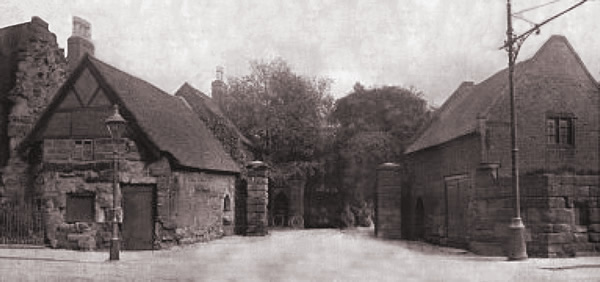
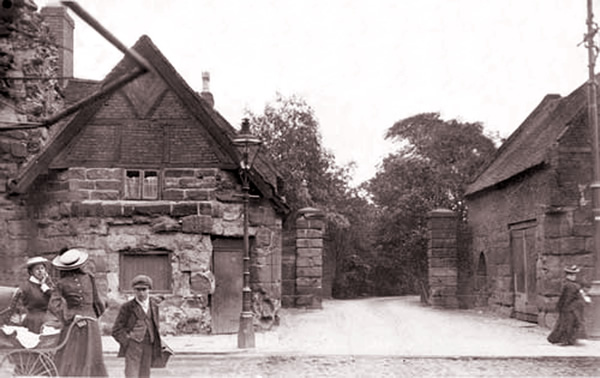 Abbey Gates 1910
 Abbey Gates 1913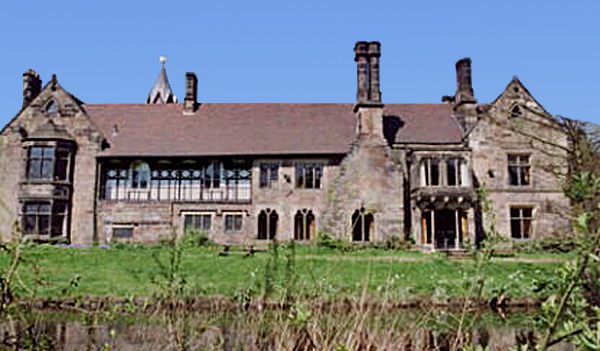
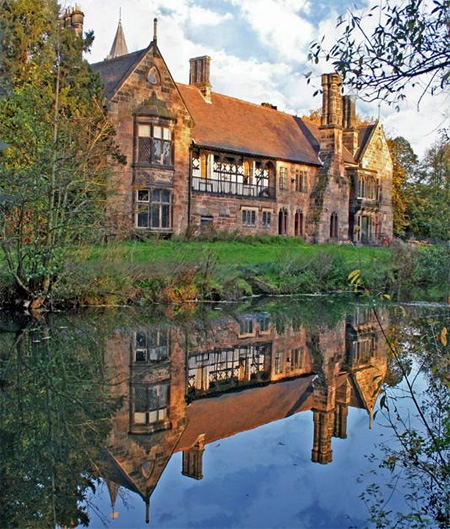
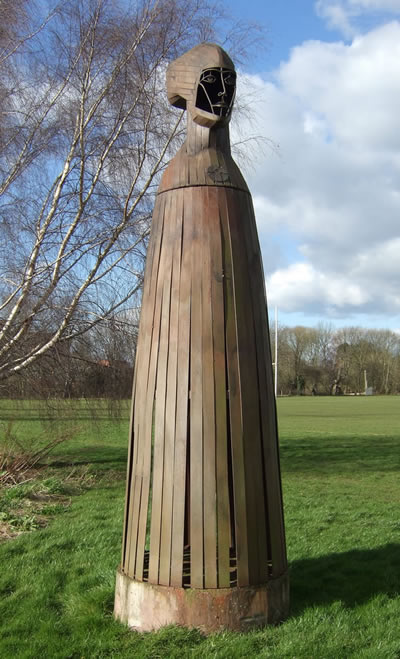 Christianity was introduced to Mercia, one of the Kingdoms of the Anglo-Saxon Heptarchies, in 653 AD. A monastery was founded at its capital, Repton. Soon afterwards, a religious settlement was established at Burton by Saint Modwen who hence became its patron saint. She was an Irish noble woman who became an abbess and made a pilgrimage to Rome.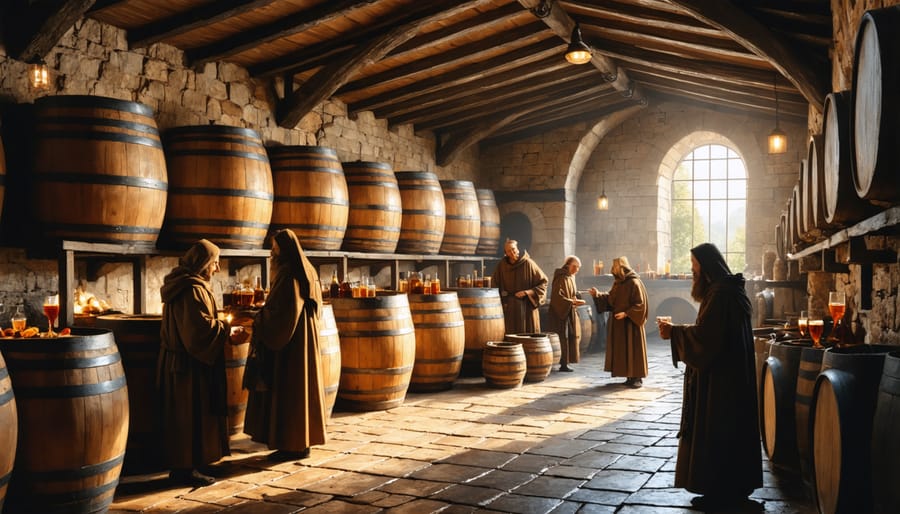
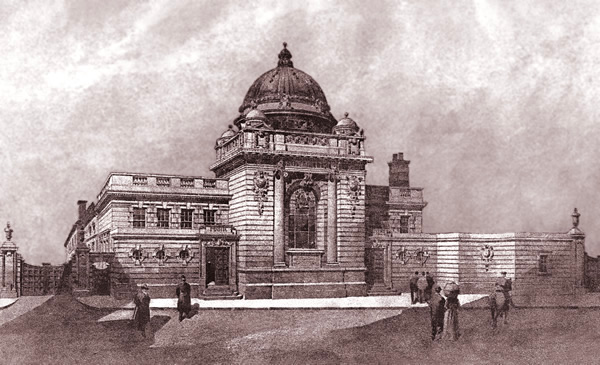
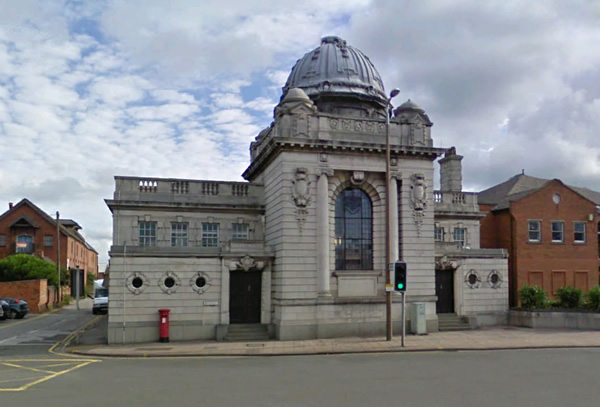
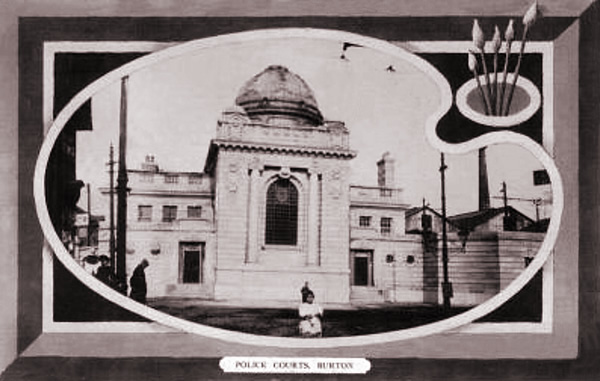
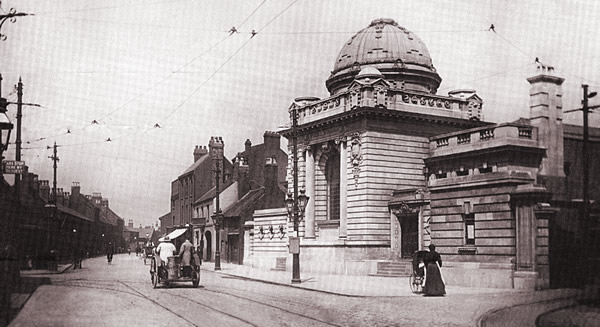
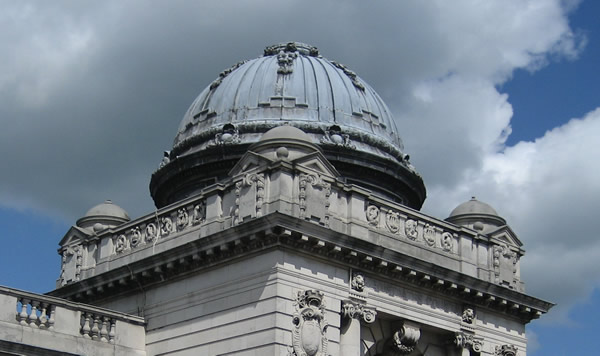
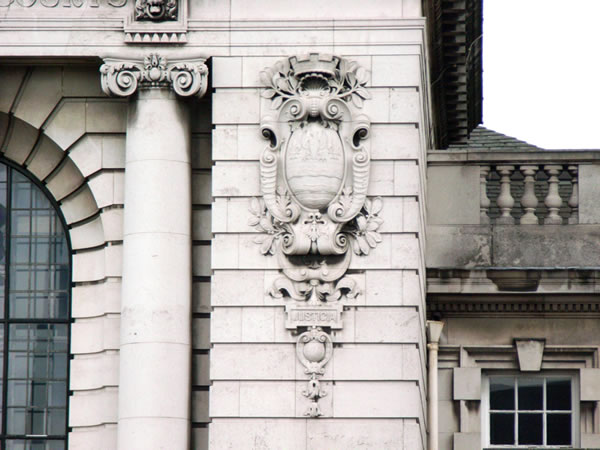
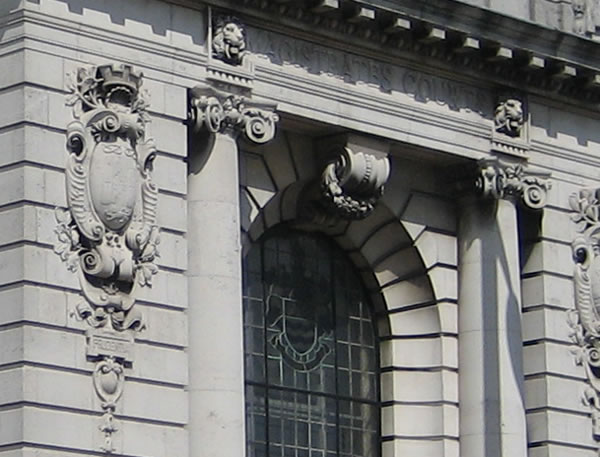
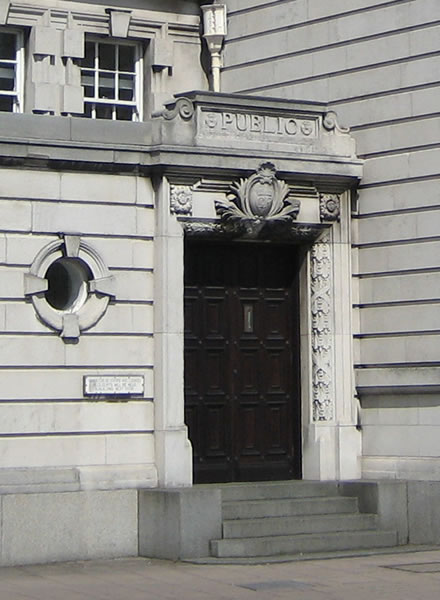
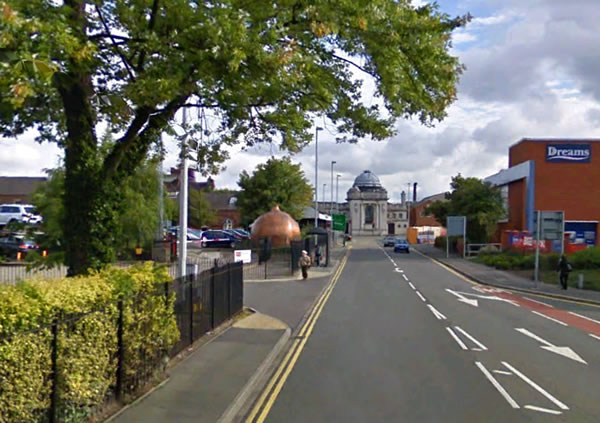
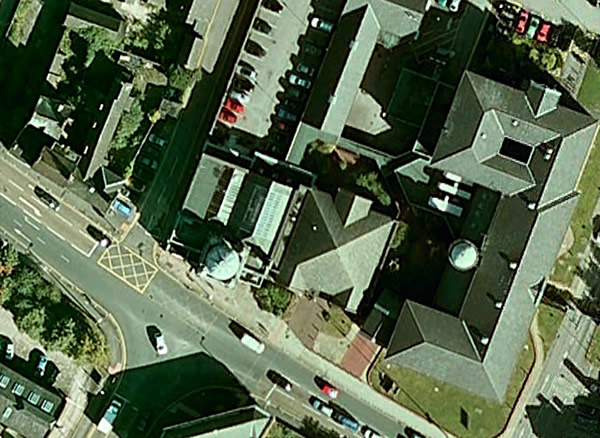
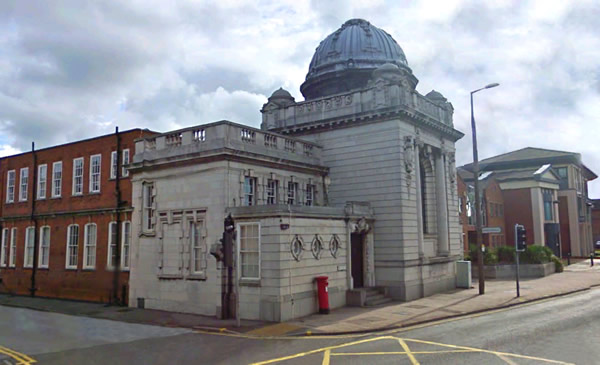
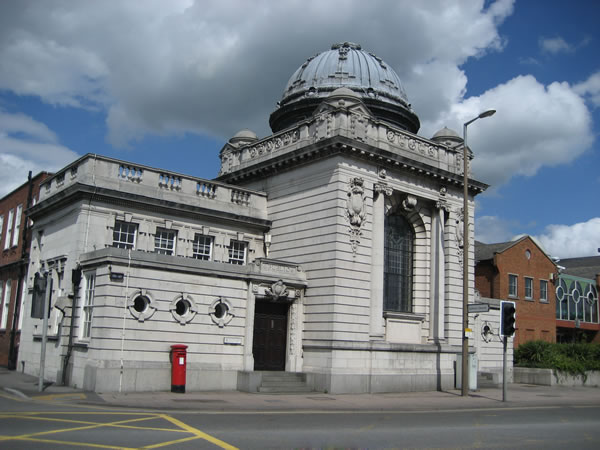
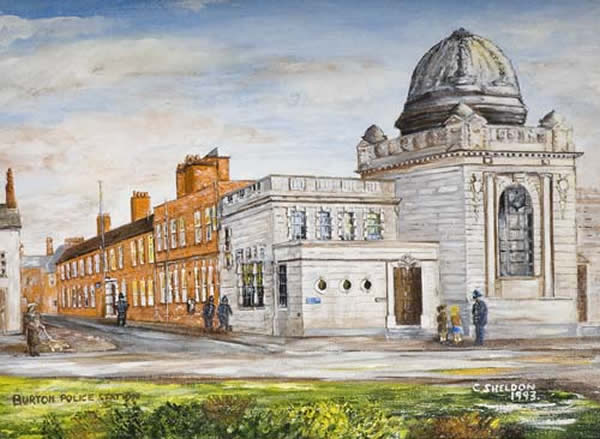
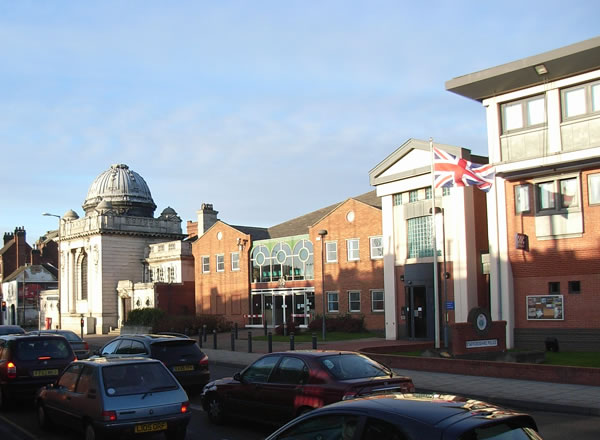
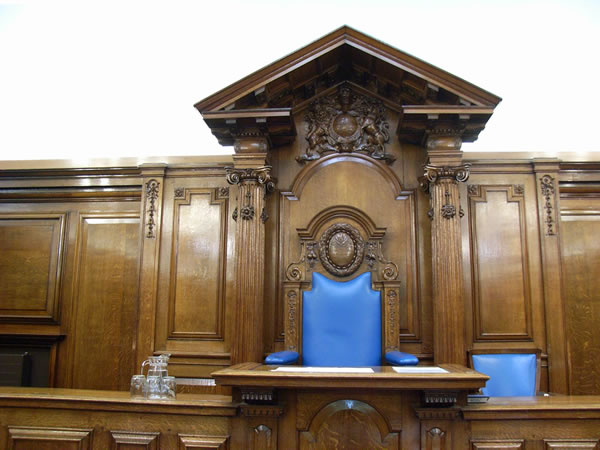 The very impressive Magistrate’s chair with Baroque styling based on the design of the Old Bailey. It is very easy to imagine a red gowned, white wigged High Court judge sitting here ready to announce sentence.
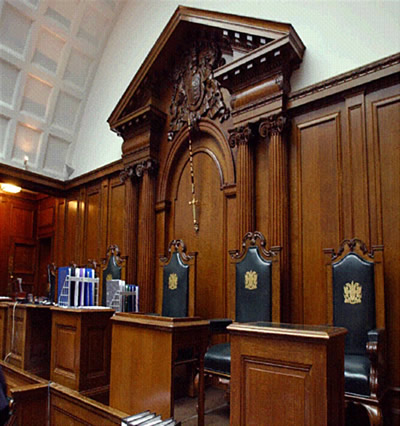 The Old Bailey judge’s chair for comparison.
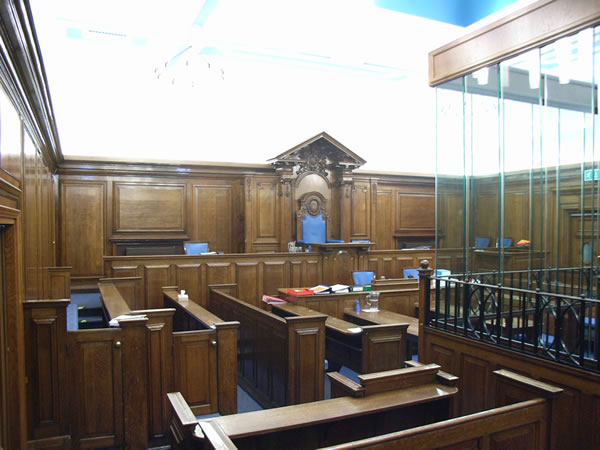 Court 1 is still in very regular use and is little changed, except probably, for the protective glass around the dock.
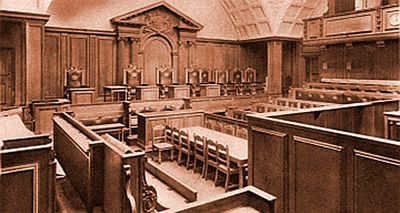 The Old Bailey Courtroom for comparison.
 A view from the Magistrates bench
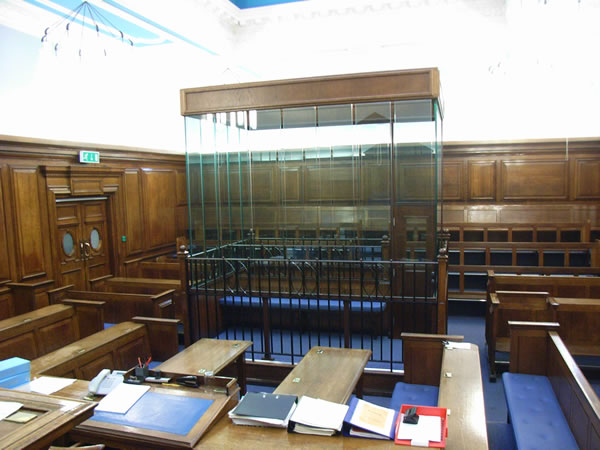 The dock itself looks almost as intimidating as the bench does in the other direction!
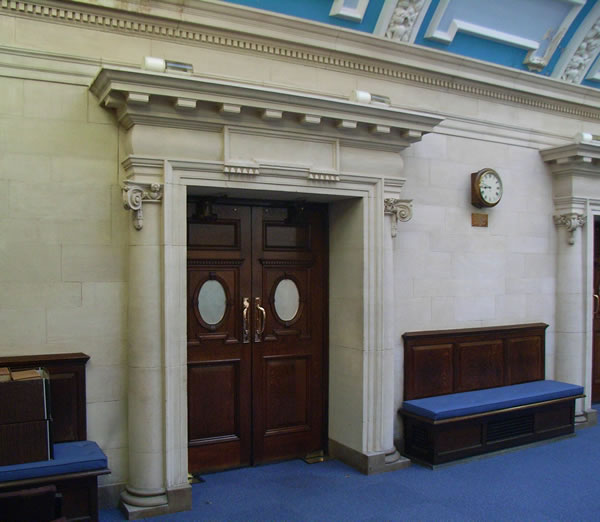
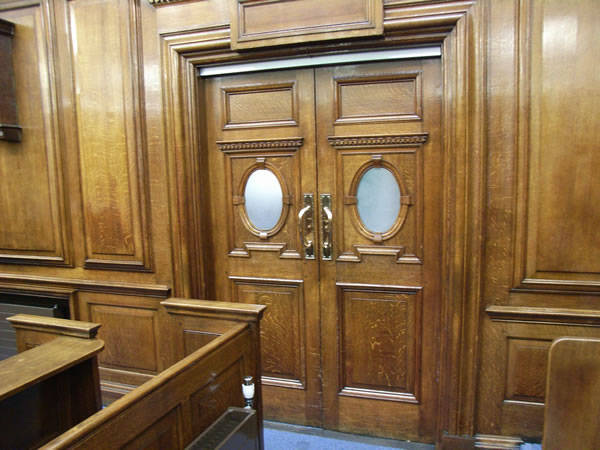 The two pairs of double doors have a wonderful feel about them.
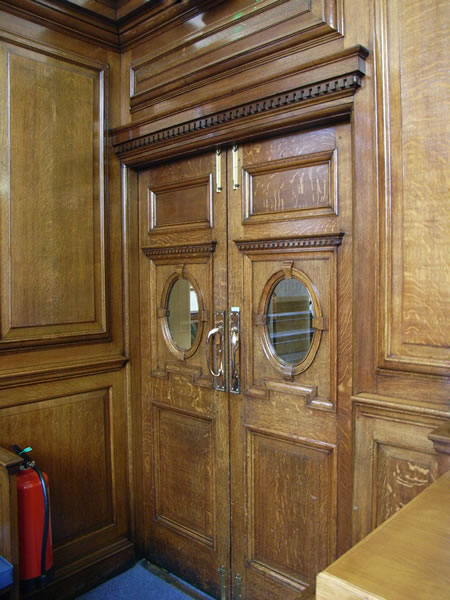
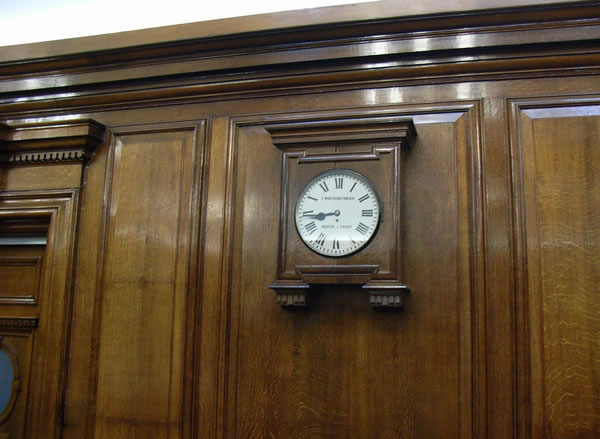 The Court clock sports the name T. Worthington
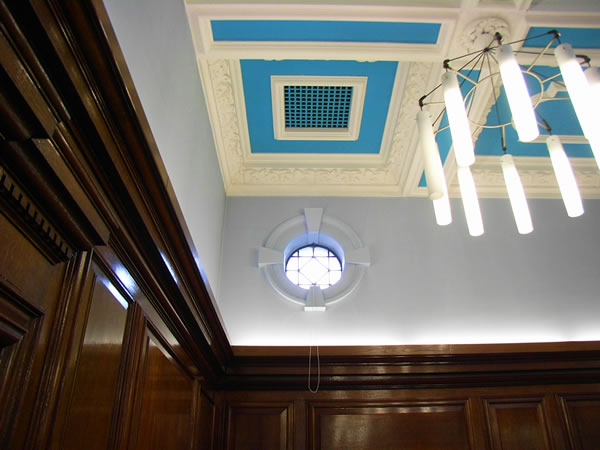 A row of circular windows add to the court’s character
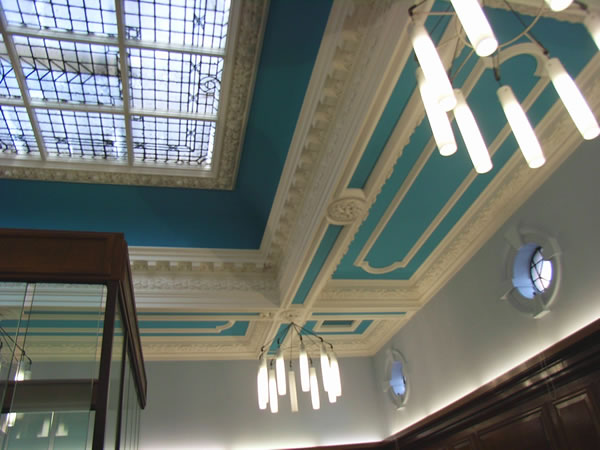 A view of a corner of the ceiling
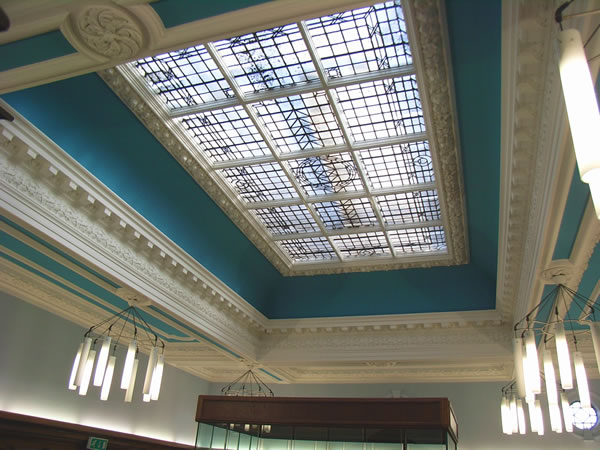 And finally, a view of the impressive skylight
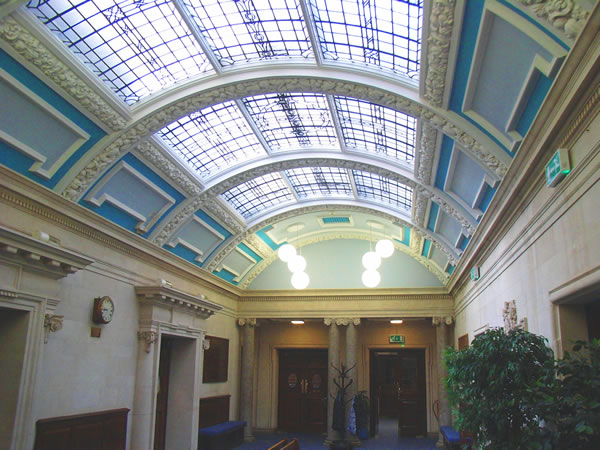 The original waiting room
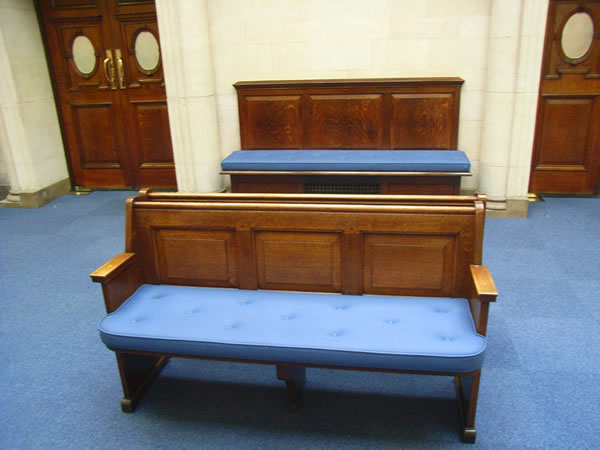 And the original waiting room benches where many an anxious wait would have been experienced
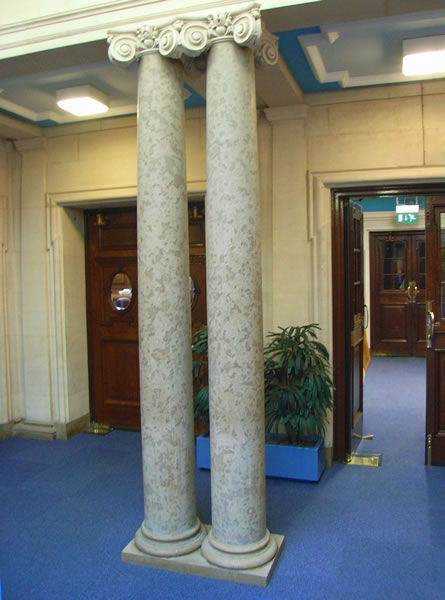 Columns which add to the elegance of the building
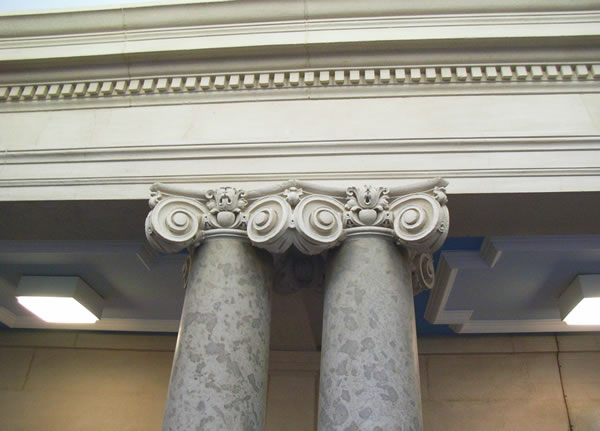 And lovely attention to detail
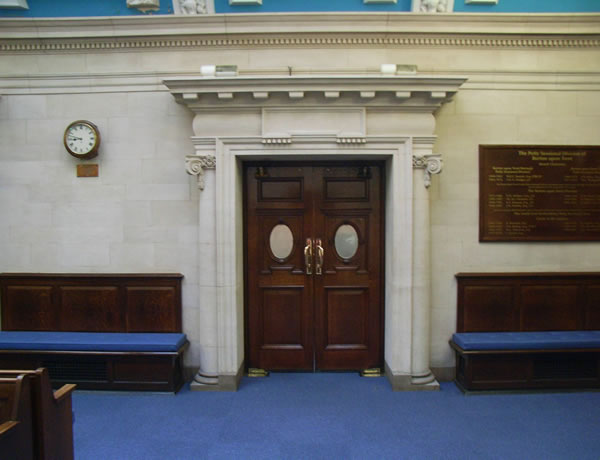 Admiring the doors, it is easy to forget the dread they may have held for some
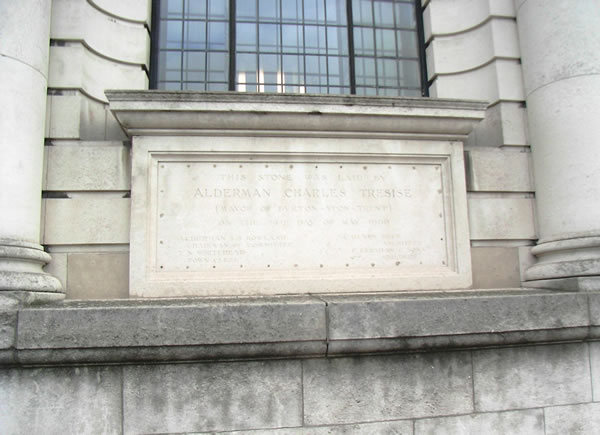
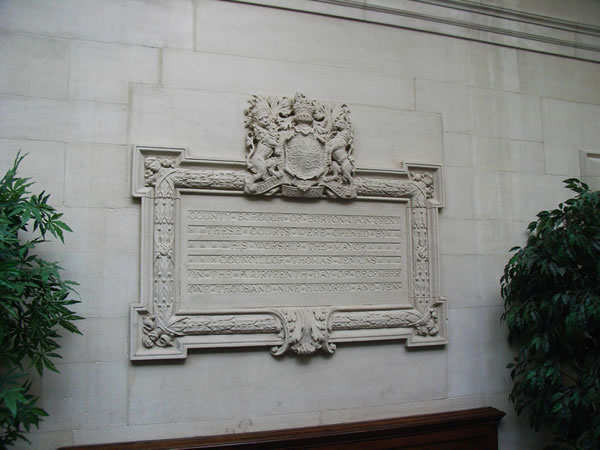 Stonework in the waiting room proudly informs:
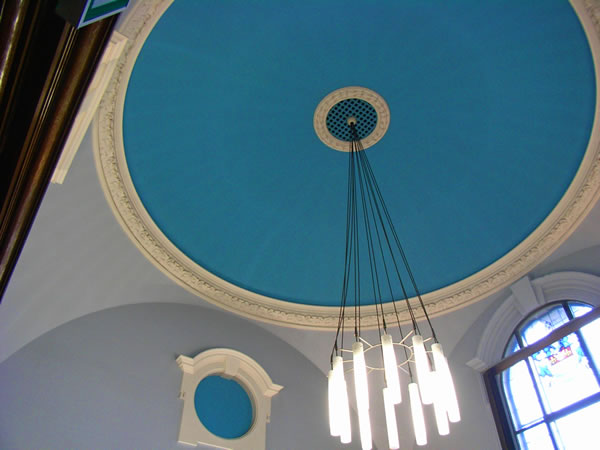 Slightly disappointingly, this is the ceiling directly under the impressive dome. I was rather hoping to be able to see the inside of the dome
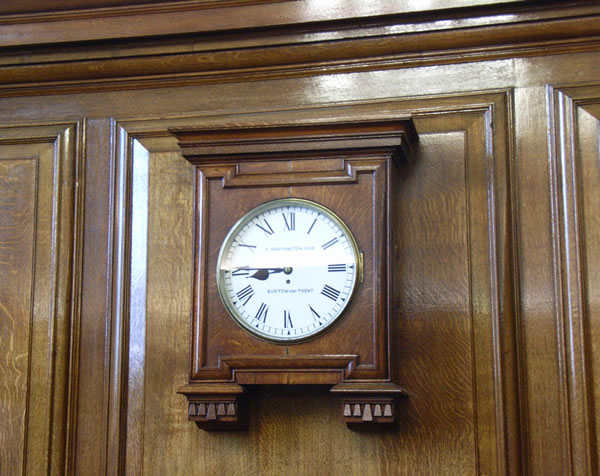 A second clock to match the one in Court 1
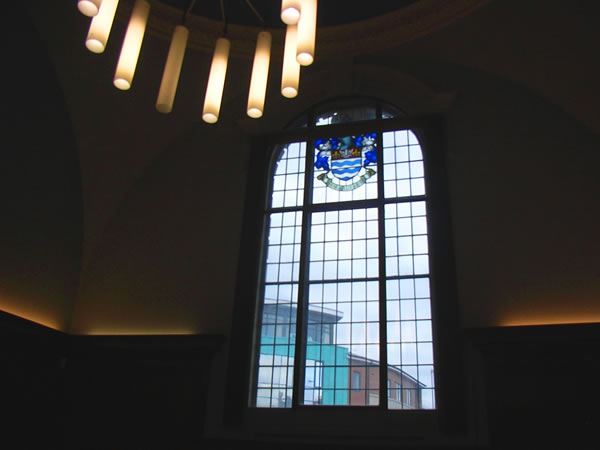 The impressive window that can be seen from the front of the court
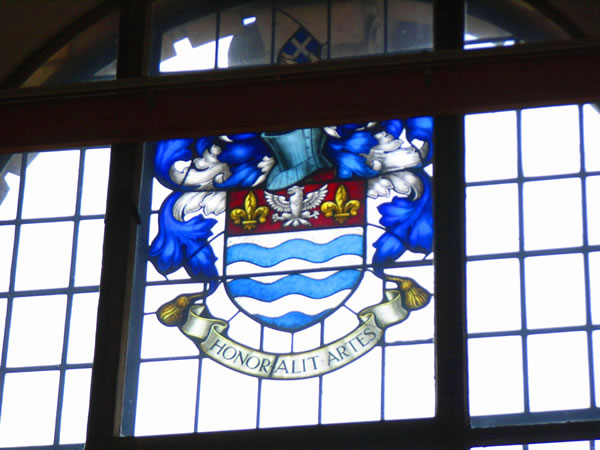
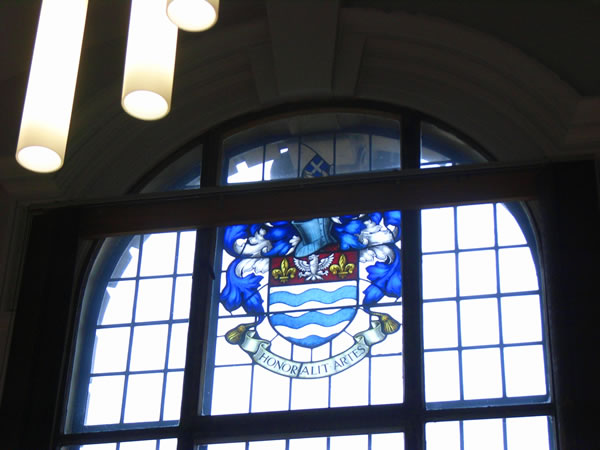 The stained glass window sports the Burton coat of arms and moto
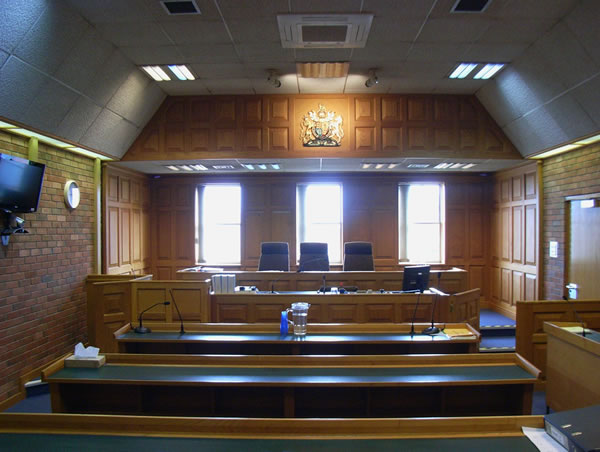 The modern day Court 2 has a much less intimidating feel
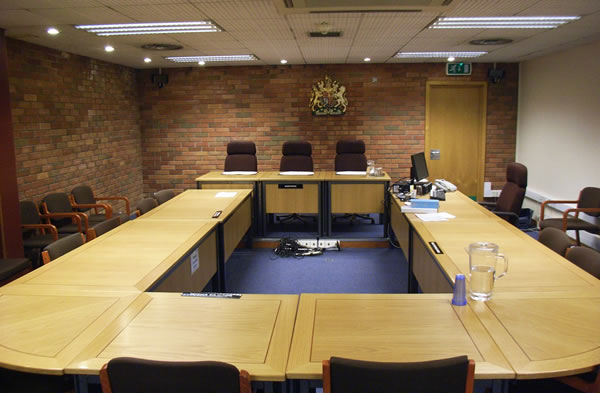 Court 3, used for the least serious and family cases, feels almost like a meeting room
 The new waiting room
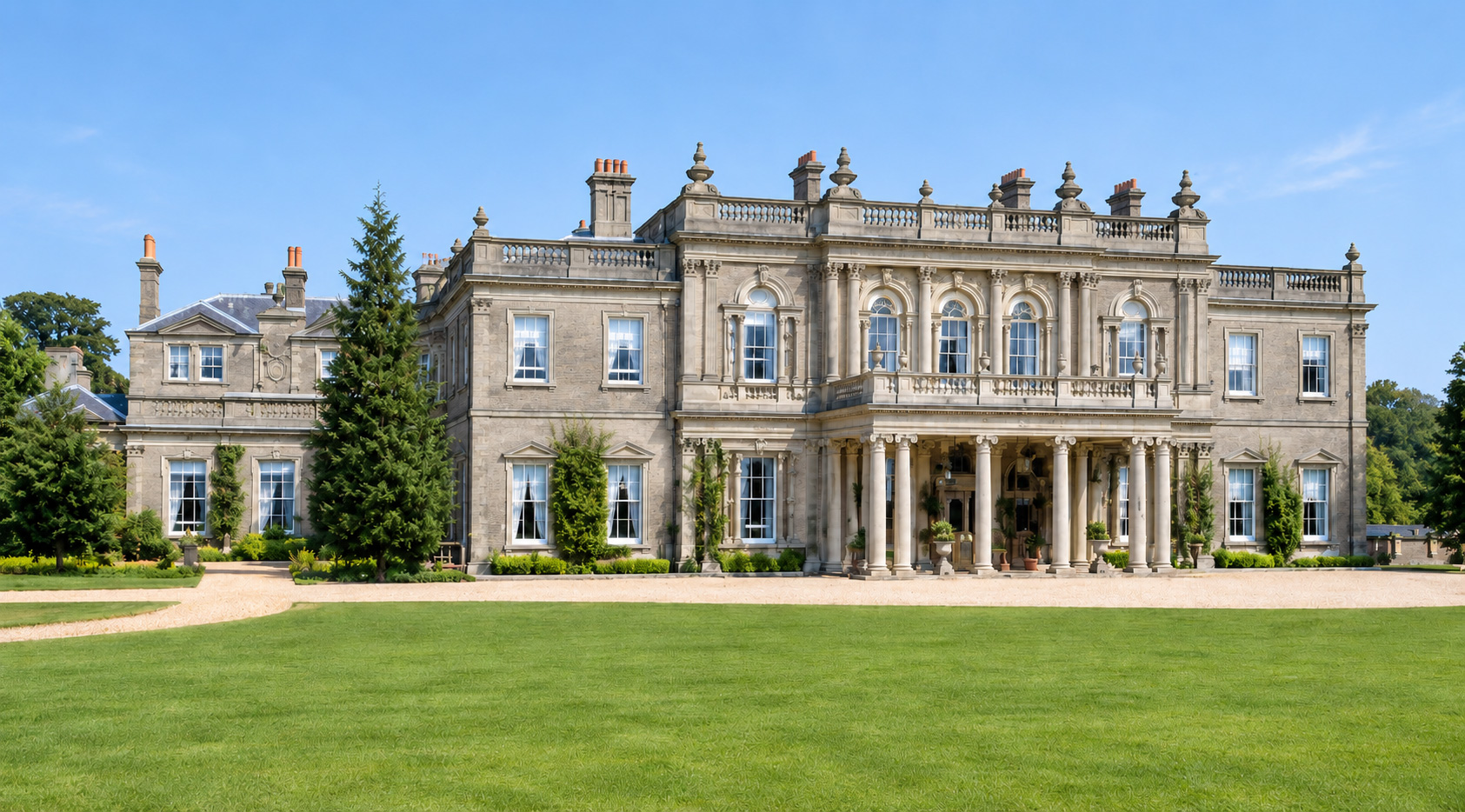 Rolleston Hall Front Elevation
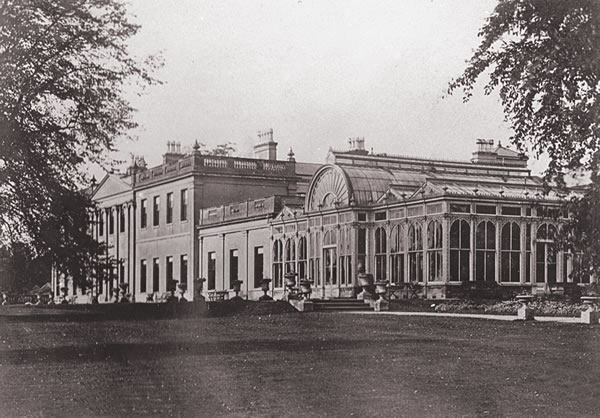 A view from the South East shows the magnificent conservatory
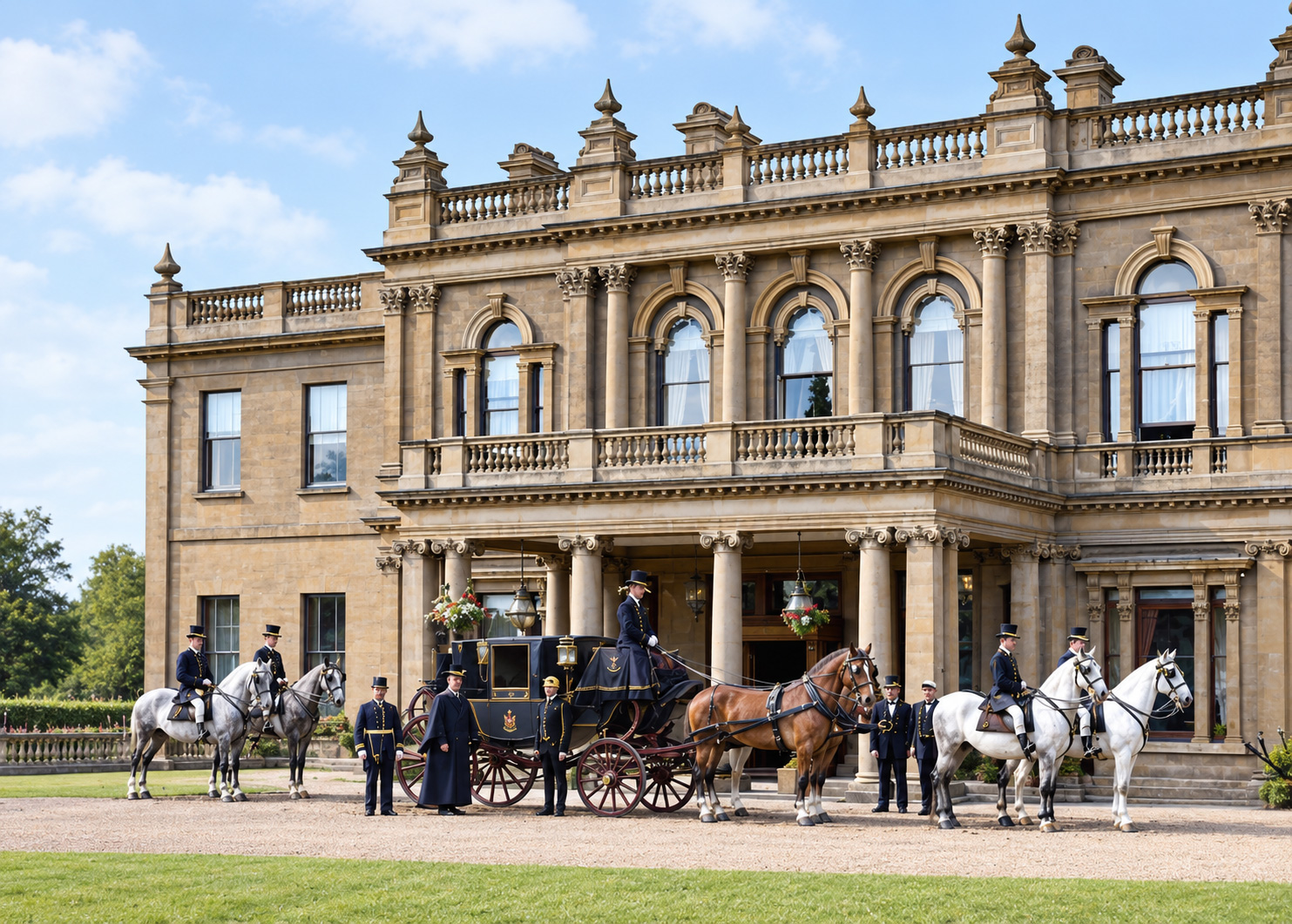 Rolleston Hall Carriage
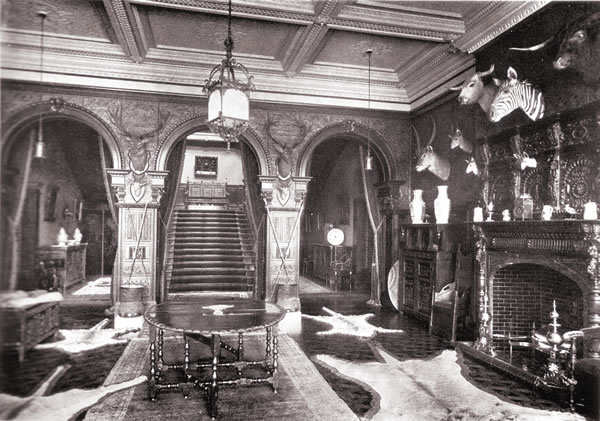 Rolleston Hall Entrance Hall and Stairway c1880
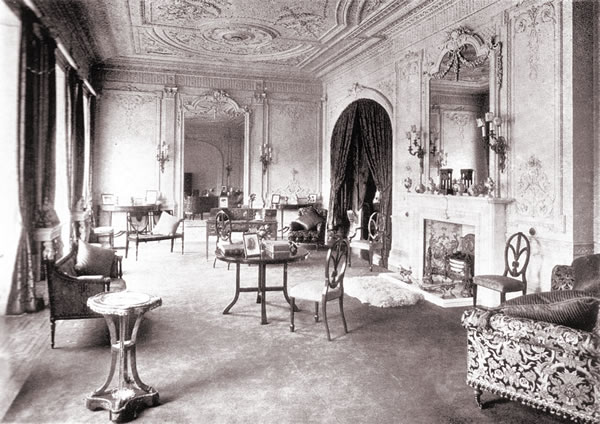 Rolleston Hall Drawing Room c1880
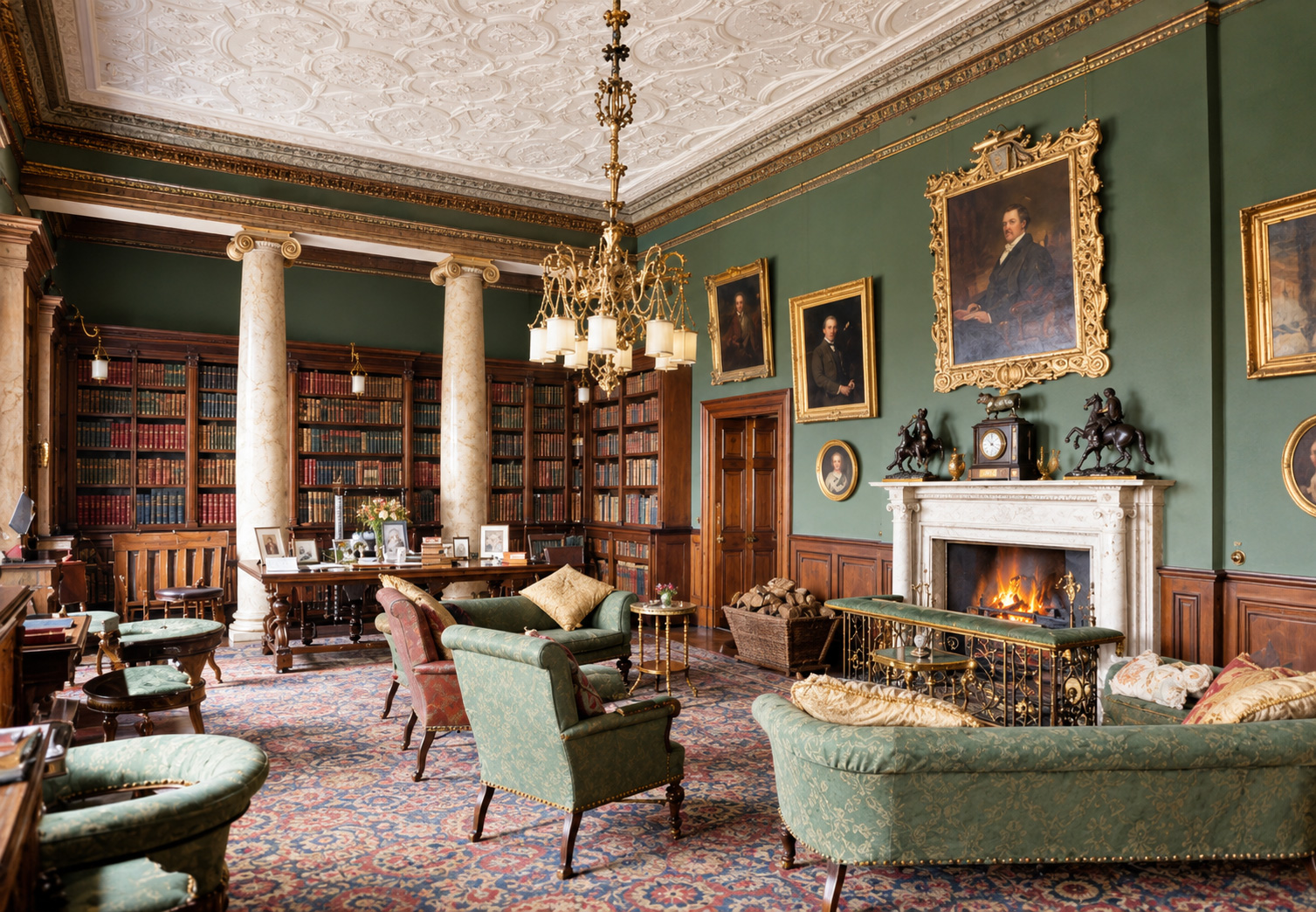 Rolleston Hall Library c1890
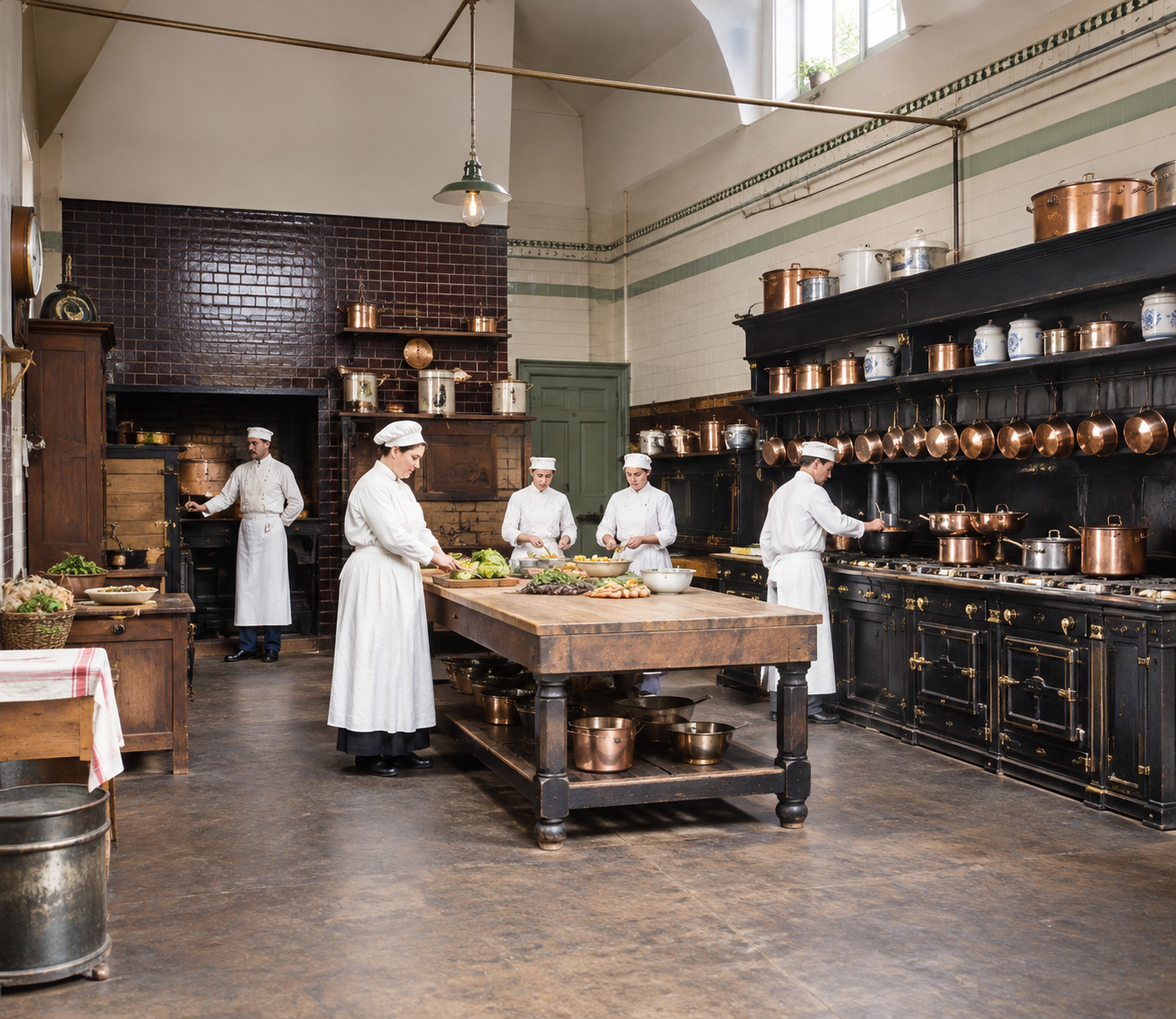 Rolleston Hall Kitchen c1890
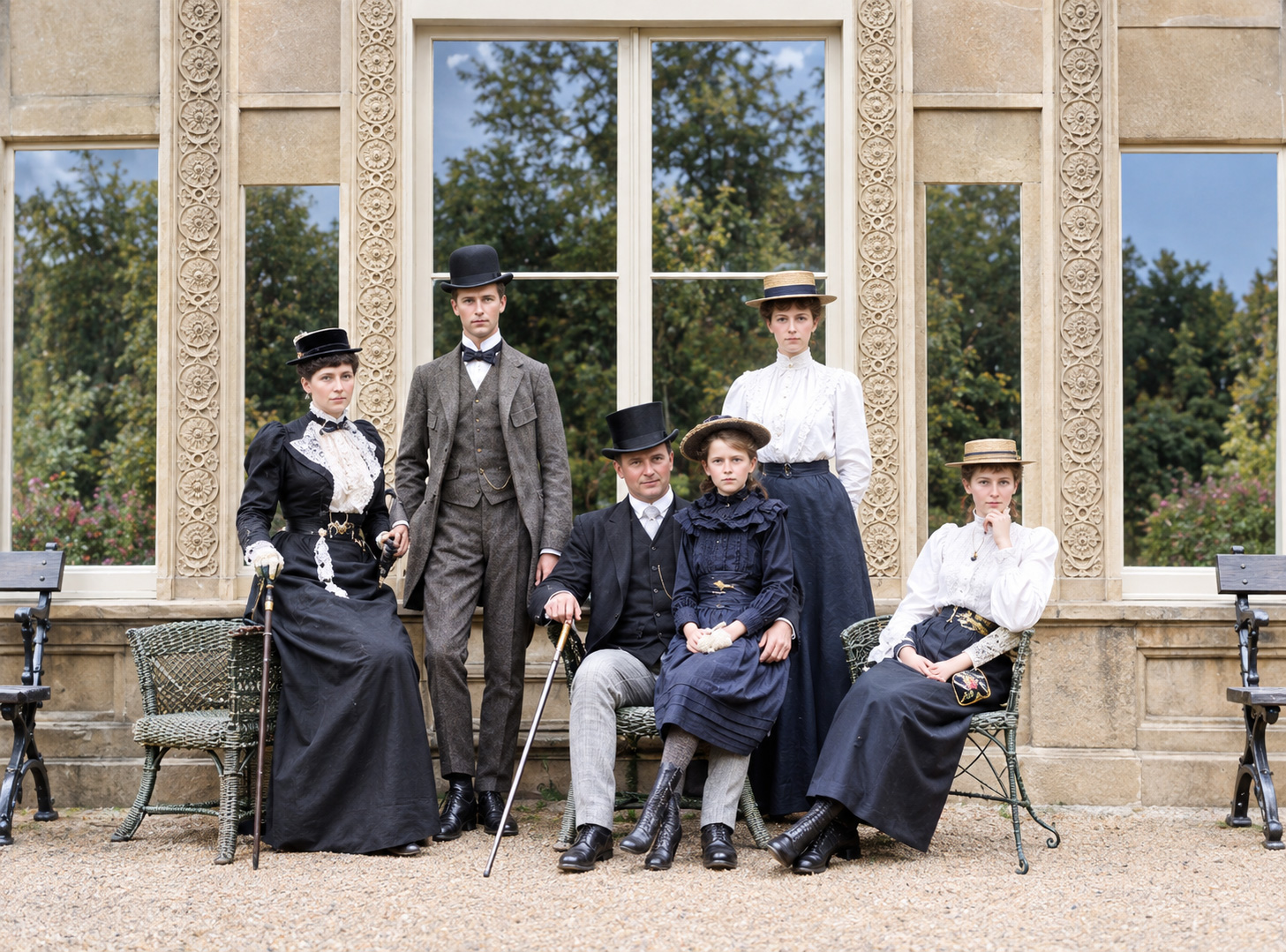 Mosely Family c1880
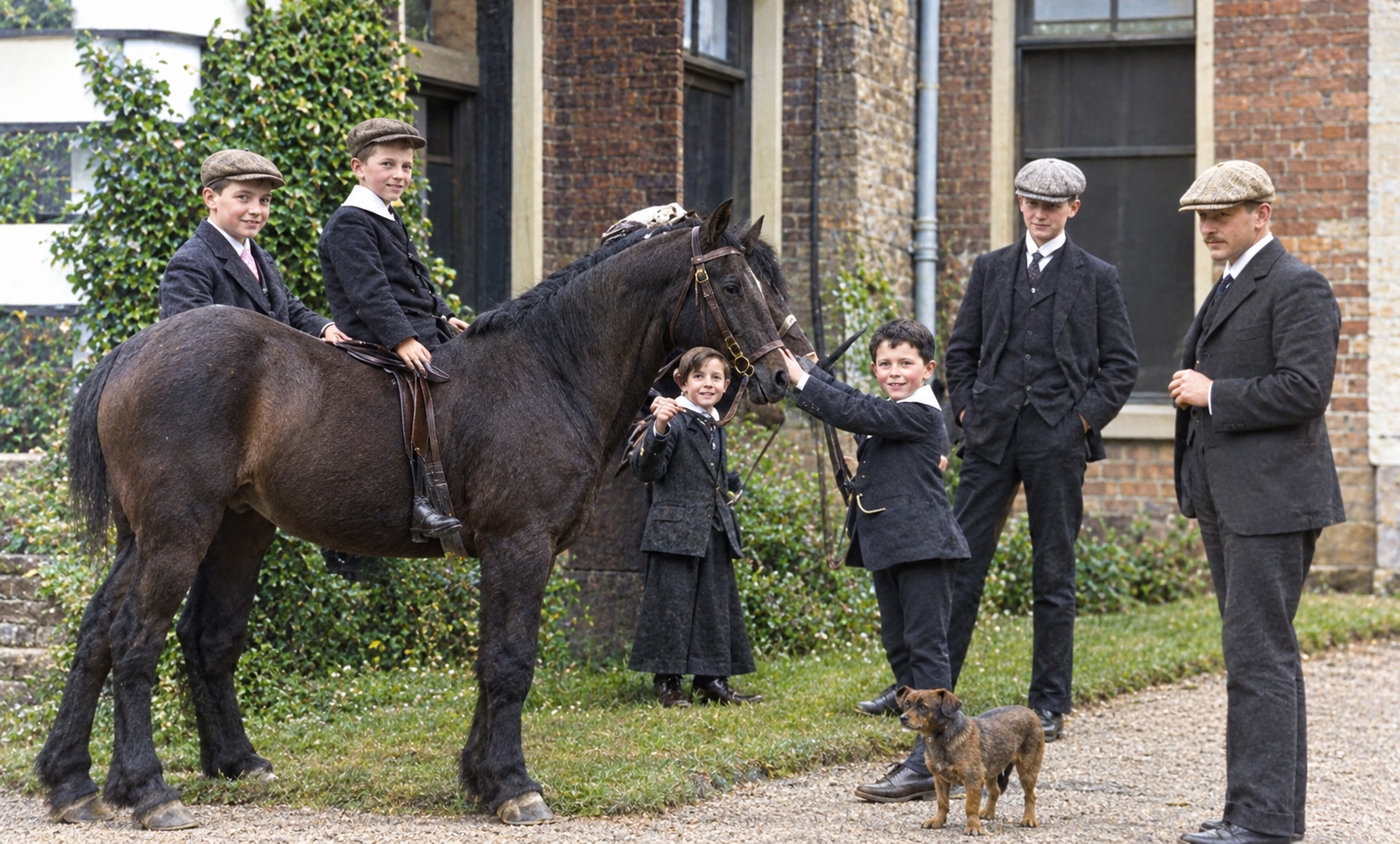 Mosely Family c1890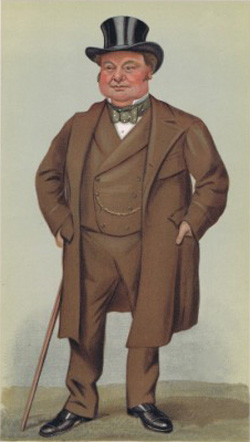
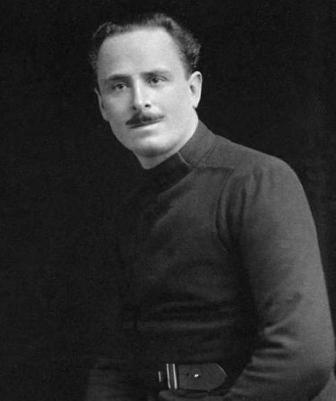 Sir Oswald Mosley, 6th Baronet of Ancoats